Welcome back to the Cyber PMM vision series. Today, in Part 2, I'm picking up from the last post on Defining our Tetris Shapes. I want to be very clear that I'm not just posting about using a GPT to add to the AI hype; instead, I'll be testing the feasibility of whether or not GPT sidekicks are a viable tool for Cyber PMMs. It's not about sipping the AI Kool-Aid; it's about seeing what's practical and if I'm convinced a tool can help me do my job better, sign me up!
Training a GPT Sidekick
A GPT sidekick can potentially do a lot of tasks for Cyber PMMs — if we train it. This is what I call "sharpening the ax". Another way to look at it — we need to bring in Mr. Miyagi for the Karate Kid. Perhaps a GPT can eventually execute our processes, but let's test the waters before diving in headfirst. We also shouldn't dismiss this technology as "all hype" without testing it first.
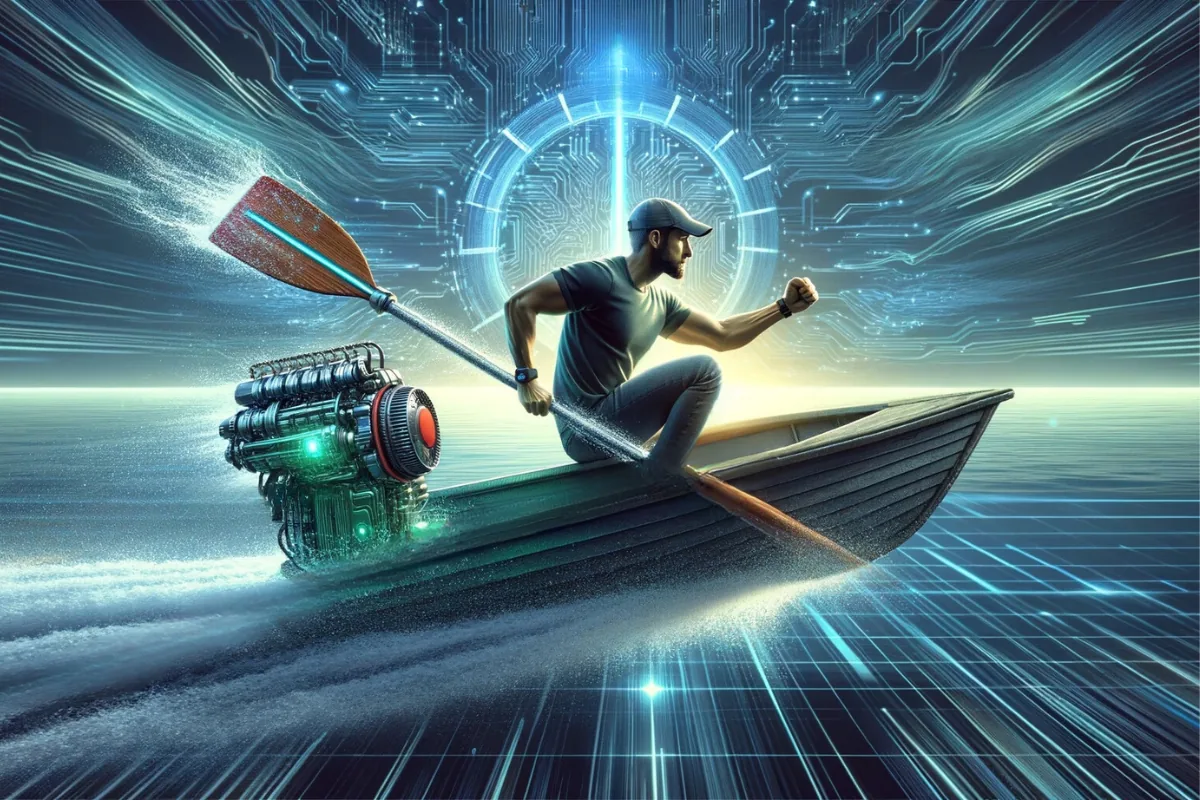
In part one of the vision series I listed out examples of "Tetris shapes", or standard processes that we could eventually train a GPT on. The concept is that we'd remain captains of the ship, guiding the GPTs direction. But the heavy digital lifting—the machine grunt work—can be outsourced to a sidekick, whether it's ChatGPT or other tools. Let machines do what machines do best – they are tools for us to use. Maybe it's time to let an engine push the ship forward so we can take our oars out of the water.
Sharpening the Ax
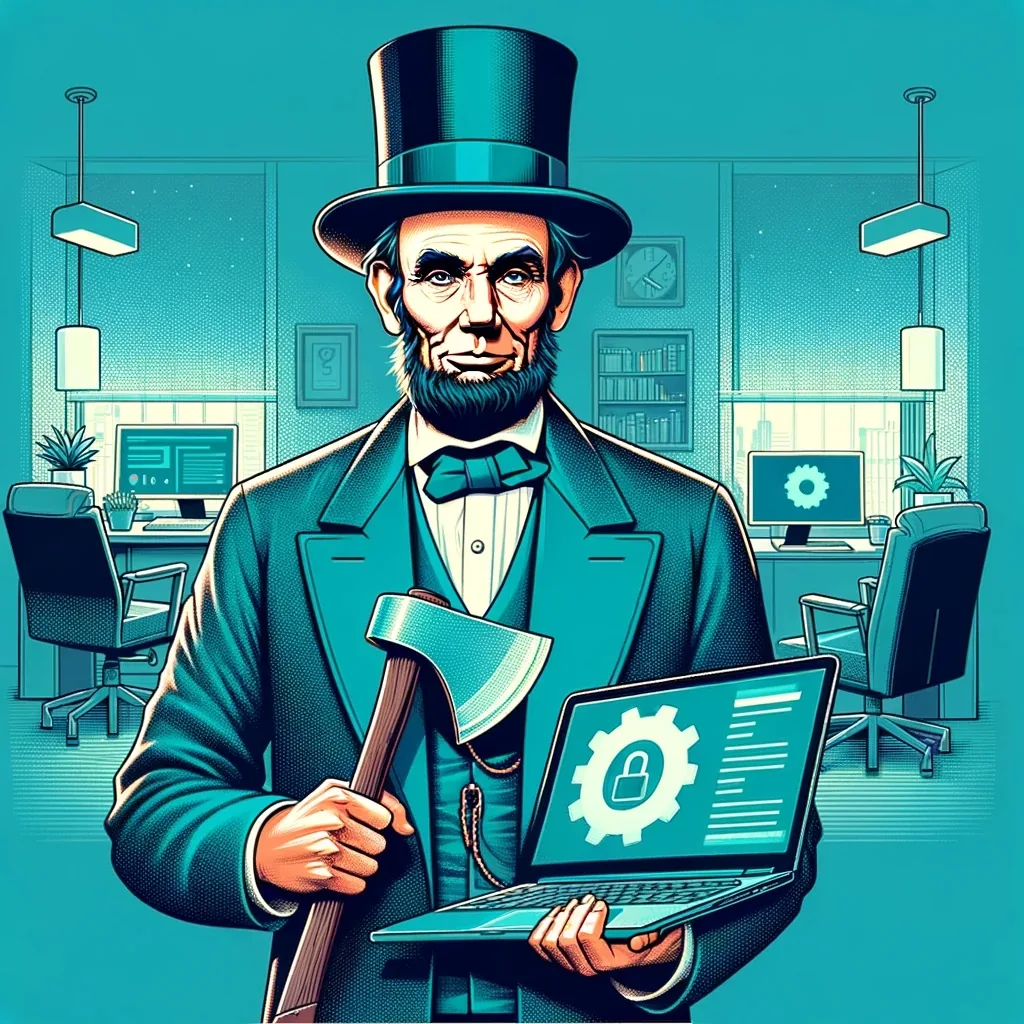
It reminds me of the old Abe Lincoln saying, "Give me six hours to chop down a tree and I will spend the first four sharpening the ax."
This quote emphasizes the importance of preparation and planning in achieving one's goals more effectively. It suggests that time spent in preparing and sharpening one's skills or tools can make the actual task at hand much more efficient and successful. And anyone that was still chopping down trees without an ax in Lincoln's day would have been considered a bit weird, right? So the other point here is that we need to use the tools around us in a smart way, to use more brains and less muscle wherever we can.
It's hard not to imagine a future where PMMs are sitting in our homes, wearing headsets and speaking to a virtual assistant like ChatGPT to pump out work. I am personally excited for this future, and I don't think it's wise to ignore the introduction of these technologies. My expectation is that product marketing teams will not be increasing in size and existing employees will be asked to do more with less due to these technological advancements (think of all the "efficiency" layoffs going on).
Therefore, the most valuable product marketers will be those that embrace this technology, and demonstrate an ability to deploy it in our daily activities. PMMs that can quickly extrapolate on how they are using technology to create a more efficient operation are going to stand out from the crowd.
Don't be frightened of this future though. If you haven't given GPTs a whirl yet, try it out. You can create a sidekick in minutes without any coding skills. I'm by no means a heavy GenAI user, or a developer with coding skills, and I was able to create an Open AI account and create a Cyber PMM GPT in less than 30 minutes. My goal is to train it to process mundane tasks, freeing up time for more strategic planning and relationship building. The vision is to outsource to Cyber PMM GPT sidekick basic requests that chew up the most time.
Sample Prompts
Let's think more about what this means to keep things practical and demonstrate what I mean through examples. Really, we're talking about creating prompts. So let's start to list these out based on the examples from the Defining Our Tetris Shapes post.
This list isn't exhaustive – it's a starting point to test our sidekick out later. Let's put a pin in this until I can find more time to start running these prompts against test scenarios. I might find some of these to be feasible and others more difficult, but I still want to test them out.
Dispelling the AI Job Displacement Myth
Now, here's the part that might make some folks nervous: the fear of AI replacing us, rendering our roles obsolete. But here's the truth—AI is not here to snatch our jobs; it's here to be our trusty sidekicks in productivity. By automating the repetitive grind, AI liberates us to do what we humans excel at: being creative and emotionally intelligent. However, our skillset will have to adapt and meet the challenge of managing AI tools.
I'm all for embracing GenAI as a sidekick in our work. This means more time for activities that demand the human touch. Here's where our uniqueness truly shines:
Building Consensus: AI can't replicate the art of building cross-functional consensus at work. We understand the intricate nuances of diverse teams and can foster collaboration like no machine can.
Emotional Intelligence: Machines may be clever, and as much as Elon Musk tries, they don't do feelings, yet. We, on the other hand, have a knack for understanding and addressing the emotions and needs of our colleagues and customers, creating genuine connections by using empathy. I say this realizing that machines can learn how to recognize some emotions and adjust responses accordingly.
Personal Engagement: While AI can generate solid messages, there's no substitute for showing up in person to deliver them at events or meetings. Our personal touch adds authenticity and resonance to our interactions. We can read an audience, answer questions live, and inject humor or personal stories to enliven our messages.
Being Human: Beyond the work arena, we engage in a multitude of "human" activities that enrich our lives—hobbies, leisure pursuits, and adventures that make us well-rounded individuals that have actual personal lives, not just processing tasks like machines.
In a nutshell, we're letting AI do what it excels at—being efficient, precise, and automating tasks—while we focus on what makes us uniquely human: our creativity, empathy, emotional intelligence, and our ability to forge profound connections.
Closing
So, as we venture deeper into the "age of AI", we should train tools to deliver our outputs based on testing with real-world scenarios. Doing so will allow us to sharpen our digital axes and become more effective PMMs as we fight the digital chaos around us. More importantly, we'll get better at guiding customers as they navigate a complex buyer's journey to try and keep their organizations safe.