AI Innovation for Beginner's (Like Me)
As I discussed in my last post, my LinkedIn feed is a firehose of AI hype—much of it noise, some of it genuinely game-changing. The pace is overwhelming, but one thing is clear: we either adapt to AI or risk irrelevance in digital work.
Also if you are more interested in using AI tools ASAP, my advice is to start with a clear objective—what do you want to accomplish? For example: I want to build an app that tracks tech industry M&A. Use YouTube to do research and then test what you find. I was amazed at how easy it was to test AI-powered app builders like Bolt.new and Bubble.ai, and also tested automation tools like Relevance AI and Zapier for creating AI agents. It's not rocket science—just define your goals and experiment.
In my next post, I'll dig into how AI agents can automate product marketing—because if AI can tackle rocket science, it can certainly handle PMM tasks. Stay tuned for that.
Methodology
Here's the result. A list that highlights the 10 major AI camps and their roles in shaping the AI landscape.
Pro tip: For every vendor you aren't familiar with below, simply search for their brand on LinkedIn and click Follow. Then just observe their releases and community engagement. I have been amazed at what they are up to.
The Ten Camps of AI Innovation
1. Chip Makers: The Foundation
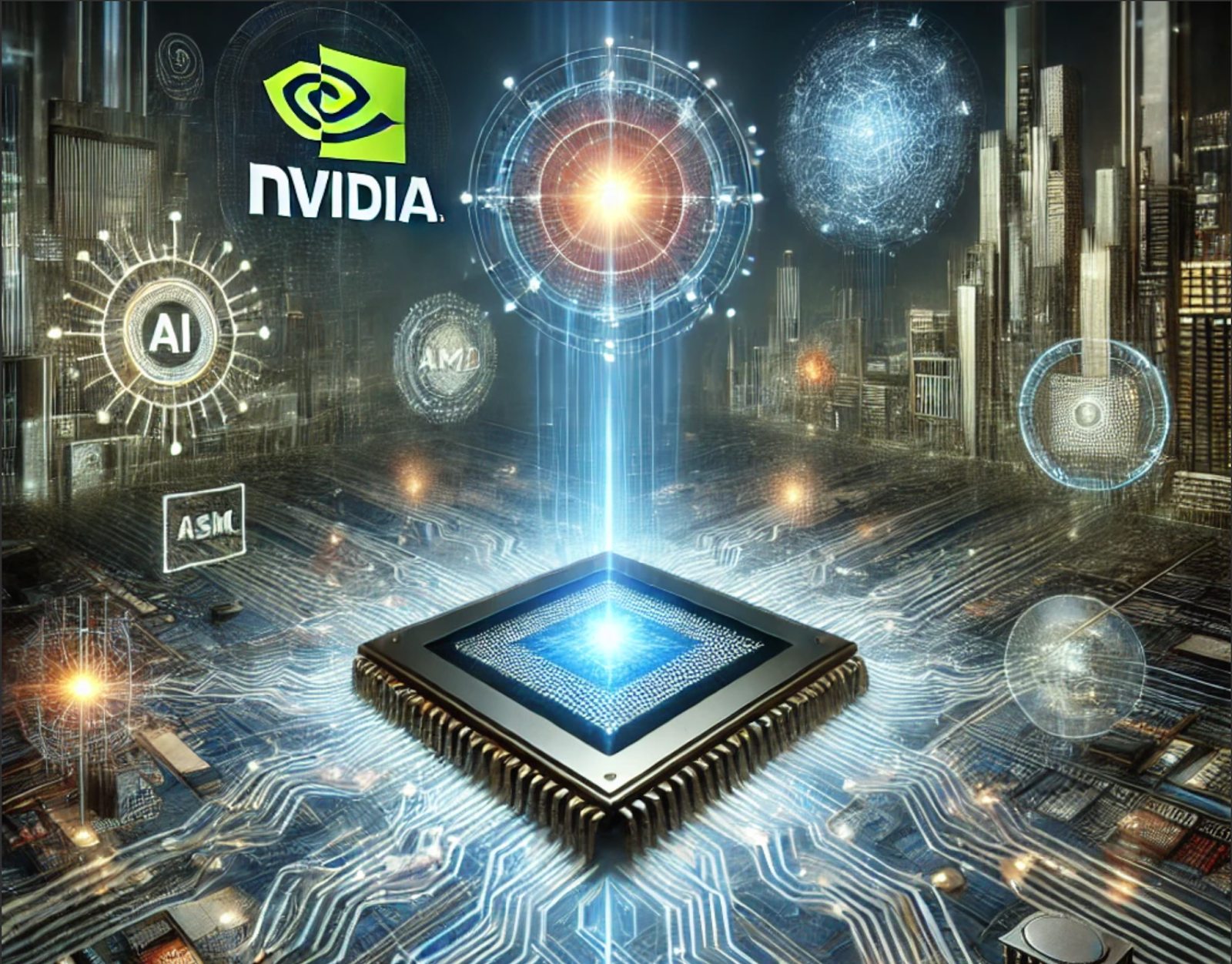
I know this one is a no-brainer, but chip design and manufacturing forms the backbone of AI innovation. Companies like NVIDIA, AMD, and TSMC produce GPUs and processors that power AI workloads, needed for training large language models (LLMs) and running complex AI systems.
NVIDIA, in particular, leads this space with its cutting-edge AI-optimized chips, making it the tip of the spear for AI hardware and software development. If you haven't watched Jensen Huang's CES or GTC keynotes yet, you need to go check them out so see how they are at the forefront.
2. Large Language Models (LLMs): The Brains Behind AI
Large Language Model (LLM) is a type of artificial intelligence (AI) model designed to understand, generate, and manipulate human-like text. LLMs are built using deep learning techniques, particularly transformer architectures, and are trained on massive datasets of text from diverse sources, including books, articles, and online content. LLMs power chatbots, AI assistants, content creation tools, and research applications, playing a crucial role in modern AI-driven automation and decision-making.
Some of the most prominent LLMs include:
OpenAI – ChatGPT: Scheduled for launch within weeks, GPT-4.5 will be the final model without full chain-of-thought reasoning, a method that enhances complex problem-solving by generating intermediate steps. Following this, GPT-5 is planned for release in the coming months, aiming to integrate various OpenAI technologies, including the o3 model, to create a unified AI system.
Google – Gemini: Google DeepMind has unveiled "Gemini 2.0," an advanced AI model designed for the agentic era. Gemini 2.0 offers multimodal output capabilities, including native image generation and audio output, and integrates seamlessly with tools like Google Search and Maps.
Anthropic – Claude: Anthropic has released the "Claude 3" model family, comprising Claude 3 Haiku, Claude 3 Sonnet, and Claude 3 Opus. These models set new industry benchmarks across various cognitive tasks, with Claude 3 Opus being the most advanced, excelling in complex analysis, higher-order math, and coding tasks.
Meta – Llama: Meta has introduced "Llama 3.2," the latest in their open-source AI model series. Llama 3.2 includes small and medium-sized vision LLMs, as well as lightweight, text-only models optimized for deployment on edge devices, enhancing accessibility for developers.
I highly recommend the videos by Andrej Karpathy to learn more. He is the top resource on simplifying LLMs for beginners.
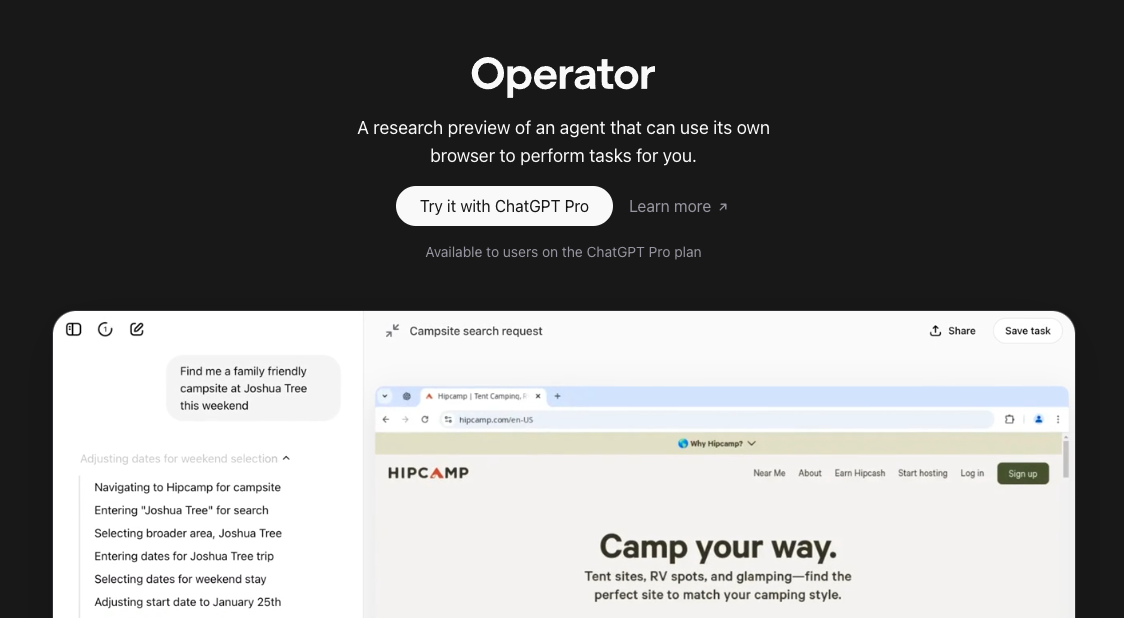
These LLMs dominate the conversation because of their early adoption, daily usage, and ability to rapidly release groundbreaking features. A single feature launch—like ChatGPT Operator—can disrupt entire software ecosystems by rendering thousands of apps obsolete.
3. AI-Native Startups: The Application Layer
Using the above LLMs, AI-native startups are spearheading innovation by building new apps and tools on AI-driven foundations. Many leverage AI coding assistants which drastically lower the barrier to entry for app development. Apps no longer cost hundreds of thousands of dollars or hiring engineers to build.
Cursor
Repl.it
Bubble.io
Bolt
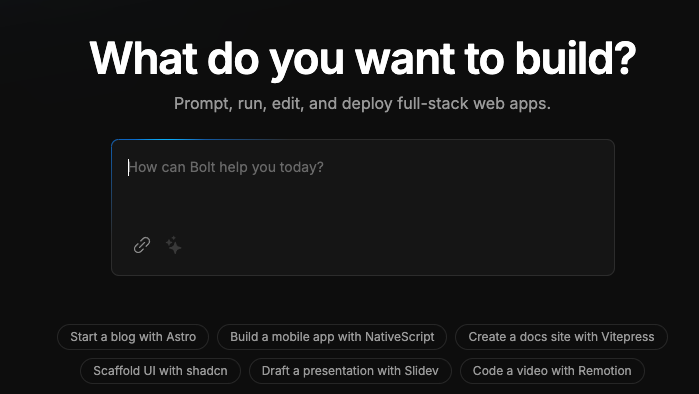
I personally signed up for each of these tools. I was using Bolt.new for maybe 2 minutes before I had the interface coded for an app idea I've had for 15+ years. Now, I (and you) have the power to build apps in minutes, without any coding knowledge.
It's really amazing, but one catch was that once I decided to move forward and keep building this app, Bolt shrewdly ended my supply of free tokens and tried to upsell me. Can't blame them, they have VC's to repay. I declined, as I figured there were other tools to explore, which there were. Moving to Bubble.io, I built an app as well, and I'm testing that some more. Tools like these are giving everyone the ability to build apps in minutes—no coding required. But while this flood of innovation is exciting, it's also flooding the market with new apps by the hour.
4. Existing SaaS Providers Adding AI Assistants
Established SaaS providers, such as Microsoft adding Copilot, HubSpot AI and Salesforce Einstein, are baked-in AI assistants inside of their already-adopted applications as a survival strategy. This is just to name a few but I think you would be hard-pressed to find a SaaS vendor that isn't doing this.
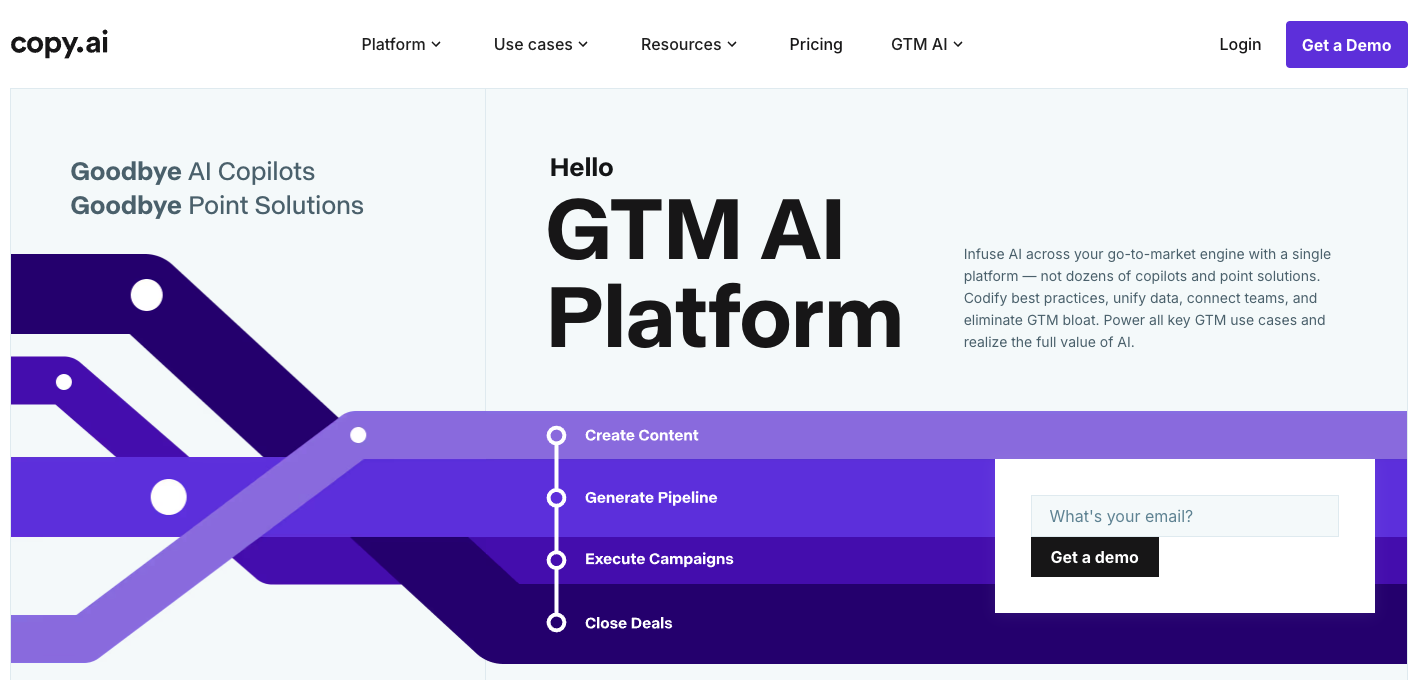
Why do I say survival strategy? Am I being overly dramatic? My view is that these vendors are facing a major threat from AI-native startups. For example look at the emergence of copy.ai, a once-tiny startup that is now on Salesforce's radar in this area called, "AI GTM". Just look at both of their new positioning statements, and they look very similar. Of course there can be no comparison when it comes to scale, users and capacity – but look at the reality these days, many companies are operating with much less people thanks to AI and automation, so we shouldn't discount a company just because they are "small."
There are many "Salesforce's" facing widespread disruption from the masses of AI startups entering the scene, and are scrambling to innovate and keep talent in house. Another example is simplified.com providing AI bots across the board for marketing teams.
I picture the current AI startup landscape as a game of Pac-Man—but with a twist. Right now, AI startups are like Pac-Man, racing through the market maze, trying to gobble up market share from established SaaS vendors. But in reality, the game may play out differently. Instead of startups overtaking the incumbents, we're more likely to see established players in the Pac-Man role, acquiring companies like Copy.ai and Simplified.com rather than building their own solutions from scratch. In the end, it may be a game of buy vs. build, with the bigger fish swallowing the smaller ones.
Another major threat to existing SaaS vendors is LLMs integrating core SaaS functionalities. If AI models like ChatGPT can introduce features like Operator, enterprise-grade capabilities won't be far behind. Imagine an Operator for SaaS—instead of juggling 10 different SaaS subscriptions, users could rely on one. The shift from static SaaS platforms to AI-driven automation could fundamentally reshape the enterprise software landscape.
5. Enterprise AI Agent Development Frameworks
This is where the practical application of AI gets exciting. Developer-friendly tools and no/low-code platforms are making it easier than ever to build AI agents that interact with their environments. Many of these are focused on enterprise use cases because that's where the big money is, and also happens to be where much of the demand is. Examples include:
LangChain: Framework for connecting LLMs with external data sources and workflows.
LlamaIndex: A framework for ingesting, indexing, and querying enterprise data.
These frameworks enable developers to build sophisticated AI agents that can automate complex workflows and integrate with existing enterprise systems.
[The full article continues with camps 6-10...]