
NATIONAL PARKS
Biscayne
A Field Guide
On this page
One November afternoon in a park that's 95 percent water: the boat ride across Biscayne Bay to Boca Chita Key, the spiral stairs of its 1930s lighthouse, the shipwreck stories at the visitor center, and a lobster dinner to end the day. Why we missed the point, and why you should go snorkeling.
Version 1.1 · Updated Nov 17, 2026
Map
When to go
Average monthly visits, 2023–2025. Source: NPS visitor statistics. ● marks the months we visited.
| January | 37,423 |
|---|---|
| February | 43,733 |
| March | 53,537 |
| April | 49,880 |
| May | 52,956 |
| June | 46,537 |
| July | 57,496 |
| August | 42,682 |
| September | 41,835 |
| October | 32,155 |
| November | 31,491 |
| December | 33,615 |
Biscayne was the first stop on a three-park Florida trip in November 2022: Biscayne, then Dry Tortugas, then the Everglades. It was a nice park, but honestly, it was underwhelming, and that was our fault. We didn't go in with a plan to snorkel.
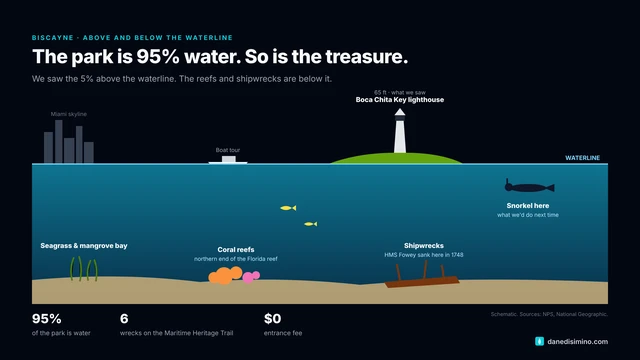
In fact, we'd never been snorkeling, and we didn't even know it was a thing at the park, which is an embarrassing thing for an explorer to admit. So we missed the point. We took the boat ride over to the lighthouse and spent the day wondering why this was a national park. The answer is that the treasure of Biscayne is almost all underwater.
At Dry Tortugas, our next stop, someone handed us snorkeling gear, and I was hooked the moment I put my face in the water. Our next snorkeling trip, in the Virgin Islands, turned it into a full-blown love. So learn from us: if you go to Biscayne, snorkel.
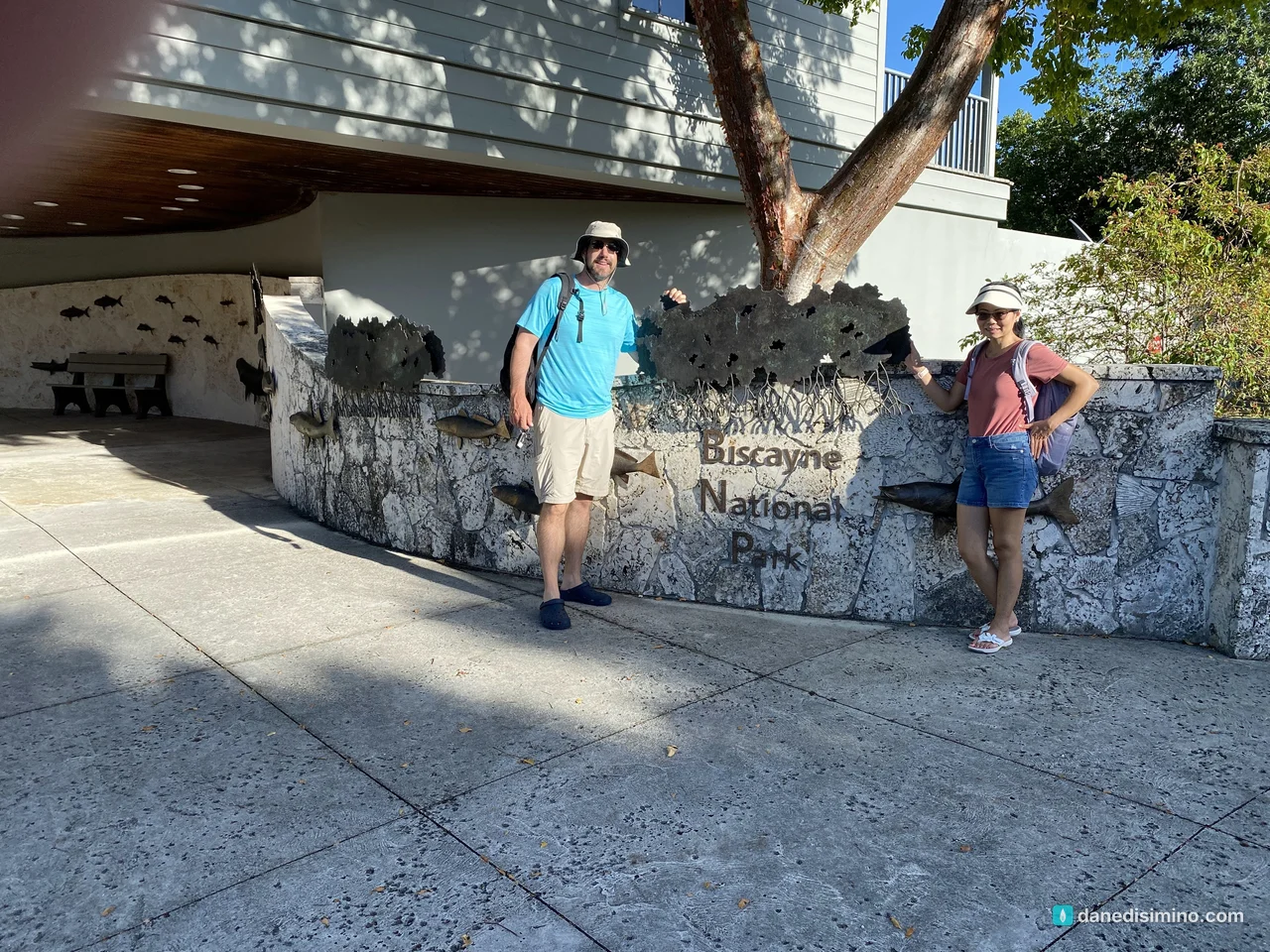
We wondered why it was a national park. The answer was under the water.
The short version
Plan to snorkel. The coral reefs, fish and shipwrecks are the reason this is a national park. Book a snorkel trip ahead of time.
Or take the boat to Boca Chita Key. If you won't get in the water, the boat ride is lovely, and the island has a historic lighthouse with a view of Miami.
You need a boat. The islands and reefs are only reachable by water. Tours leave from the Dante Fascell Visitor Center at Convoy Point.
There's no entrance fee. You'll pay for the tour, and private boats pay a docking fee at Boca Chita.
Go November through April. It's drier and more comfortable. Summer is great for snorkeling, but bring bug spray.
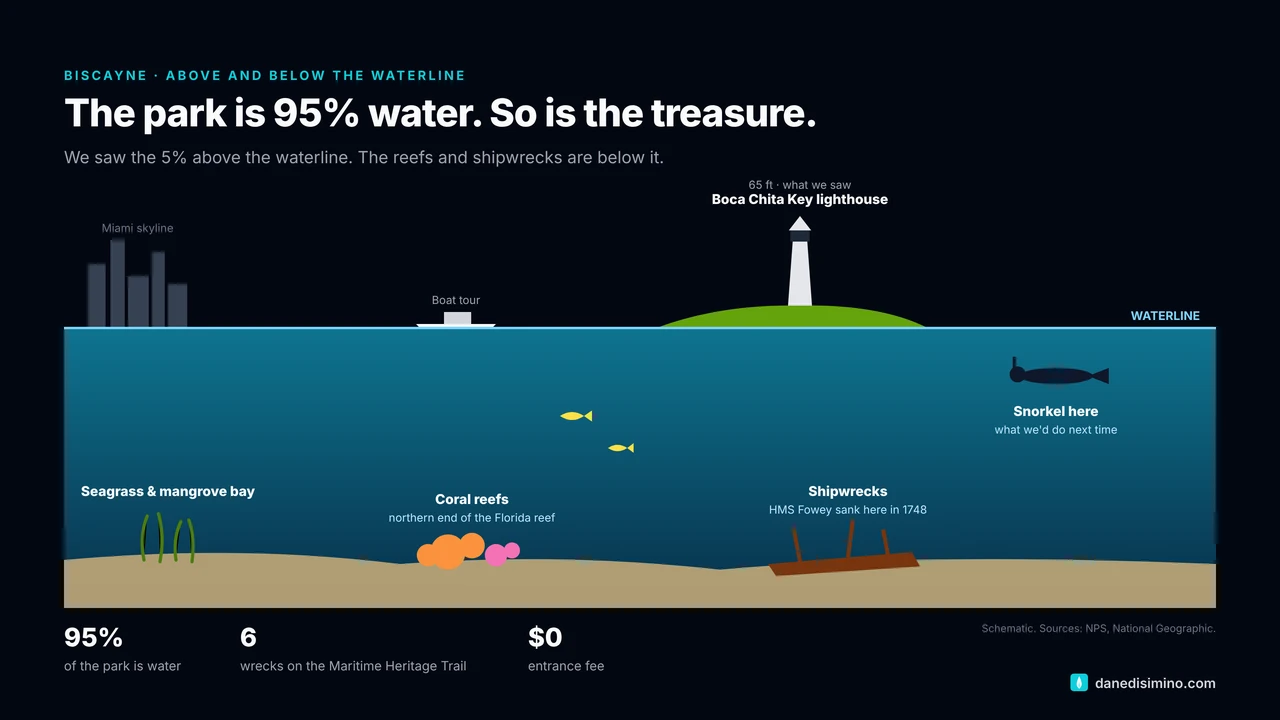
The park at a glance
- 95%
- Of the park is water
- 65 ft
- Boca Chita Key lighthouse
- 6
- Shipwrecks on the Maritime Heritage Trail
- $0
- Entrance fee
Where: south of Miami, near Homestead. The Dante Fascell Visitor Center at Convoy Point is the mainland base.
Getting around: by boat. The Biscayne National Park Institute runs snorkel trips, Boca Chita cruises, sailing and paddling tours; book ahead. Other licensed operators run tours too.
When: July is the busiest month and November the quietest. November through April is drier.
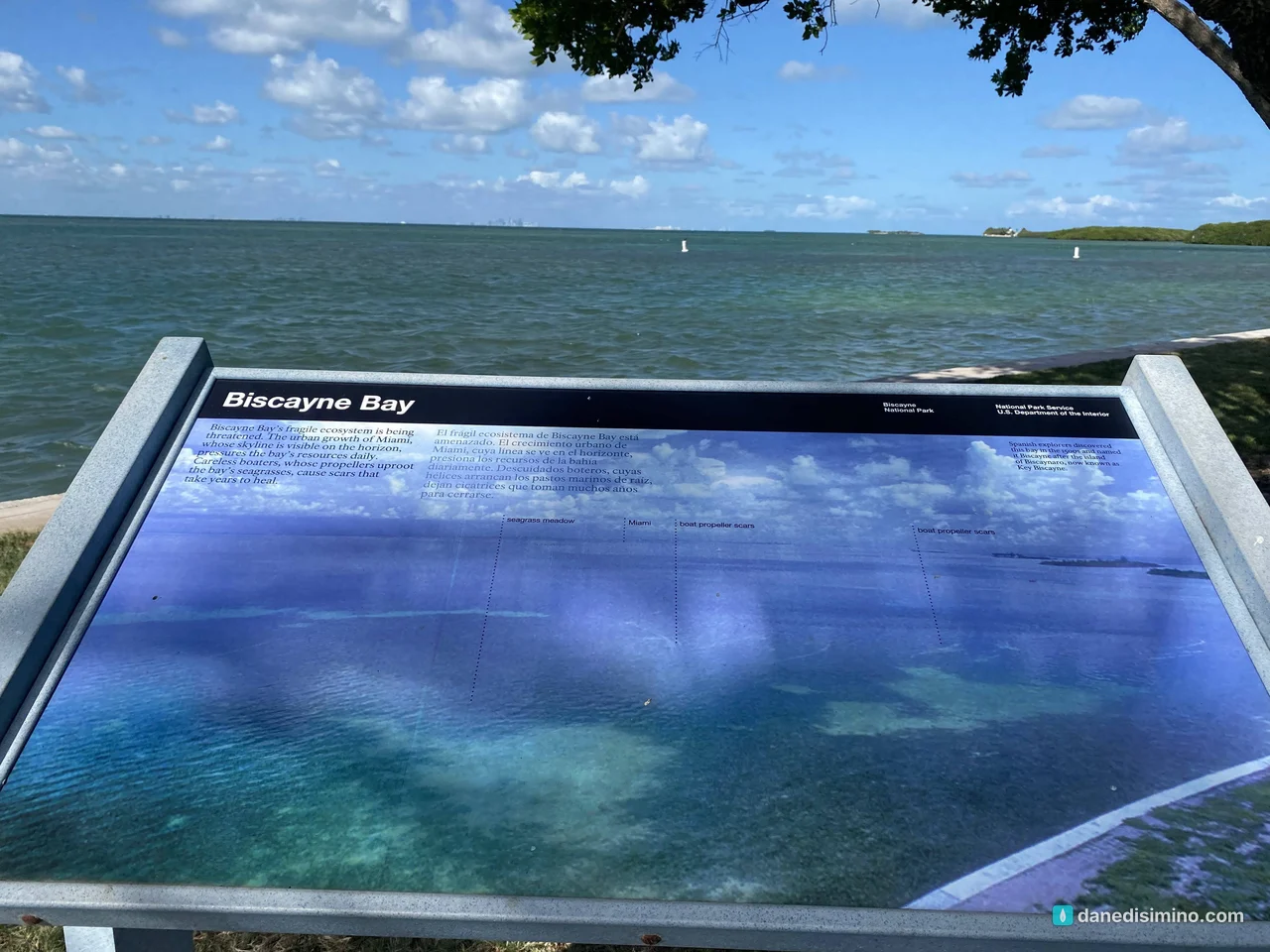
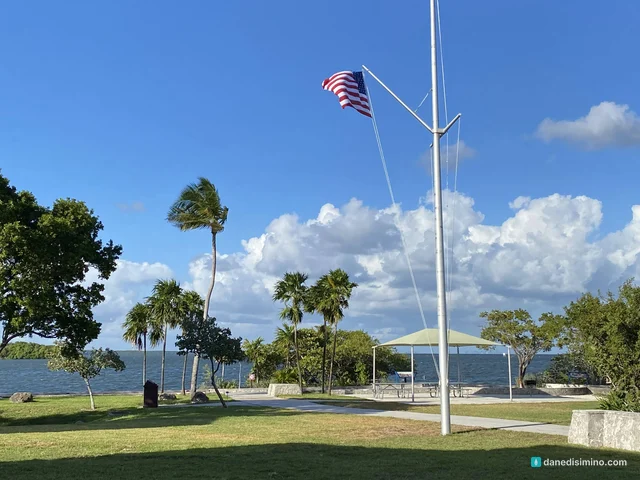
What's protected: a bay up to eight miles wide, mangrove shoreline, a chain of islands, and the northern end of the Florida Keys reef.
Contact: nps.gov/bisc. In an emergency, call 911.
Four parks in one
Biscayne protects four ecosystems that blend into each other, all within sight of downtown Miami:
Mangroves along the mainland shore, a nursery for fish and a buffer against storms.
Biscayne Bay, clear and shallow, with seagrass meadows where manatees and sea turtles feed.
The northernmost Florida Keys, ancient coral reef islands. Most people think the Keys start at Key Largo, but nearly 50 more lie to the north, almost all undeveloped.
The northern end of Florida's Coral Reef, the third-largest coral reef in the world, with hundreds of species of colorful fish.
People have been here for 10,000 years, from the Tequesta, who free-dove for conch from dugout canoes, to Bahamian settlers and the wealthy industrialists who built getaways like Boca Chita. Dozens of shipwrecks lie on the reefs.
The park that almost wasn't
In the 1950s and '60s, developers had big plans for these islands. There was a proposal to dredge 8,000 acres of bay bottom for a jetport. In 1961, landowners formed the City of Islandia on the keys, and in 1962 came plans for Seadade, an industrial seaport with a 40-foot channel cut through the bay.
A group of ordinary locals, doctors, pilots, farmers and writers, pushed for something nobody had tried: a national park that was mostly water. The fight got ugly. One park supporter said the opposition poisoned his dog. As support grew, Islandia landowners bulldozed a six-lane, seven-mile swath down the middle of Elliott Key to spoil it. Locals called it "spite highway."
It didn't work. Led by Congressman Dante Fascell, Congress created Biscayne National Monument, and President Lyndon Johnson signed it on October 18, 1968. It was enlarged and became Biscayne National Park in 1980. Spite highway has grown into a shady tunnel through tropical forest, and today it's the park's only hiking trail.
The boat ride to Boca Chita Key
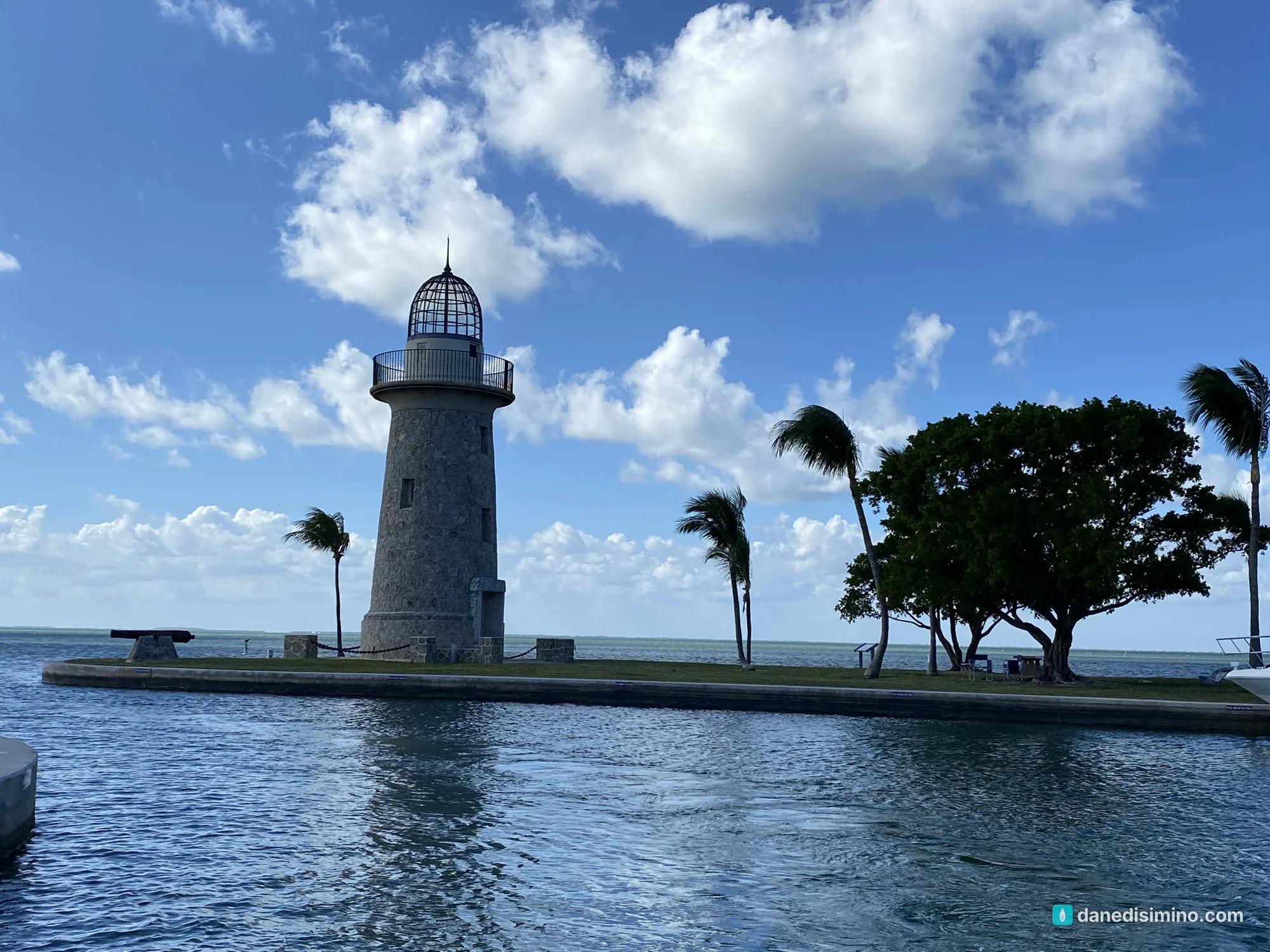
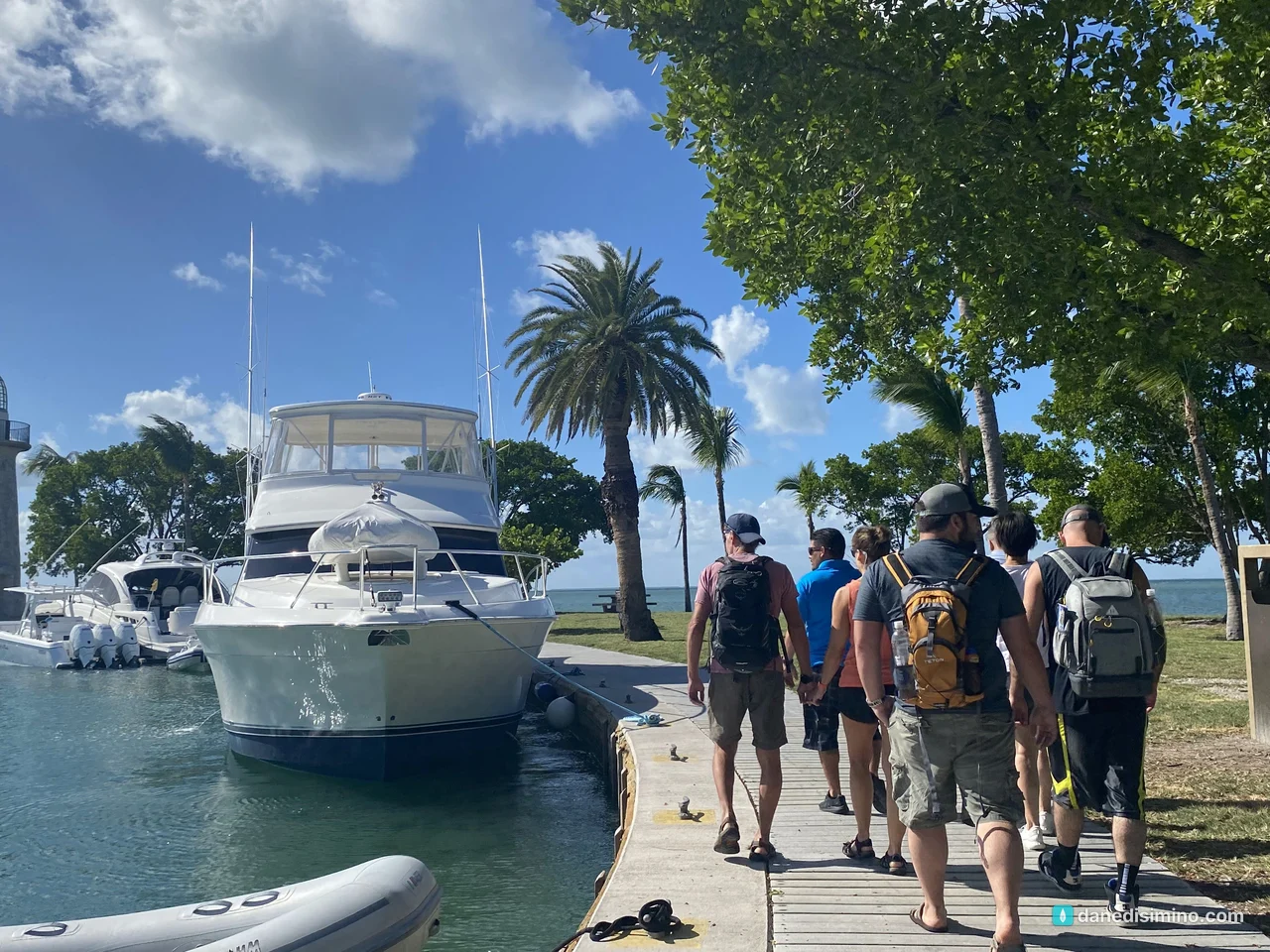
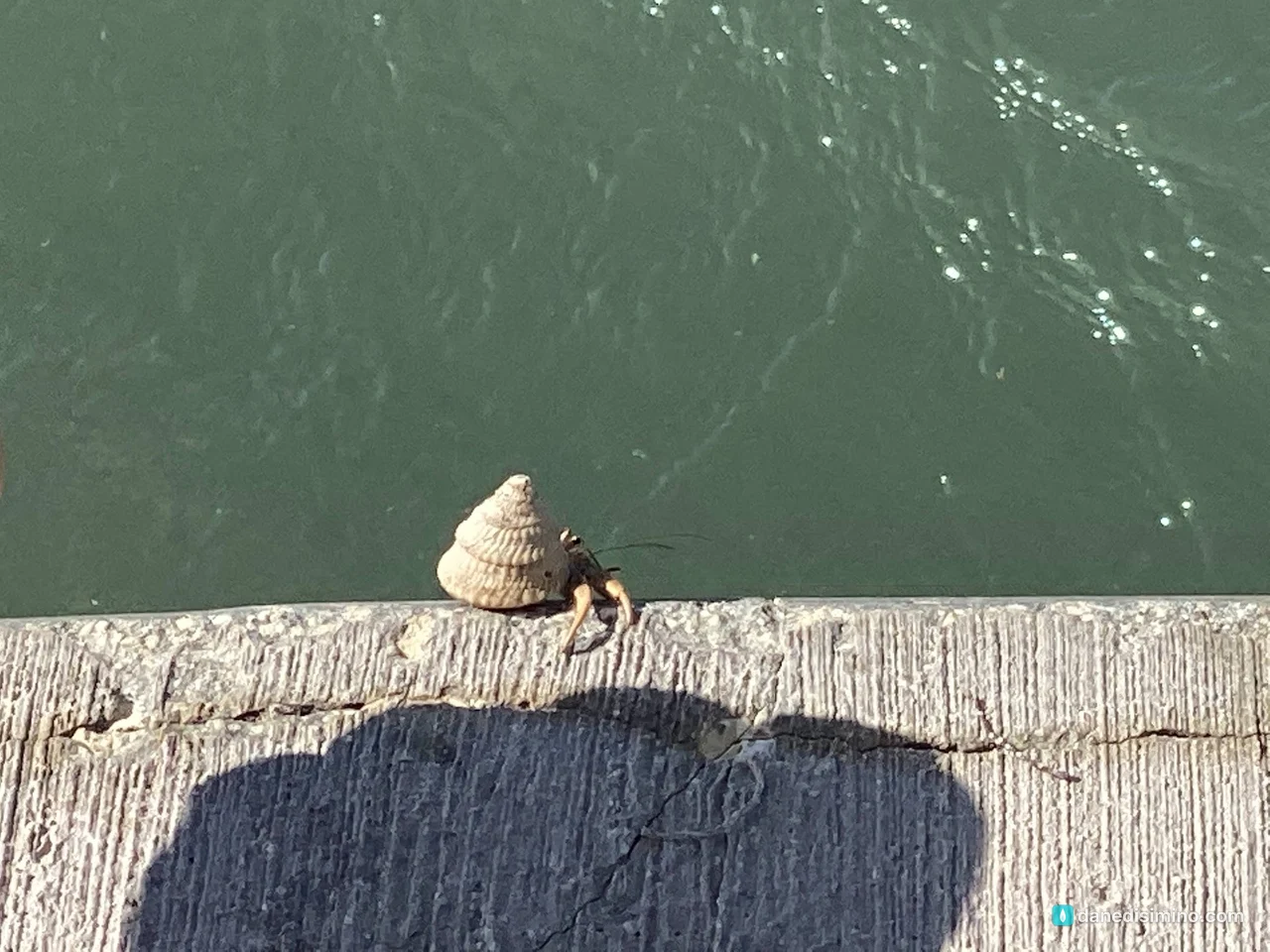
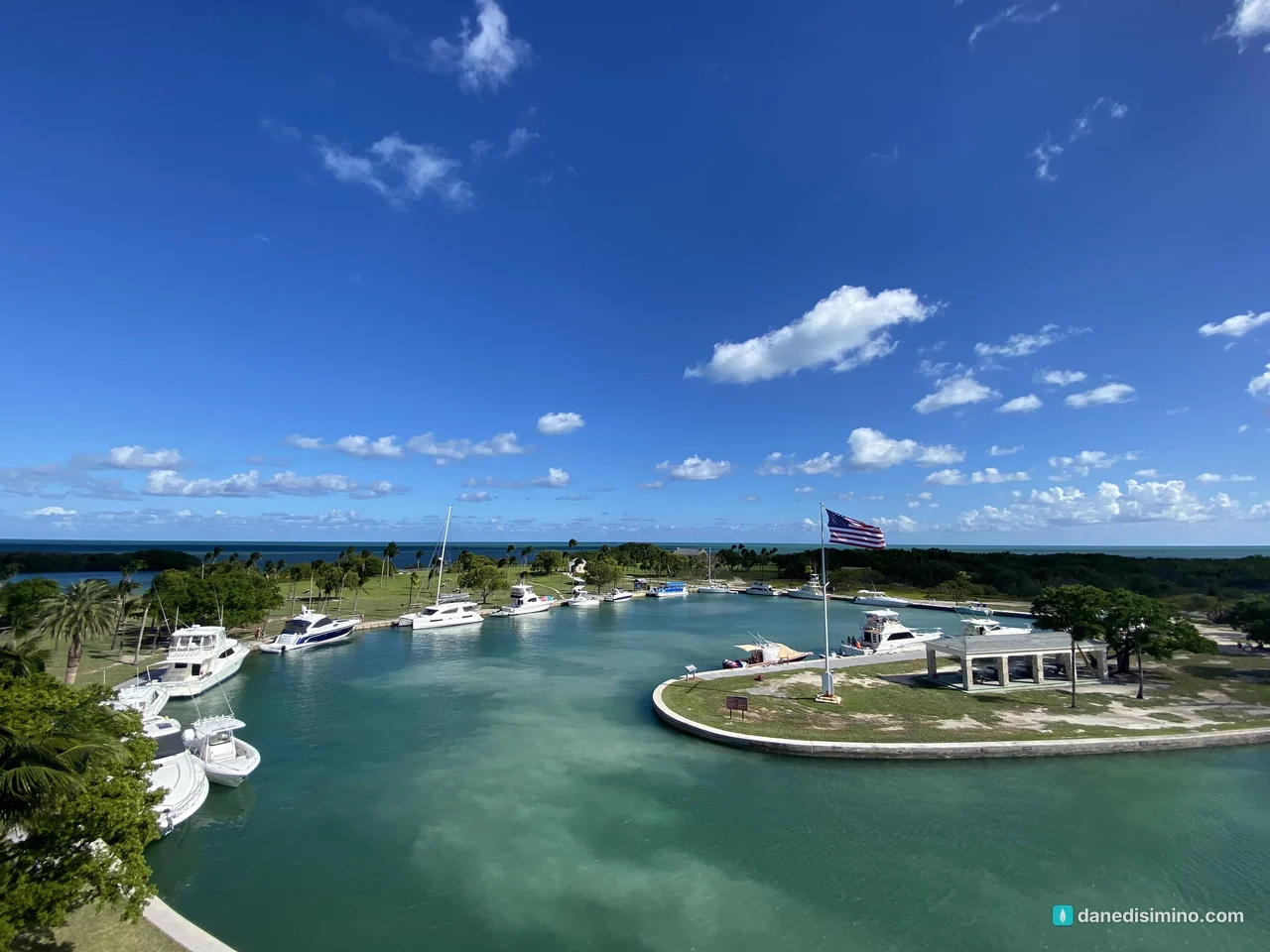
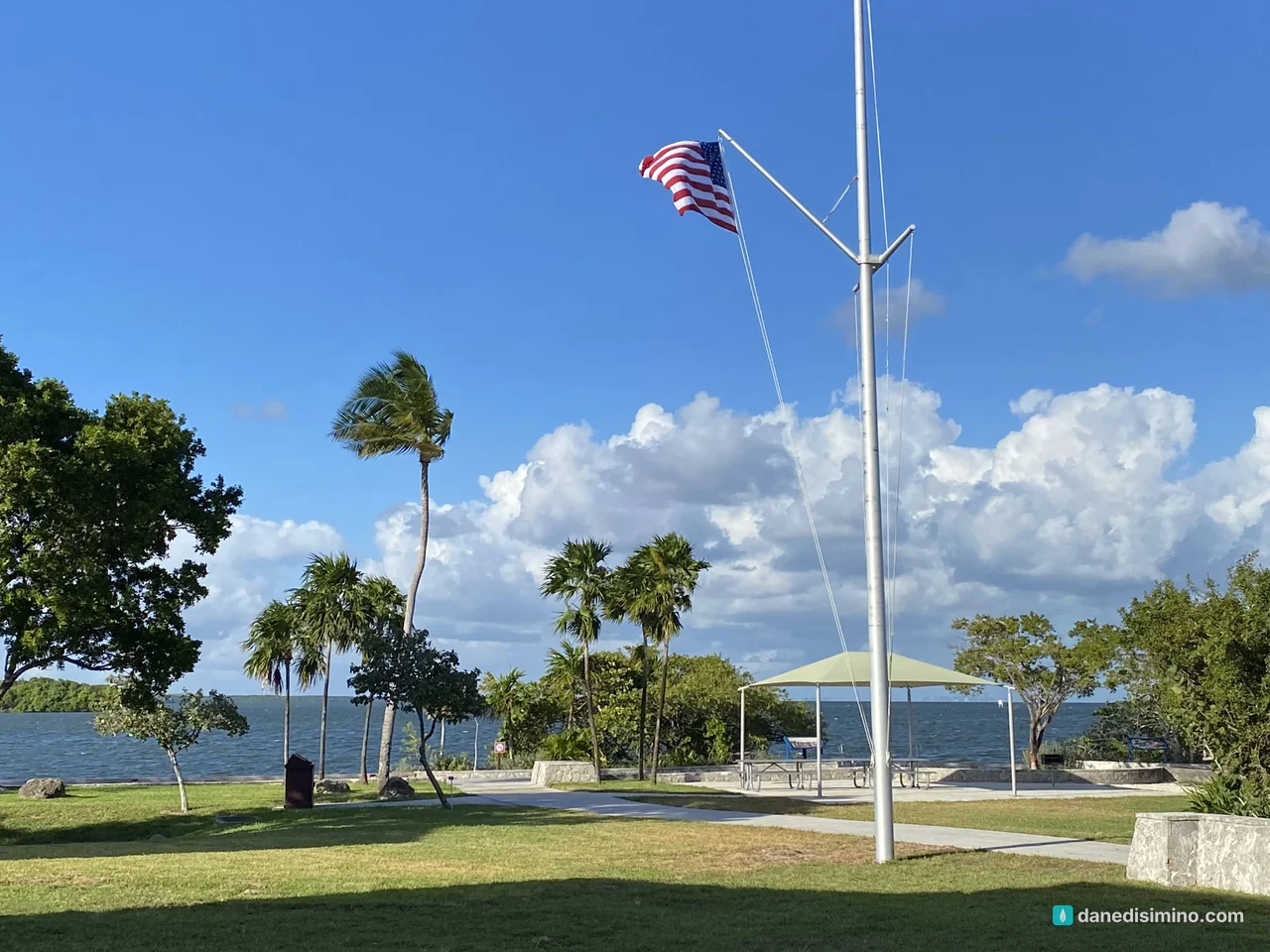
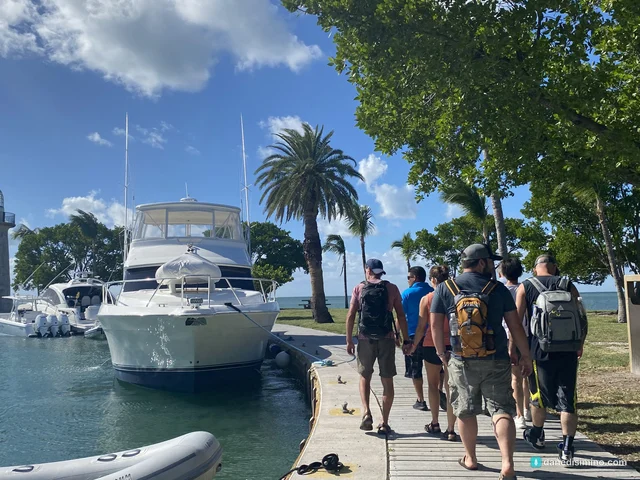
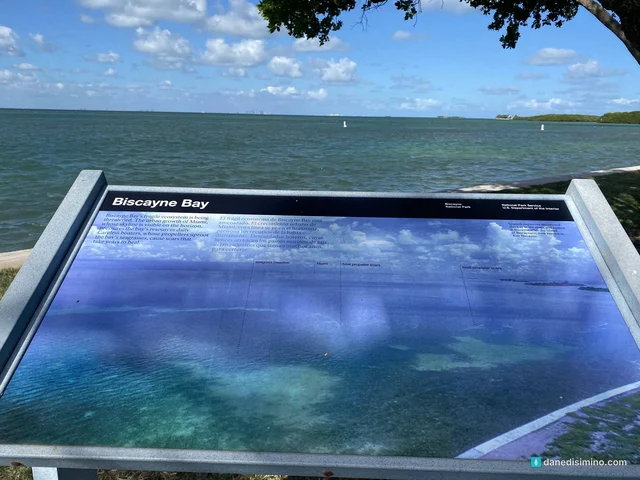
We took the boat across Biscayne Bay to Boca Chita Key, the most visited island in the park. Even without snorkeling, the ride is beautiful: aquamarine water, sunshine, birds and the Miami skyline on the horizon.
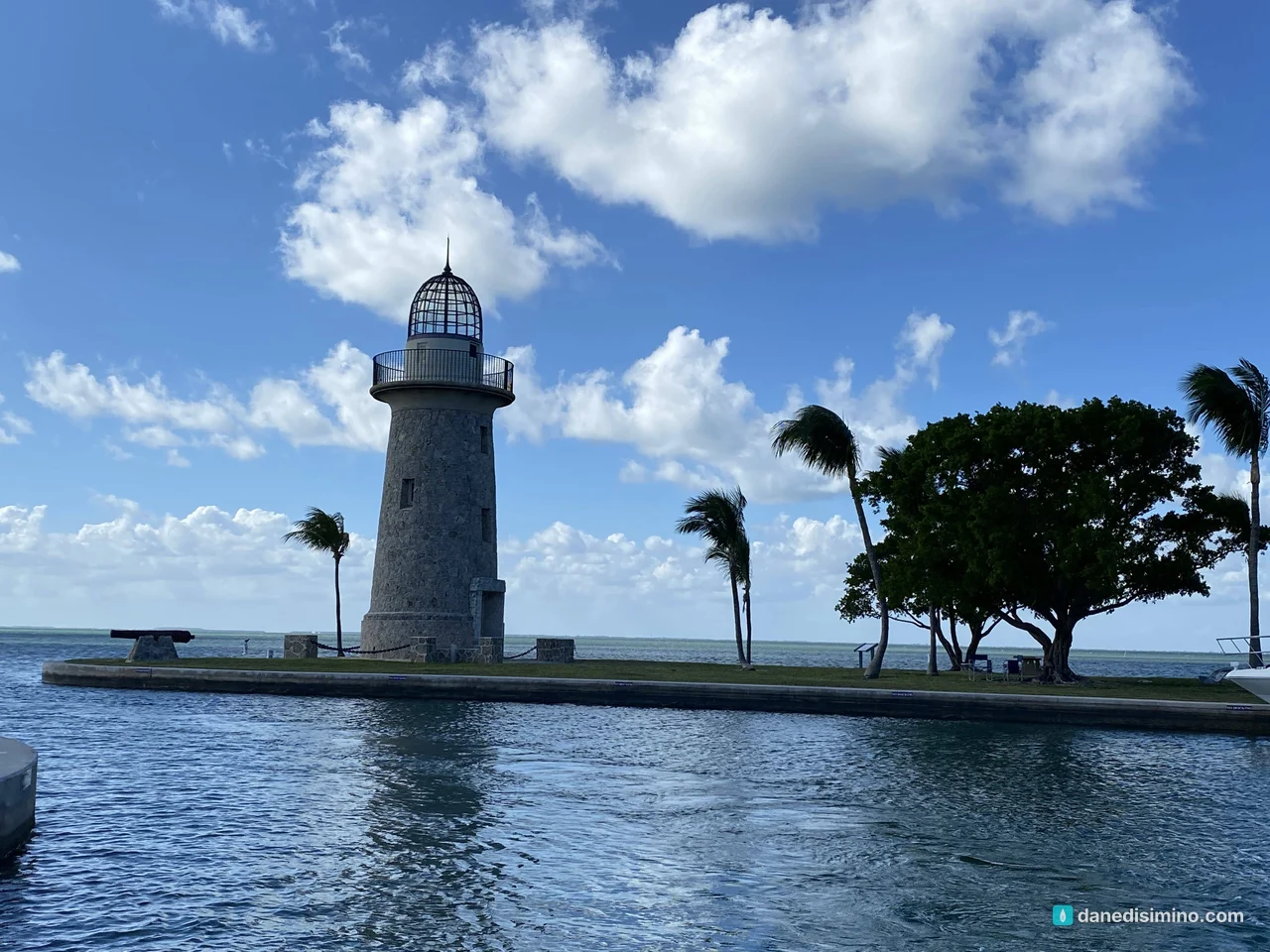
The island was a private retreat built by Mark Honeywell between 1937 and 1945, and much of it still looks the way it did in the 1940s. A half-mile trail loops around the island.
Climbing the lighthouse
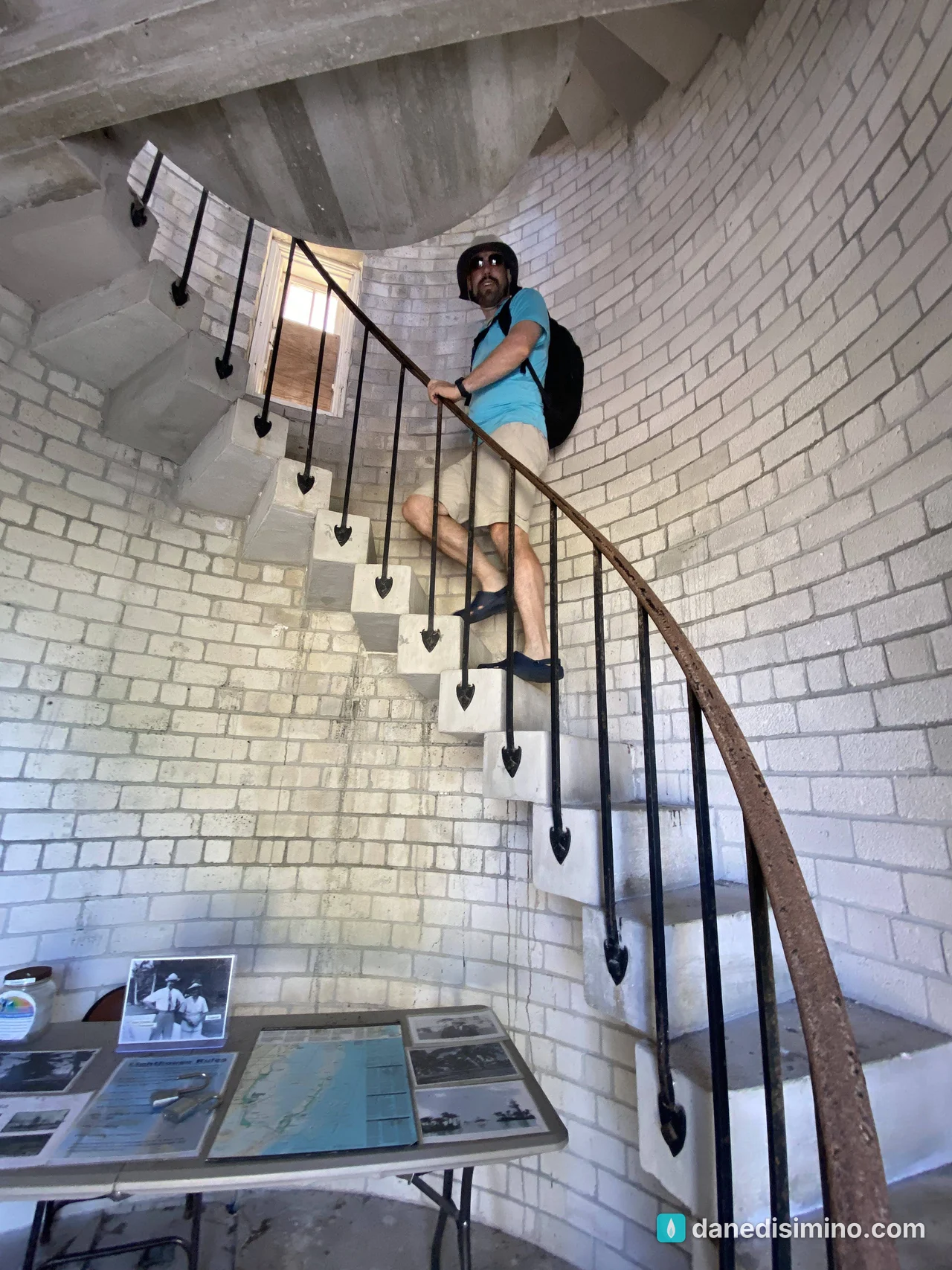
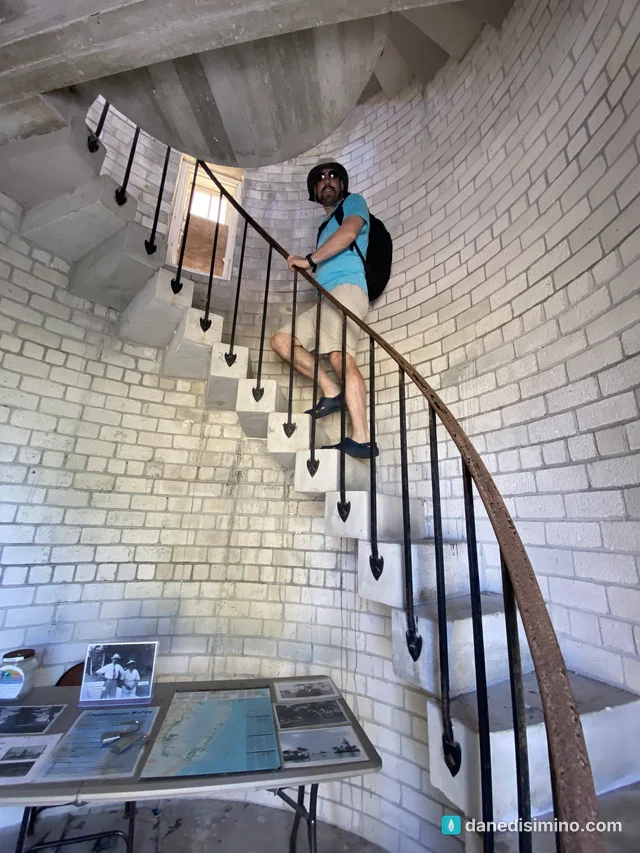
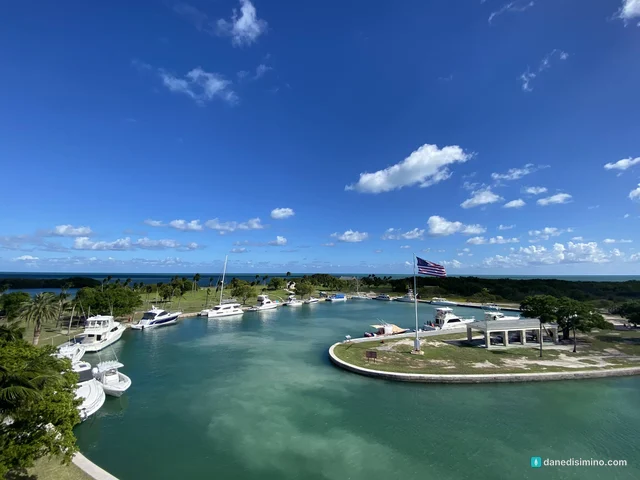
The best part of the island was going inside the lighthouse and climbing the spiral stairs to the top. The 65-foot tower's observation deck looks out over the harbor, the islands, the bay, the ocean and the Miami skyline.
The visitor center and the shipwrecks
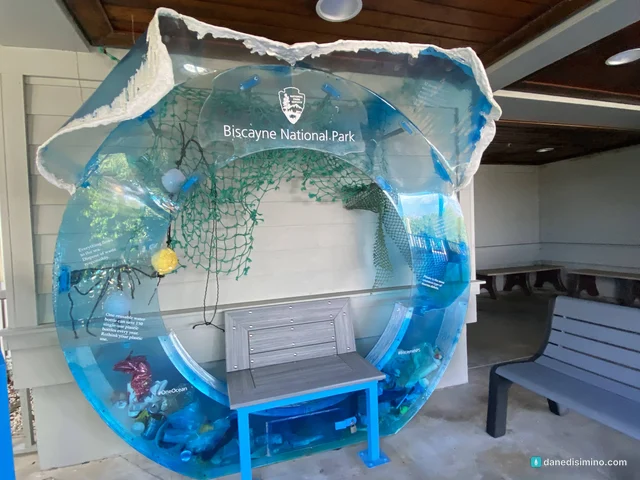
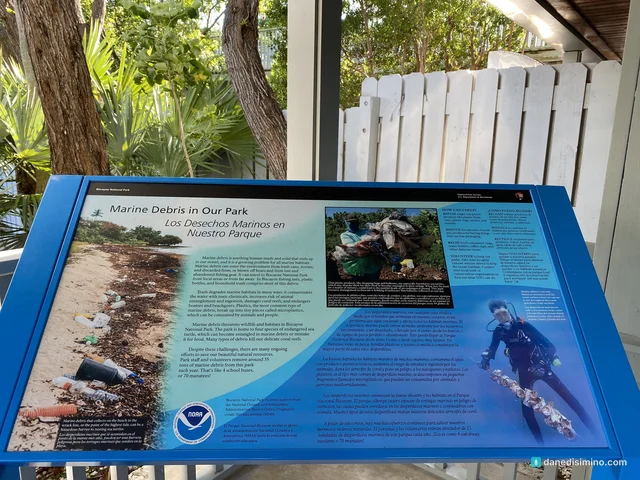
Back on the mainland, the Dante Fascell Visitor Center at Convoy Point is worth a stop. The exhibits are where we finally started to understand what we'd missed.
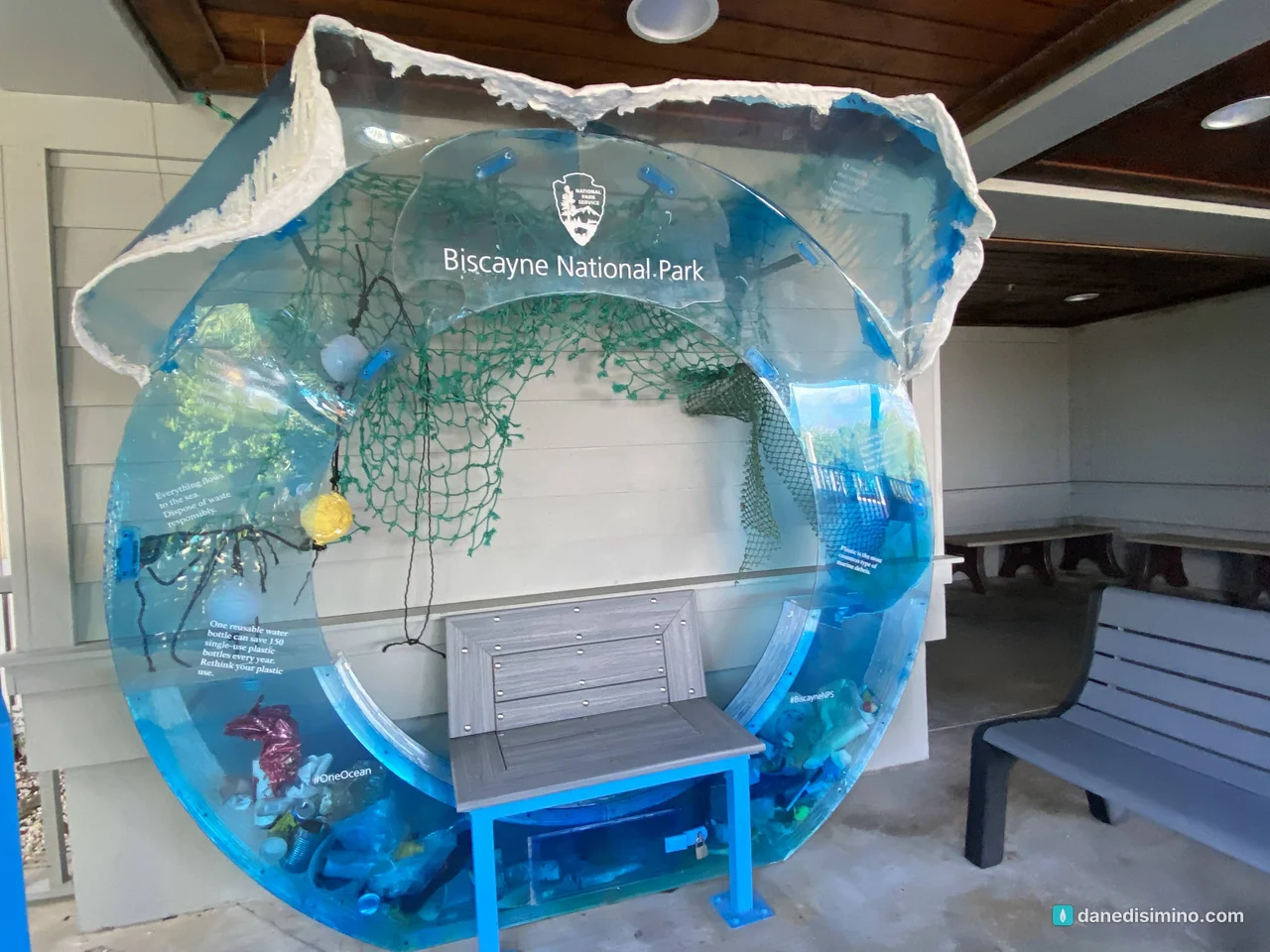
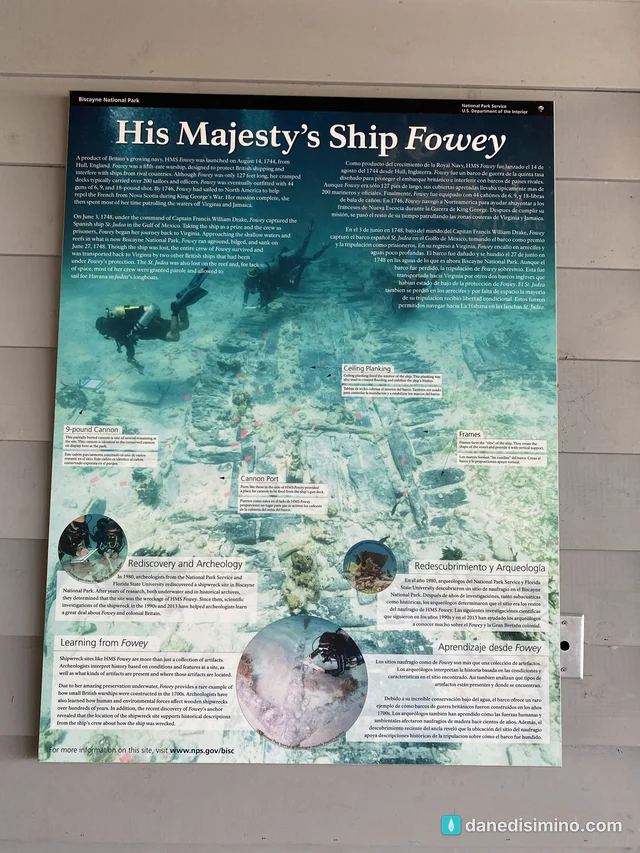
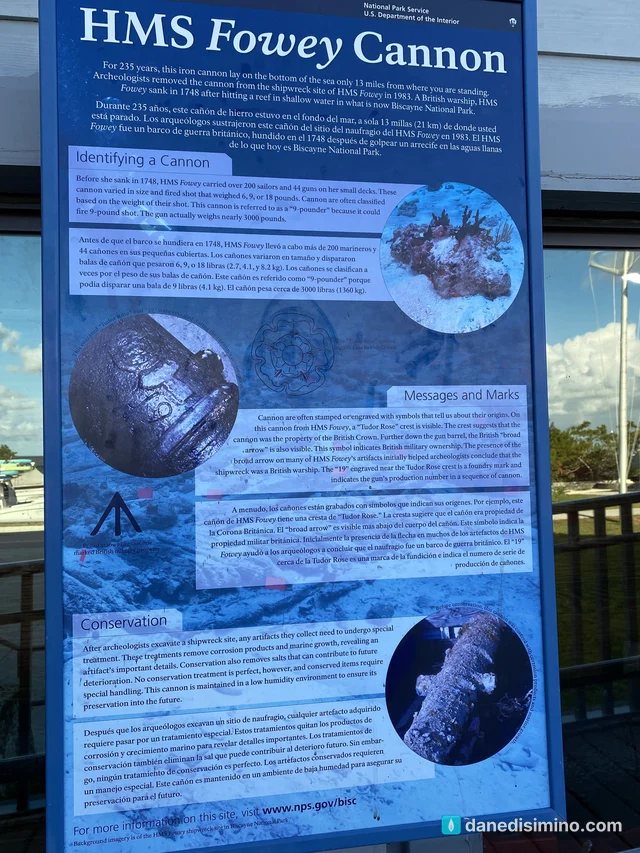
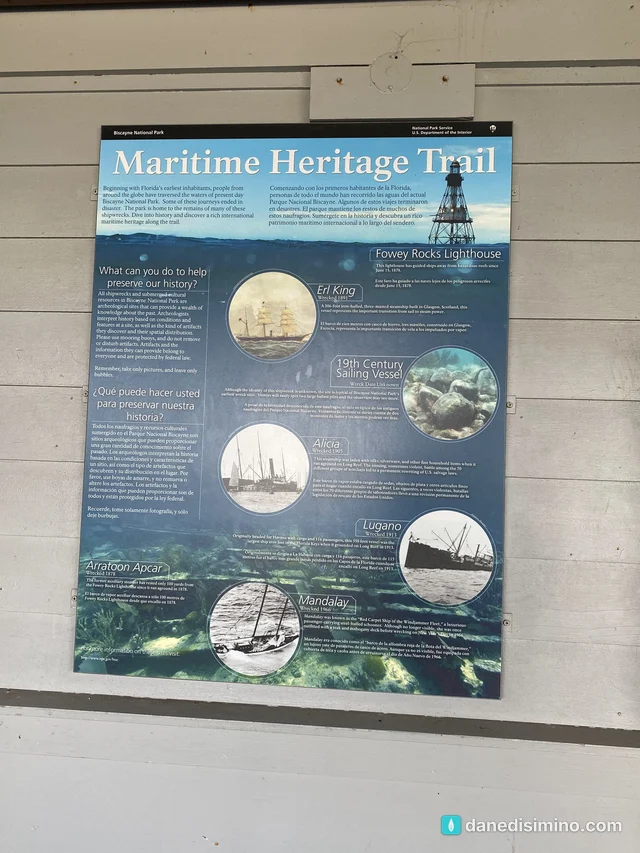
One sign tells the story of HMS Fowey, a 127-foot British warship with 44 guns. In June 1748, sailing home with a captured Spanish ship, she ran aground on the reefs of what's now Biscayne National Park and sank. Her whole crew survived. Archaeologists from the Park Service and Florida State University rediscovered the wreck in 1980, and one of her cannons is on display at the park.
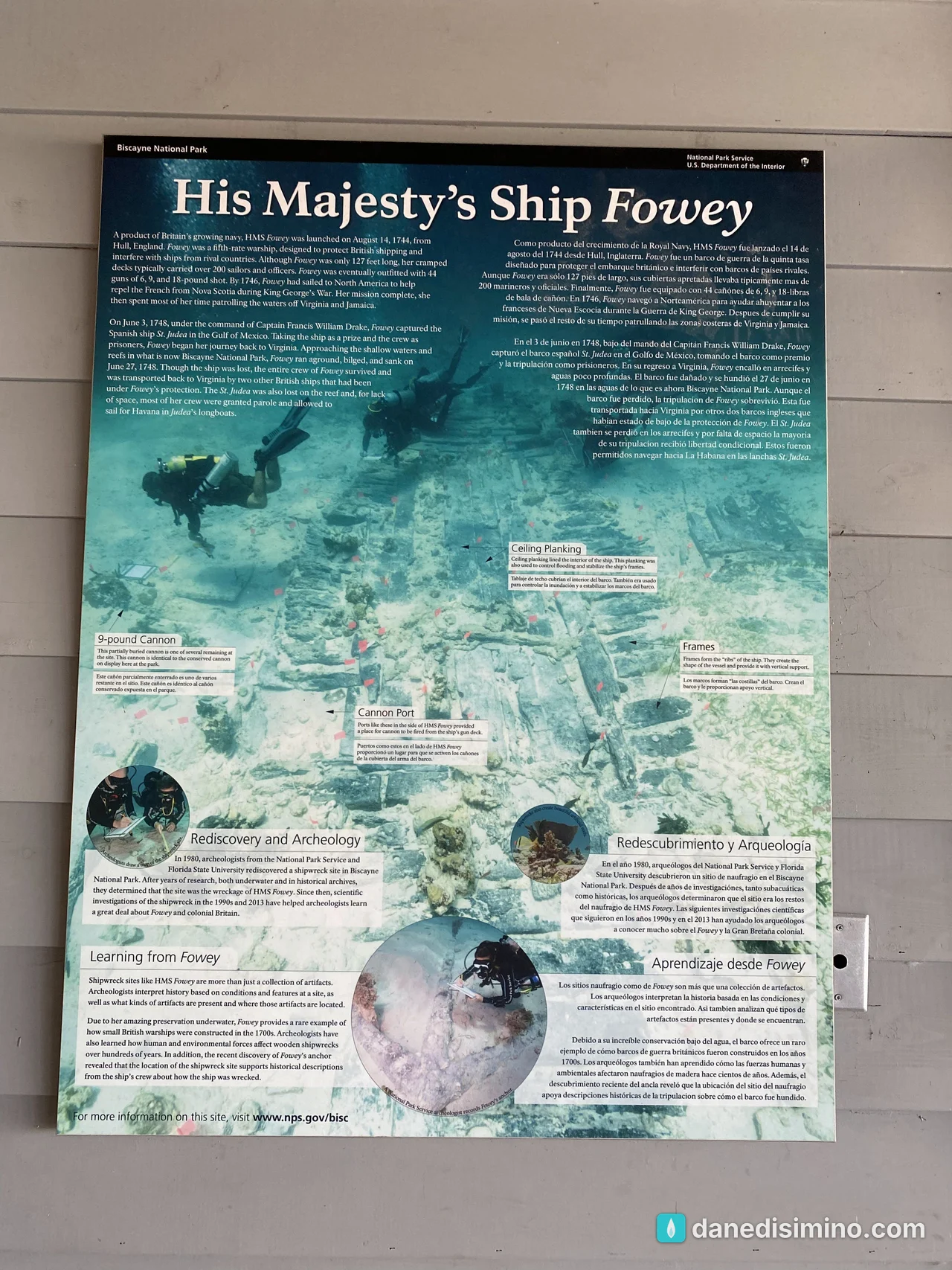
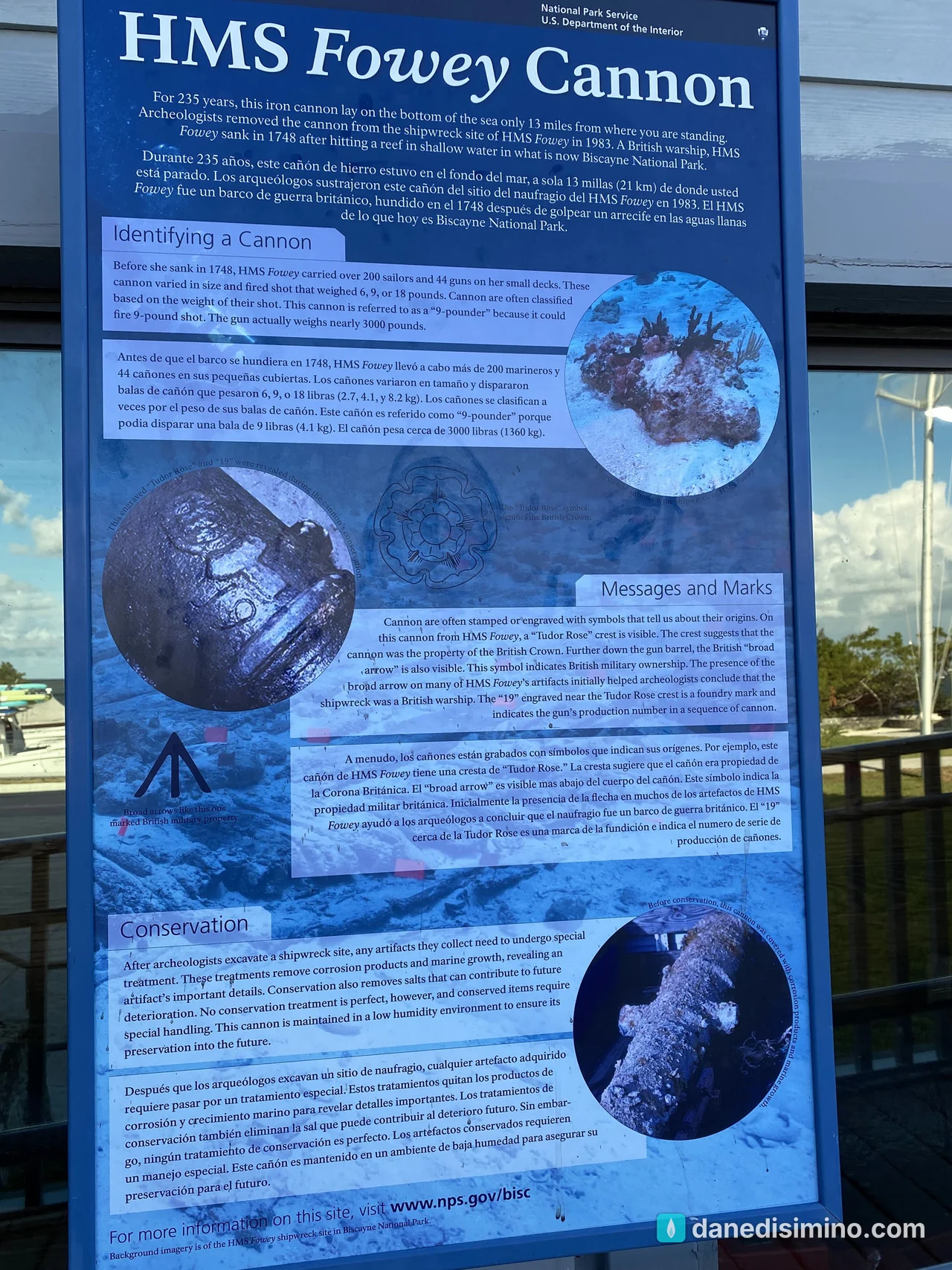
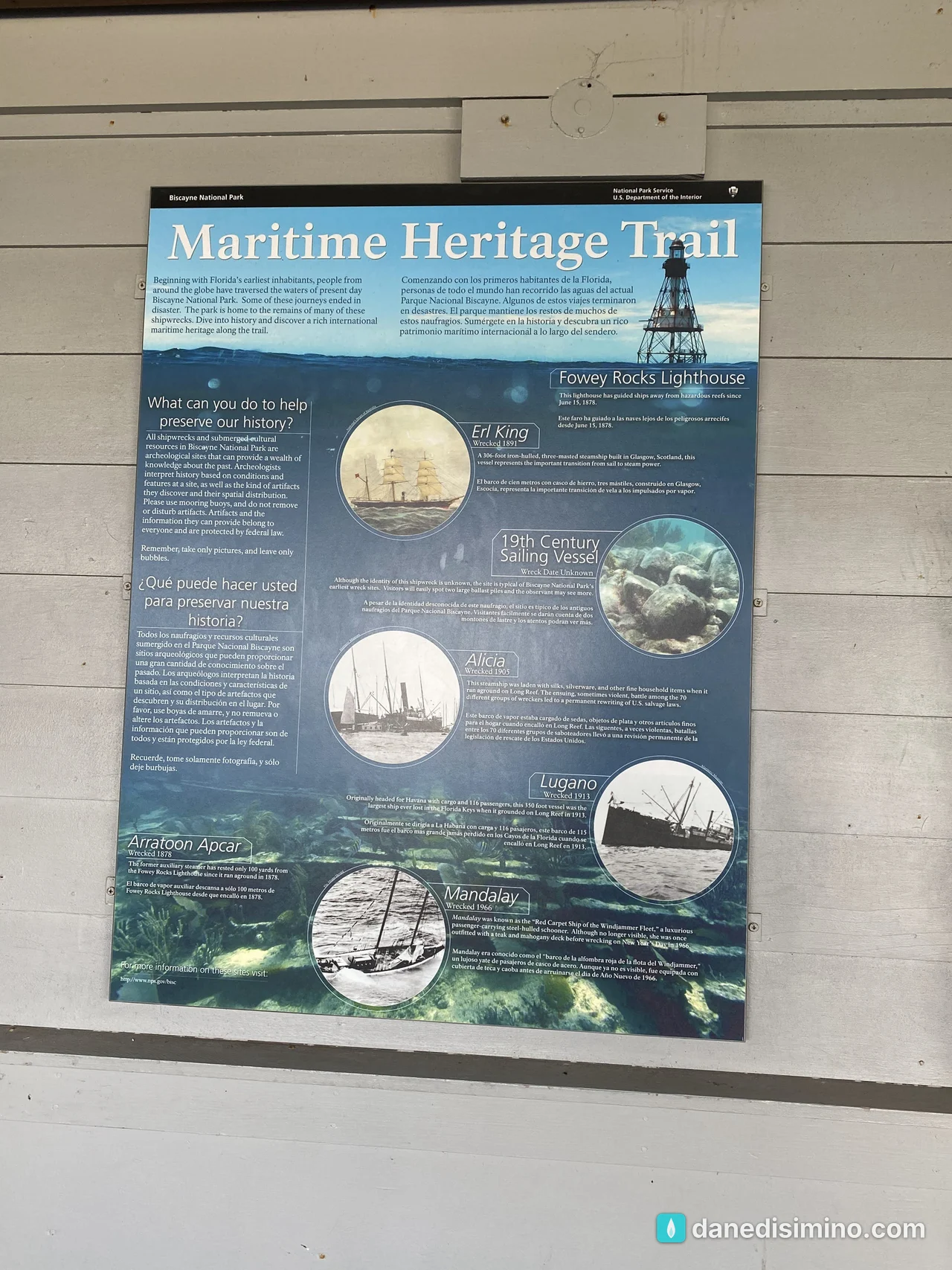
That's just one of the wrecks. The park's Maritime Heritage Trail links six shipwrecks you can visit underwater, the only underwater archaeological trail in the National Park System. That's what I mean when I say the treasure is underwater.
Dinner at the Fish House
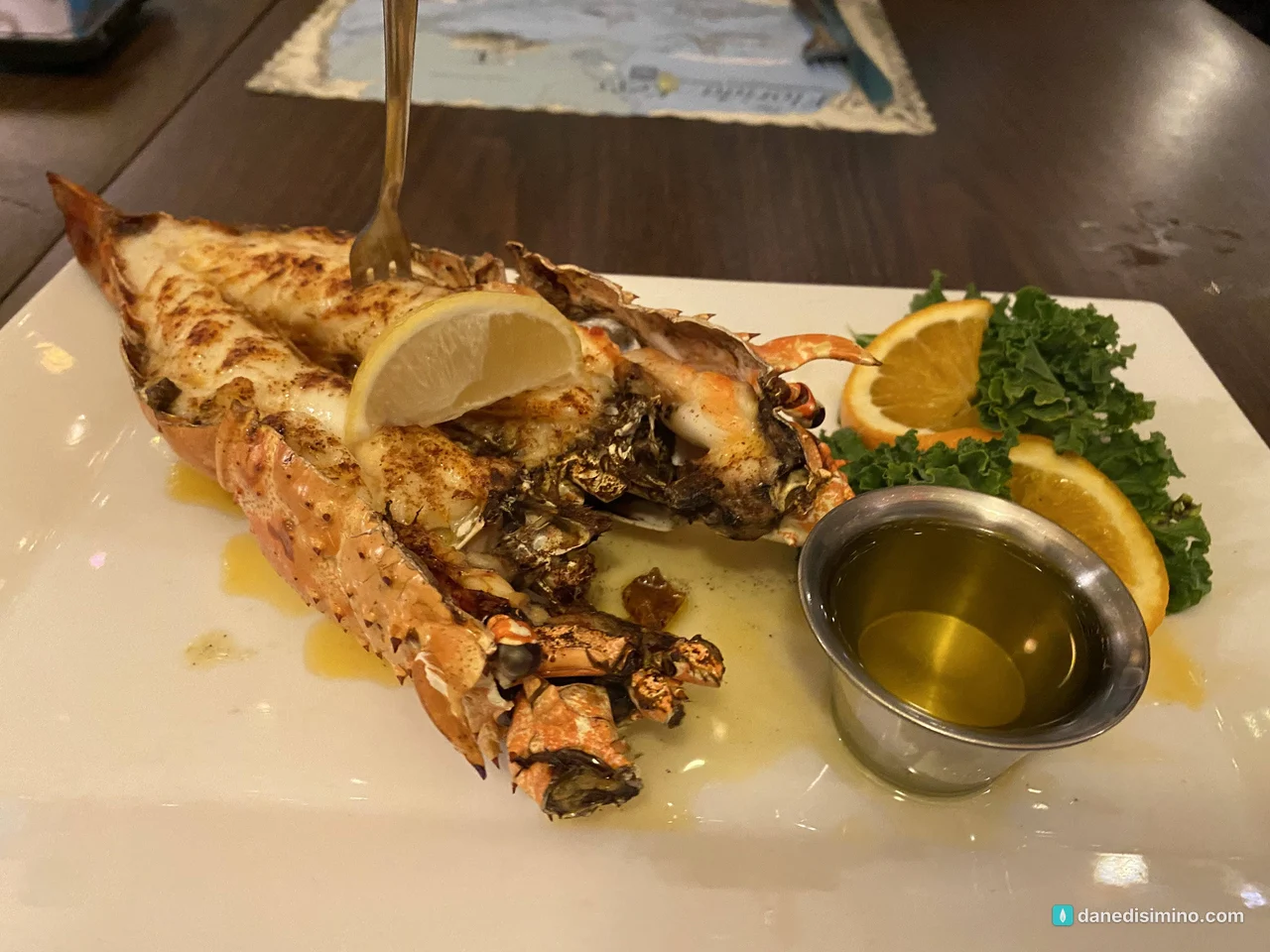
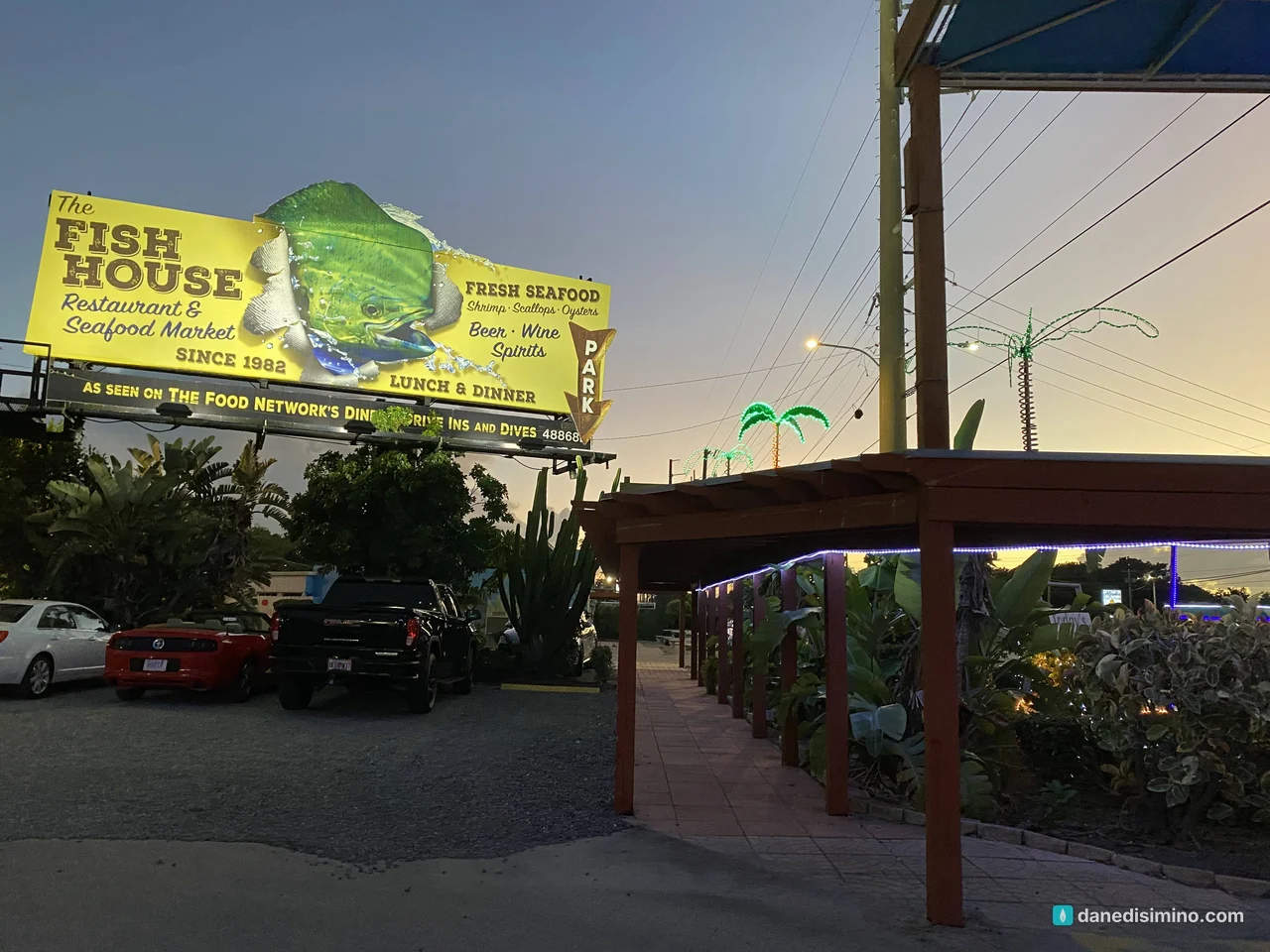
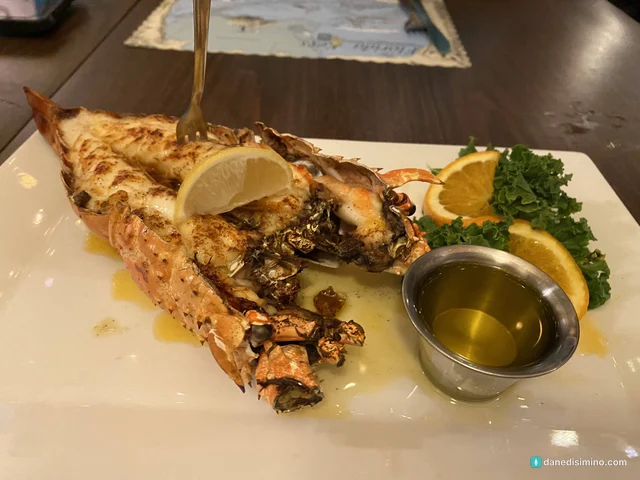
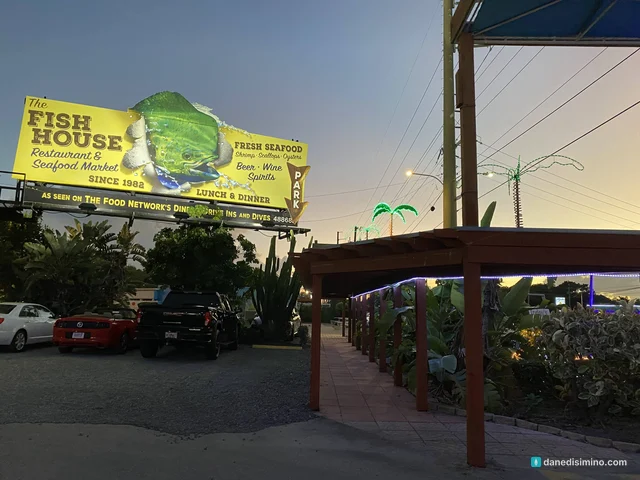
We ended the day at the Fish House, a seafood restaurant and market, with a lobster dinner. It was a great meal and a perfect end to the first day of the trip.
Make it a bigger trip
Do the three South Florida parks. Biscayne, Dry Tortugas and the Everglades make a great one-week trip. Dry Tortugas is a ferry or seaplane ride from Key West.
Snorkel at both Biscayne and Dry Tortugas. If you're hooked after the first one, like I was, you'll be glad you planned both.
Watch for manatees in winter. They're one of the reasons to visit in the cooler months.
What I'd do differently
Book a snorkel trip. To the reef or a shipwreck. This is the whole point.
Spend a full day on the water. Combine a snorkel stop with Boca Chita Key.
Camp on Boca Chita. The island has a small campground, if you have a boat to get there.
What Biscayne taught me
Biscayne taught me that the treasure isn't always on the surface. We rode across the top of it all day and almost missed why the park exists. Everything that makes it special was right beneath us.
"The Kingdom of Heaven is like a treasure that a man discovered hidden in a field. In his excitement, he hid it again and sold everything he owned to get enough money to buy the field." (Matthew 13:44, NLT)
The best things are often hidden. They're worth going after.
Questions?
Ask me anything about Biscayne: booking a snorkel trip, getting to Boca Chita Key, the shipwrecks, or planning a South Florida parks trip. I answer every question.
Photos
Sources
- Biscayne National Park (NPS)
- Boca Chita Key (NPS)
- Boca Chita Key Lighthouse reopens (NPS)
- Guided tours (NPS)
- Fees and passes (NPS)
- Fowey Rocks Lighthouse (NPS)
- Everything you should know about Biscayne (National Geographic)
- Ecosystems (NPS)
- The birth of Biscayne National Park (NPS)
- History and culture (NPS)
- Biscayne National Park (GovInfo)
Pathlight
Park guides from the road. A printable trip sheet comes with them when one is ready.