
NATIONAL PARKS
Congaree
A Field Guide
On this page
An old-growth floodplain forest that felt like a real national park after a rough start to our eastern trip. A morning on the boardwalk among giant bald cypress and loblolly pines. How floods grow champion trees, who saved the forest, and why you should come back in May for the synchronous fireflies.
Version 1.0 · Updated Nov 20, 2026
Map
When to go
Average monthly visits, 2023–2025. Source: NPS visitor statistics. ● marks the months we visited.
| January | 14,692 |
|---|---|
| February | 16,595 |
| March | 31,963 |
| April | 26,111 |
| May | 32,053 |
| June | 21,768 |
| July | 19,121 |
| August | 14,768 |
| September | 17,814 |
| October | 23,357 |
| November | 23,683 |
| December | 18,073 |
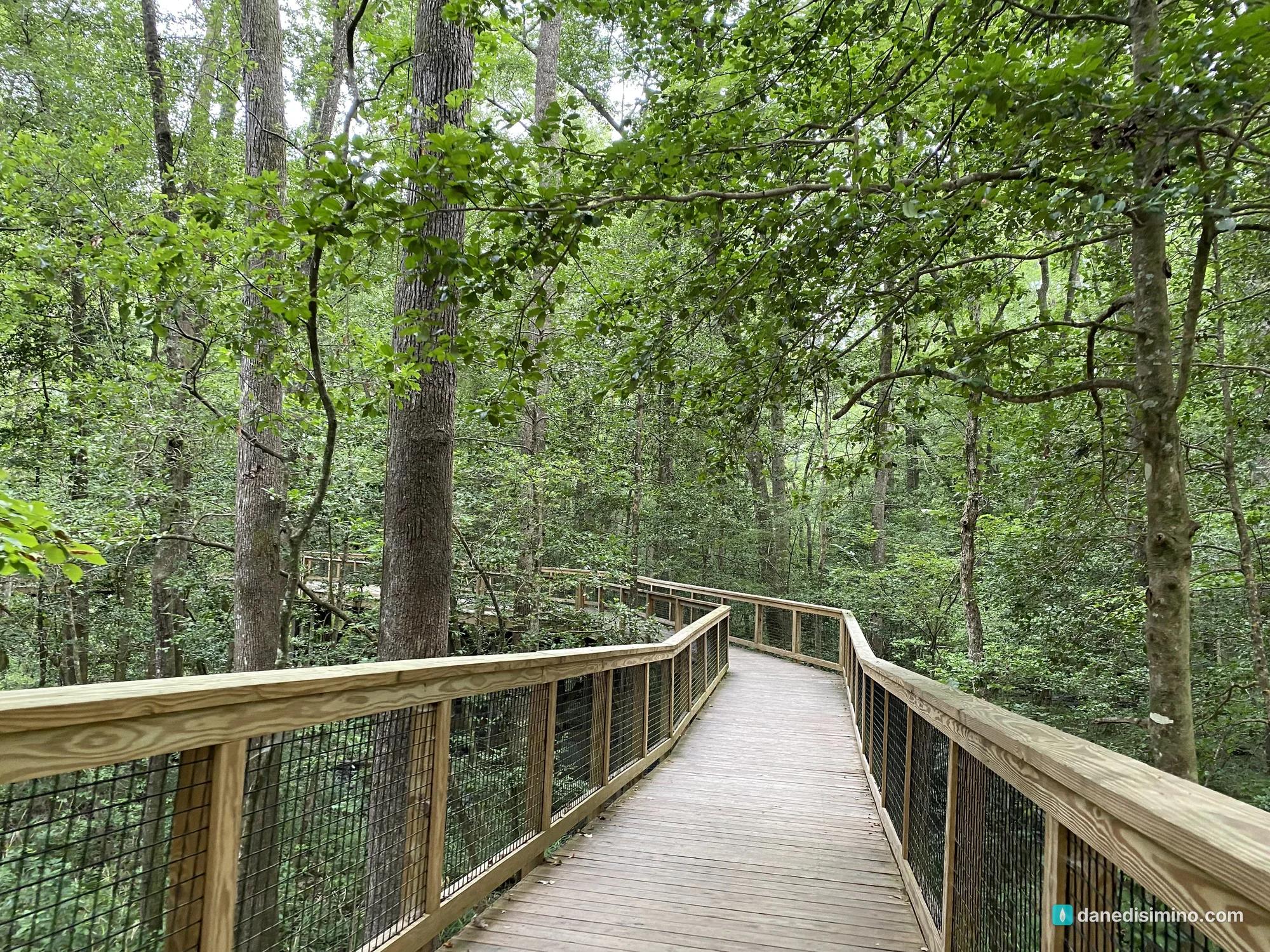
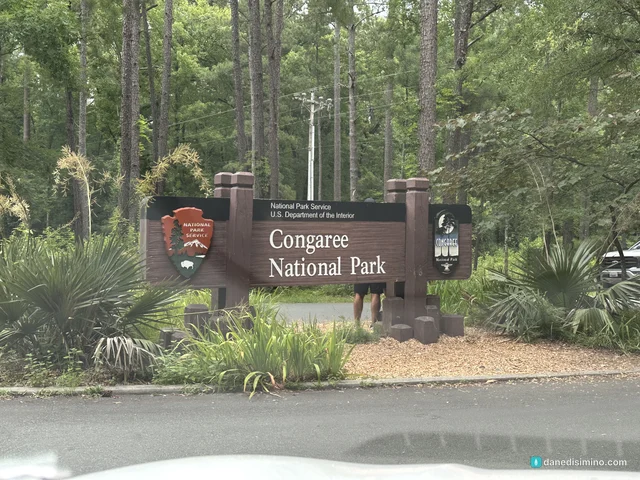
After driving through states we'd never visited together, including Mississippi and Georgia, Congaree was a welcome stop. It actually felt like a special national park. We walked its boardwalk on the morning of July 3, 2023, the second park of our eastern trip and the farthest east we'd go.
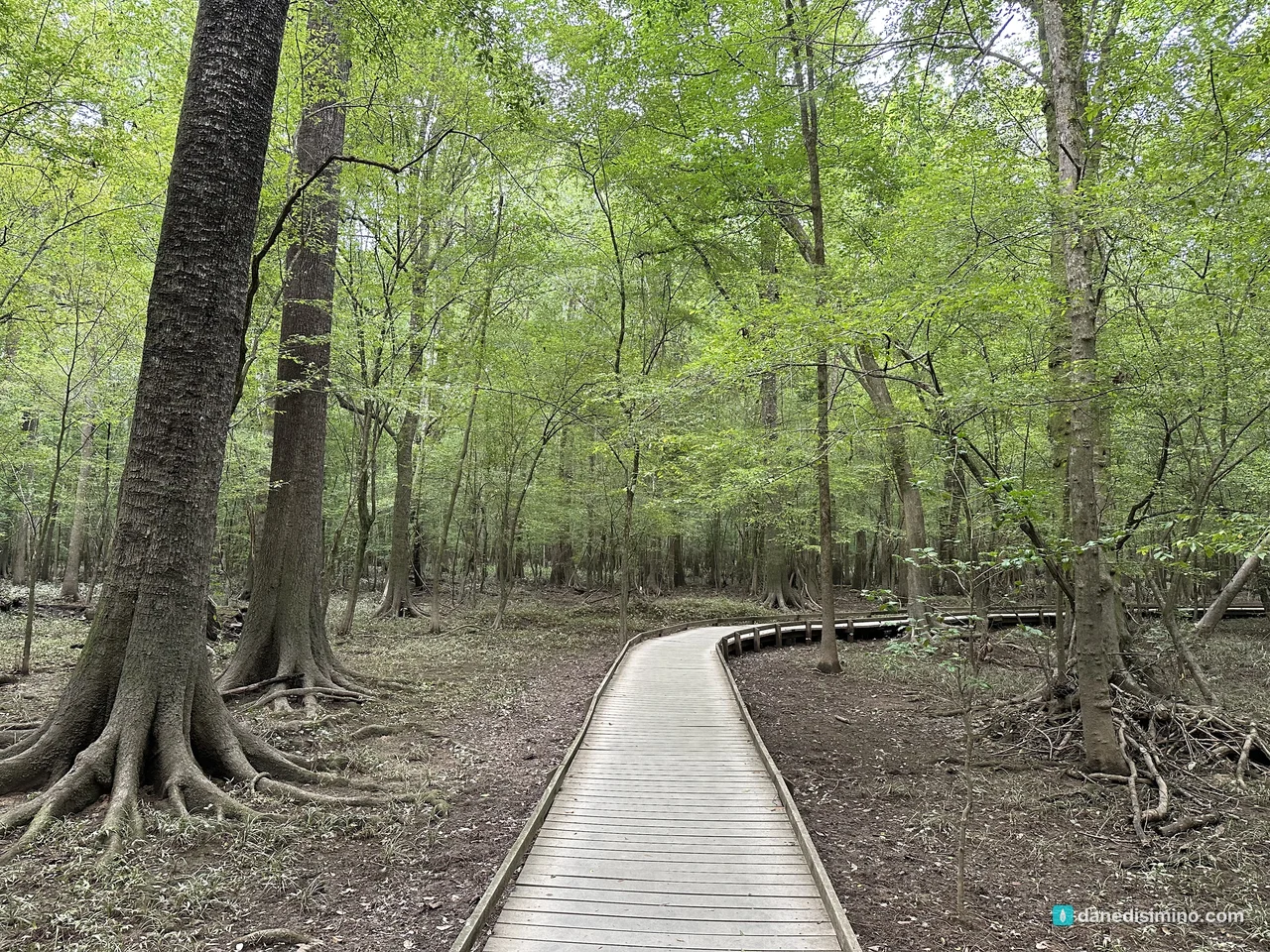
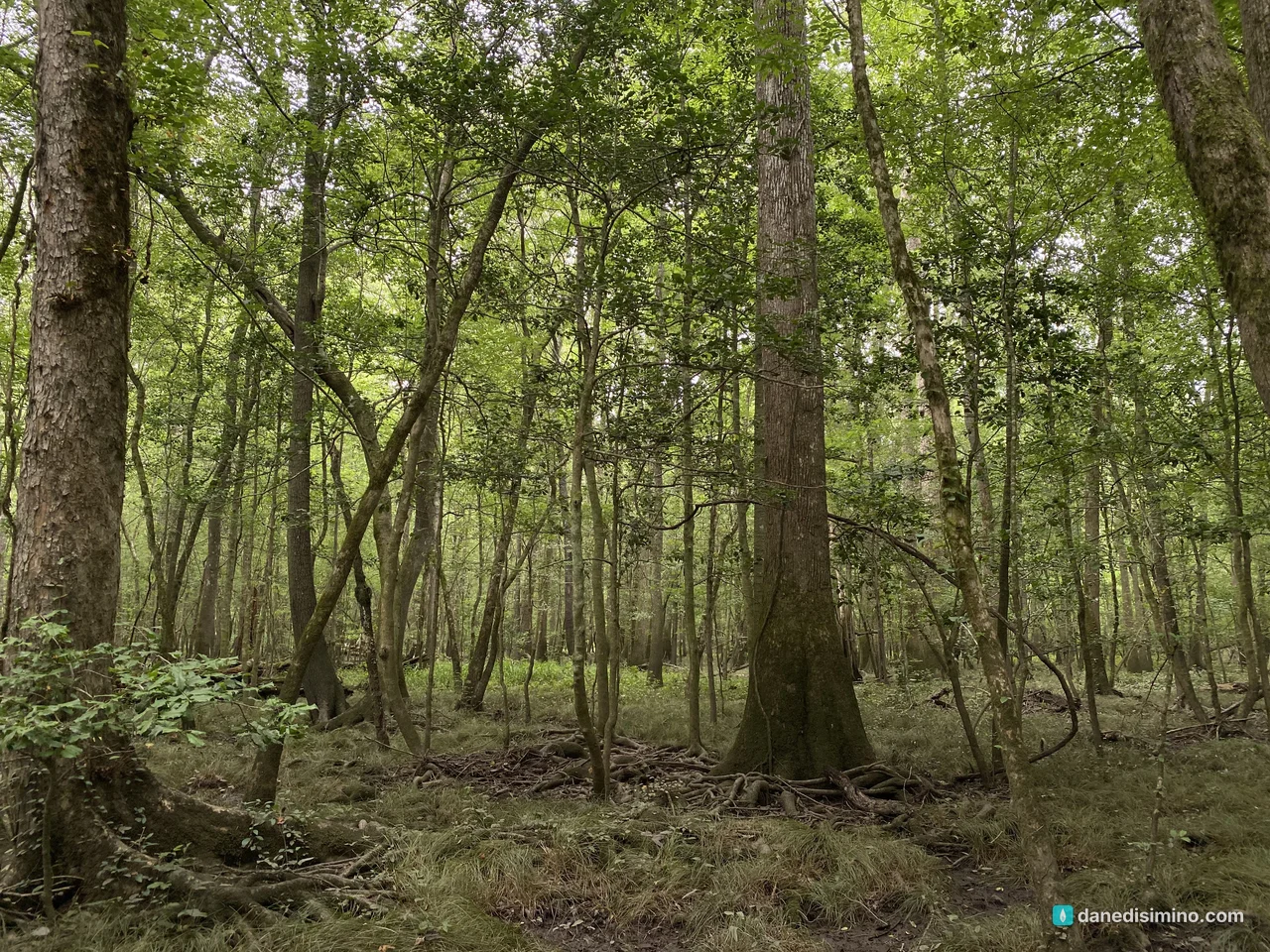
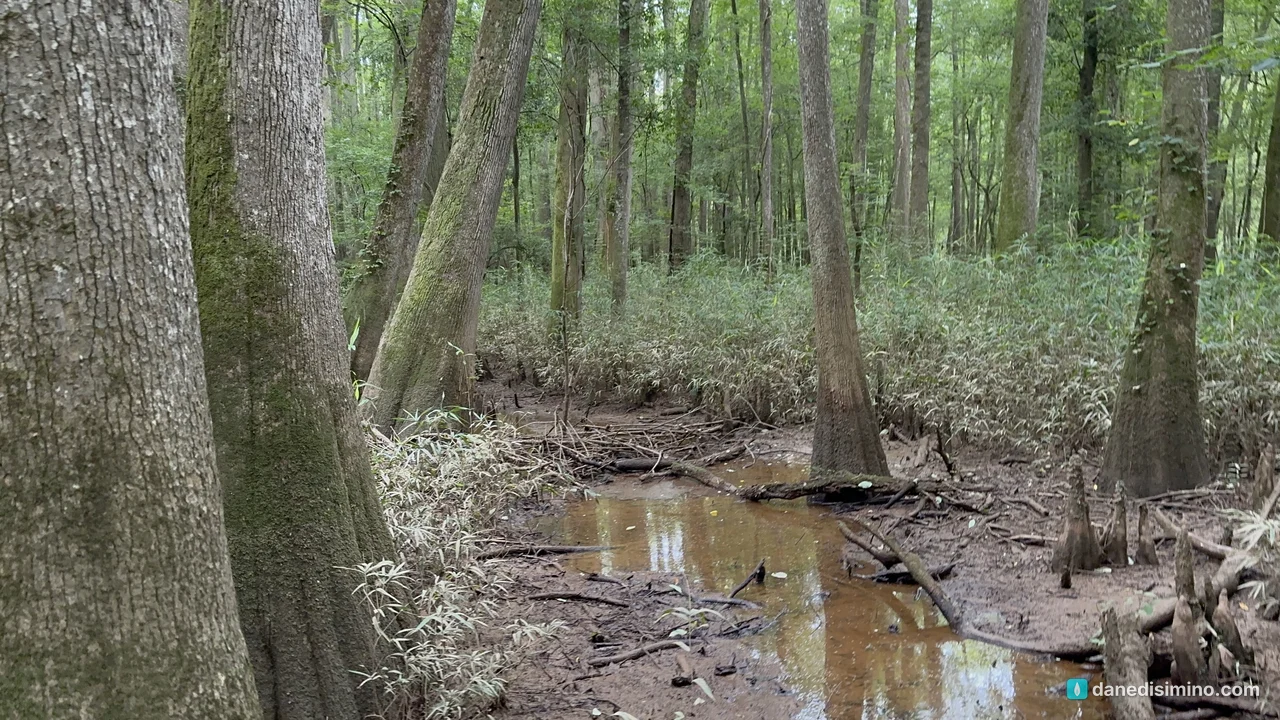
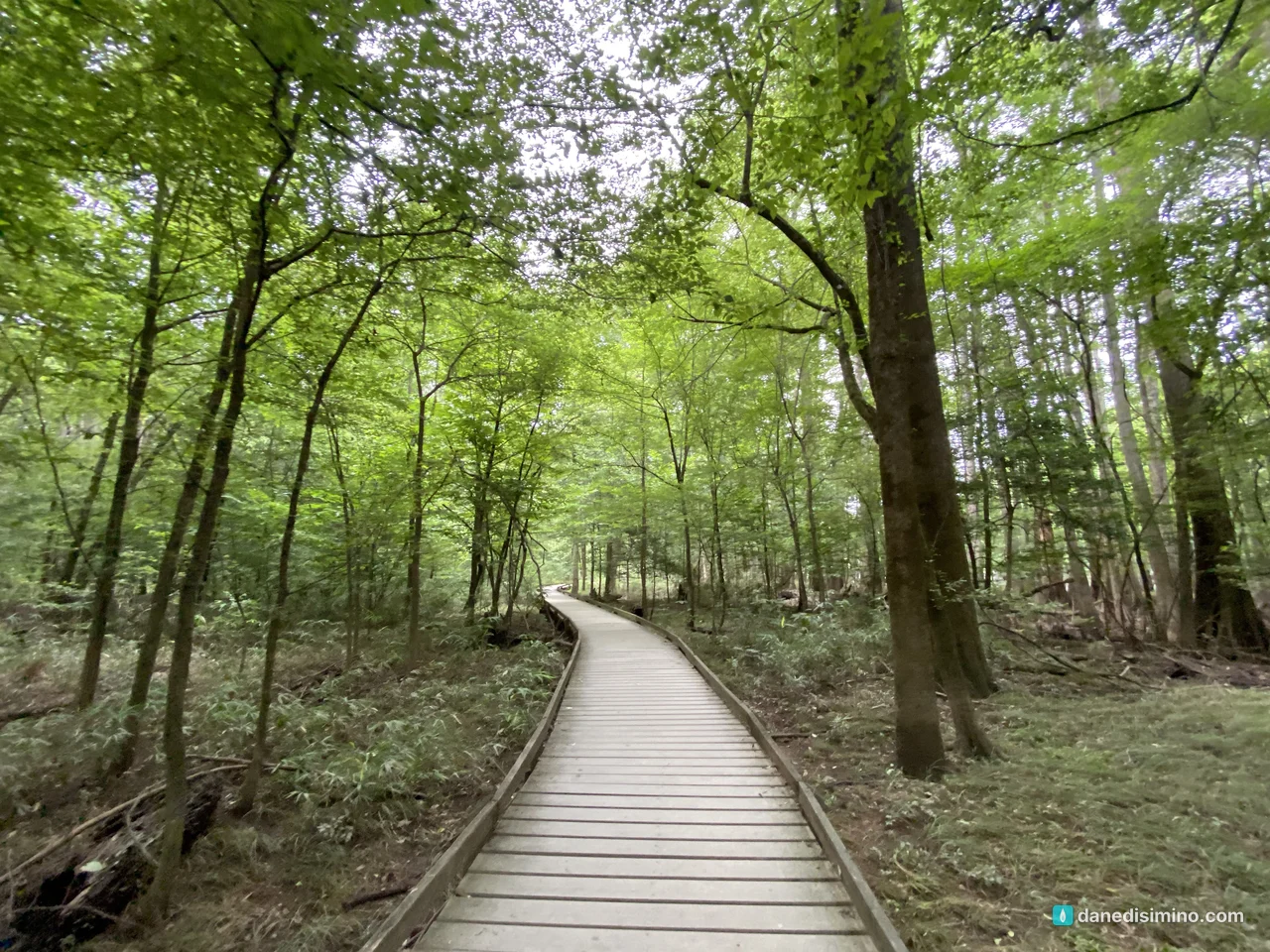
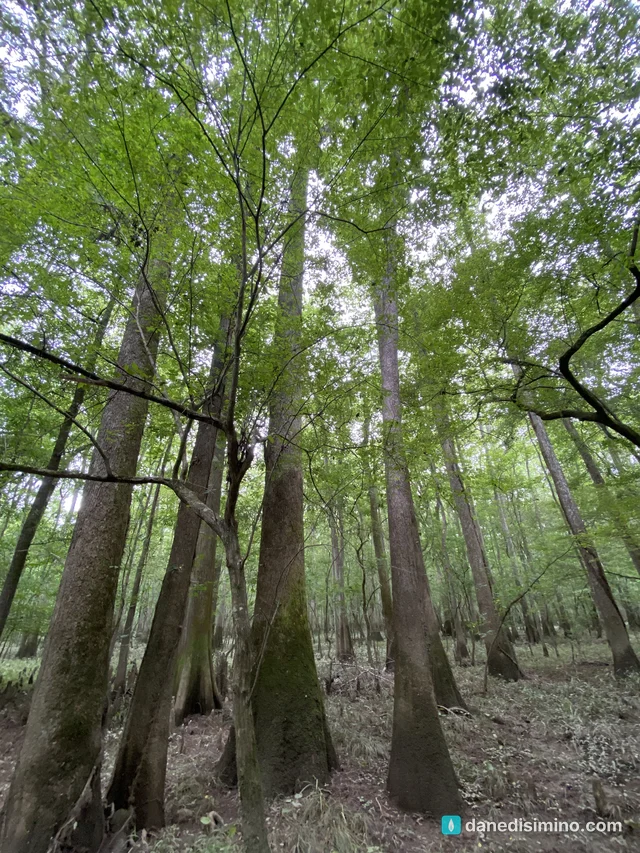
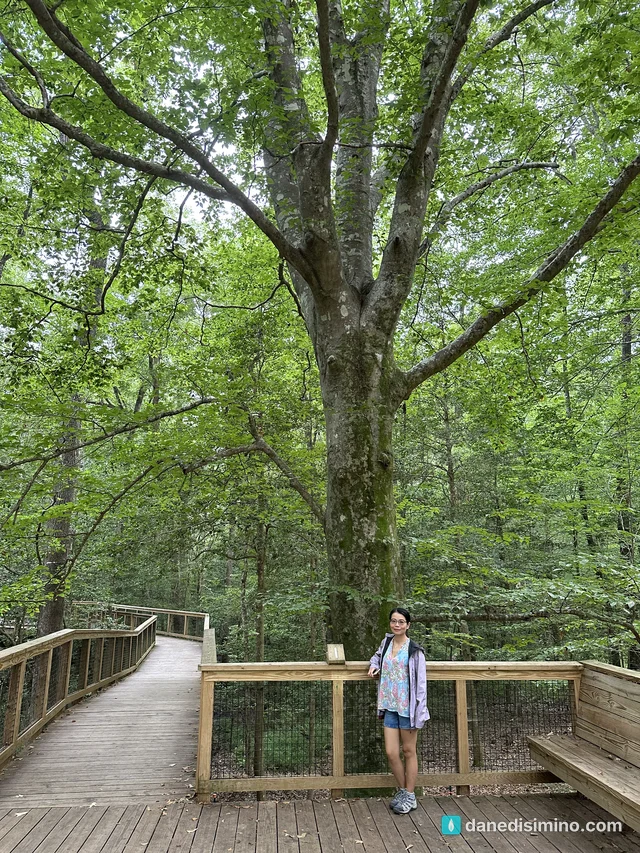
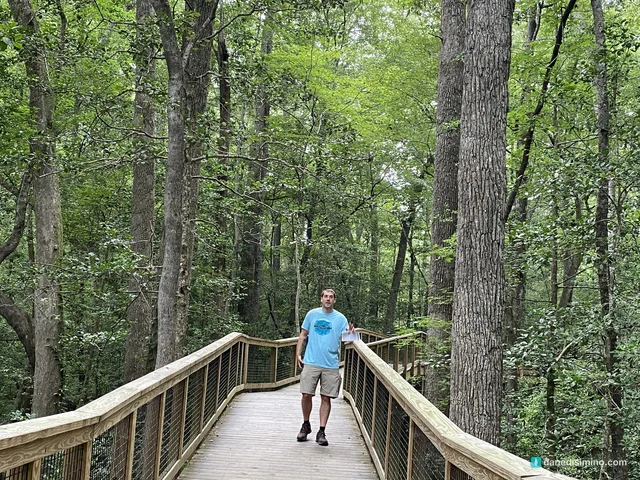
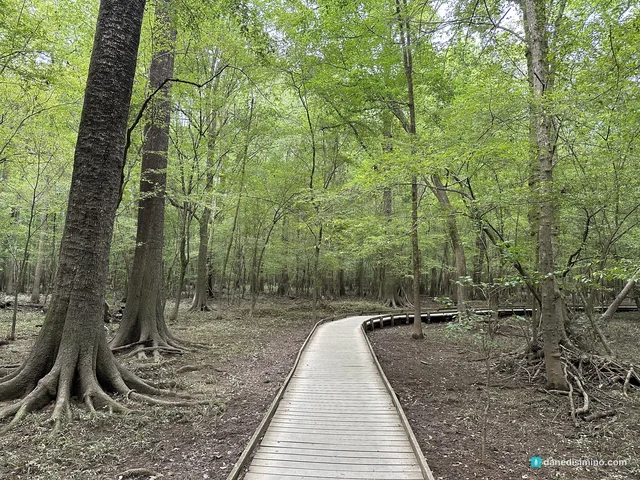
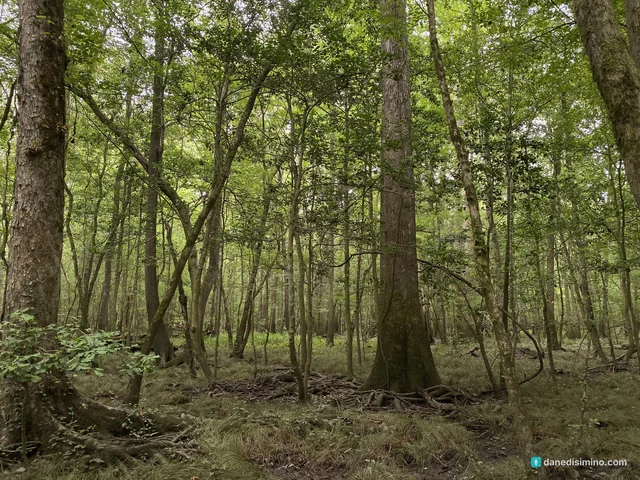
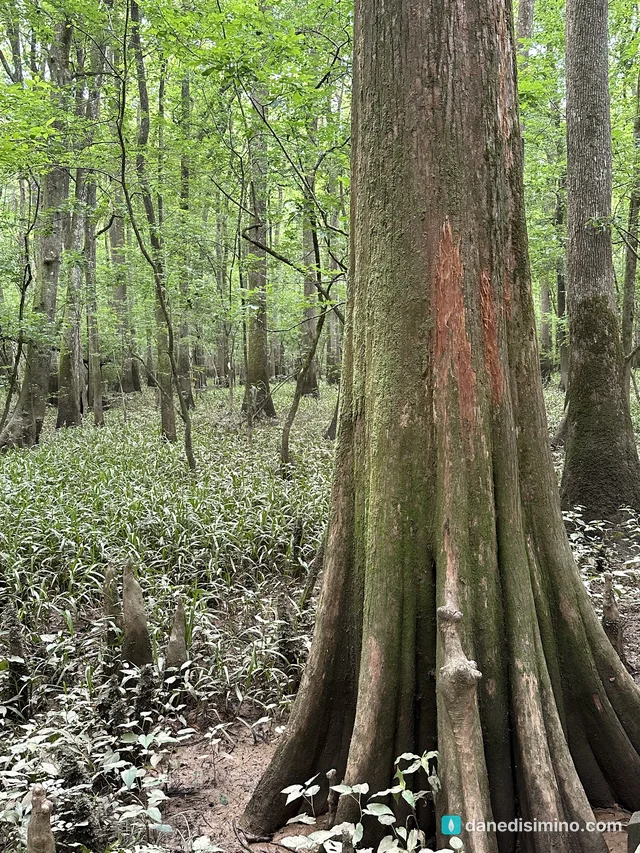
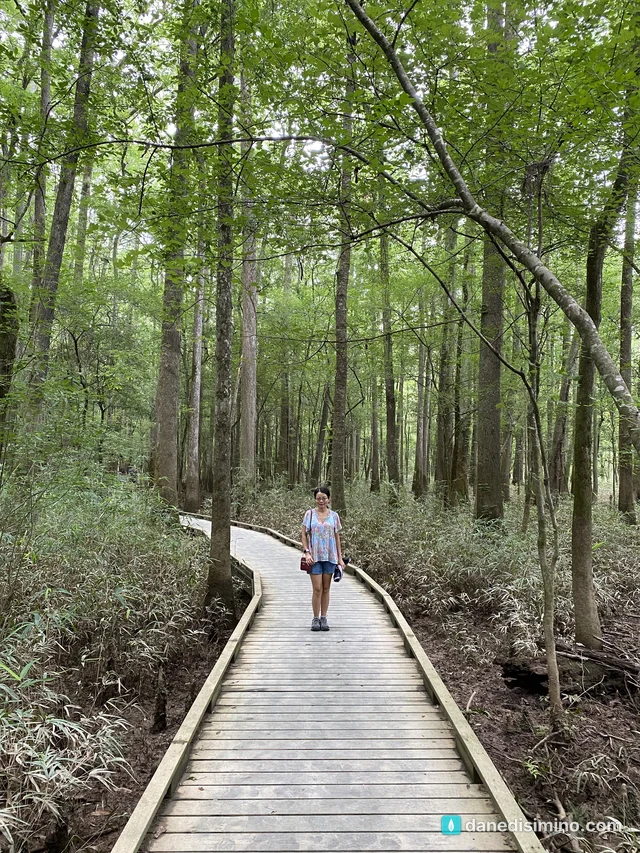
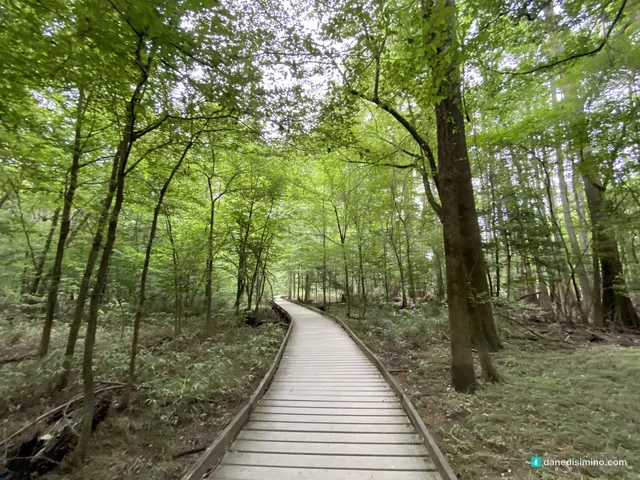
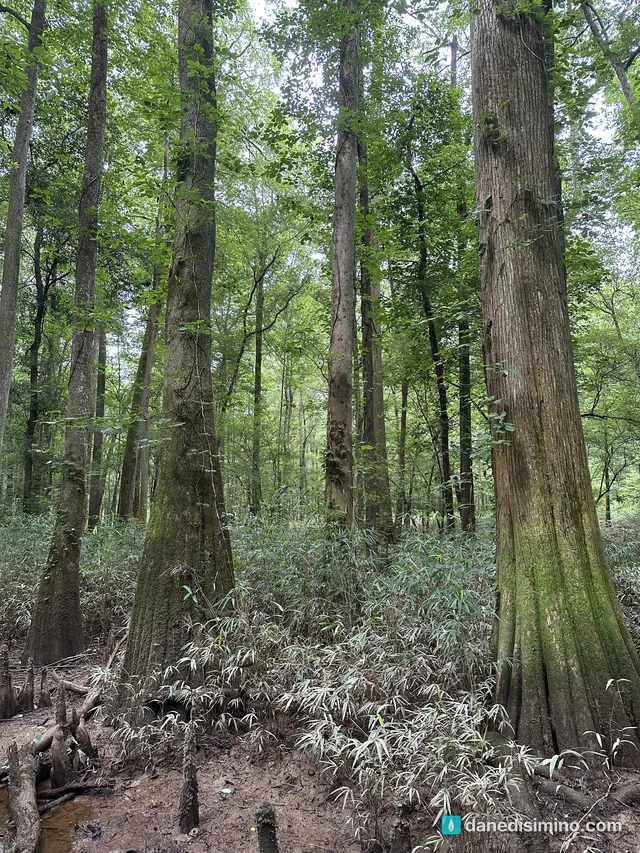
The forest almost feels like it's speaking to you as you walk through it. It's like being in Fangorn Forest from The Lord of the Rings: giant trunks, knobby roots and green light all around.
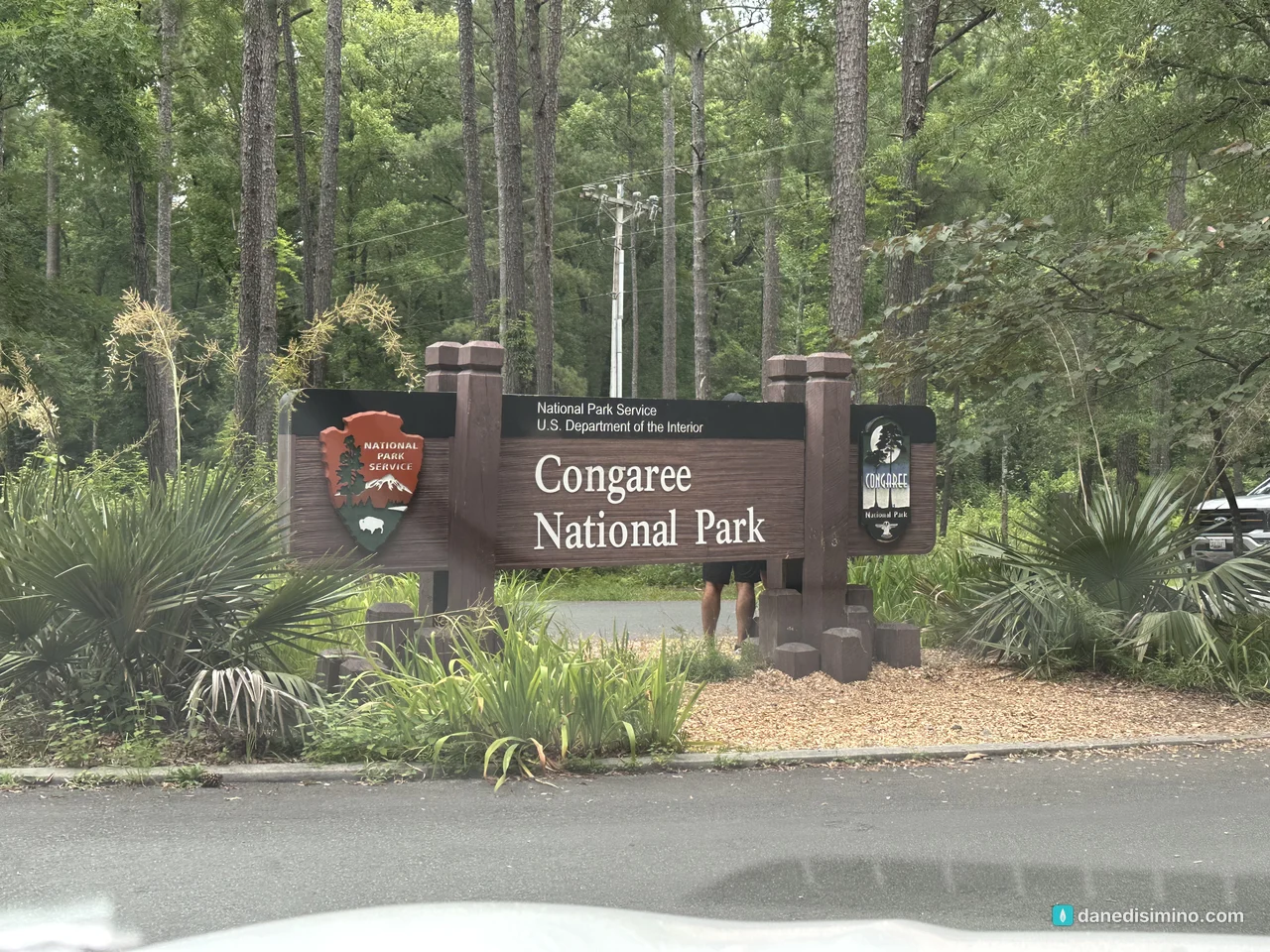
The forest almost feels like it's speaking to you as you walk through it.
The short version
Walk the Boardwalk Loop. It's about 2.6 miles round trip through old-growth forest, and it's wheelchair and stroller accessible.
Grab the boardwalk brochure. Numbered posts along the way match stops in the free self-guided tour from the visitor center.
It's free. Congaree doesn't charge an entrance fee.
Come in May for the fireflies. Enter the spring lottery for a viewing pass.
Bring bug spray in summer. But don't spray it during the firefly event.
The park at a glance
- 26,000+
- Acres of forest
- 5
- National champion trees
- 1976
- First protected
- $0
- Entrance fee
Where: central South Carolina, near Hopkins, about 18 miles southeast of Columbia.
Start here: the Harry Hampton Visitor Center, open 9 a.m. to 5 p.m. daily, with exhibits, a park film and the boardwalk brochure. The trails are open 24 hours.
Camping: Longleaf Campground (tent sites, reservations required) is about half a mile before the visitor center.
Before you go: floods can cover parts of the boardwalk. Check the park's Alerts & Conditions page at nps.gov/cong.
How the forest formed
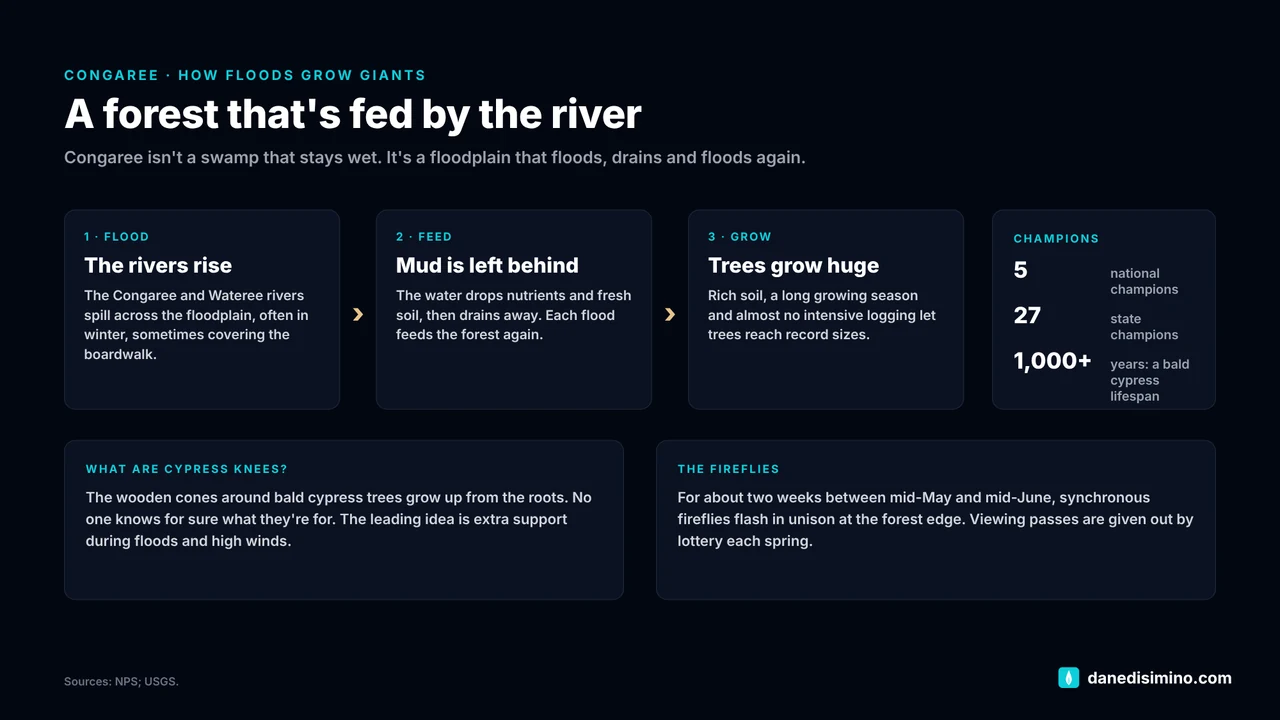
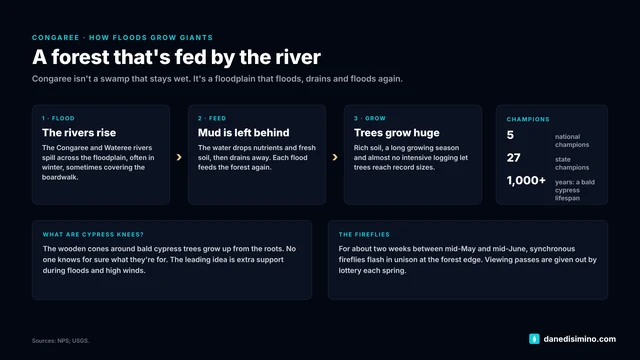
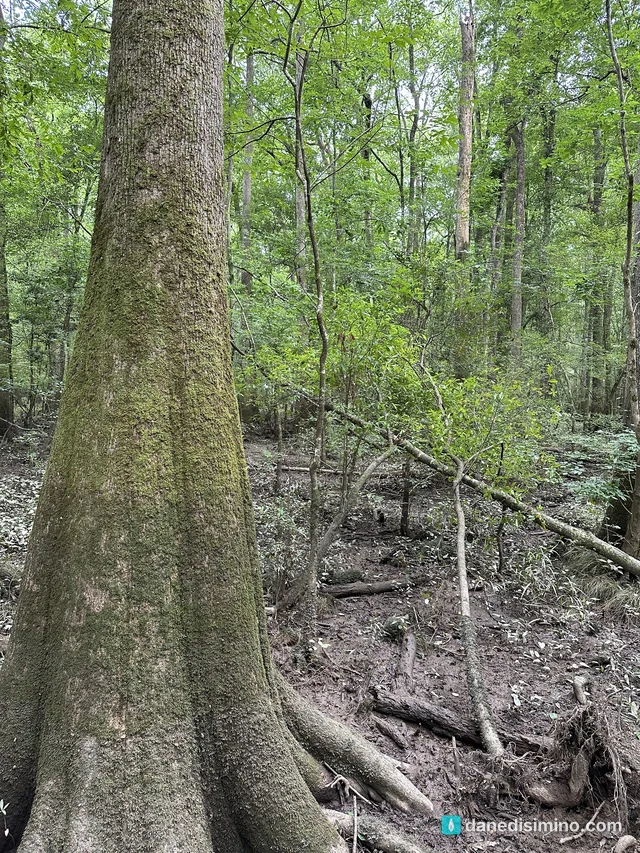
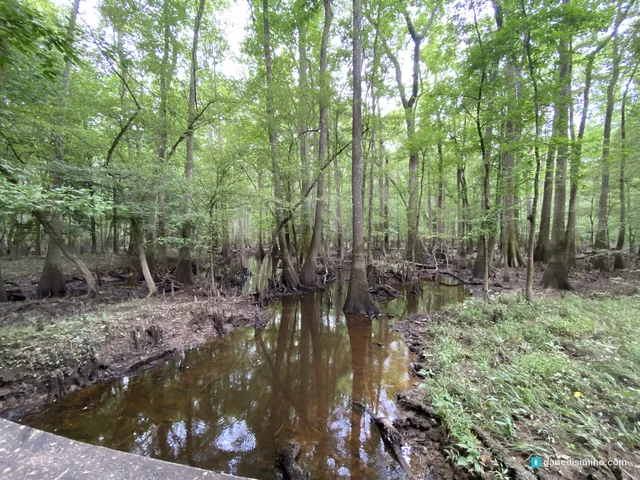
Congaree isn't a swamp that stays wet. It's a floodplain. The Congaree and Wateree rivers spill across it, then drain away, leaving fresh soil and nutrients behind. That rich soil, a long growing season and a history free of intensive logging let the trees grow enormous.
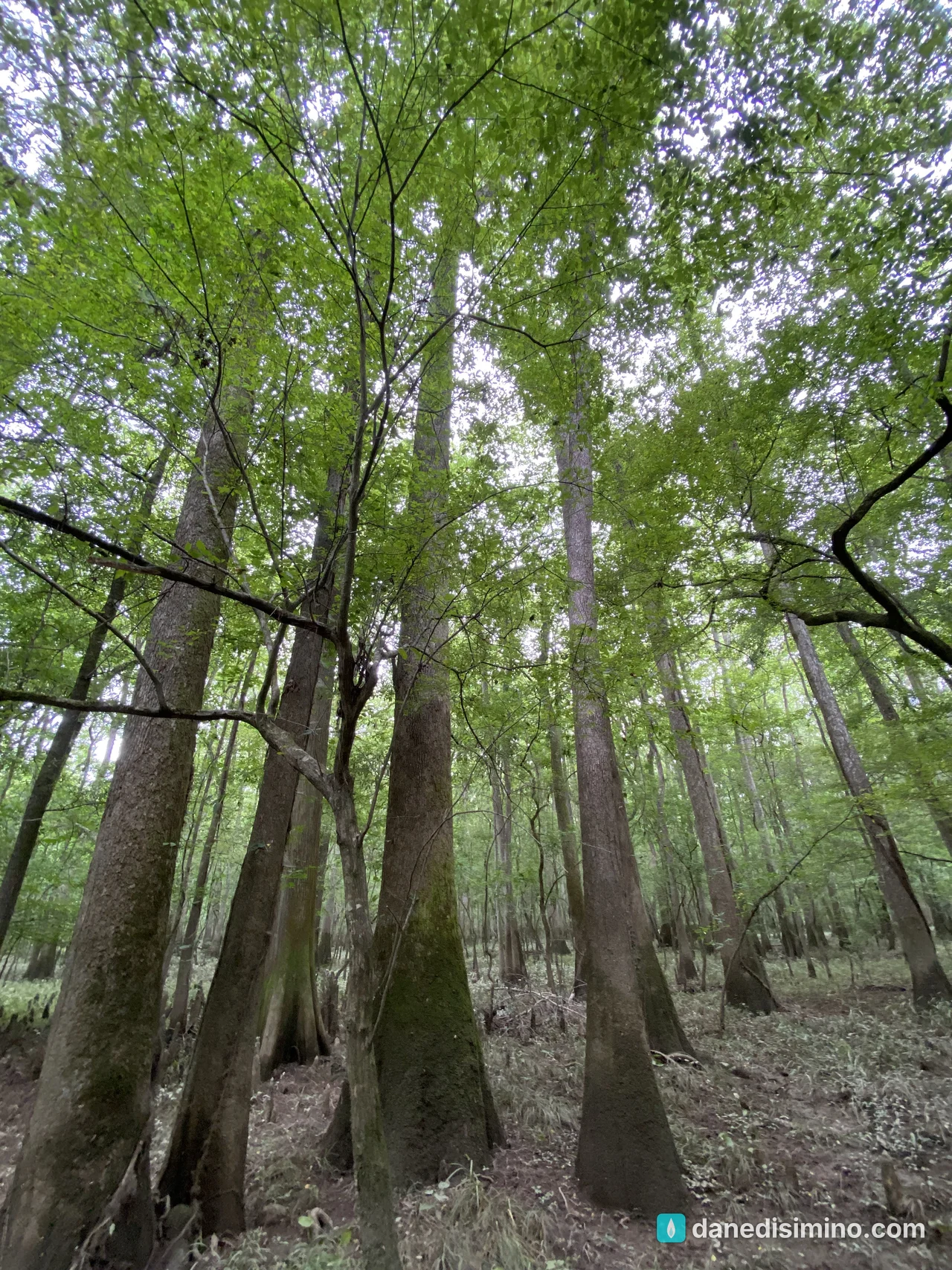
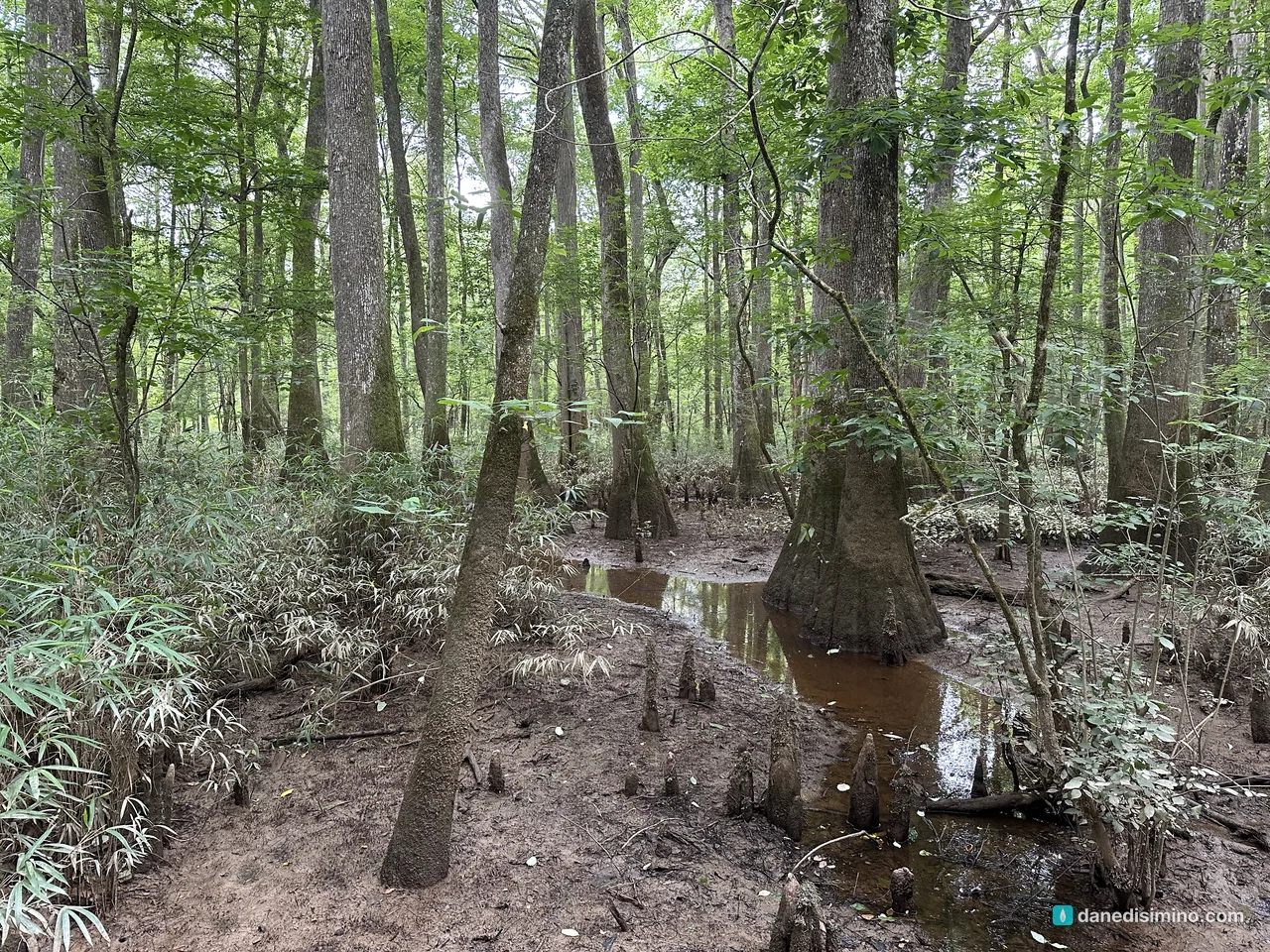
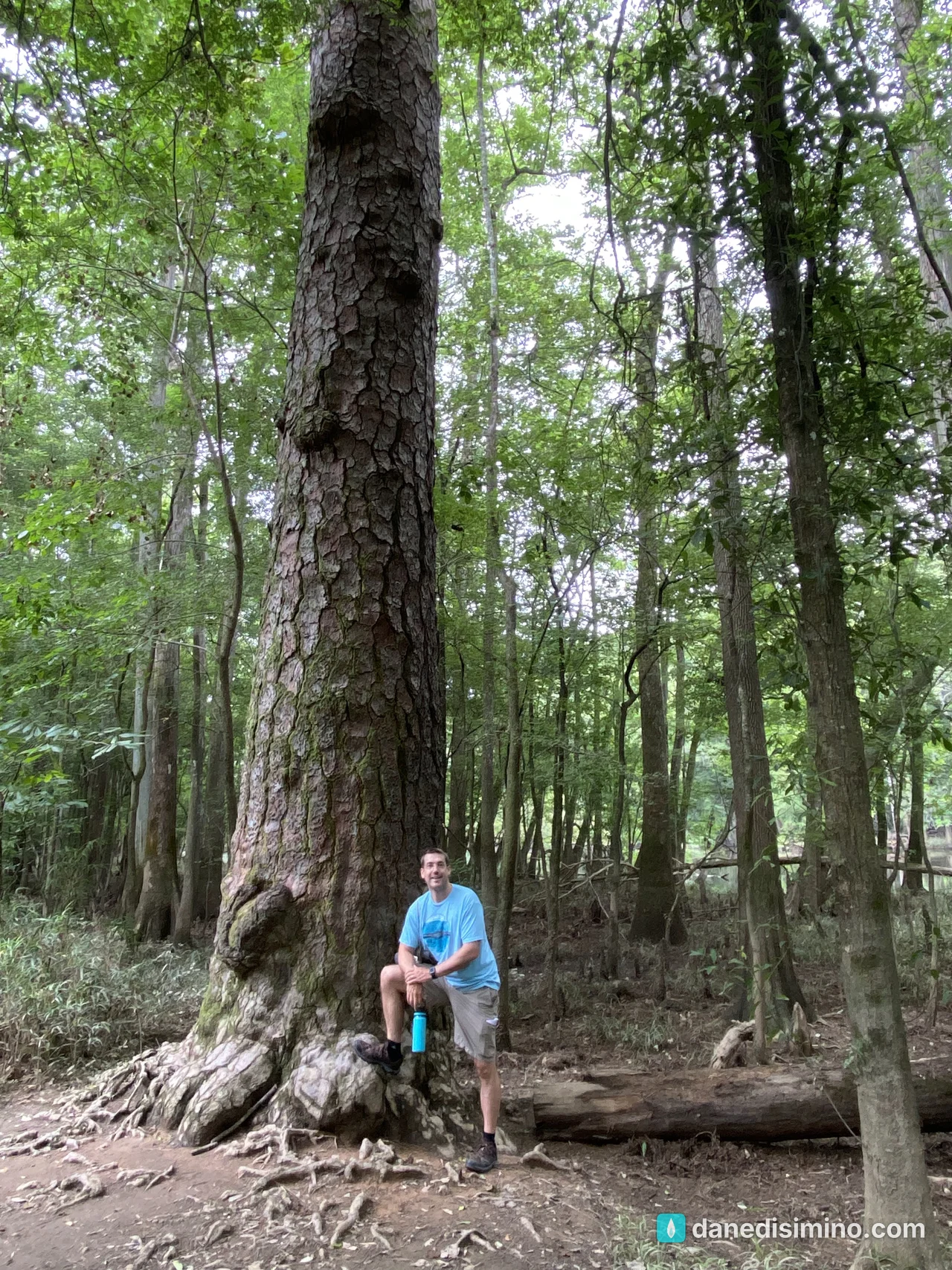
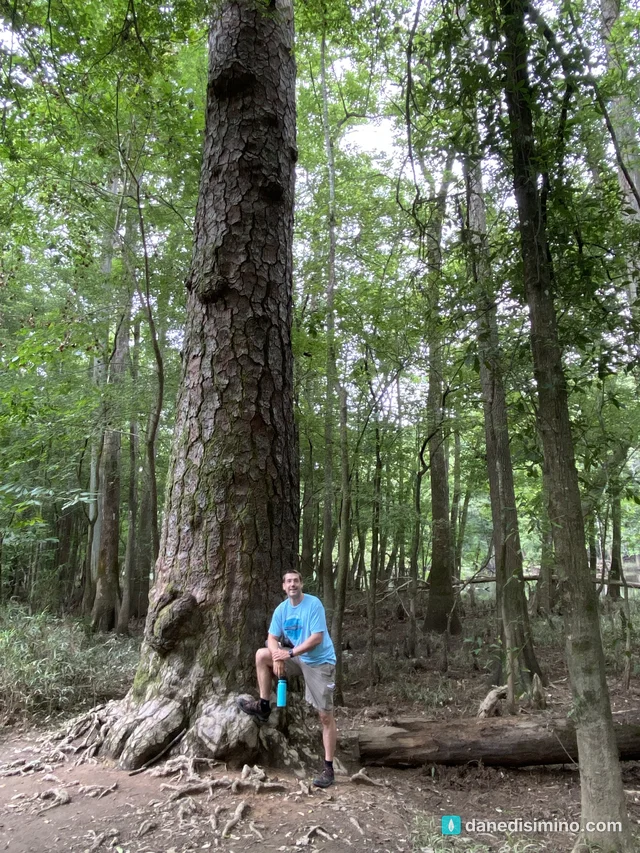
It's the largest intact stretch of old-growth bottomland hardwood forest left in the Southeast. The park has five national champion trees and 27 state champions. Its loblolly pines rise about 170 feet, among the tallest trees east of the Mississippi.
How the park began
The park is named for the Congaree people who once lived here, and people have used this floodplain for more than 10,000 years. Hernando de Soto's Spanish expedition passed through in 1540. Later, people escaping slavery, known as maroons, hid in these woods, sometimes for years.
The forest nearly disappeared. Loggers took many of the giant bald cypress in the late 1800s and early 1900s. When logging resumed in the 1960s, journalist Harry Hampton and other local conservationists fought to save what was left. Congress created Congaree Swamp National Monument in 1976, and it became Congaree National Park in 2003.
The Boardwalk Loop
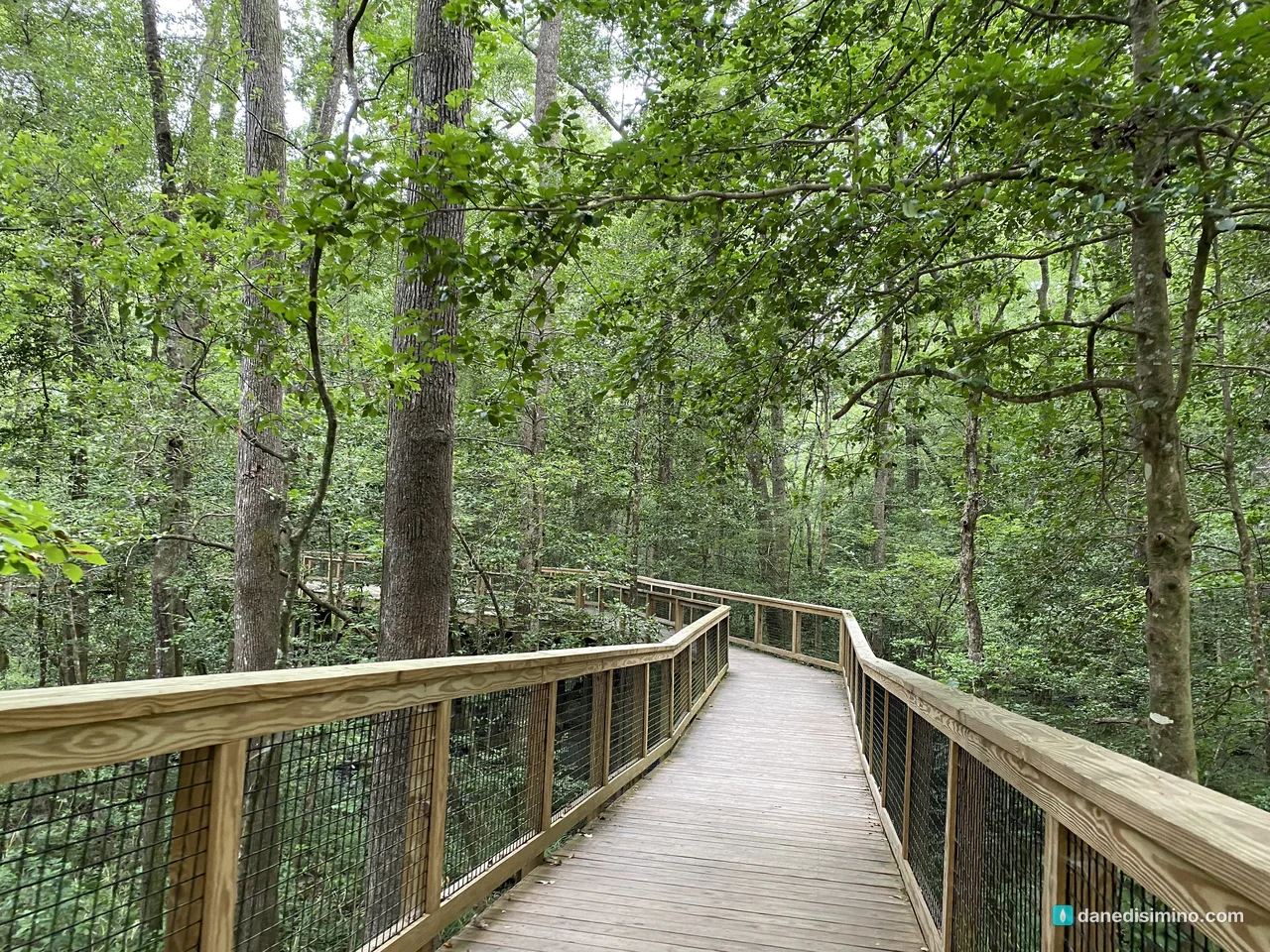
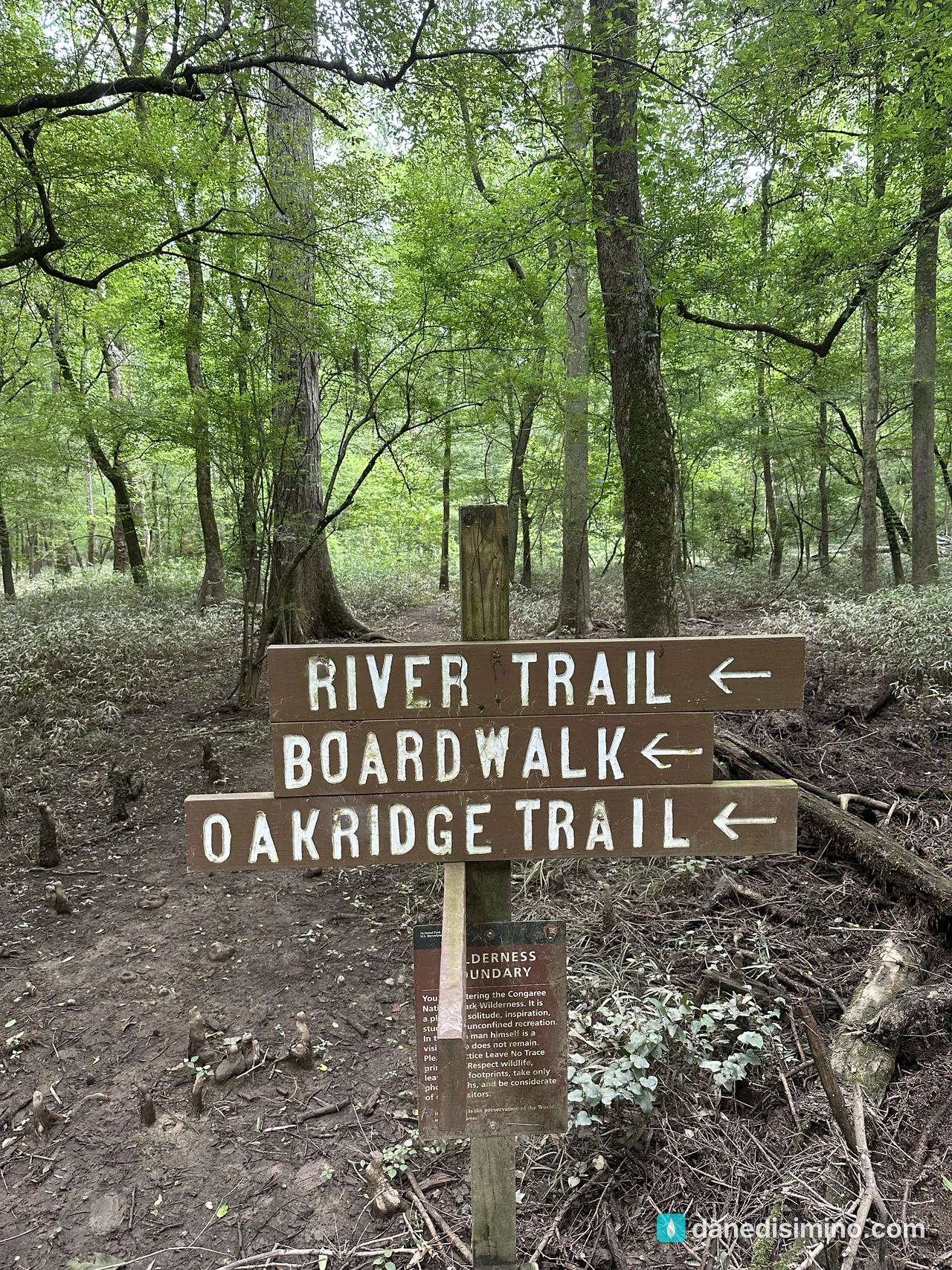
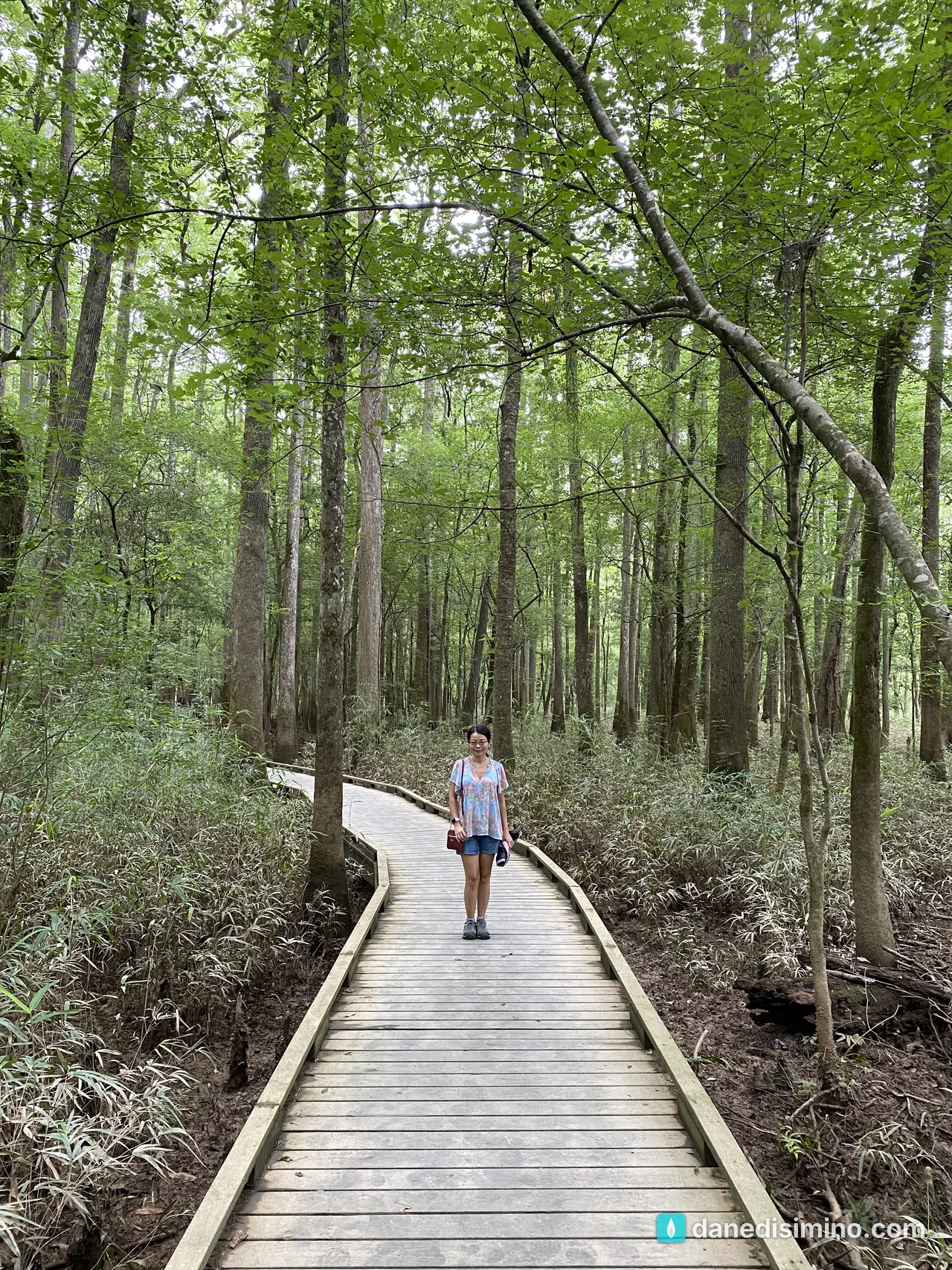
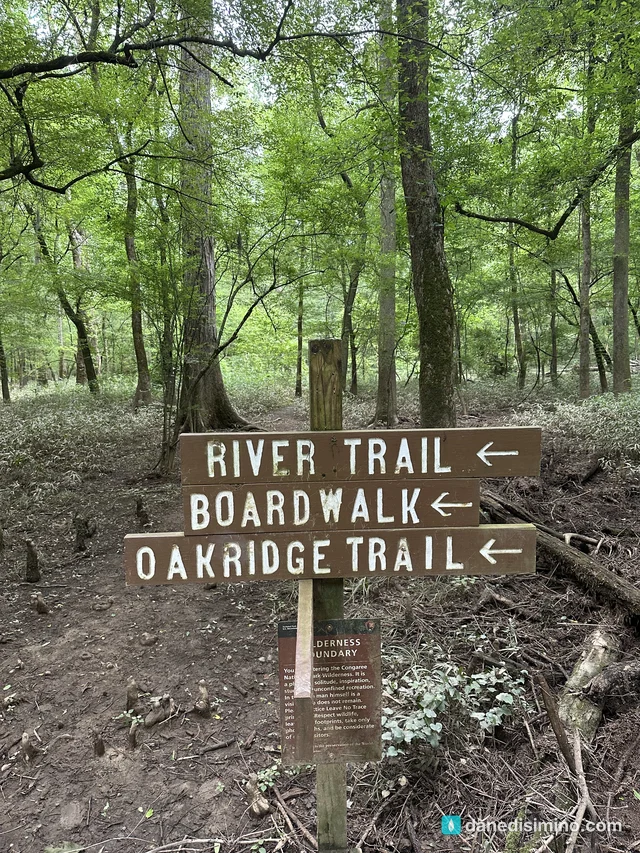
We started on the raised boardwalk, which climbs through the trees before dropping down to run just above the forest floor.
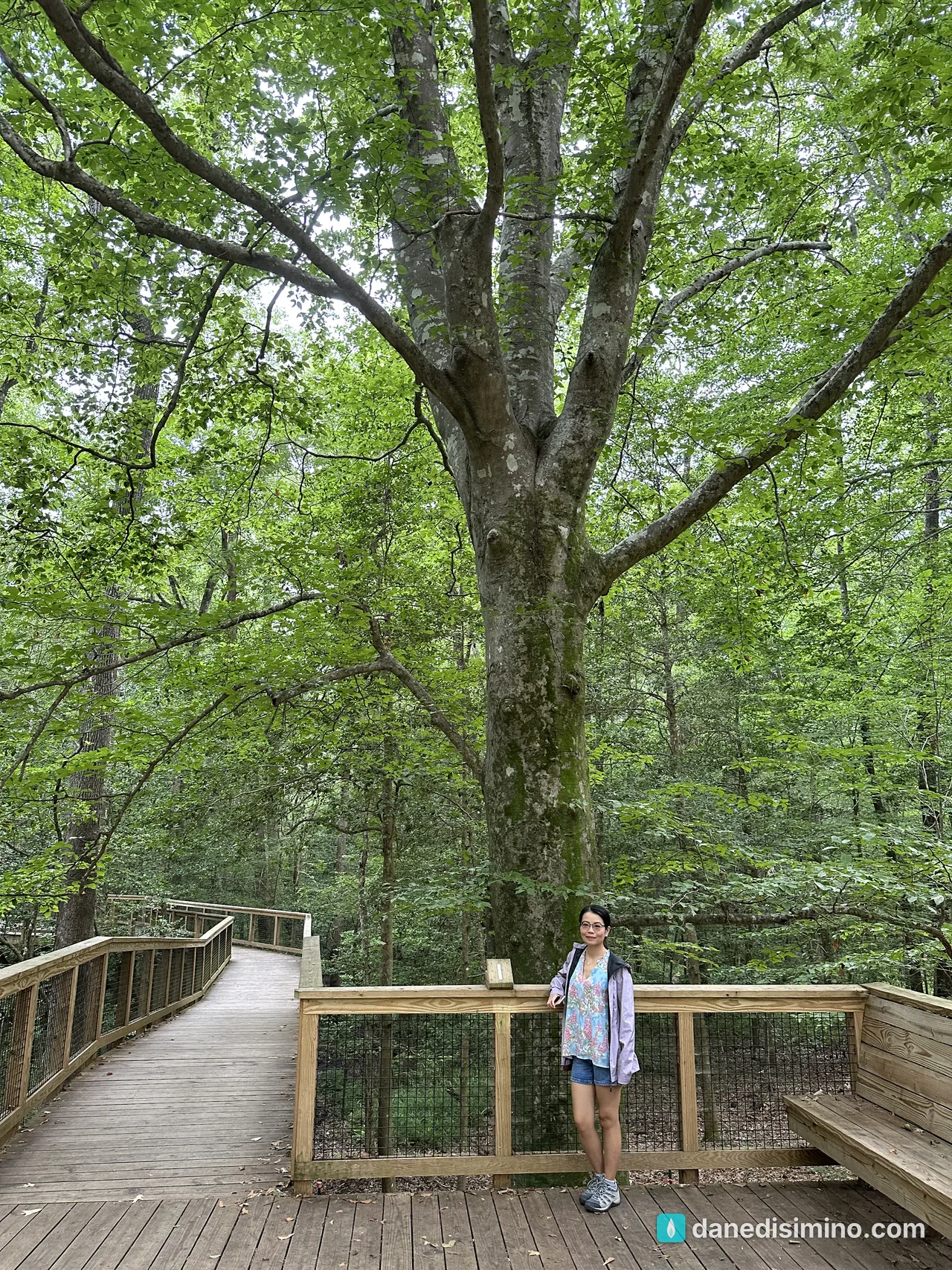
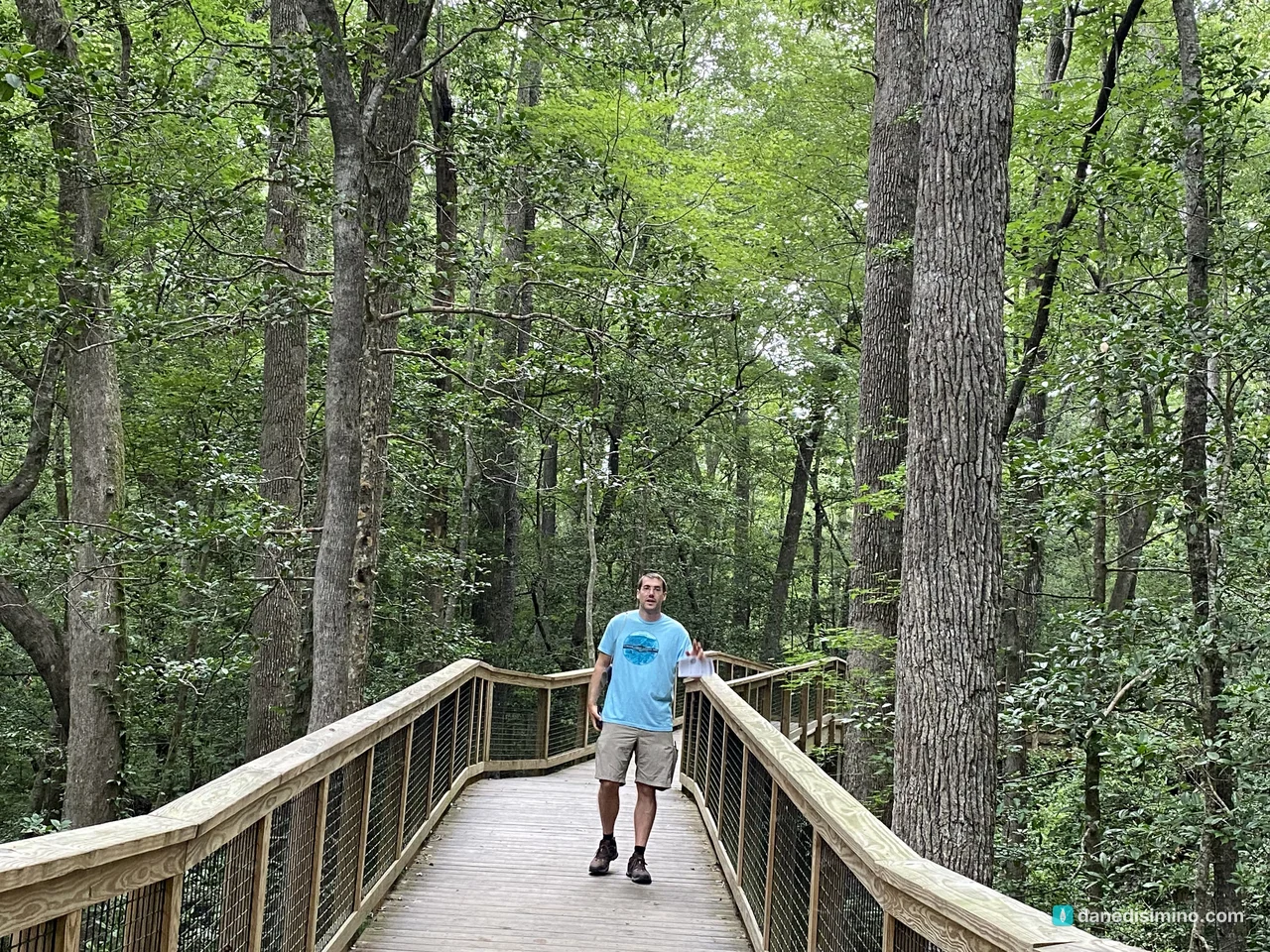
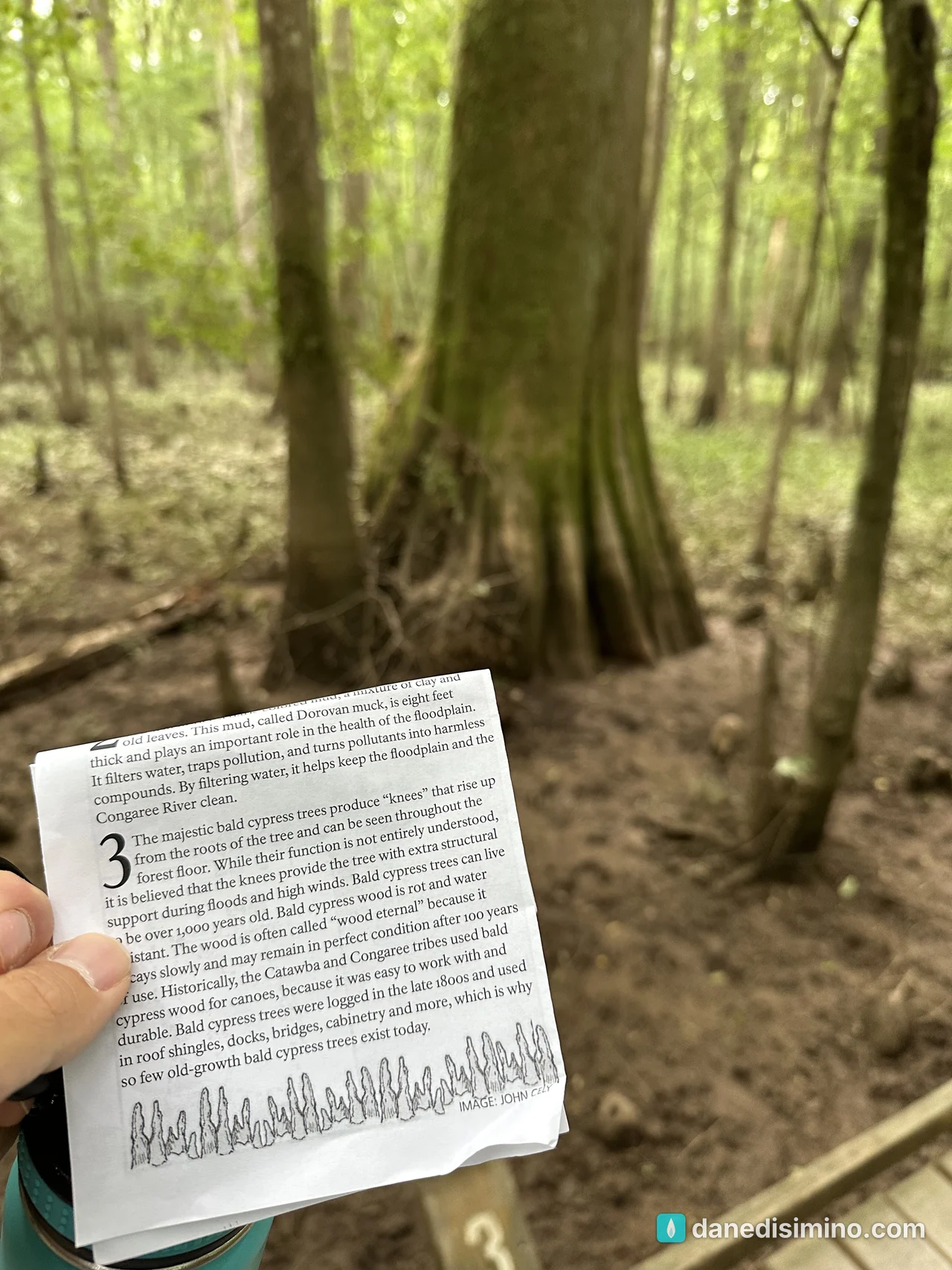
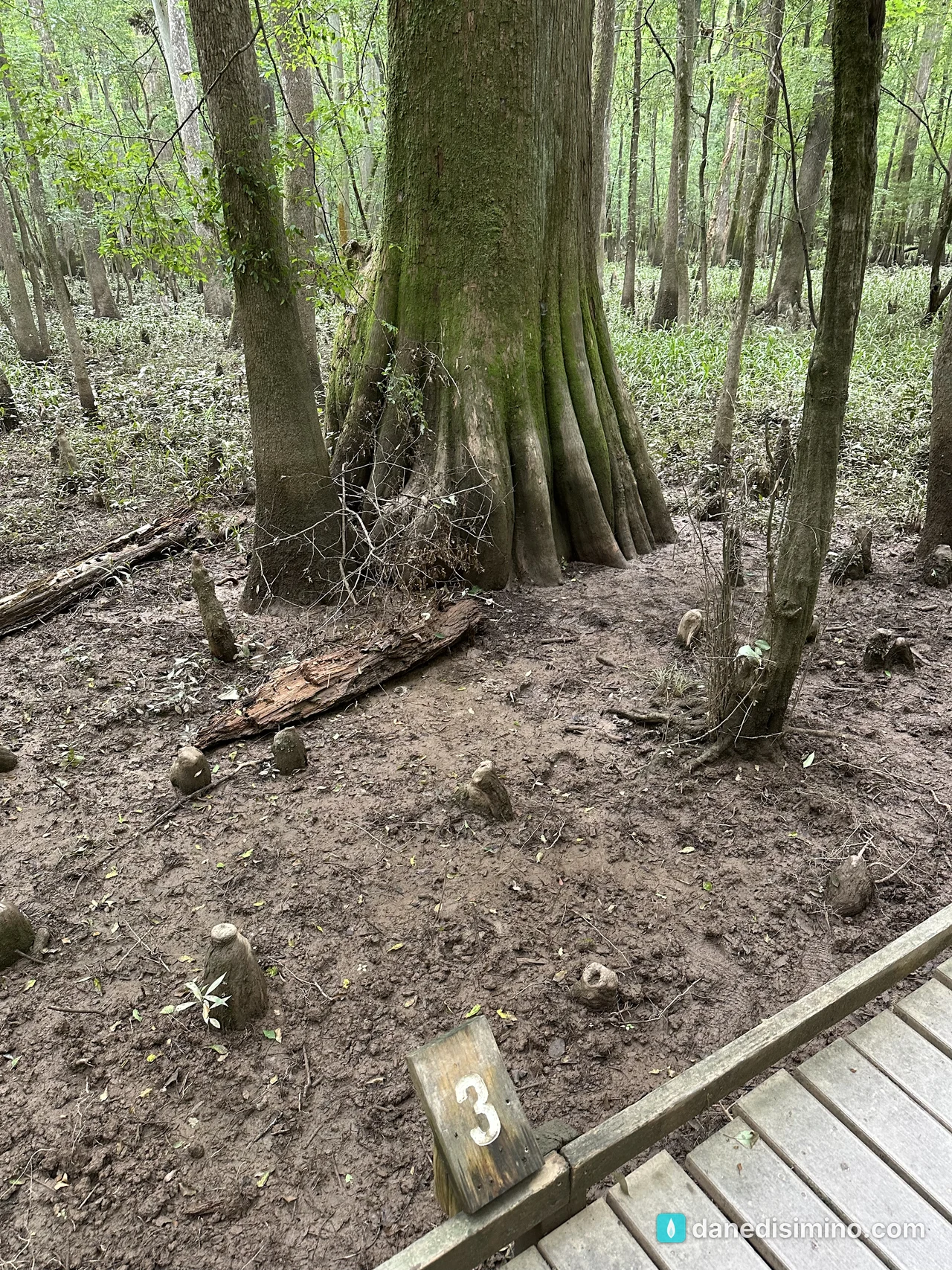
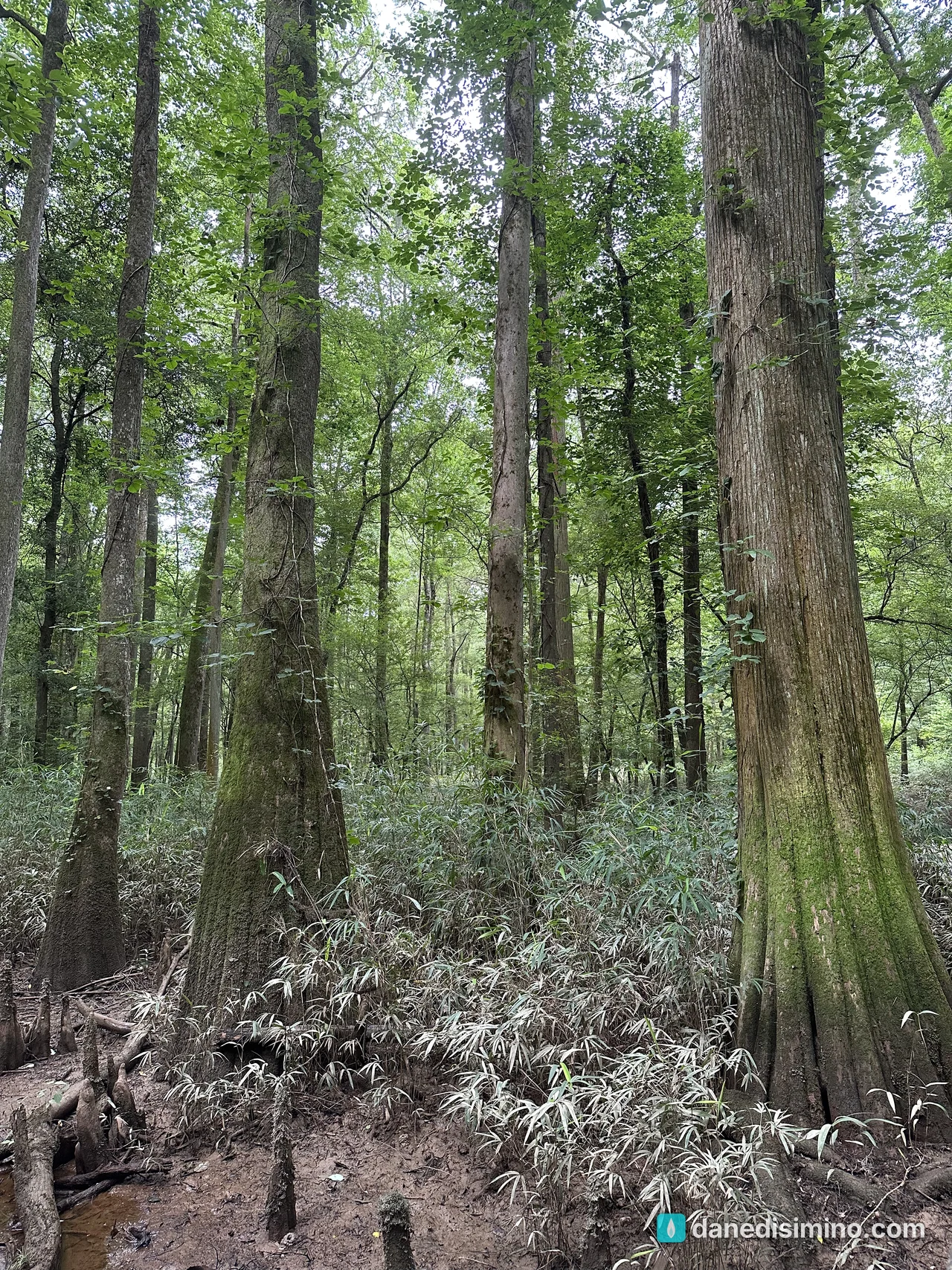
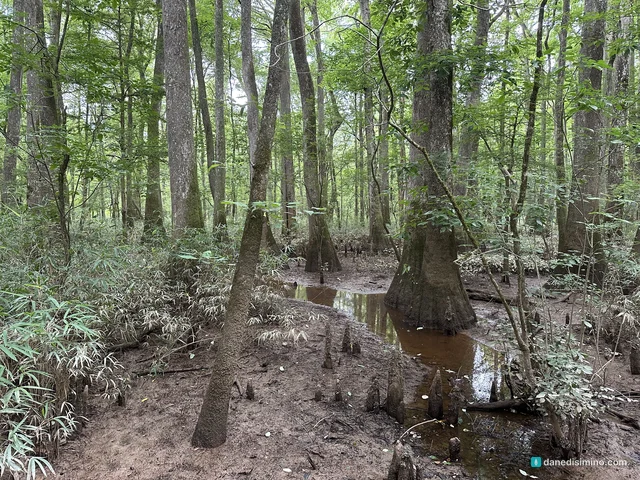
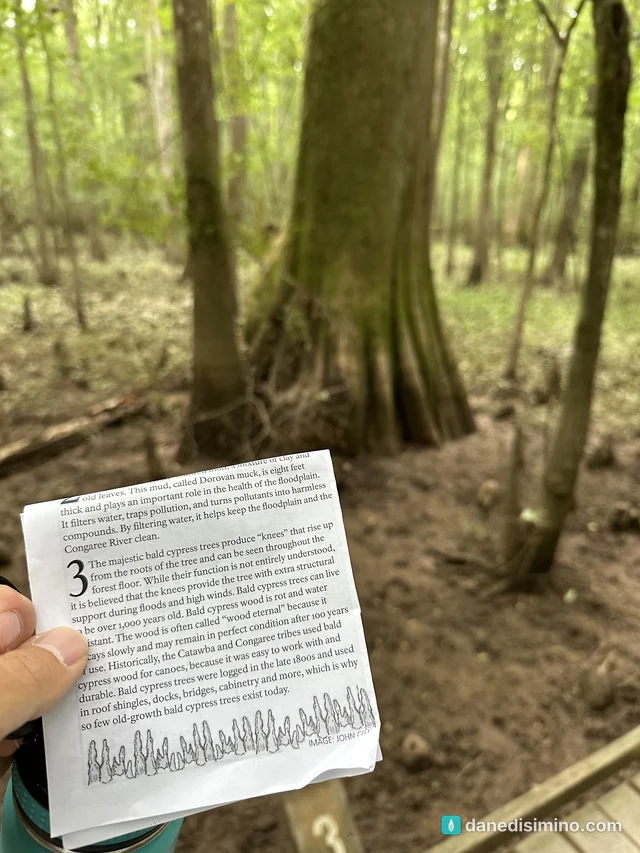
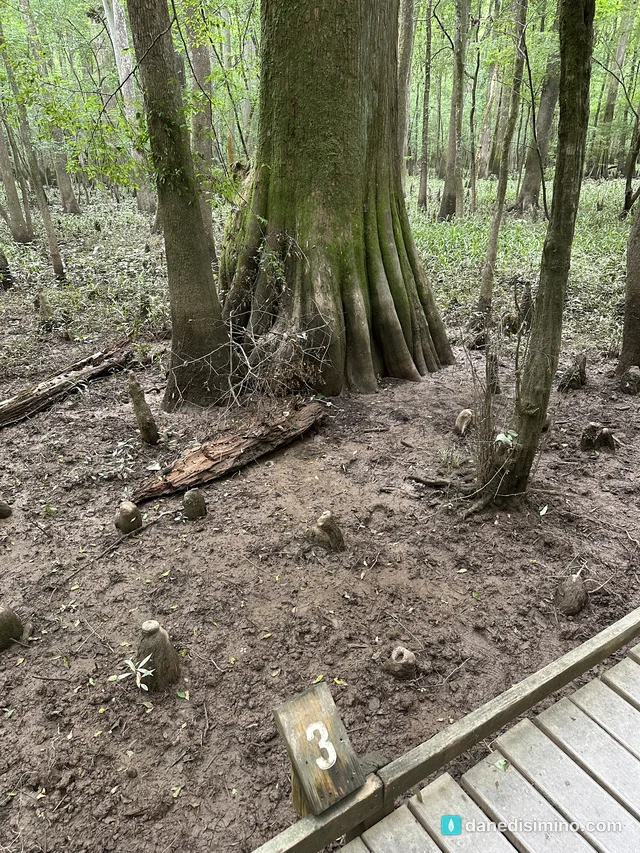
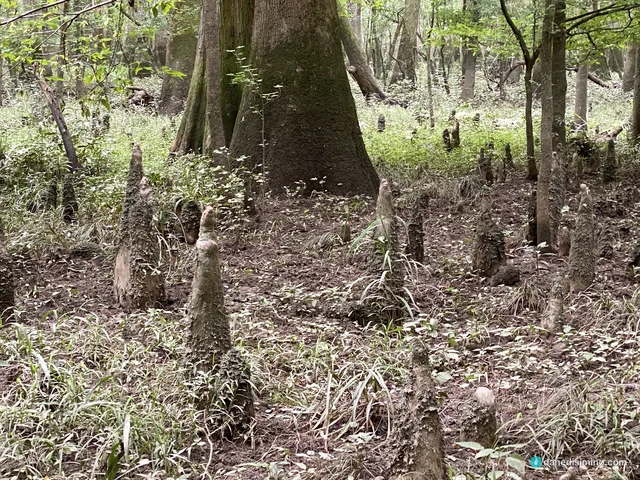
At stop 3 we found the bald cypress and its "knees," the wooden cones that rise from its roots all over the forest floor. No one fully understands what they're for. The leading idea is that they help brace the tree during floods and high winds. Bald cypress can live more than 1,000 years.
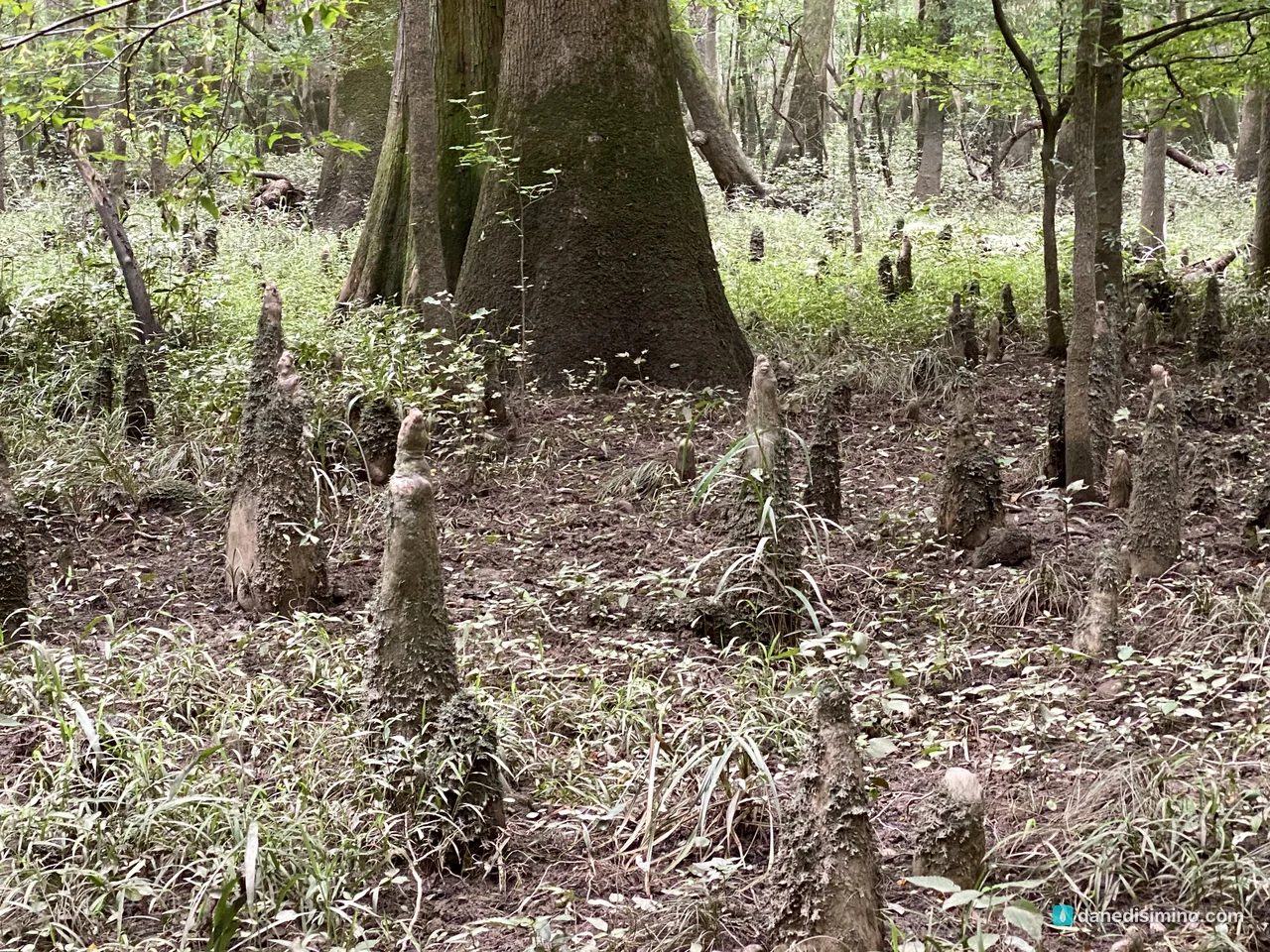
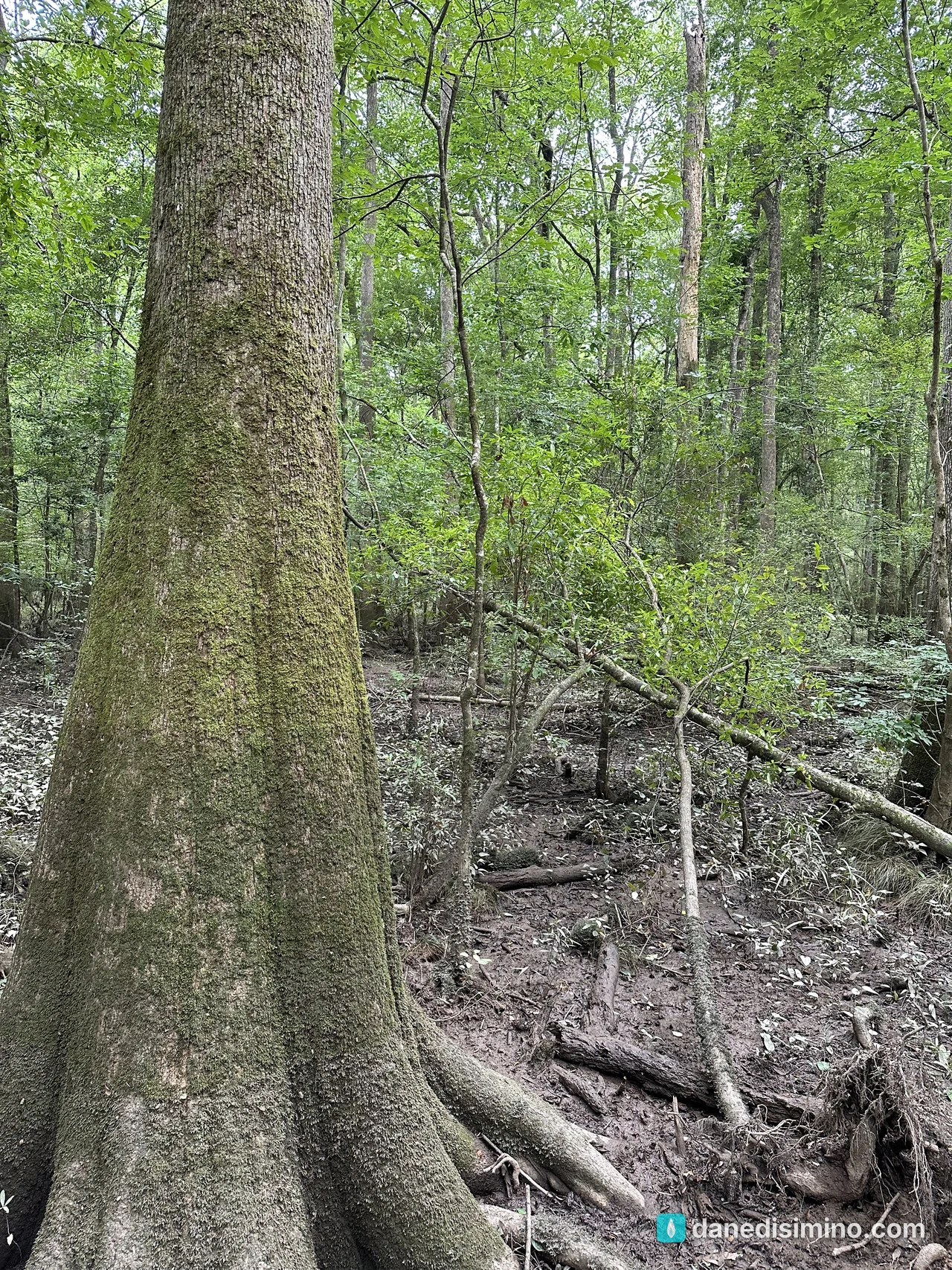
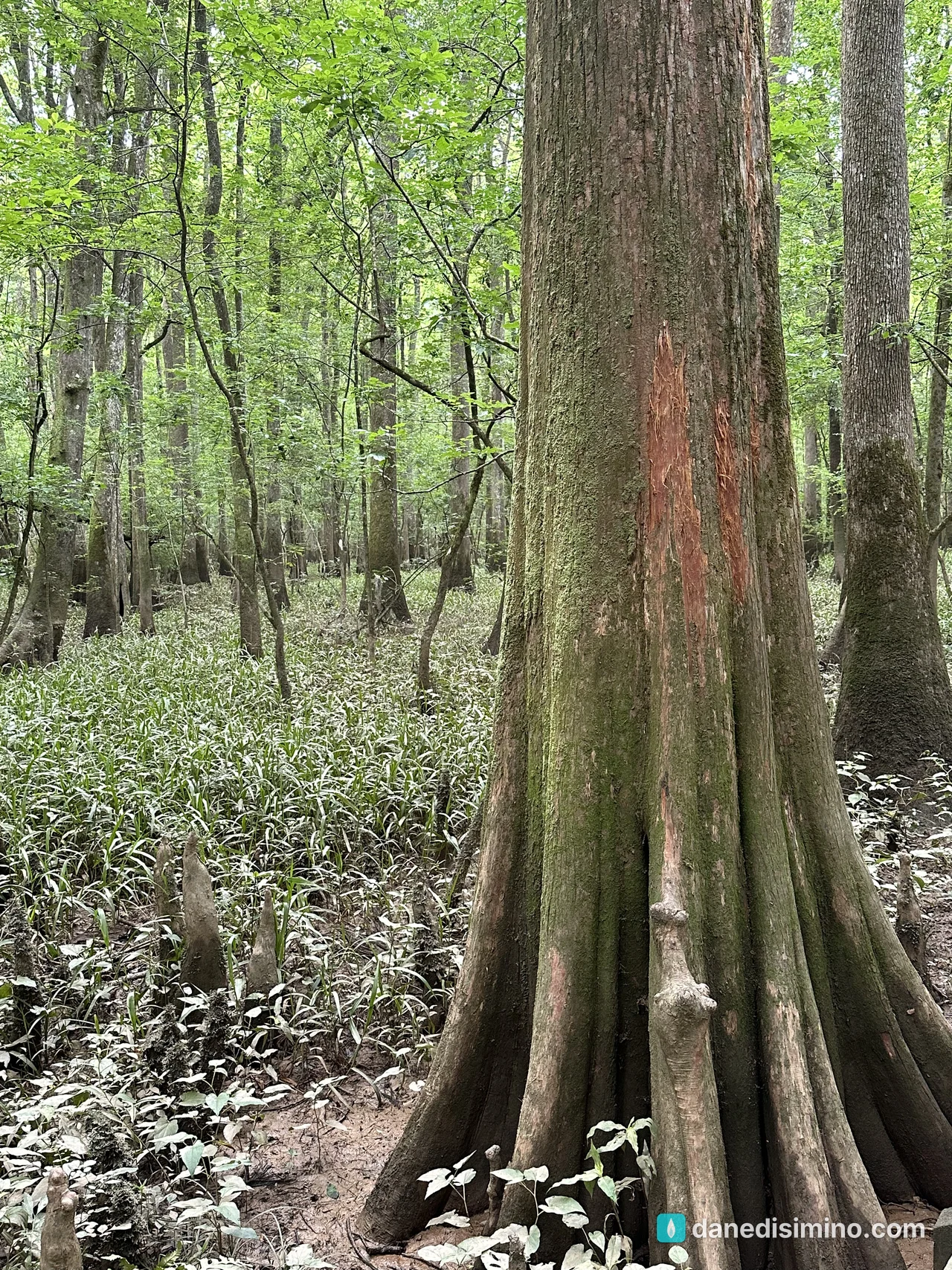
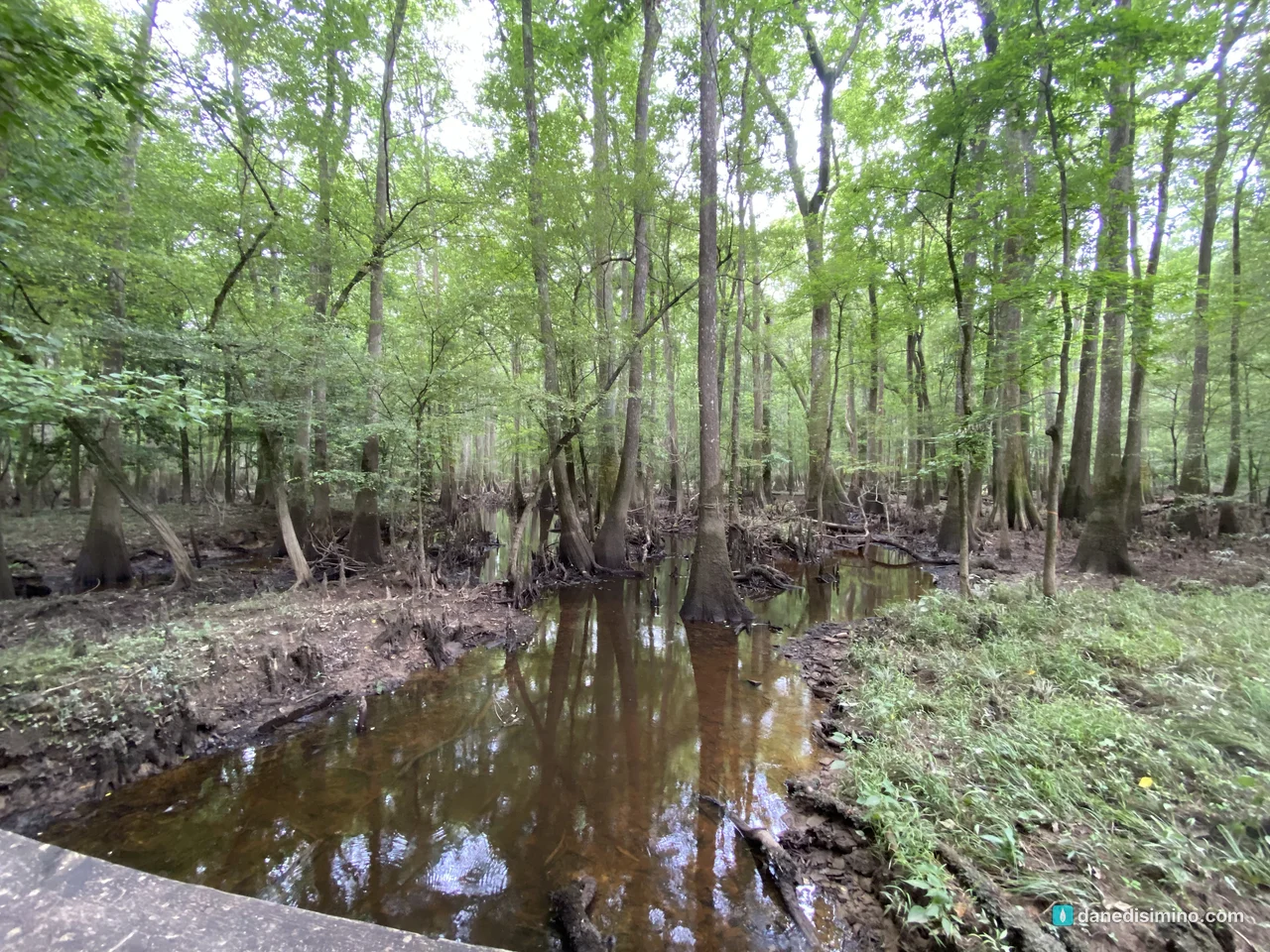
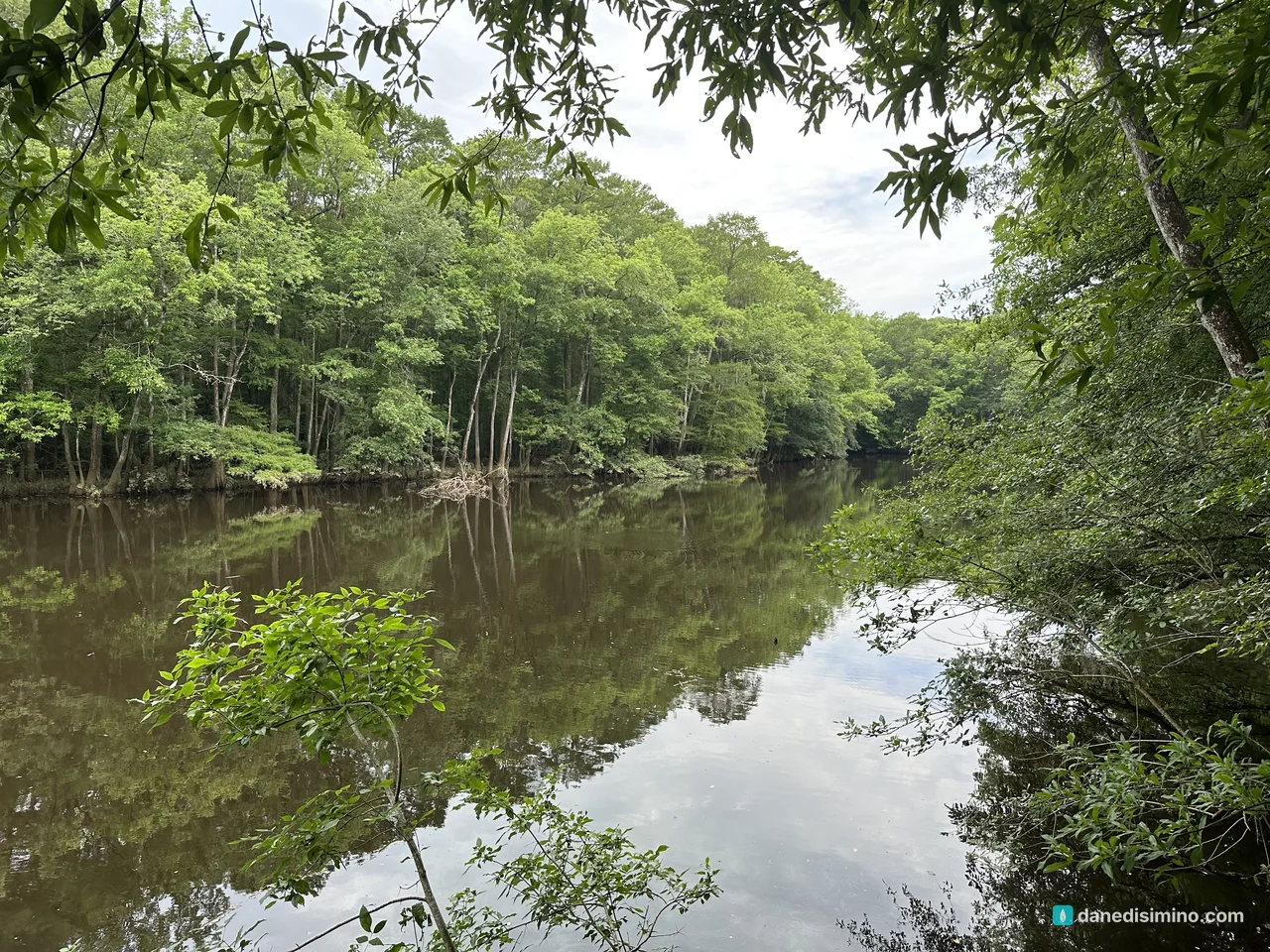
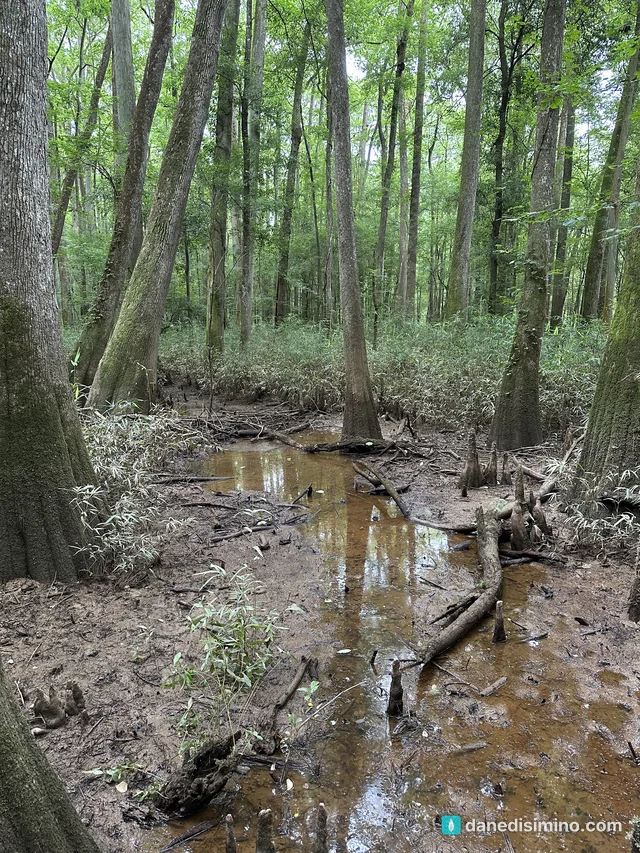
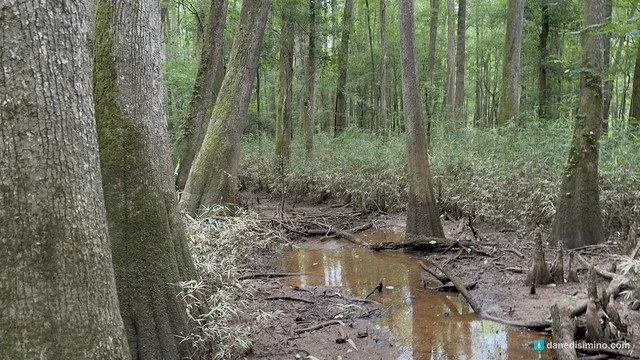
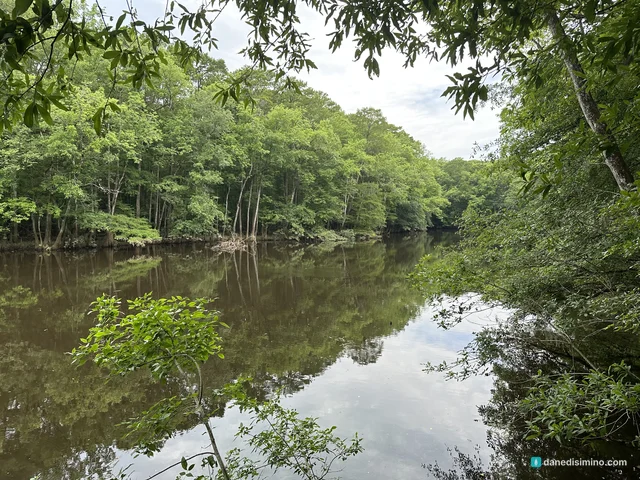
Deeper in, blackwater creeks wind between the trees. Even on a dry July morning, the floodplain was holding water.
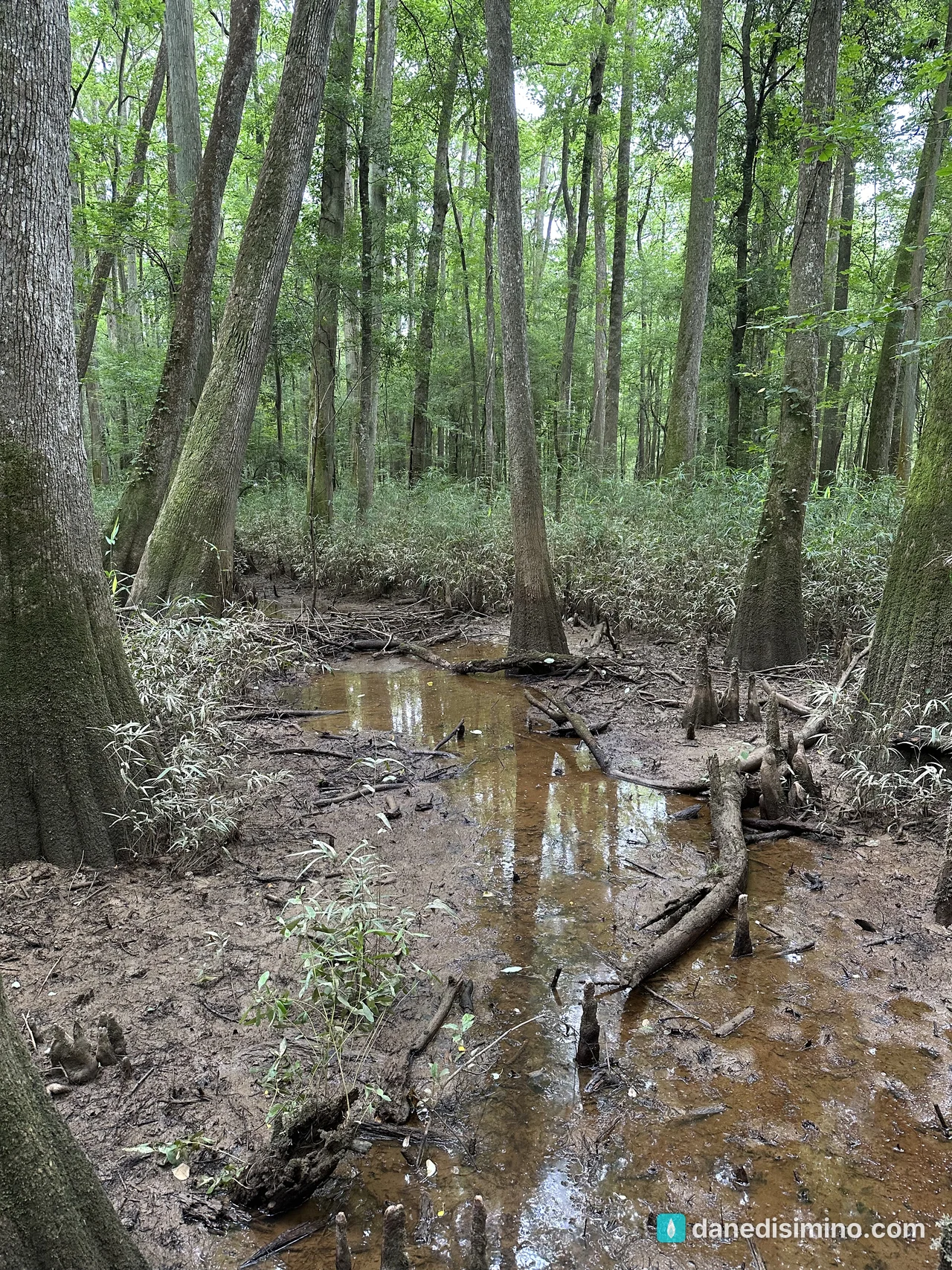
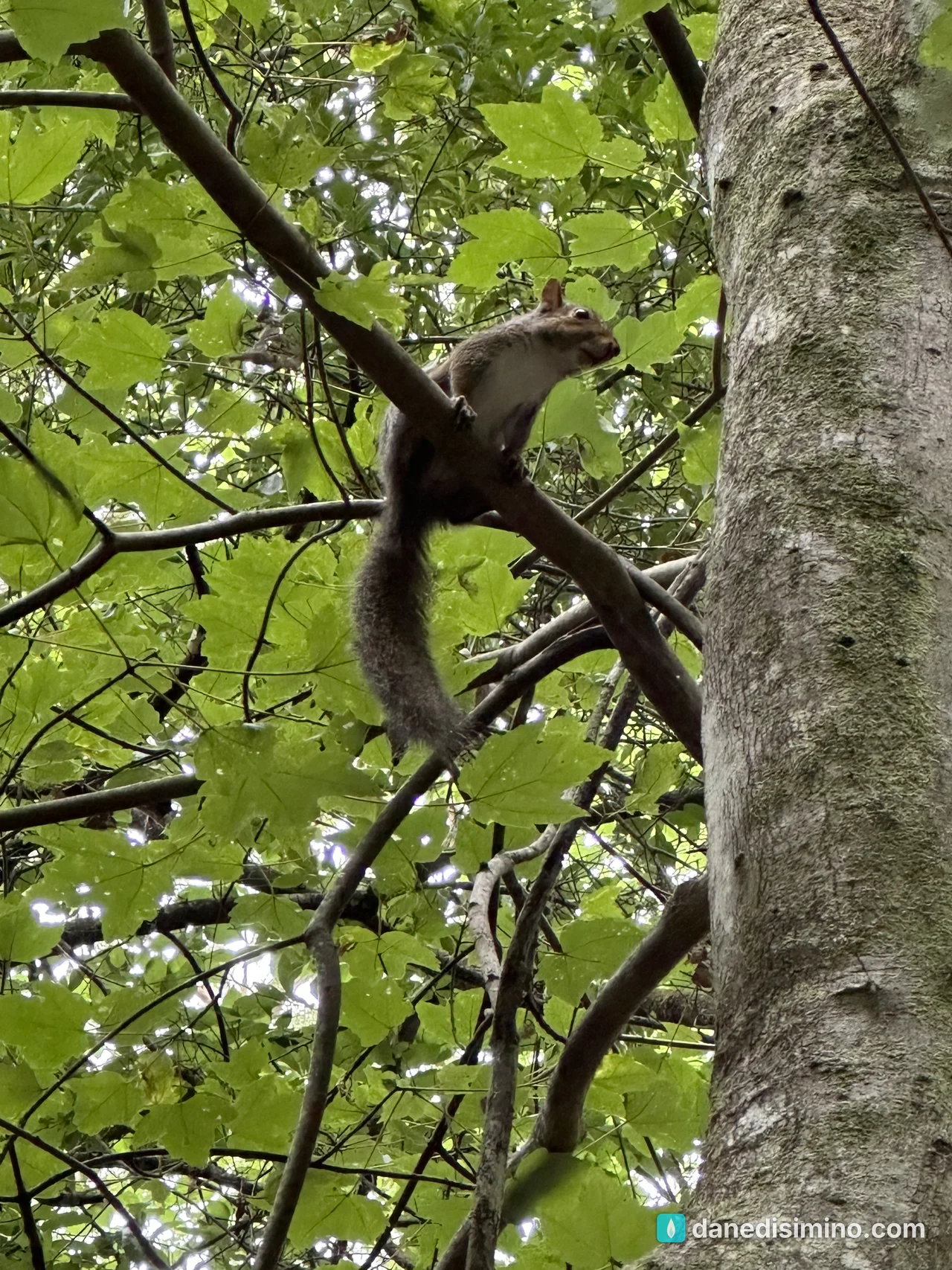
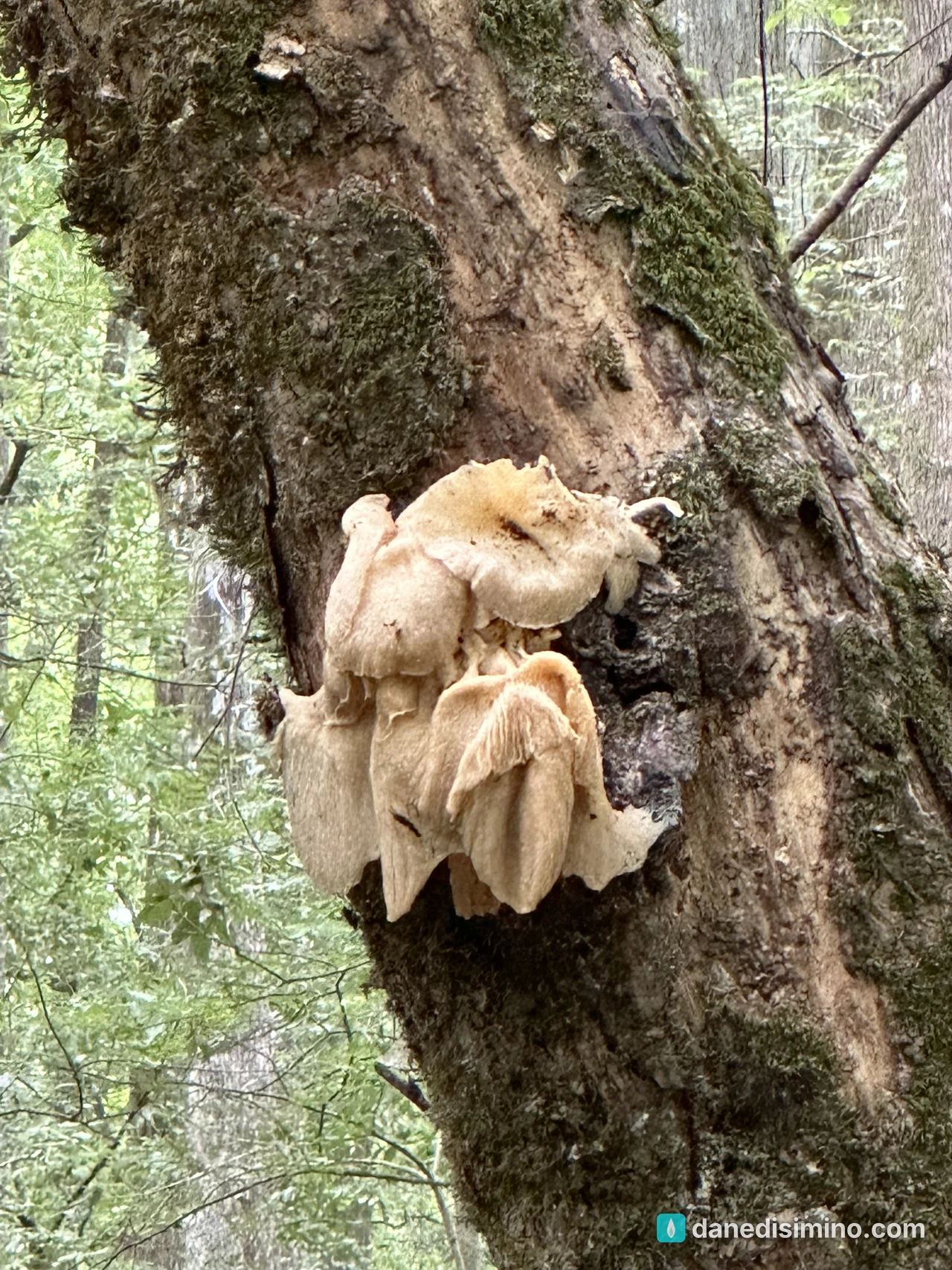
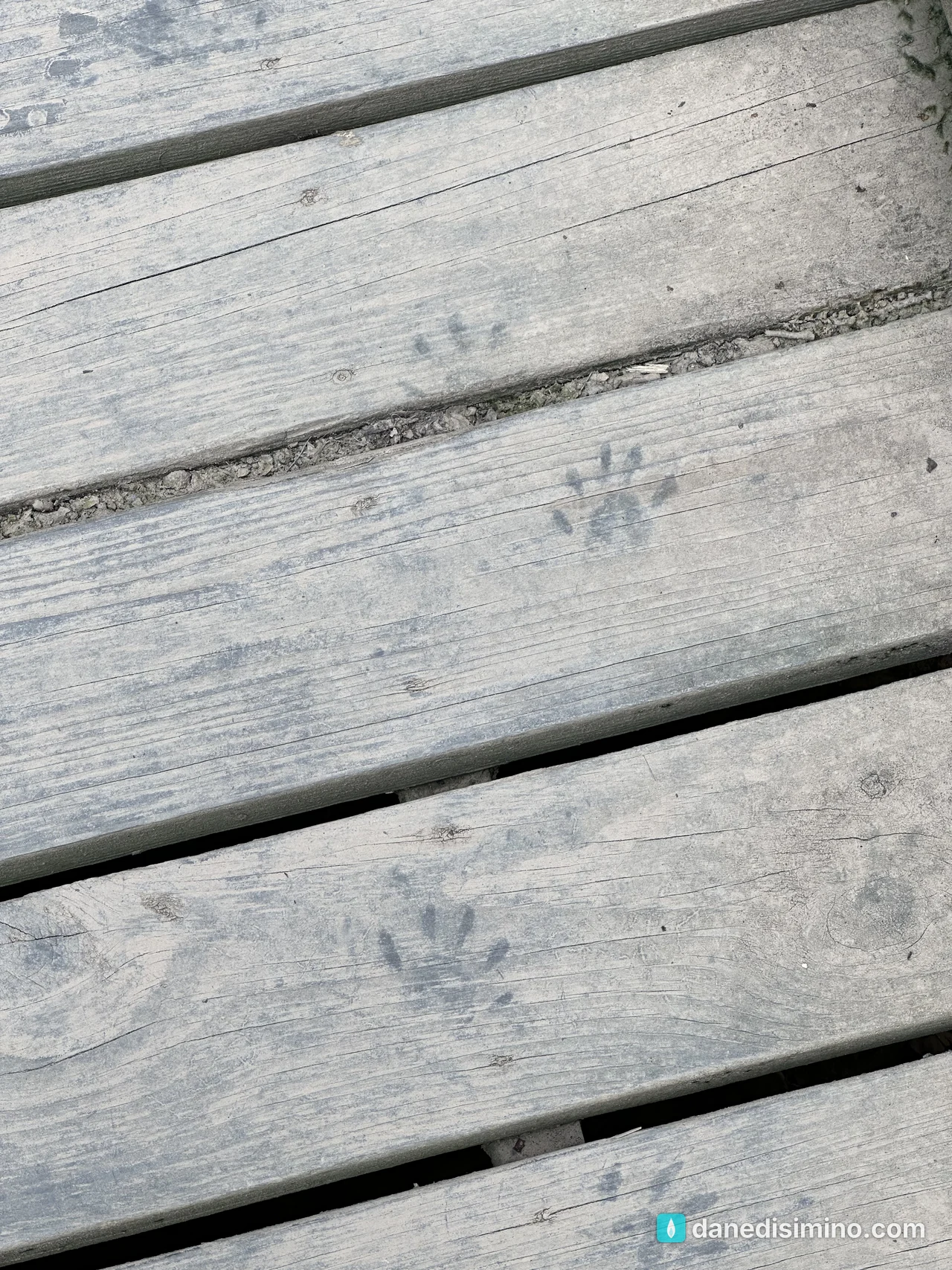
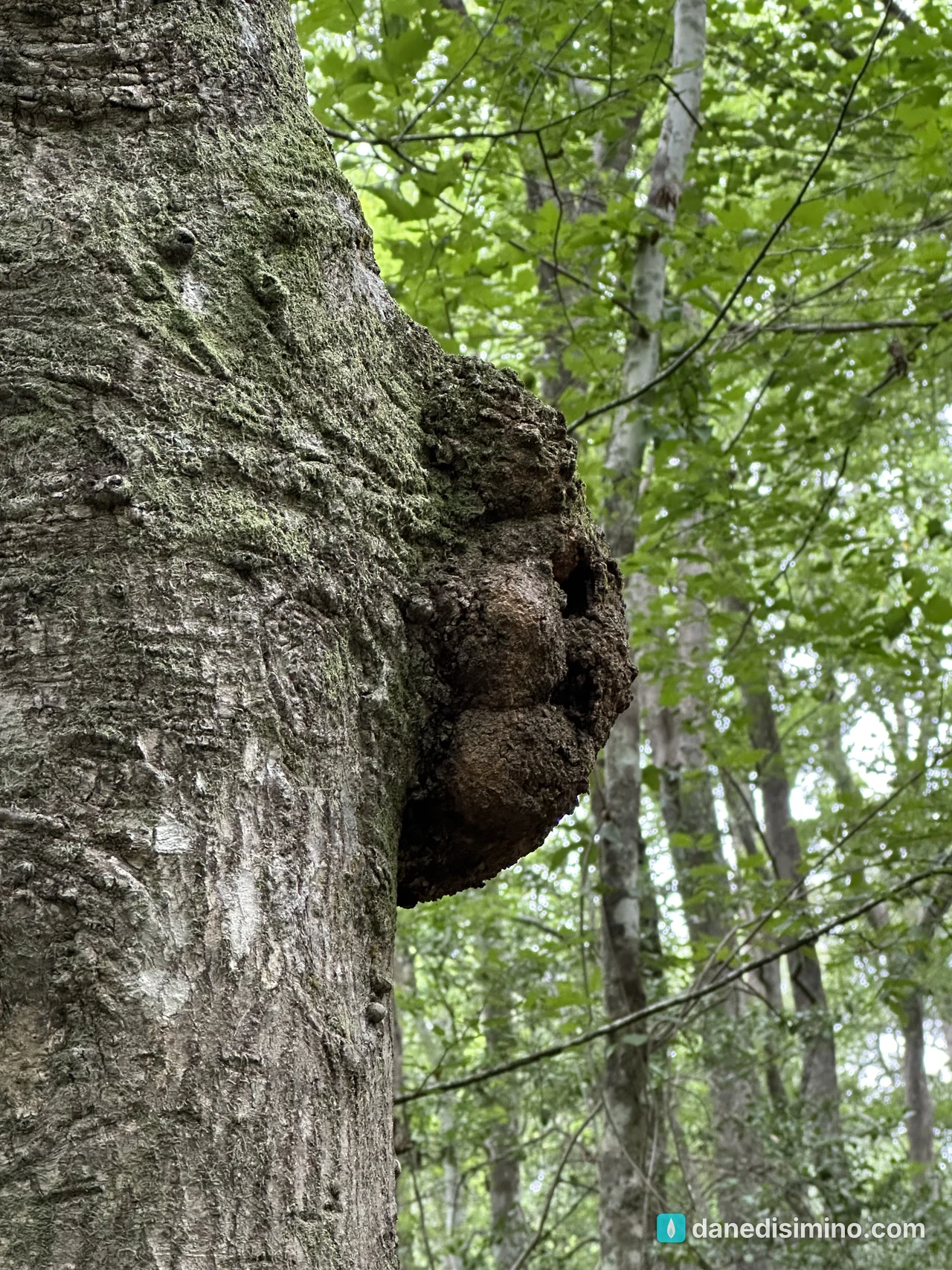
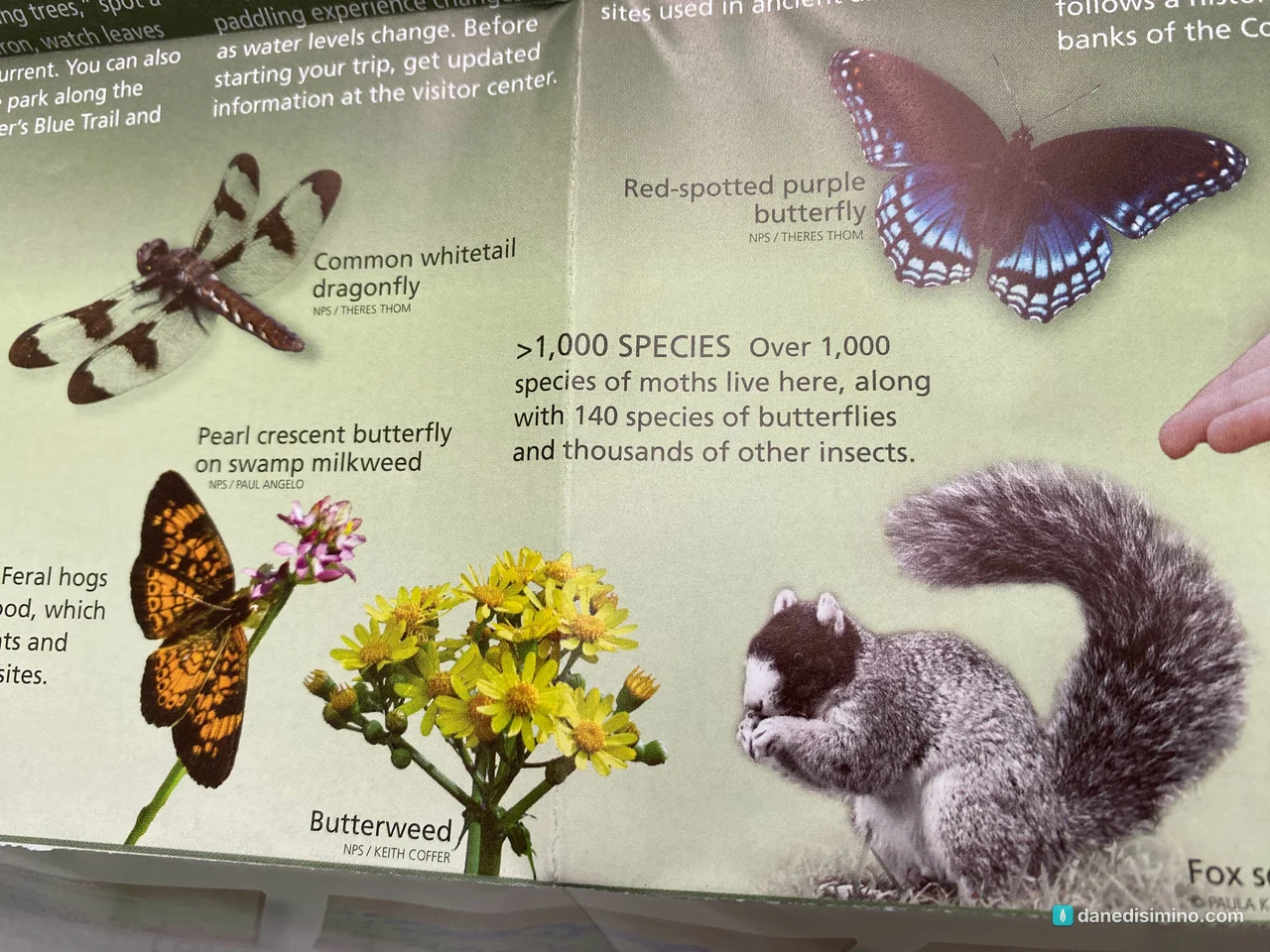
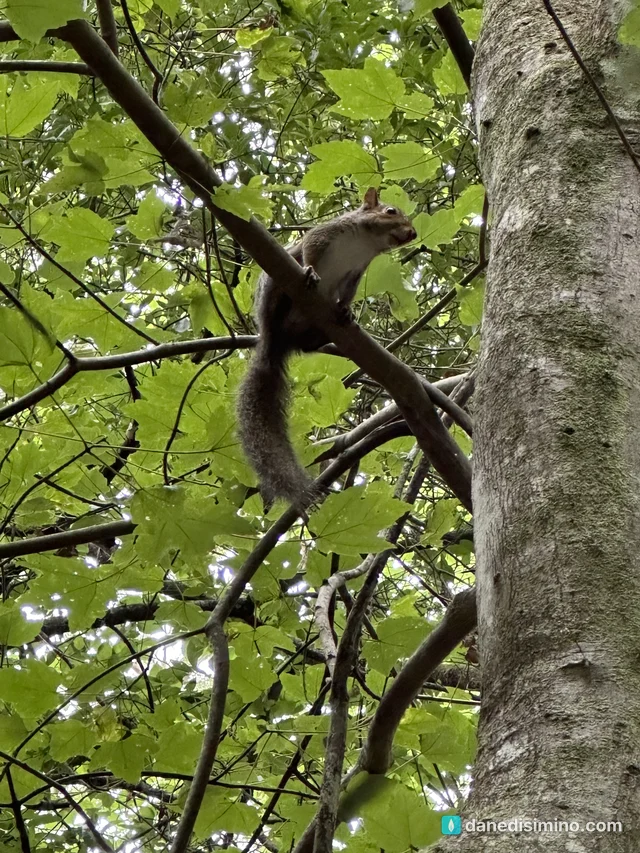
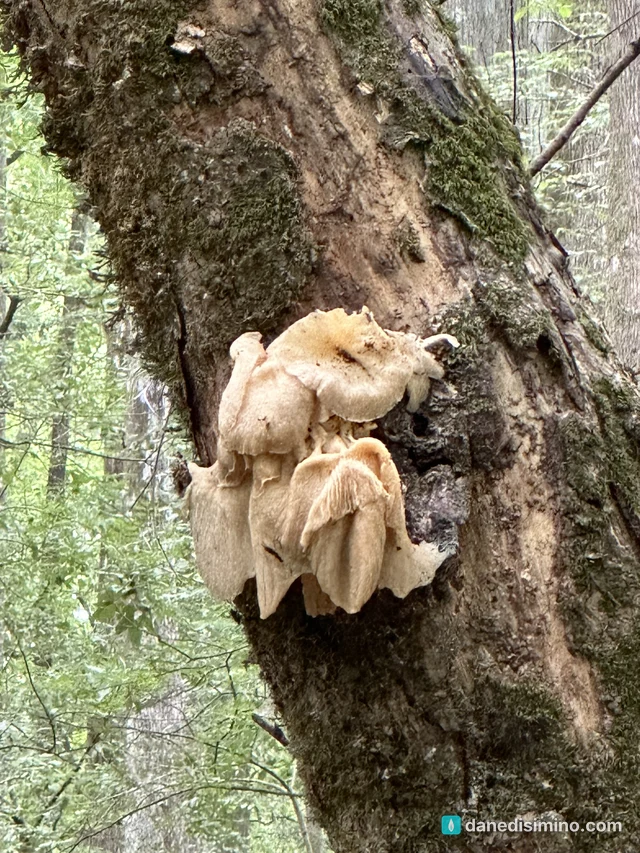
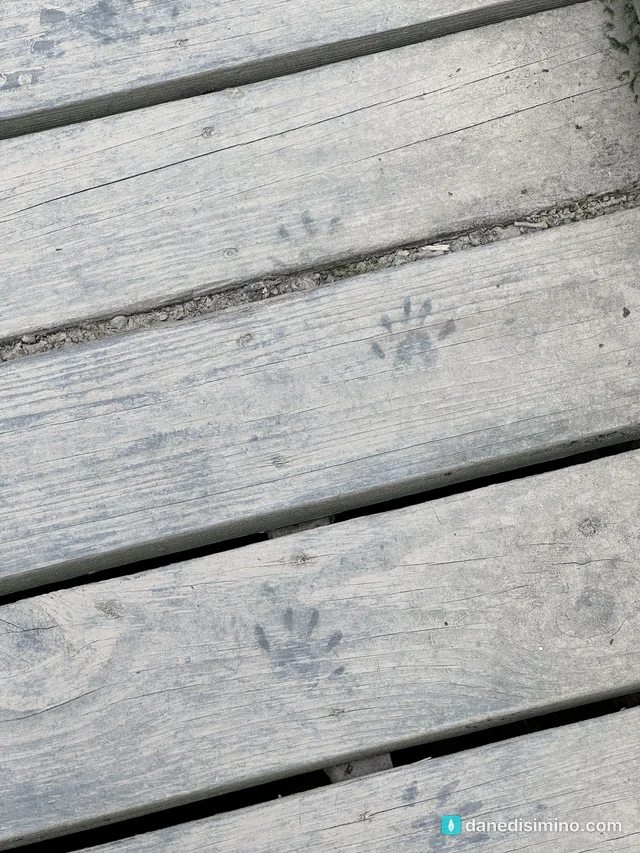
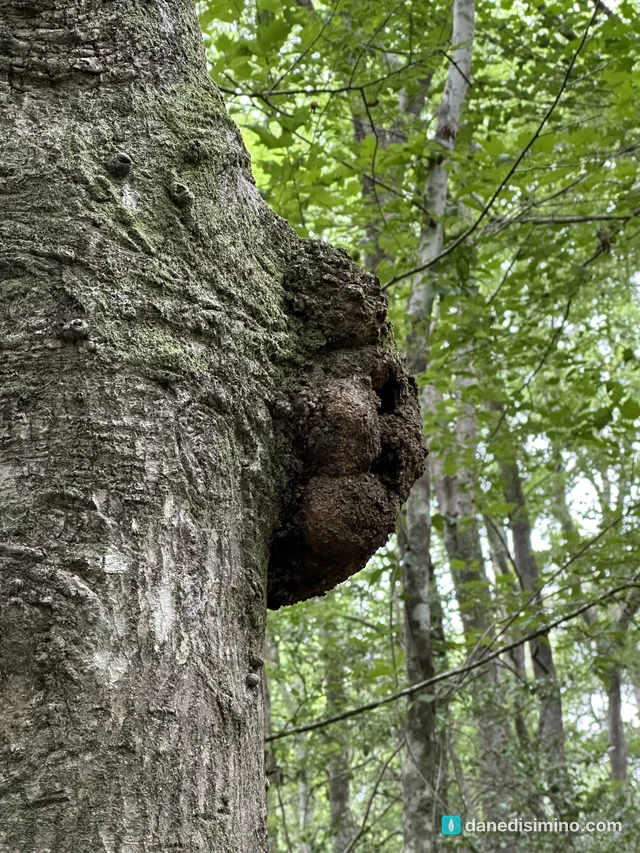
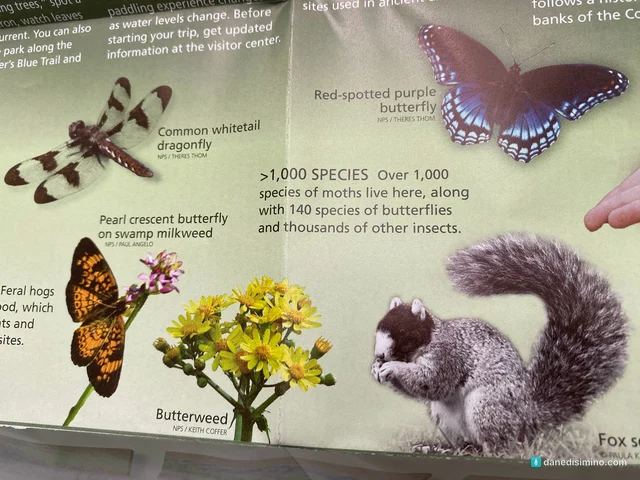
The little things were worth stopping for too: a squirrel high in the canopy, fungus growing on a trunk, a huge burl and raccoon tracks pressed into the boardwalk.
The fireflies we missed
My one regret is not seeing the fireflies. For about two weeks between mid-May and mid-June, the synchronous firefly Photuris frontalis flashes in unison along the edge of the floodplain. We came in early July, after the season, and didn't have the time or daylight to stay into the evening anyway. I can only imagine standing in that forest with fireflies all around you.
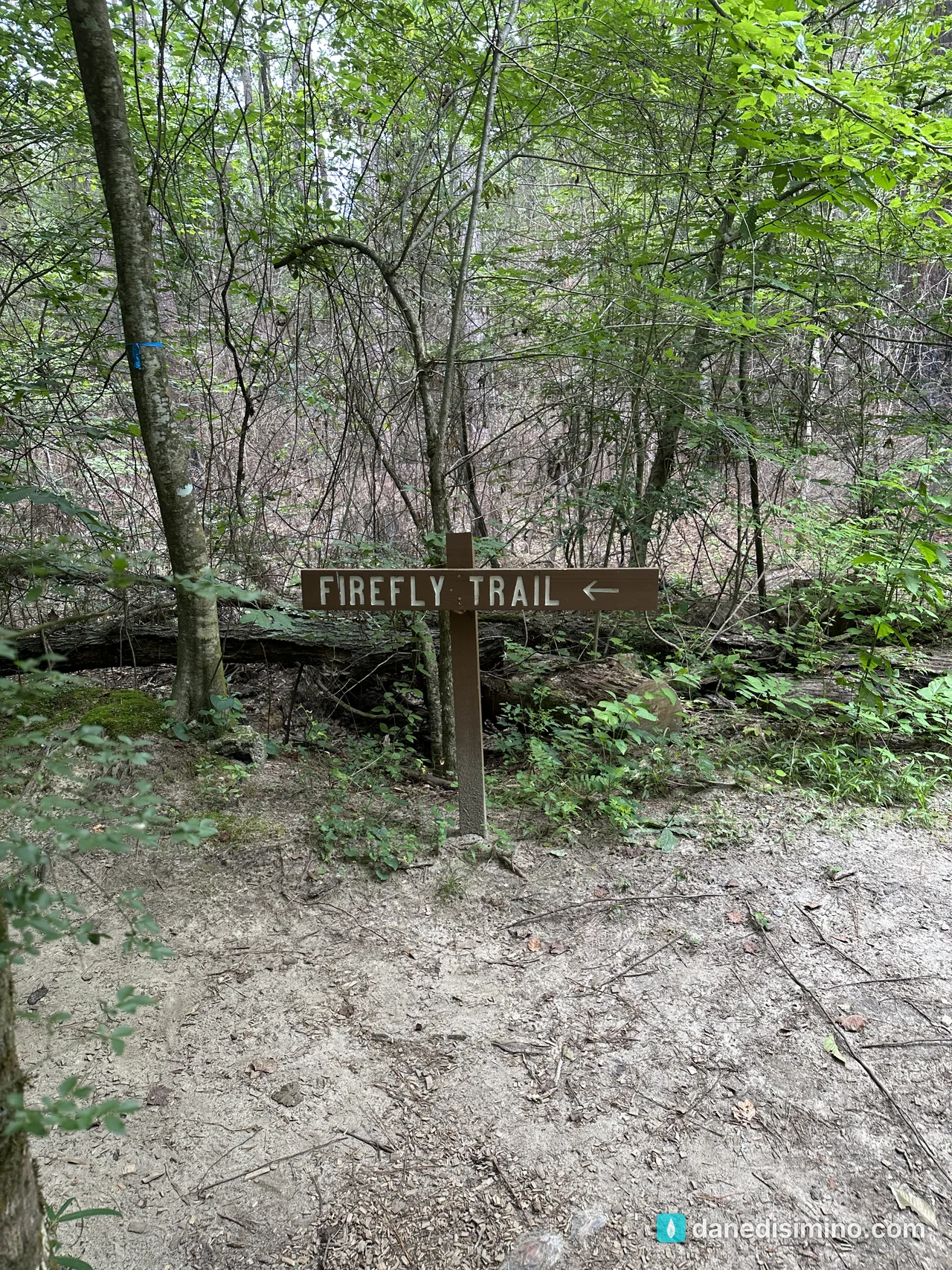
The visitor center
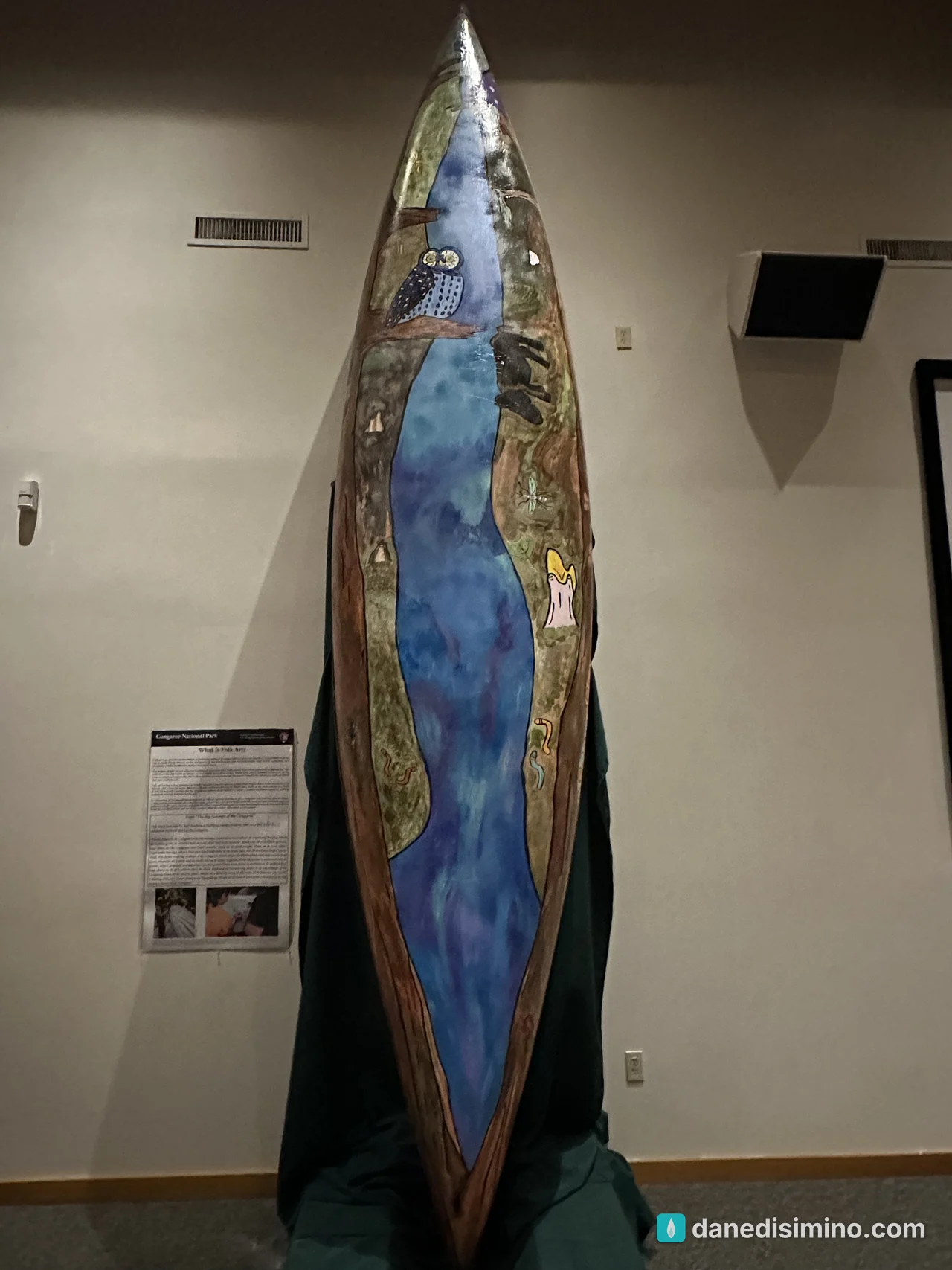
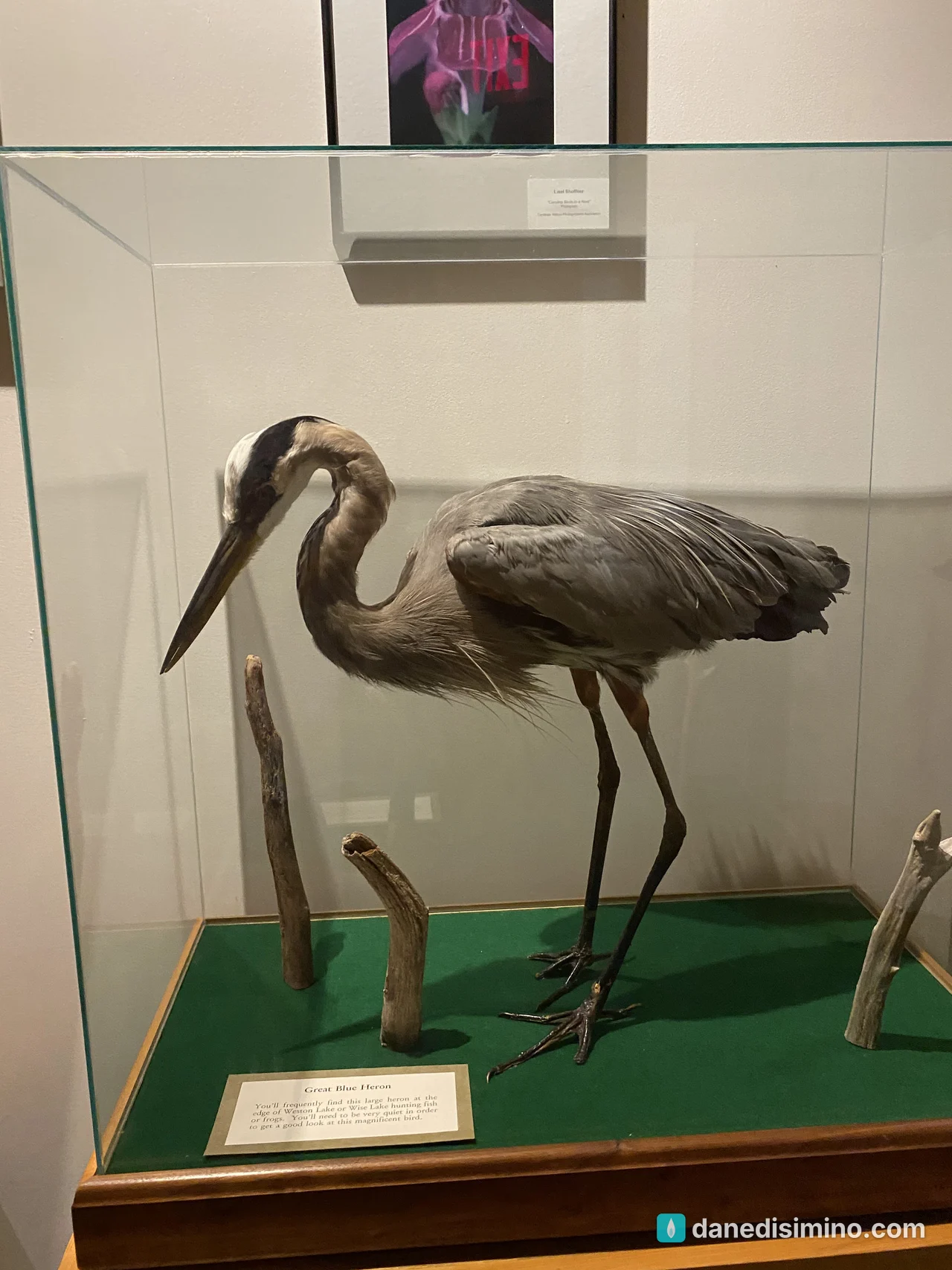
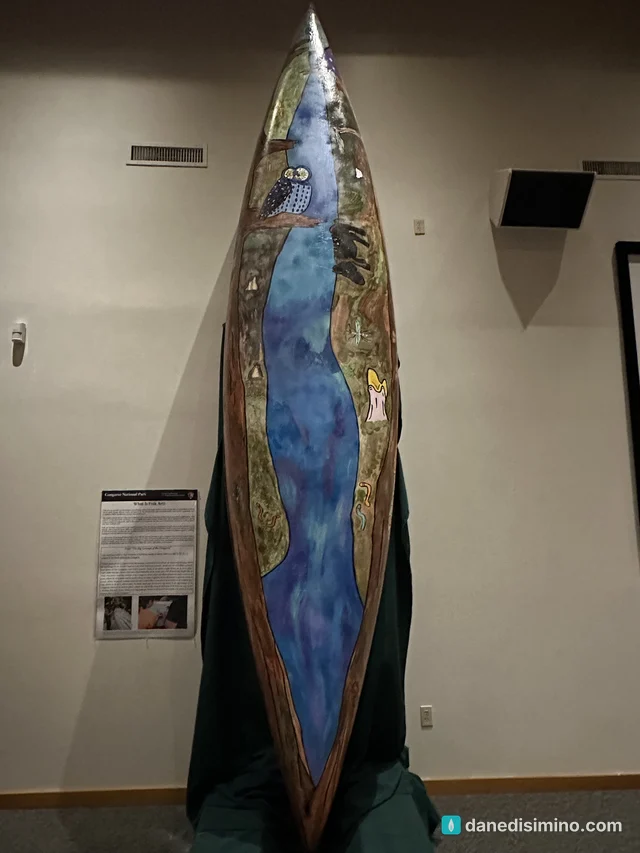
The Harry Hampton Visitor Center is a really good one, with exhibits on the forest's history and the people who lived in it. A carved, painted canoe reminds you that the Catawba and Congaree tribes made canoes from bald cypress because the wood was durable and easy to work.
My honest take
Congaree was better than Hot Springs by a landslide, and it's unique in its own right. But we'd been spoiled by the big western parks. There isn't one view here that makes you say, "You have to go see this." Walk the boardwalk, see the visitor center, and if you can, plan your trip around the fireflies.
Where we stayed
We stayed in a basic chain hotel, nothing to write home about. If you want to sleep closer to the trees, Longleaf Campground is right by the visitor center. Columbia, about 18 miles away, has plenty of hotels.
What I'd do differently
Come in May. The firefly event would make this a top-tier park visit.
Stay into the evening. The forest at dusk must feel completely different.
Paddle Cedar Creek. The park's canoe trail gets you deeper into the floodplain than the boardwalk.
What Congaree taught me
Walking under those trees, I felt like the forest was alive with praise.
"Let the fields and their crops burst out with joy! Let the trees of the forest sing for joy before the LORD, for he is coming!" (Psalm 96:12–13, NLT)
Even the trees know who made them.
Questions?
Ask me anything about Congaree: how to get firefly passes, which trails to walk, or how to fit it into a trip east. I answer every question.
Photos
Sources
- Congaree National Park (NPS)
- People in the floodplain (NPS)
- Park brochure (NPS, via NPS History)
- Fees and passes (NPS)
- Trail information (NPS)
- Camping (NPS)
- Self-guided boardwalk tour, stop 3 (NPS)
- Synchronous fireflies at Congaree (NPS)
- Firefly viewing event (NPS)
- Congaree getaway (NPS)
- Ecology of Congaree National Park (USGS)
- Congaree history (National Parks Traveler)
- Congaree: champion trees, synchronous fireflies and more (NPCA)
- Congaree National Park (Wikipedia)
Pathlight
Park guides from the road. A printable trip sheet comes with them when one is ready.