
STATE PARKS · SOUTH DAKOTA
Custer State Park
A Field Guide
On this page
The hidden gem of our Dakotas trip: bison herds on the Wildlife Loop, begging burros, a double rainbow in Hot Springs, and a sunset drive home from the Badlands we'll never forget. How the bison came back, what it costs, and why I'd camp here next time.
Version 1.0 · Updated Nov 20, 2026
Custer State Park was the delightful surprise of our Dakotas trip. I'd never heard much about it, and I came away thinking it was more memorable than Wind Cave, the national park right next door.
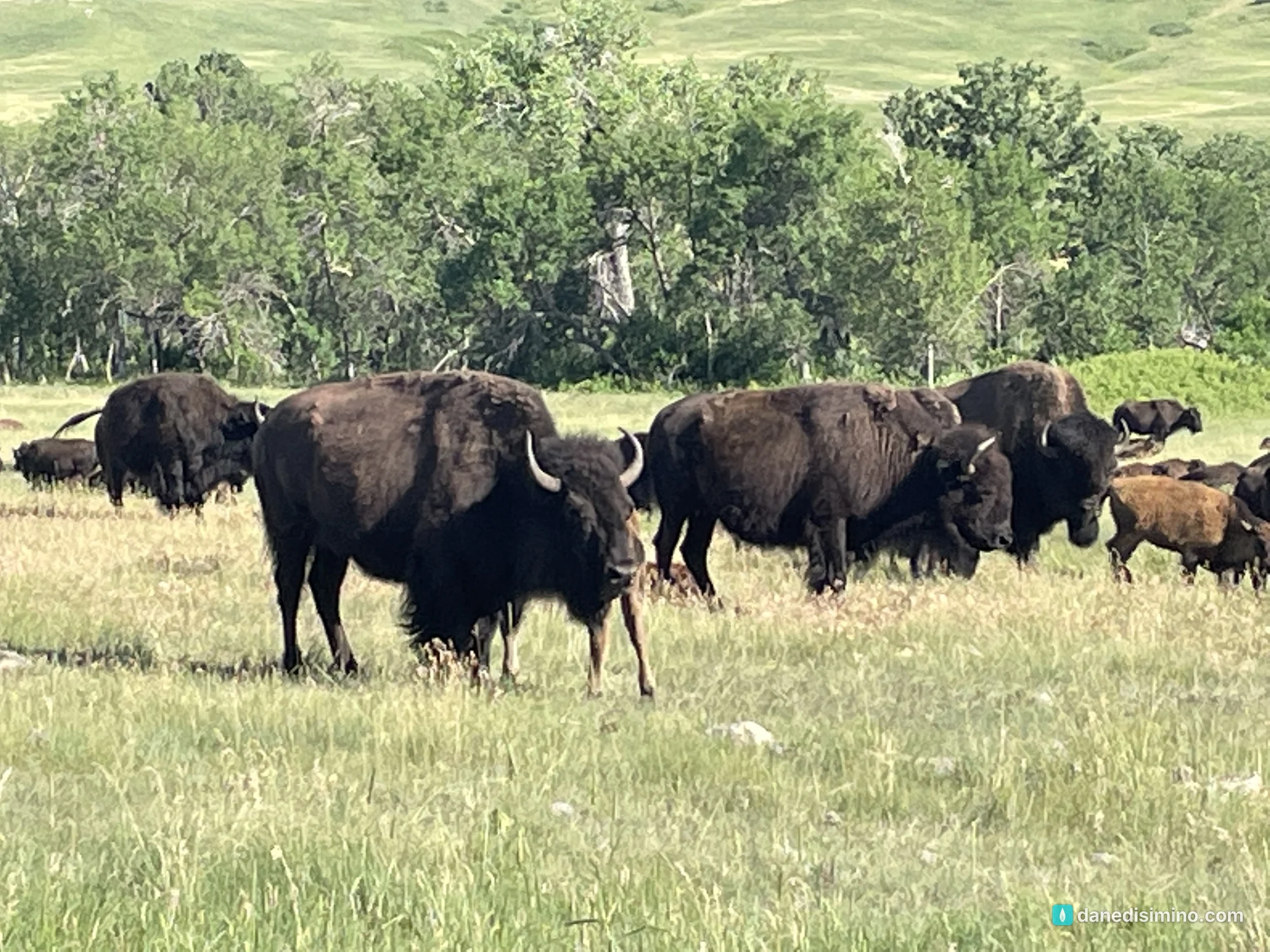
We drove the Wildlife Loop the afternoon of July 3, 2022, after Mount Rushmore, and met our first herd. The next evening, after a long day in the Badlands, we cut back south through the park on the way to our campground. We don't regret it. The sun set over the prairie with bison grazing all around us, and those are still some of my favorite photos.
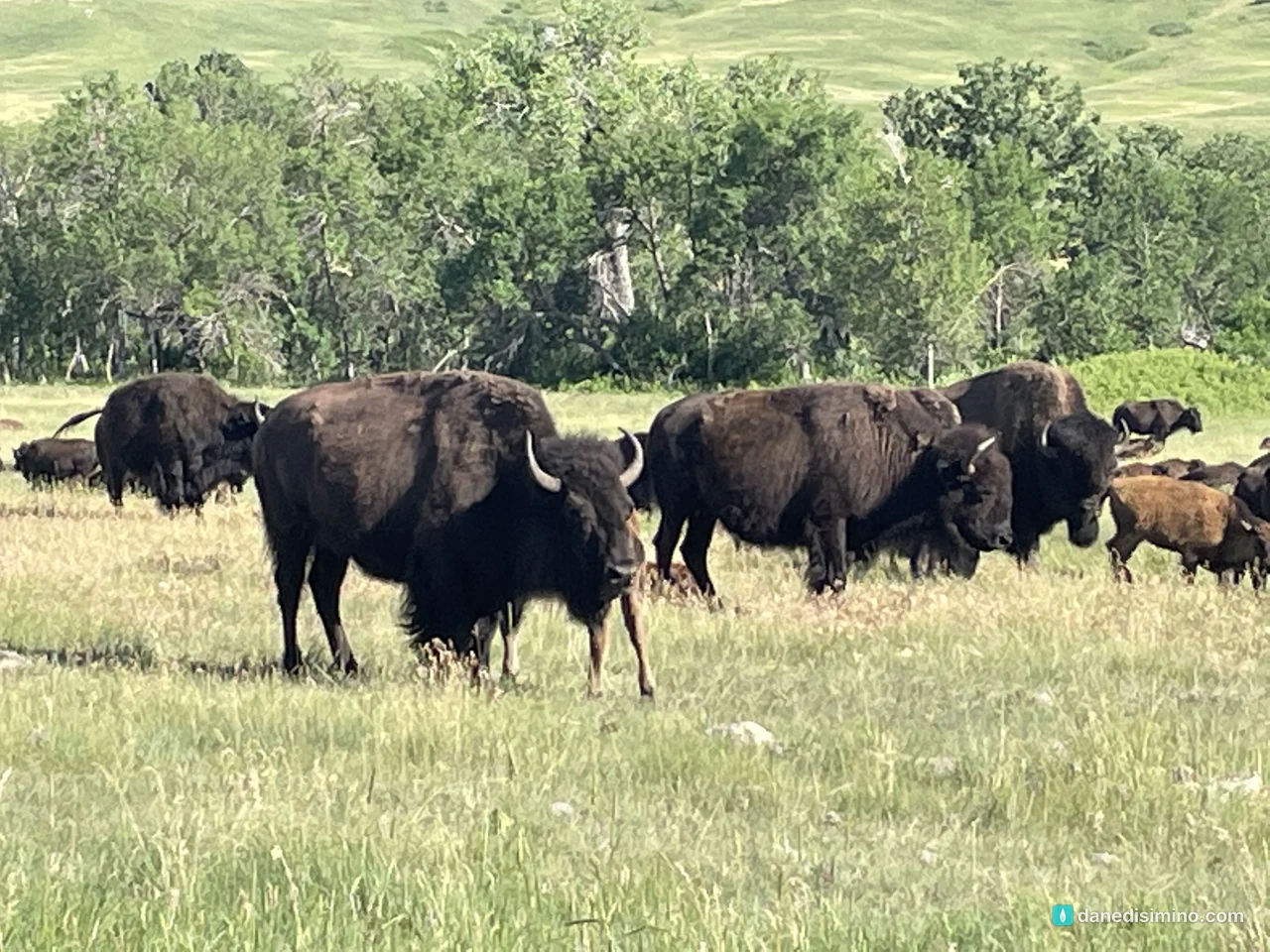
South Dakota is beautiful, and I think it's happy to keep that a secret.
The short version
Drive the Wildlife Loop Road. It's 18 miles through prairie and pine, and it's where the bison are. Go early in the morning or in the evening.
Buy the 7-day license. It's $25 per vehicle and covers every South Dakota state park for the week.
Stay in your car around bison. They look slow. They aren't.
Expect the burros. A band of friendly donkeys works the Wildlife Loop for snacks.
Camp here. If I went back, I'd stay in the park instead of in town.
The park at a glance
- 71,000
- Acres in the Black Hills
- ~1,300
- Free-roaming bison
- 1919
- Became a state park
- $25
- Per vehicle, good for 7 days
Where: the southern Black Hills, east of the town of Custer. Wind Cave National Park borders it to the south, and Mount Rushmore is a short drive north.
Getting in: the temporary entrance license is $25 per vehicle ($20 per motorcycle) and lasts seven days. If you're only driving straight through on U.S. 16A or south Highway 87, you don't need one.
Scenic drives: the Wildlife Loop Road for animals, plus the Needles Highway and Iron Mountain Road for granite spires and tunnels.
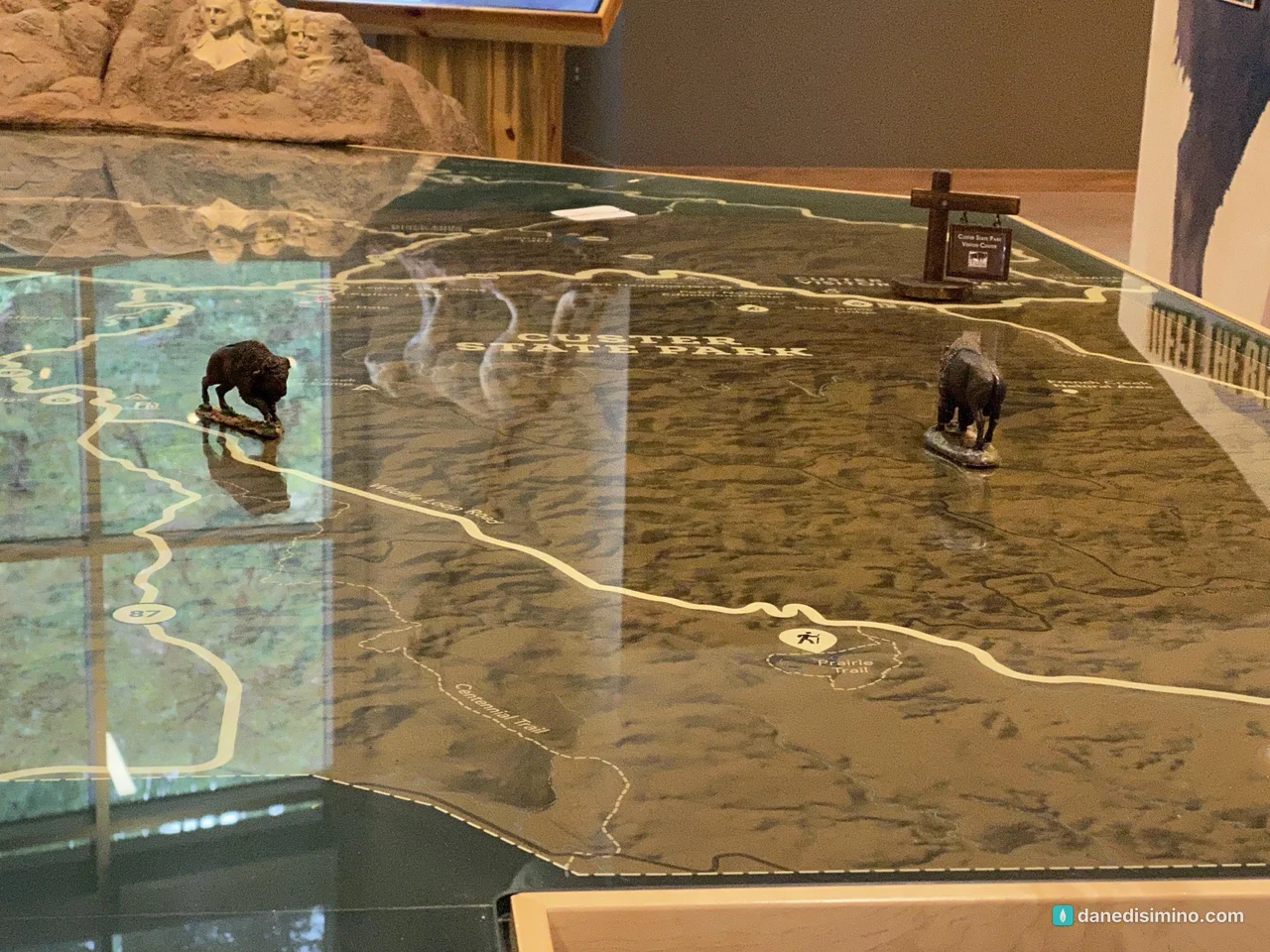
Start here: the Custer State Park Visitor Center, at the junction of Highway 16A and the Wildlife Loop, is open year-round and plays a 20-minute film about the park.
How the park began
Custer State Park started as Custer State Forest in 1912. Governor Peter Norbeck, the "Father of Custer State Park," pushed to protect it further, and on July 1, 1919, it officially became a state park. It's named for George Armstrong Custer, whose 1874 expedition found gold along French Creek.
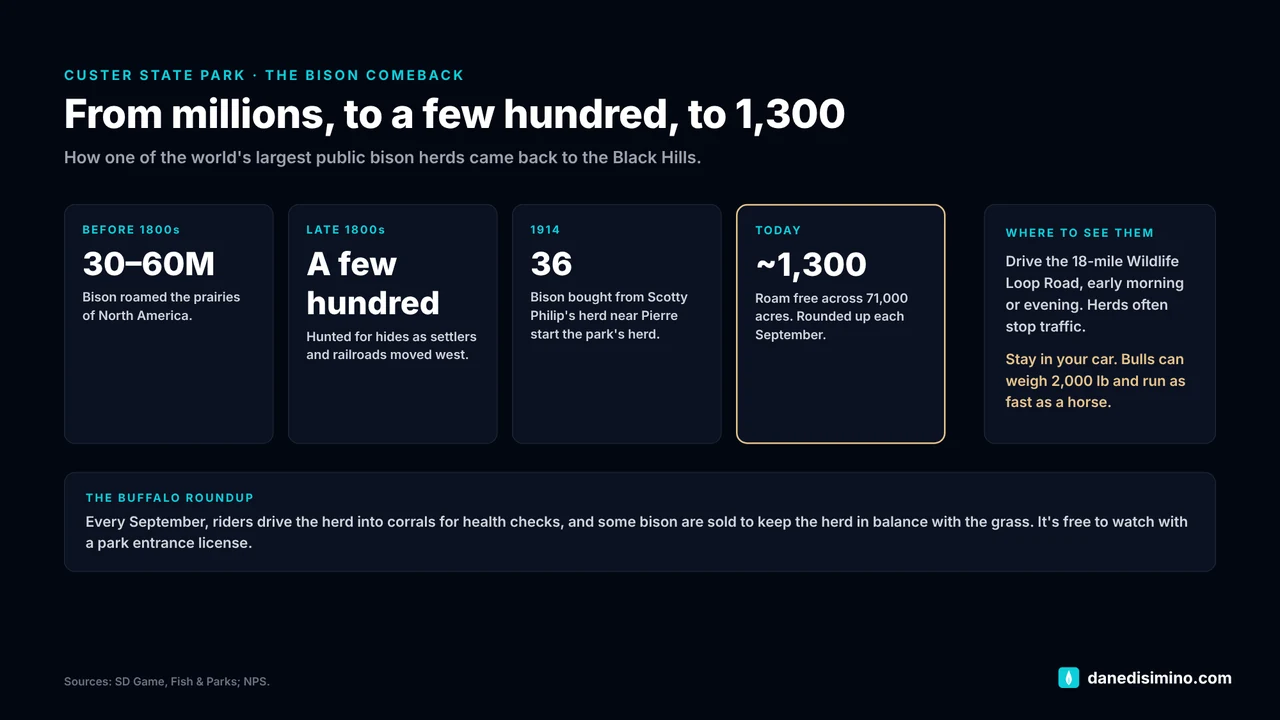
The bison came first. In 1914, the park bought 36 bison from Scotty Philip's herd near Pierre. Today about 1,300 roam the park, one of the largest publicly owned bison herds in the world. Every September, riders round up the herd for health checks during the Buffalo Roundup.
The Wildlife Loop
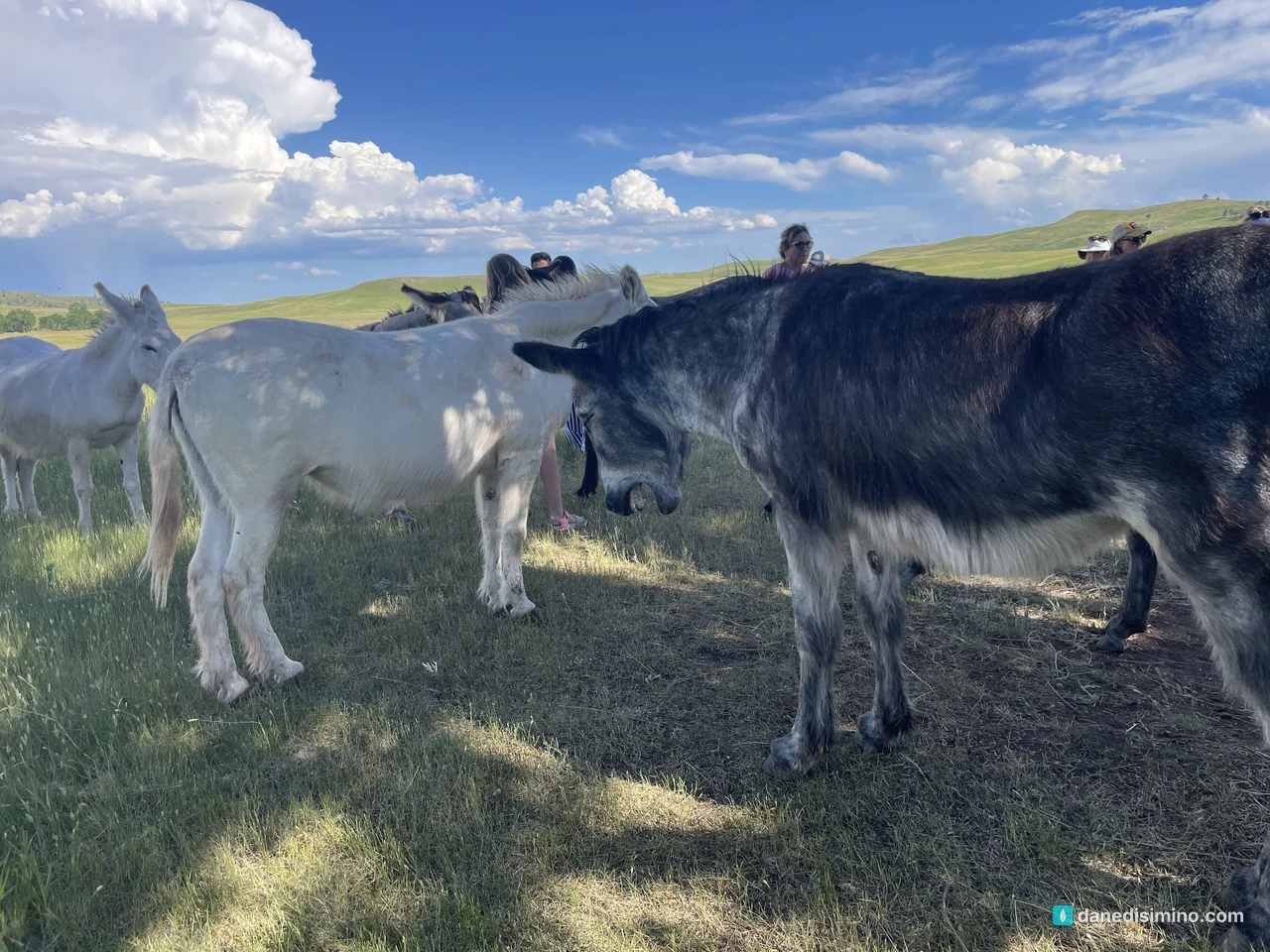
We came in from Mount Rushmore around 5 p.m. The first animals to greet us weren't bison. They were burros, standing in the road and walking up to cars. The burros descend from pack animals that once carried visitors up to the area's highest peak. When they were no longer needed, they were turned loose, and their descendants have been working the Wildlife Loop ever since.
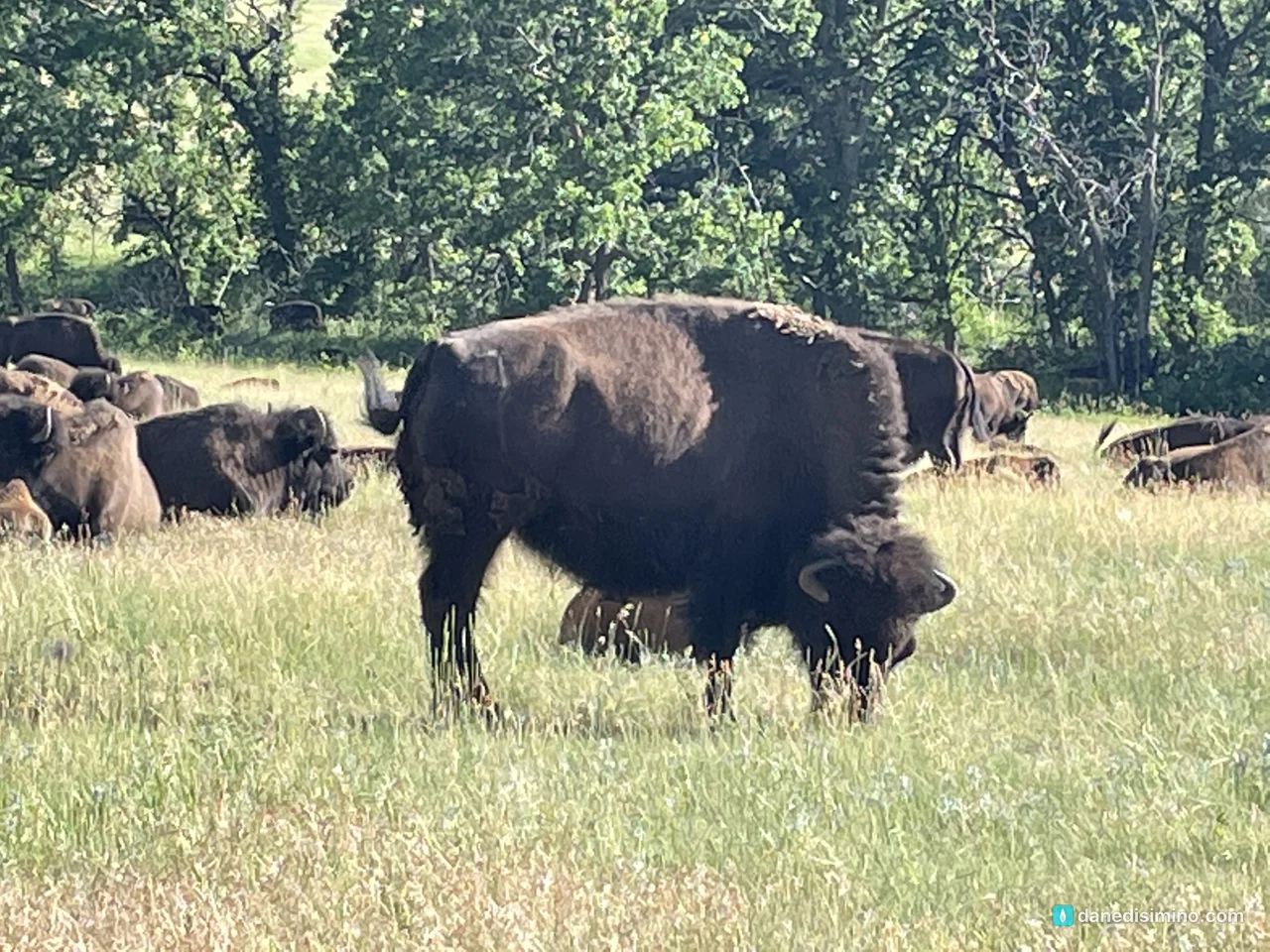
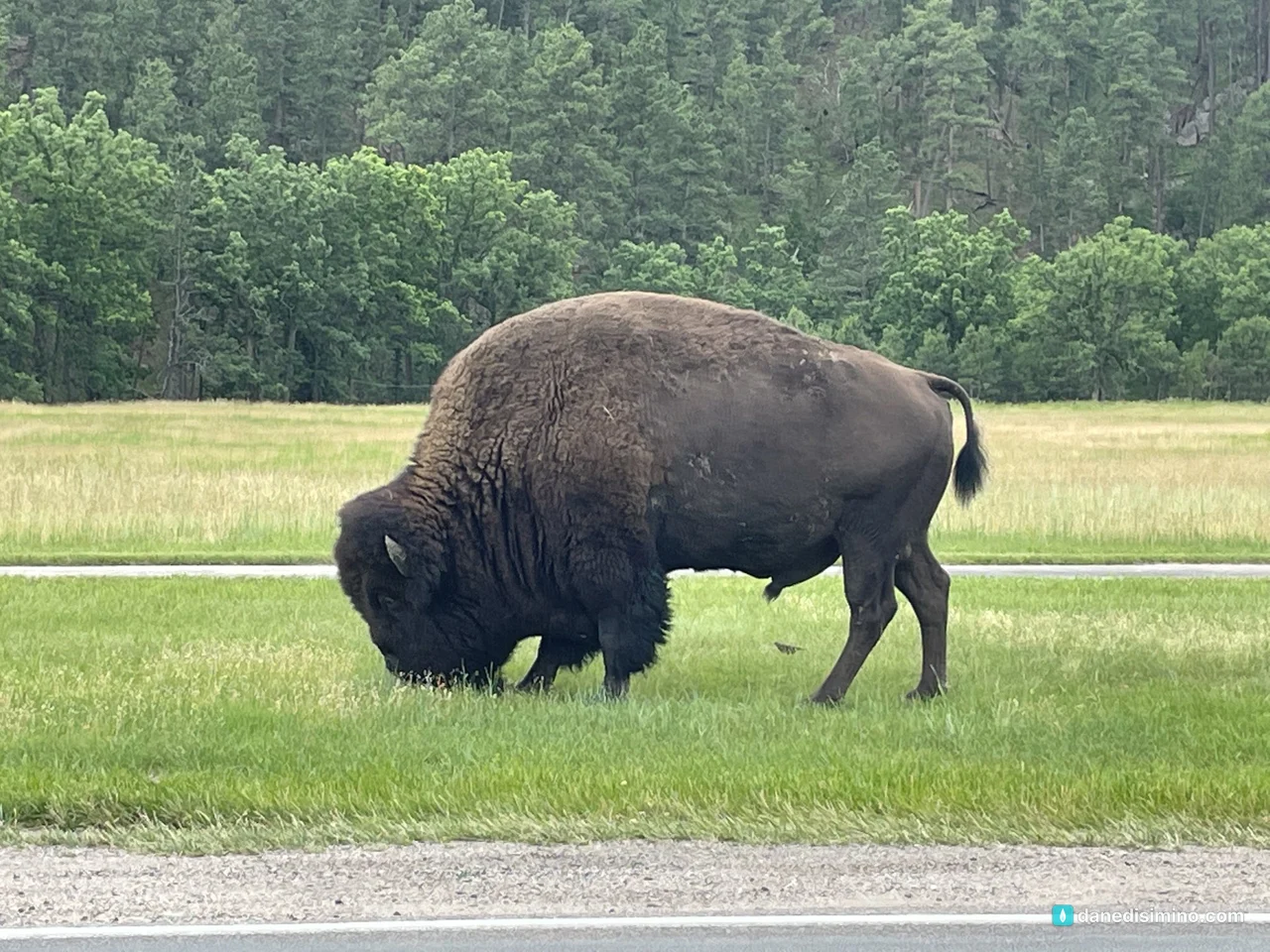
A few minutes down the road we found the herd: dozens of bison grazing in a green meadow, calves tucked in between the adults. There were so many bison. It's the most we saw anywhere on the trip.
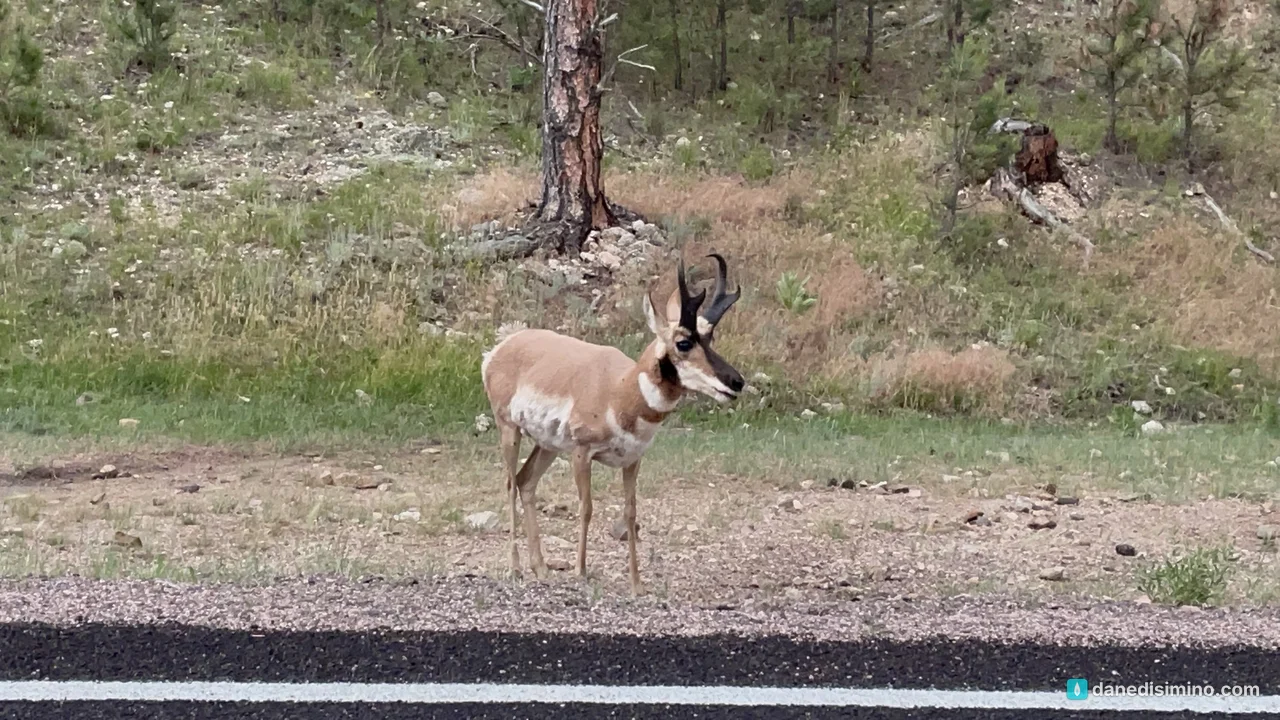
Bison weren't the only ones out. A pronghorn buck stood at the edge of the road, close enough to see the black hooks on his horns. Pronghorn are the fastest land animals in North America.
Hot Springs: a mammoth and a double rainbow
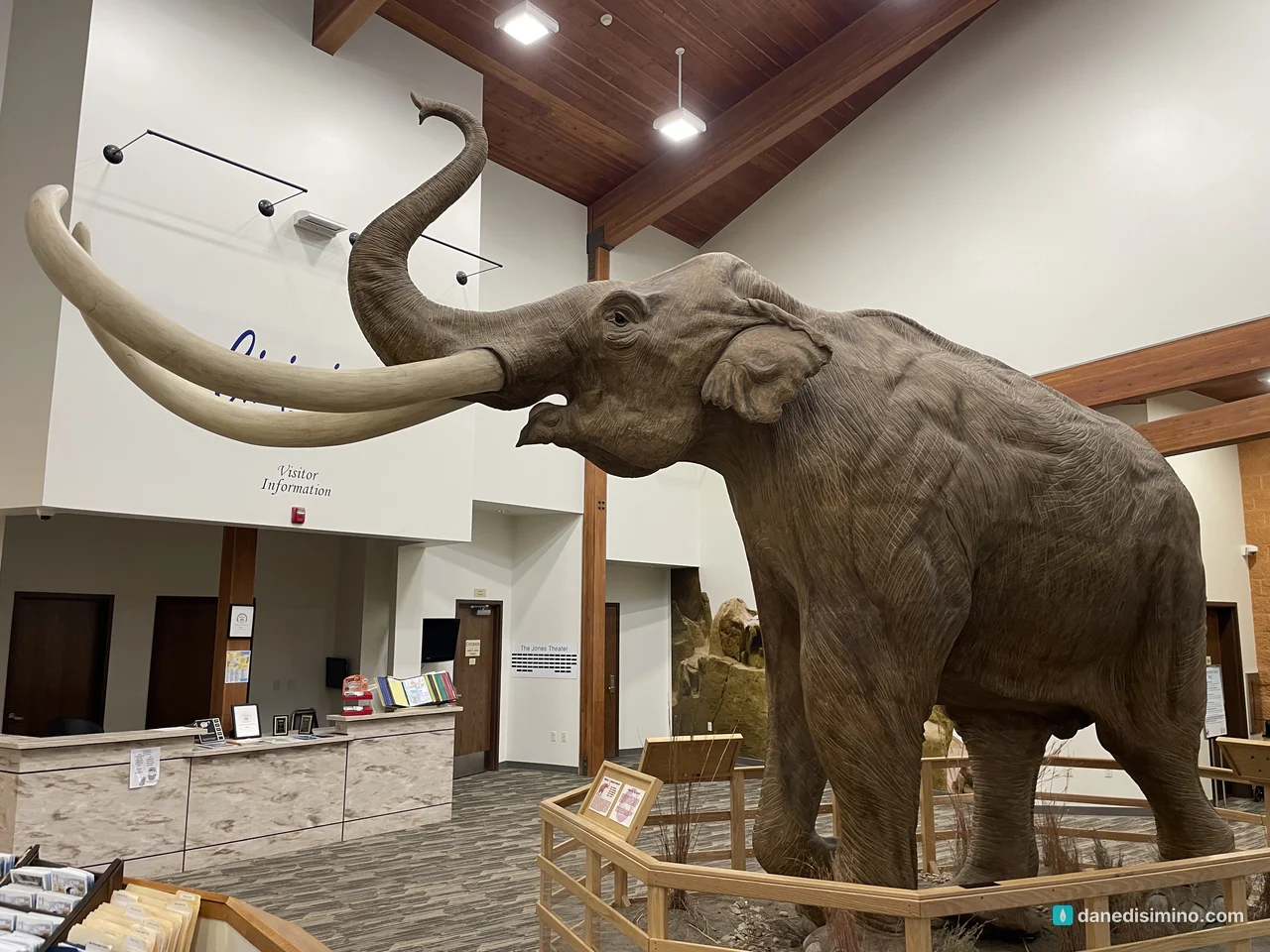
That evening we headed south toward our campground in Hot Springs. On the way we stopped at a visitor center with a huge mammoth standing in the lobby. Hot Springs is home to The Mammoth Site, where Columbian and woolly mammoths were trapped in a sinkhole more than 26,000 years ago. Today it's an active dig you can walk around, with the bones left where they were found.
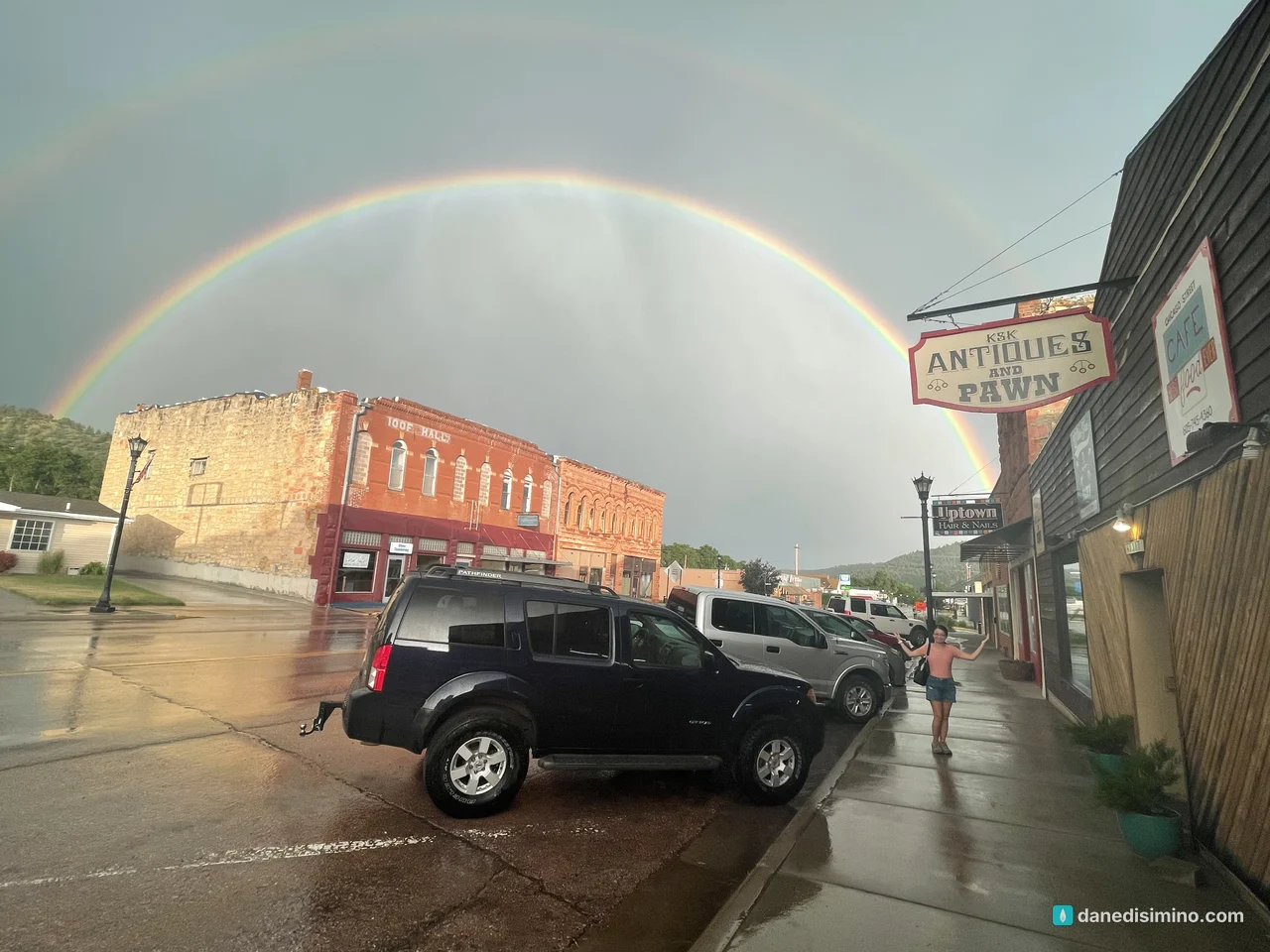
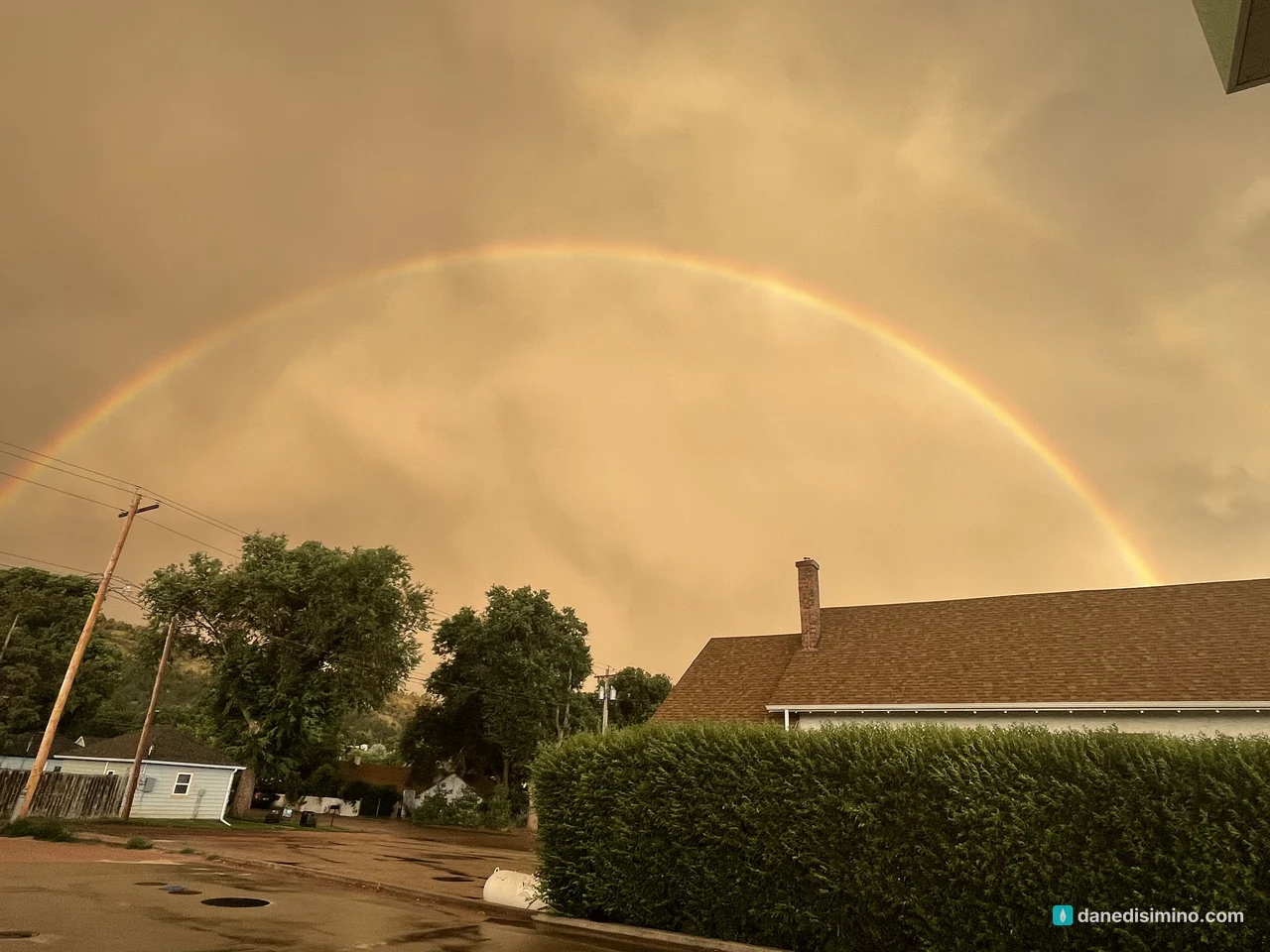
Later, a storm rolled through downtown Hot Springs. When it cleared, a full double rainbow stretched over the old sandstone buildings on Chicago Street. Carrie stood under it with her arms out. It was one of those little surprises that make a trip.
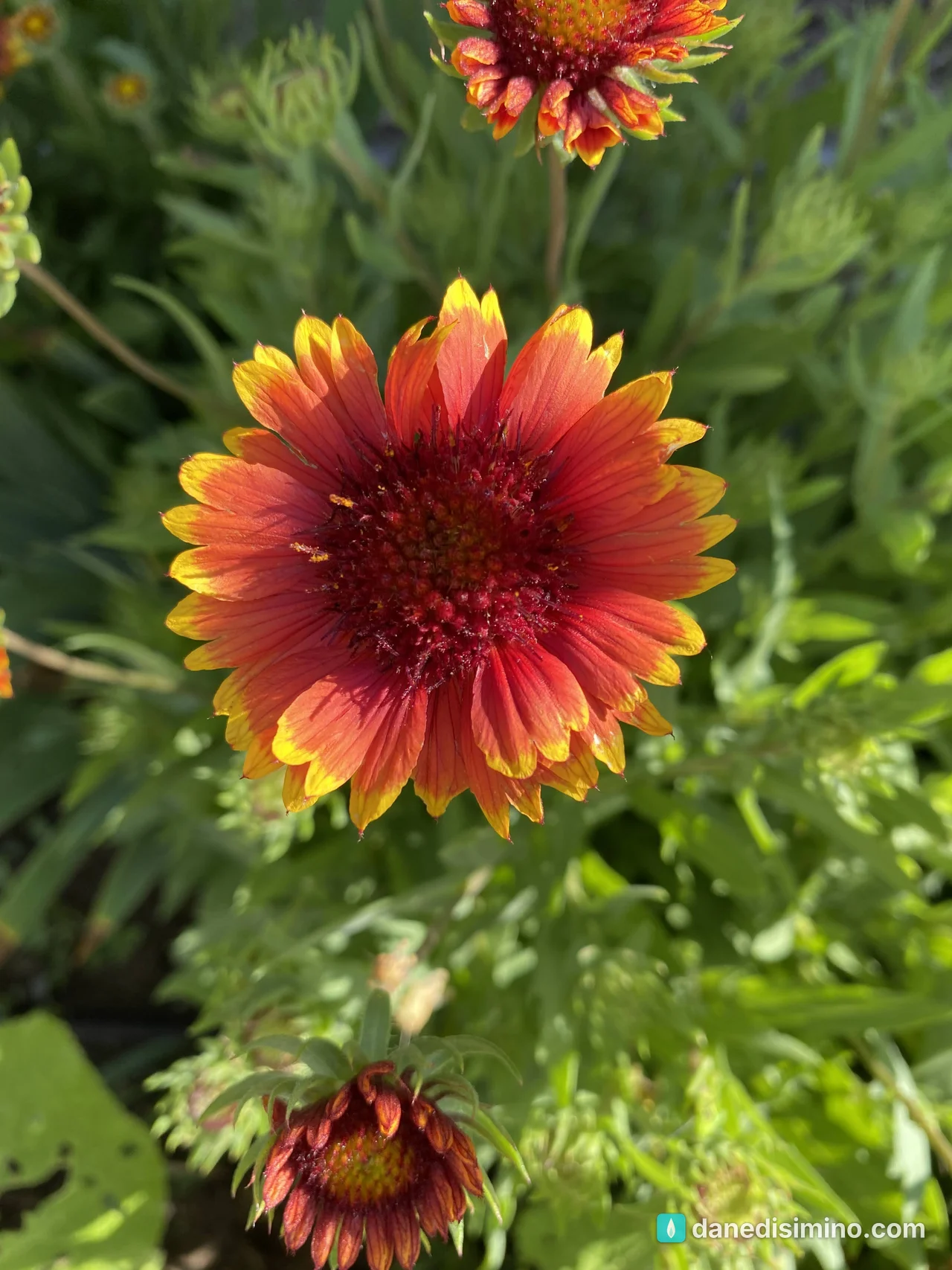
The sunset drive home
The next day we spent touring the Badlands. On the way back, we chose to cut south through the Black Hills instead of taking the faster way. That road runs through Custer State Park and on into the prairie of Wind Cave National Park.
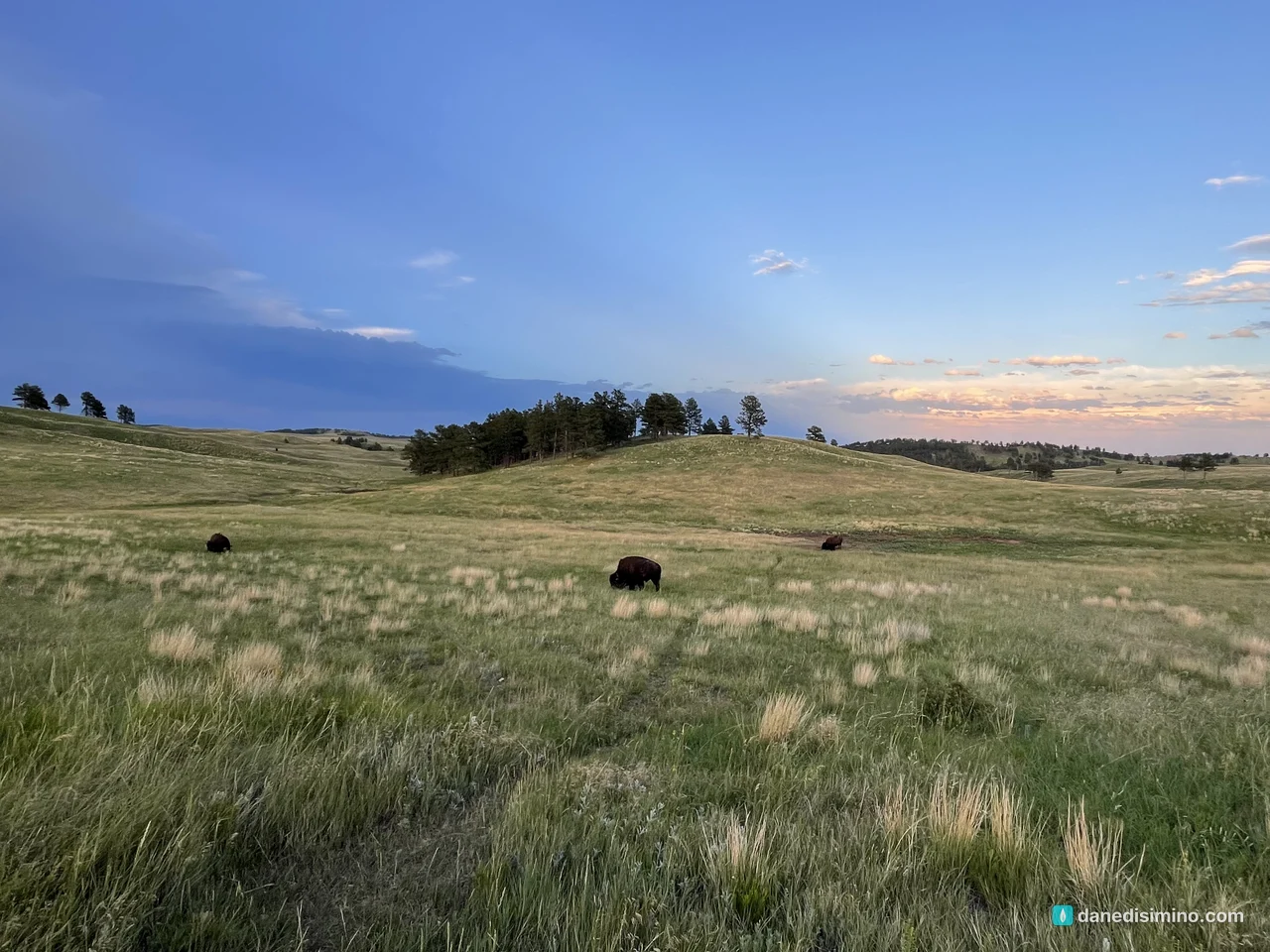
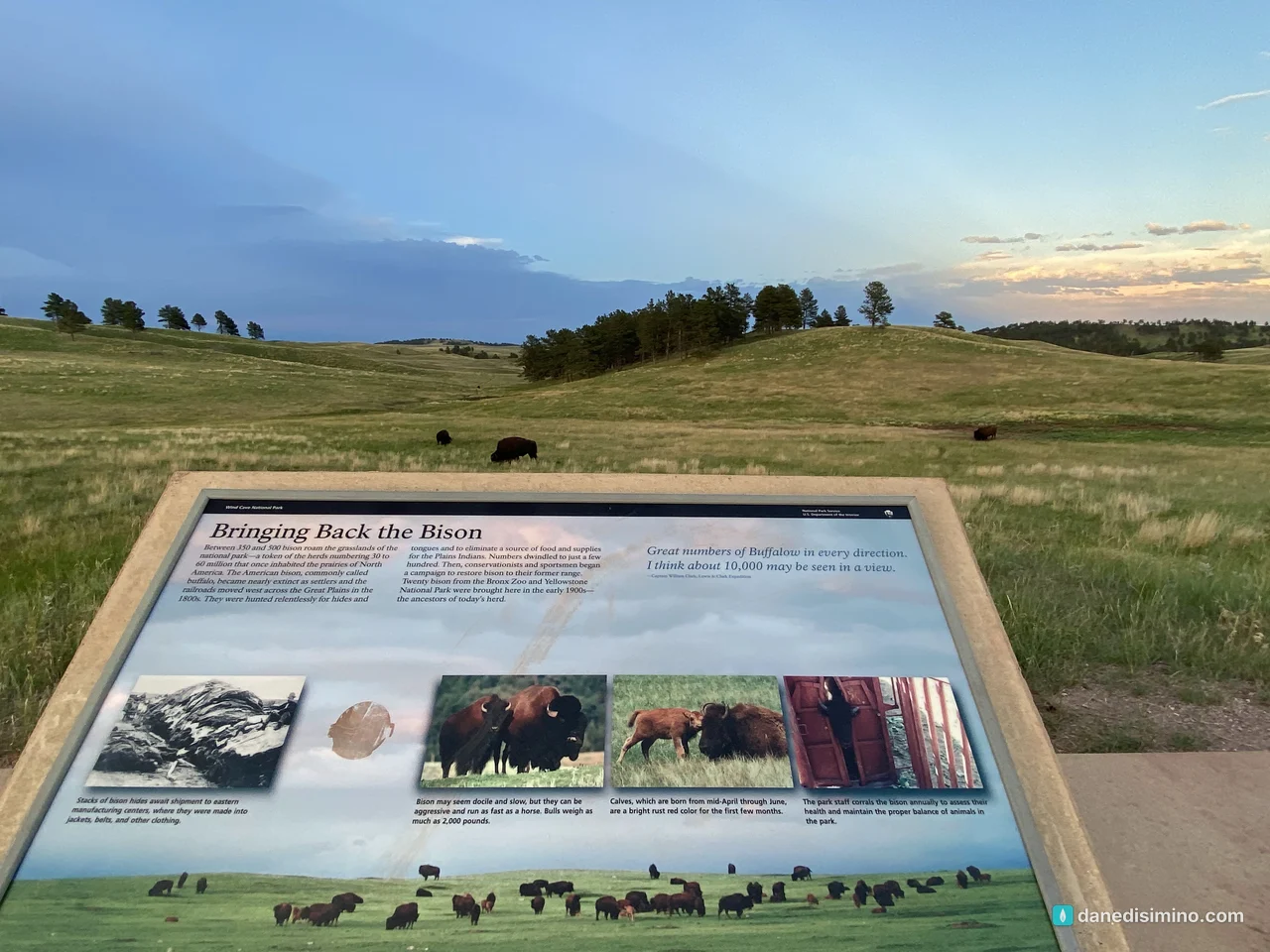
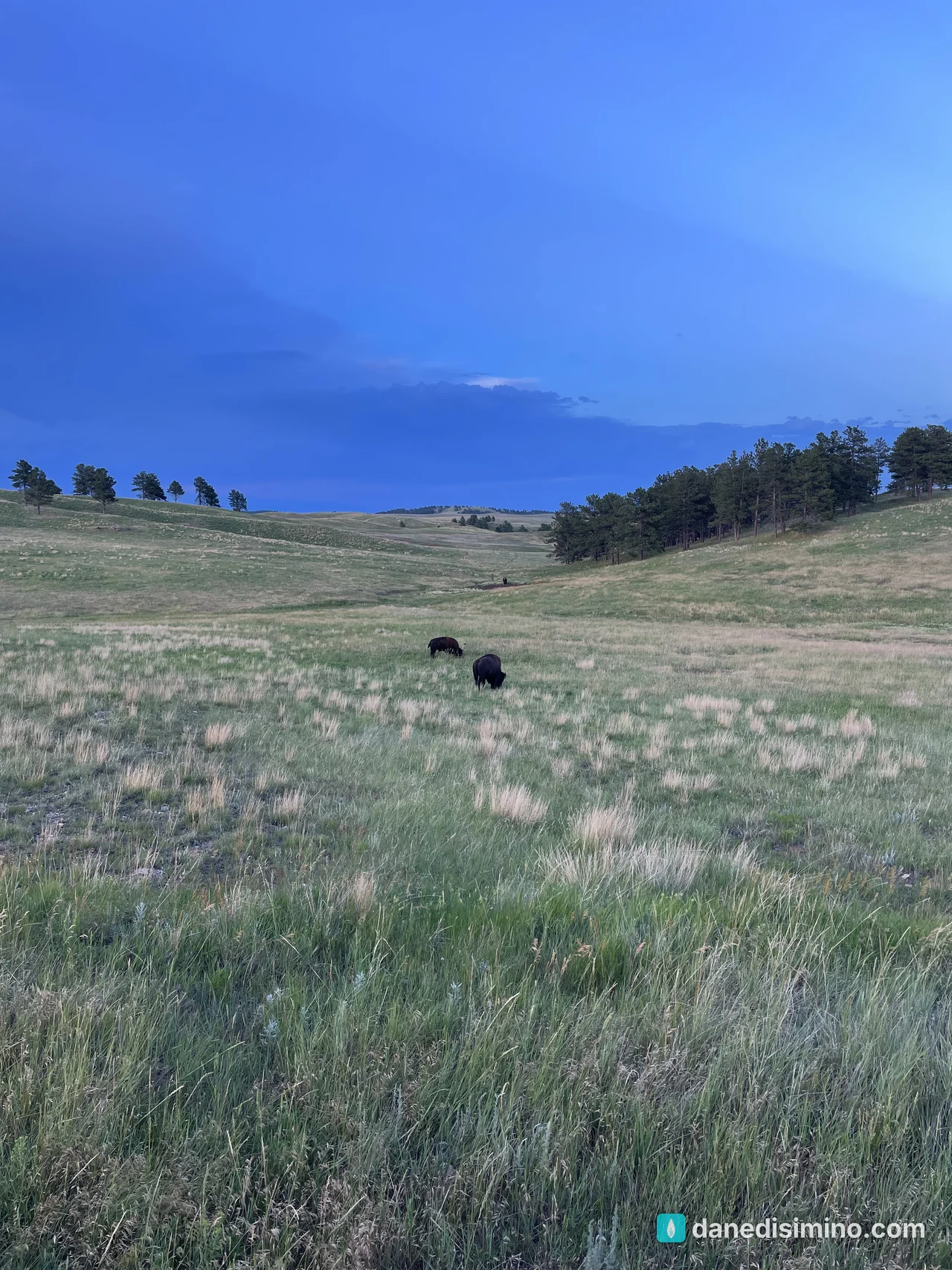
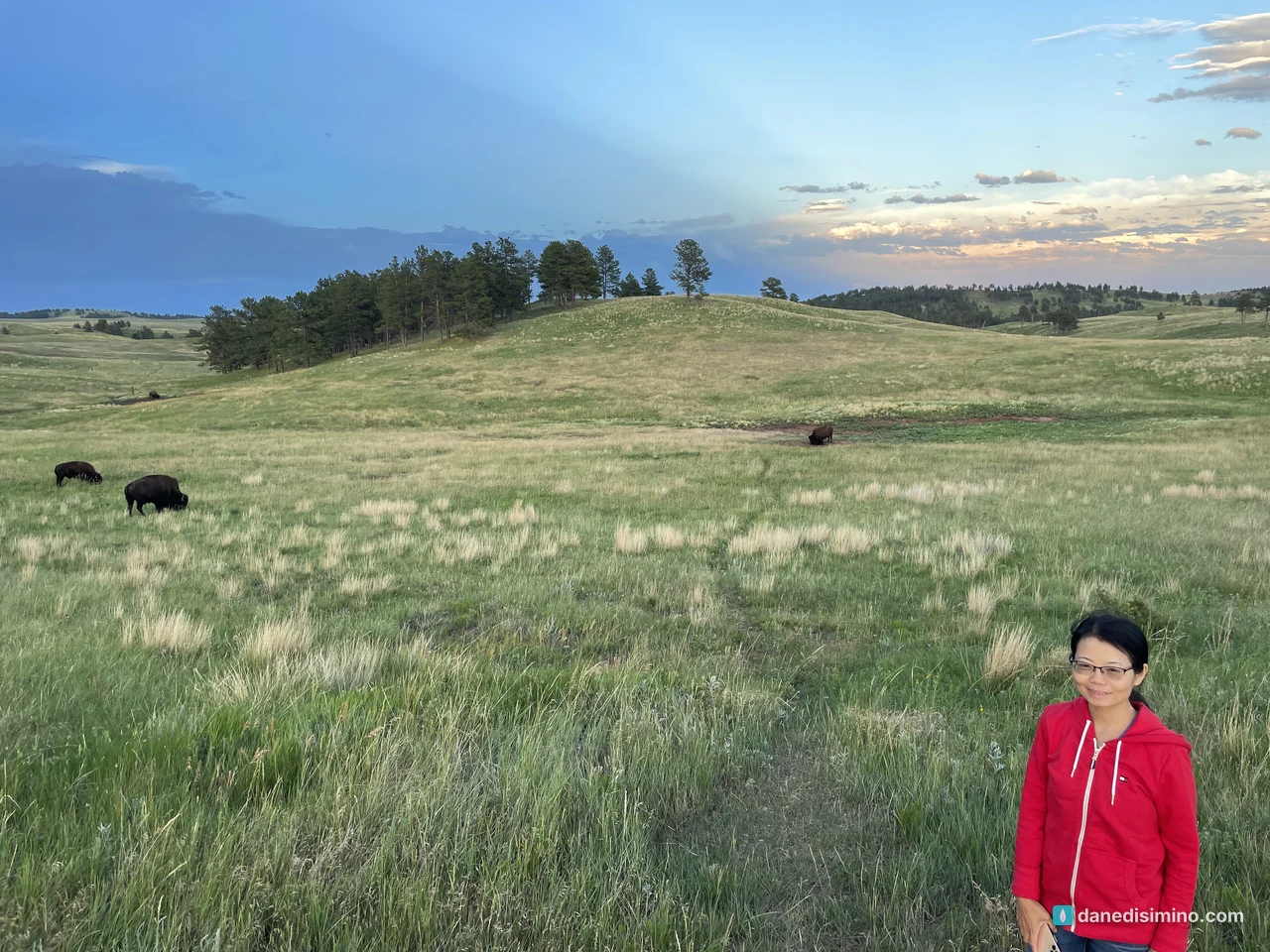
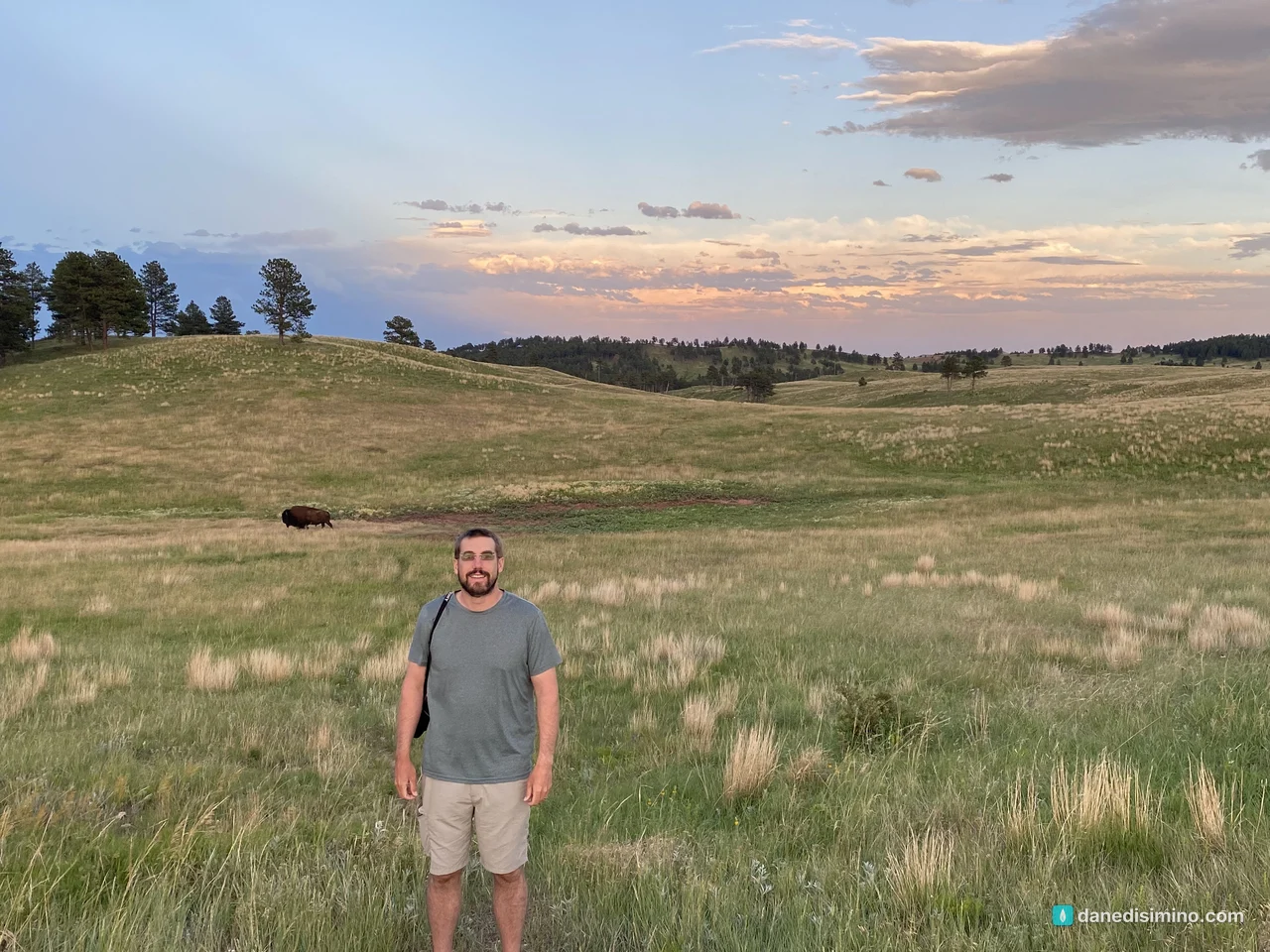
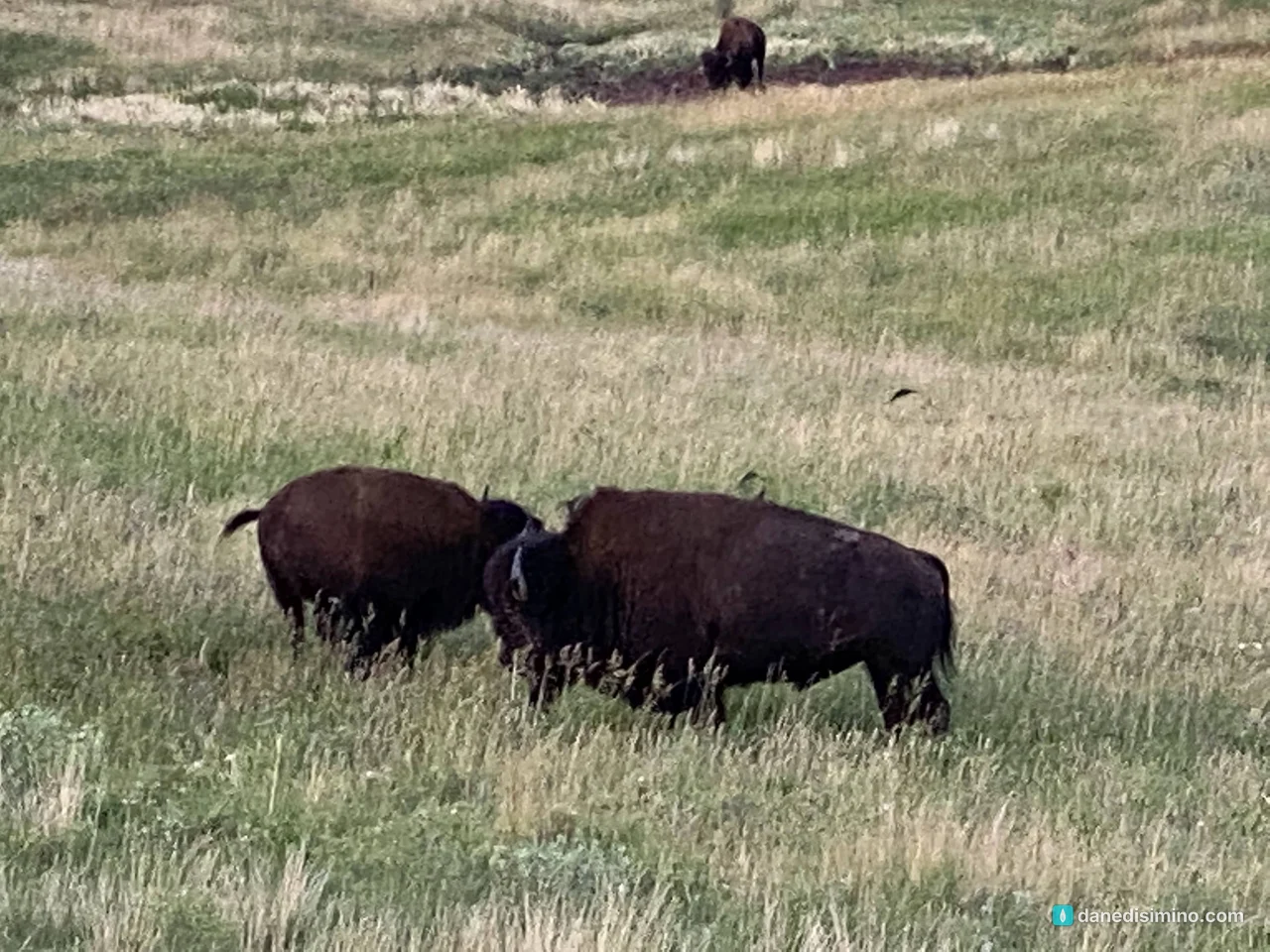
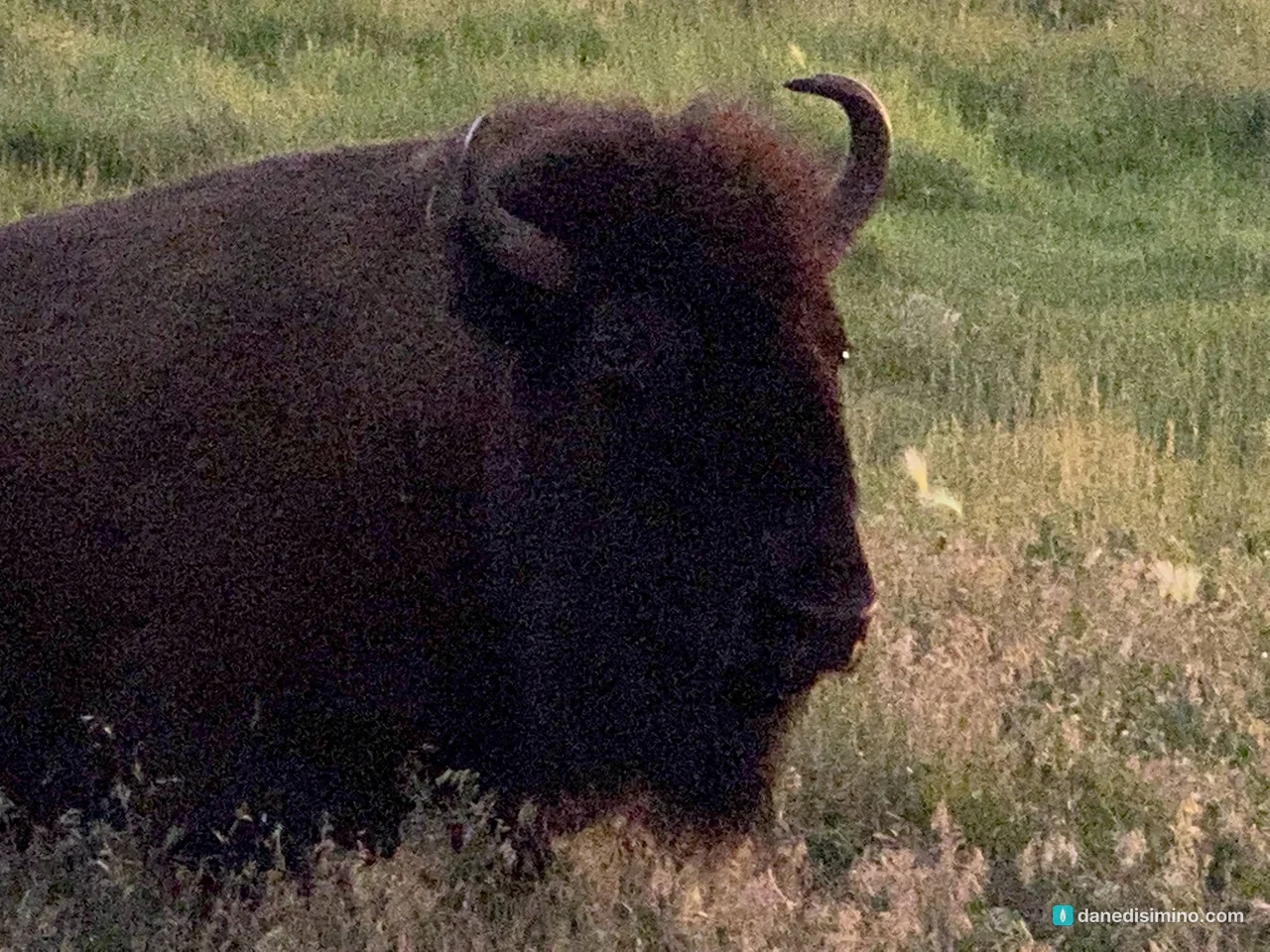
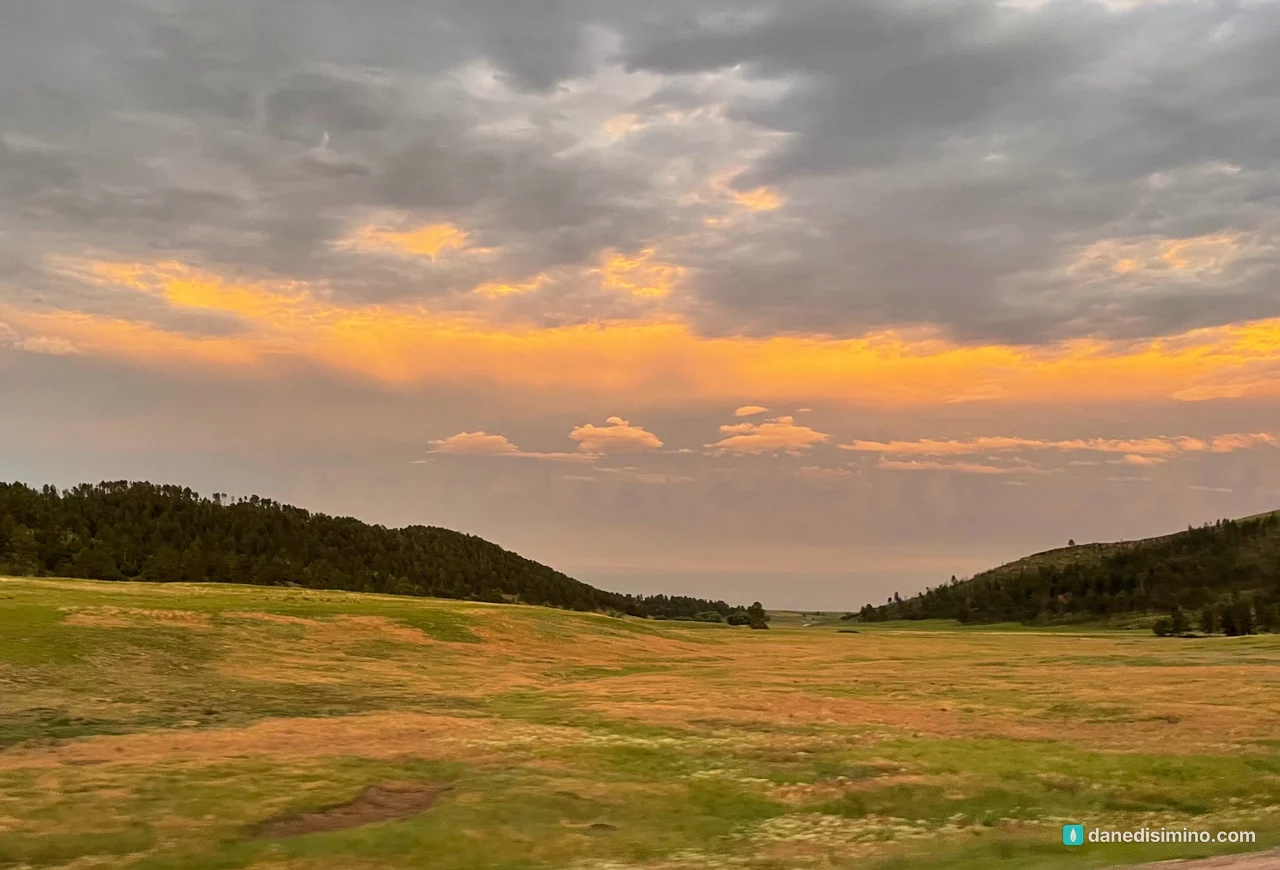
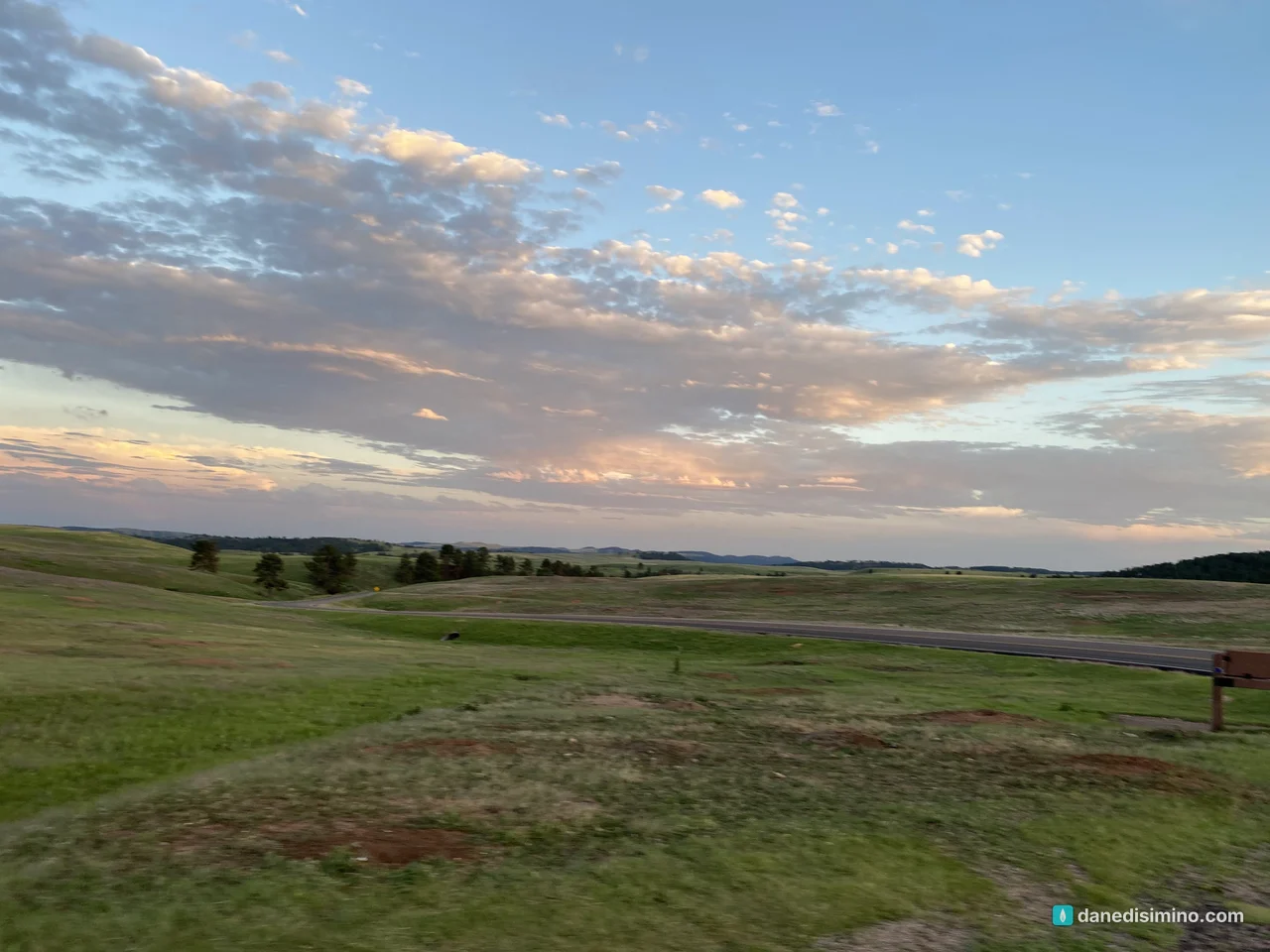
Just after 8 p.m., the sun dropped toward the hills. Bison were spread across the grass in every direction, and the sky turned pink and gold. We pulled over and stood in the prairie until the light was gone. By then we'd crossed out of Custer State Park: the sign at our pullout, about bringing the bison back, belonged to Wind Cave National Park. The two parks share a border, and the bison don't check which side they're on. I later entered these photos in the South Dakota state parks photo contest. They didn't win, but I still think they're great pictures.
Where we stayed
We stayed at the Hot Springs KOA, south of the park. It worked, but next time I'd camp inside Custer State Park. The park has campgrounds plus lodges and cabins run by Custer State Park Resorts. Camping reservations are at campsd.com.
What I'd do differently
Camp in the park. You'd wake up close to the Wildlife Loop and the morning light.
Drive the Needles Highway and Iron Mountain Road. We stuck to the Wildlife Loop and missed the granite spires and tunnels.
Stop at the visitor center first. The film and the exhibits explain the bison and the park.
What Custer State Park taught me
Standing on that prairie at sunset, I could see why Teddy Roosevelt fell in love with this kind of land. The grass seemed to go on forever, and every bison was right where it belonged.
"For all the animals of the forest are mine, and I own the cattle on a thousand hills." (Psalm 50:10, NLT)
The prairie, the herds and the sunset all belong to God. We just get to stand in it for a while.
Questions?
Ask me anything about Custer State Park: where to find the bison, which scenic drive to take, or where to camp. I answer every question.
Sources
- Custer State Park (SD Game, Fish & Parks)
- Custer State Park history (SD Game, Fish & Parks)
- Custer State Park Visitor Center (SD Game, Fish & Parks)
- Park entrance license (SD Game, Fish & Parks)
- Tatanka: 2026 guide to Custer State Park (SD Game, Fish & Parks)
- Plan your trip to Custer State Park (Travel South Dakota)
- Custer State Park (Britannica)
- Could you refuse the burros? (South Dakota Magazine)
- Wind Cave bison (NPS)
- Custer State Park Resorts
- The Mammoth Site, Hot Springs
Pathlight
State park guides from the road, written as we go.