
NATIONAL PARKS
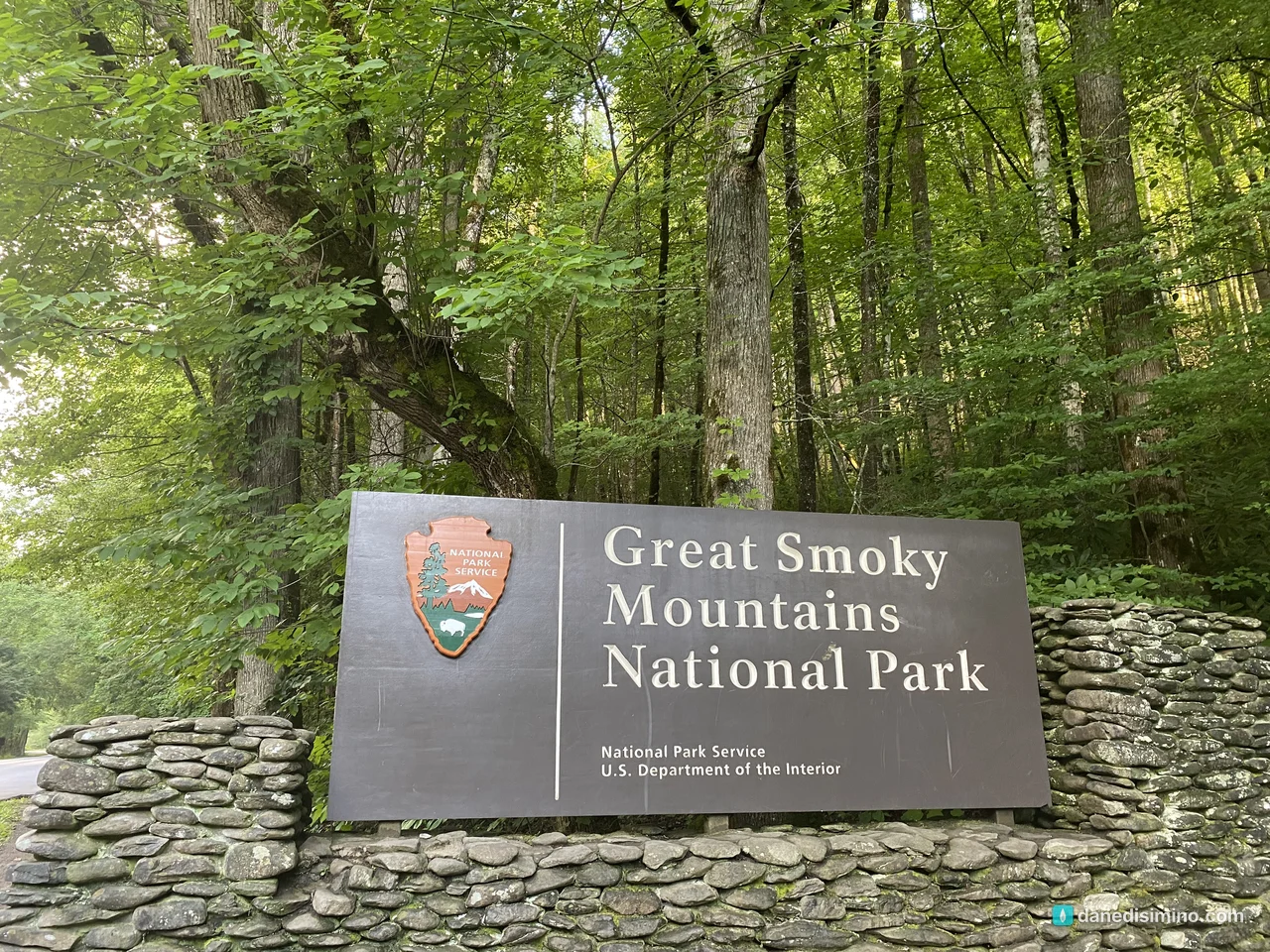
Great Smoky Mountains
A Field Guide
On this page
Fog, rain and the most peaceful river I fished on our whole trip. Three days in America's most visited national park in July: Kuwohi in the clouds, elk at Oconaluftee and rhododendron over the water. Plus why the mountains look smoky, how the park was pieced together and how to dodge the crowds we didn't.
Version 1.0 · Updated Nov 20, 2026
Map
When to go
Average monthly visits, 2023–2025. Source: NPS visitor statistics. ● marks the months we visited.
| January | 381,476 |
|---|---|
| February | 462,868 |
| March | 865,946 |
| April | 988,128 |
| May | 1,203,539 |
| June | 1,420,077 |
| July | 1,476,977 |
| August | 1,145,903 |
| September | 1,101,707 |
| October | 1,592,430 |
| November | 953,182 |
| December | 746,906 |
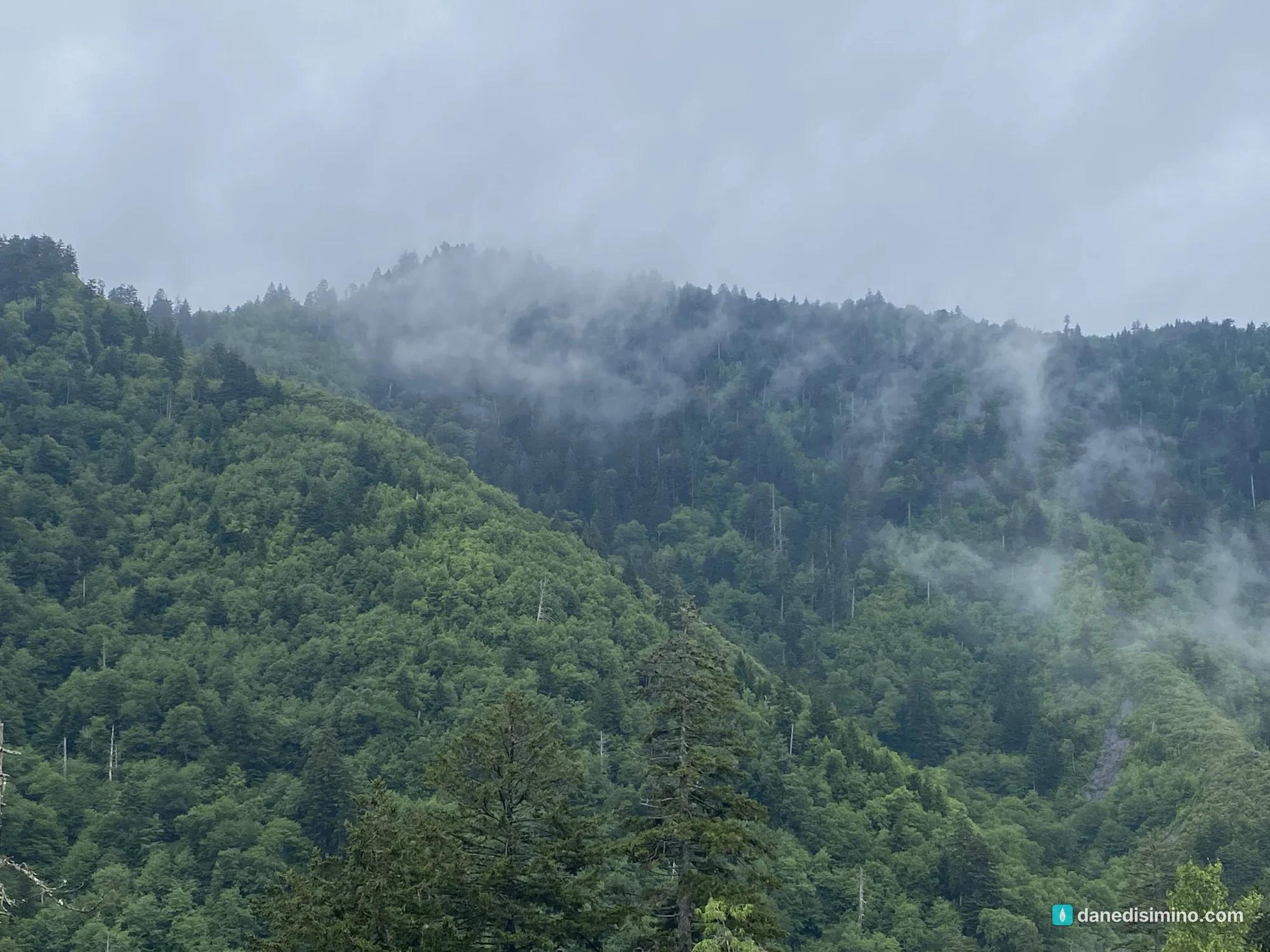
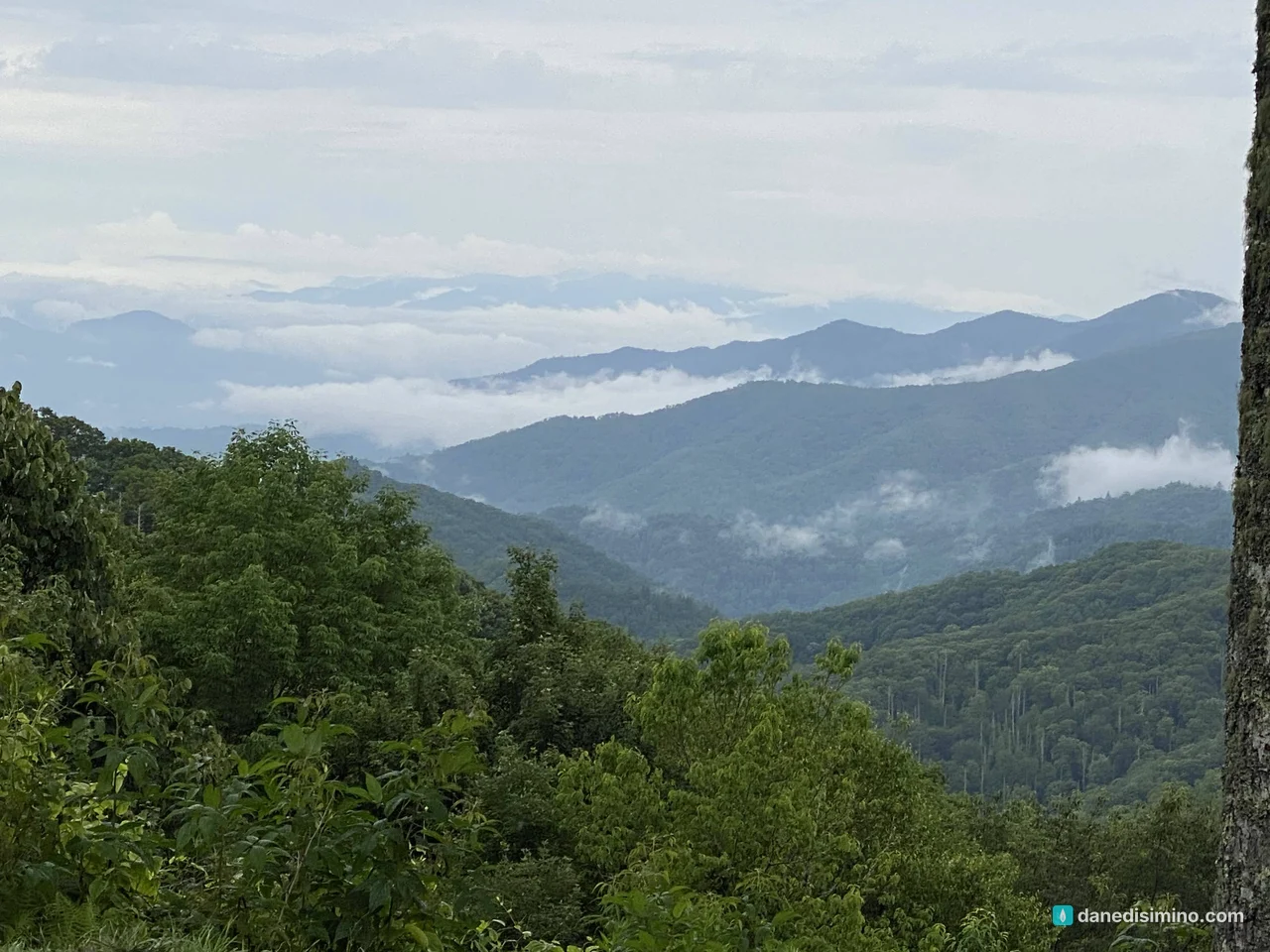
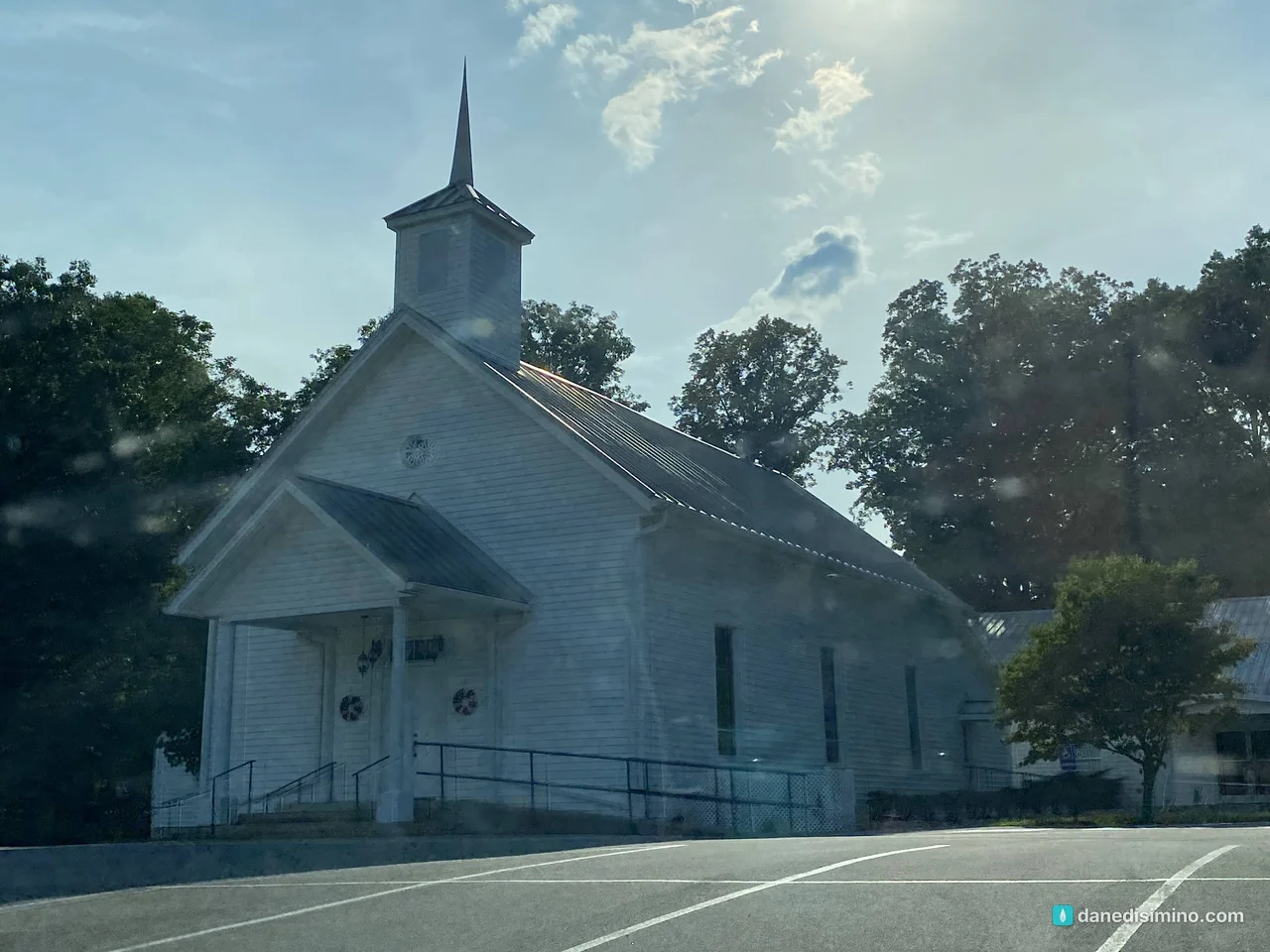
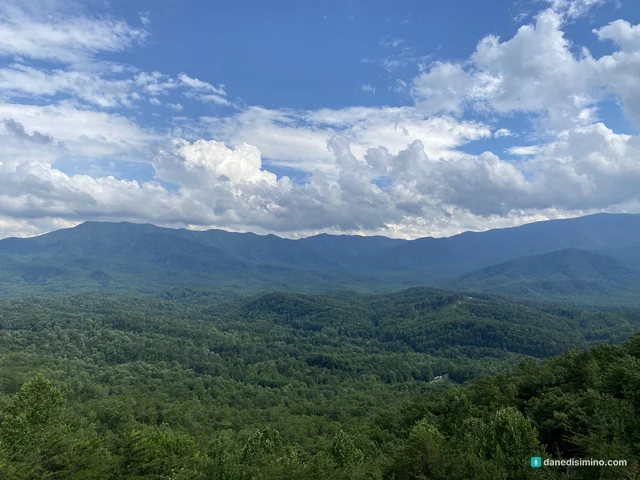
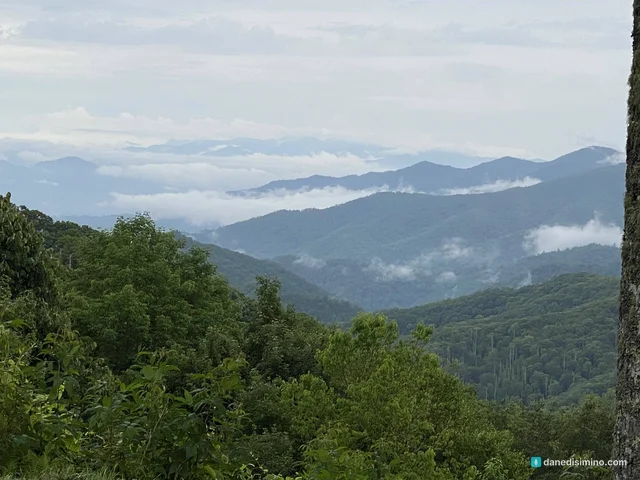
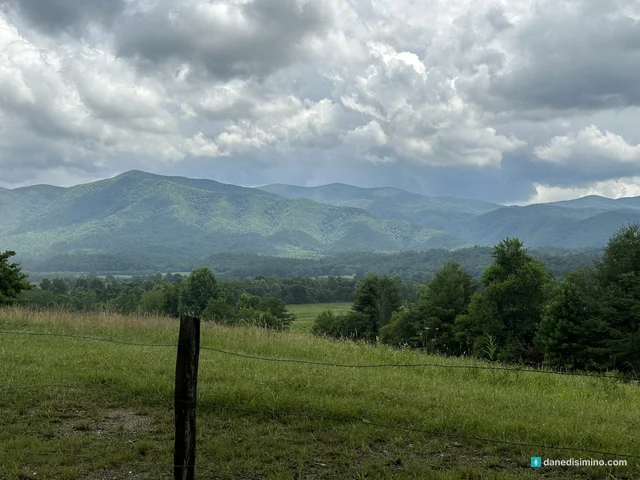
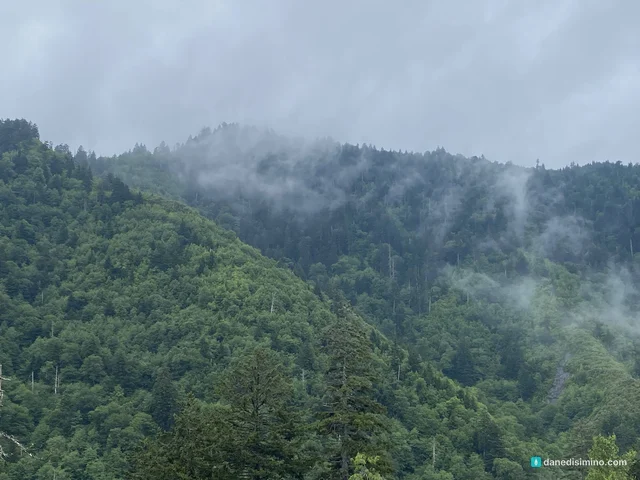
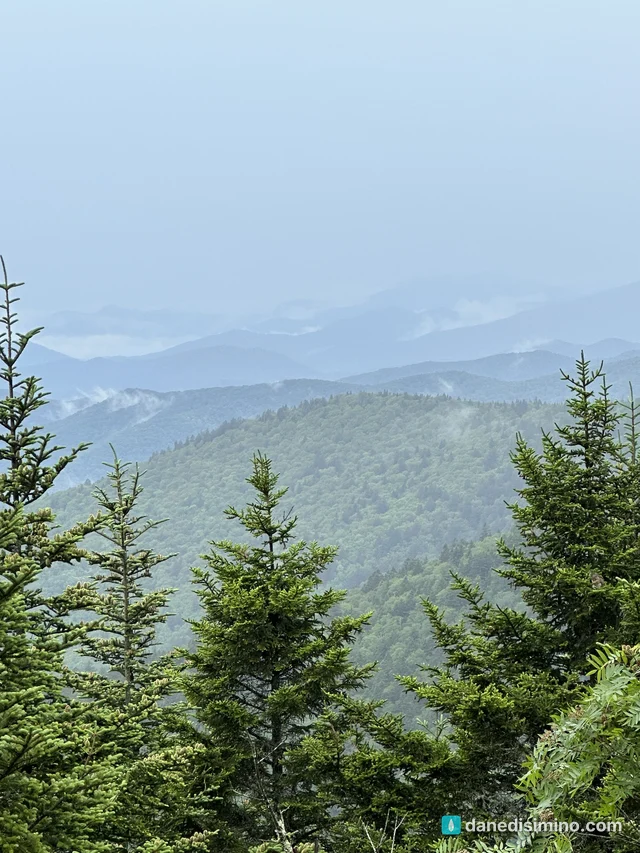
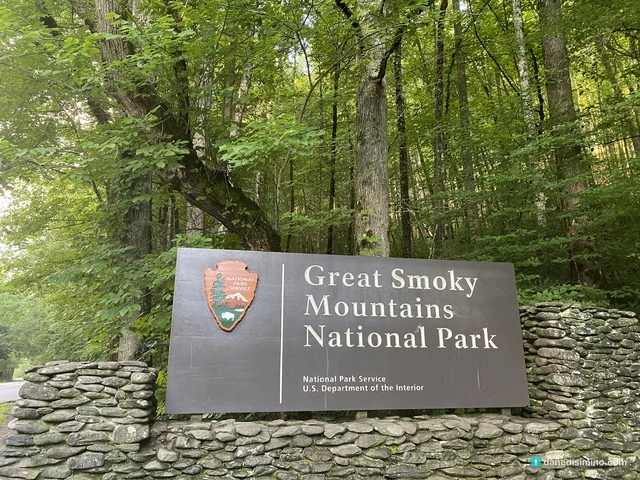
The Great Smoky Mountains began with our first-ever look at these blue ridges. Driving in from the Carolinas on July 3, 2023, I was surprised: the mountains really do wear a blue haze. This was the premier stop of our five-park eastern trip, and we gave it three days.
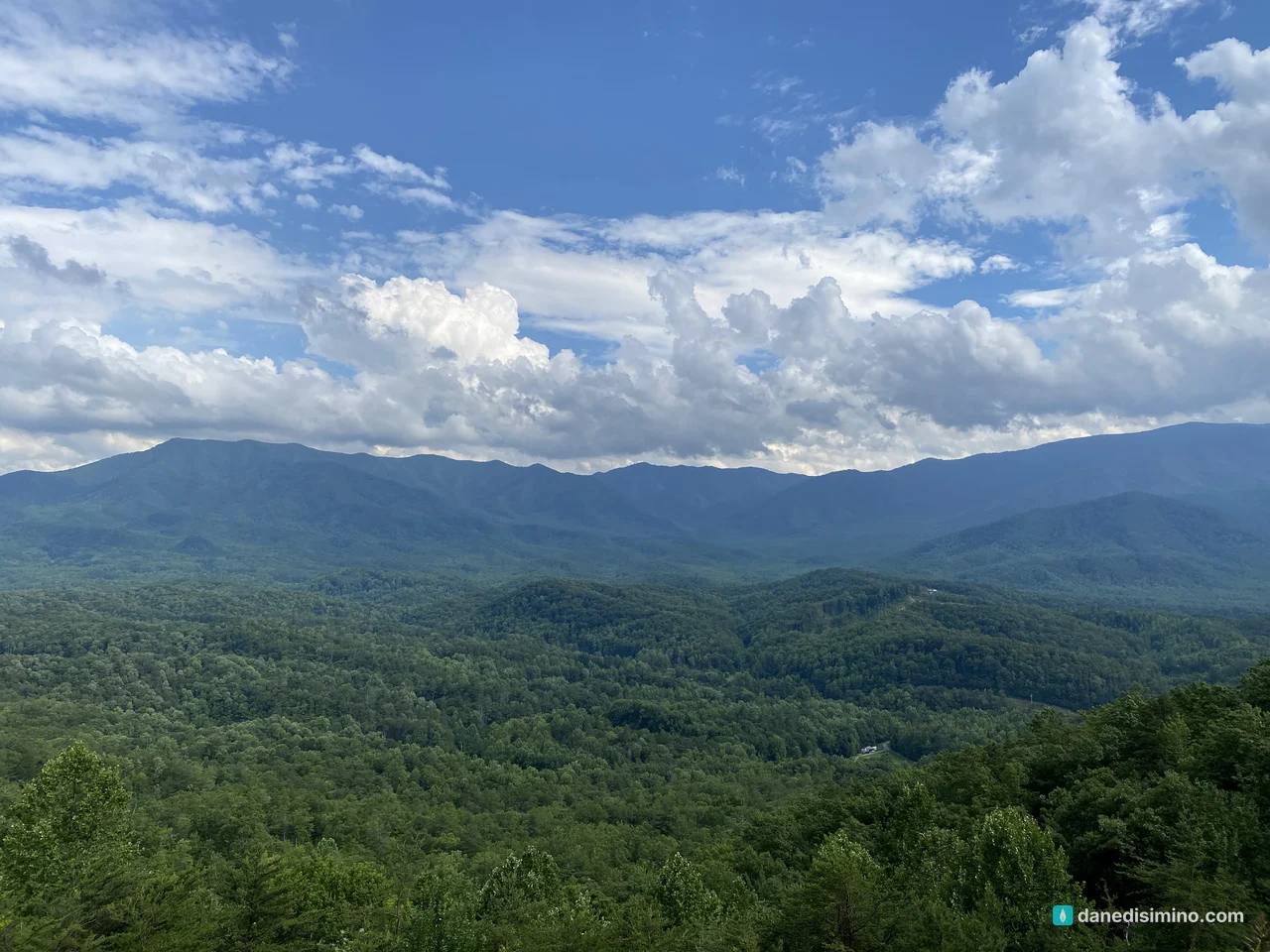
The weather didn't cooperate, and July crowds were everywhere. But one river on our second full day was the most beautiful, peaceful water I saw in all five parks.
The rivers were the most beautiful part of our whole trip. Tranquil is the word.
The short version
Go in the off-season. It's America's most visited national park, and summer and October are its busiest stretches. We went in July and fought crowds at every pullout.
Pack a rain jacket and layers. Kuwohi can be 10–20°F cooler than the valleys. We were cold in July.
Find a river. The streams are the real treasure. Fish one, or just sit beside one.
Buy a parking tag. Entry is free, but parking longer than 15 minutes needs a tag.
Look for elk at Oconaluftee. Morning and evening are best.
The park at a glance
- 522,427
- Acres
- 11.5M
- Visits in 2025
- 1934
- Established
- $0
- Entrance fee
Where: on the Tennessee–North Carolina line. Gateway towns include Gatlinburg and Townsend in Tennessee, and Cherokee in North Carolina.
Fees: no entrance fee. Parking tags are $5 a day, $15 a week or $40 a year for any stop longer than 15 minutes.
Visitor centers: Sugarlands near Gatlinburg and Oconaluftee near Cherokee are the main two.
Weather: wet and changeable. Bring rain gear even when the forecast looks clear.
Before you go: check the park's Alerts & Conditions page at nps.gov/grsm for road and trail updates.
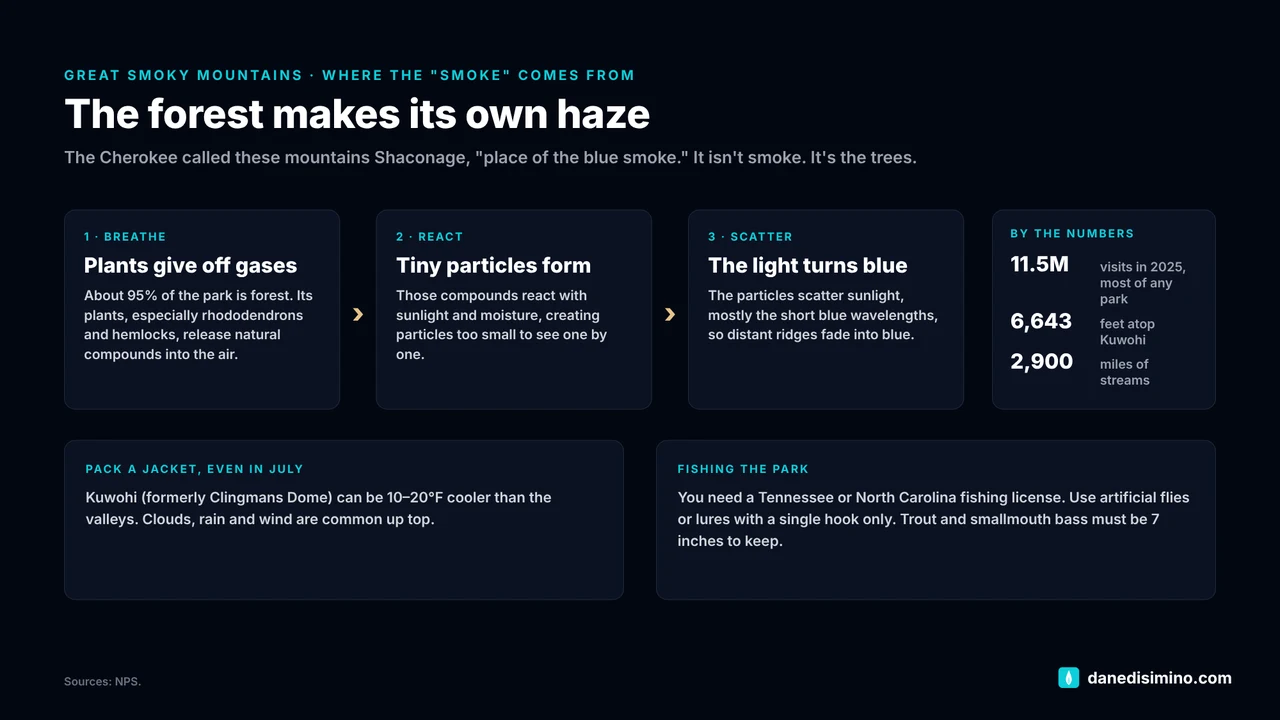
Why the mountains look smoky
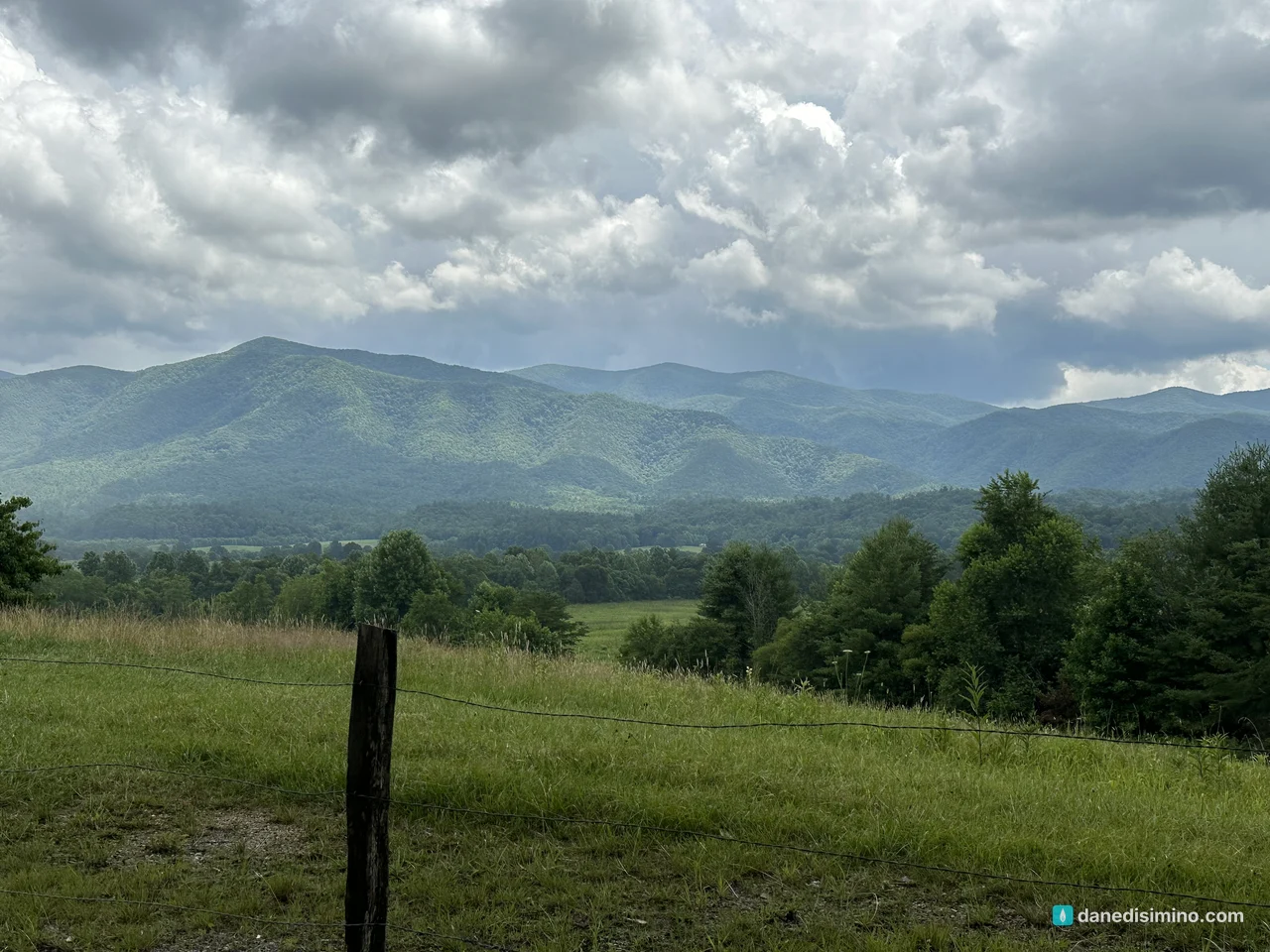
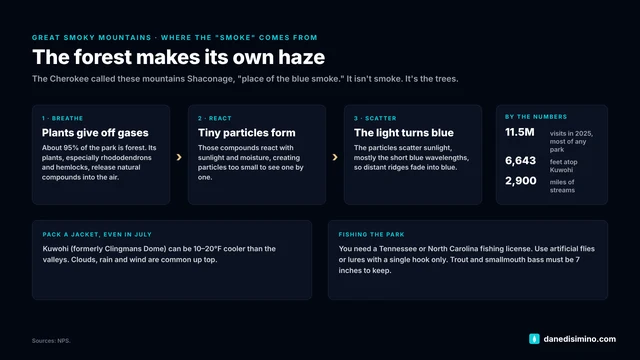
The Cherokee called these mountains Shaconage, "place of the blue smoke." The haze isn't smoke. About 95% of the park is forest, and its plants release natural compounds. Those react with sunlight and moisture to form tiny particles that scatter blue light. The same haze gives the wider Blue Ridge its name.
How the mountains formed
These are some of the oldest mountains on Earth. Their oldest rocks are over a billion years old. Most of the park is sedimentary rock laid down 800–545 million years ago, when sand, mud and gravel washed into an ancient sea basin.
Between about 310 and 245 million years ago, Africa collided with North America while building the supercontinent Pangaea. The crust crumpled and rose into peaks that were probably as high as today's Rockies. Since then, erosion has been wearing them down by about two inches every thousand years.
How the park began
Western parks were carved from land the government already owned. The Smokies had to be bought. Hundreds of small farms and a few big timber companies owned the land, and loggers had already cut much of the forest.
Tennessee and North Carolina raised $5 million by 1928. The Laura Spelman Rockefeller Memorial Fund matched it with another $5 million. The park was established in 1934, and President Franklin Roosevelt dedicated it at Newfound Gap on September 2, 1940.
Arriving in Townsend
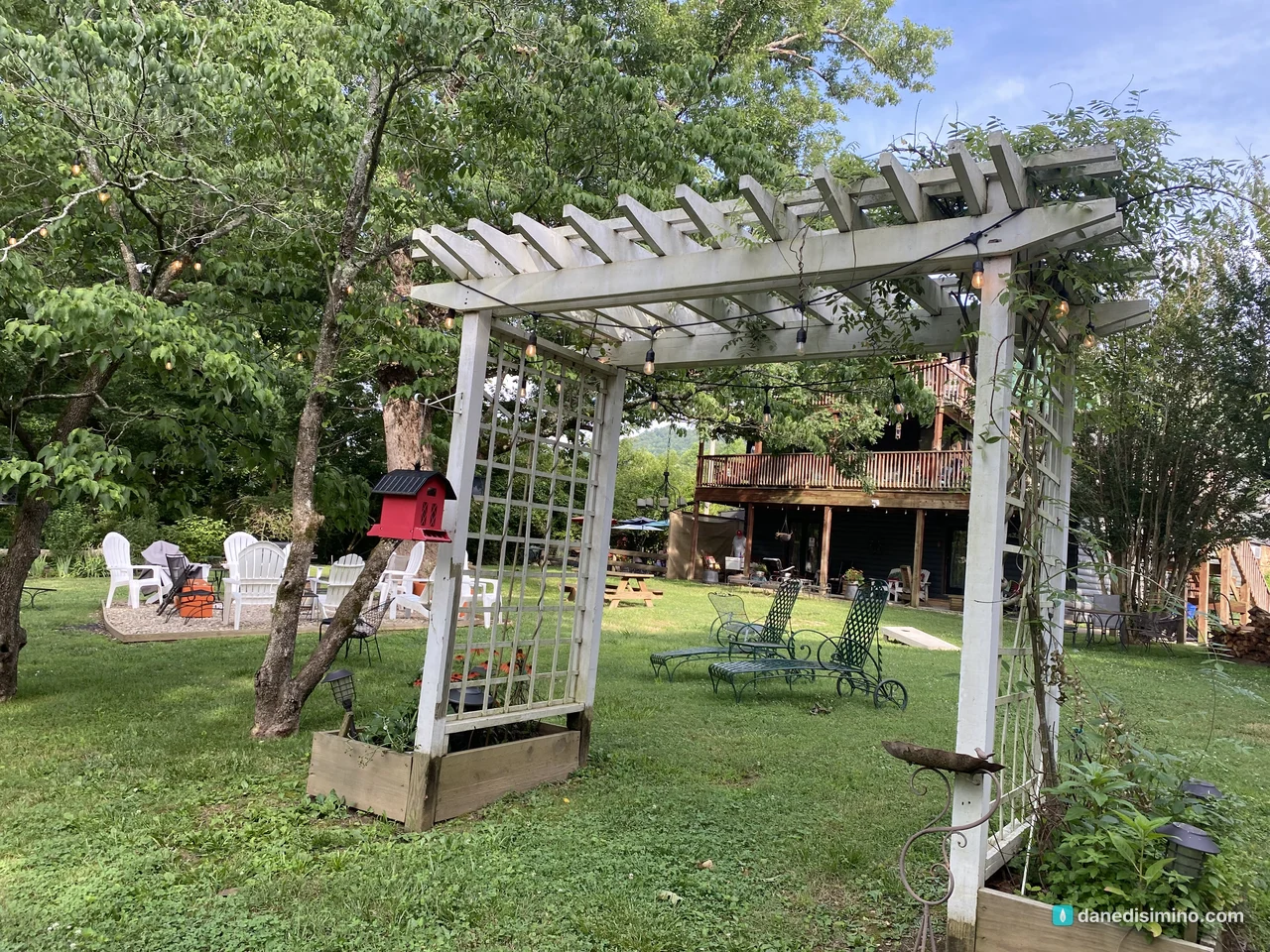
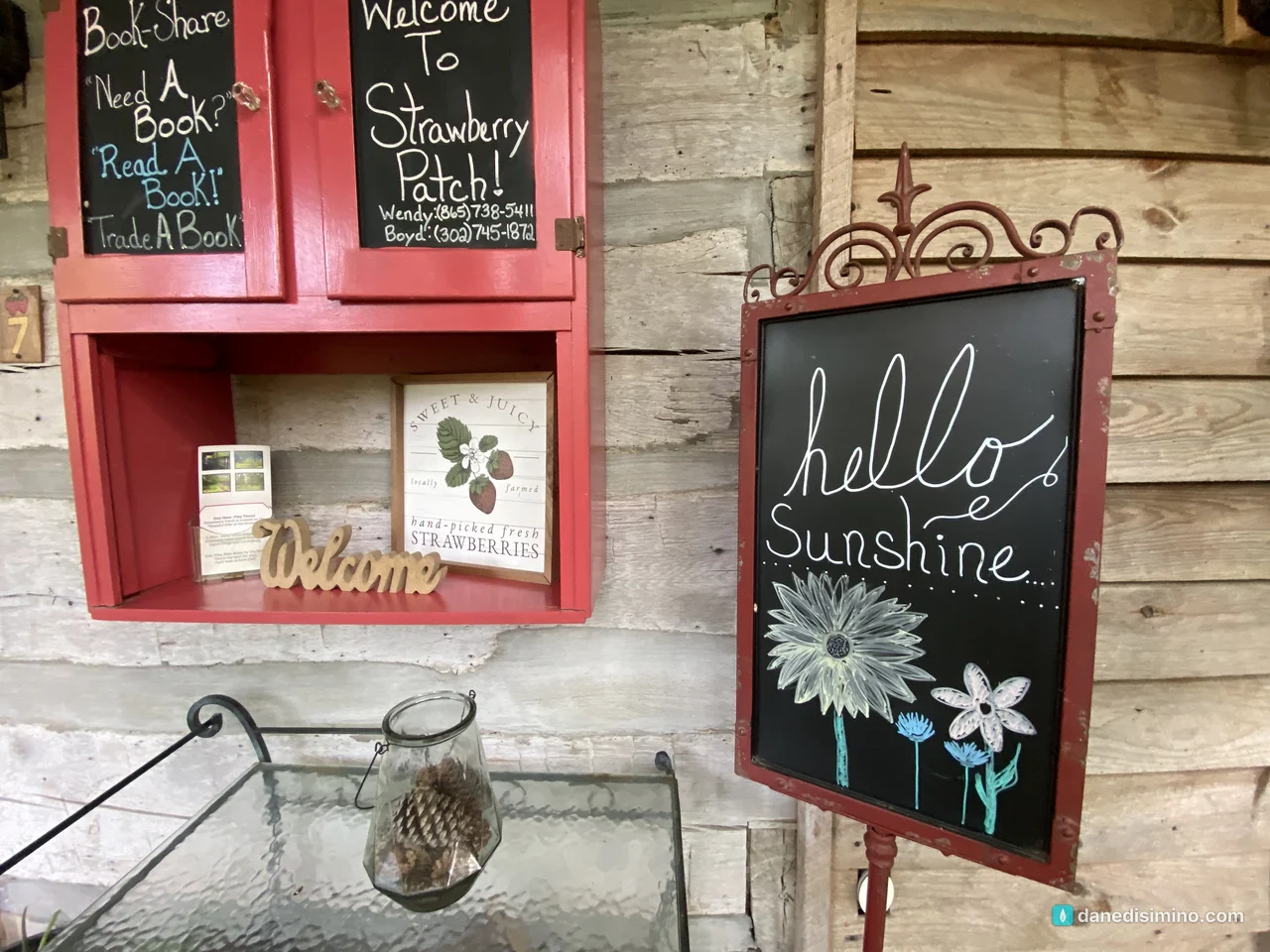
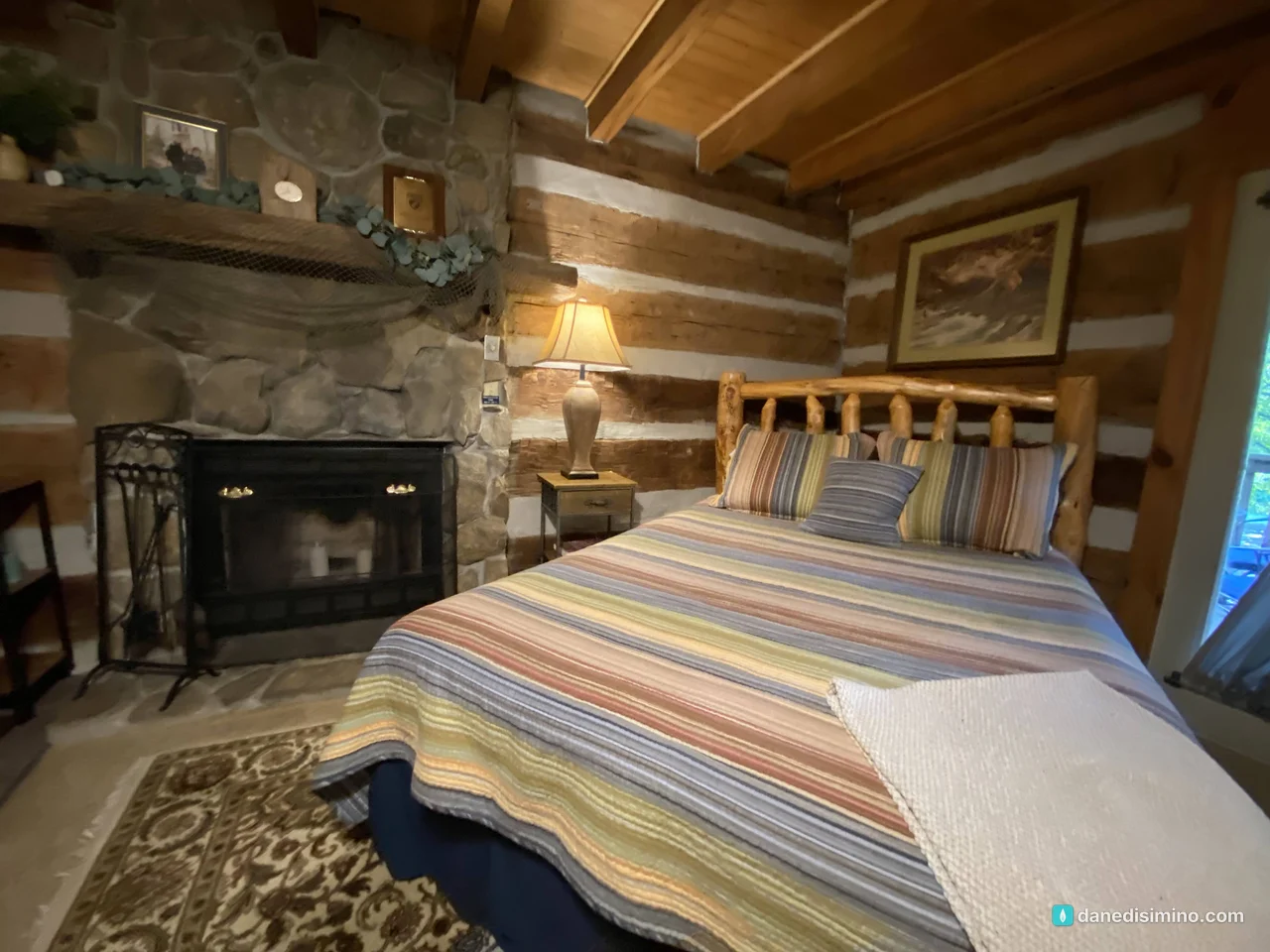
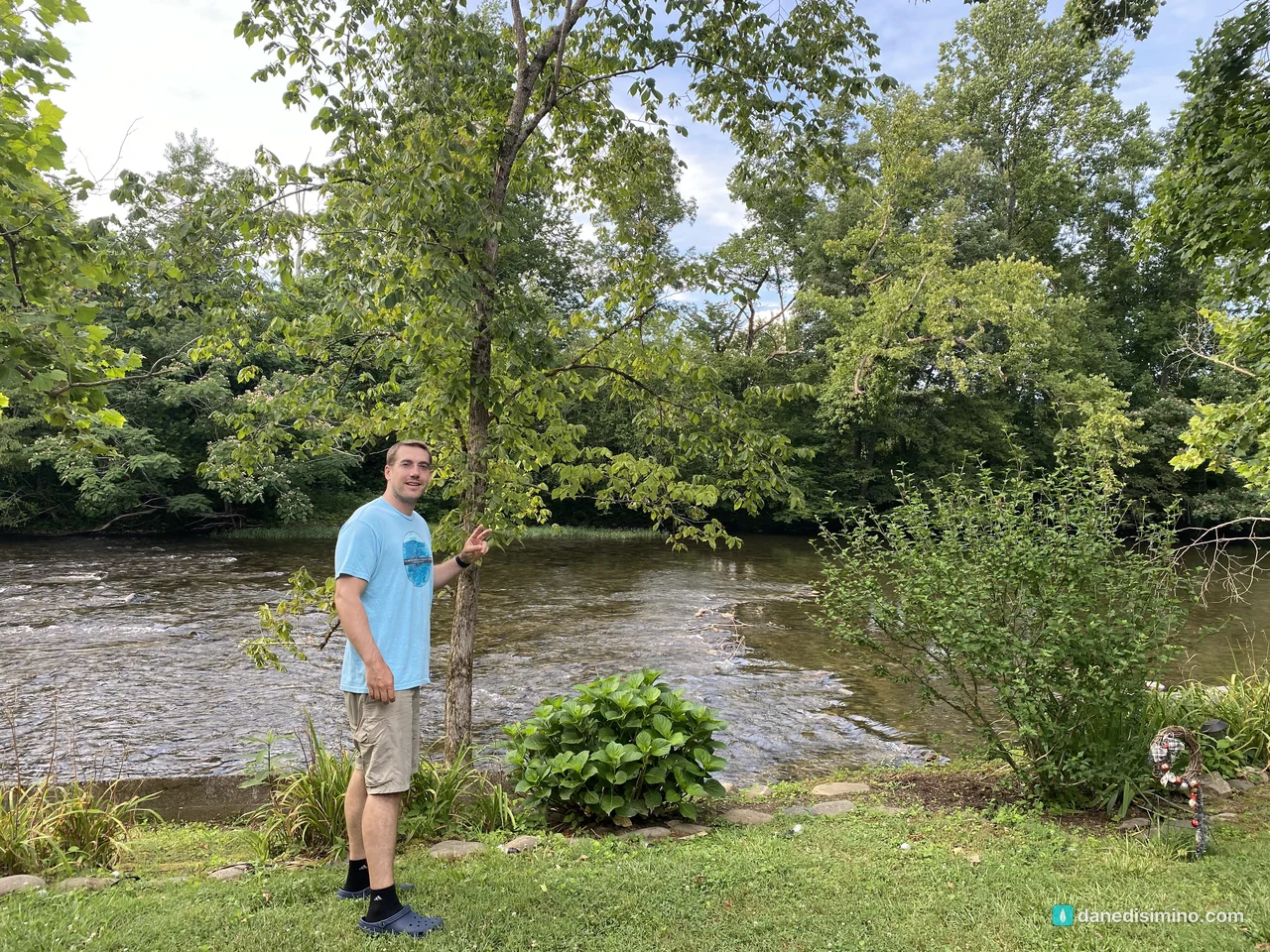
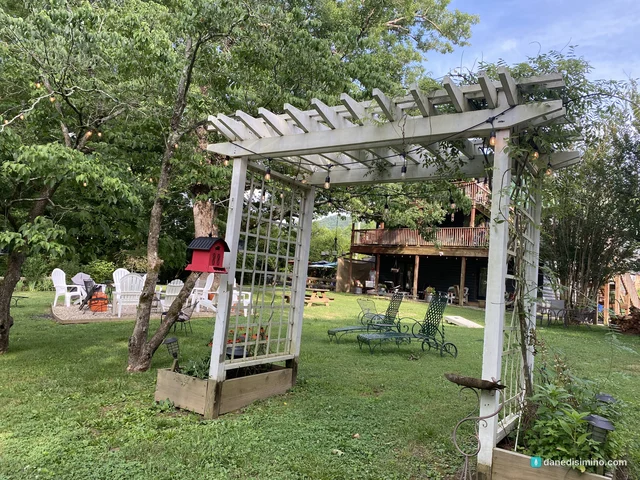
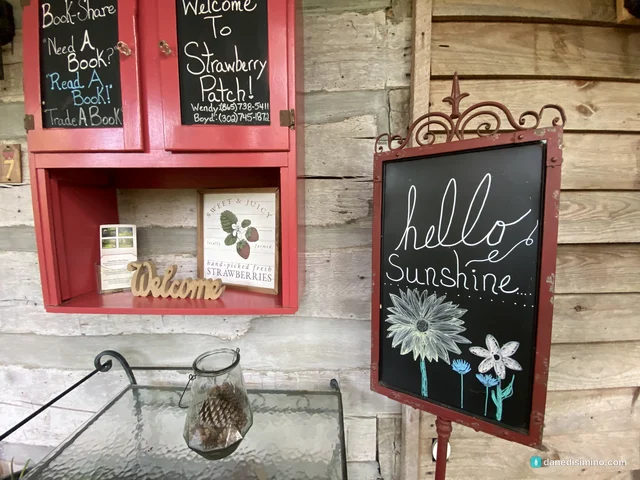
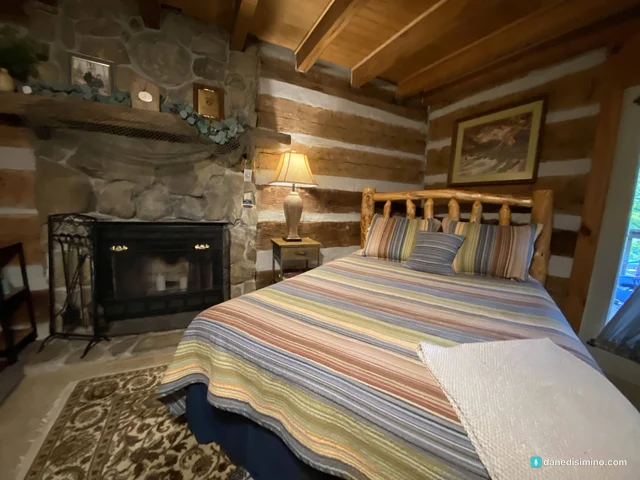
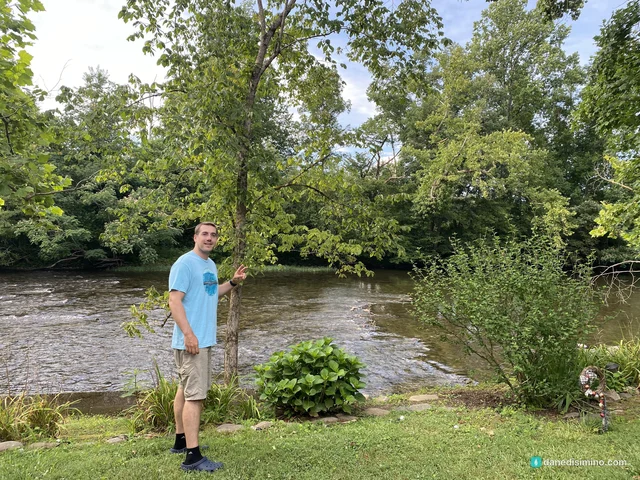
We stayed in Townsend, Tennessee, at a B&B that greeted us with a handwritten welcome sign. It was clean and cozy, about 30 yards from a river and an easy drive to restaurants. We bought groceries and cooked our own meals for a change. After a long road trip, that felt great.

A rainy day in the mountains
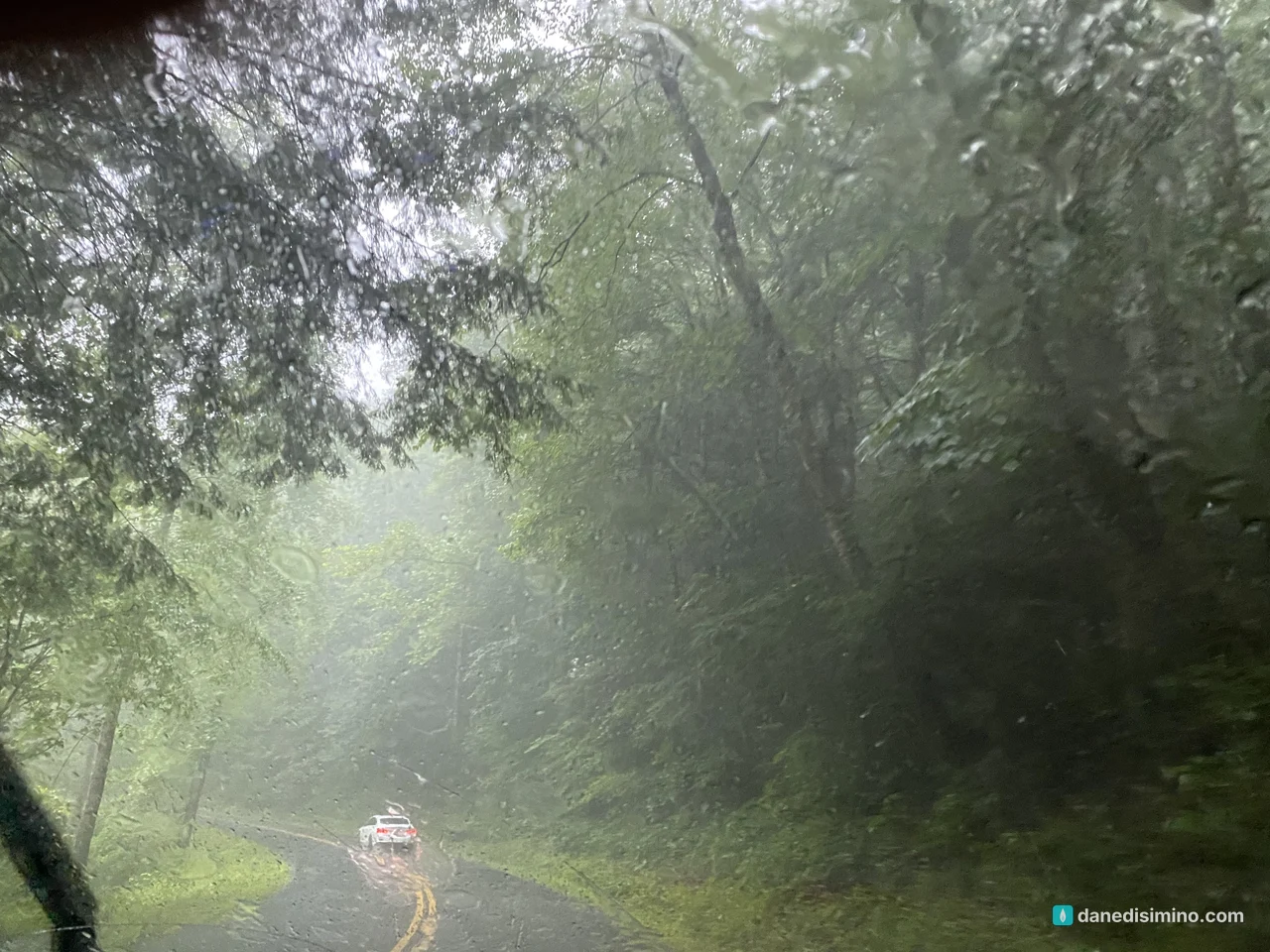
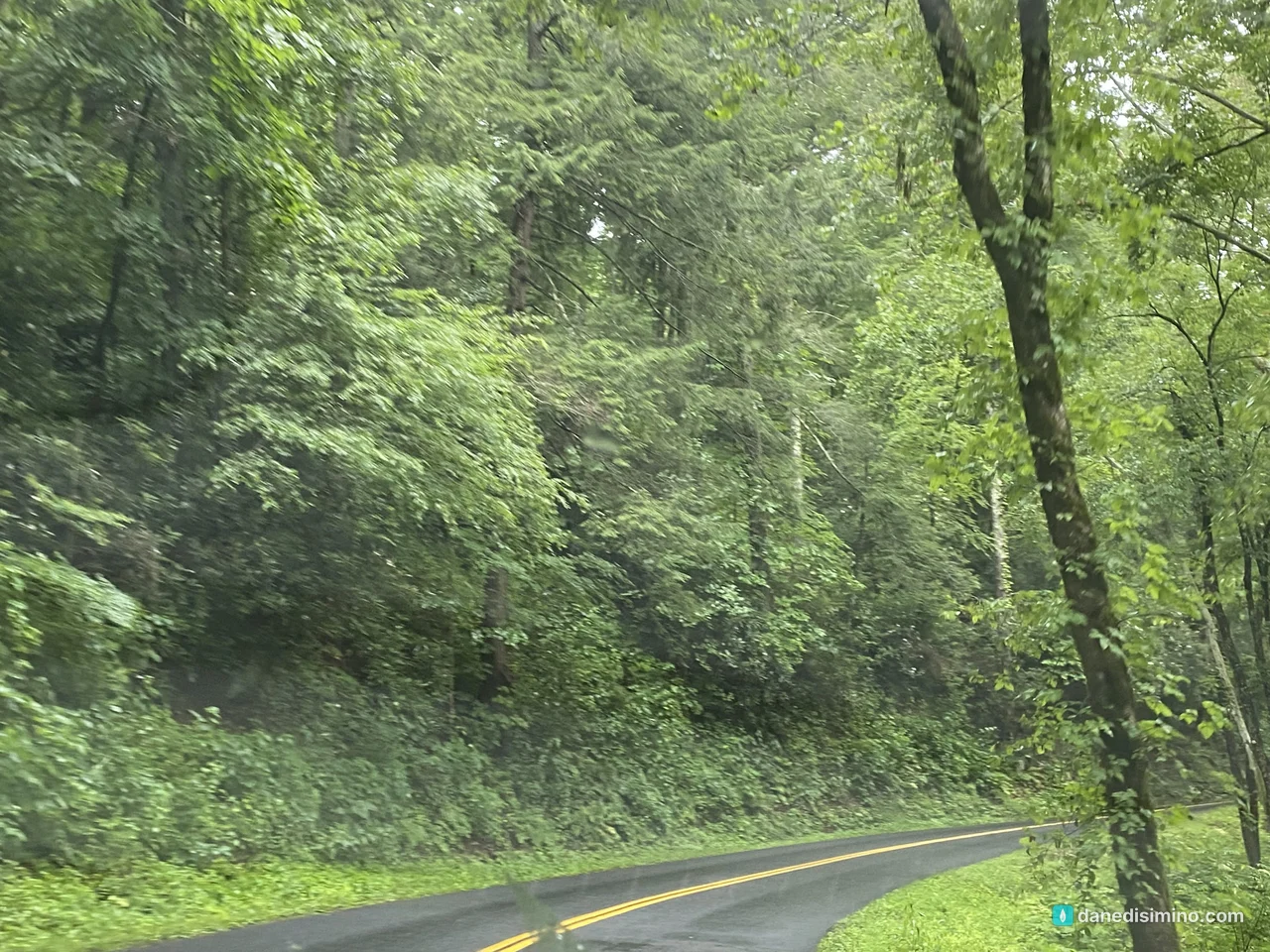
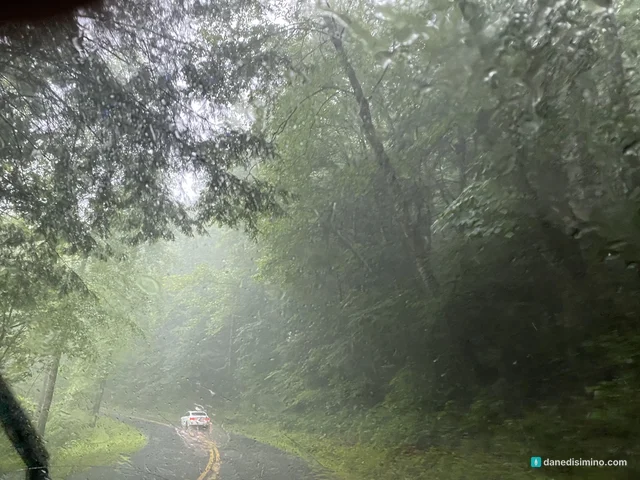
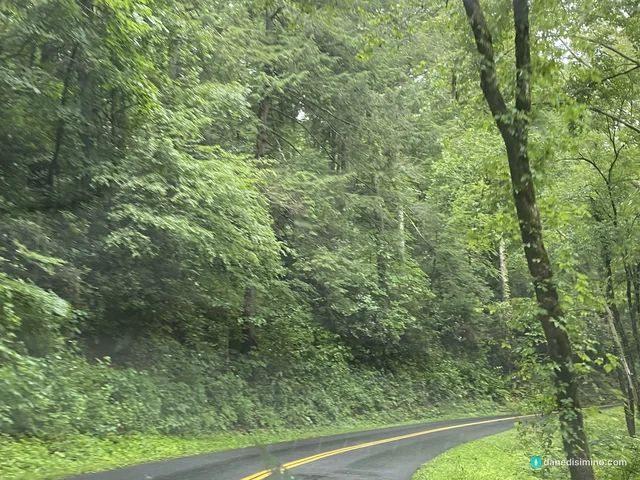
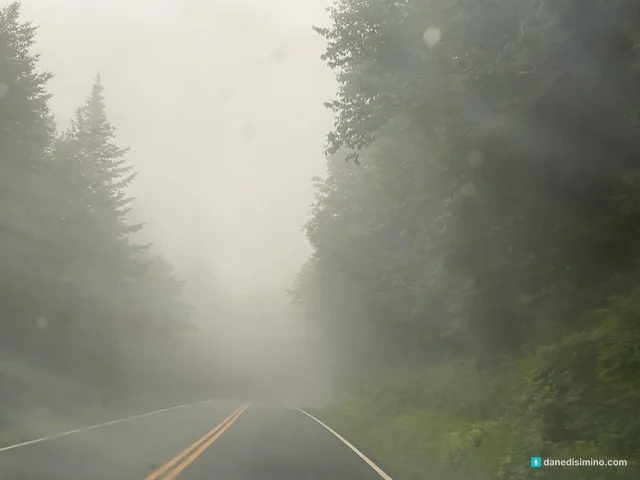
Our first full day was wet. We drove through fog and drizzle, stopped at a visitor center and watched the clouds roll across the ridges.
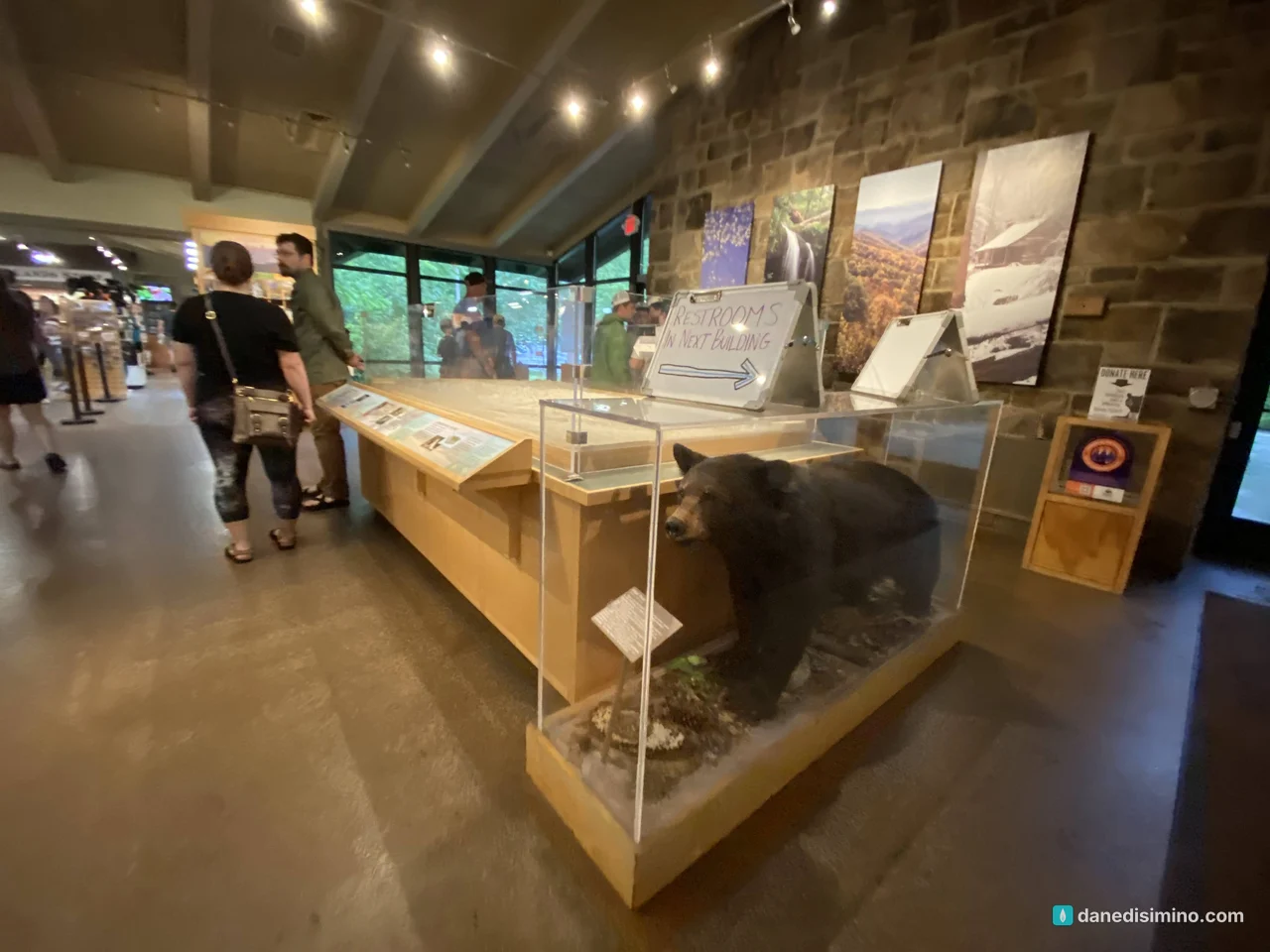
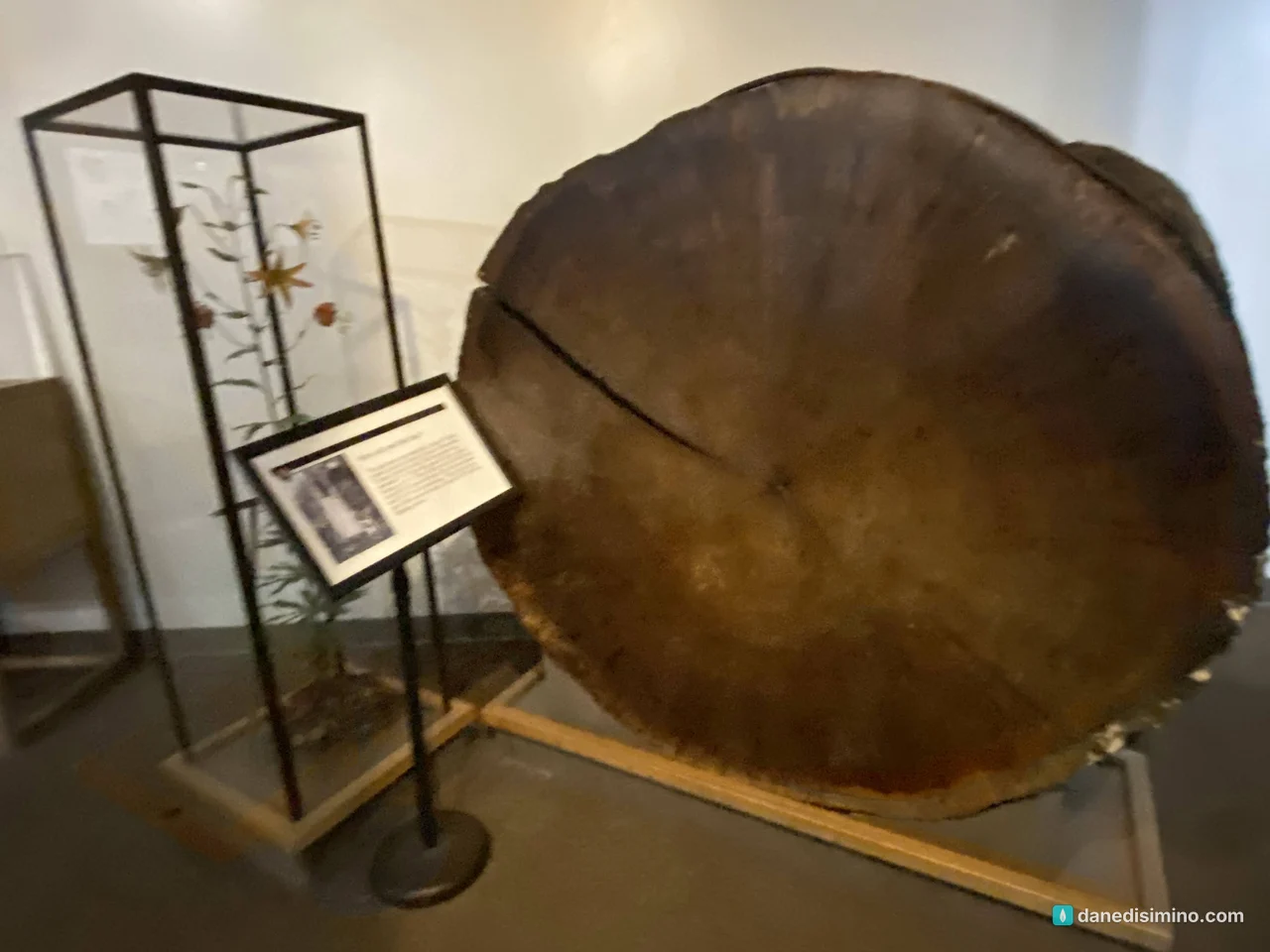
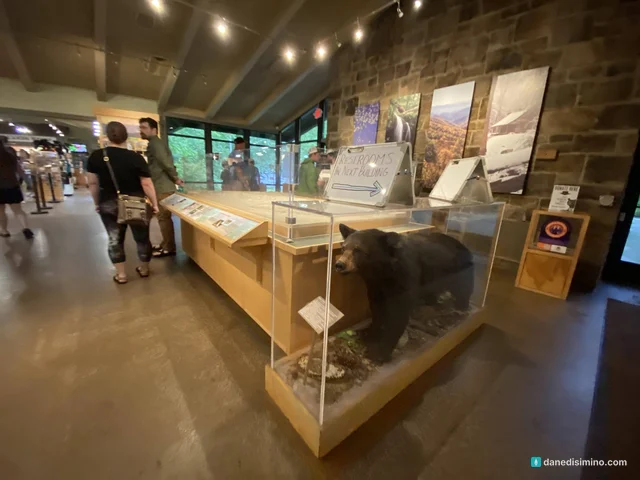
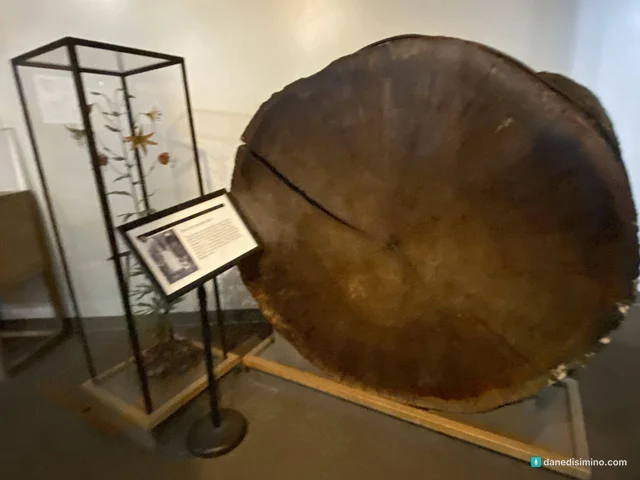
The visitor center had a black bear exhibit and a slab from a huge old tree. Roughly 1,900 black bears live in the park, about two per square mile, the densest population in the country.
Kuwohi in the clouds
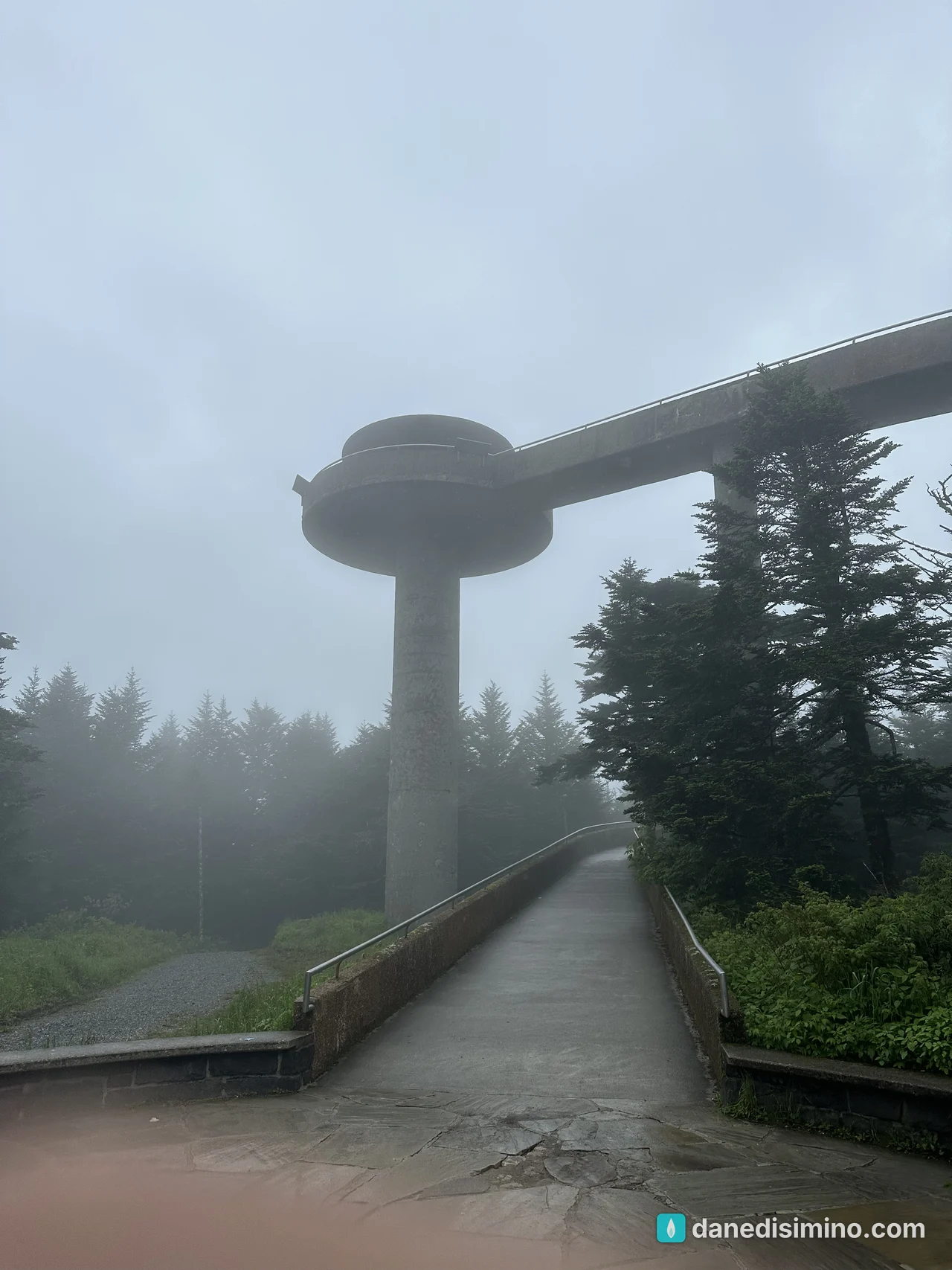
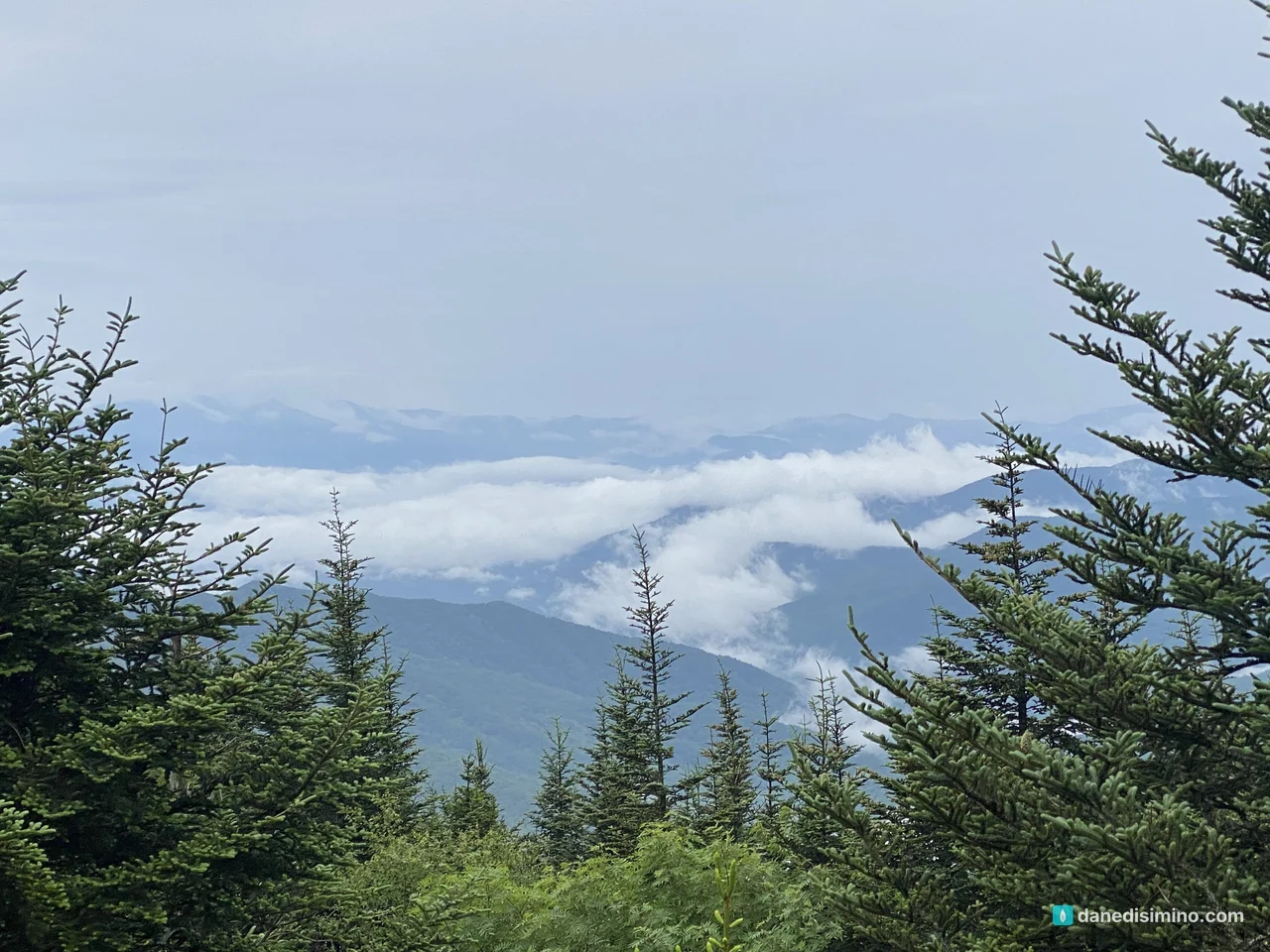
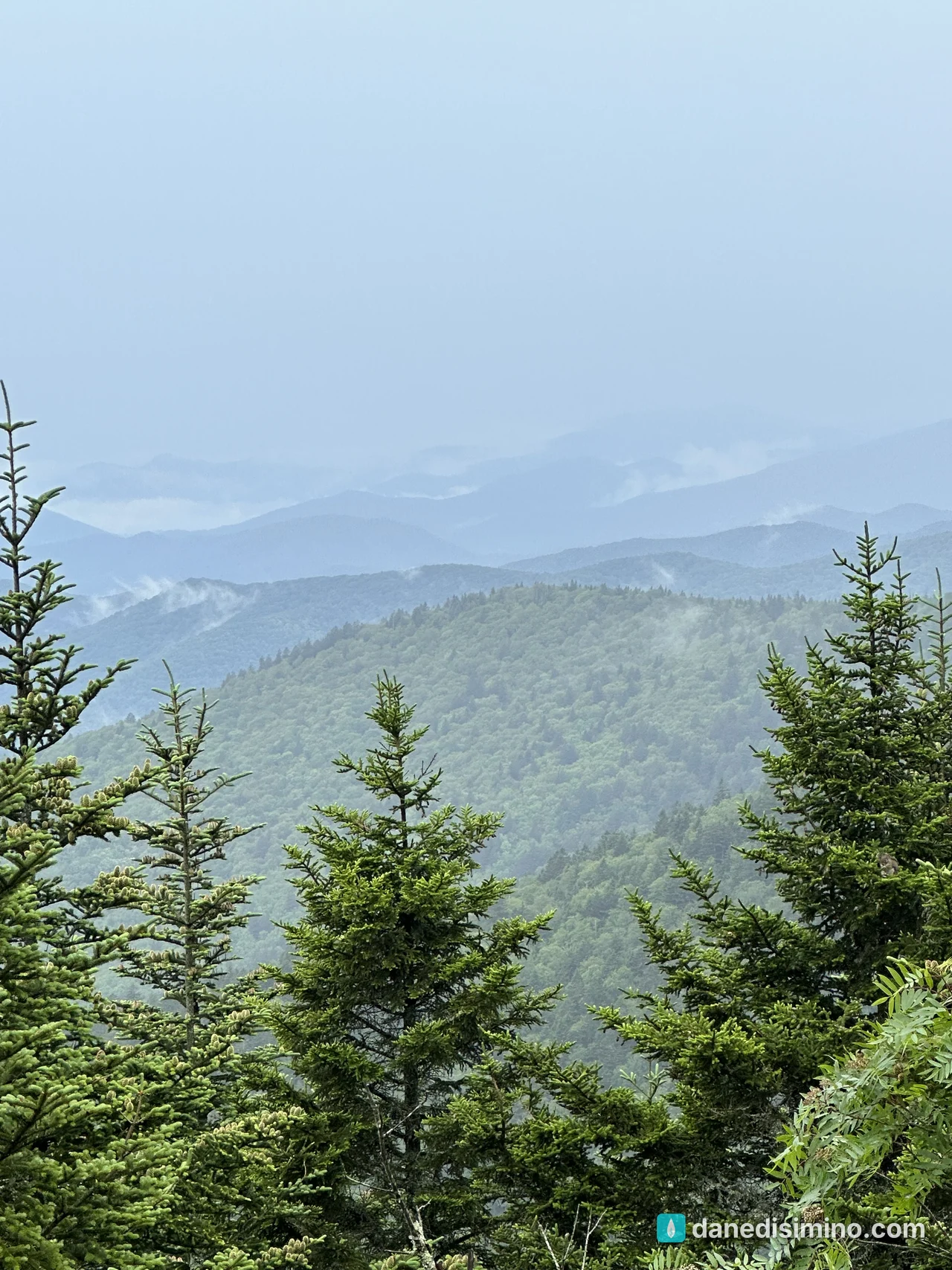
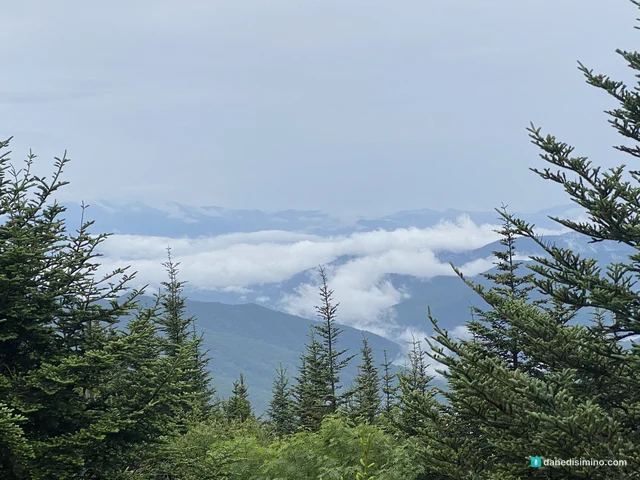
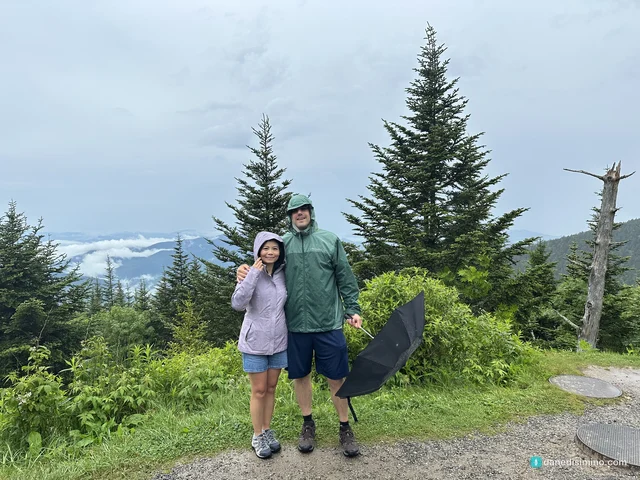
The next morning we drove up to Kuwohi, the park's highest peak. It was called Clingmans Dome until September 2024, when the Cherokee name, meaning "mulberry place," was restored.
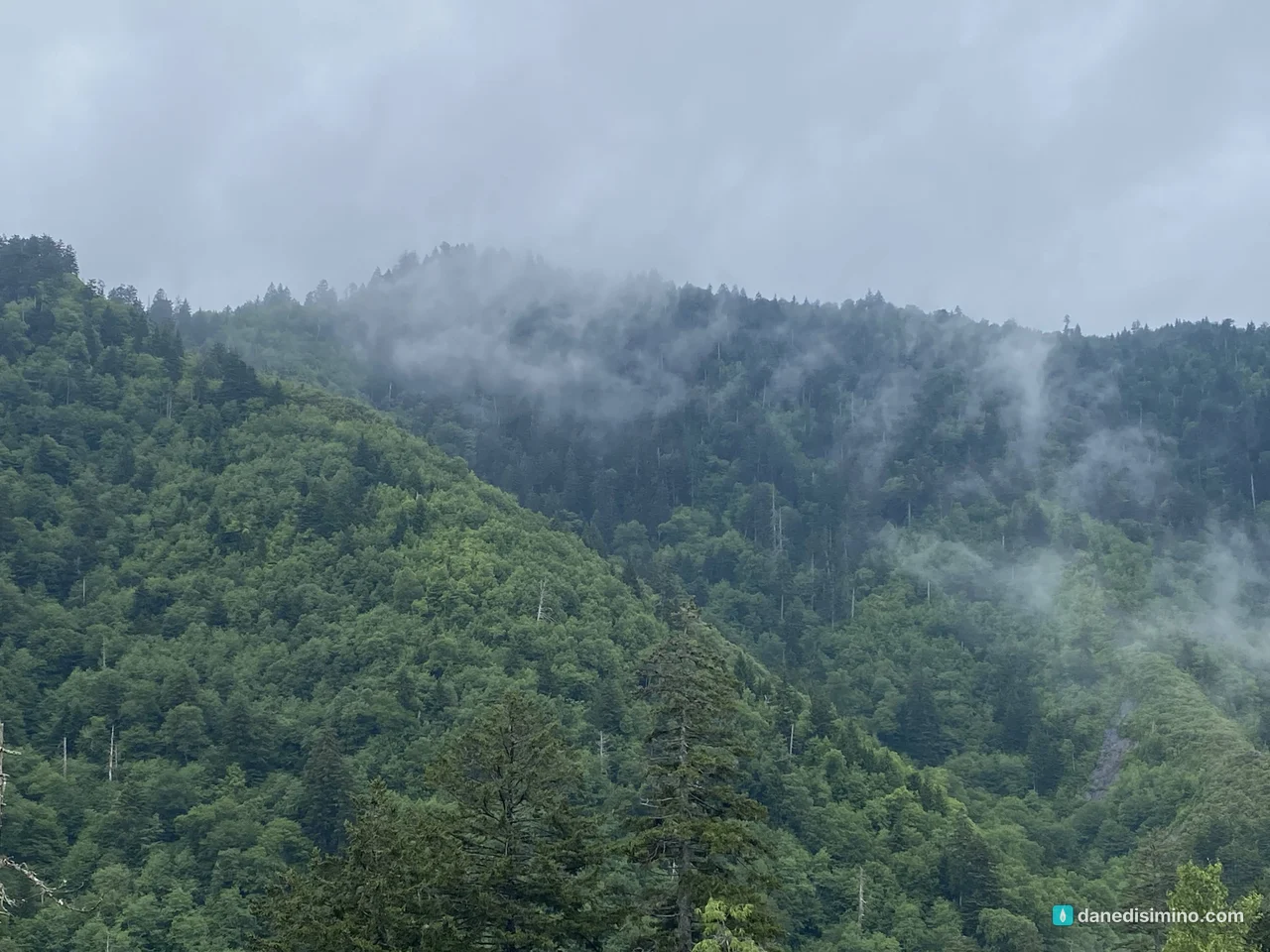
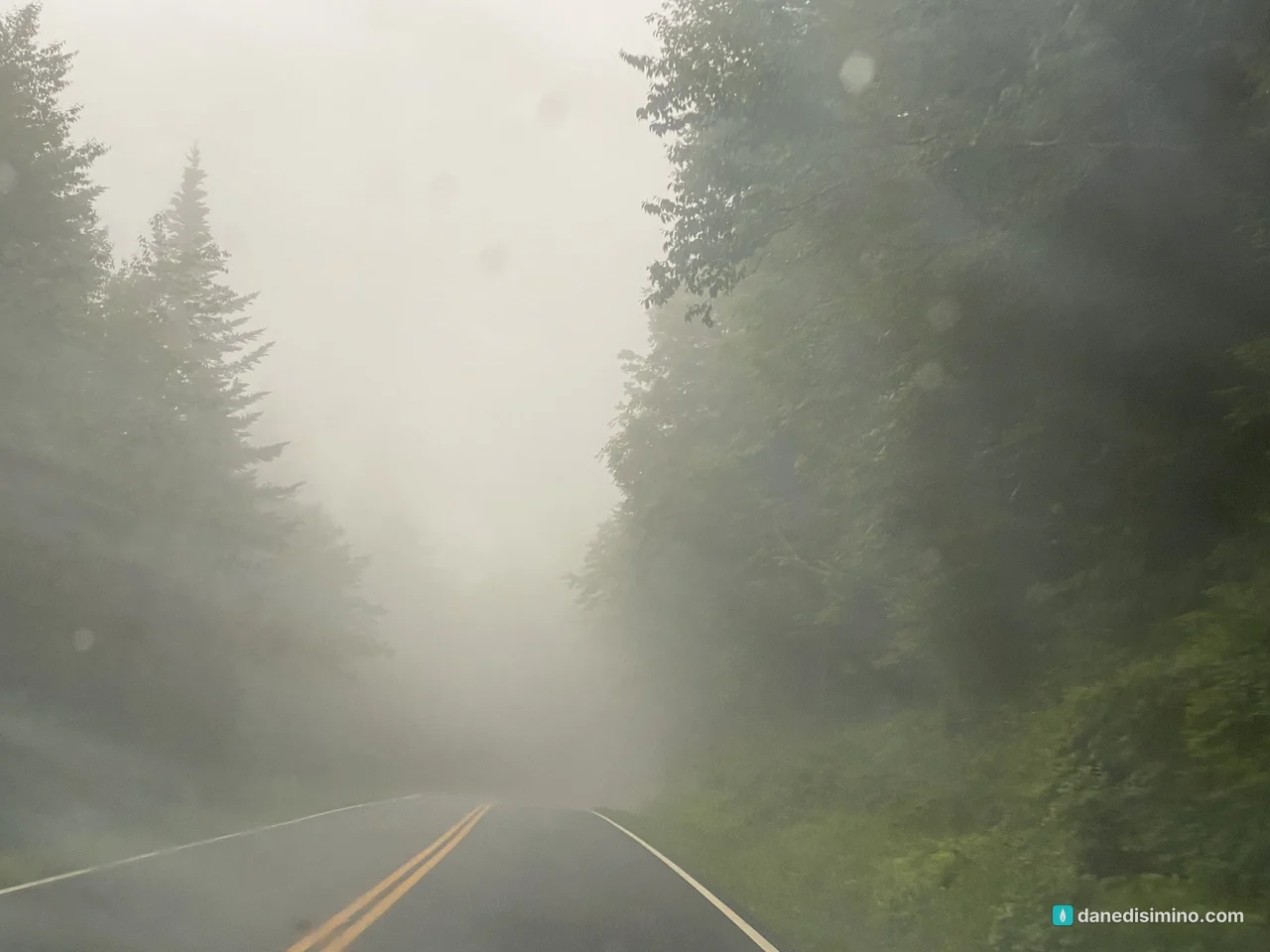
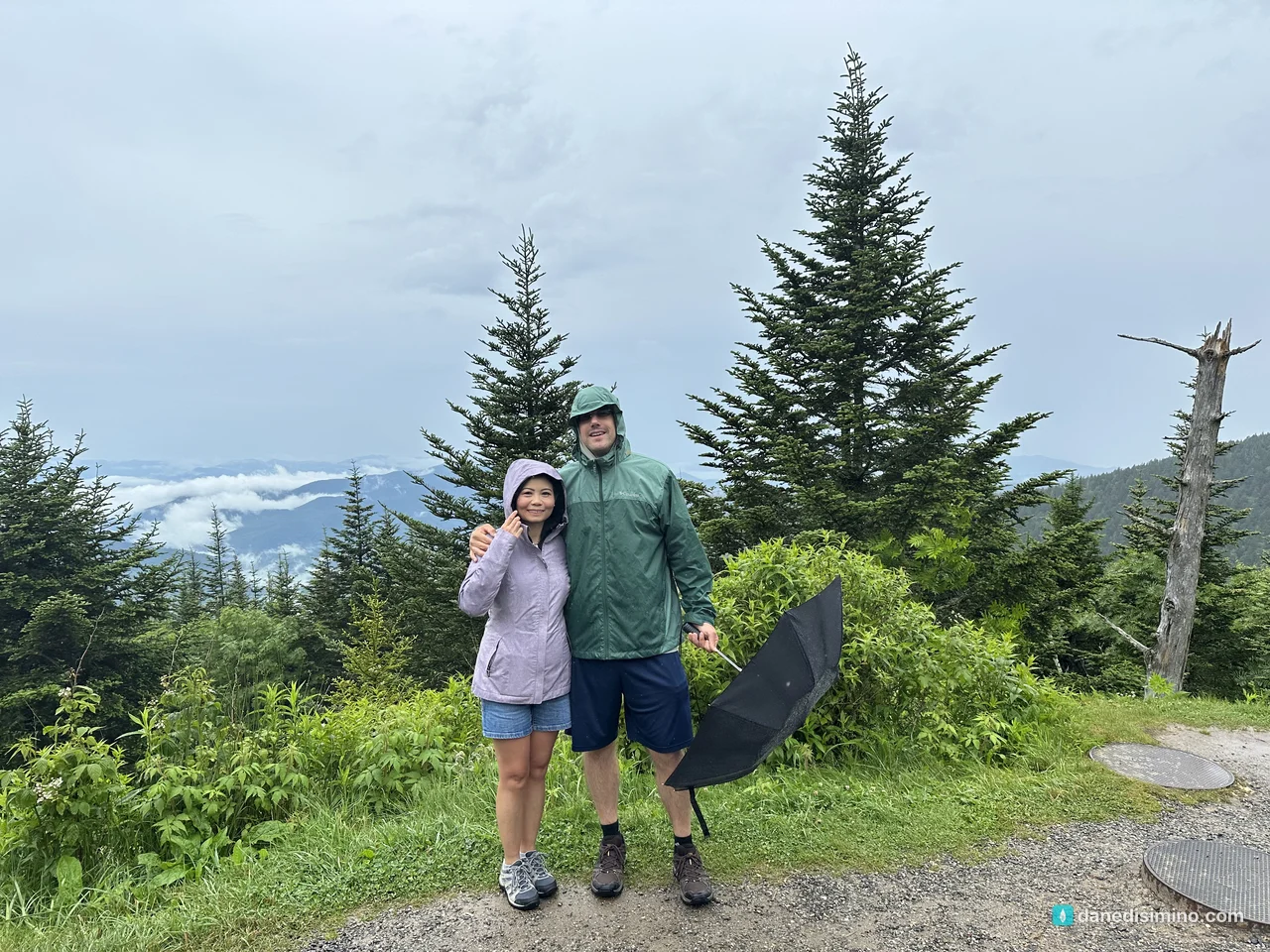
It started to rain. With the altitude, mist and wind, it was actually chilly, in July. We hadn't planned for that, but at least we had our rain jackets.
Elk at Oconaluftee
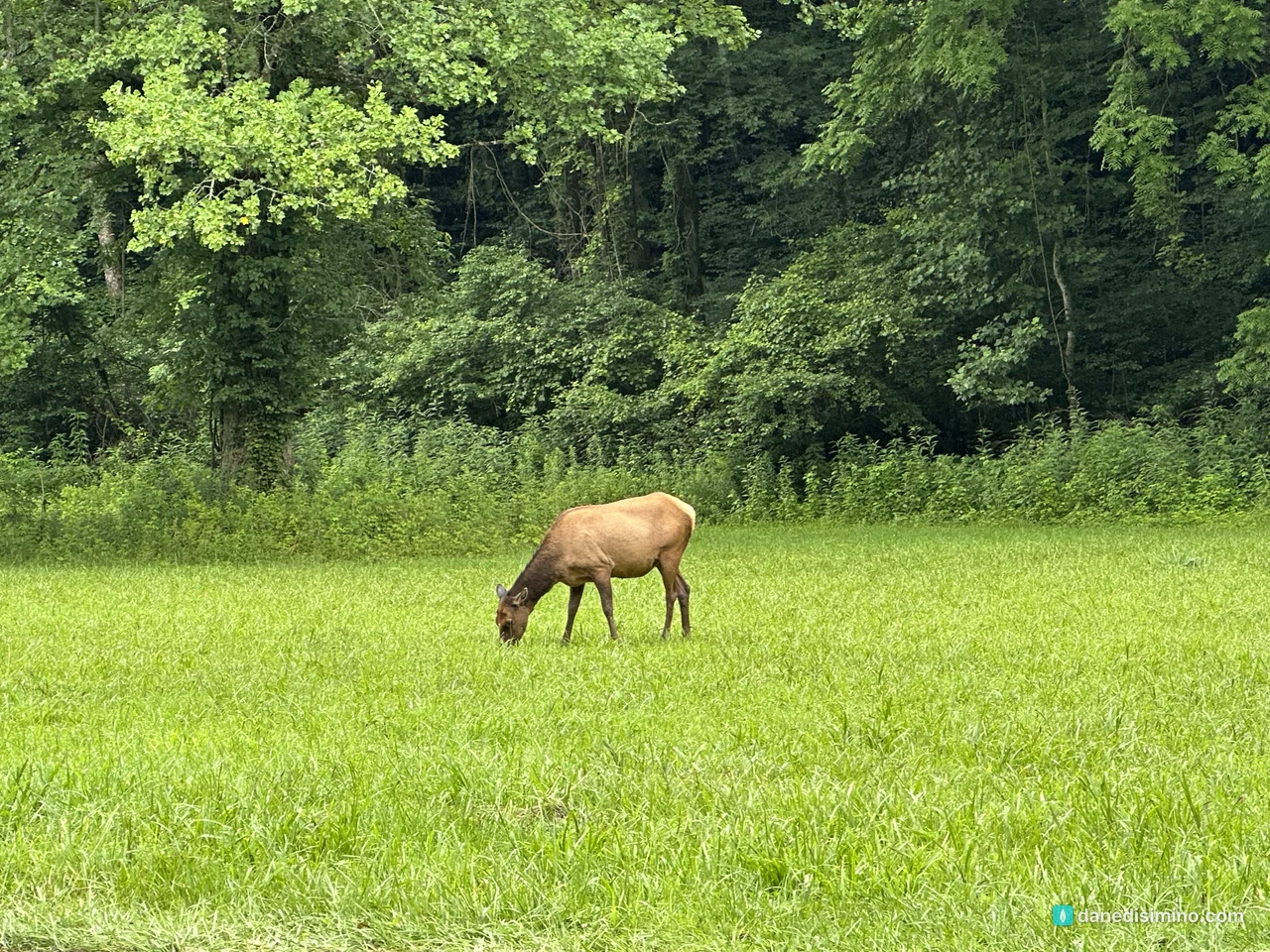
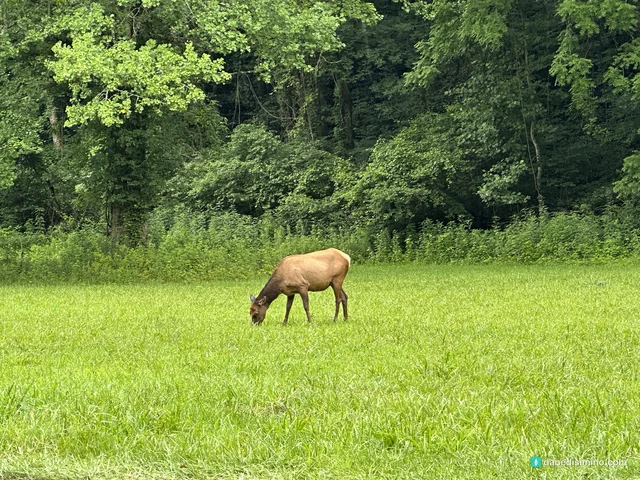
On the North Carolina side, we found an elk grazing in the fields near the Oconaluftee Visitor Center. Elk were wiped out here long ago. The park brought 25 back in 2001, and now they're one of its best sights.
The river
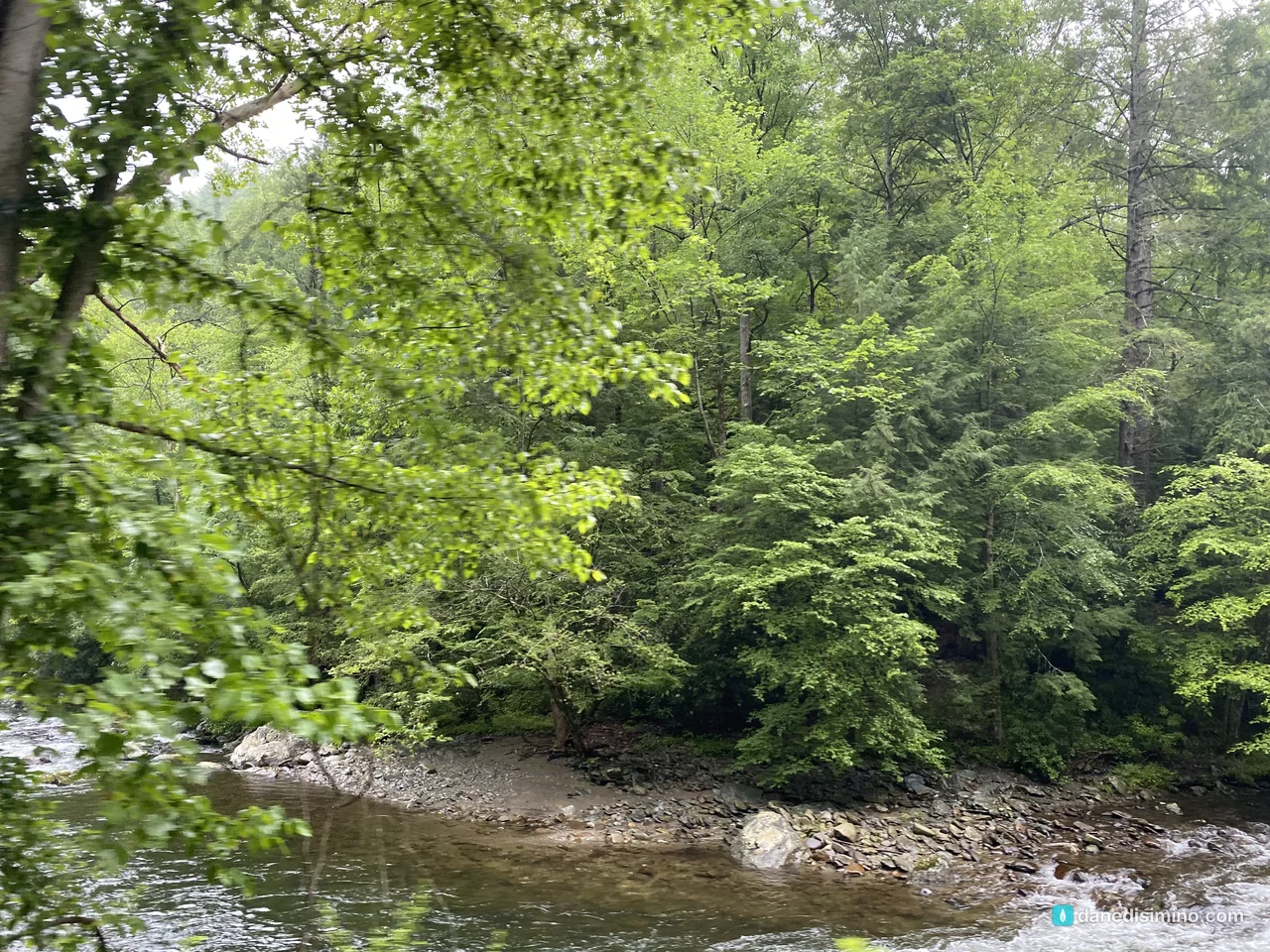
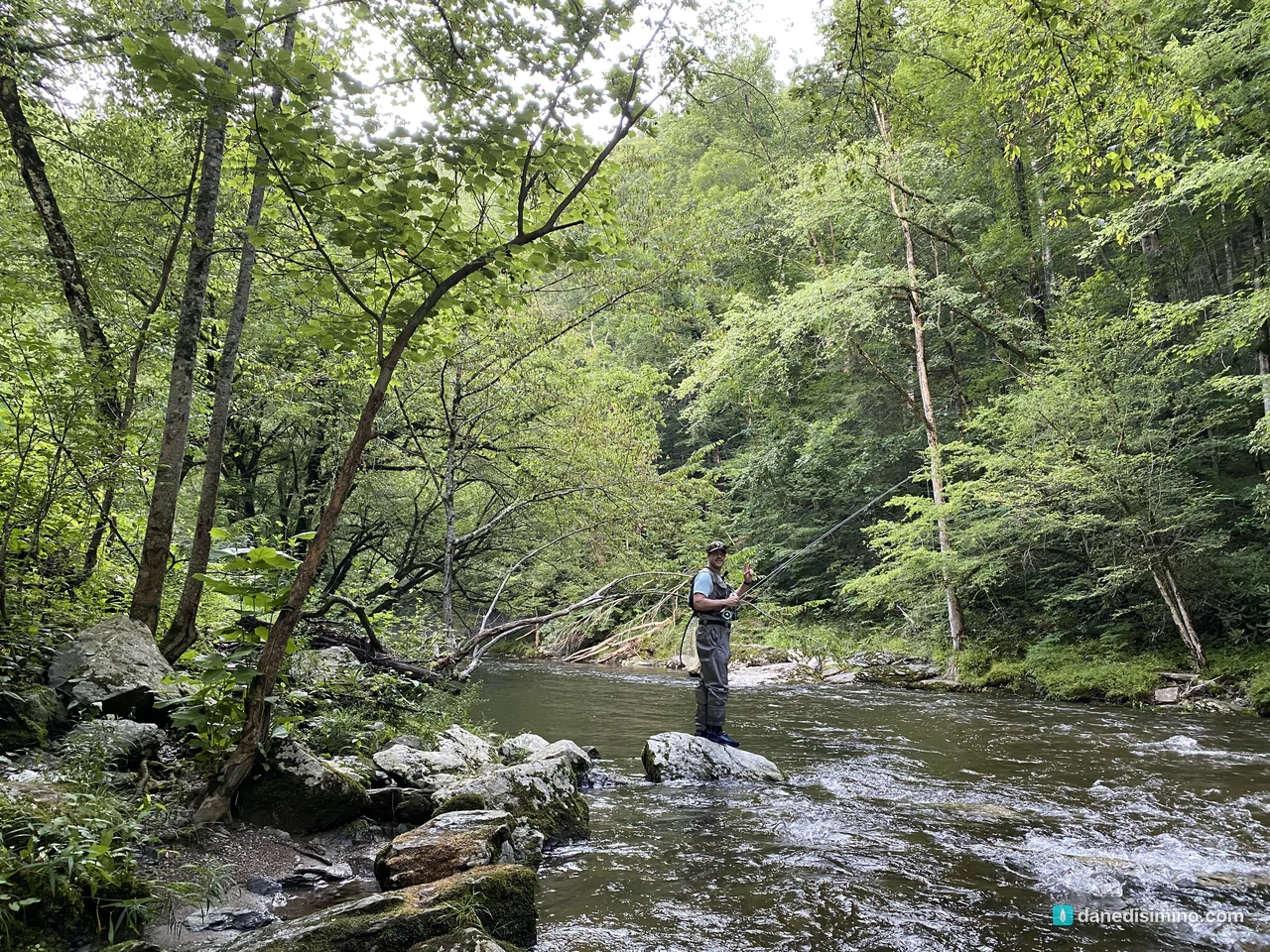
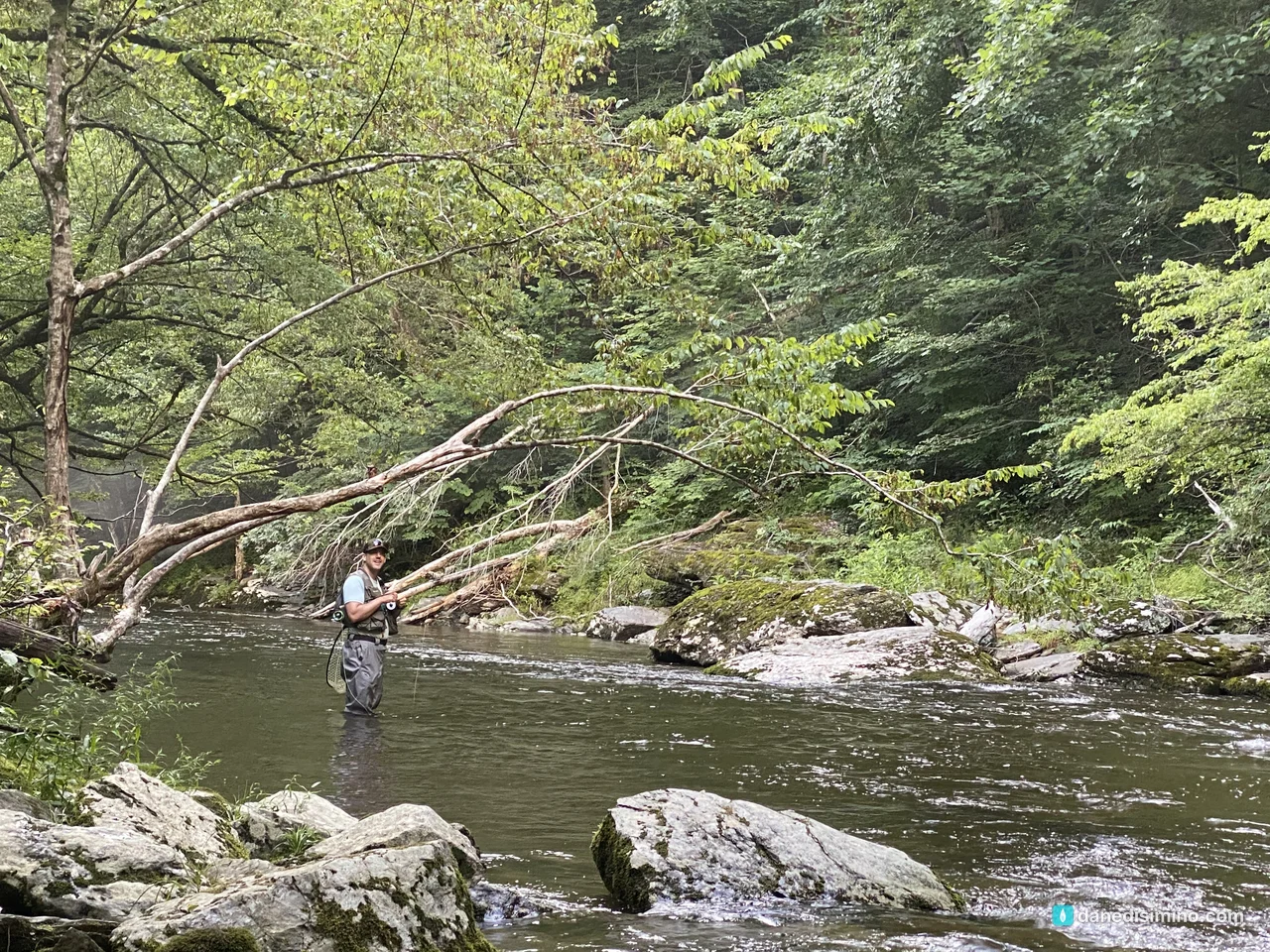
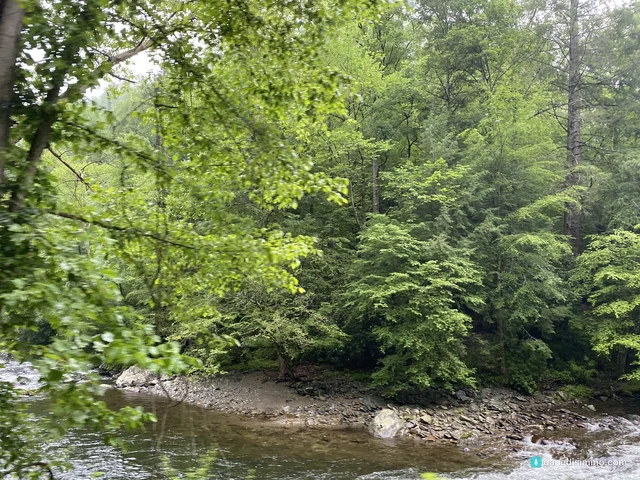
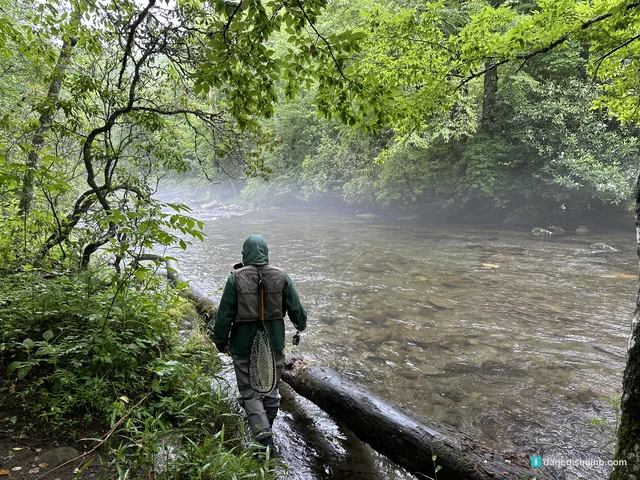
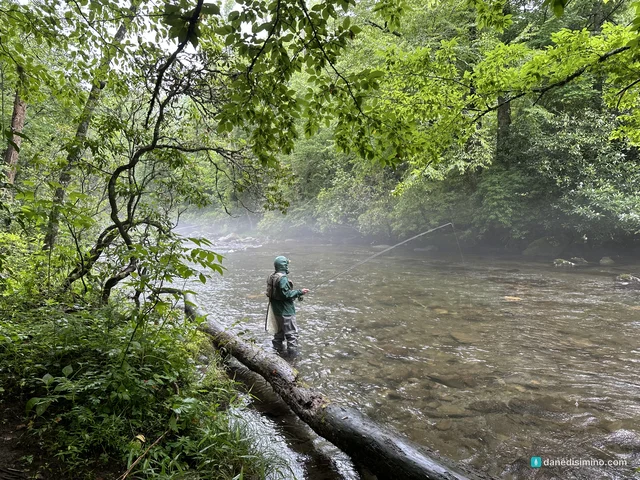
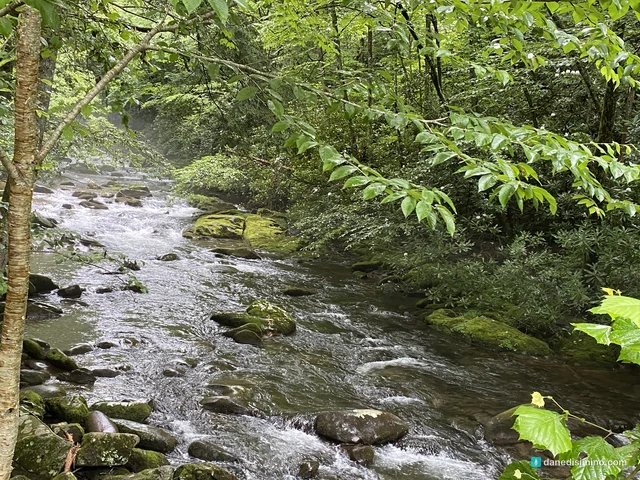
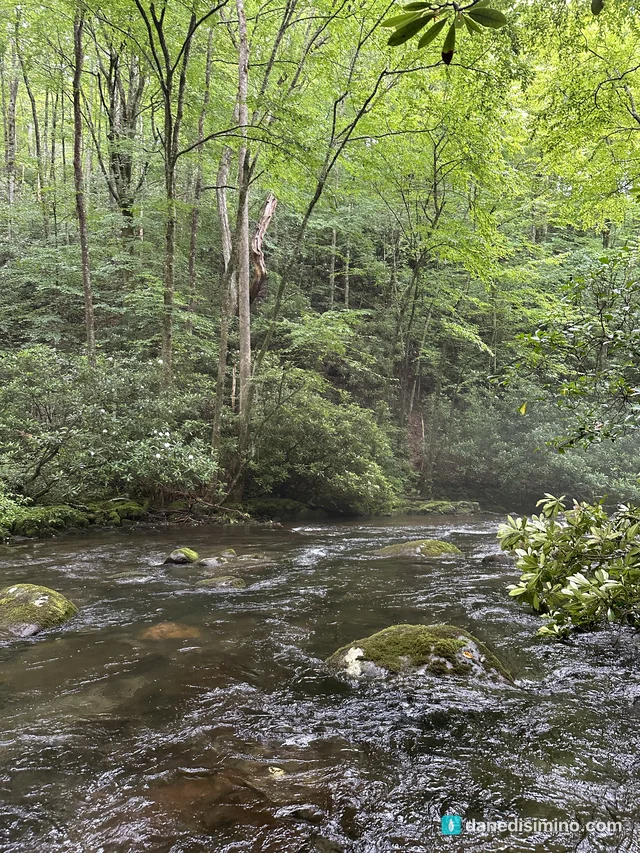
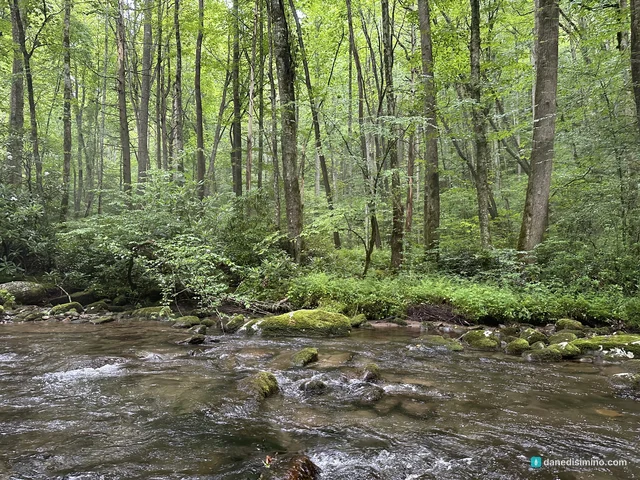
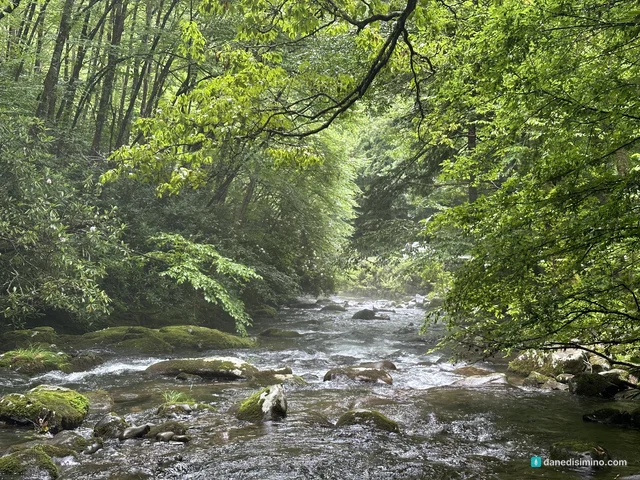
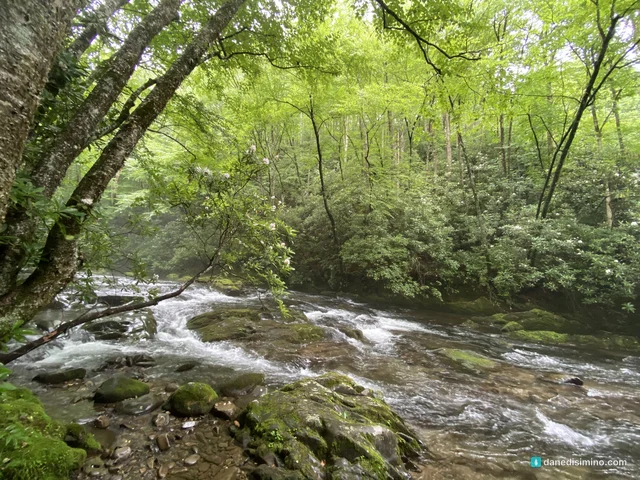
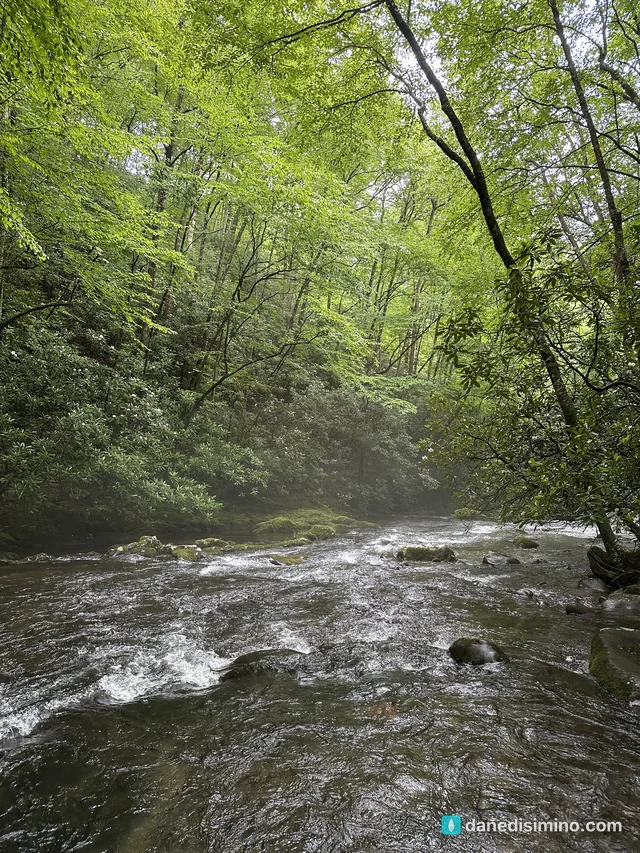
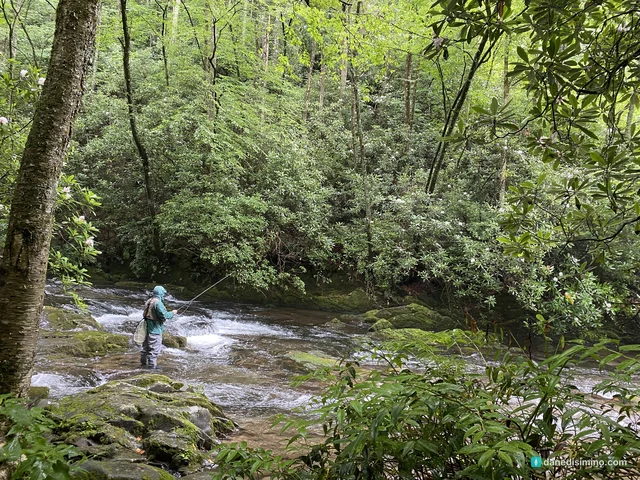
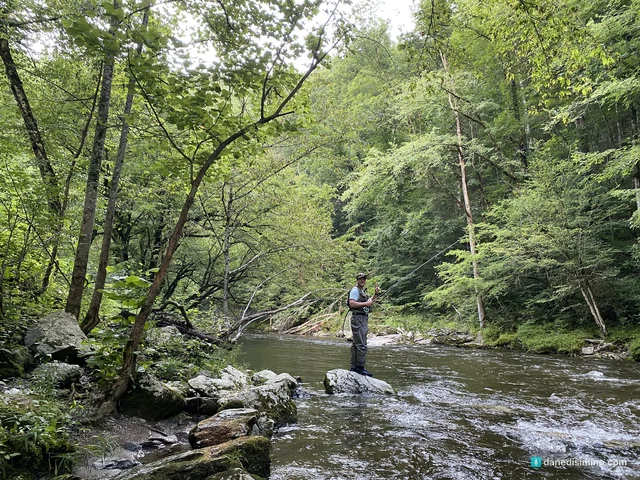
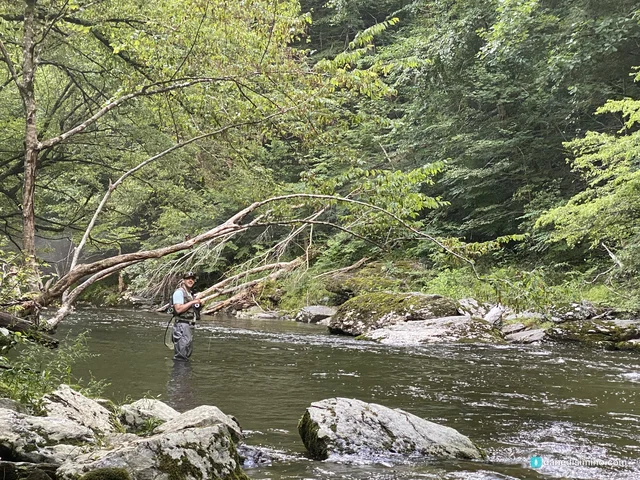
This was the highlight of my trip. I found a river, tracked down to it with my rod and fished in the mist.
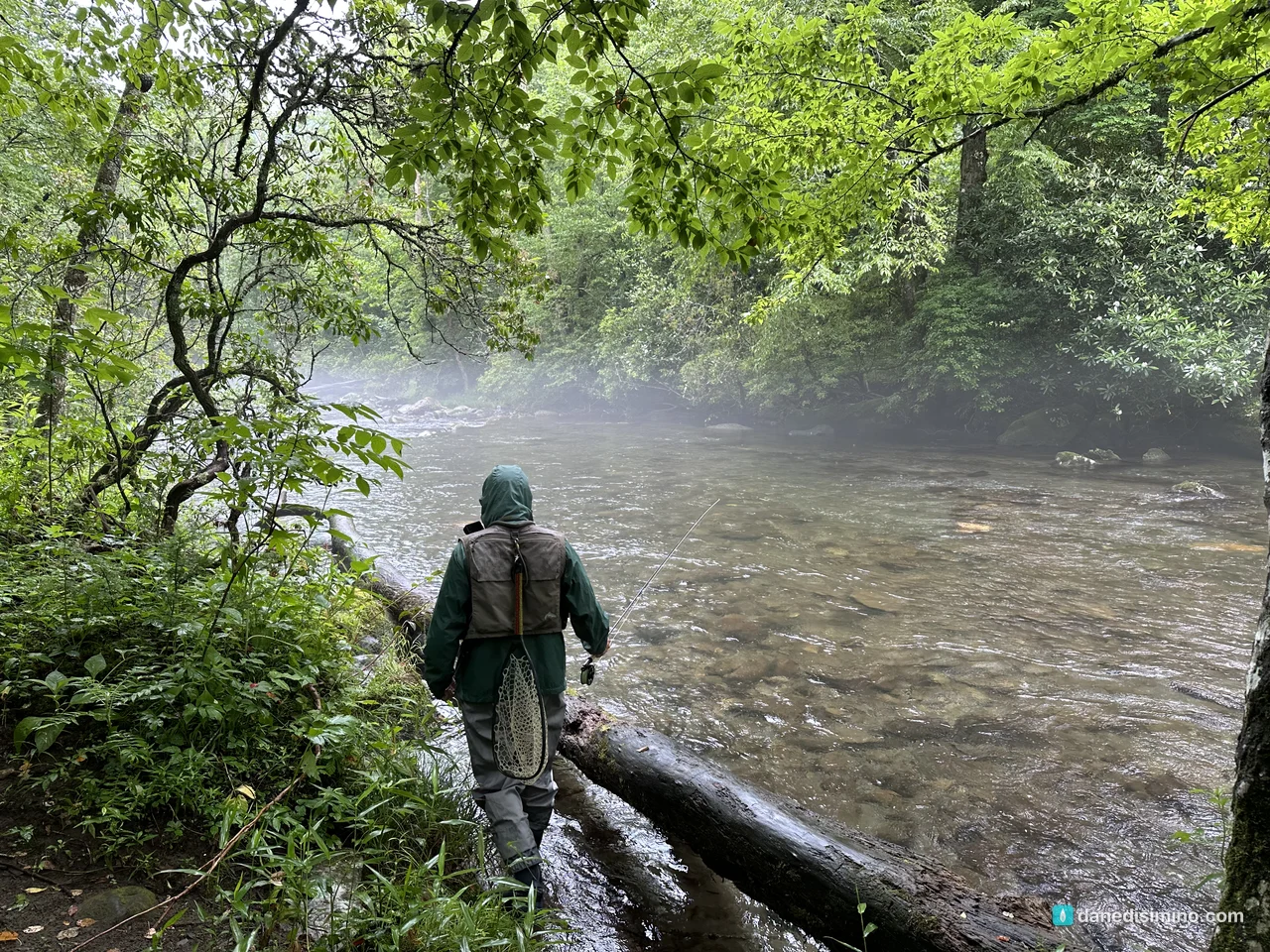
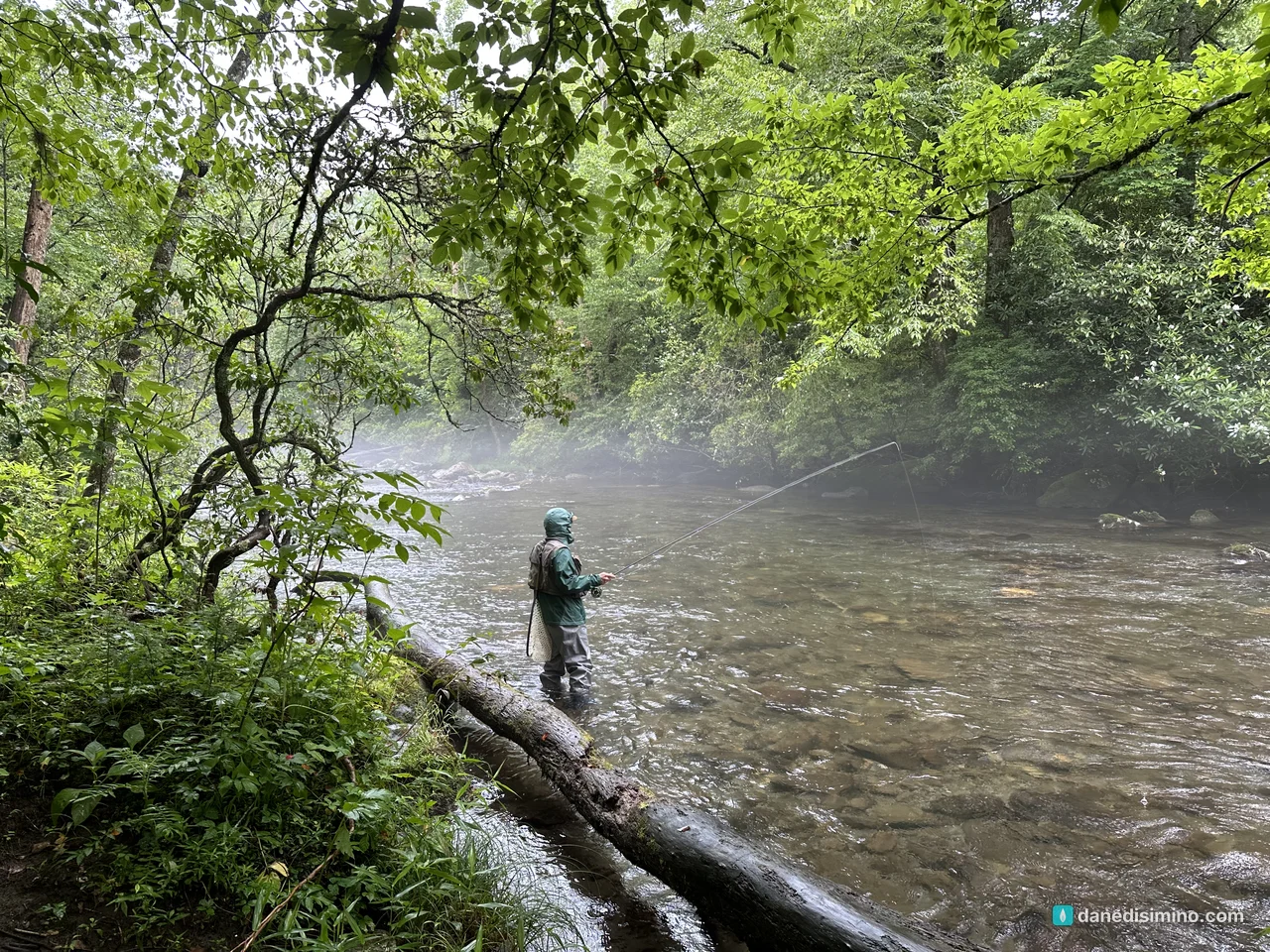
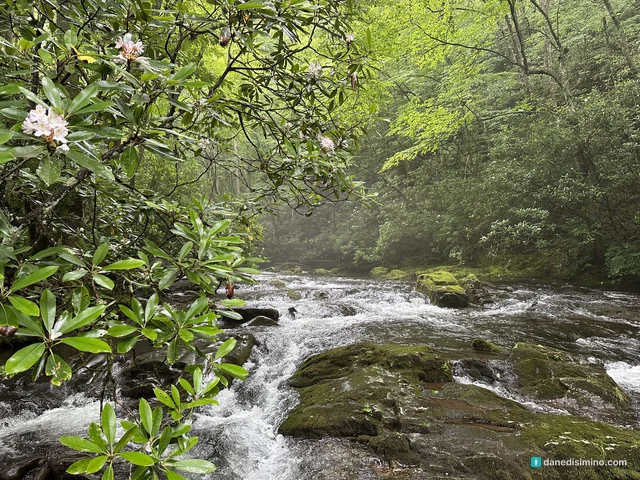
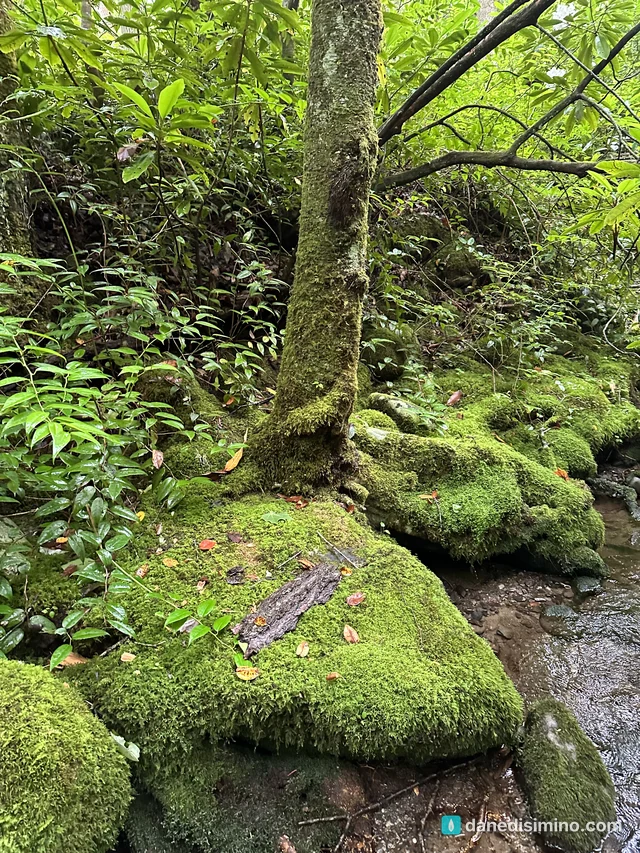
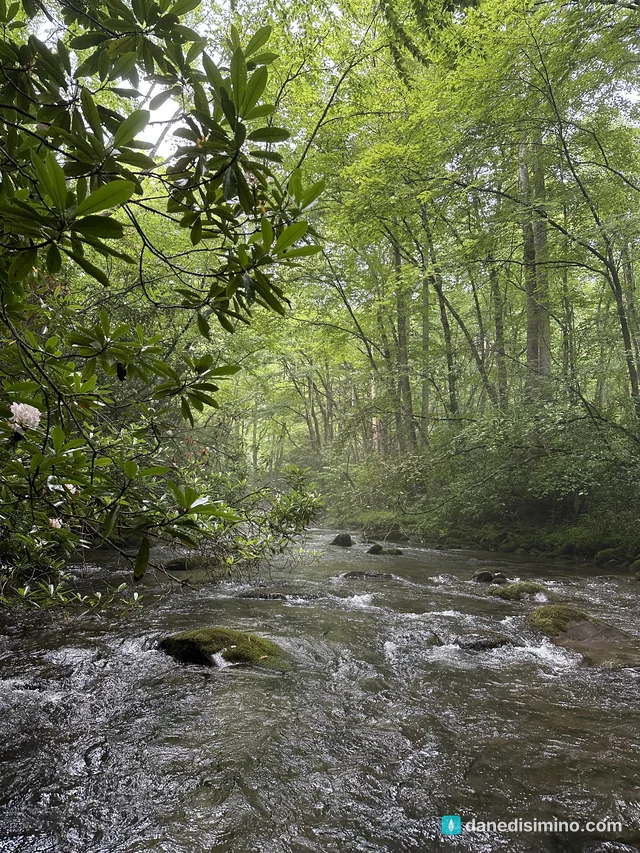
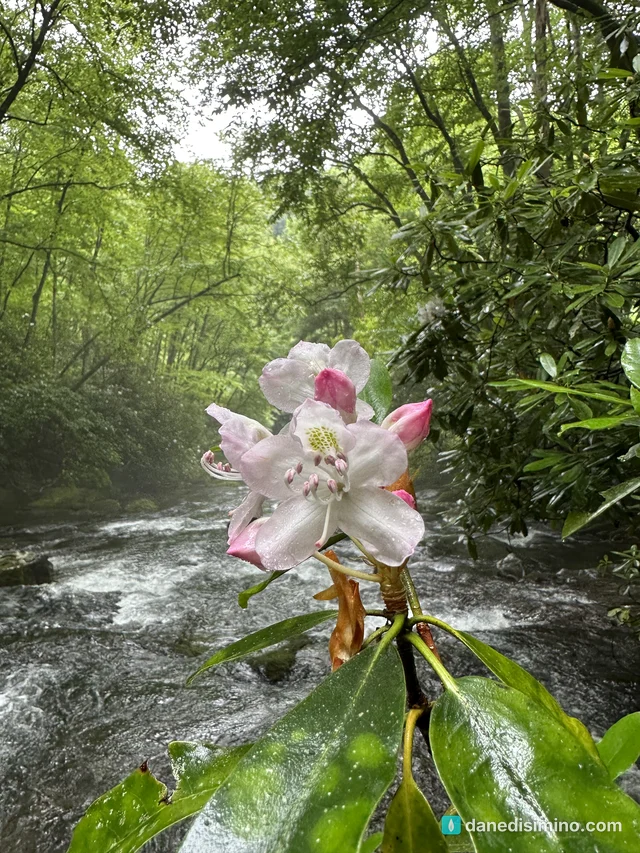
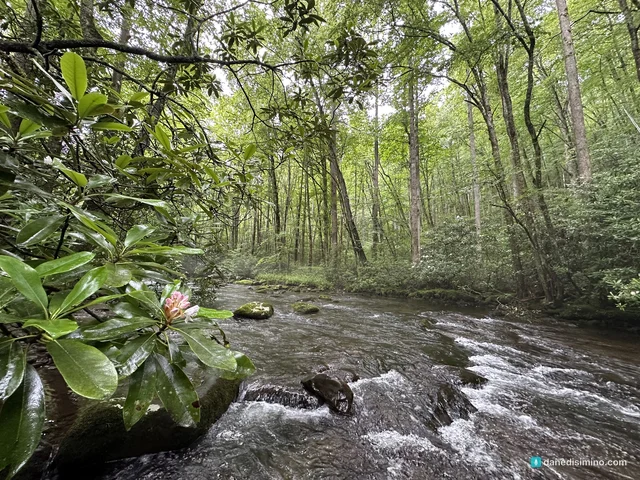
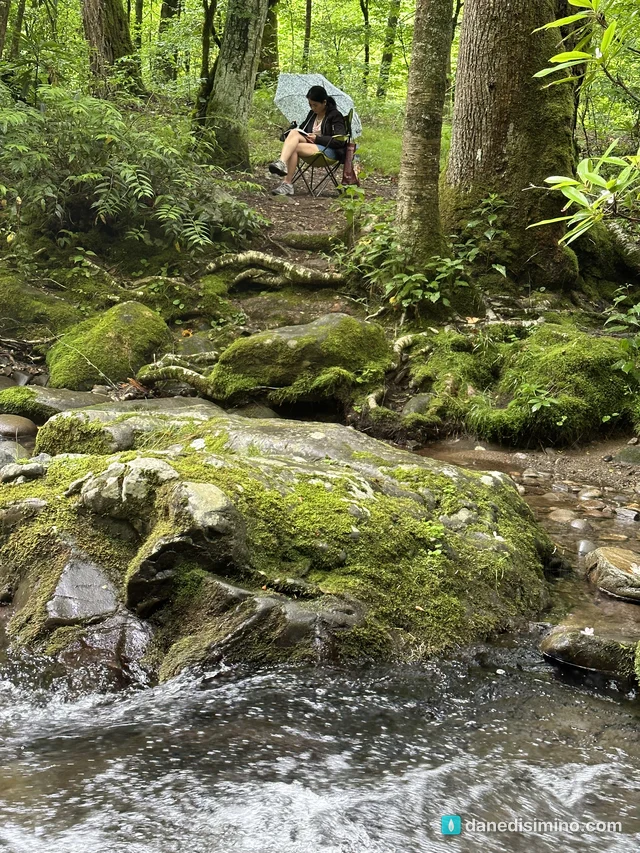
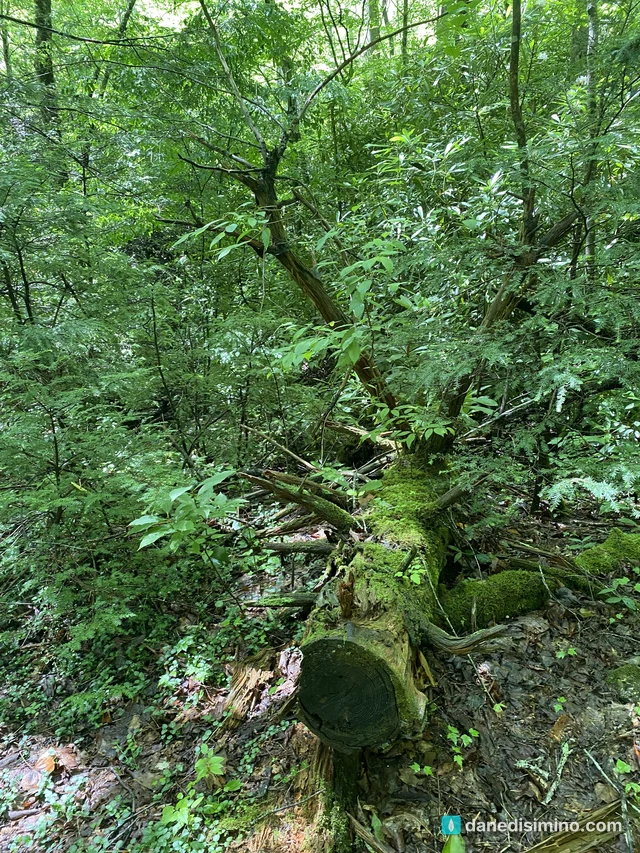
The scenery was almost mesmerizing: moss around the stumps, water sliding over the rocks, and rhododendron hanging over the current. Of all five parks, these rivers were the most beautiful and tranquil places I saw.
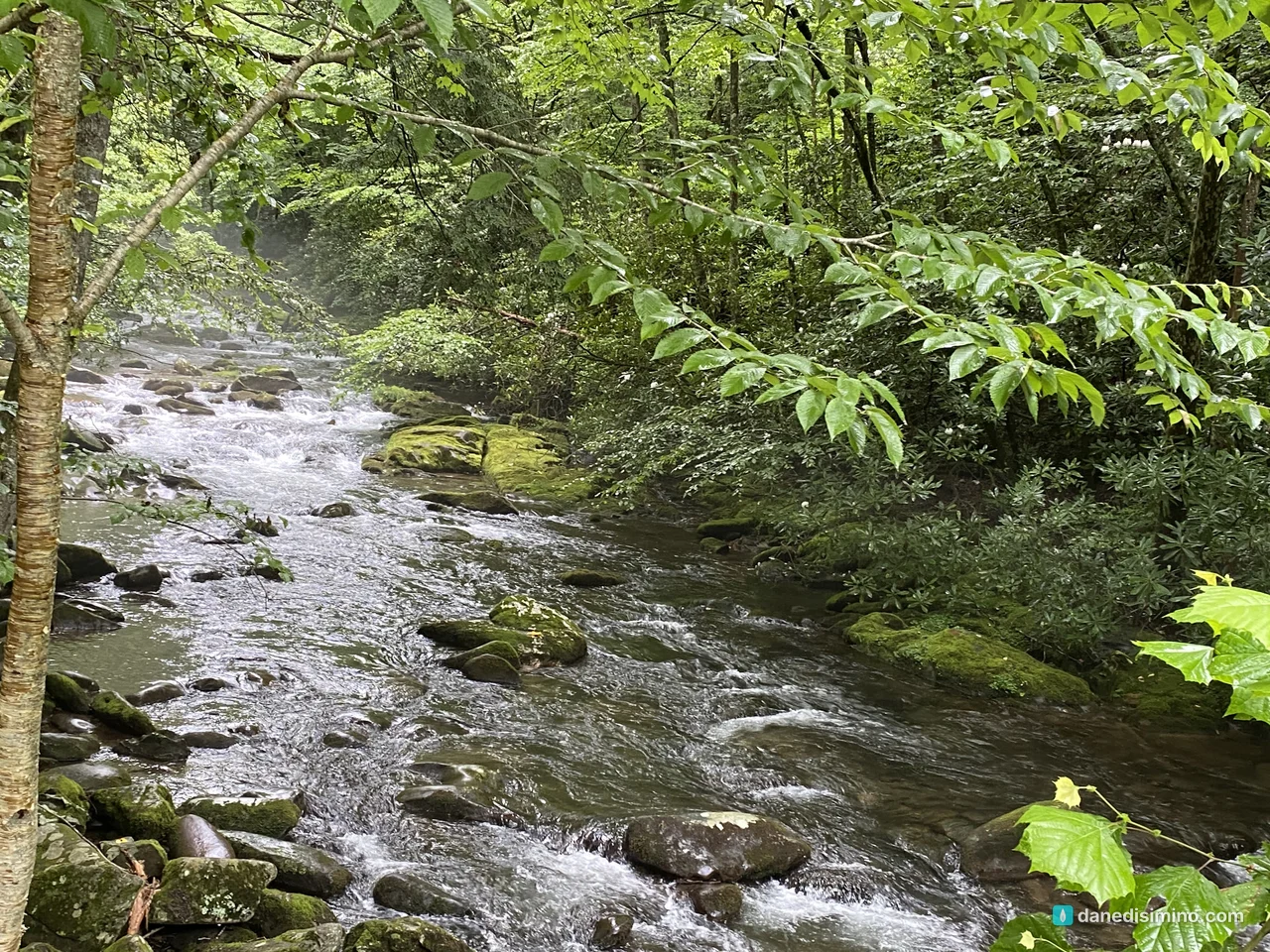
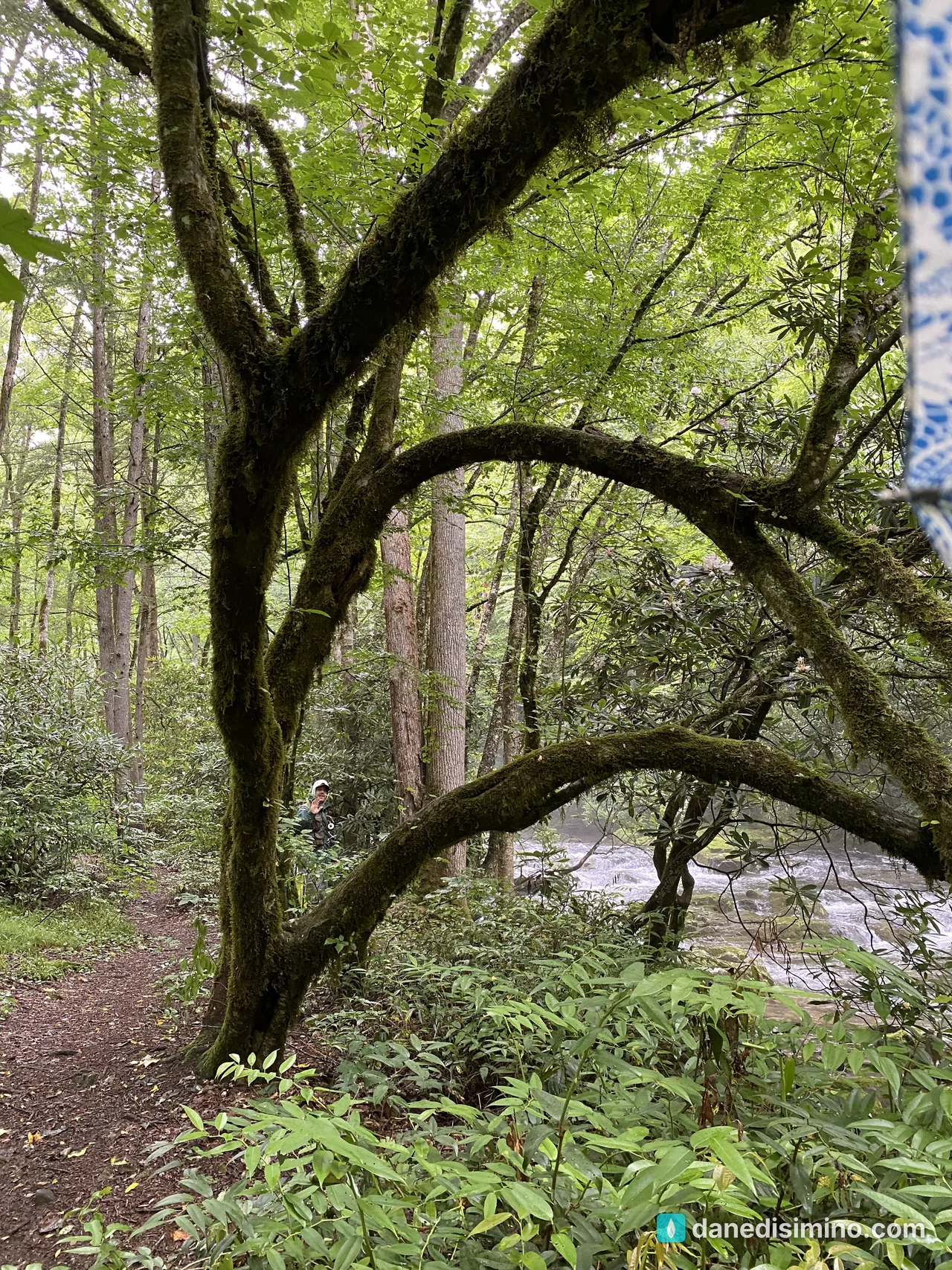
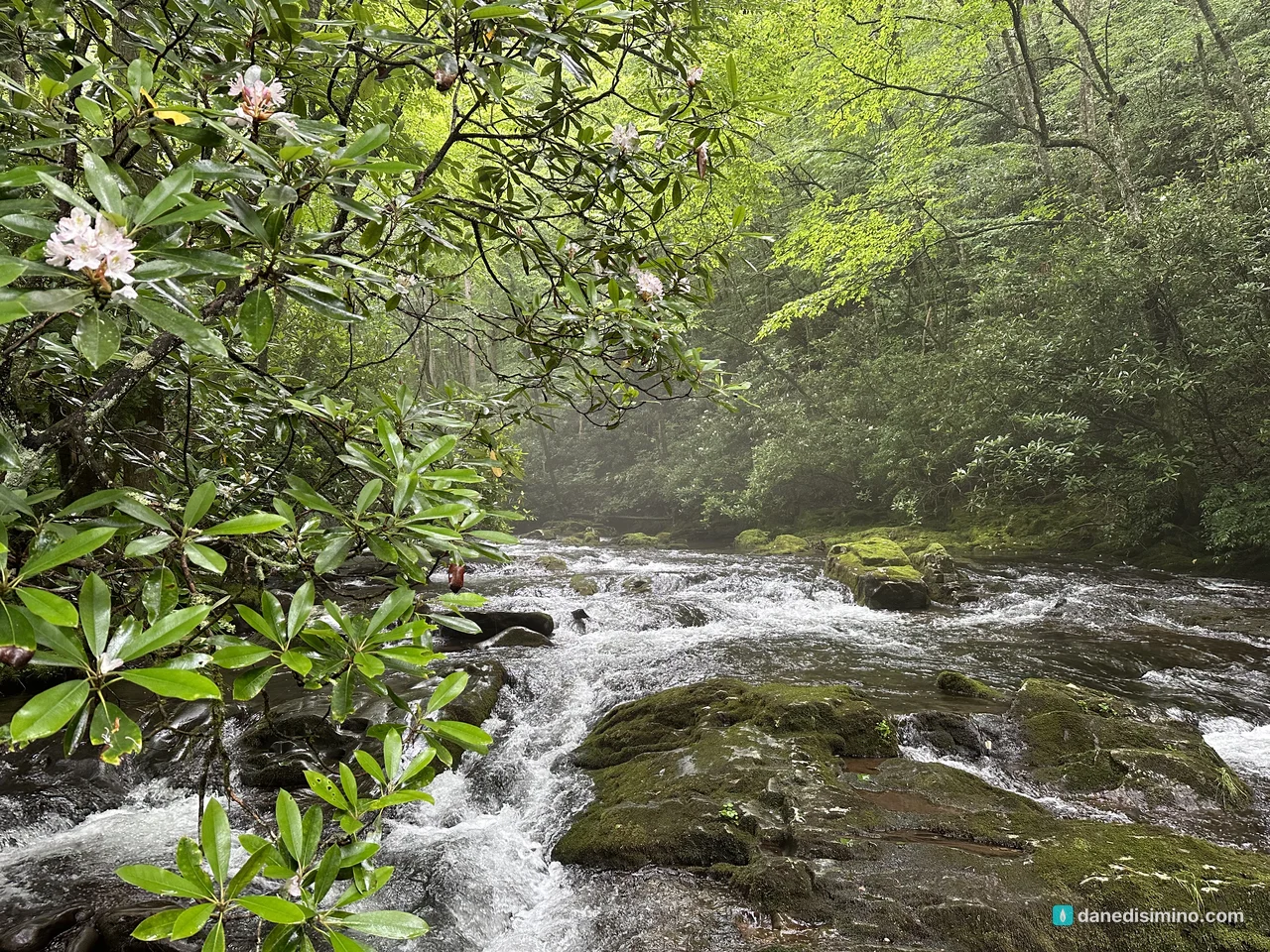
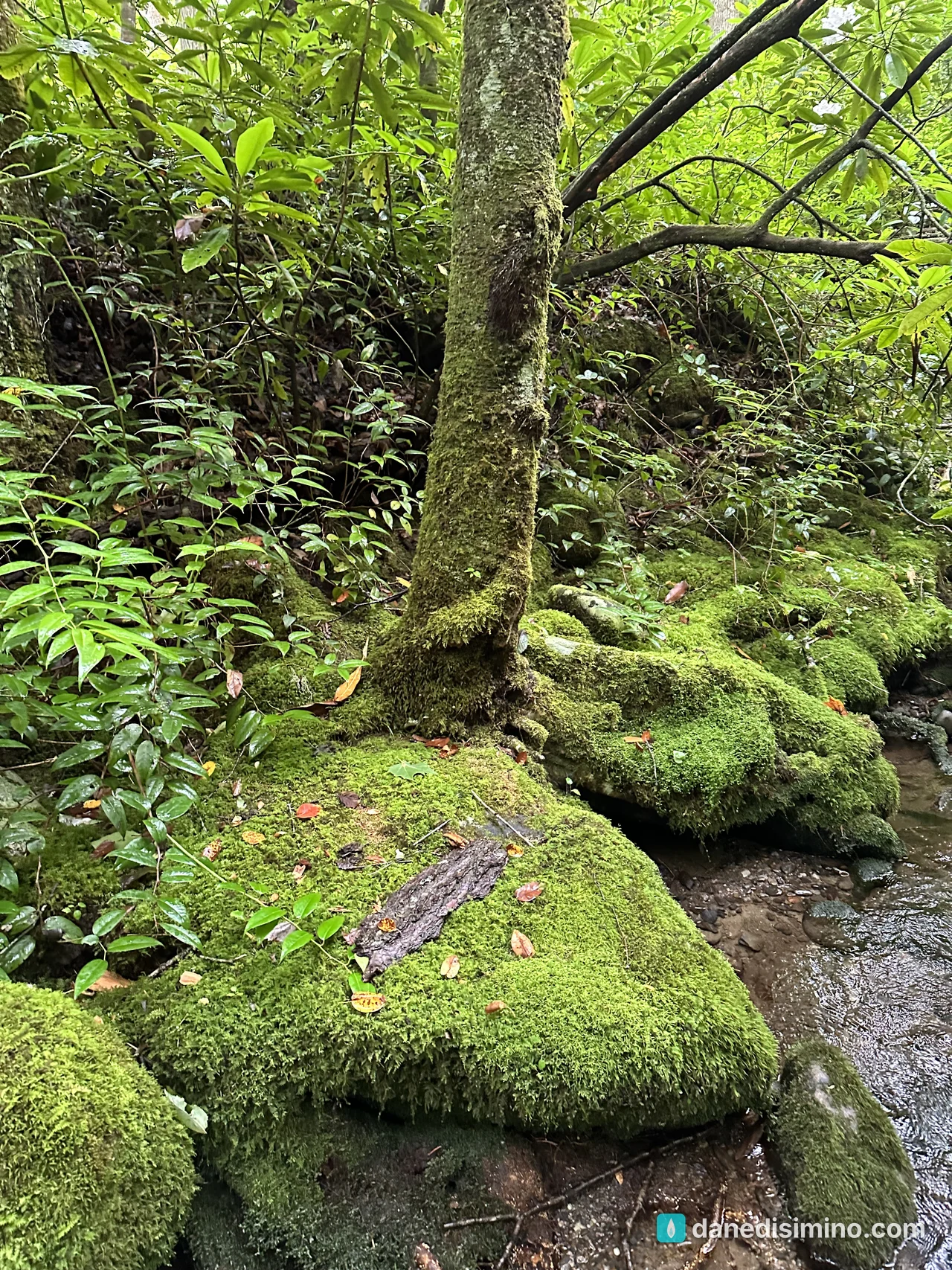
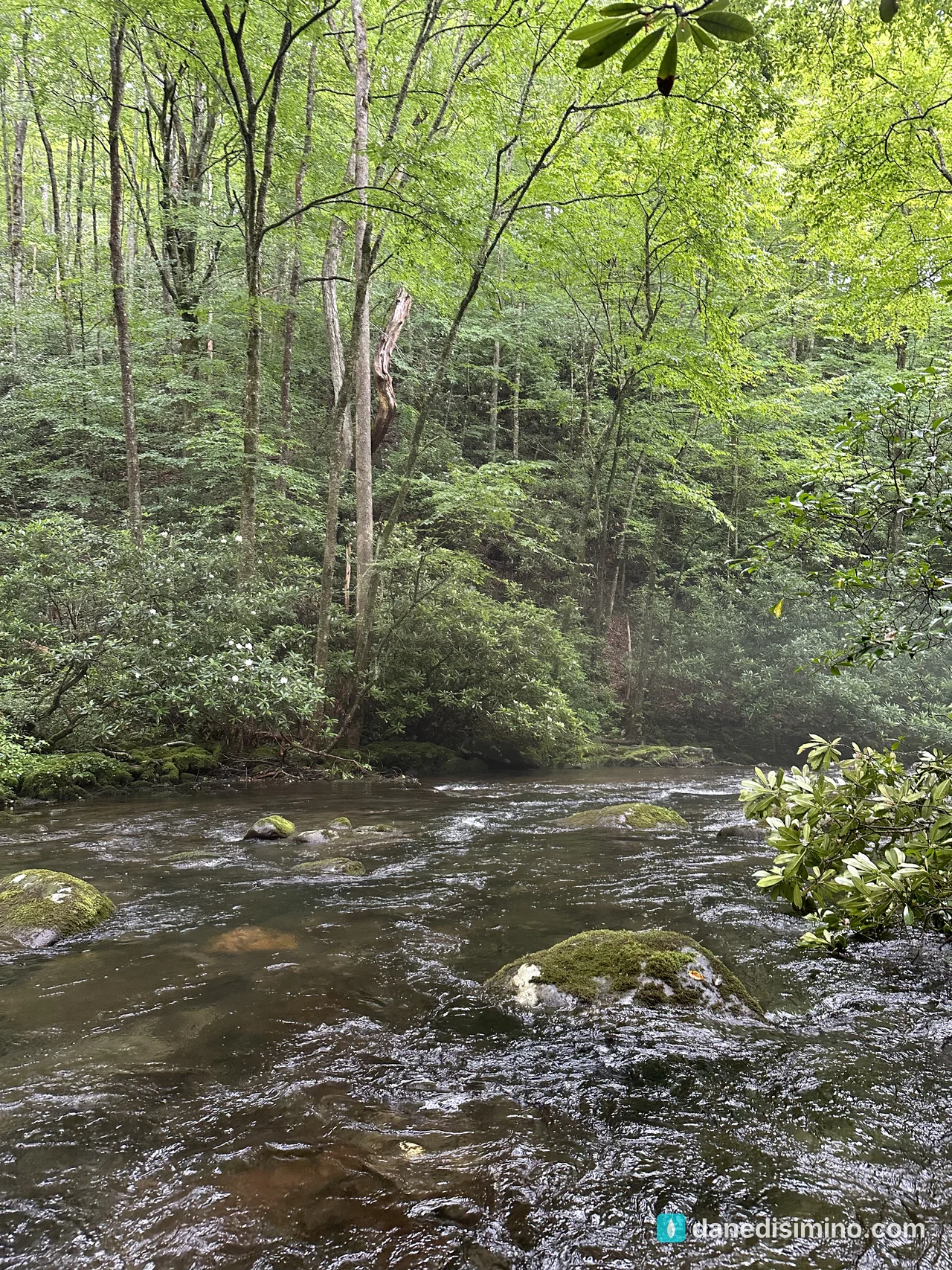
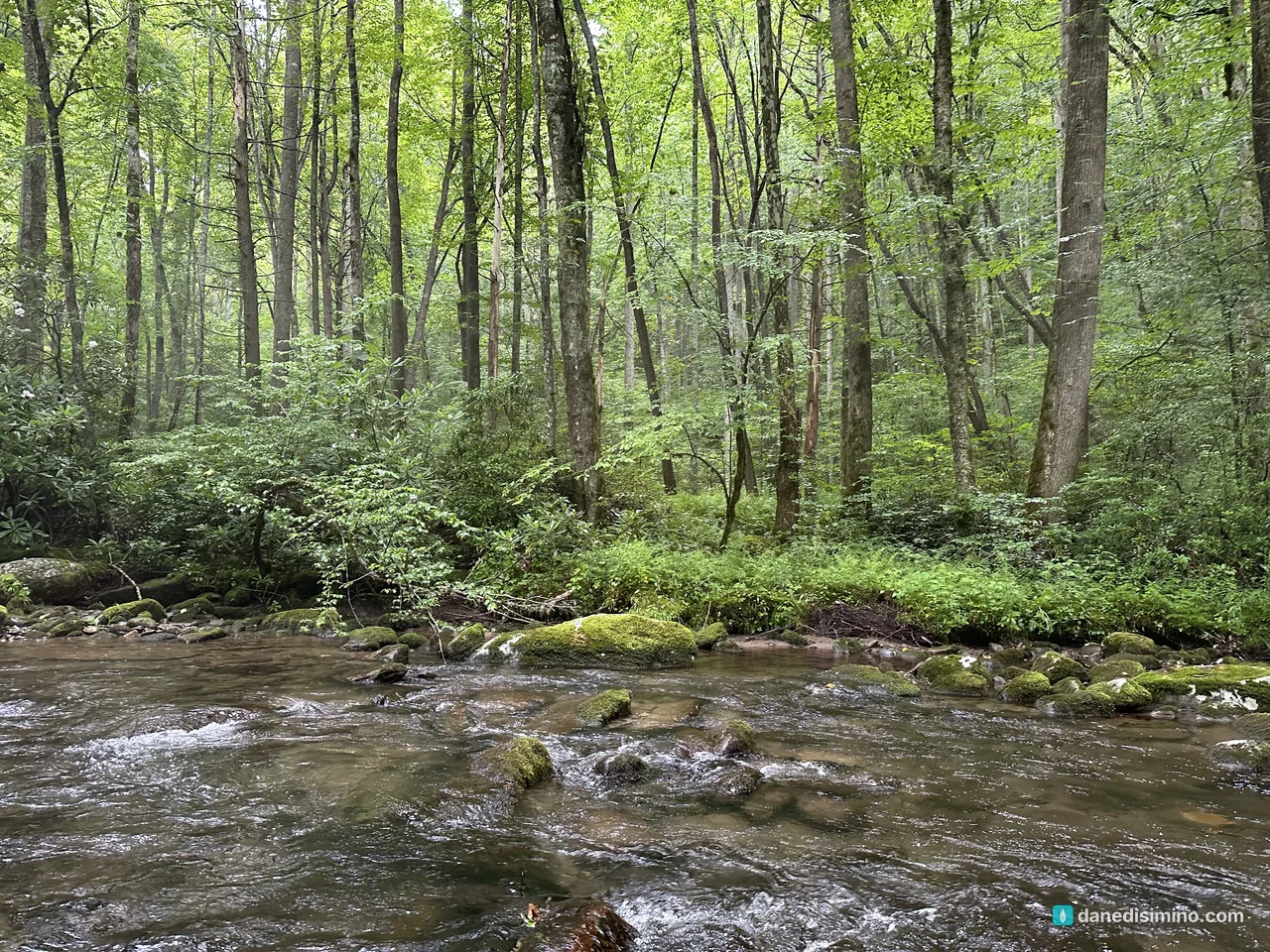
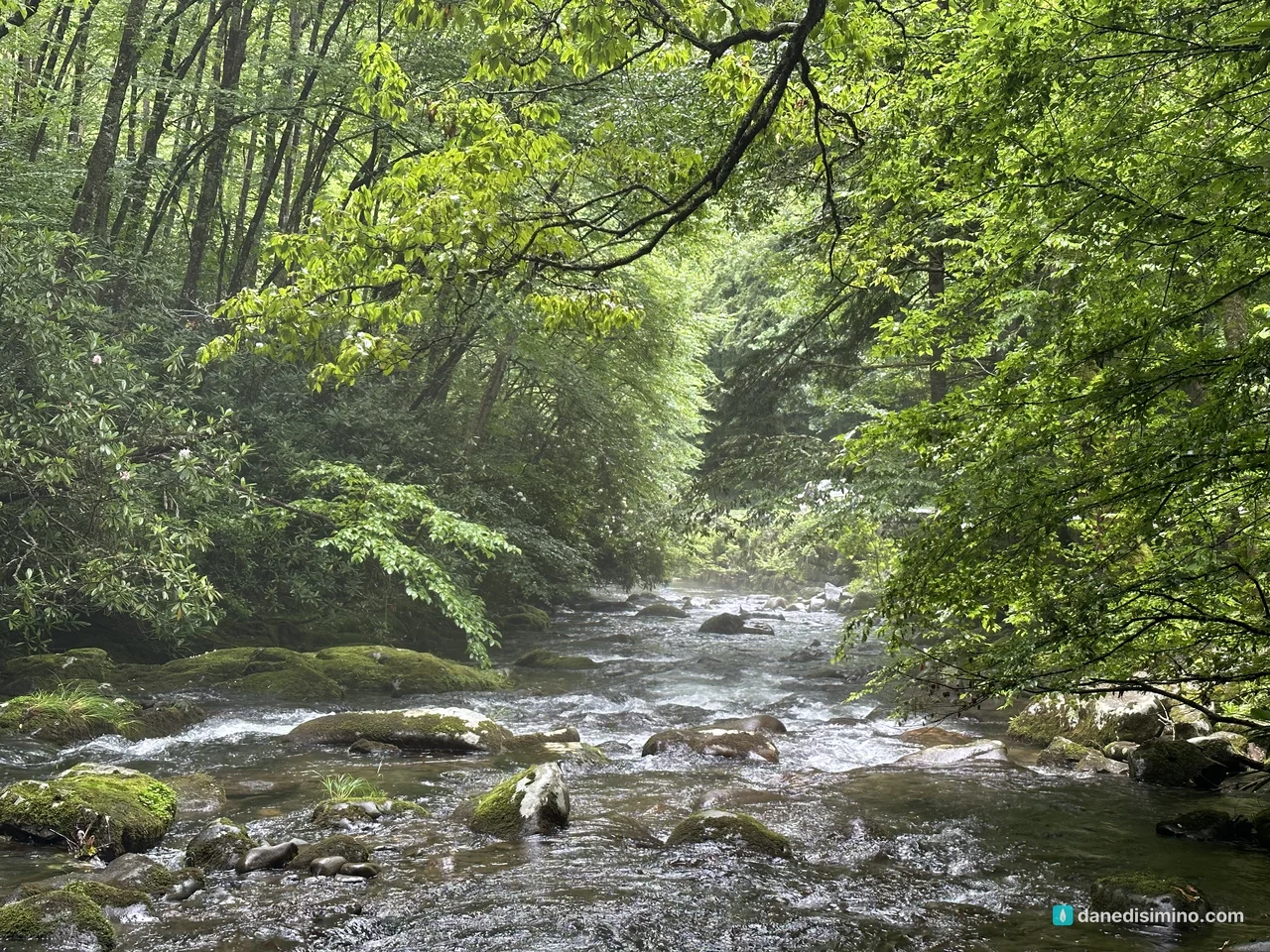
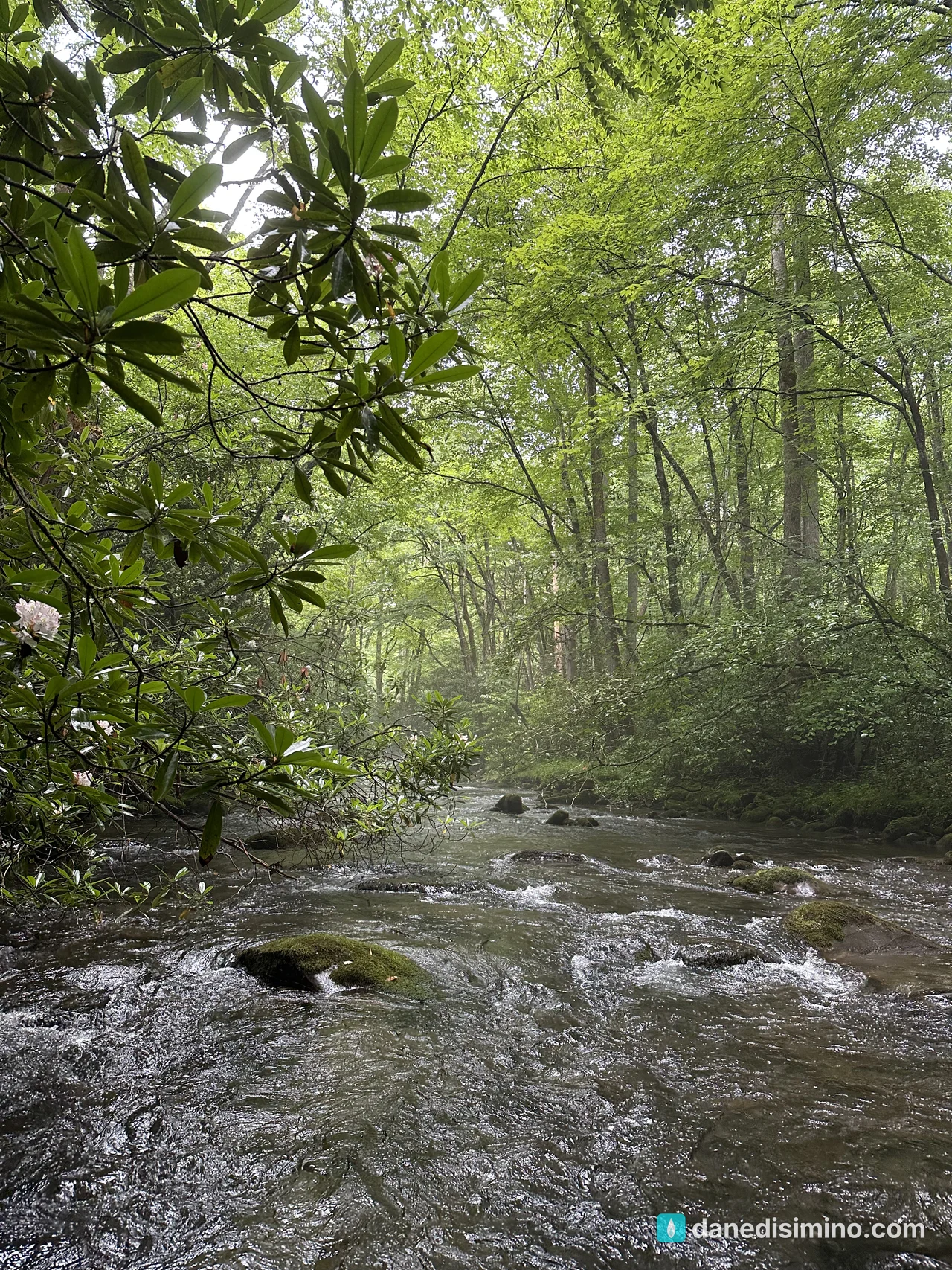
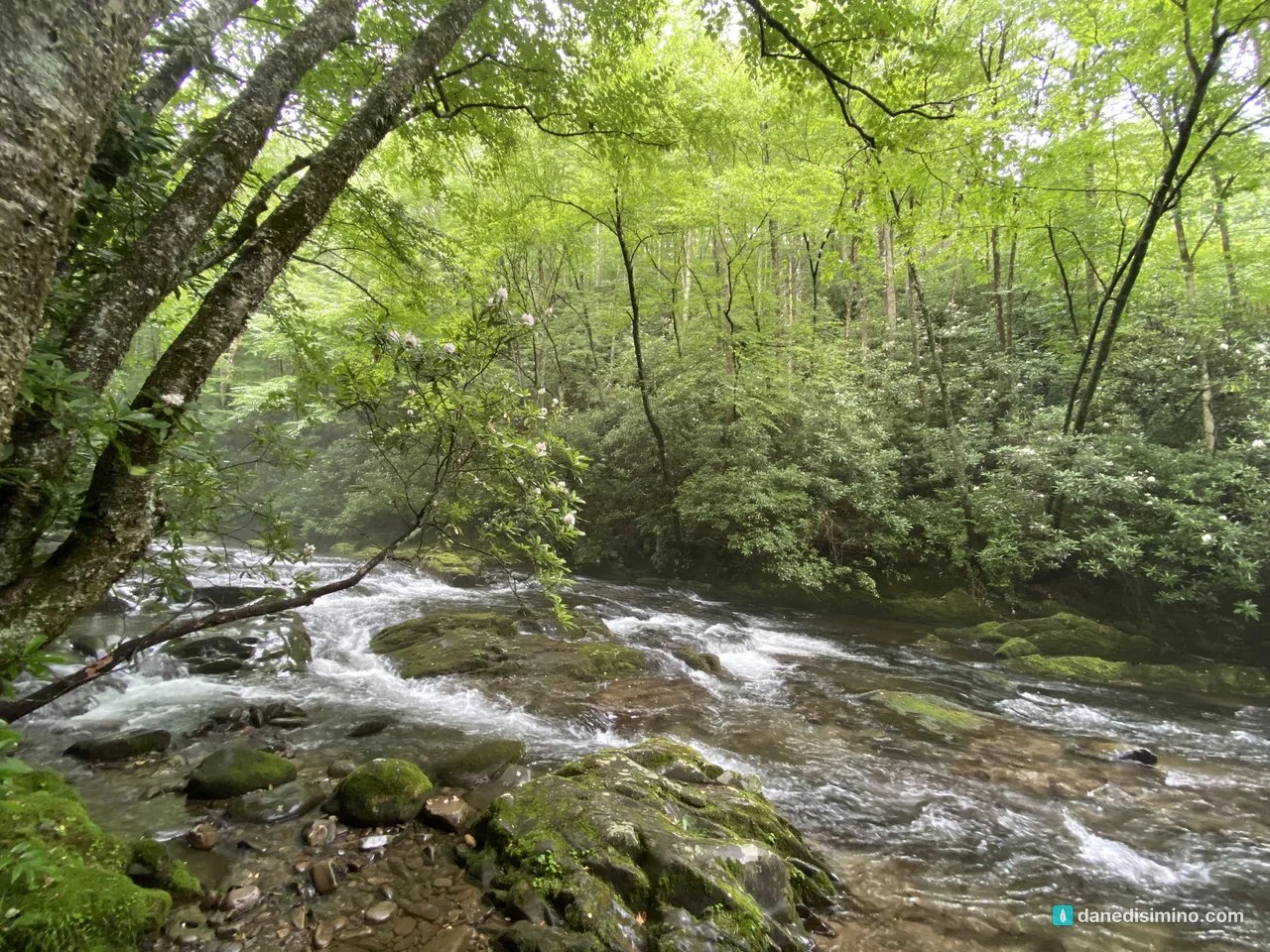
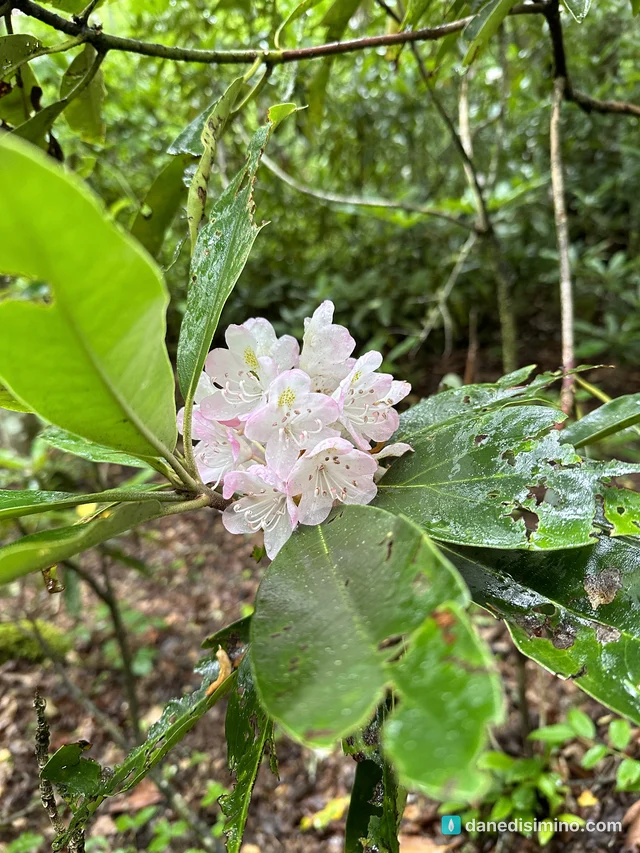
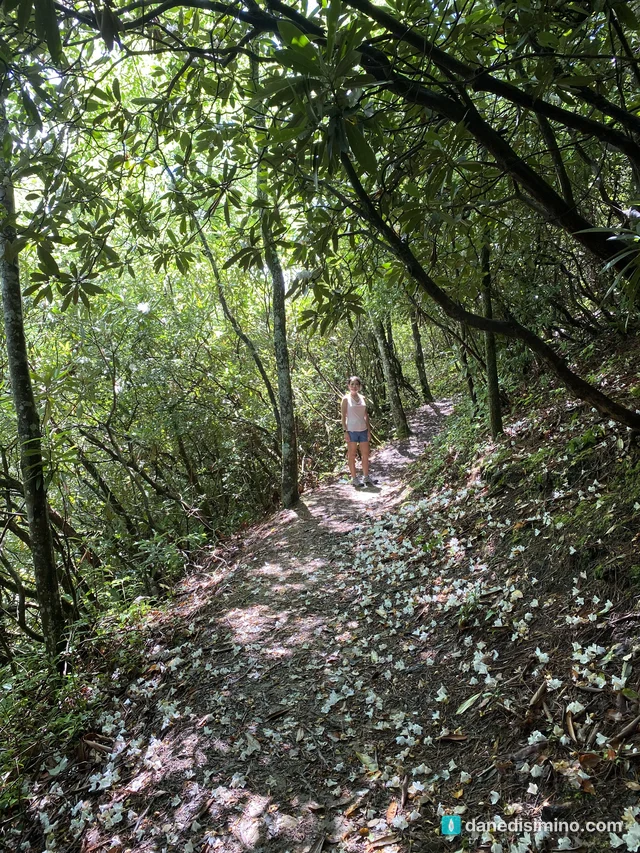
The flowers popped against the fog. The white-and-pink blooms in my photos are rosebay rhododendron, the most common rhododendron in the Smokies. It grows along streams and blooms at mid-elevations in July.
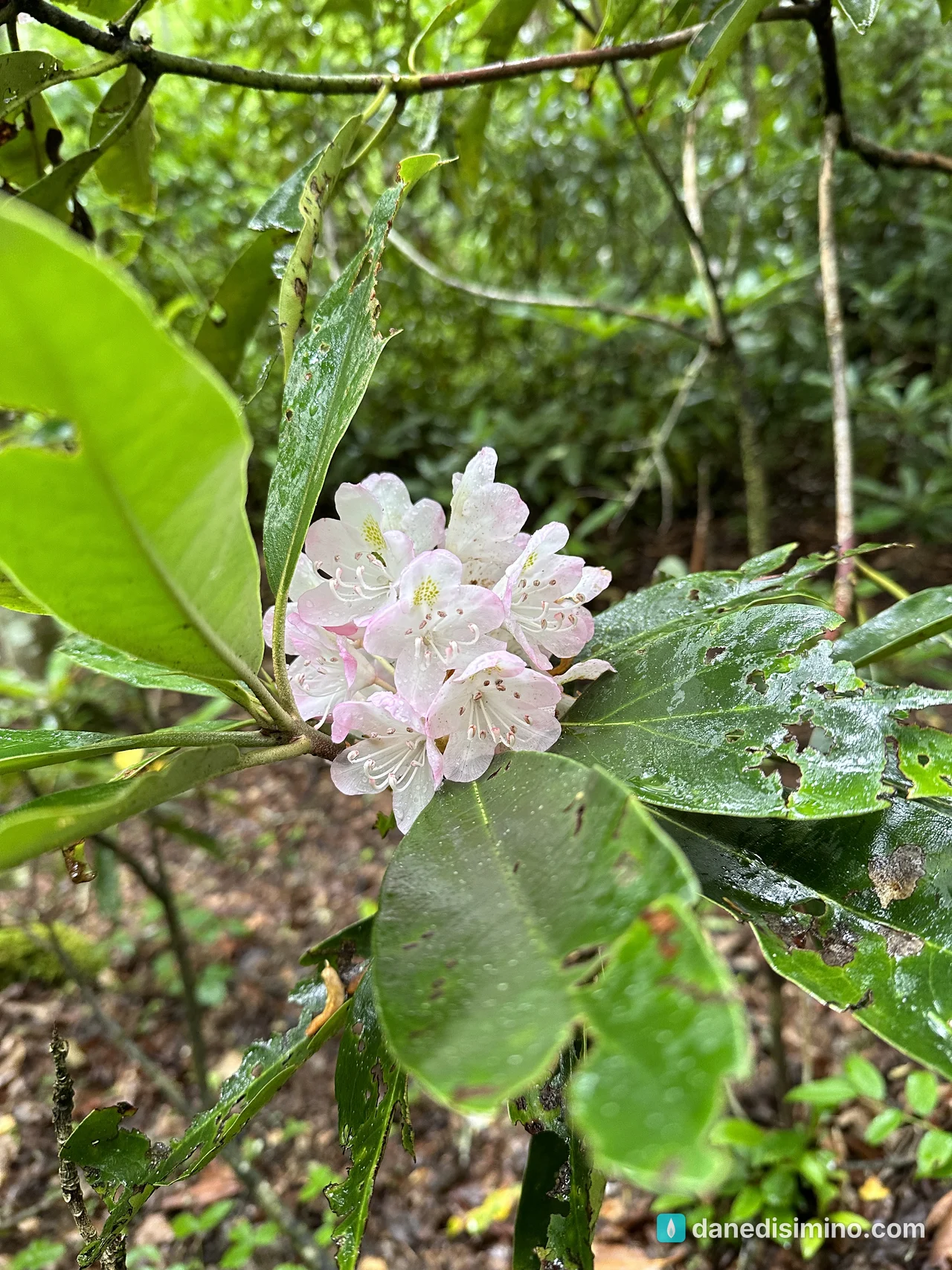
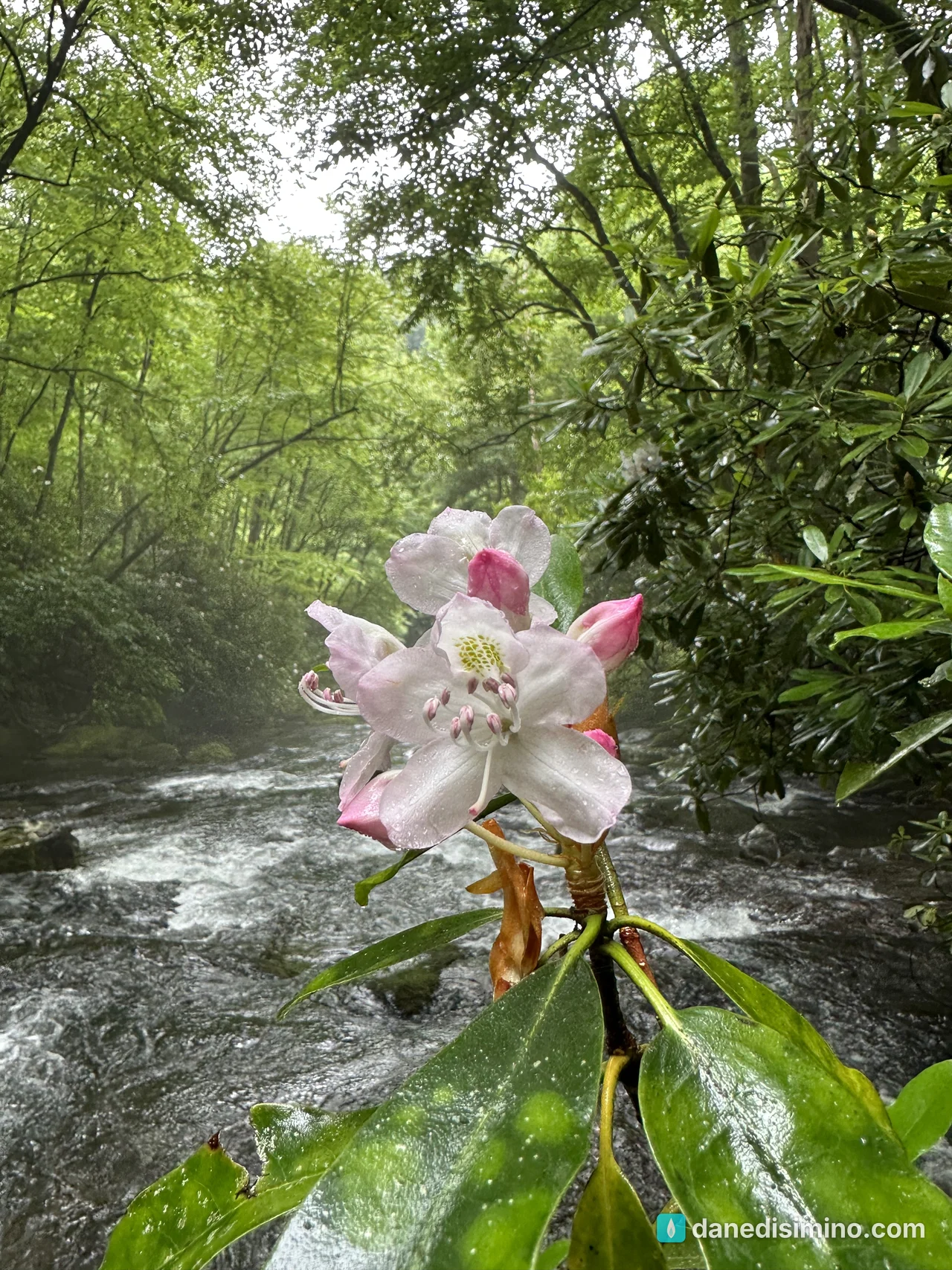
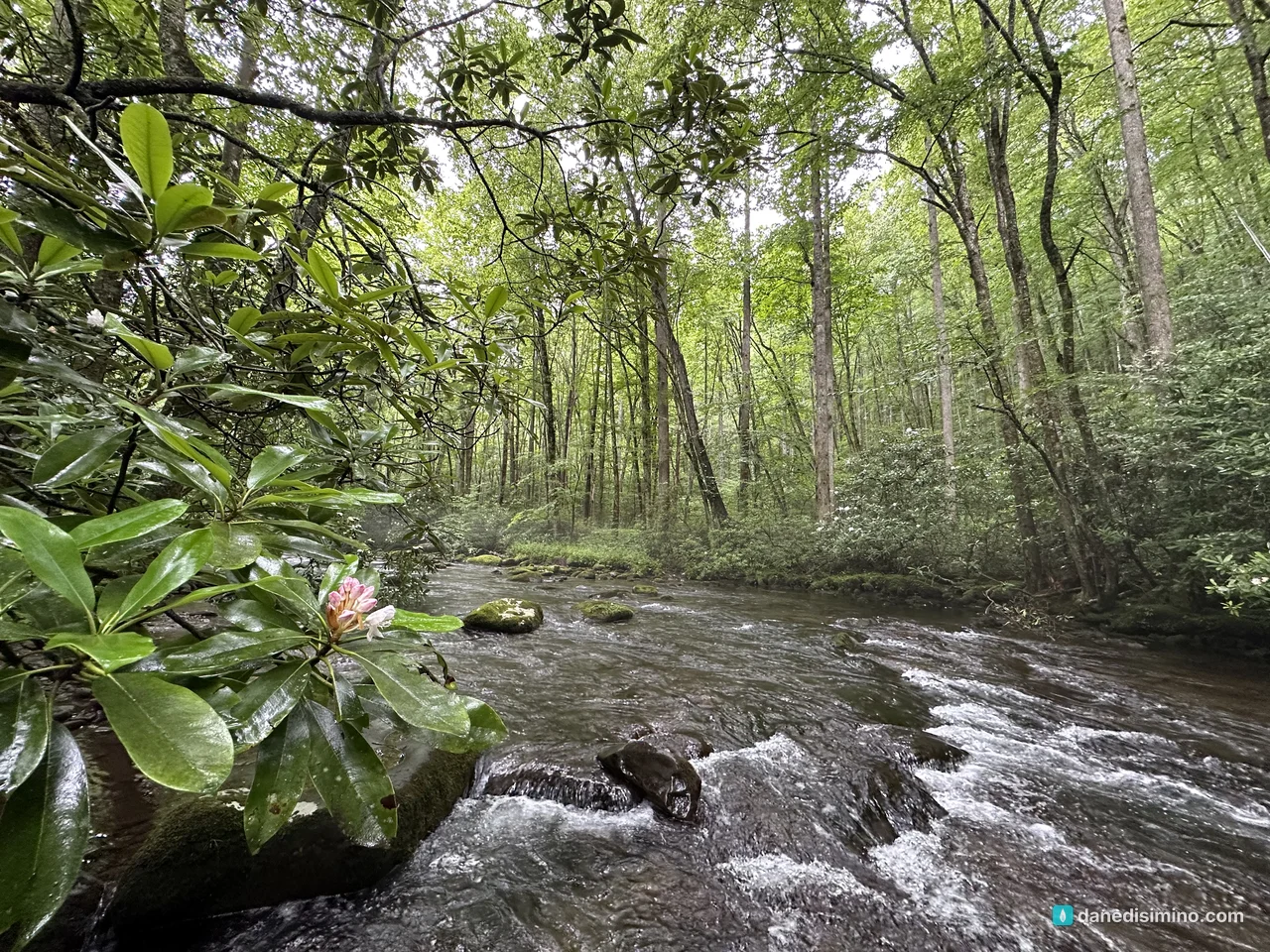
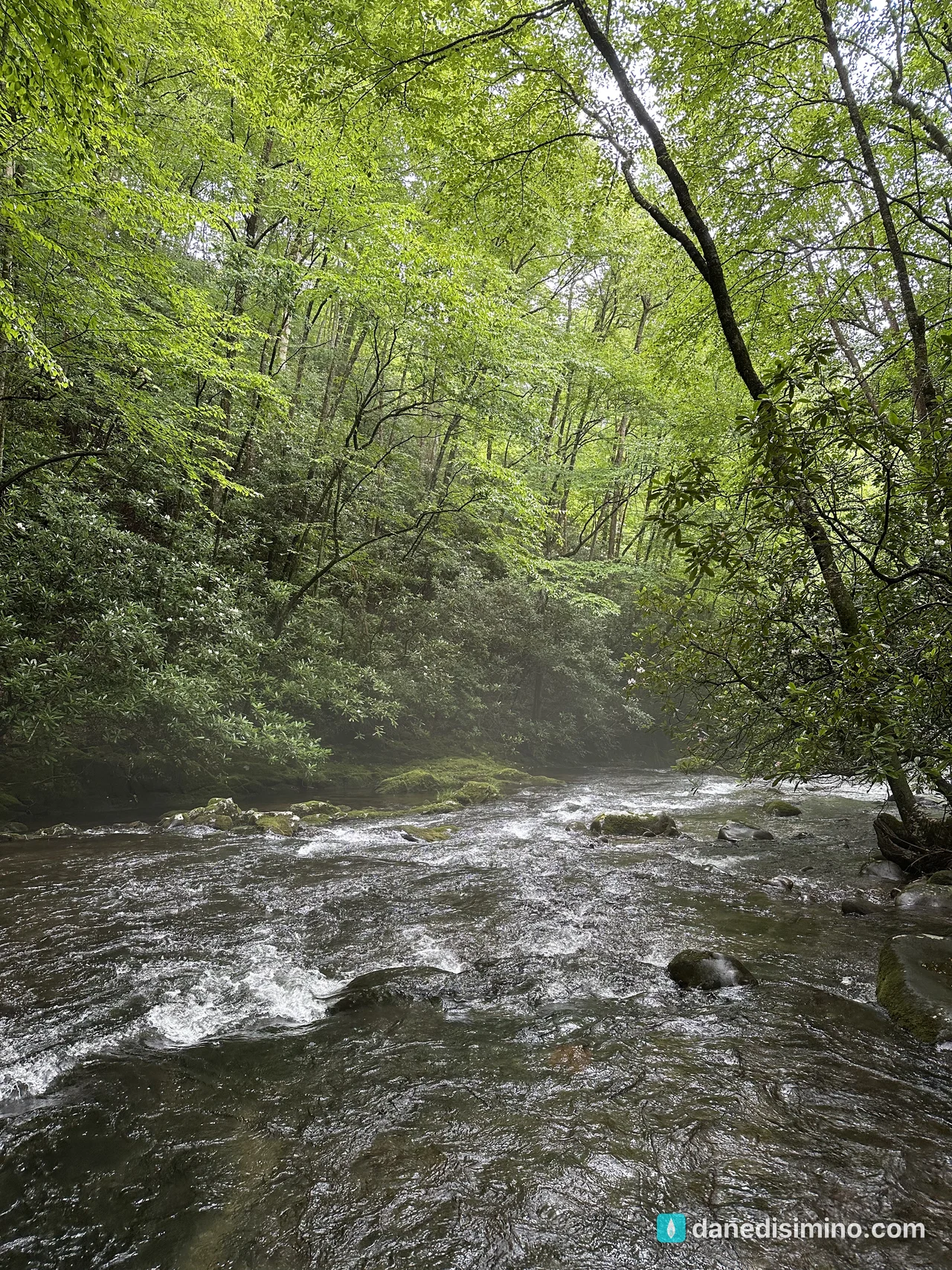
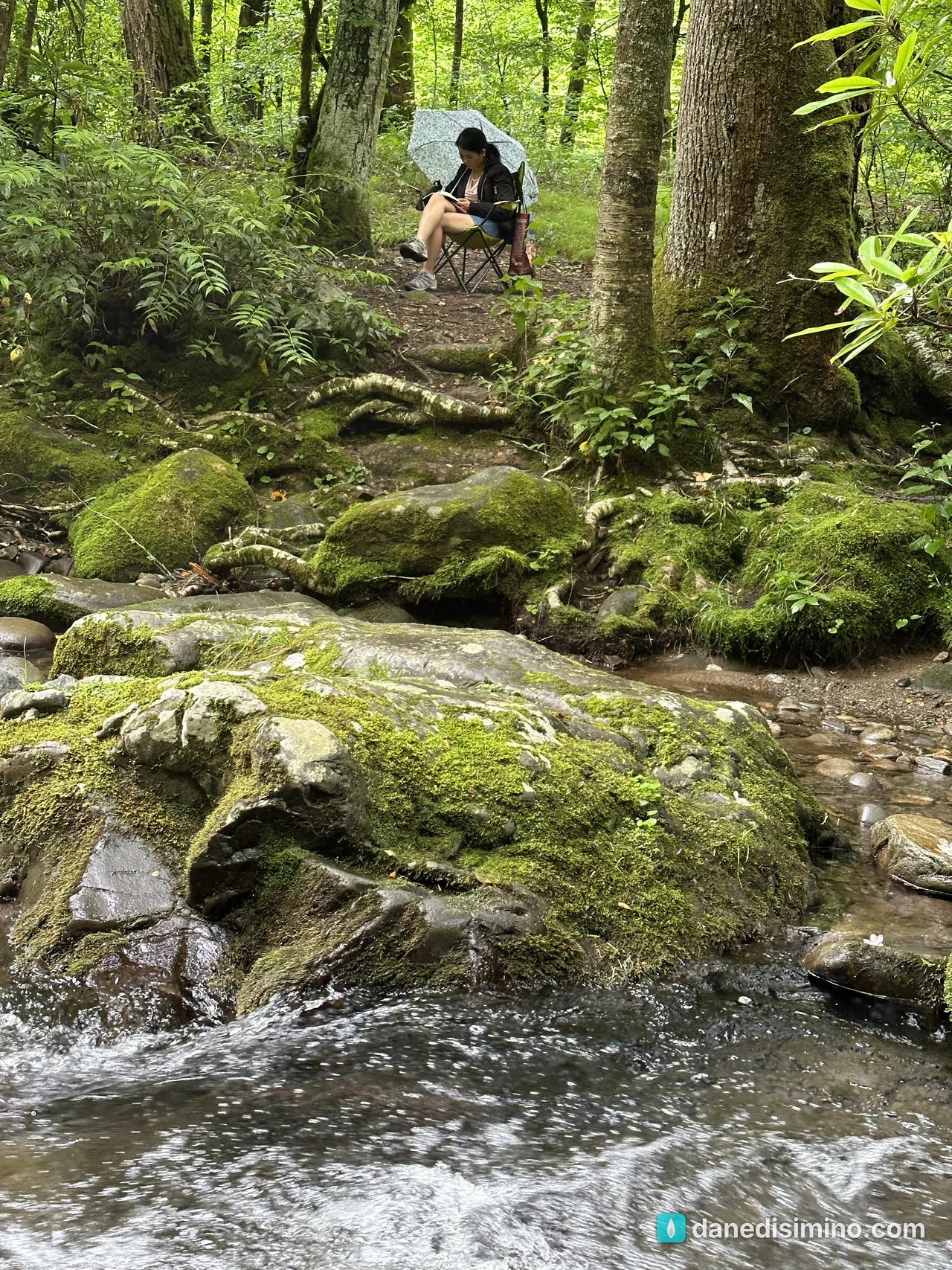
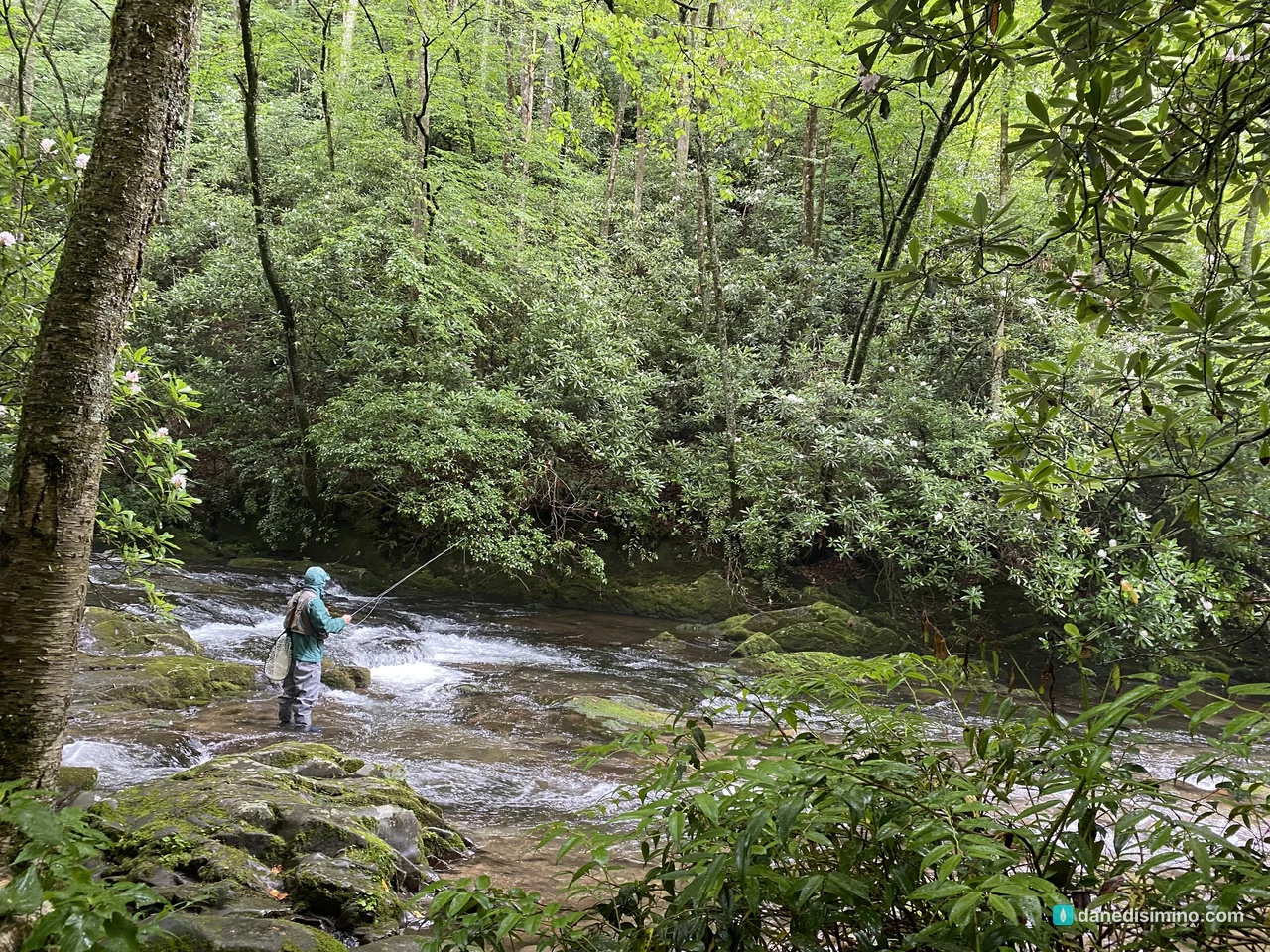
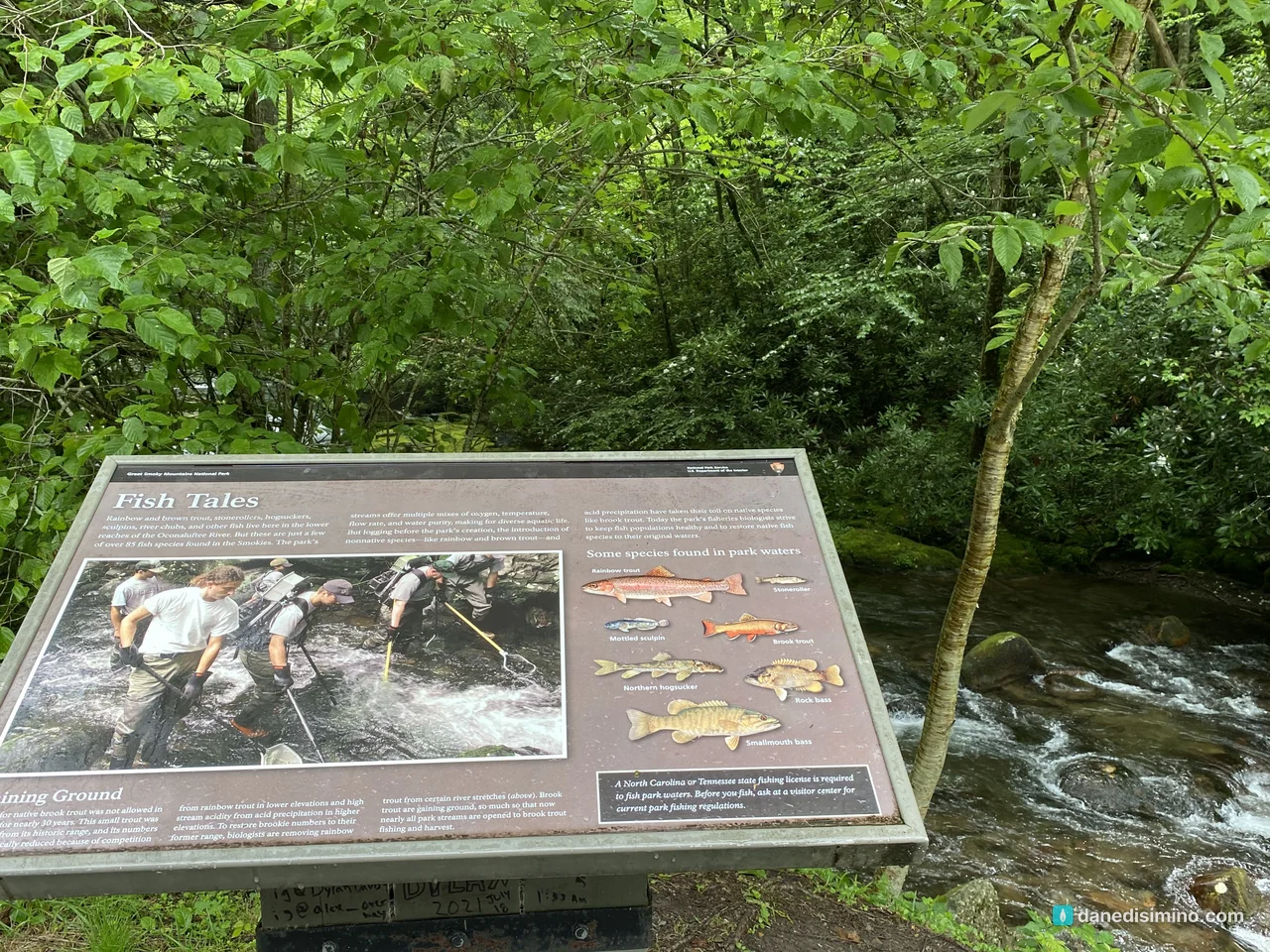
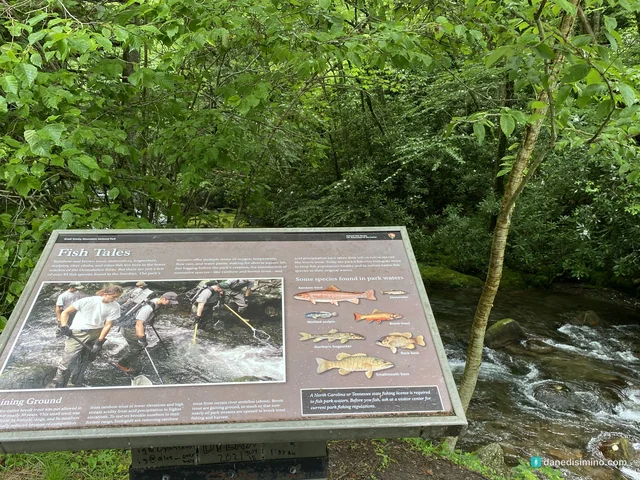
I didn't catch anything on flies. The trout weren't biting, so I switched to a lure. Sure enough, I hooked a smallmouth bass, but he came off before I could get him in the net. The park holds rainbow, brown and native brook trout, and smallmouth bass live in its larger, lower streams.
A walk in the woods
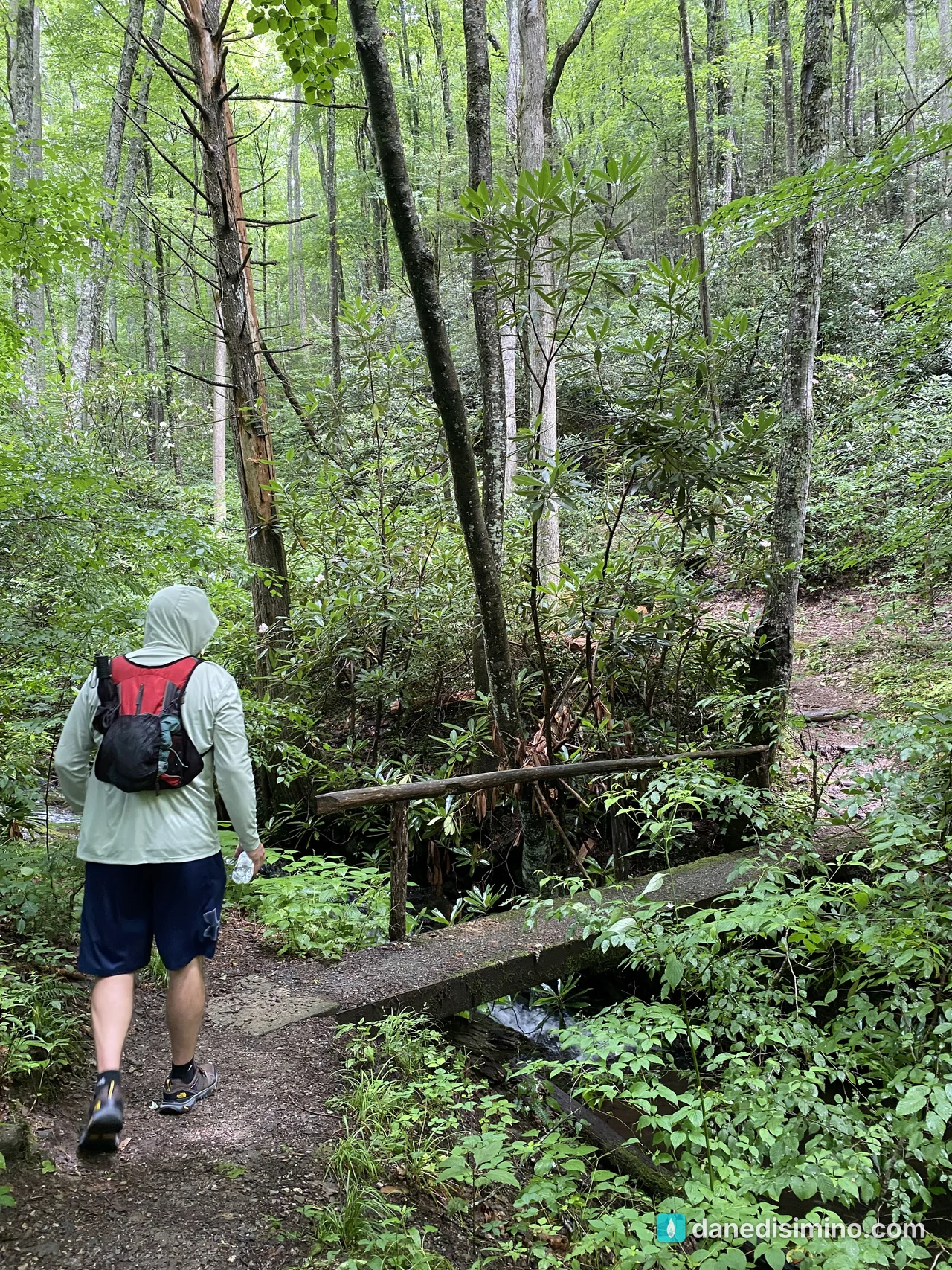
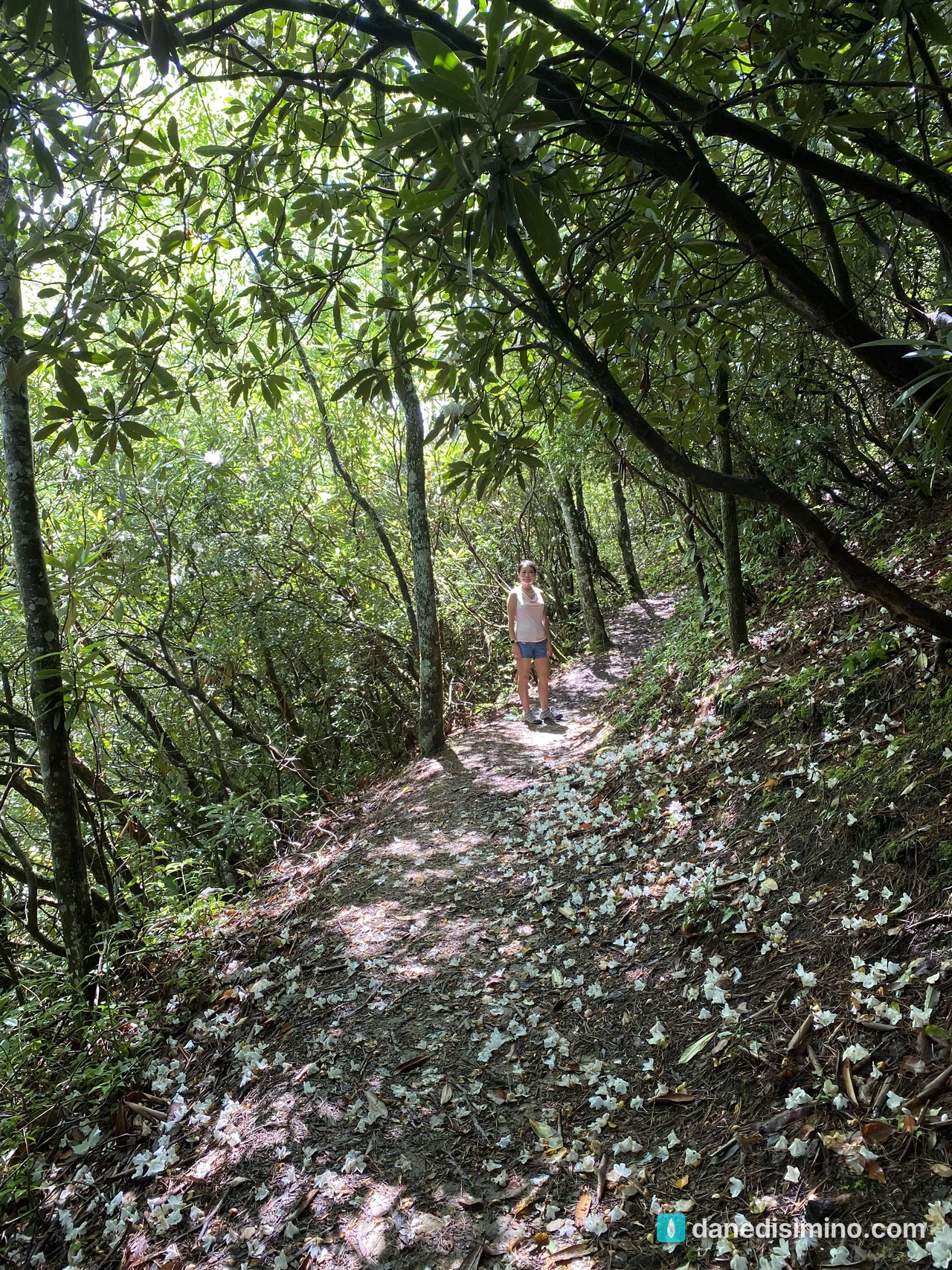
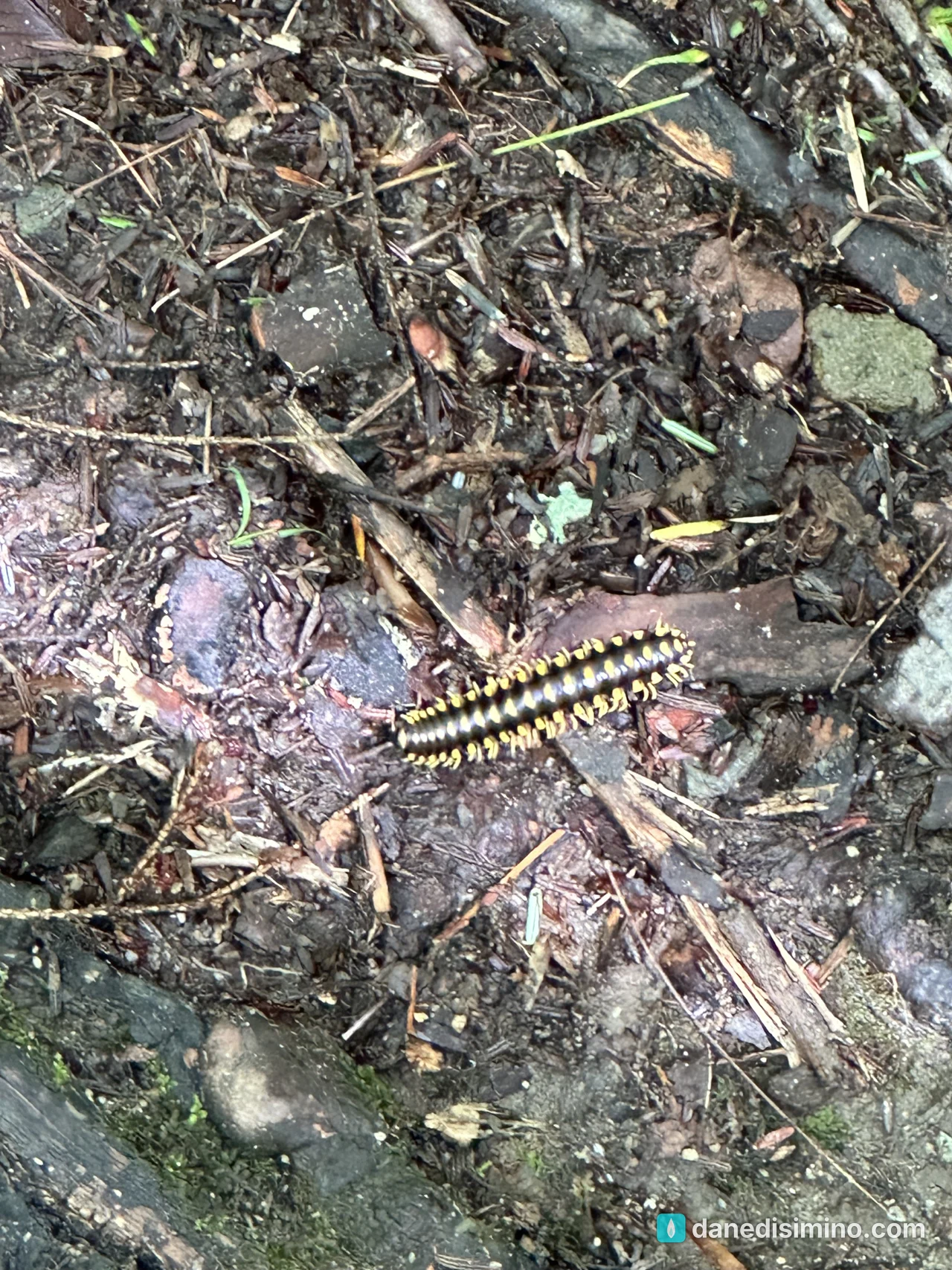
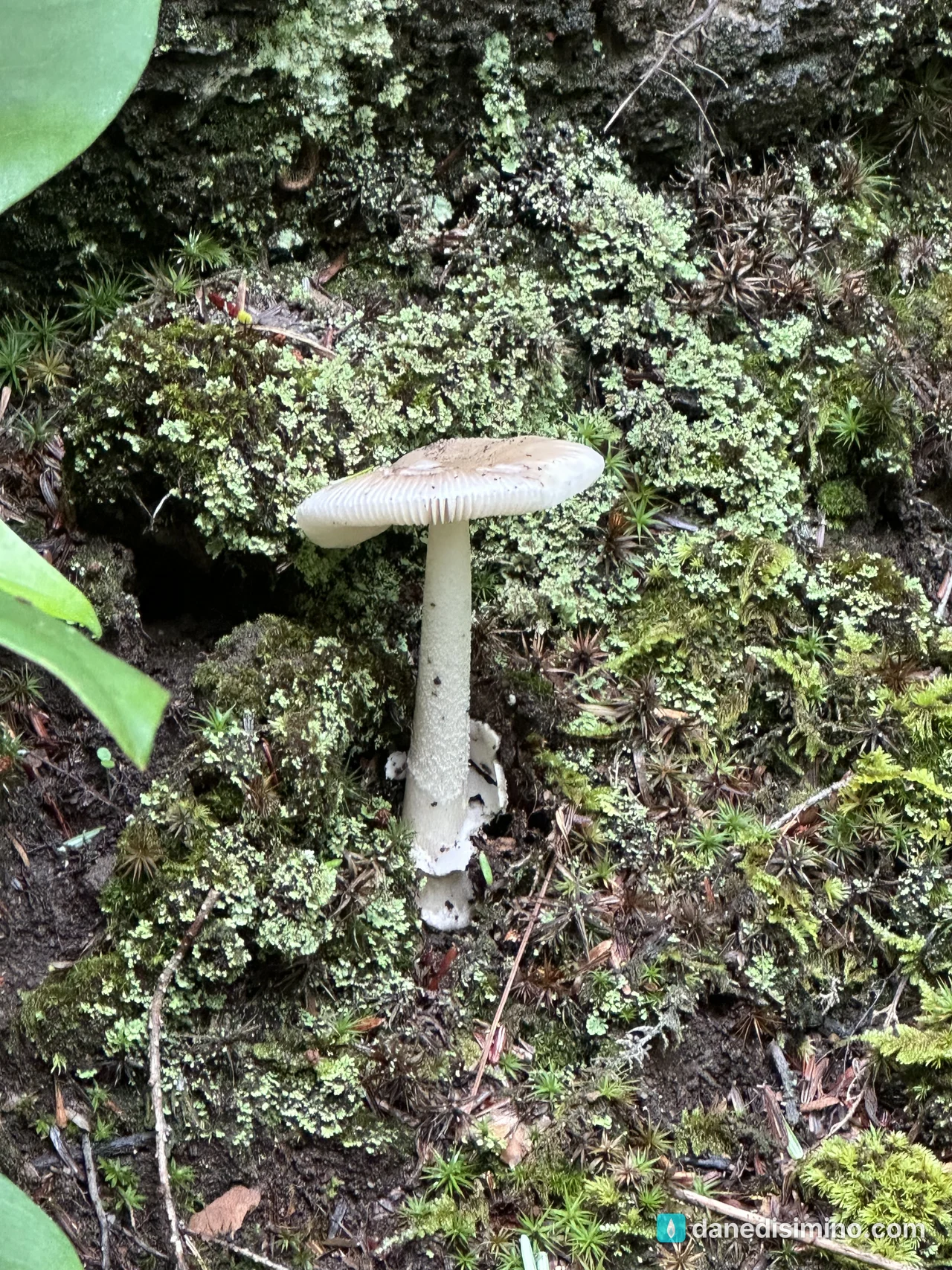
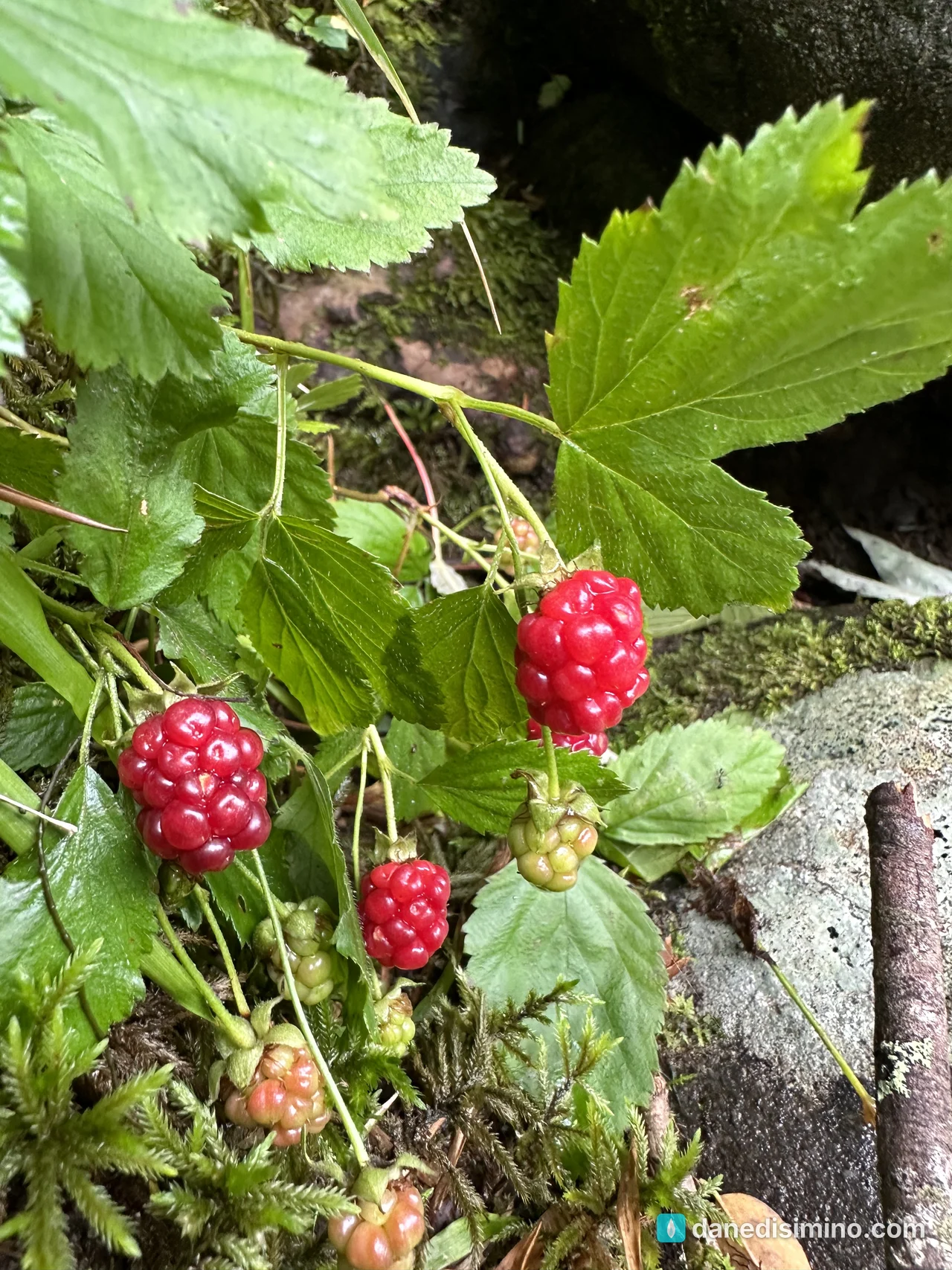
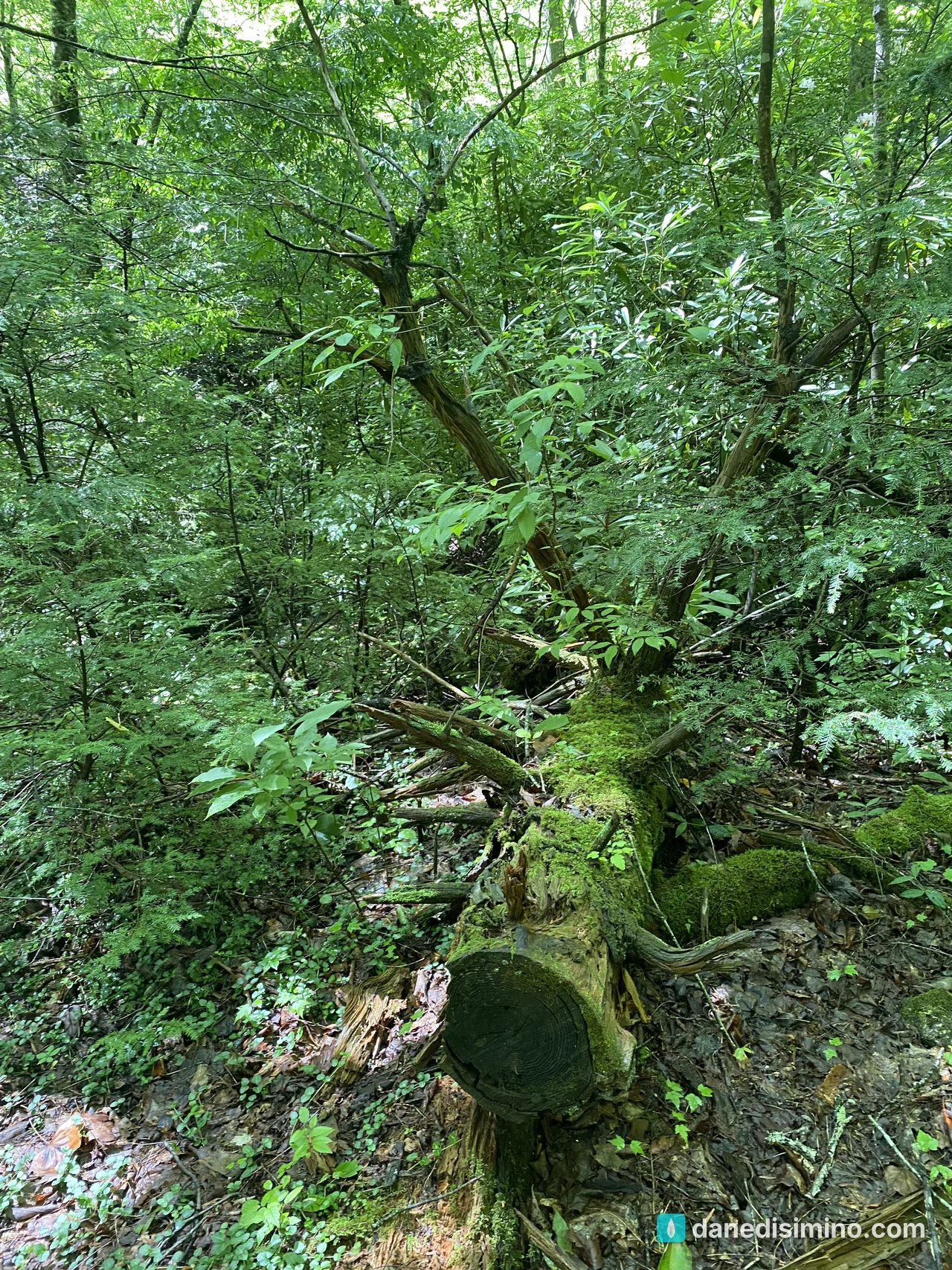
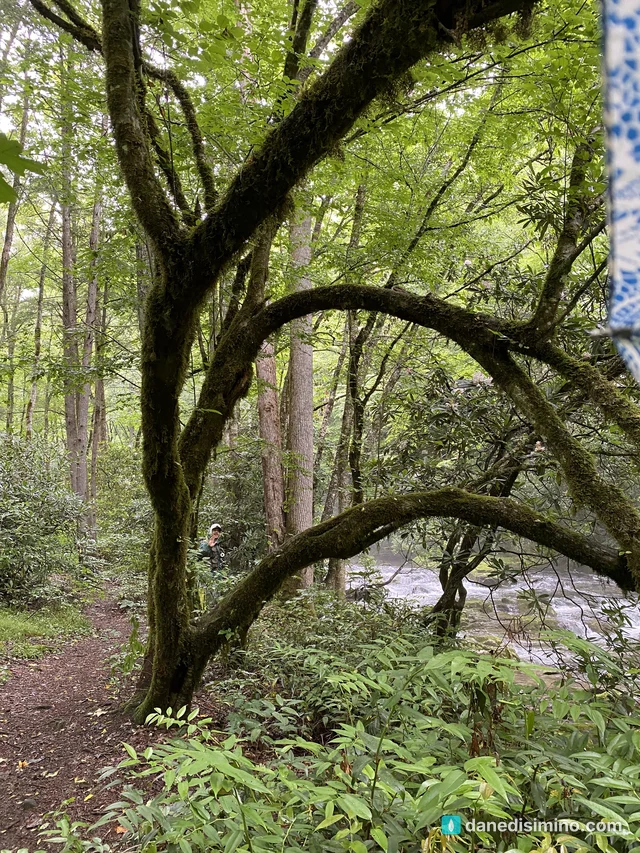
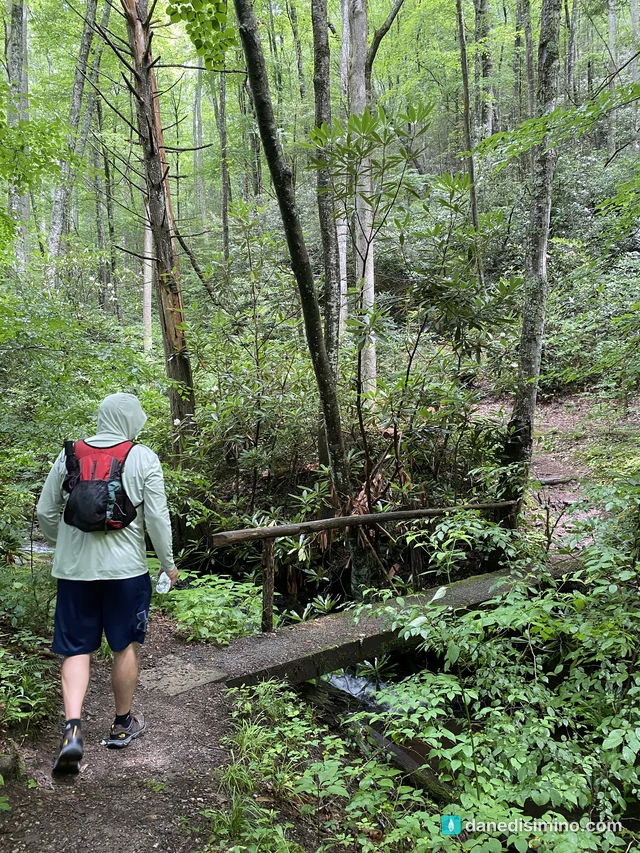
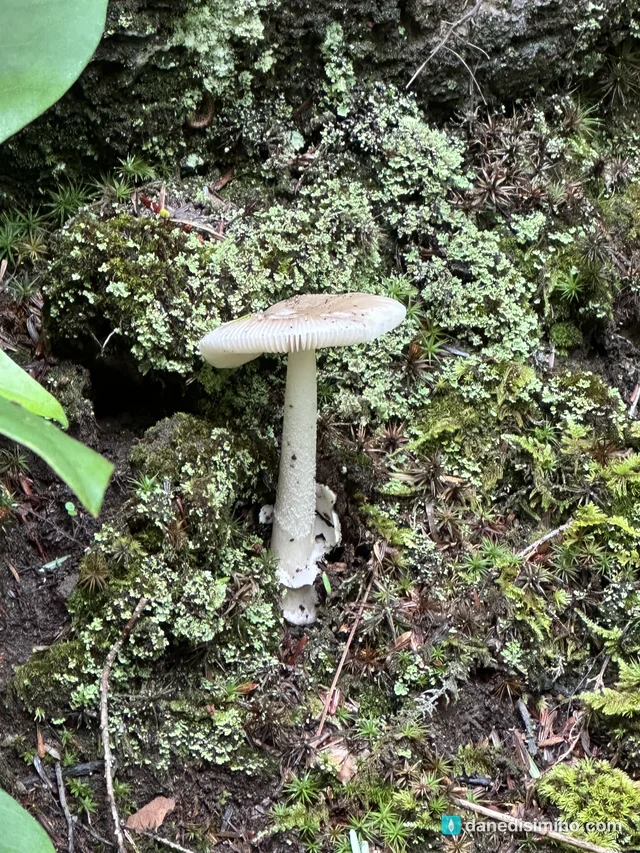
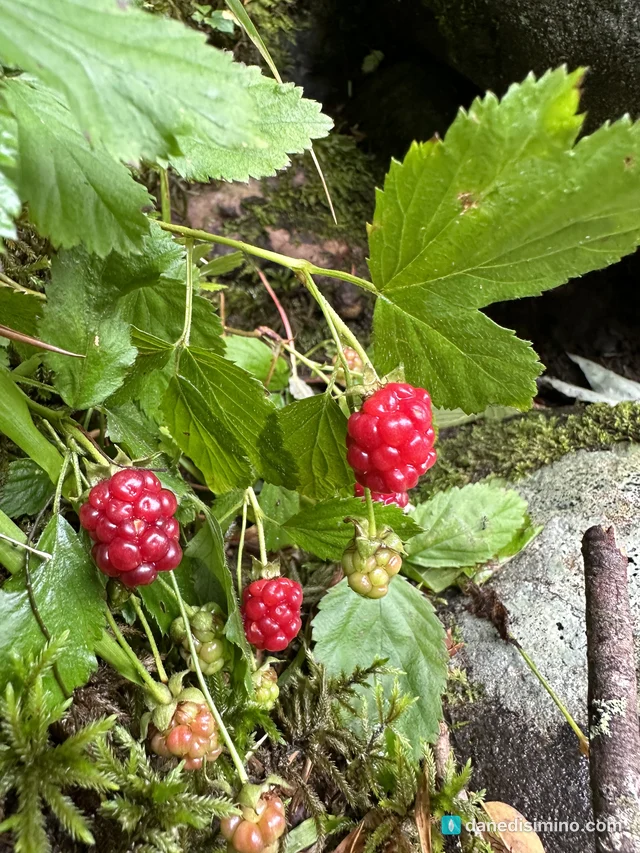
That afternoon we hiked a forest trail. It was full of small surprises: a yellow-spotted millipede, a pale mushroom, wild raspberries and rhododendron petals scattered on the path.
Evening on the water
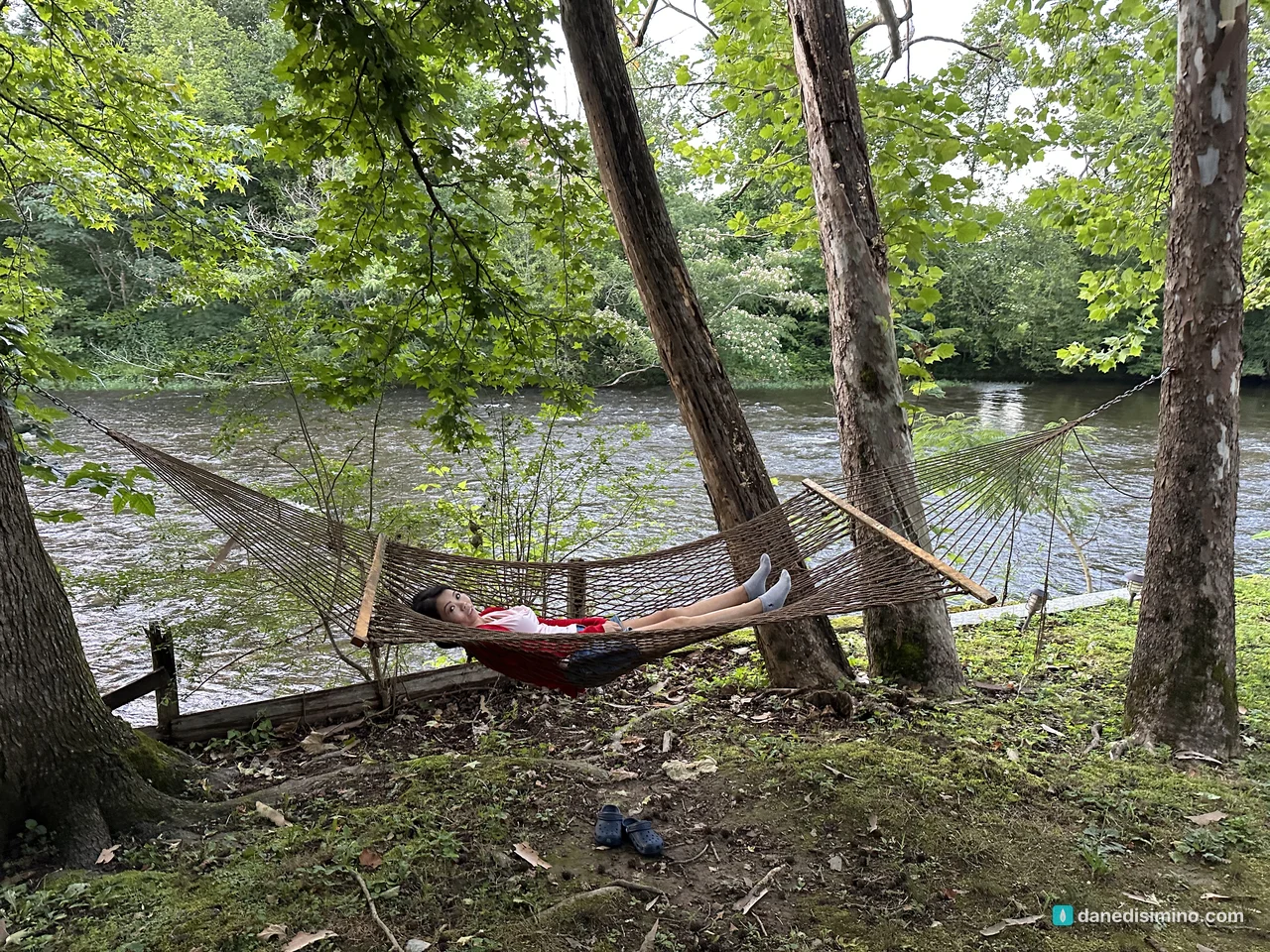
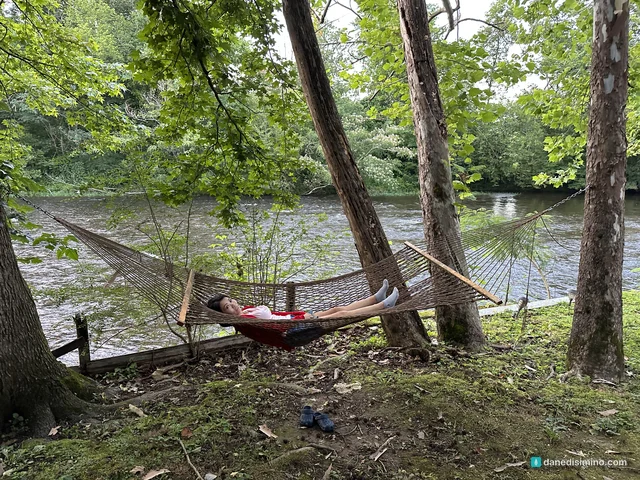
We ended the day back near Townsend. I fished again in the evening light, and Carrie relaxed in a hammock by the river.
My honest take
The Smokies have beautiful scenery, and their rivers were the best part of our five-park trip. But July is one of the busiest months in America's busiest park. Every pullout and tourist spot was full, and it felt very crowded. That was our fault for planning it then, but it was the only time I had off work that year.
Carrie and I agreed: at this point in the trip, there was no park we'd have gone back to. We were ready to move on to Mammoth Cave.
Where we stayed
We stayed a few nights at a B&B in Townsend, Tennessee, right on a river. Townsend is quieter than Gatlinburg and Pigeon Forge and sits close to the park. Cooking our own meals there was a nice break from road food.
What I'd do differently
Skip July. Late spring or a fall weekday would mean fewer crowds.
Pack for cold and rain. Bring warm layers along with rain gear.
Come back for the fireflies. Synchronous fireflies flash at Elkmont in late May or early June. The park gives out viewing spots by lottery each spring.
Spend more time on the rivers. They were the heart of the park for me.
What the Smokies taught me
Standing in that river in the mist, I understood the 23rd Psalm a little better.
"He lets me rest in green meadows; he leads me beside peaceful streams." (Psalm 23:2, NLT)
Sometimes the crowded trip leads you to the quietest water.
Questions?
Ask me anything about the Smokies: where to fish, what to pack or how to avoid the crowds. I answer every question.
Photos


Sources
- Great Smoky Mountains National Park (NPS)
- Park statistics (NPS)
- 2025 visitation statistics (NPS news release)
- Parking tags and fees (NPS)
- Where mountains breathe: the story behind the name (NPS)
- Geology (NPS)
- Geology of Great Smoky Mountains National Park (USGS)
- NPS Geodiversity Atlas: Great Smoky Mountains (NPS)
- History and culture stories (NPS)
- Kuwohi Observation Tower (NPS)
- Kuwohi name restored to the highest peak in the Smokies (NPS)
- Ancient name returns to Smokies' highest peak (NPS)
- Fishing (NPS)
- Smallmouth bass in the park (NPS)
- Wildflowers (NPS)
- Blooming shrubs (NPS)
- Elk (NPS)
- Elk rutting season news release (NPS)
- Wildlife viewing (NPS)
- Black bears (NPS)
- Synchronous fireflies (NPS)
- 2026 firefly viewing event dates (NPS)
Pathlight
Park guides from the road. A printable trip sheet comes with them when one is ready.