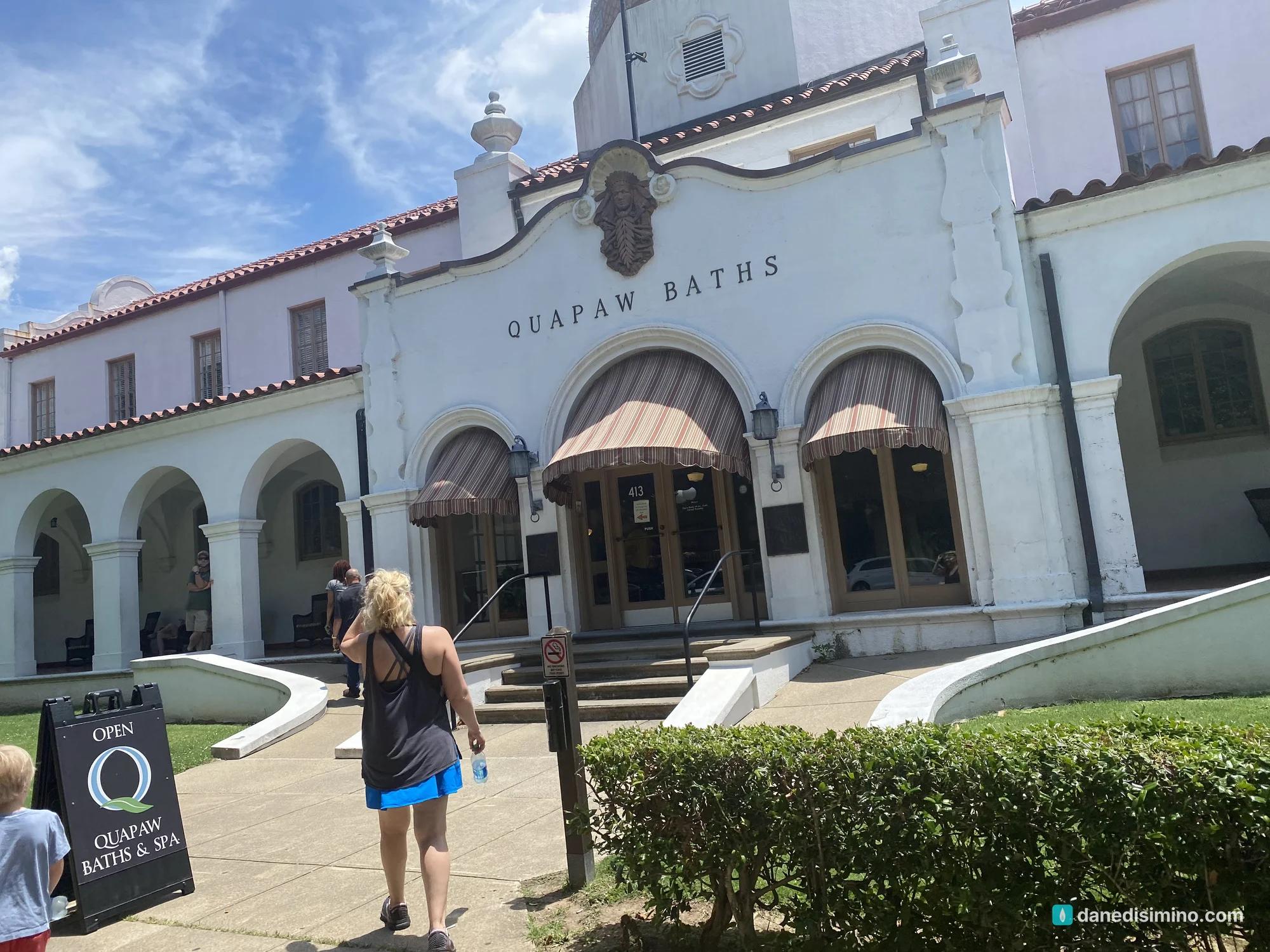

NATIONAL PARKS
Hot Springs
A Field Guide
On this page
The most disappointing national park we've visited, and the oldest protected land in the system. A steaming July afternoon on Bathhouse Row and a ride up the Hot Springs Mountain Tower. Where the 143°F water comes from, why it was protected 40 years before Yellowstone, and how to make the most of a short stop.
Version 1.0 · Updated Nov 20, 2026
Map
When to go
Average monthly visits, 2023–2025. Source: NPS visitor statistics. ● marks the months we visited.
| January | 141,020 |
|---|---|
| February | 235,529 |
| March | 277,860 |
| April | 245,855 |
| May | 203,362 |
| June | 351,023 |
| July | 274,145 |
| August | 255,072 |
| September | 126,636 |
| October | 122,749 |
| November | 125,481 |
| December | 127,732 |
If you're looking for the national park I'd rank last, look no further than Arkansas. Hot Springs is mostly a row of old bathhouses in the middle of a downtown. I love the people of Arkansas, and I don't want to be too harsh, but it was a disappointing stop.
To be fair, we went on a steaming hot day, July 1, 2023, and a steaming hot bathhouse was the last place we wanted to be. It was the first stop of a five-park trip through the eastern U.S., after a very long, flat drive from Colorado, and our first time ever in Arkansas. Not the best start to a parks trip.
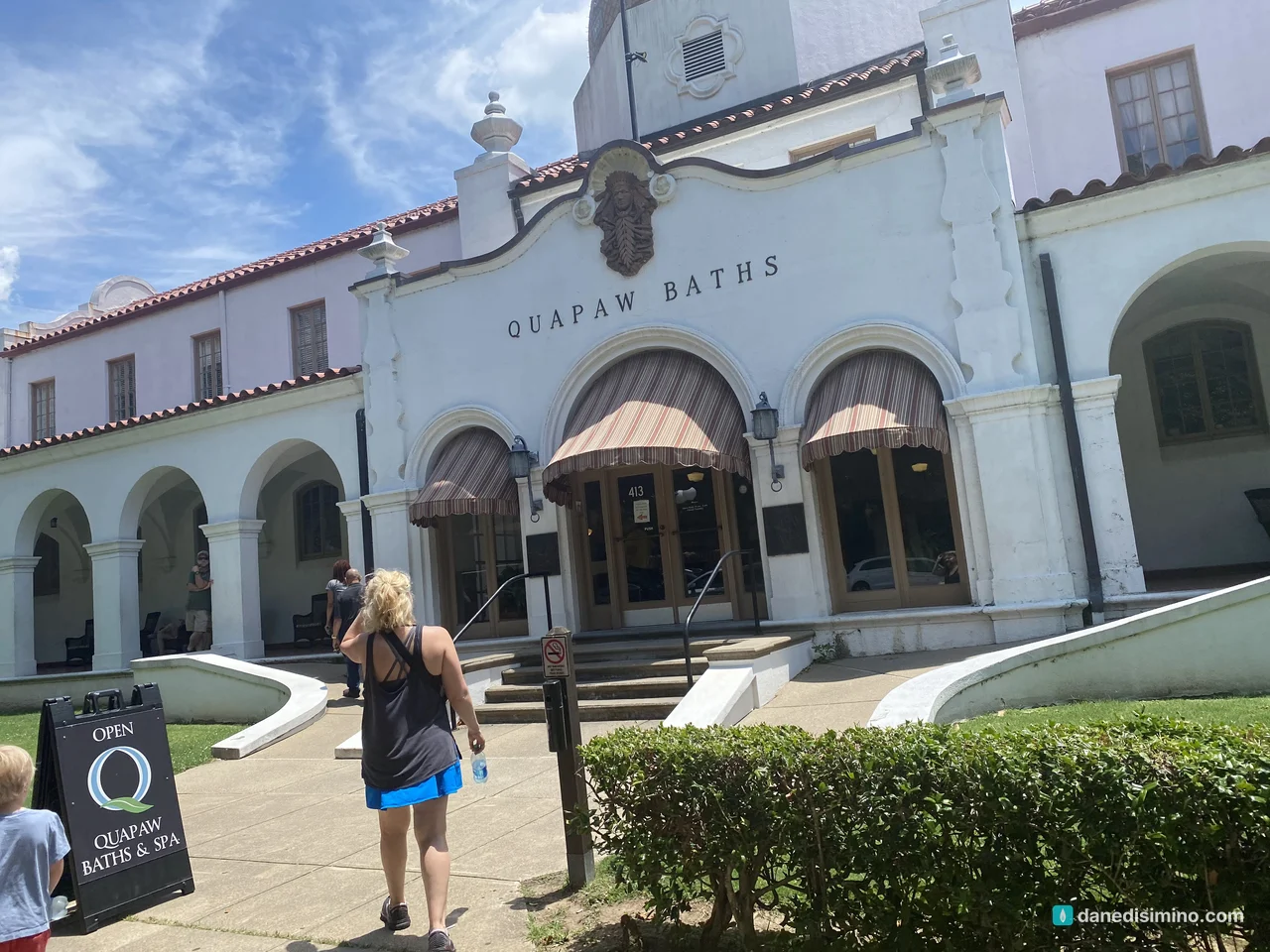
Not every national park is a wilderness. This one is a downtown.
The short version
Start at the Fordyce Bathhouse. It's the visitor center, restored to look like it did in its heyday.
There's no entrance fee. Walking Bathhouse Row and the trails is free.
Want a soak? Book ahead. Only the Buckstaff and Quapaw still offer baths.
Ride up the Hot Springs Mountain Tower. It's the best view in the park. The tower charges a fee.
Skip July if you can. Heat makes a bathhouse park a hard sell. Spring and fall are kinder.
The park at a glance
- 47
- Hot springs
- 143°F
- Average water temperature
- 1832
- Protected, 40 years before Yellowstone
- $0
- Entrance fee
Where: downtown Hot Springs, Arkansas, about 50 miles southwest of Little Rock. The visitor center is in the Fordyce Bathhouse at 369 Central Avenue.
Size: about 5,550 acres. Beyond the bathhouses, the park covers forested mountains around the city with trails and overlooks.
Camping: Gulpha Gorge Campground is in the park, and reservations are required.
Before you go: check the park's Alerts & Conditions page at nps.gov/hosp.
Where the water comes from
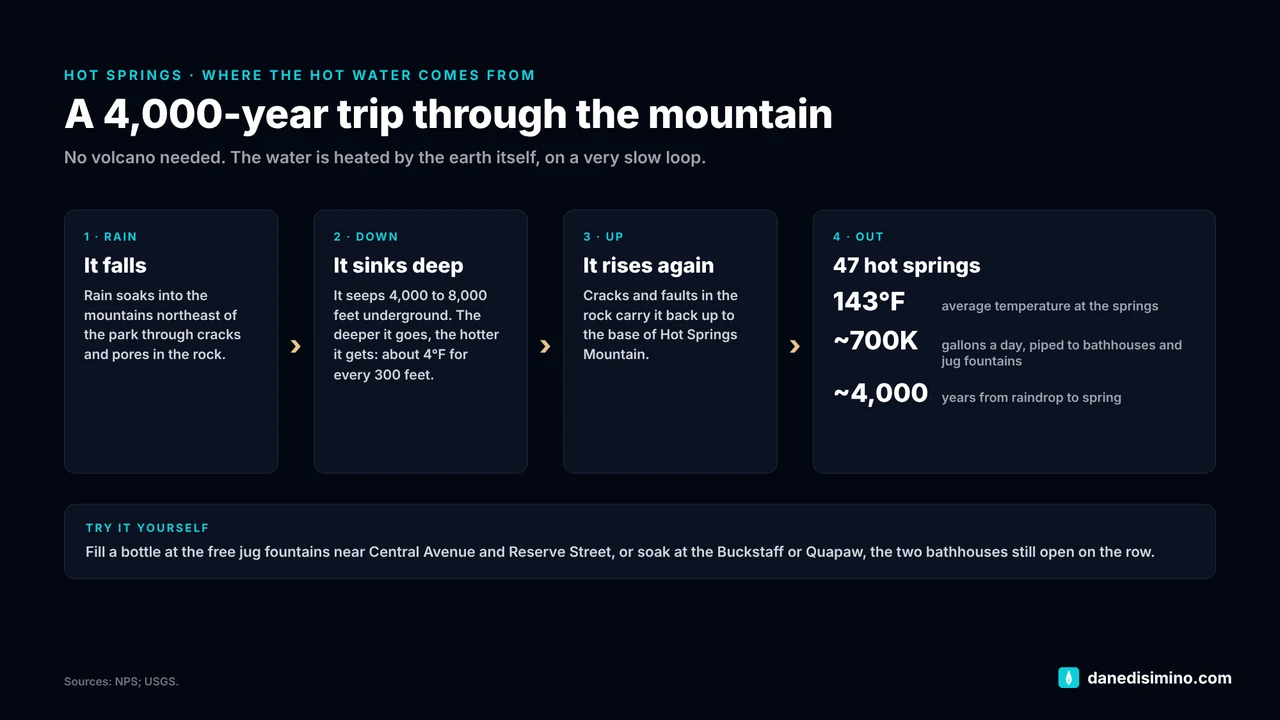
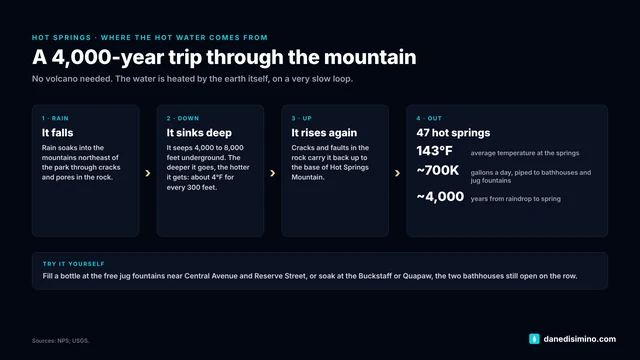
There's no volcano here. Rain falls on the mountains northeast of the park and soaks into cracks in the rock. It travels 4,000 to 8,000 feet underground, warming as it goes. The heat rises about 4°F for every 300 feet it sinks. Then faults carry it back up to the base of Hot Springs Mountain. The whole trip takes about 4,000 years.
The water comes out of 47 springs at an average of 143°F. The park goes through about 700,000 gallons a day, piped to the bathhouses and to free jug fountains where people fill up bottles.
How the park began
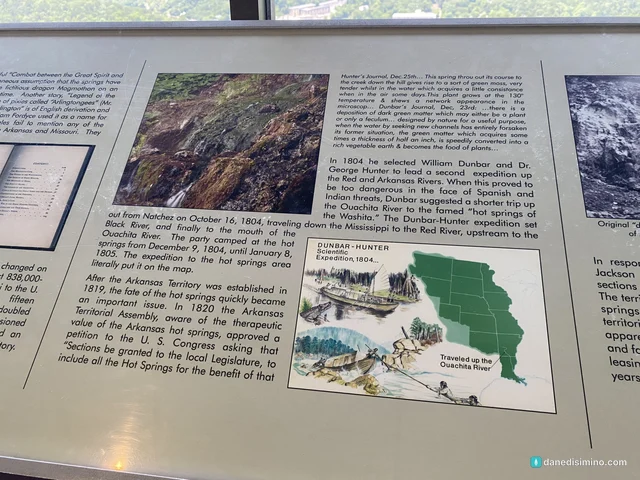
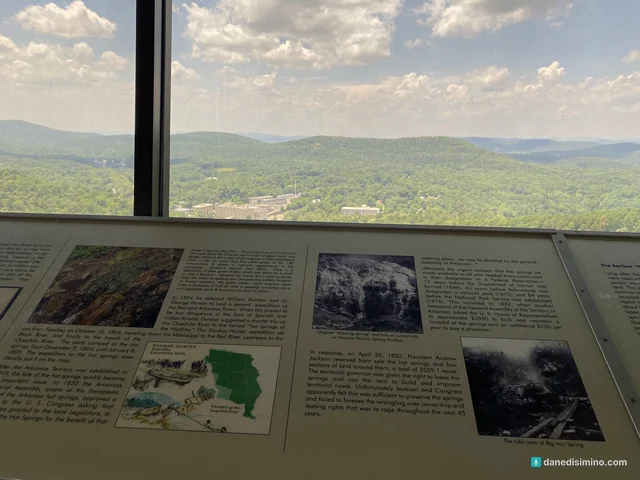
I'll admit I came away wondering how this place became a national park. The history explains a lot. In 1804, President Jefferson sent William Dunbar and George Hunter up the Ouachita River to study the springs, and their expedition put the area on the map. In 1820, Arkansas Territory asked Congress to set the springs aside.
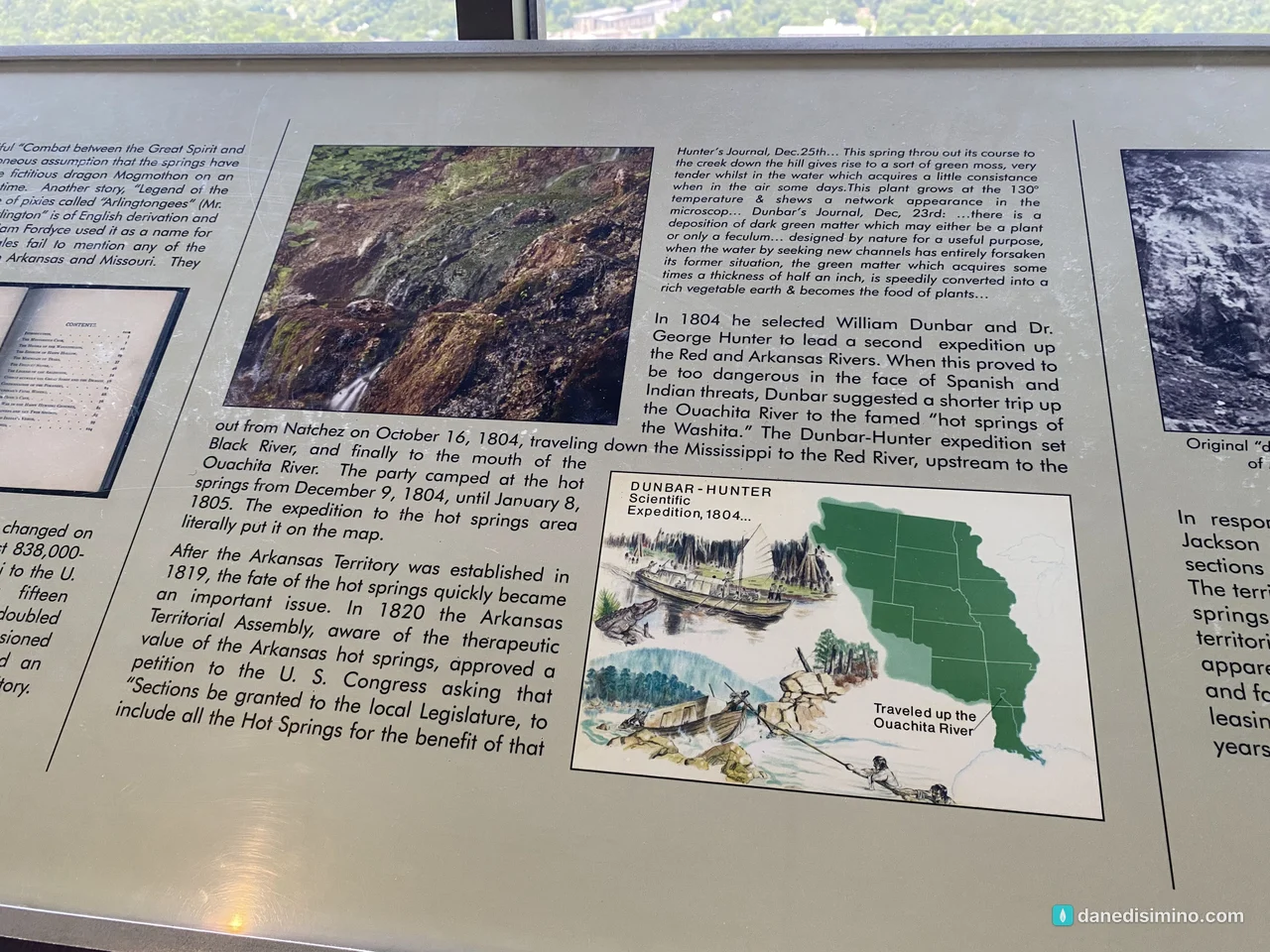
On April 20, 1832, President Andrew Jackson signed the law creating Hot Springs Reservation. That's why the park calls itself the oldest area in the national park system. It was set aside 40 years before Yellowstone became the first national park.
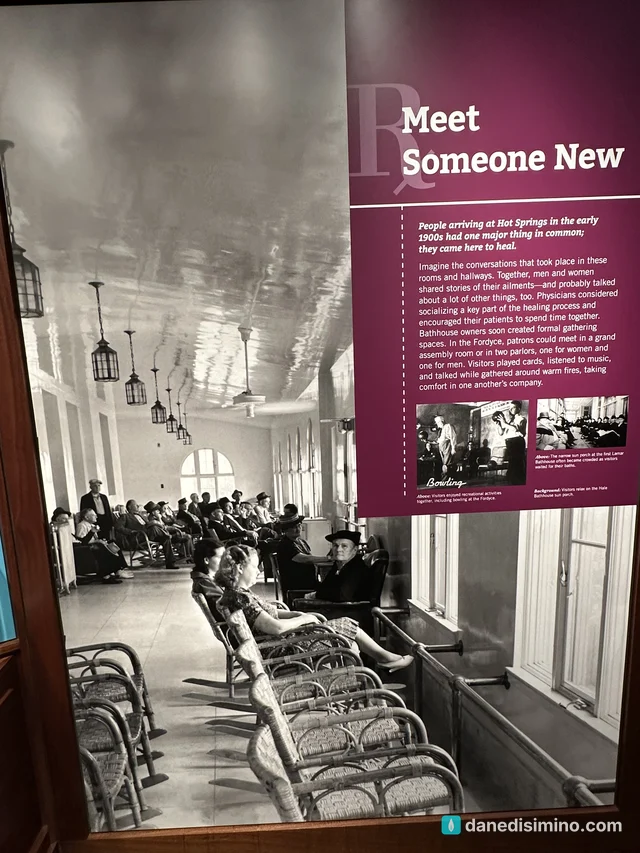
Hot Springs grew into a famous spa town where people came to soak away rheumatism and other ailments. Promoters called it a place "where crutches are thrown away." After the National Park Service was created in 1916, Congress made the reservation the 18th national park on March 4, 1921. The bathhouses you see today were built between 1892 and 1923.
So it's less a park that was invented than one of the first places the government ever protected, for its water and its history more than its scenery.
Bathhouse Row
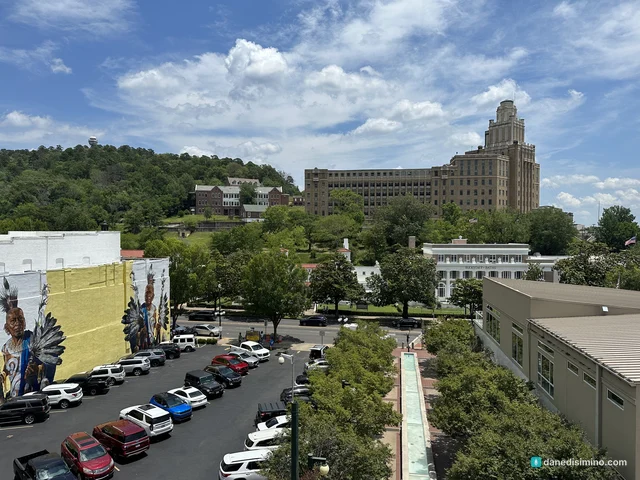
Bathhouse Row is eight bathhouses in a line along Central Avenue: Buckstaff, Fordyce, Hale, Lamar, Maurice, Ozark, Quapaw and Superior. They competed with each other for business, and each one tried to outdo the rest.
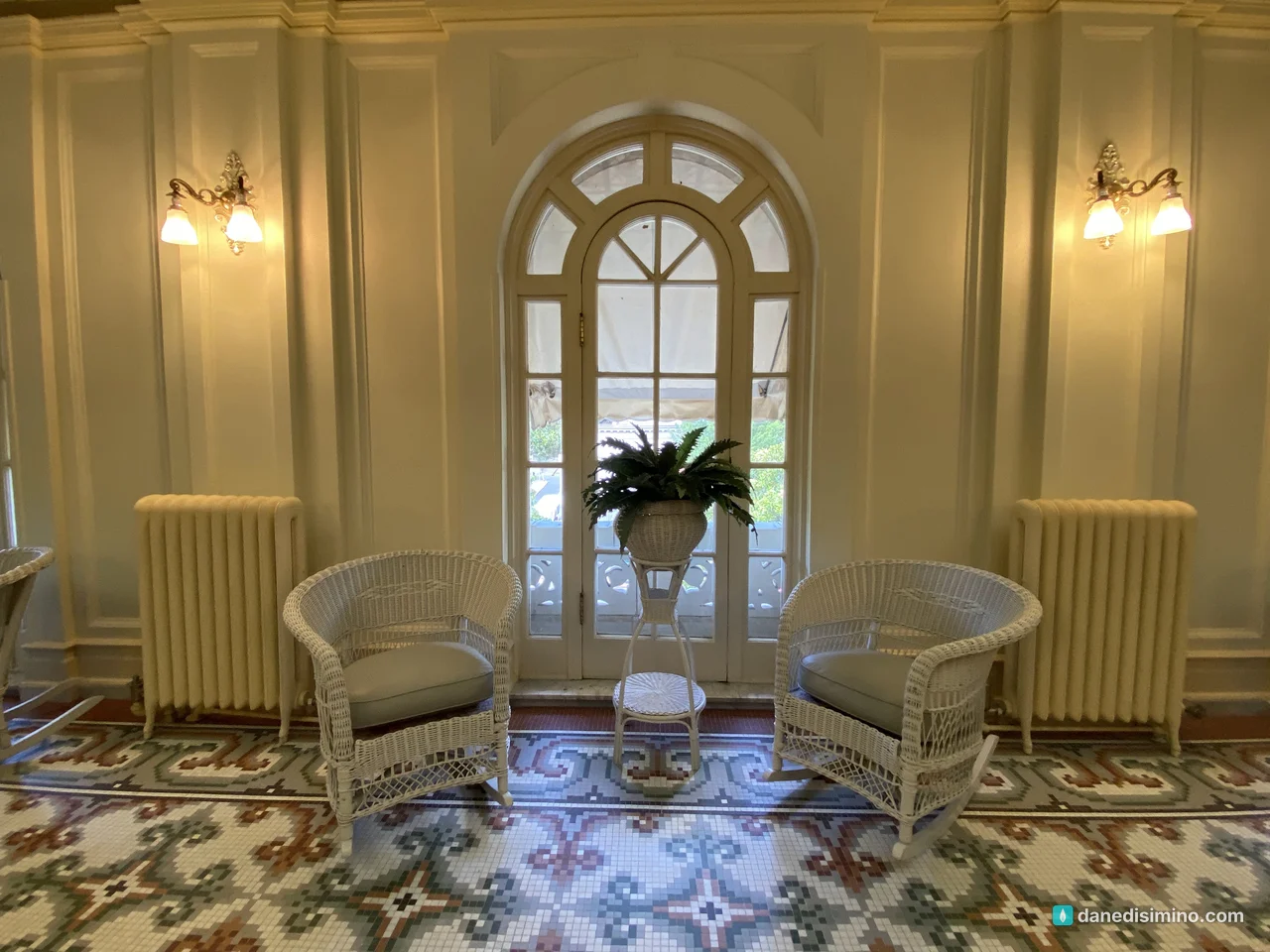
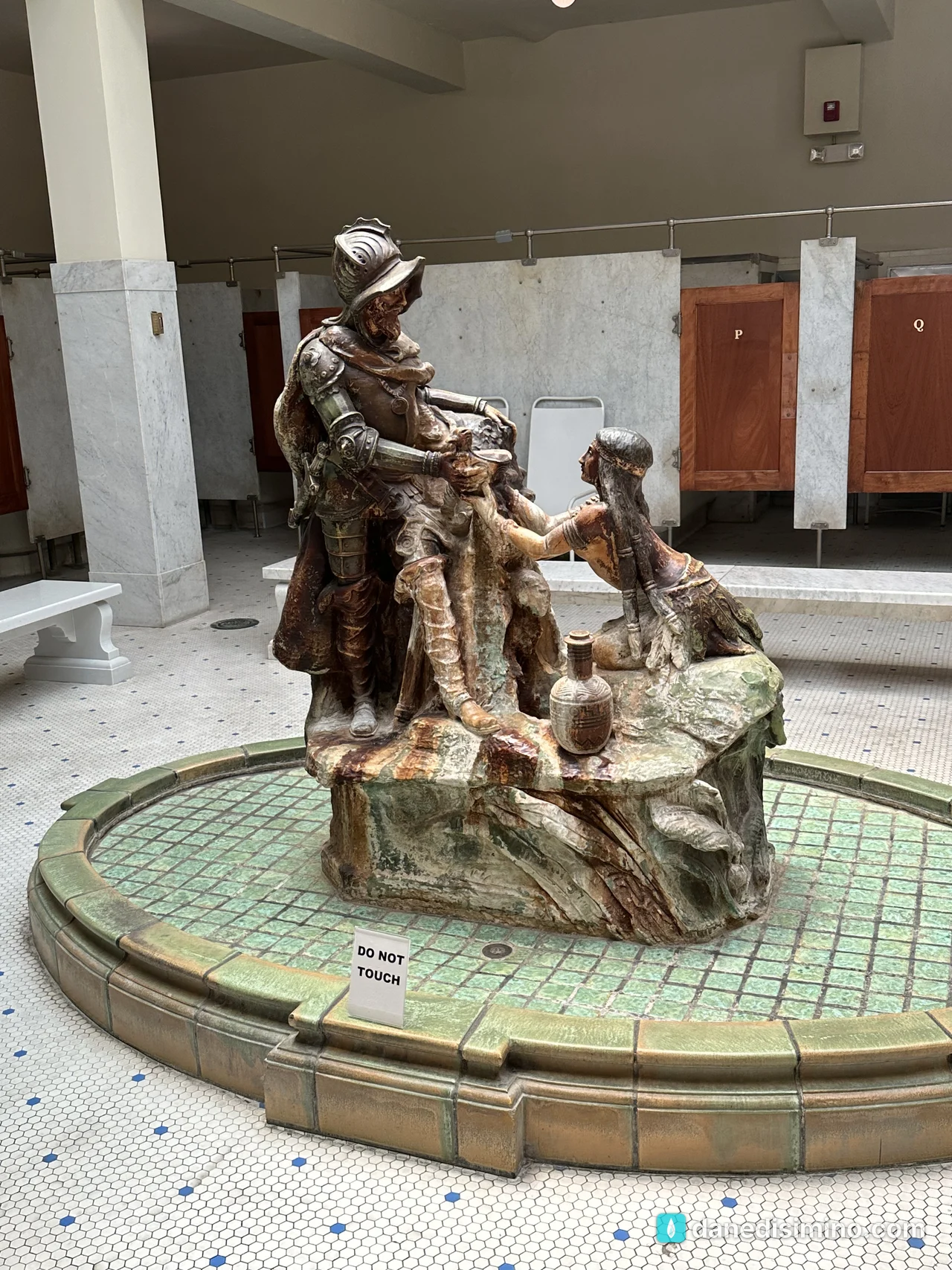
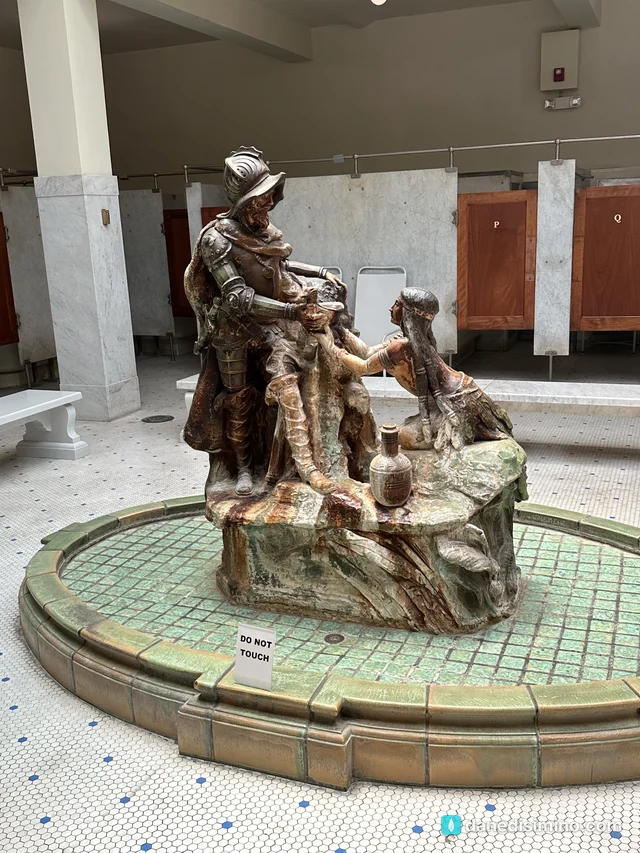
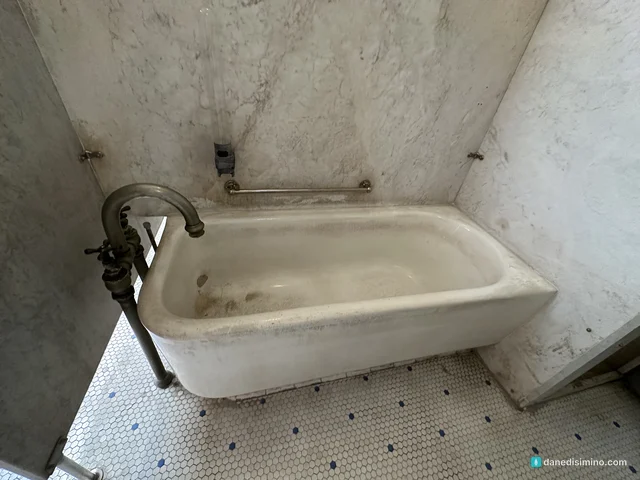
We started in the Fordyce. Its rooms are restored to how they looked when people came for the cure: the bath hall with its fountain statue, the tubs, the parlors.
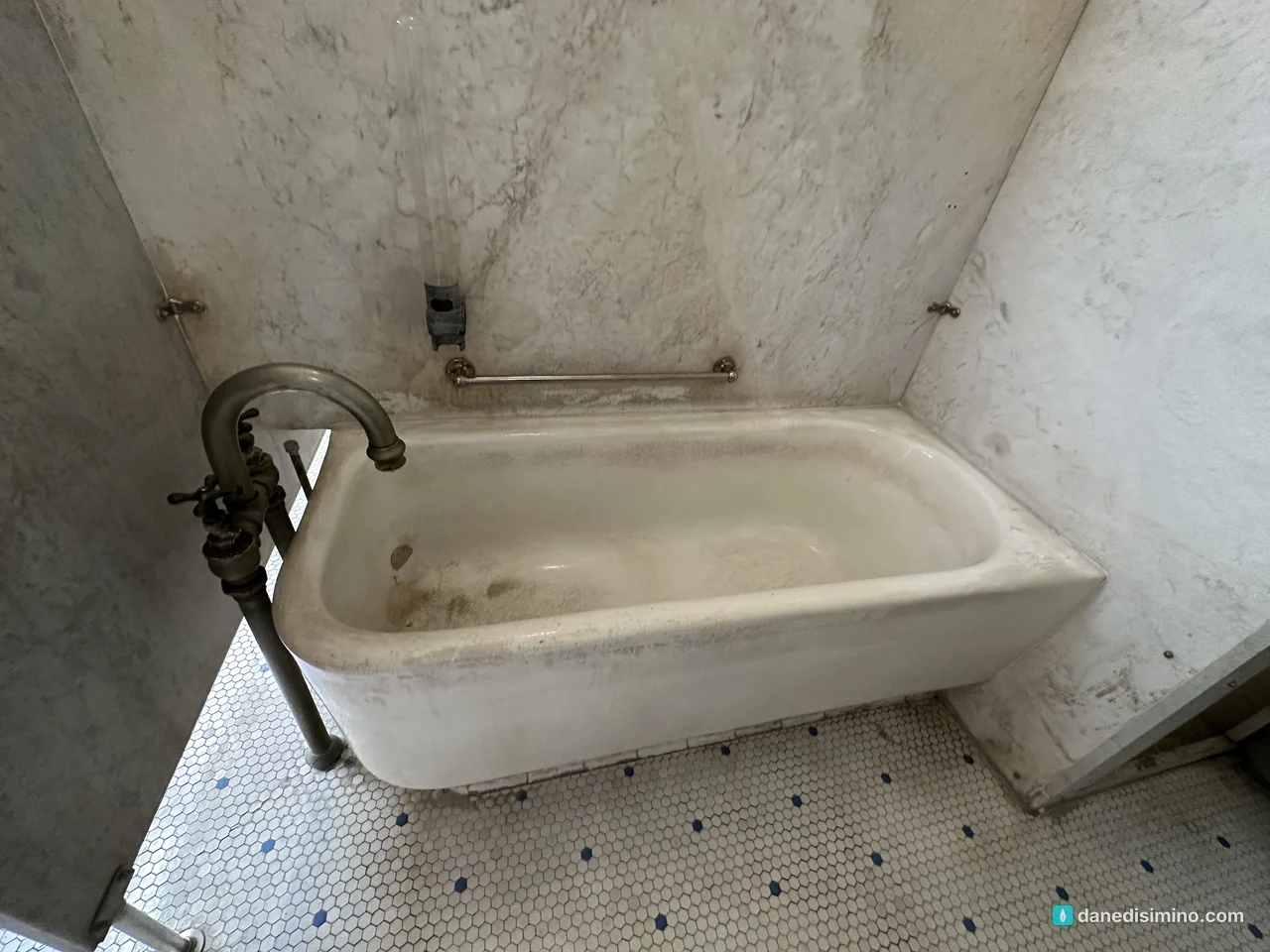
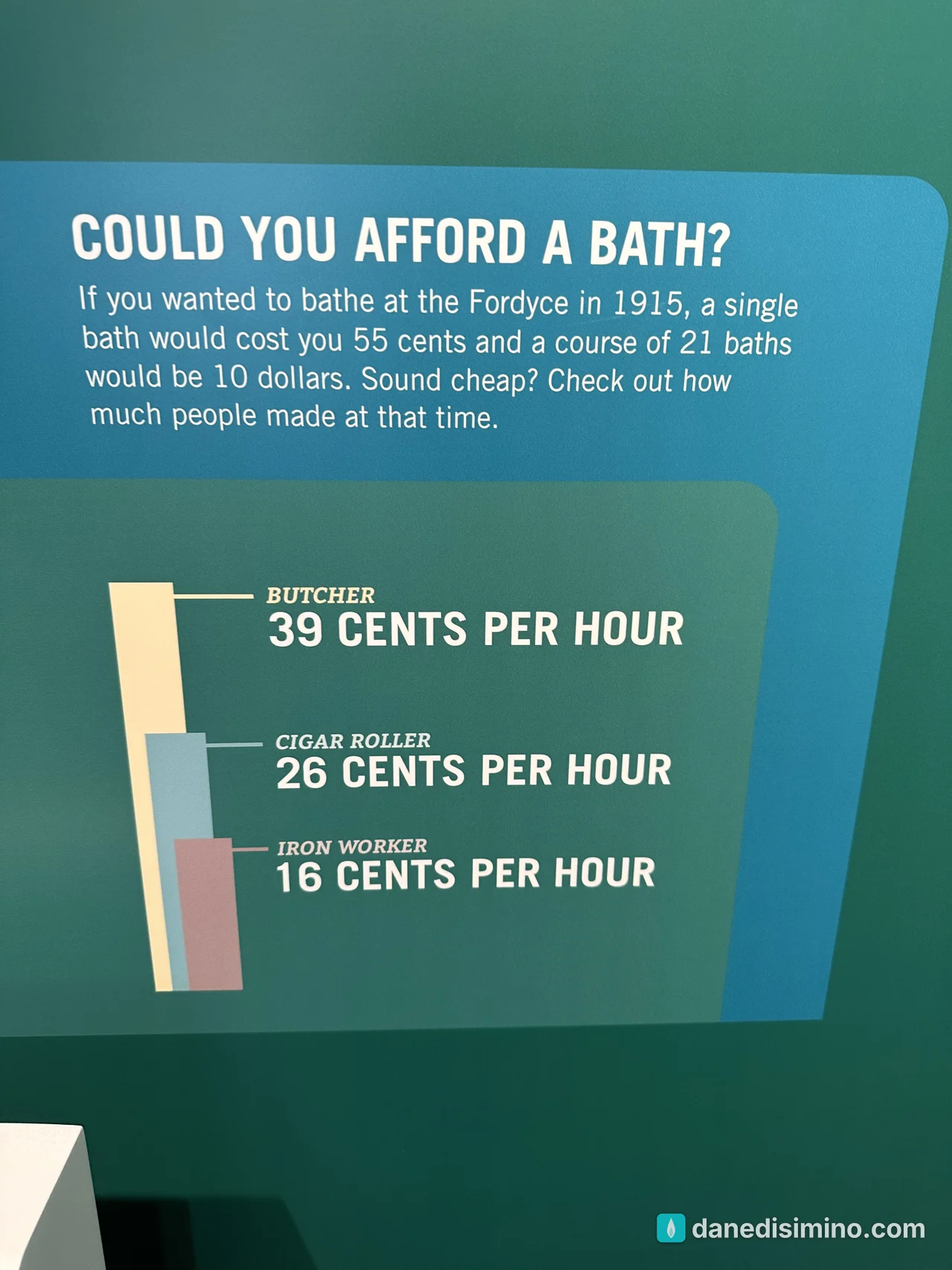
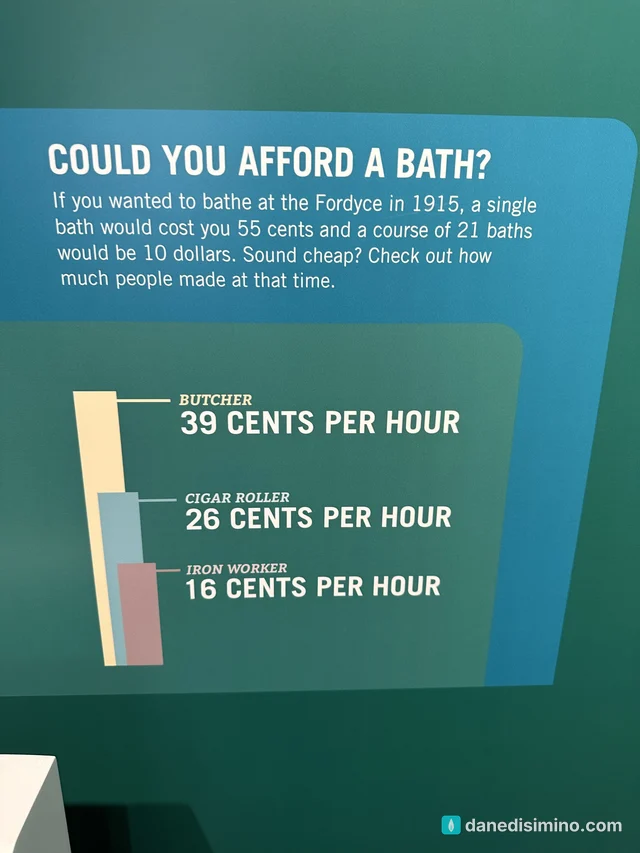
The exhibits answer the questions you'd ask. One shows that in 1915, a single bath at the Fordyce cost 55 cents, and a course of 21 baths cost $10. That was a lot when an iron worker made 16 cents an hour.
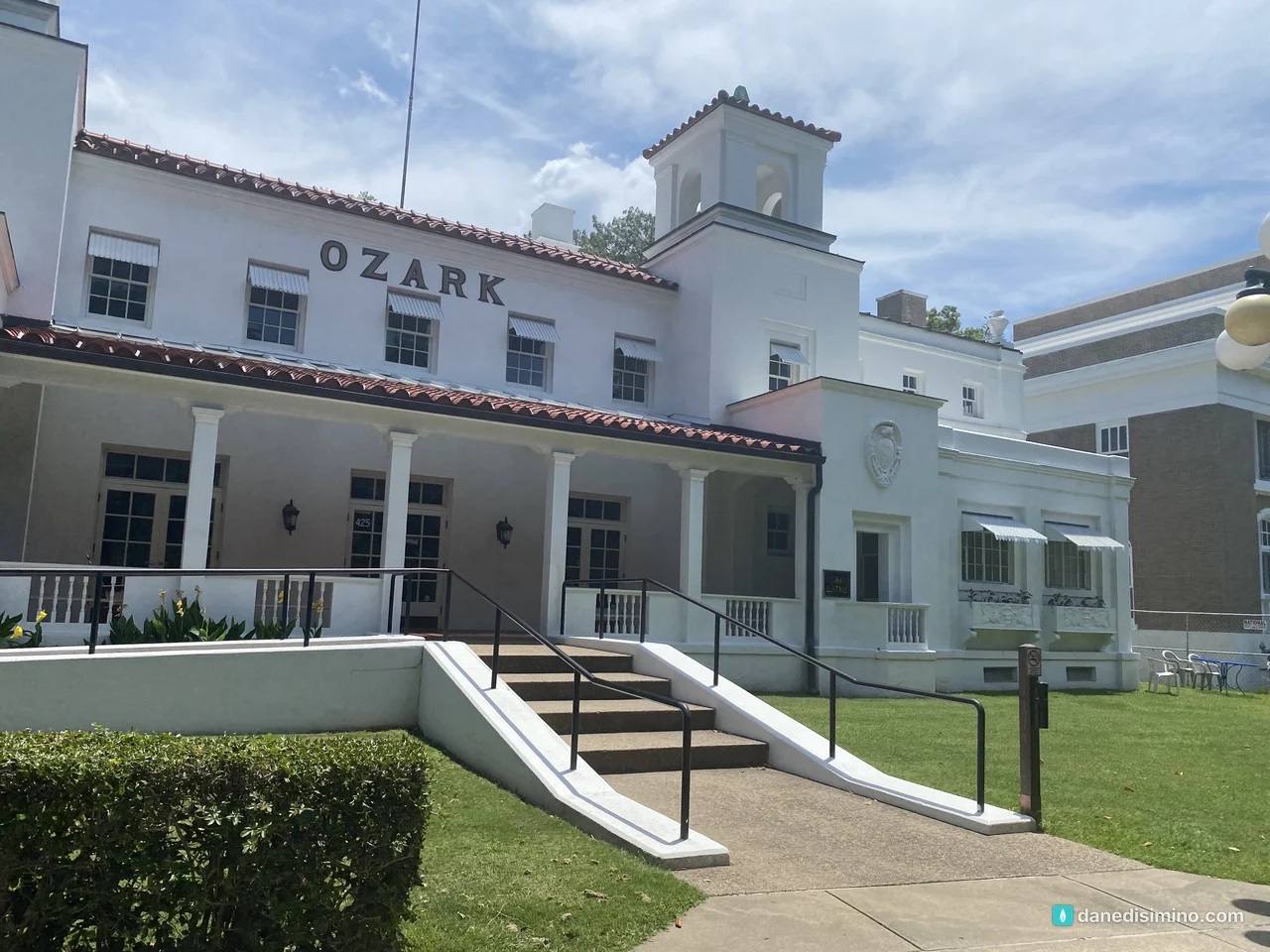
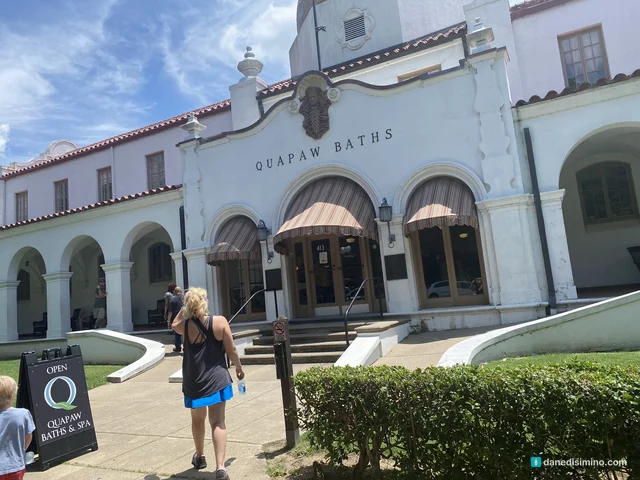
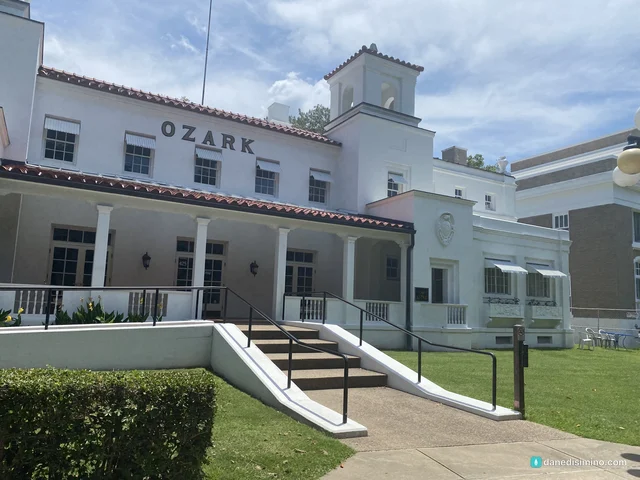
Out on the row, the Quapaw and the Ozark show off the Spanish-style architecture. The Quapaw, built in 1922, is one of the two bathhouses still offering soaks.
Up the mountain
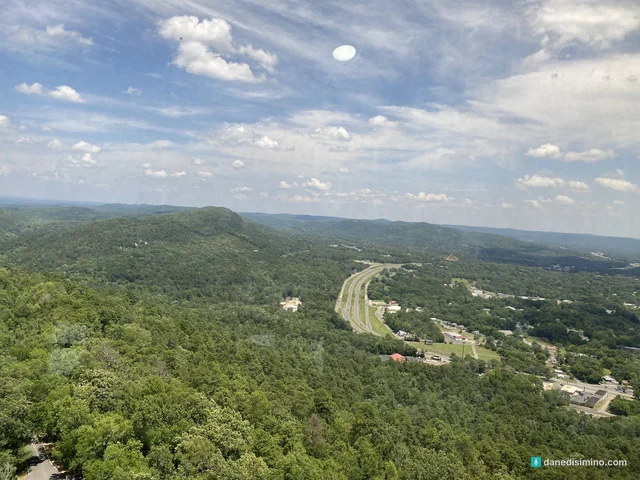
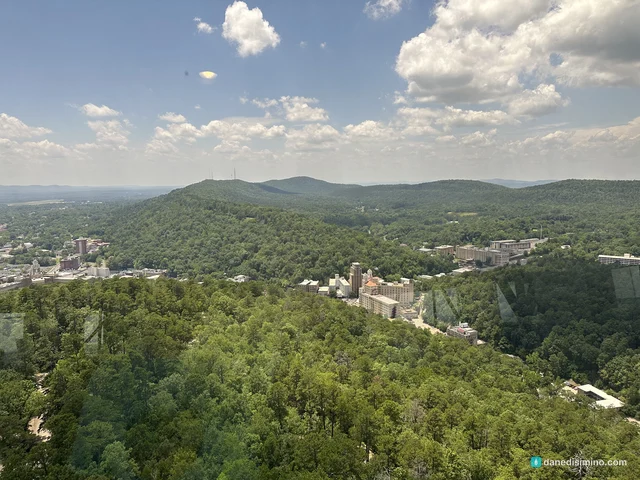
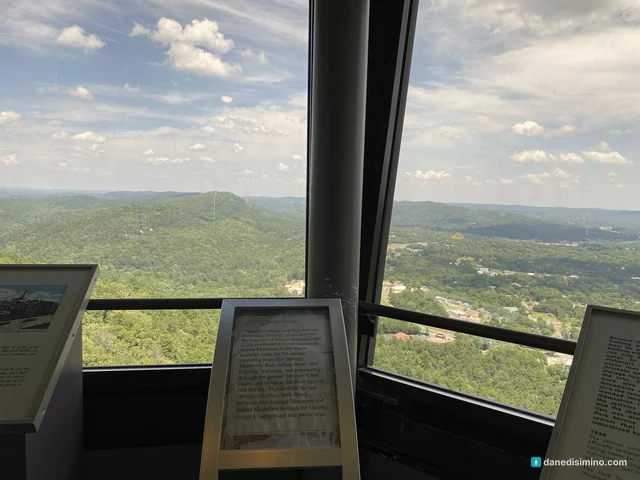
The best part of our visit was getting above the town. We went up Hot Springs Mountain to the tower. It's a 216-foot steel tower, run as a concession for the park, with an open-air deck 1,256 feet above sea level and a view over the Ouachita Mountains. You can drive up, or hike about 1.5 miles out and back from the Grand Promenade.
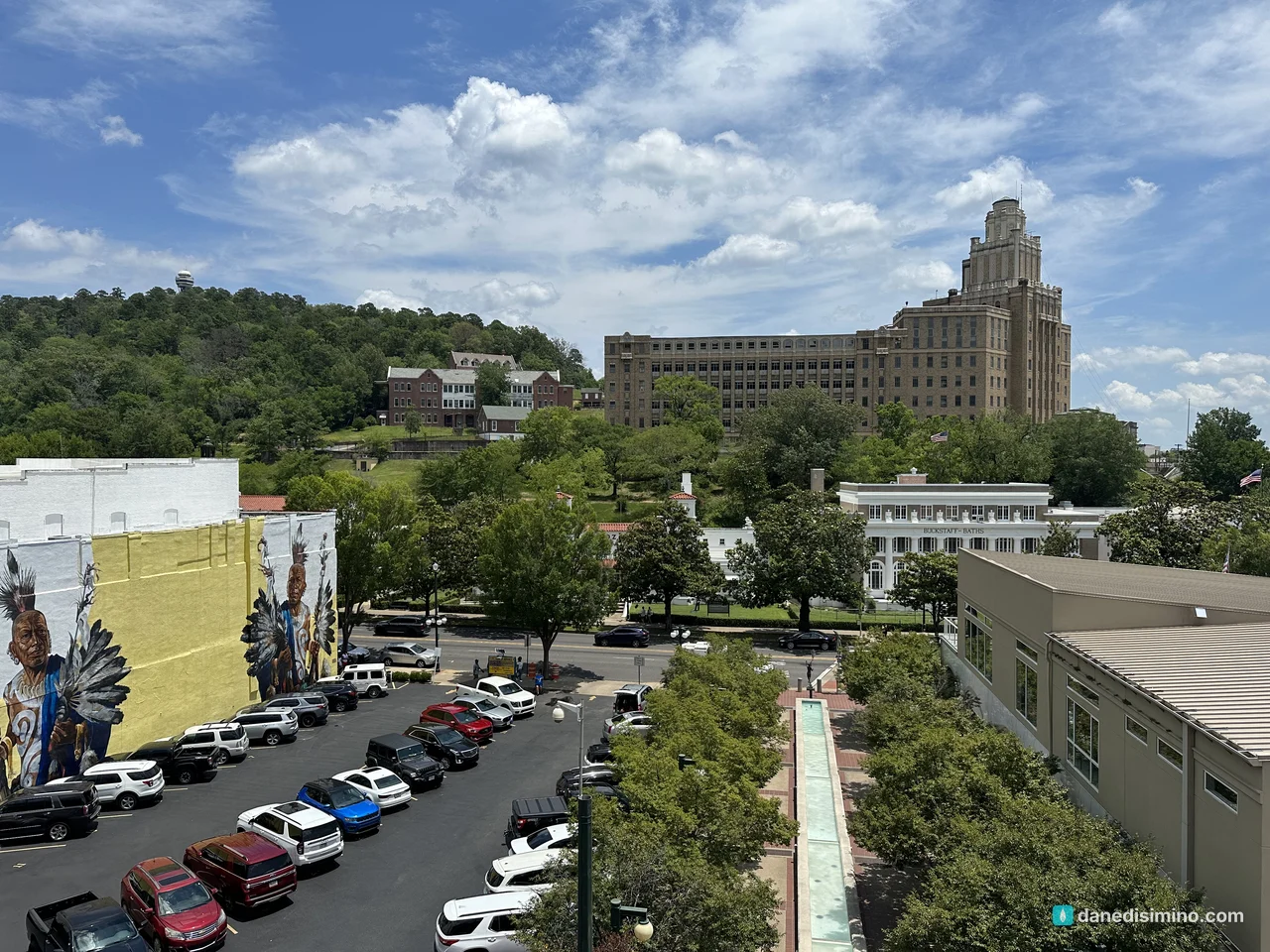
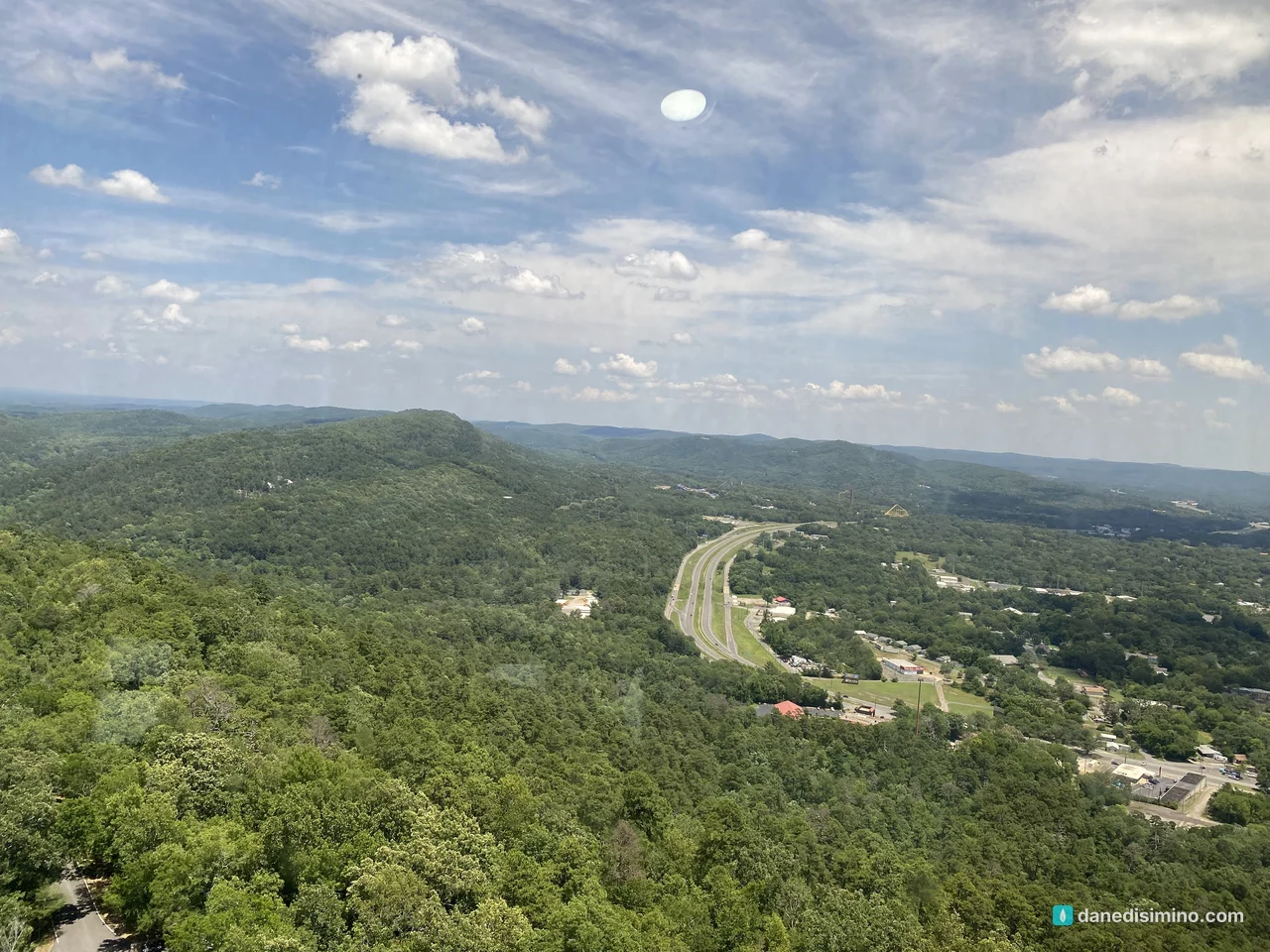
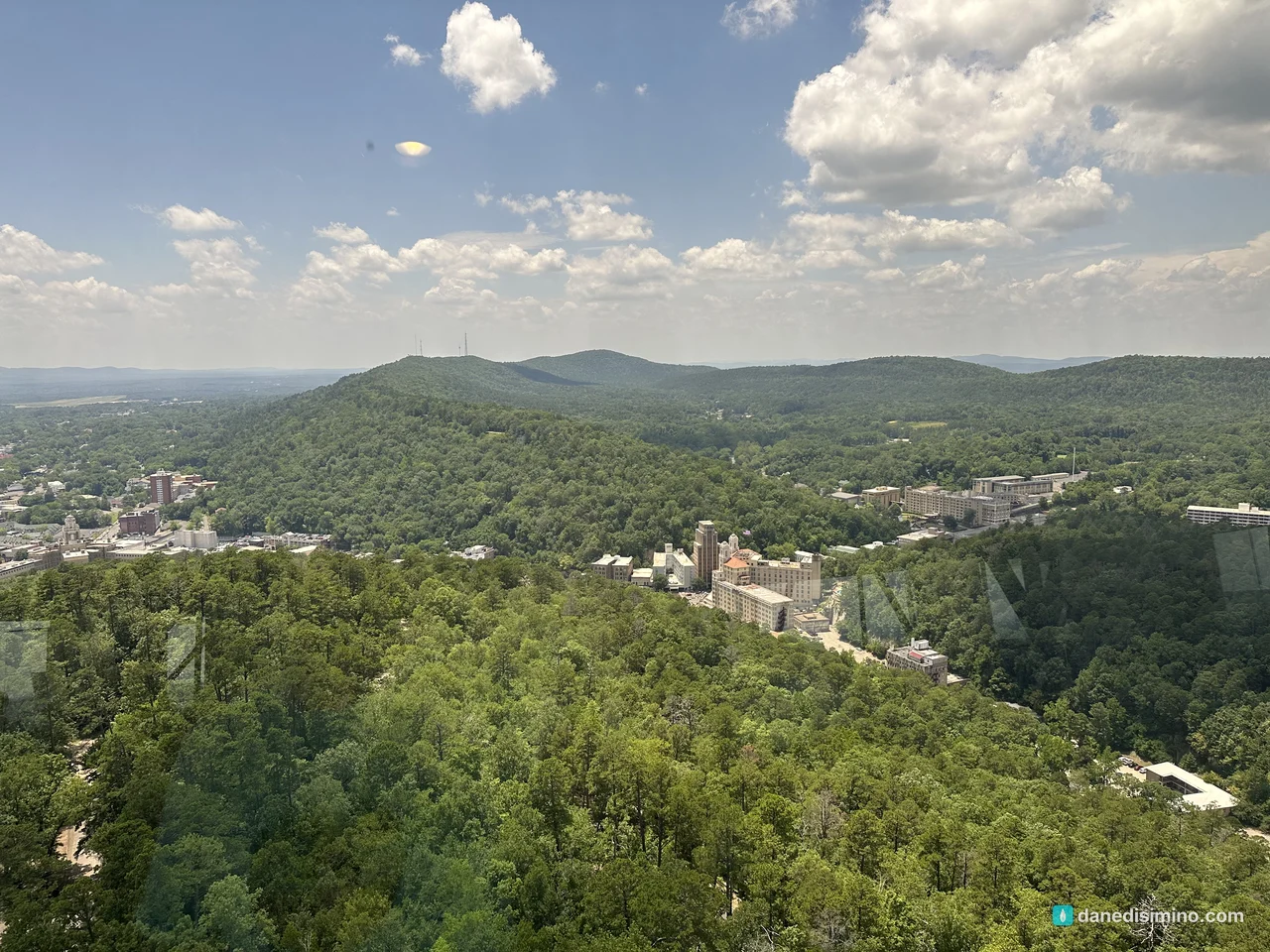
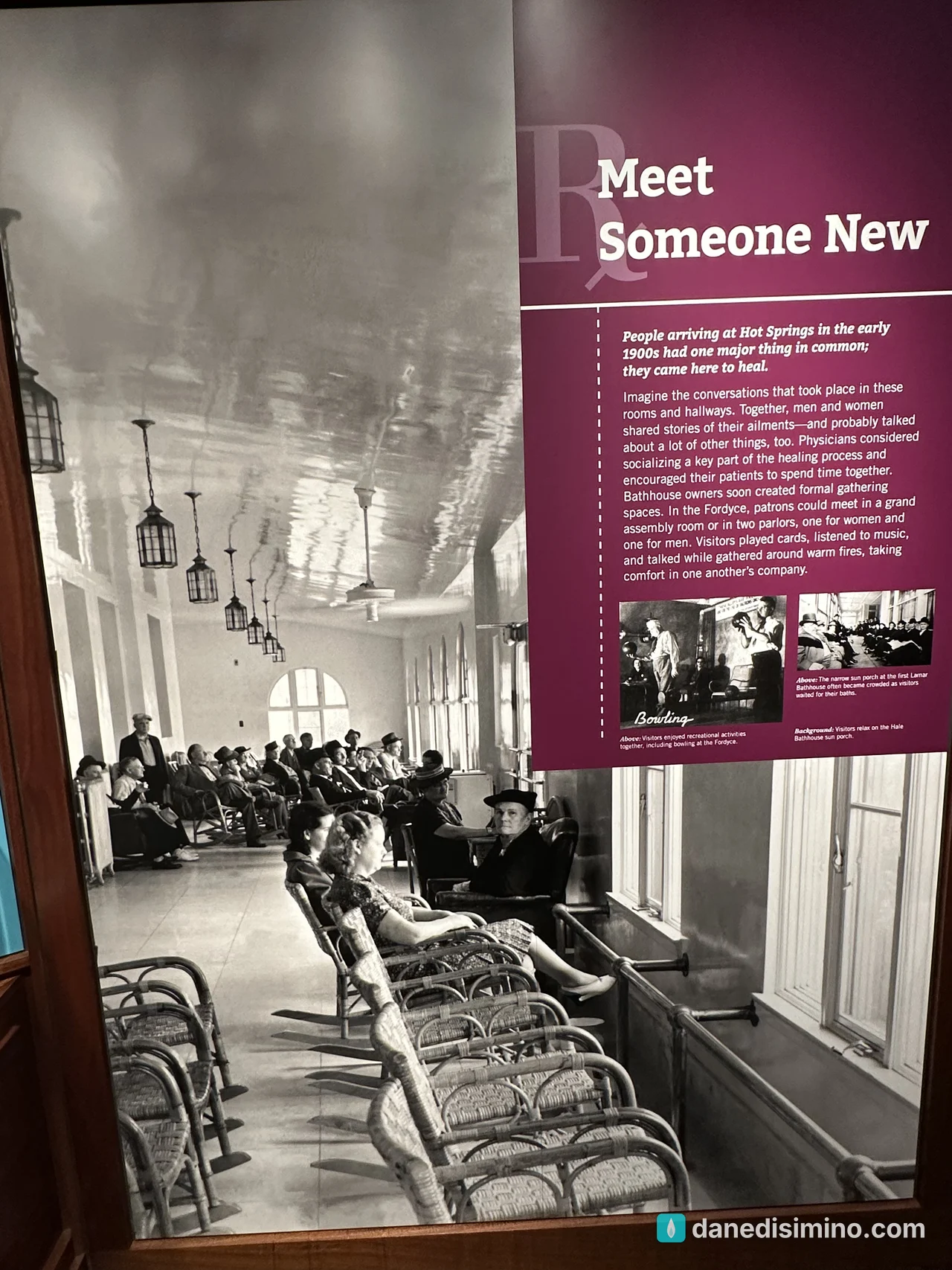
The enclosed lower deck has exhibits on the park's history, which is where we learned how people came here to heal.
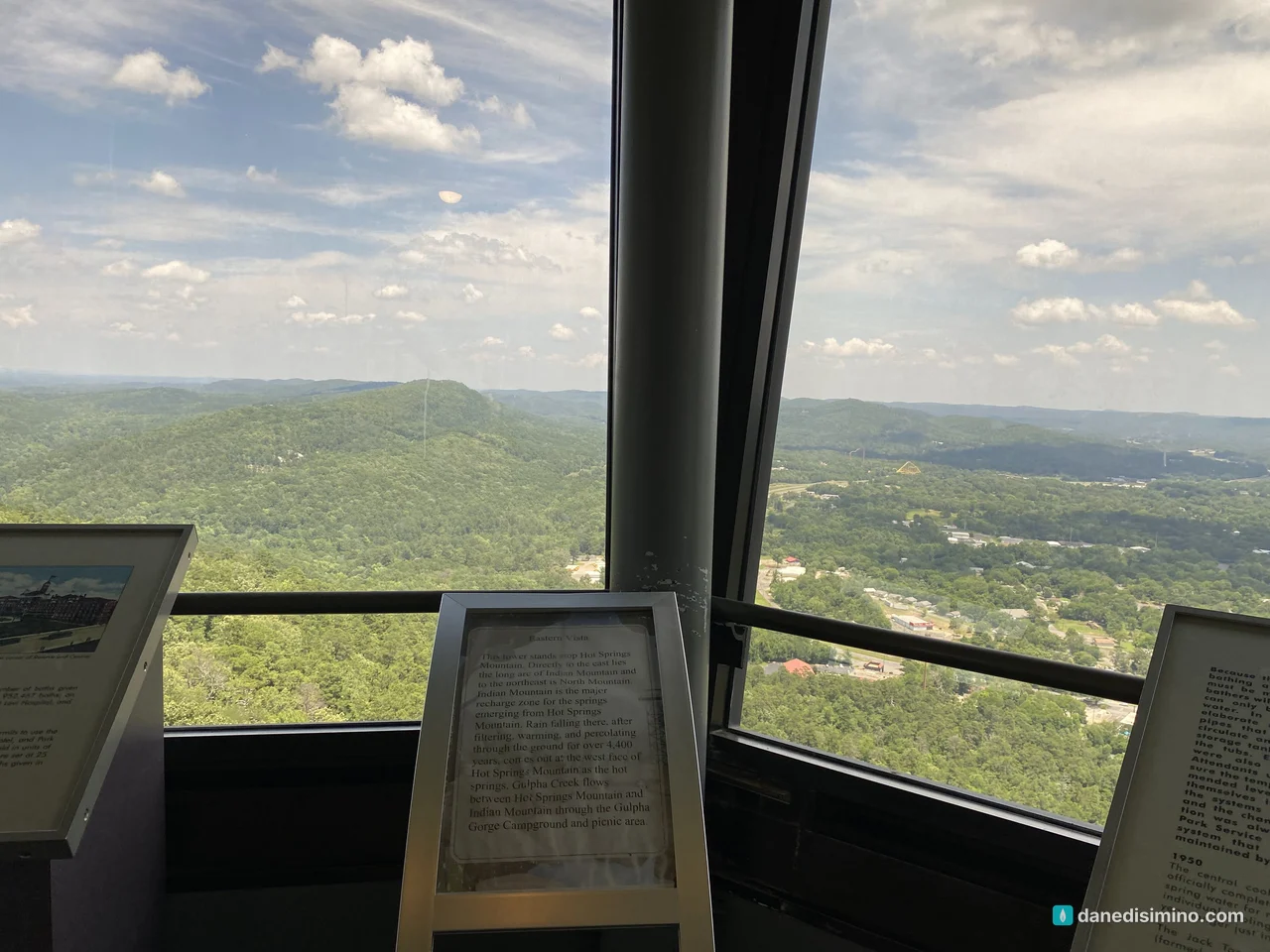
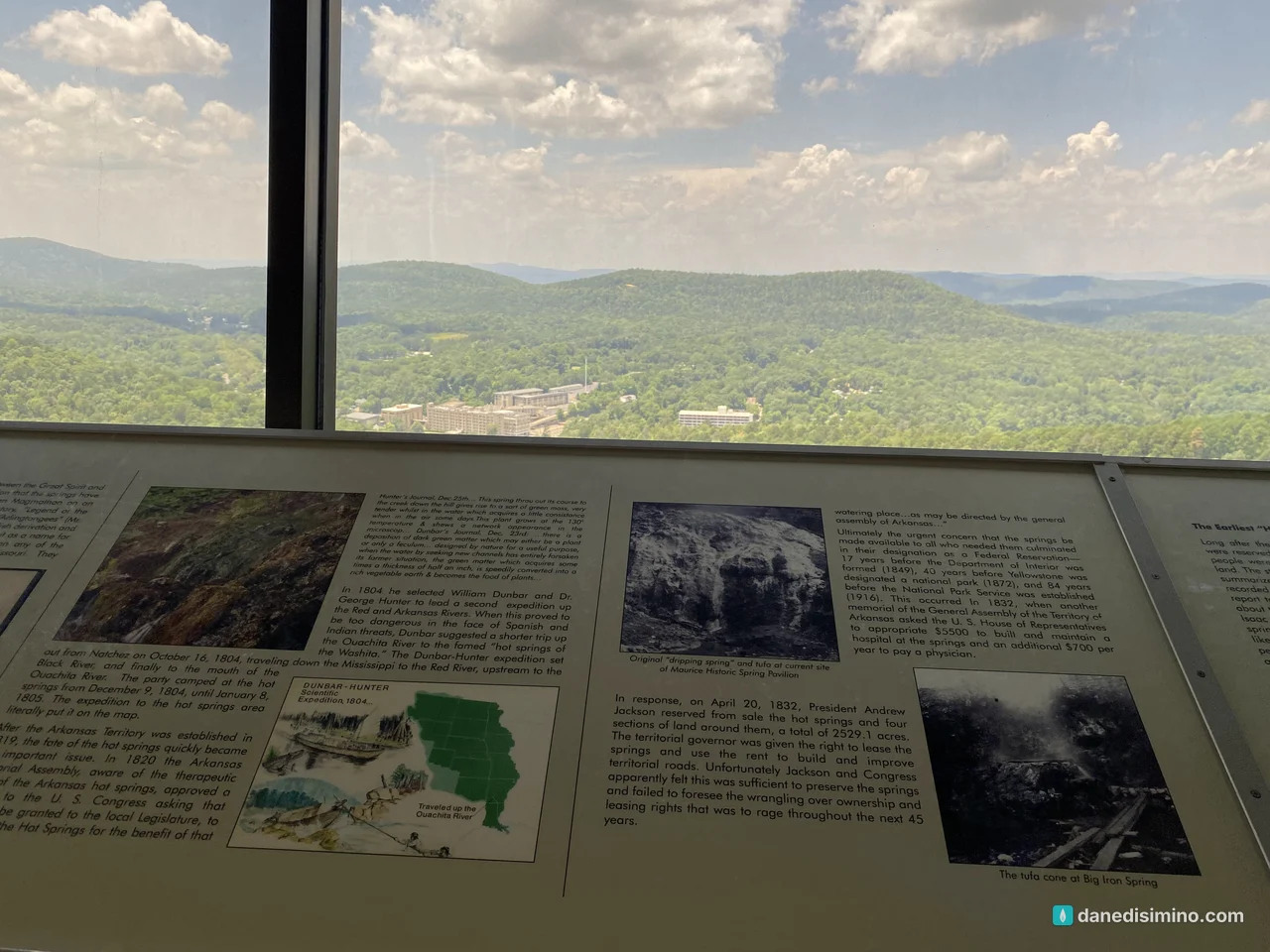
My honest take
I still don't think Hot Springs belongs beside parks like Badlands or Yellowstone. There are national monuments I'd make national parks long before this one. But it isn't the spa town's fault that we came on a scorching day after a long drive. If you're passing through, give it a few hours: the Fordyce, the tower and a soak. Just don't plan a trip around it.
What I'd do differently
Go in spring or fall. Cooler weather makes the walking and the hiking far more pleasant.
Book a soak. We came to a bathhouse park and never took a bath.
Hike up instead of driving. The trail from the Grand Promenade gets you out of town and into the woods.
What Hot Springs taught me
For more than a century, people came here hoping the water would cure them. Some found relief, some didn't. The water was never the real source of healing.
"O LORD, if you heal me, I will be truly healed; if you save me, I will be truly saved. My praises are for you alone!" (Jeremiah 17:14, NLT)
Real healing comes from God.
Questions?
Ask me anything about Hot Springs: which bathhouse to soak in, when to go, or how to fit it into a drive east. I answer every question.
Photos
Sources
- Hot Springs National Park (NPS)
- Plan your visit (NPS)
- History and culture (NPS)
- Park brochure and timeline (NPS)
- Bathhouse Row today (NPS)
- Soak in the springs (NPS)
- Hot Springs Mountain Tower (NPS)
- Outdoor activities (NPS)
- Common frequently asked questions (NPS)
- Hot Springs National Park (USGS)
- Hot Springs National Park (AAA)
- Hot Springs National Park guide (AARP)
- Hot Springs Mountain Tower (Visit Hot Springs)
Pathlight
Park guides from the road. A printable trip sheet comes with them when one is ready.