
NATIONAL PARKS · PARK 1 OF 64
Rocky Mountain
A Field Guide
On this page
Our home park and our first park: five visits across nine years. Trail Ridge Road, the wildfire fall of 2020, camping and horseback, a greenback cutthroat at The Loch, and what to know about timed entry, the east side and the west side.
Version 1.1 · Updated Nov 17, 2026
Map
When to go
Average monthly visits, 2023–2025. Source: NPS visitor statistics. ● marks the months we visited.
| January | 108,189 |
|---|---|
| February | 107,807 |
| March | 154,541 |
| April | 165,656 |
| May | 326,300 |
| June | 612,453 |
| July | 752,019 |
| August | 652,167 |
| September | 596,356 |
| October | 391,380 |
| November | 151,121 |
| December | 129,216 |
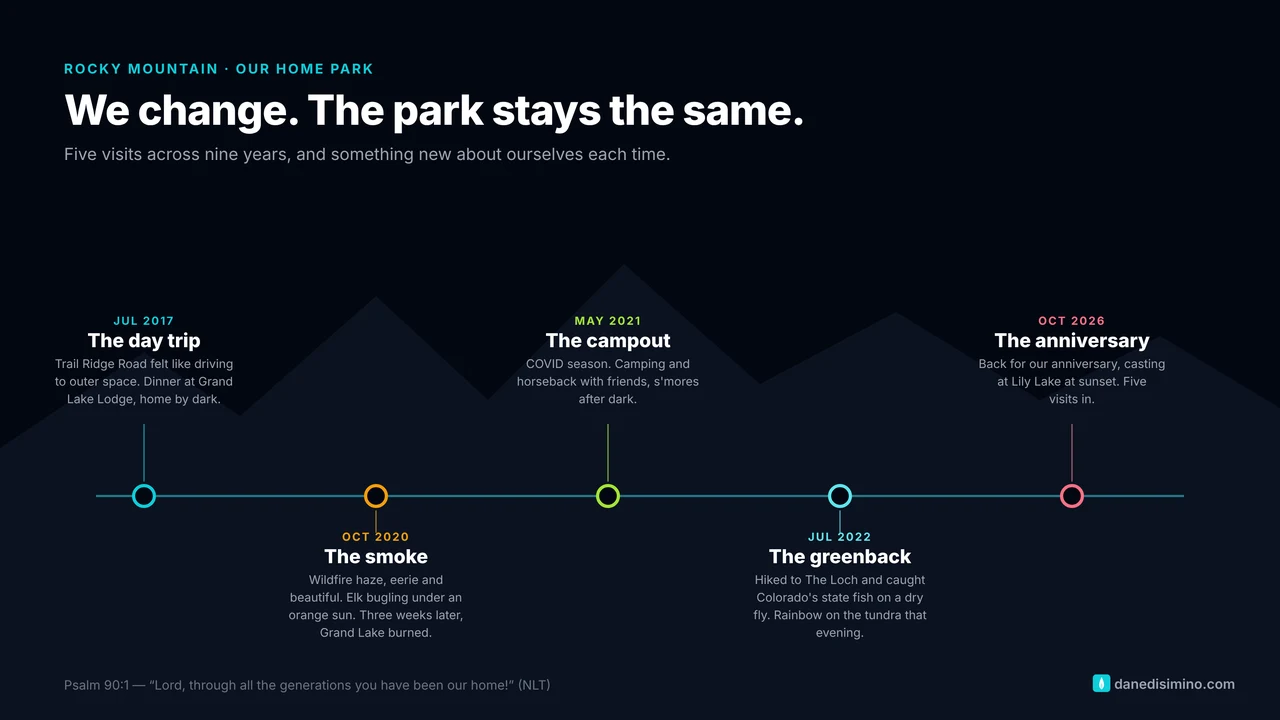
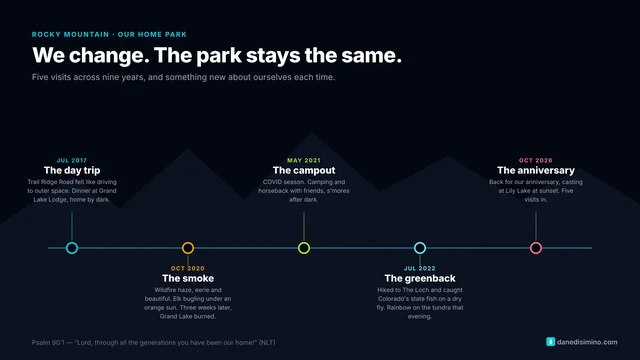
Rocky Mountain was our first national park, and it never felt like one. When we lived in Golden, it was simply the closest park to home: close enough for a day trip, big enough to never finish. We've been back four times since, and every visit has landed in a different life.
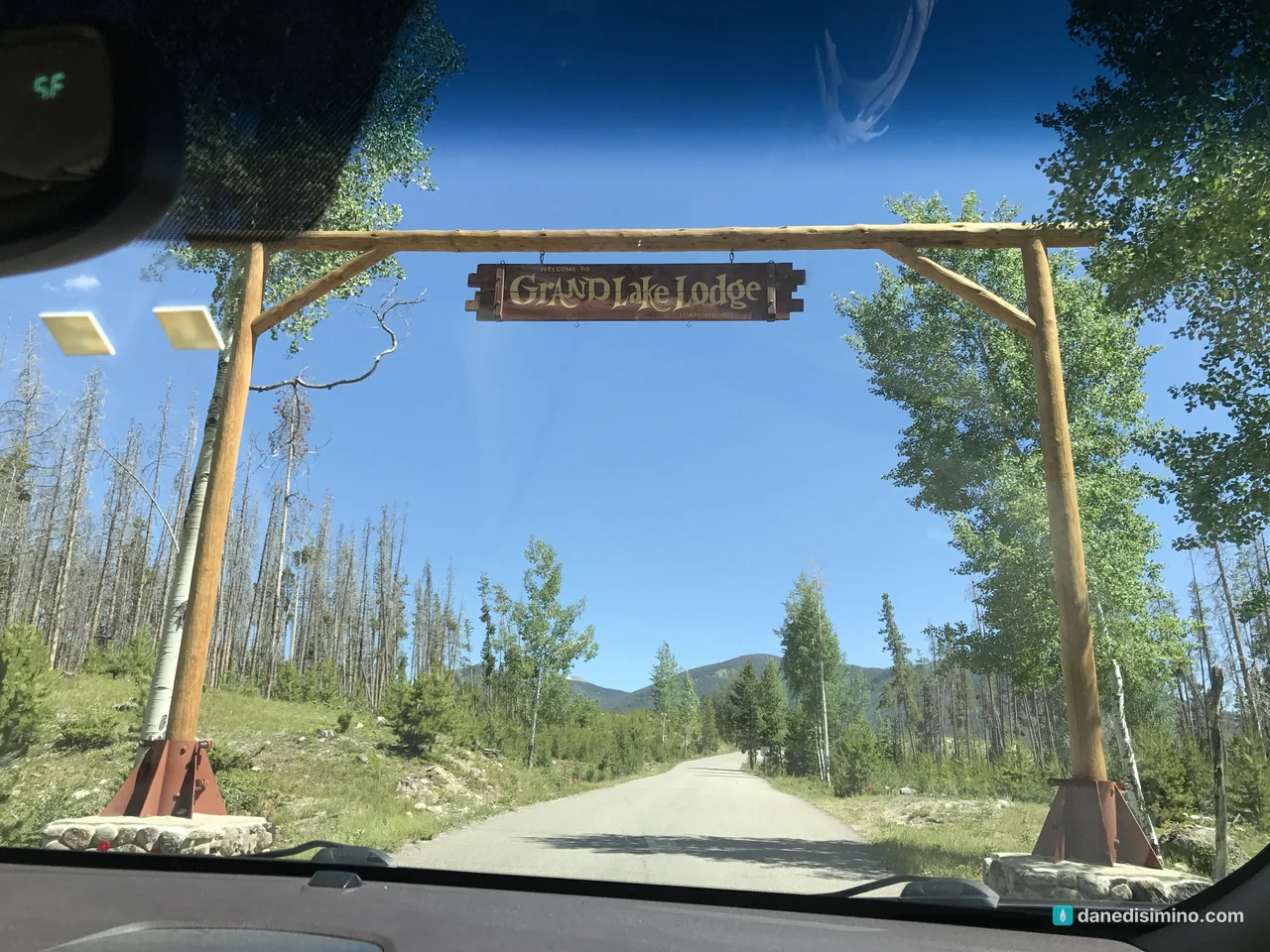
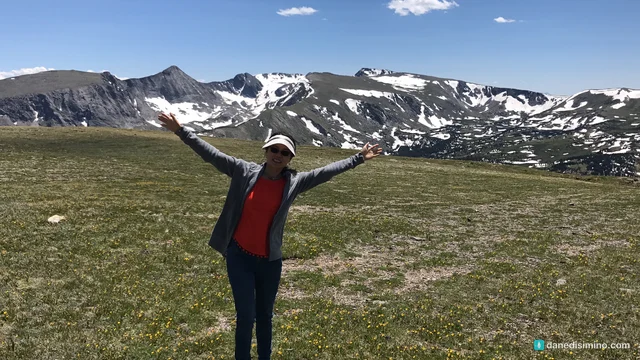
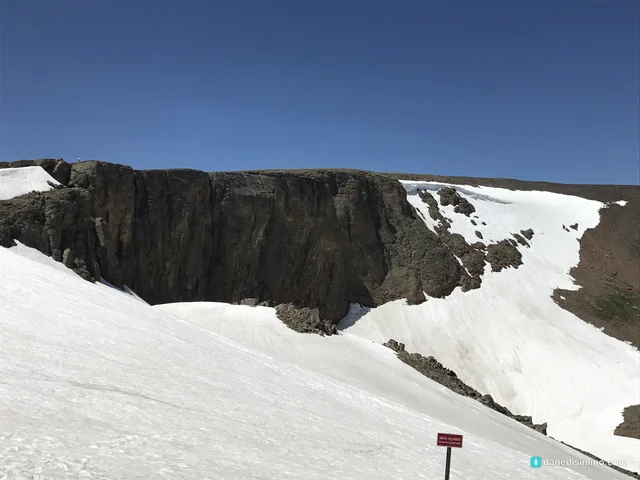
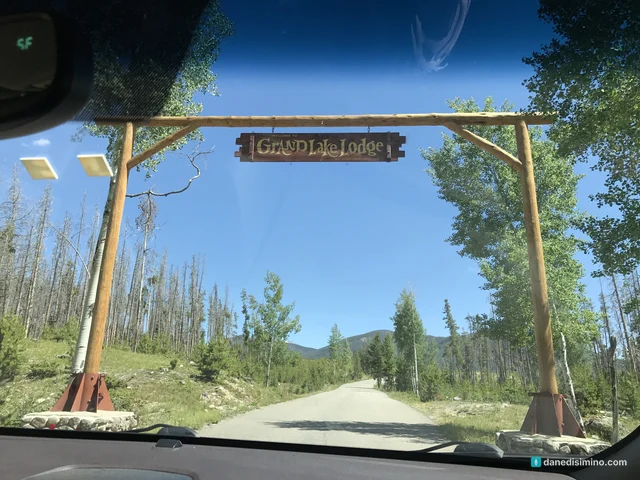
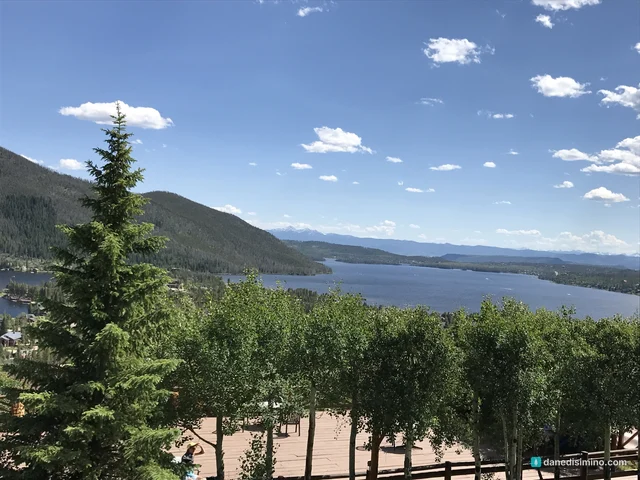
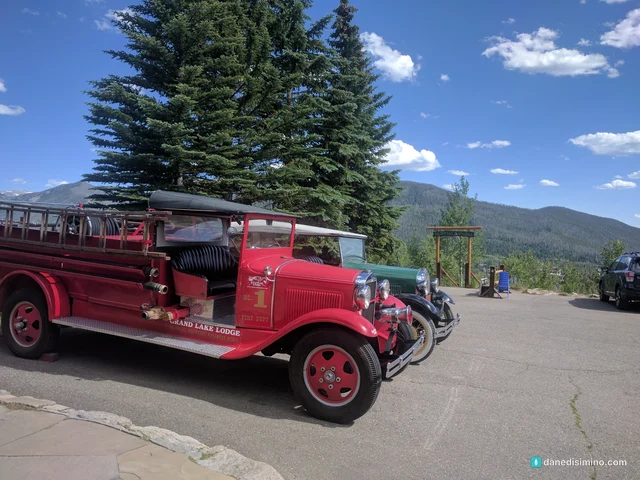
The first time was July 1, 2017. We drove up for the day, took Trail Ridge Road across the top of the park, had dinner at Grand Lake Lodge and drove home. I remember the feeling of that road more than any single view: snowbanks beside the pavement in July, the trees falling away, the tundra rolling out in every direction.
Driving Trail Ridge Road felt like driving to outer space.
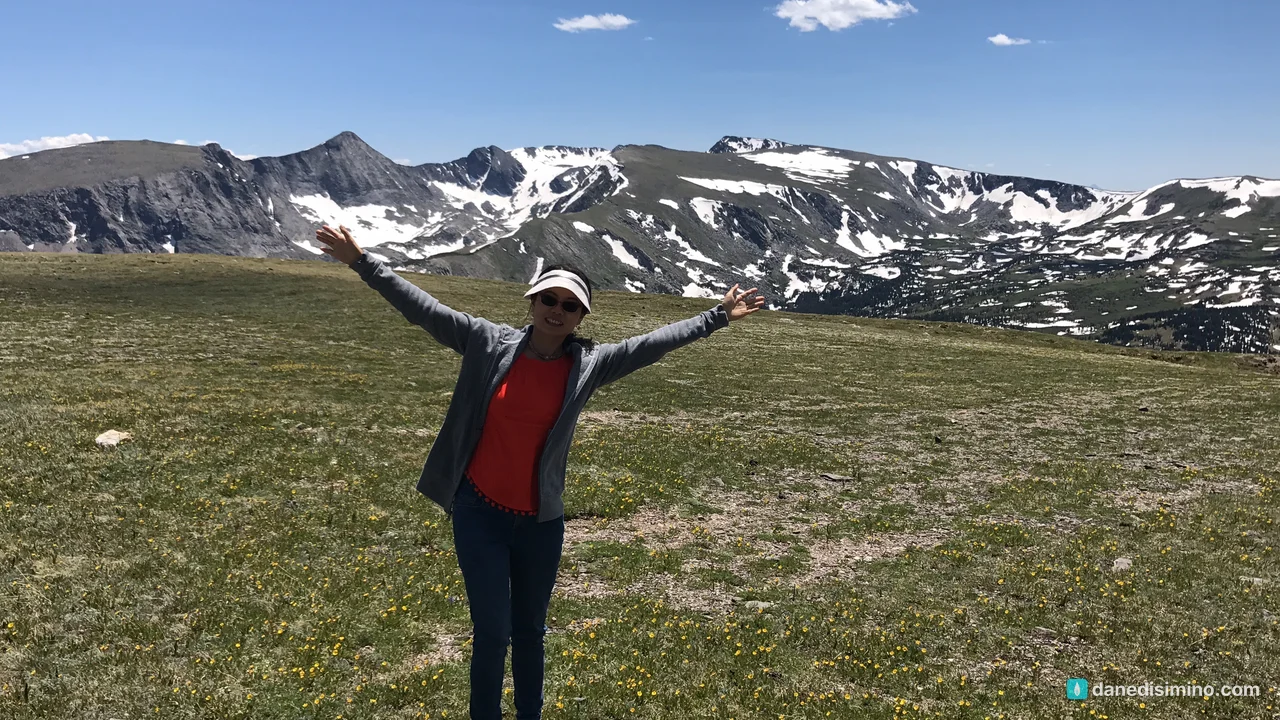
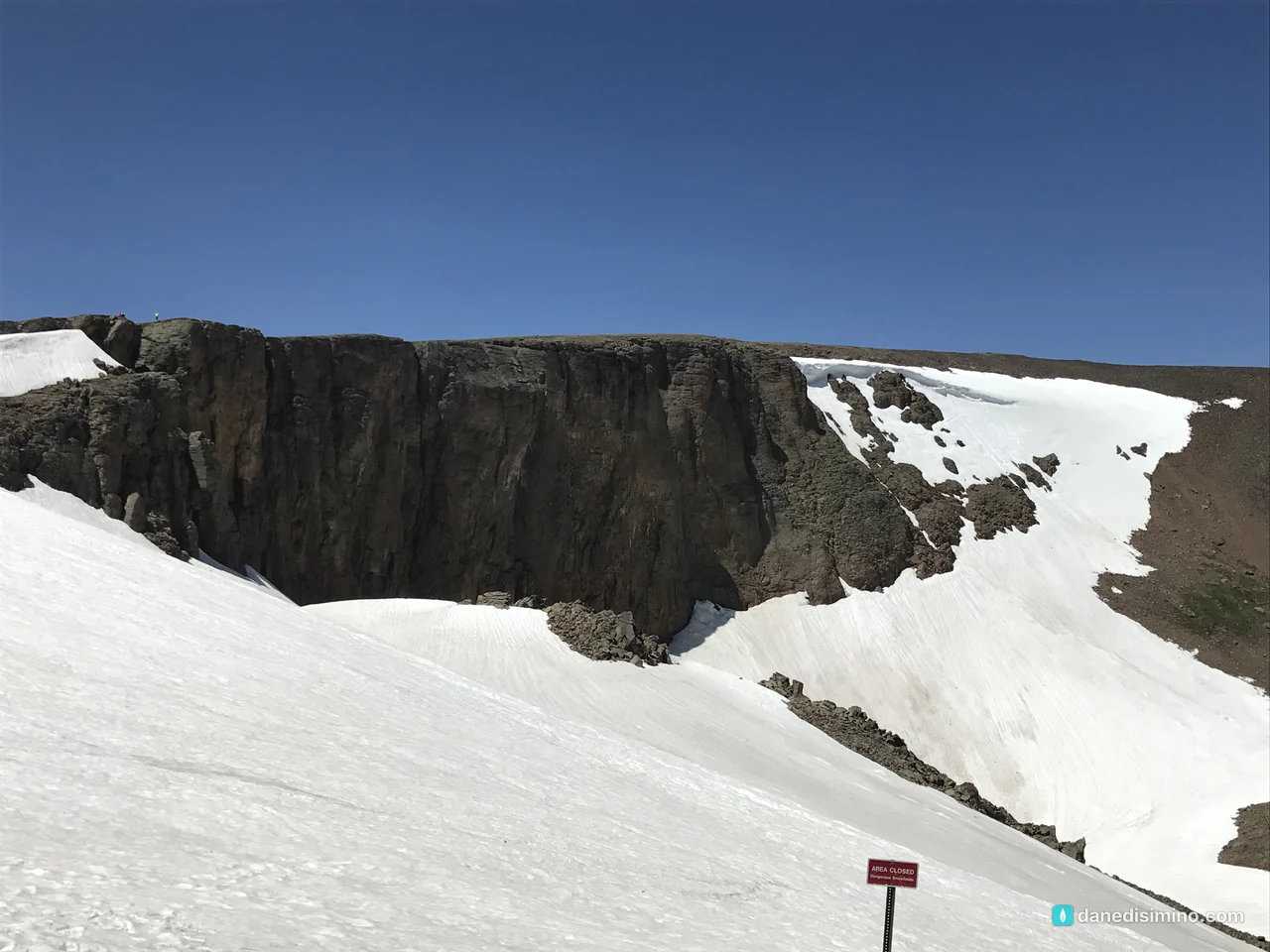
It was one of the most beautiful things I'd ever seen to that point. I wouldn't say the mission to see every national park was born that day; that came later, at Yellowstone. But this was the starting point, and it's the park we keep coming back to.
The short version
Drive Trail Ridge Road. 48 miles from Estes Park to Grand Lake, 11 of them above treeline, topping out at 12,183 feet. It's the best scenic drive in Colorado.
Check timed entry before anything else. From late May to mid-October, getting in takes a reservation on top of your entrance pass. Plan your day around it.
Go west. Estes Park is a madhouse. Grand Lake is quieter, prettier and has the lodge. If you have a choice, base west.
Hike to a lake. The high lakes are the park's crown jewels. Get a Bear Lake corridor permit, go early, and walk past the first crowds.
It rewards returning. This is a park you can visit five times and never repeat yourself.
The park at a glance
- 12,183 ft
- High point of Trail Ridge Road
- 48 mi
- Estes Park to Grand Lake
- 14,259 ft
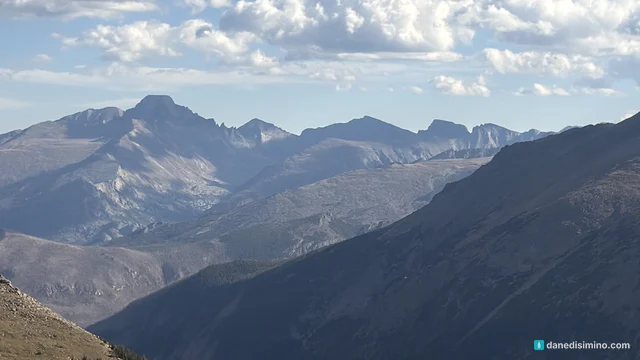
- Longs Peak, the park's only fourteener
- 415 sq mi
- Of the Colorado Rockies
Where: about 90 minutes northwest of Denver. The east entrances are at Estes Park; the west entrance is at Grand Lake. Trail Ridge Road (US 34) connects them over the top.
Entrance fee: $30 per vehicle for one day, $35 for seven days. Since 2026, visitors who aren't US residents pay an extra $100 per person. The pass is checked around the clock, and it covers outlying spots like Lily Lake and the Longs Peak trailhead too.
Timed entry: see below. It's the thing that will actually shape your day.
Contact: nps.gov/romo or (970) 586-1206. In an emergency, call 911.
The park by the numbers
- 77
- Named peaks above 12,000 feet
- 1/3
- Of the park is alpine tundra
- 147
- Lakes
- 355 mi
- Of hiking trails
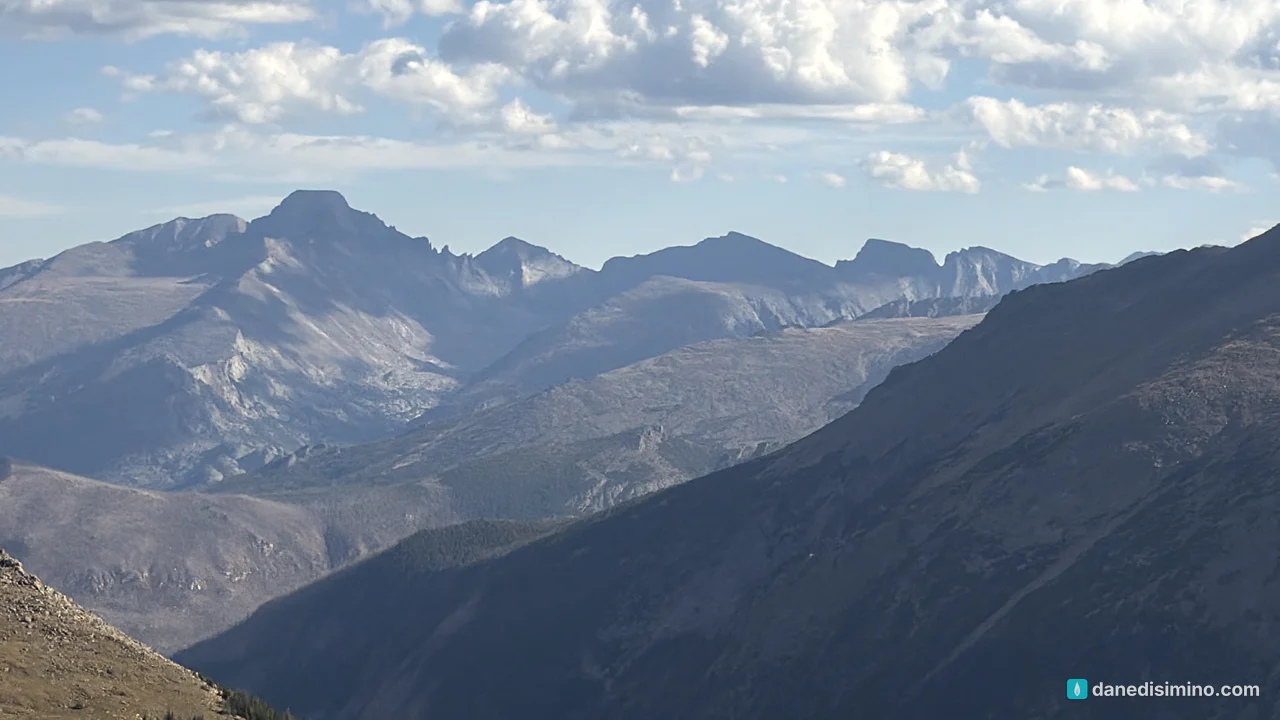
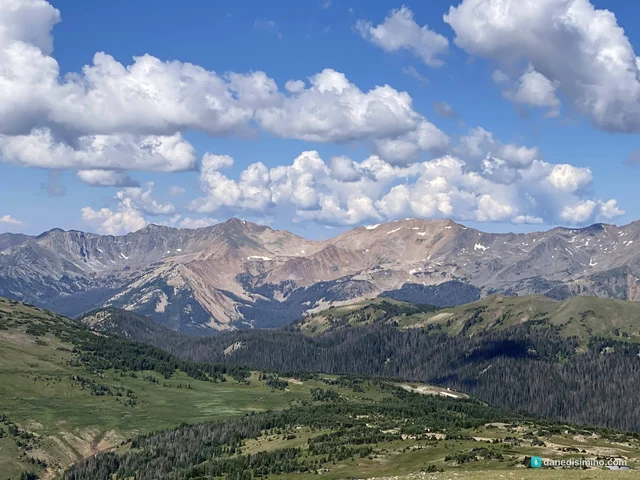
High country. The park runs from 7,600 feet to 14,259 feet at the top of Longs Peak. About a third of it is alpine tundra, one of the largest protected tundra ecosystems in the lower 48. Trail Ridge Road is the highest continuous paved road in the country.
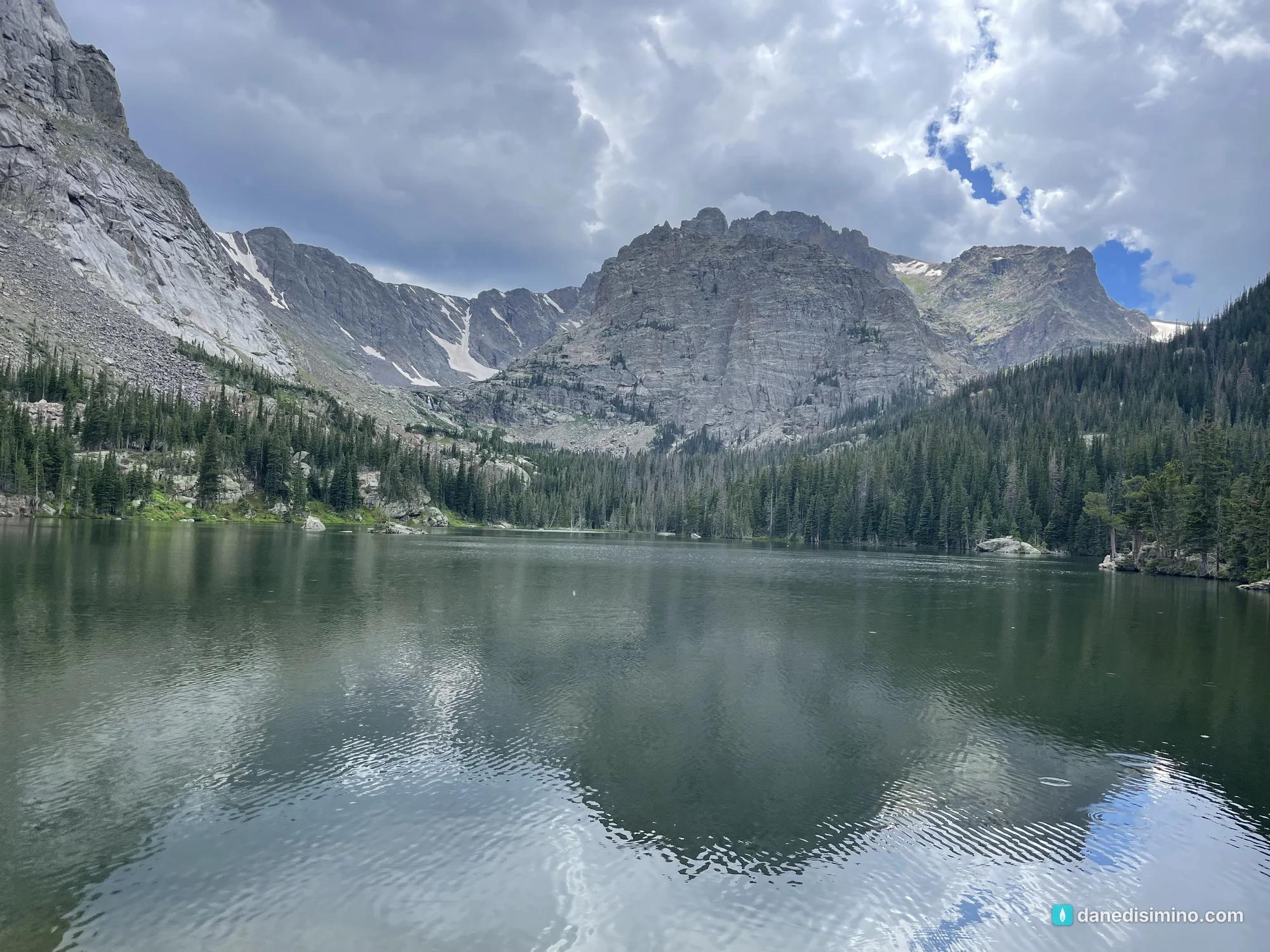
Carved by ice. Glaciers and running water shaped the park's U-shaped valleys, cirques and lakes, including The Loch and the lakes above Bear Lake.
Where rivers begin. The Continental Divide runs through the park for 42 miles, crossing Trail Ridge Road at Milner Pass. Rain on the west side heads for the Pacific; rain on the east side heads for the Atlantic. The Colorado River starts here, on the west side.
Wild. About 95 percent of the park is designated wilderness. It's an International Biosphere Reserve and a Globally Important Bird Area, with about 280 bird species and 66 native mammals.
The father of the park
People have crossed these mountains for thousands of years; you can still find traces of ancient big-game drives on the tundra. The park itself exists largely because of Enos Mills. He climbed Longs Peak for the first time at 15 and went on to climb it about 40 times alone and nearly 300 times as a guide. After a chance meeting with John Muir in 1889, he devoted his life to conservation. From his inn near Longs Peak, he wrote, lectured and campaigned for a national park, with help from groups like the Sierra Club. Congress established Rocky Mountain National Park on January 26, 1915. Mills is remembered as the "Father of Rocky Mountain National Park."
Getting in: timed entry
The system has two permit types. One covers the Bear Lake Road corridor plus the rest of the park, and applies from 5 a.m. to 6 p.m.; this is the one you want for the famous lake hikes, and it's the first to sell out. The other covers the rest of the park, excluding Bear Lake Road, and applies from 9 a.m. to 2 p.m. Each reservation gives you a two-hour entry window, costs a $2 processing fee, and reservations for each month open on the first of the month before. Arrive before the window starts or after it ends and you drive in without one.
We've felt both sides of this. In 2020 the permits were new, COVID-era, and not fun to navigate. In October 2026 we went for our anniversary and the system was still running. It works, but only if you plan for it.
Trail Ridge Road
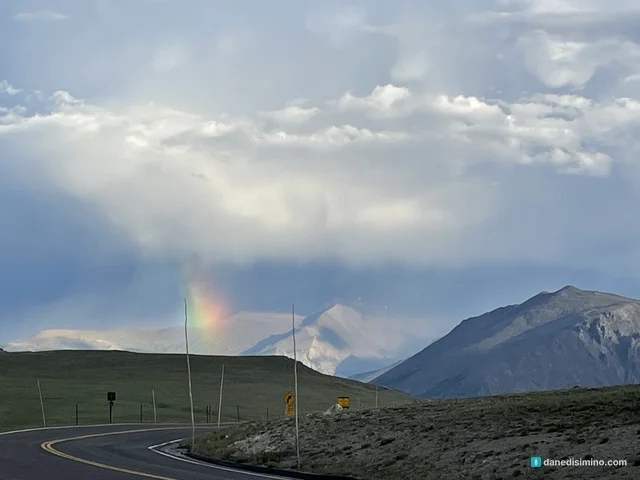
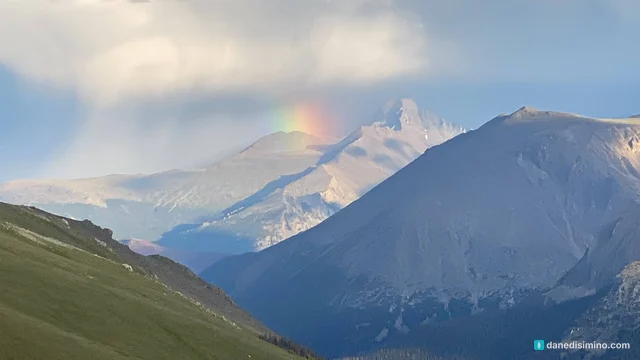
The park's spine. From either side you climb about 4,000 feet in minutes, and for 11 miles you're driving across open tundra above the trees. Pull over often: Rainbow Curve, Forest Canyon Overlook, the Alpine Visitor Center at the top. Afternoon storms roll through fast up there, and in exchange you sometimes get the kind of light nobody plans for.
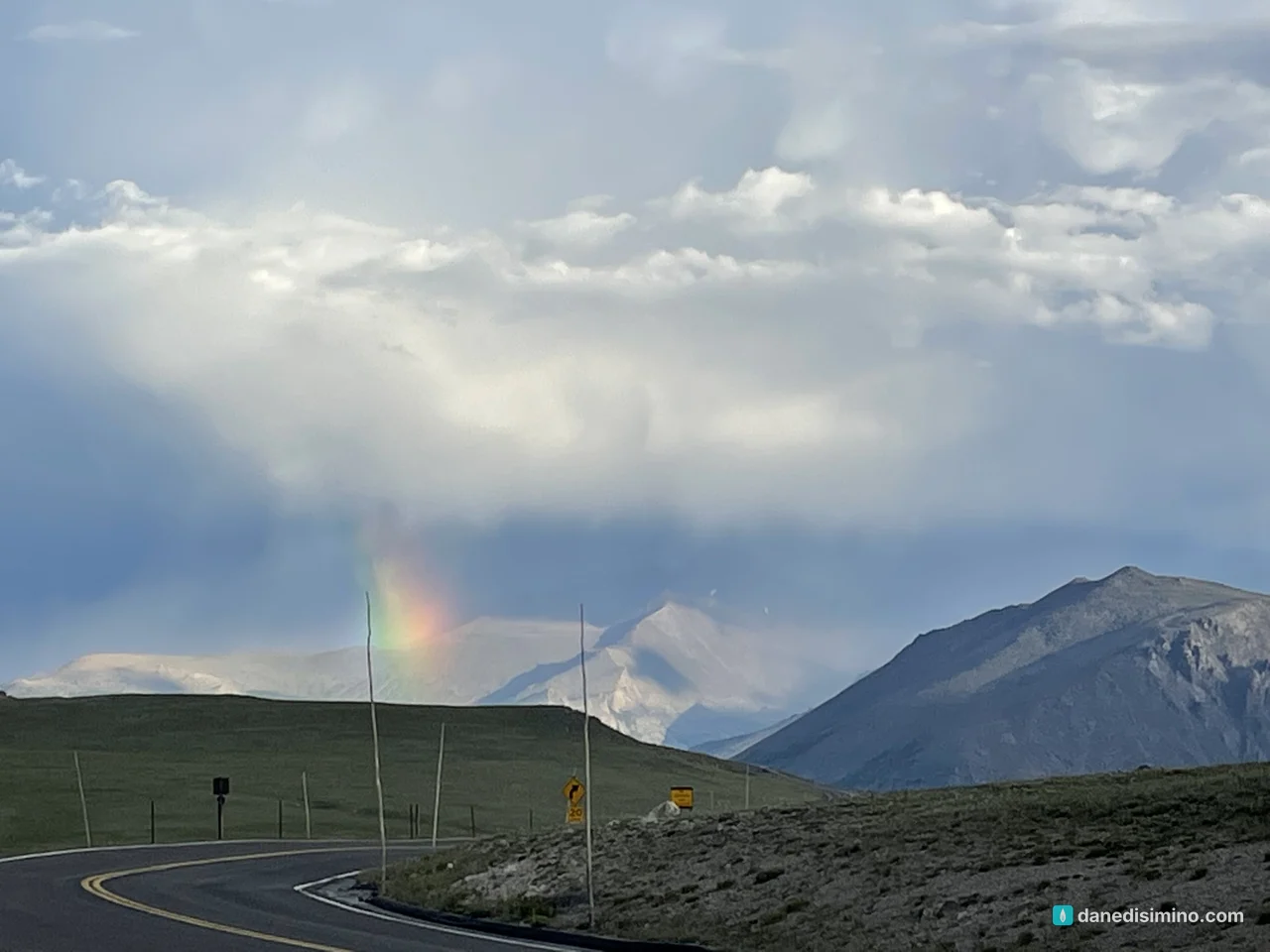
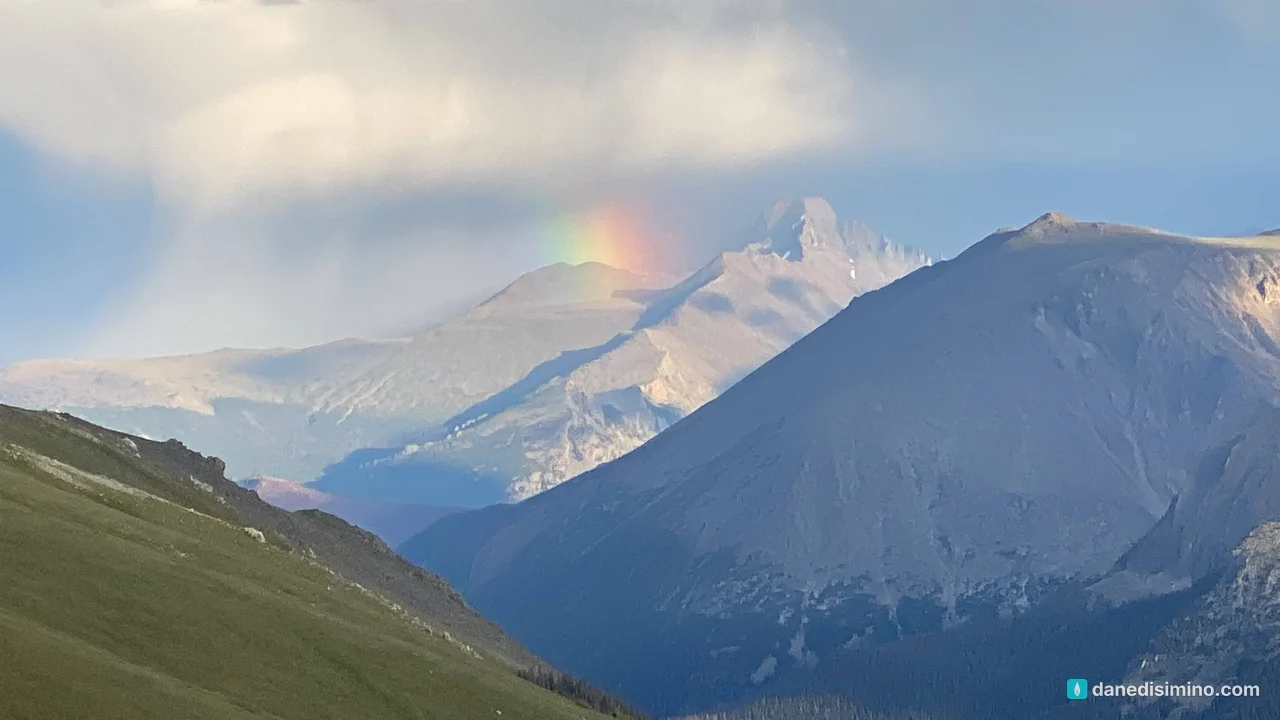
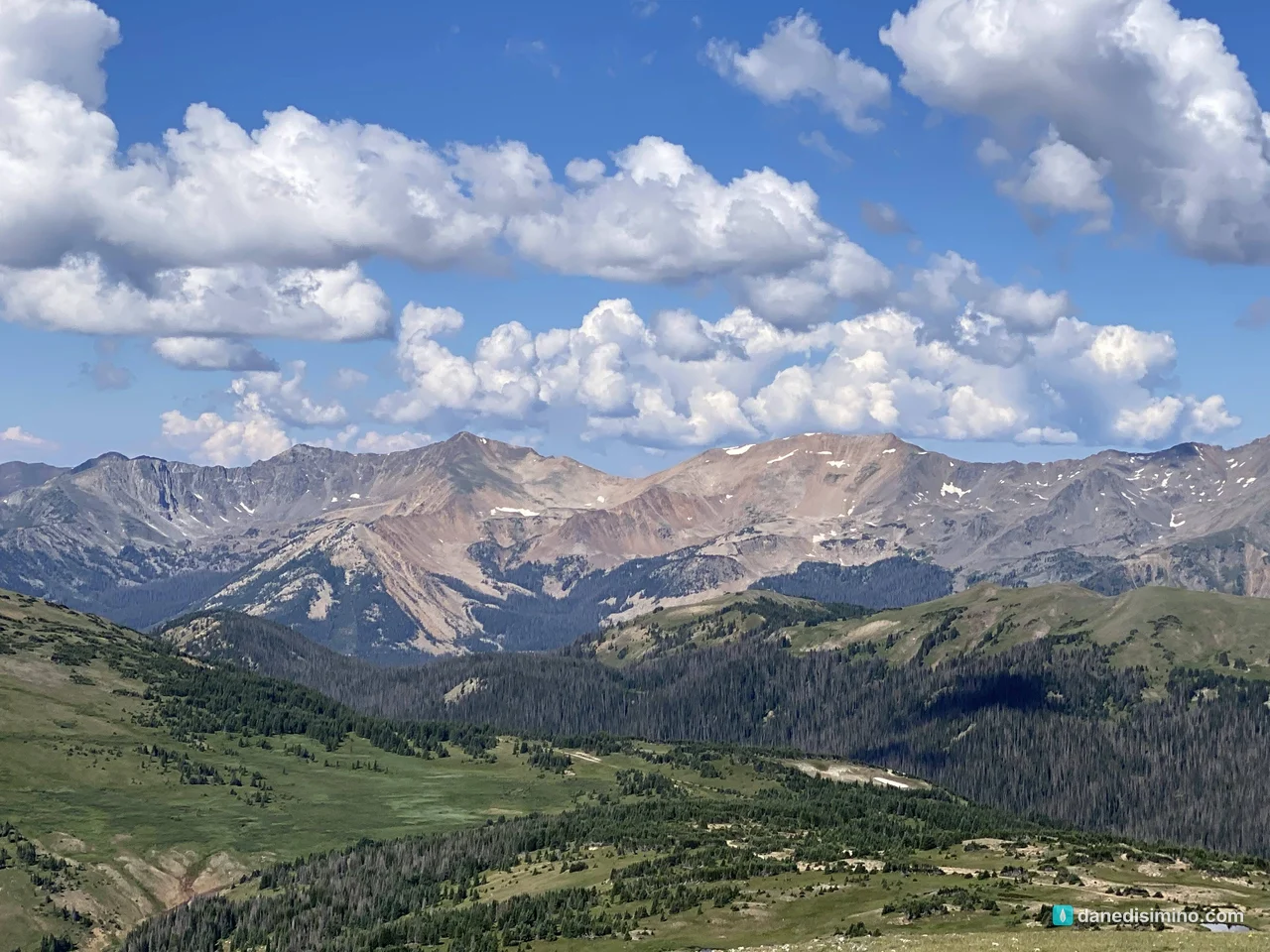
The road is generally open from Memorial Day weekend into October, weather deciding the exact dates. Check the park's Trail Ridge Road status line before a shoulder-season trip.
The big day: Alberta Falls, The Loch and a greenback
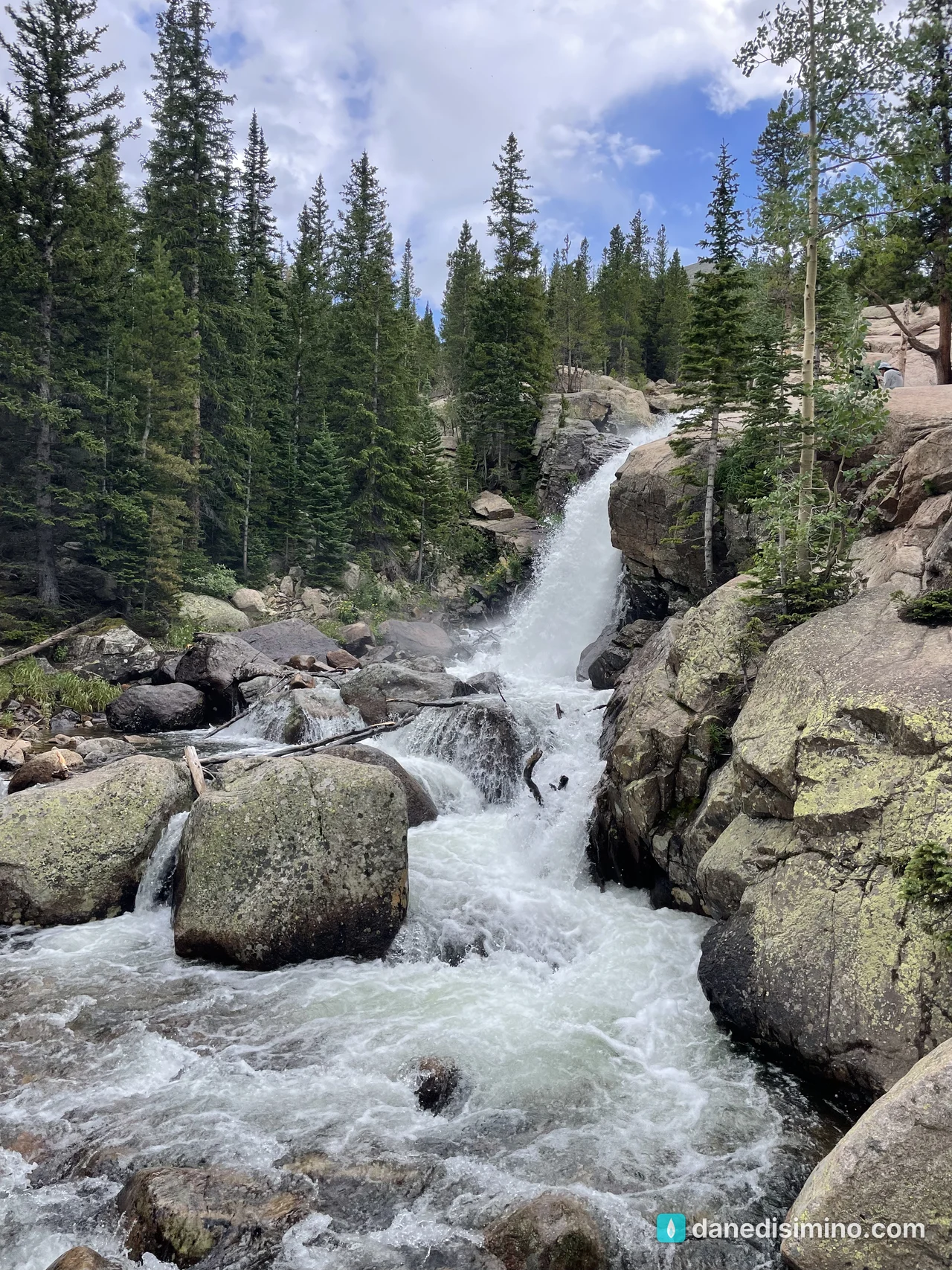
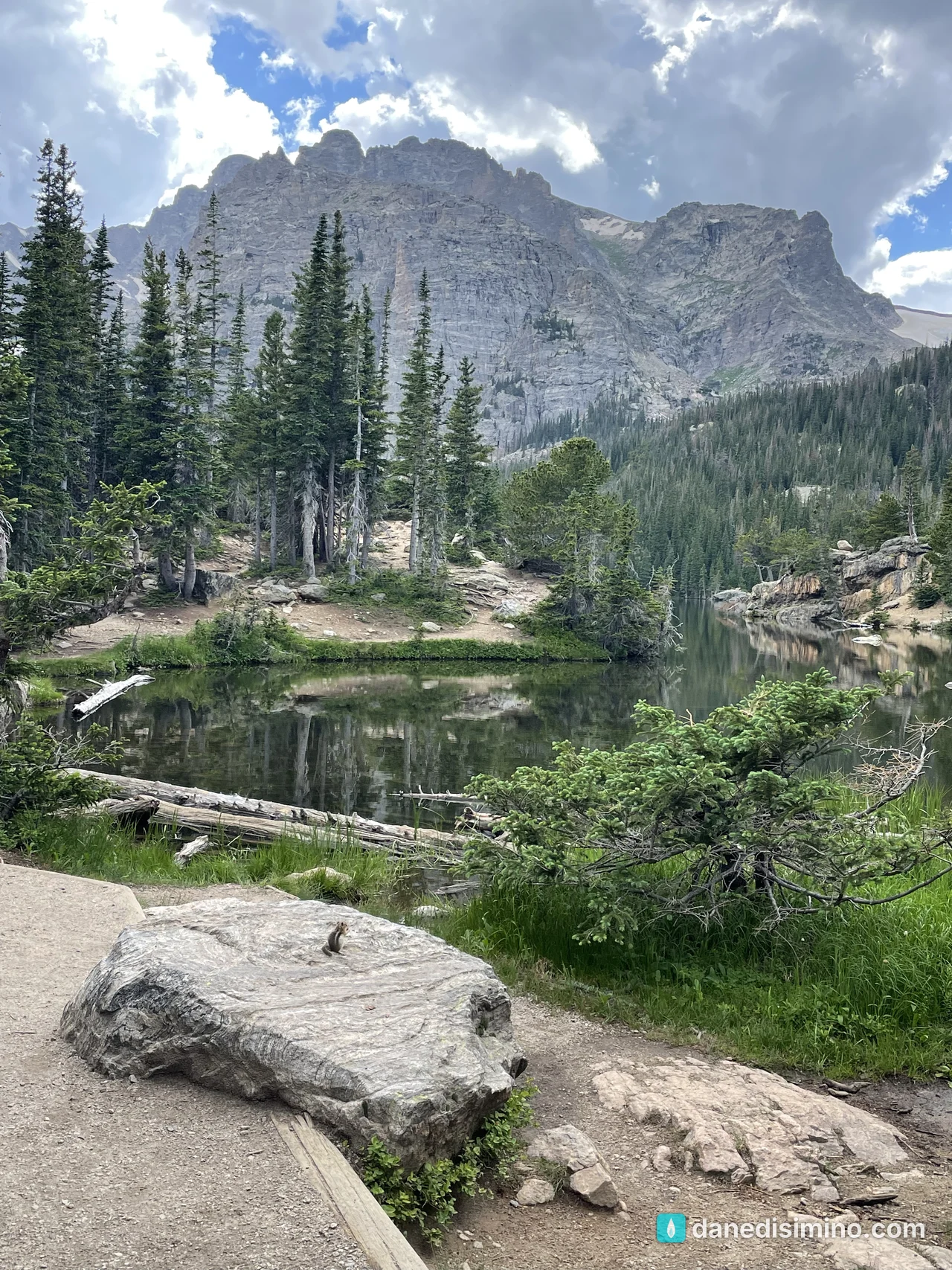
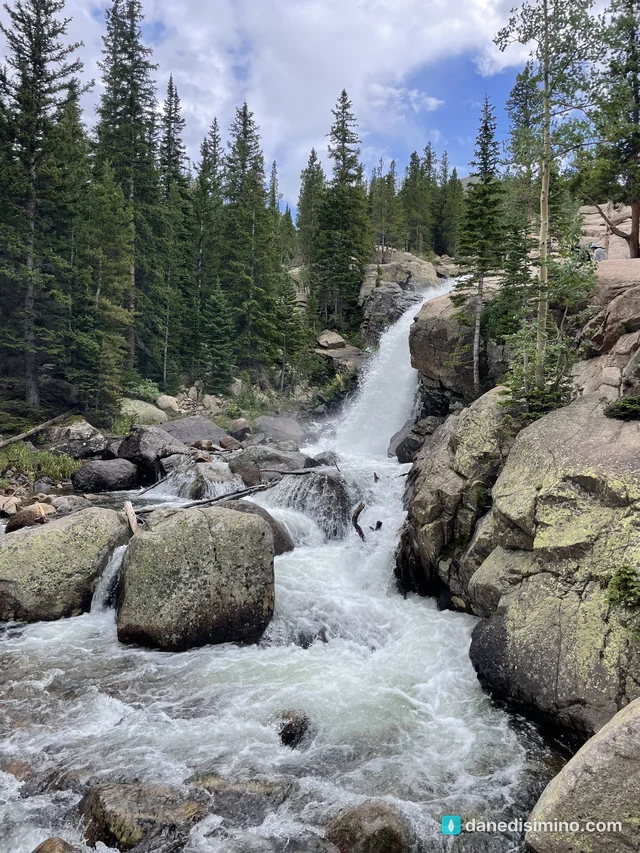
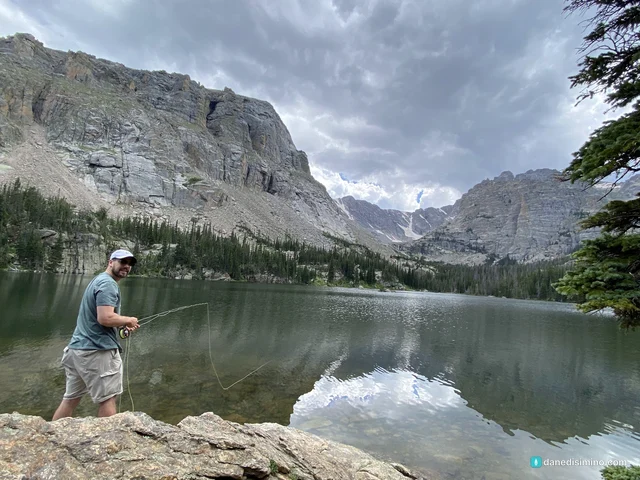
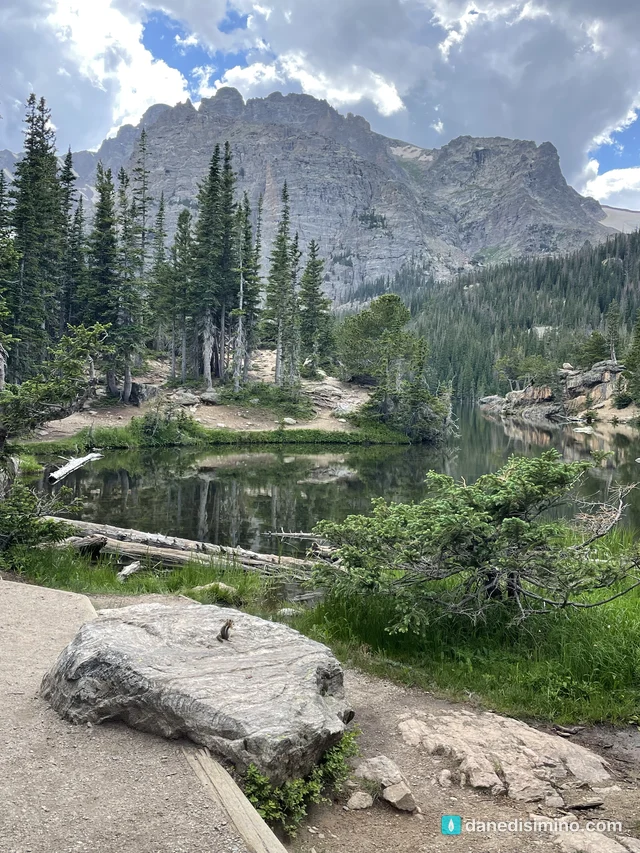
If you get one full day and one Bear Lake corridor permit, this is the day I'd copy. On July 30, 2022 we drove Trail Ridge in the morning, hiked from the Glacier Gorge trailhead past Alberta Falls to The Loch in the afternoon, caught Forest Canyon Overlook and a rainbow on the tundra in the evening, and were in Grand Lake for sunset.
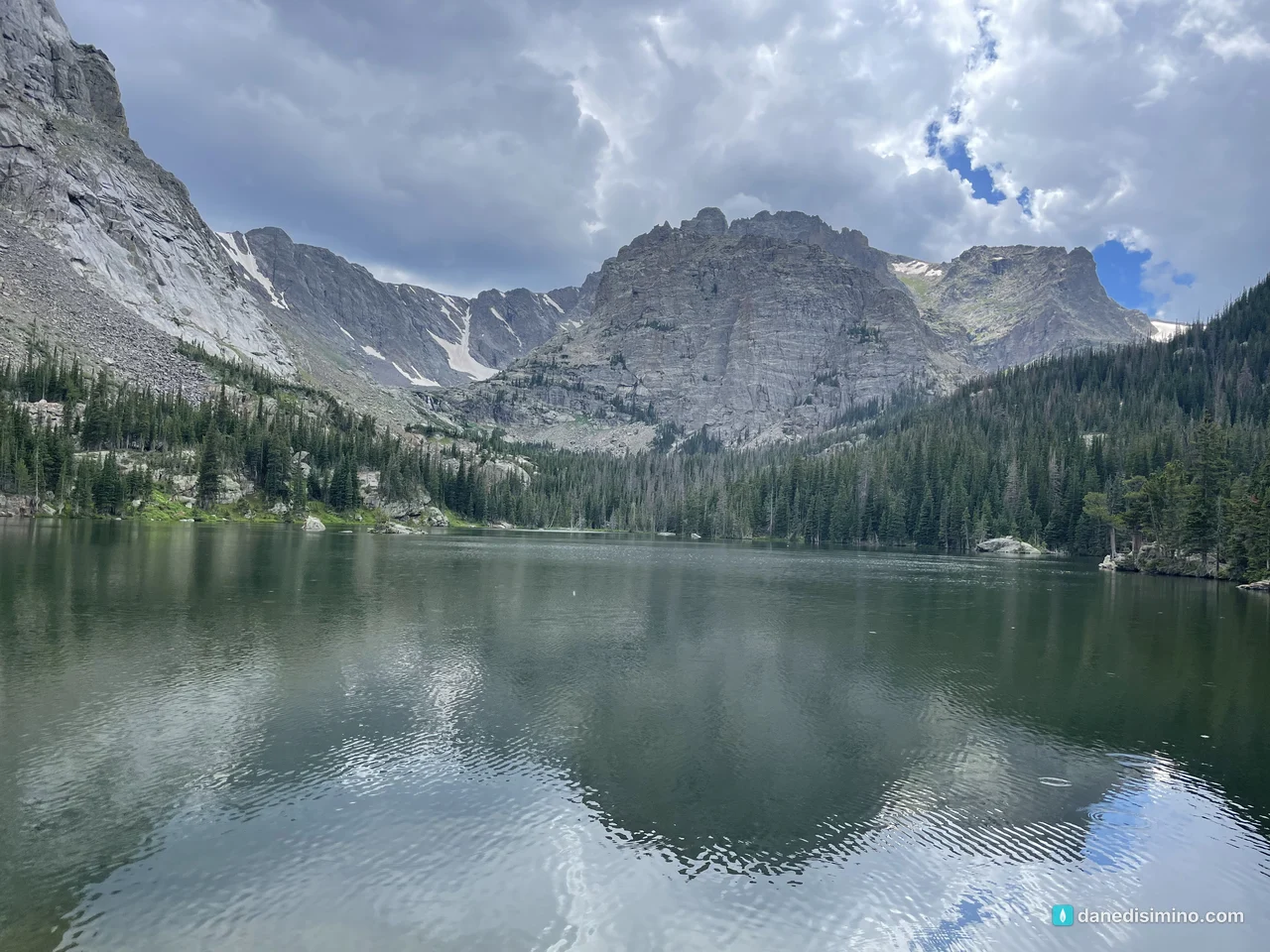
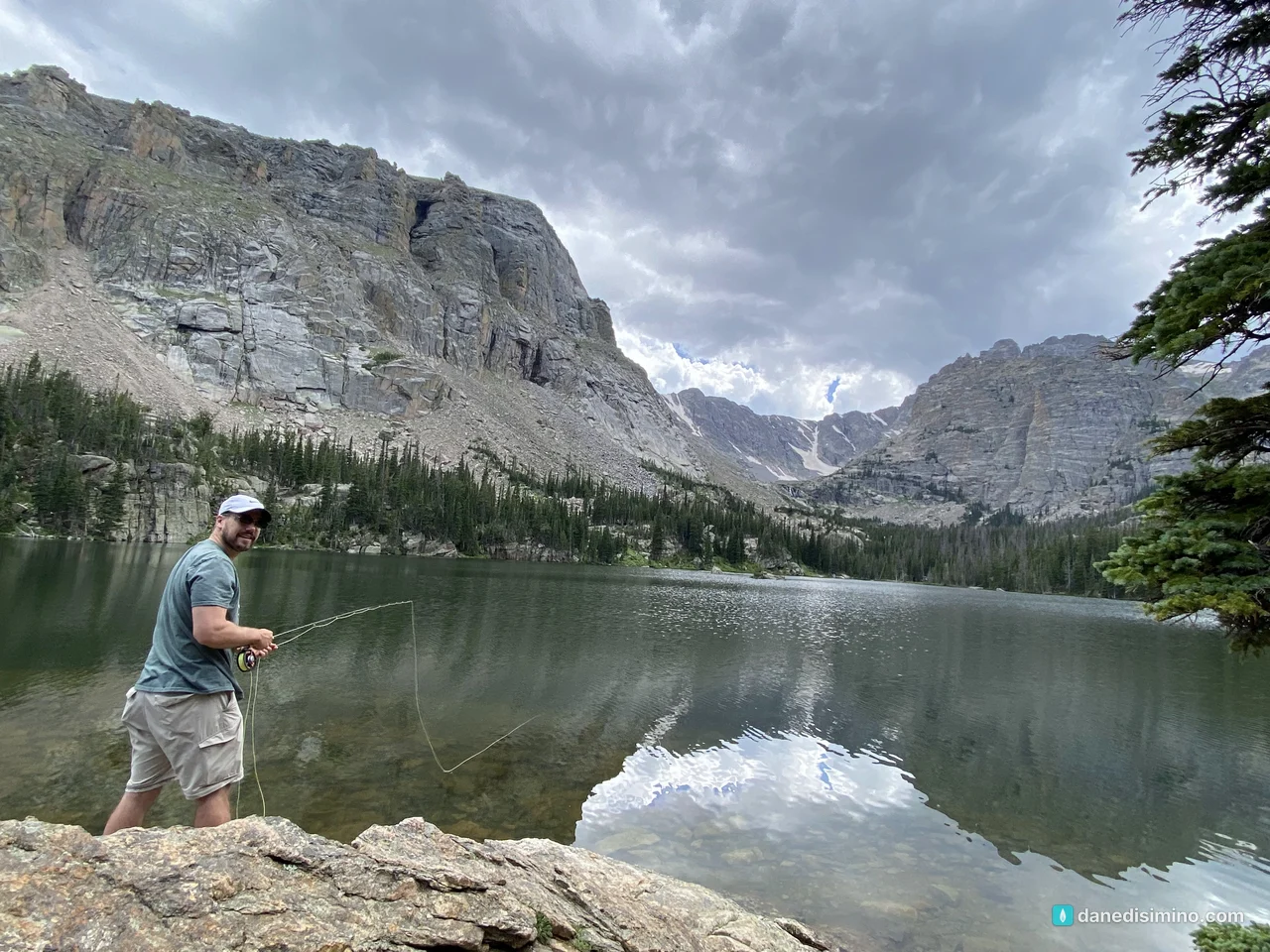
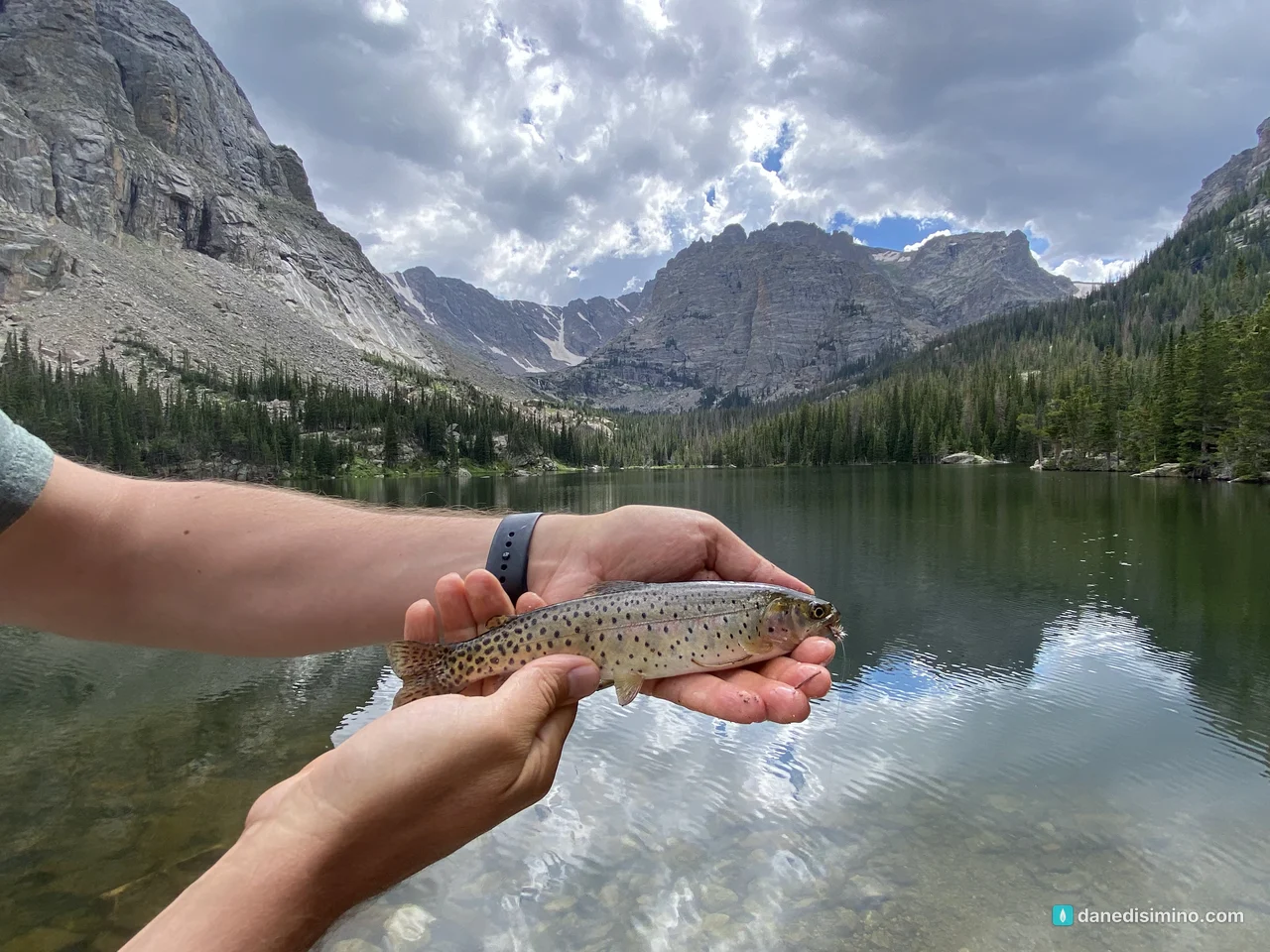
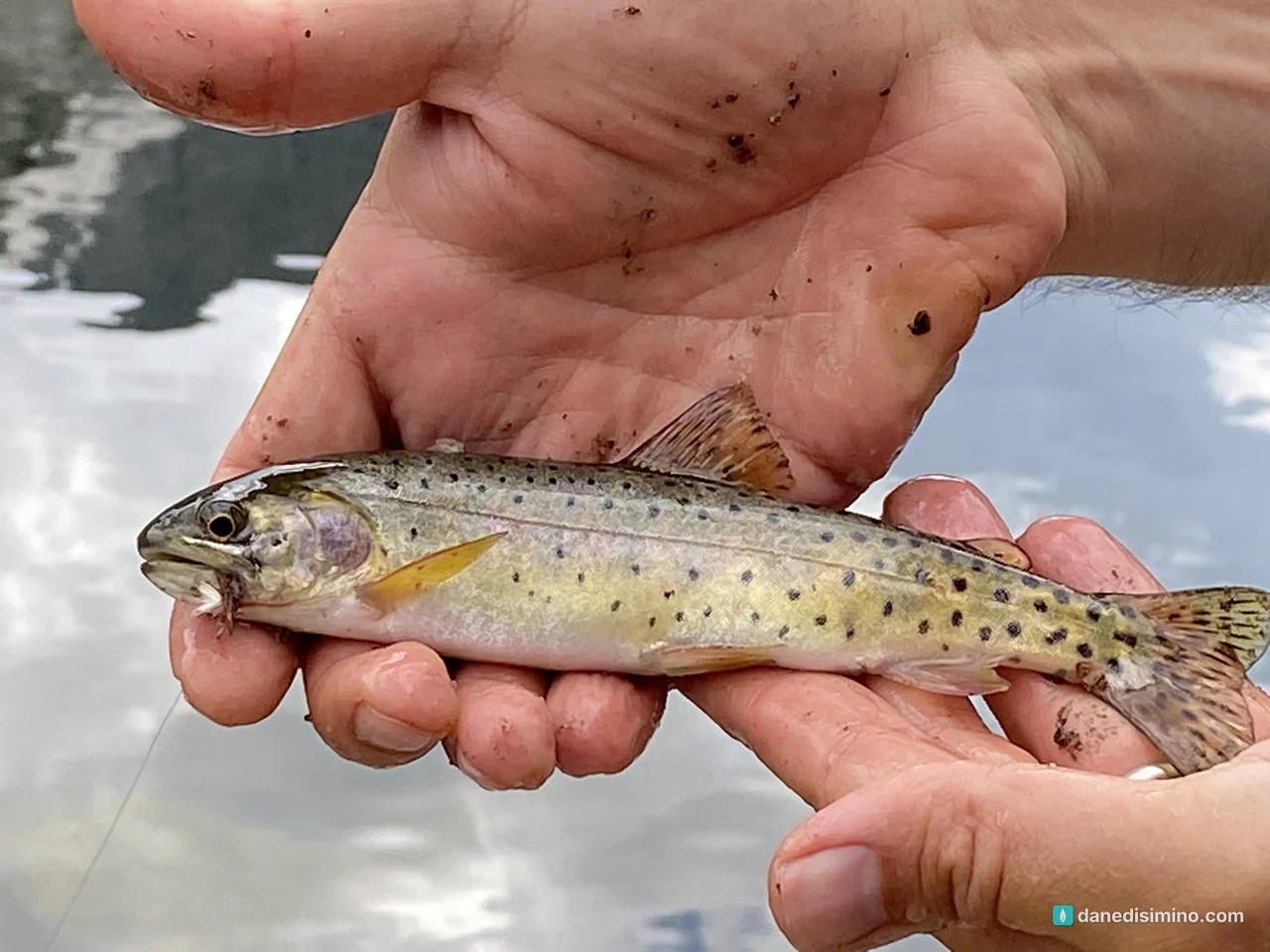
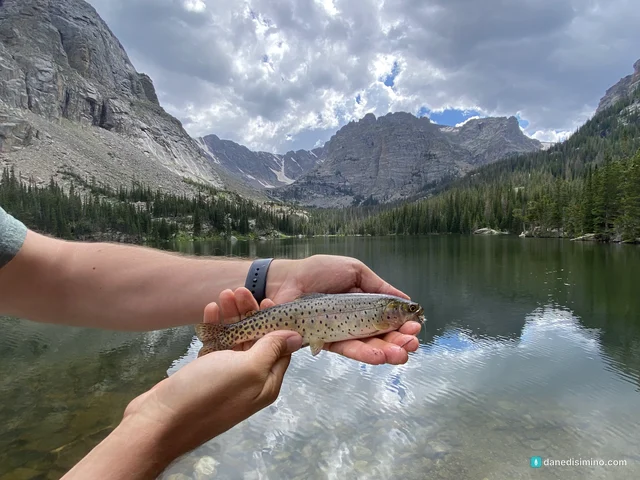
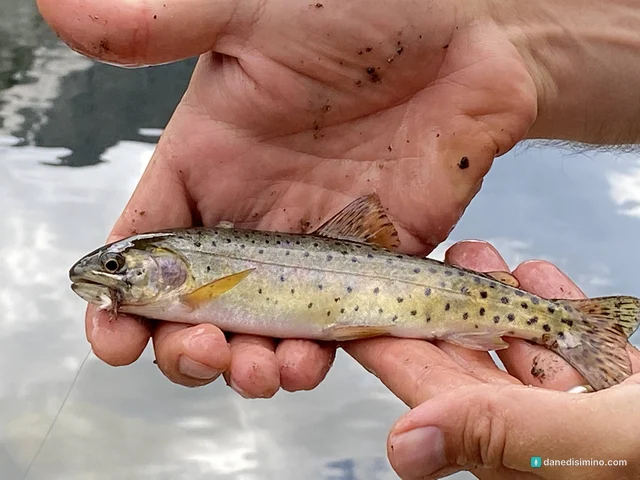
And then the fish. I'd picked up fly fishing the summer before, and at The Loch I caught my first greenback cutthroat trout, Colorado's state fish, on a dry fly, with that scenery behind it. It's still one of my top fly fishing moments in any national park.
The smoke: October 2020
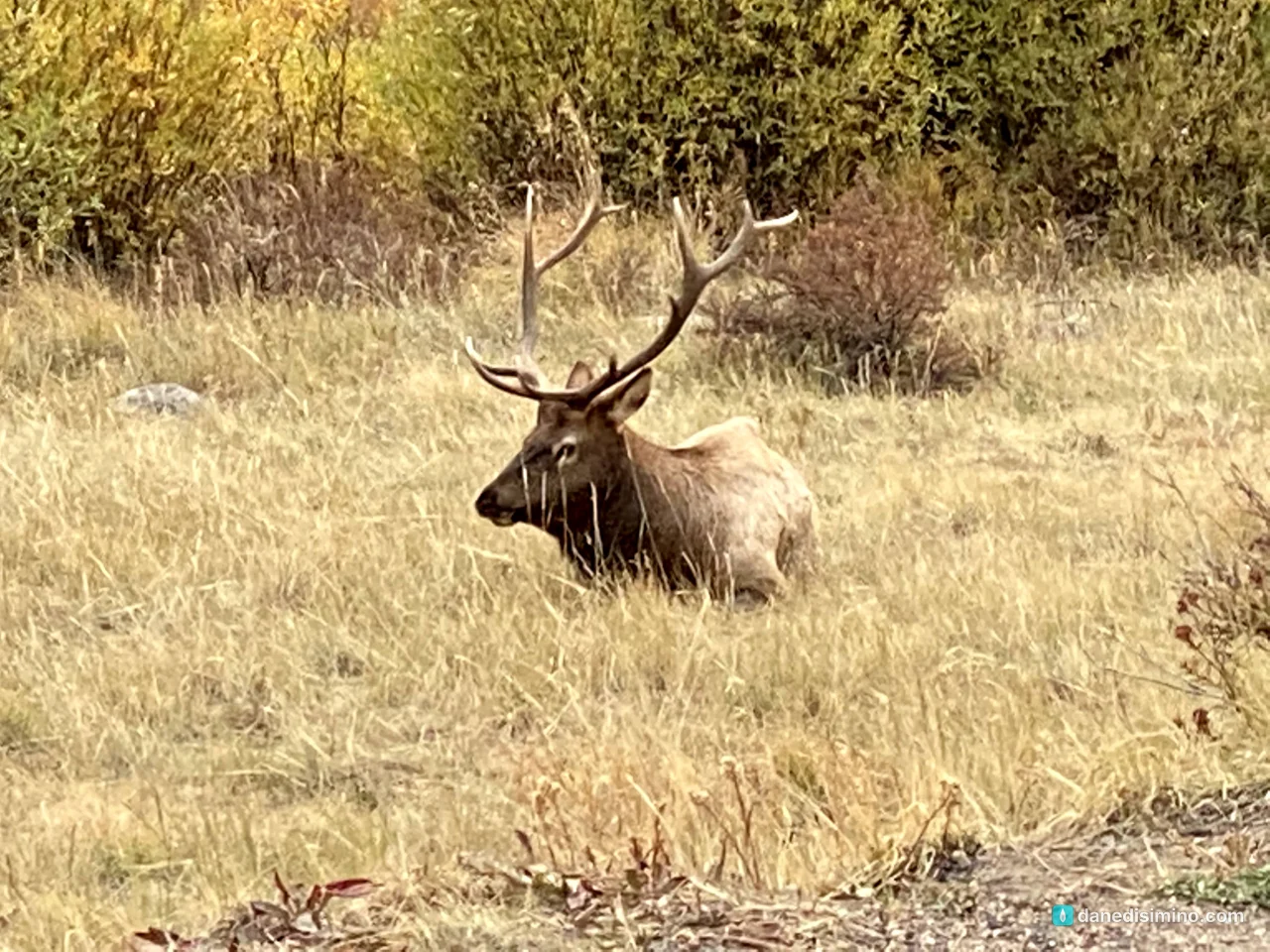
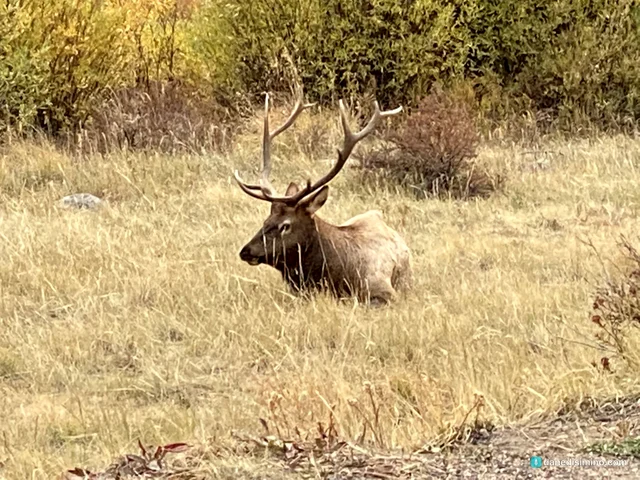
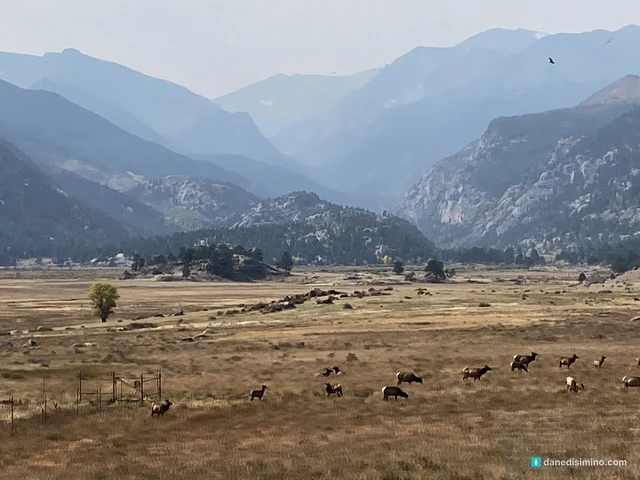
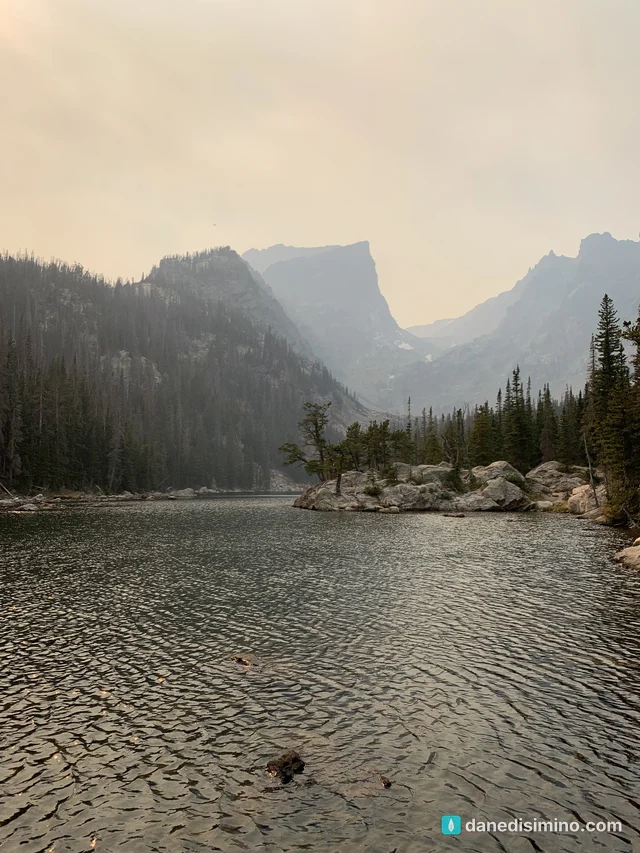
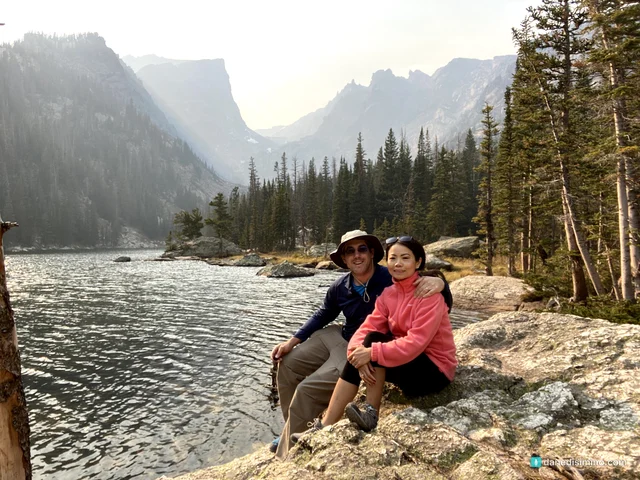
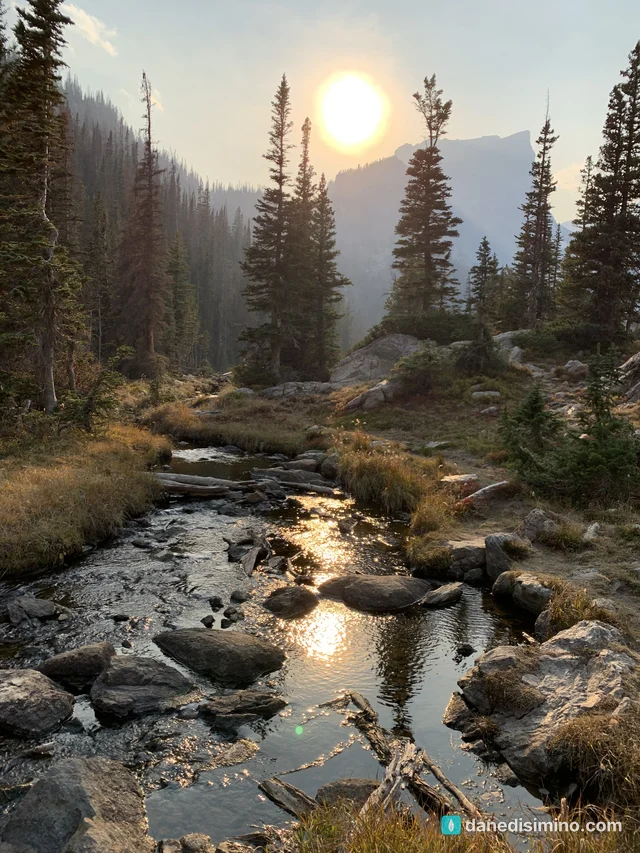
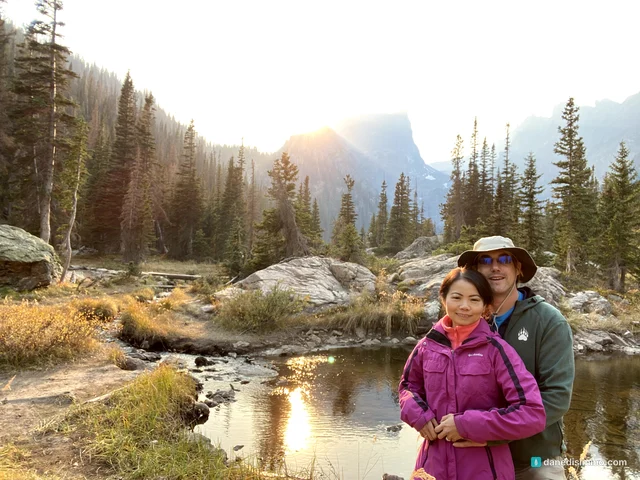
Our strangest visit, and in some ways the most beautiful. We came in early October 2020, when the Cameron Peak Fire, the largest in Colorado history, was burning near the park, with the air full of smoke. It was eerie: the sun a dim orange disk, the valleys in haze, and the elk rut in full voice. Hearing bulls bugle across a golden meadow under that sun felt like a dream with the color turned wrong.
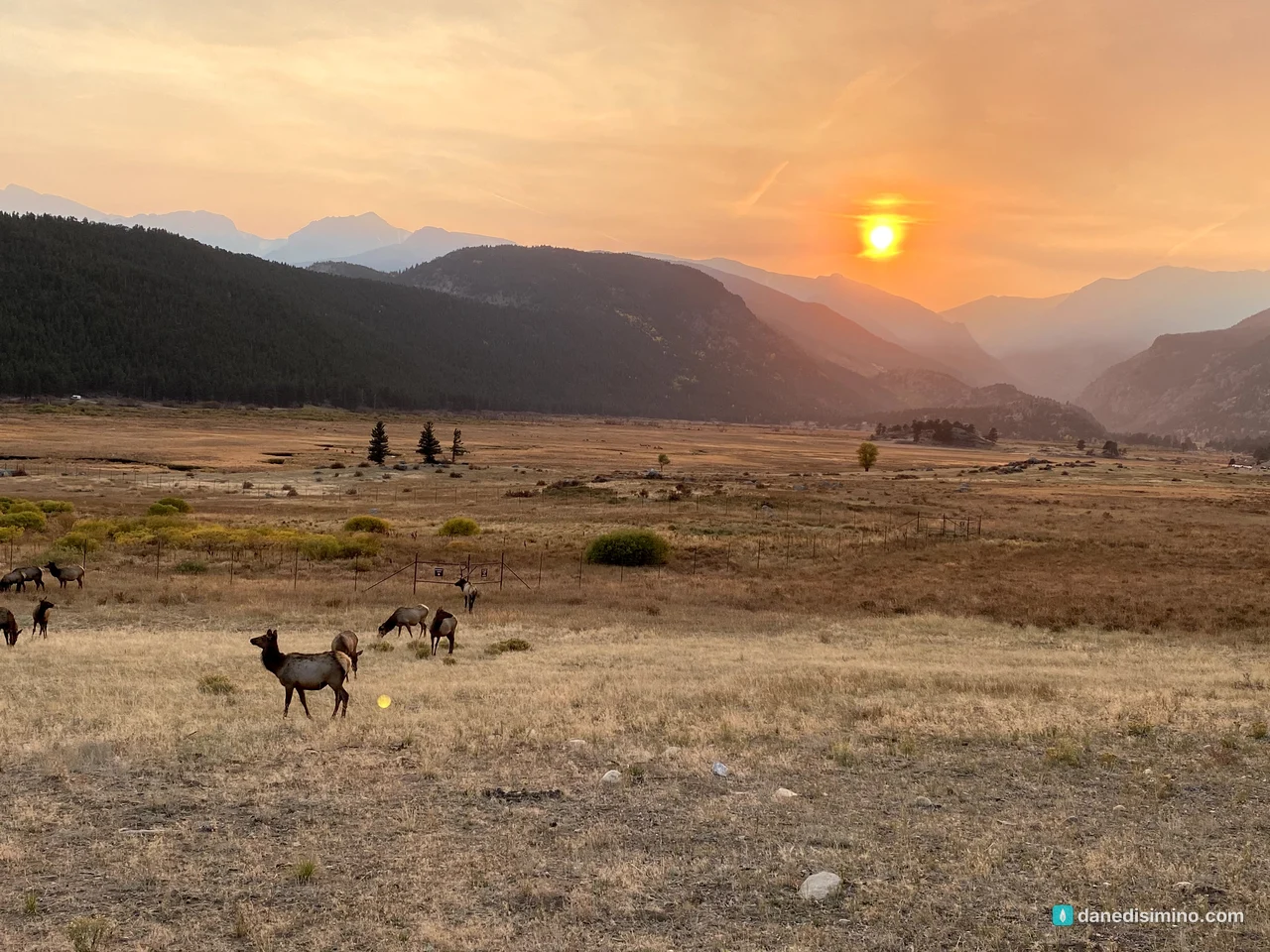
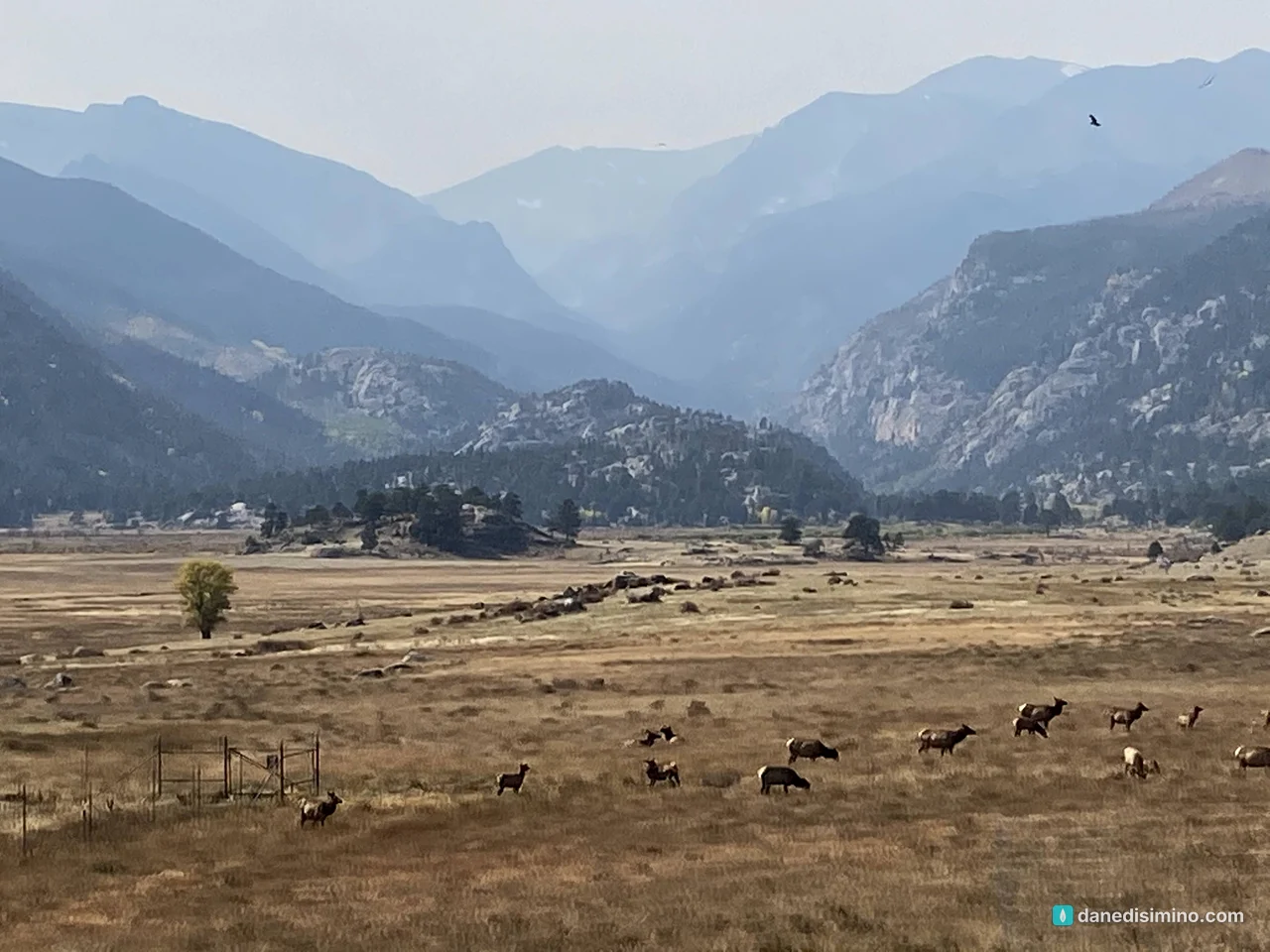
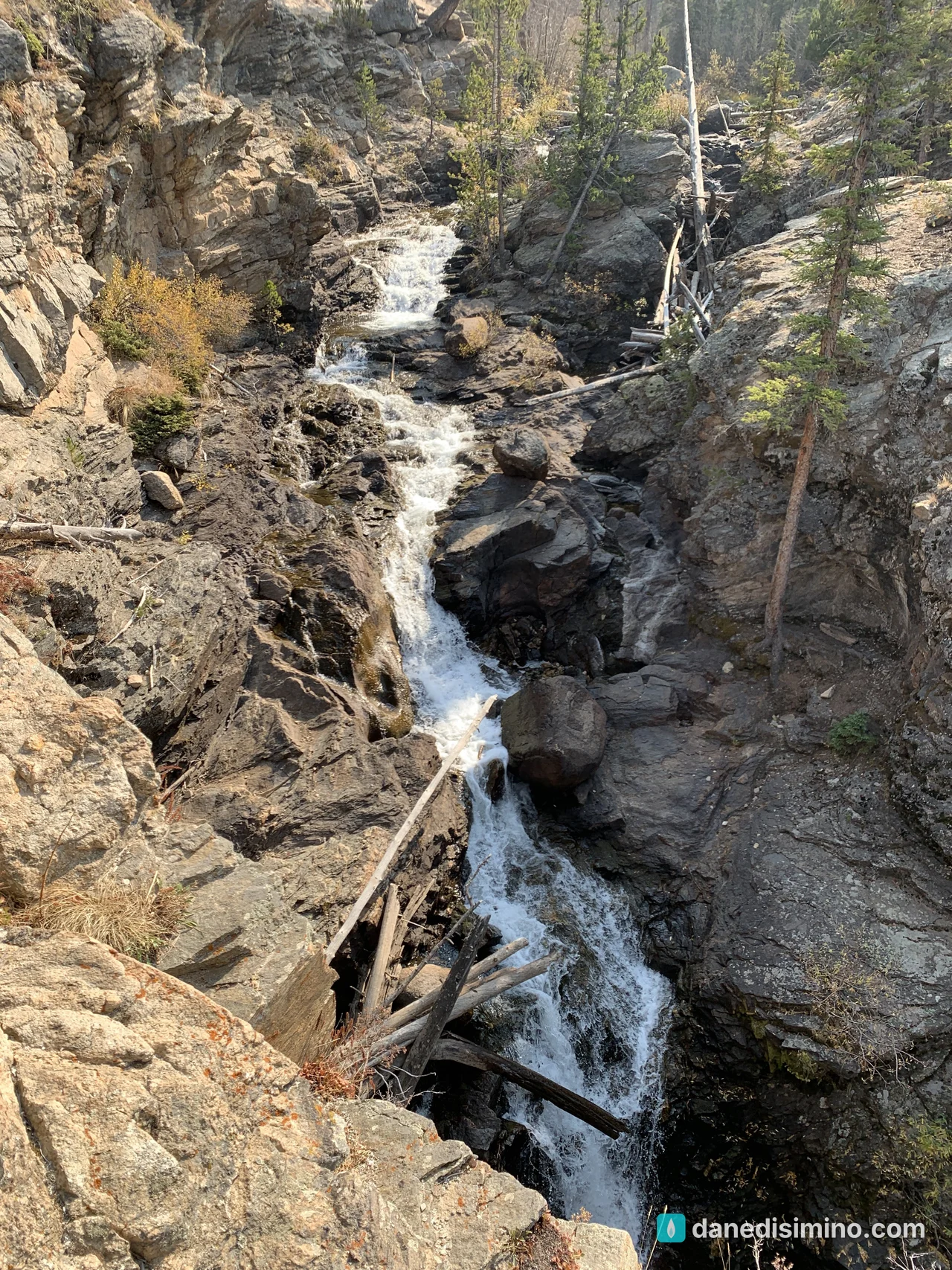
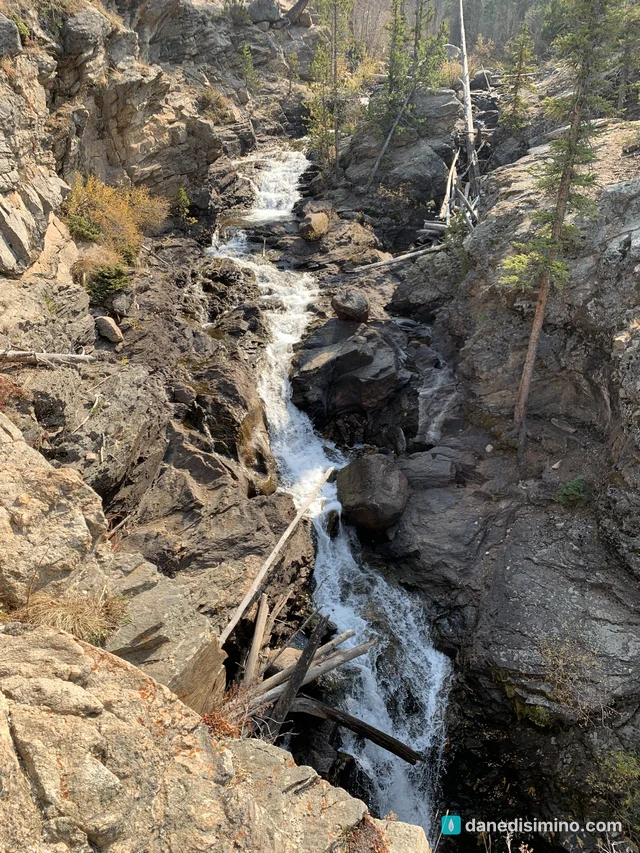
We hiked to Dream Lake through the smoke, walked to Adams Falls near Grand Lake, took a boat out on Grand Lake, and watched the smoky sun go down over town.
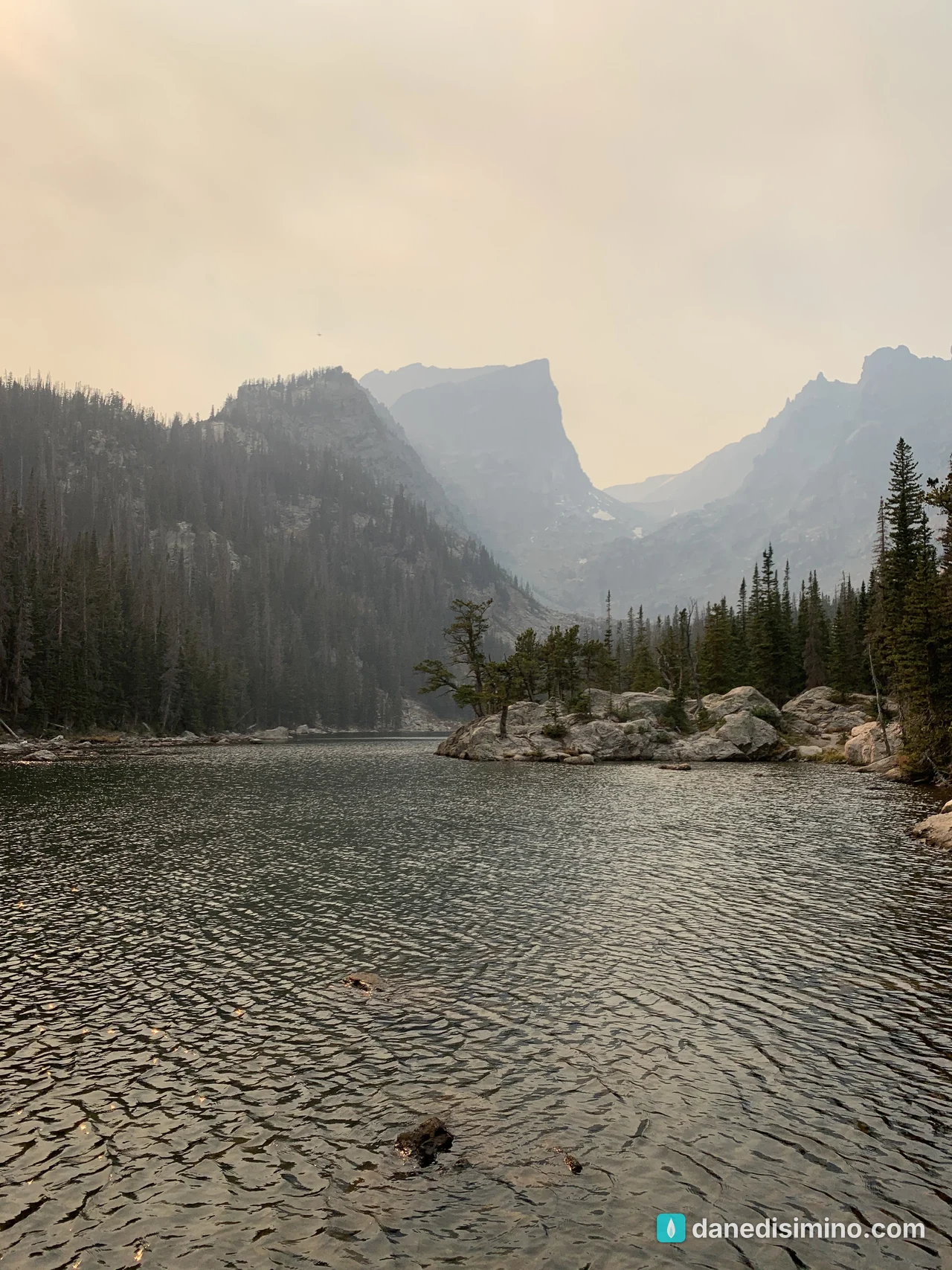
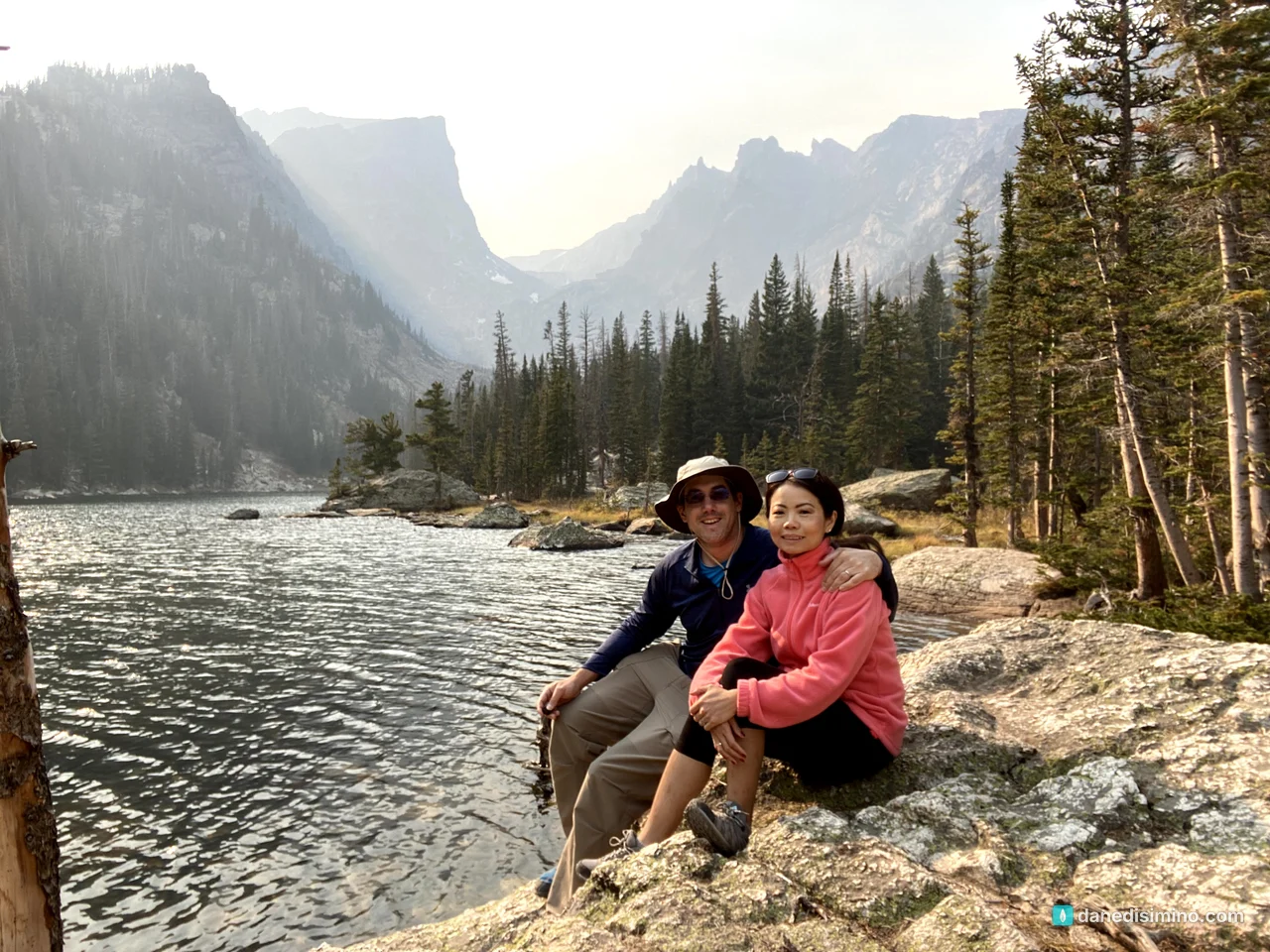
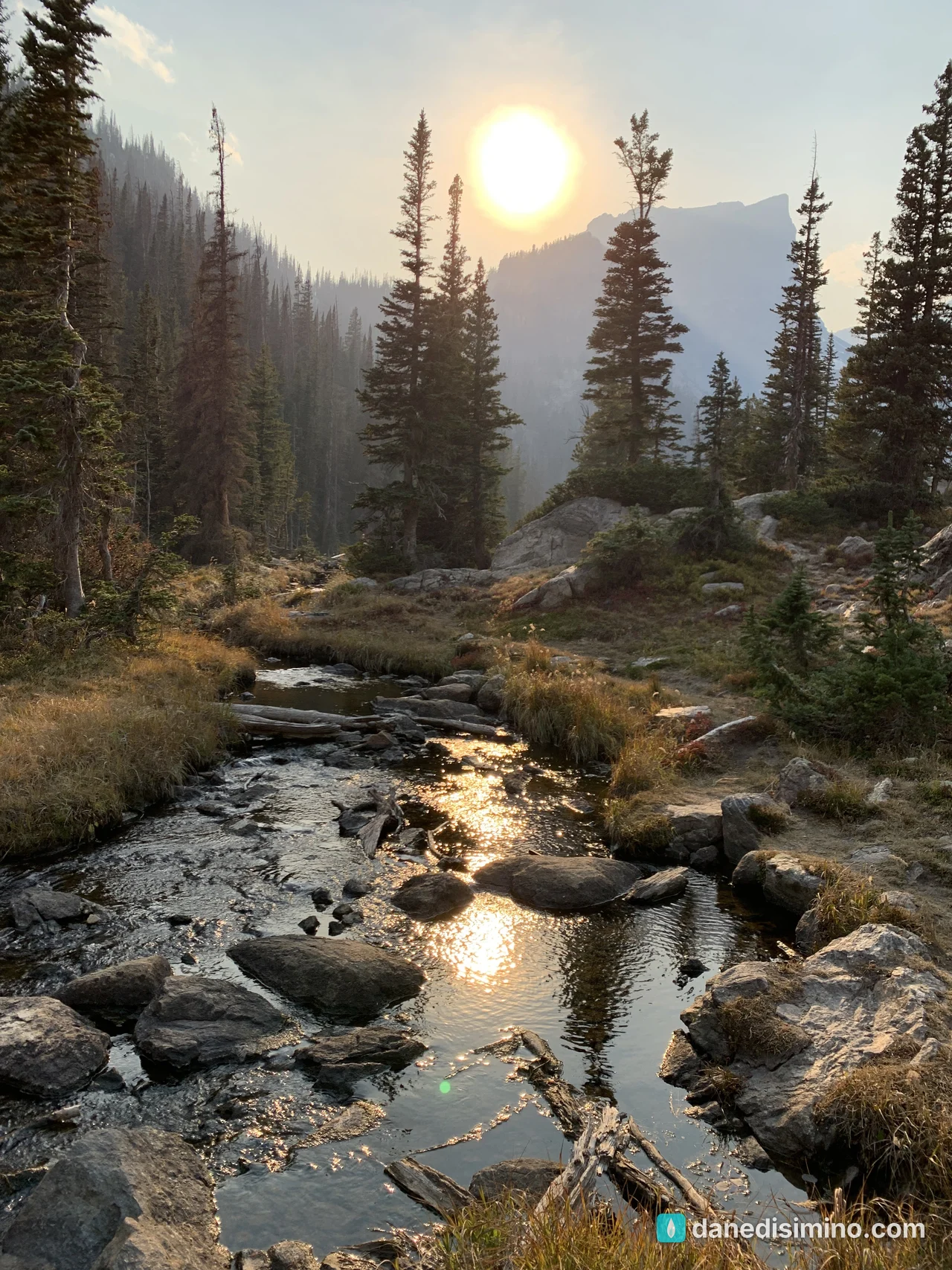
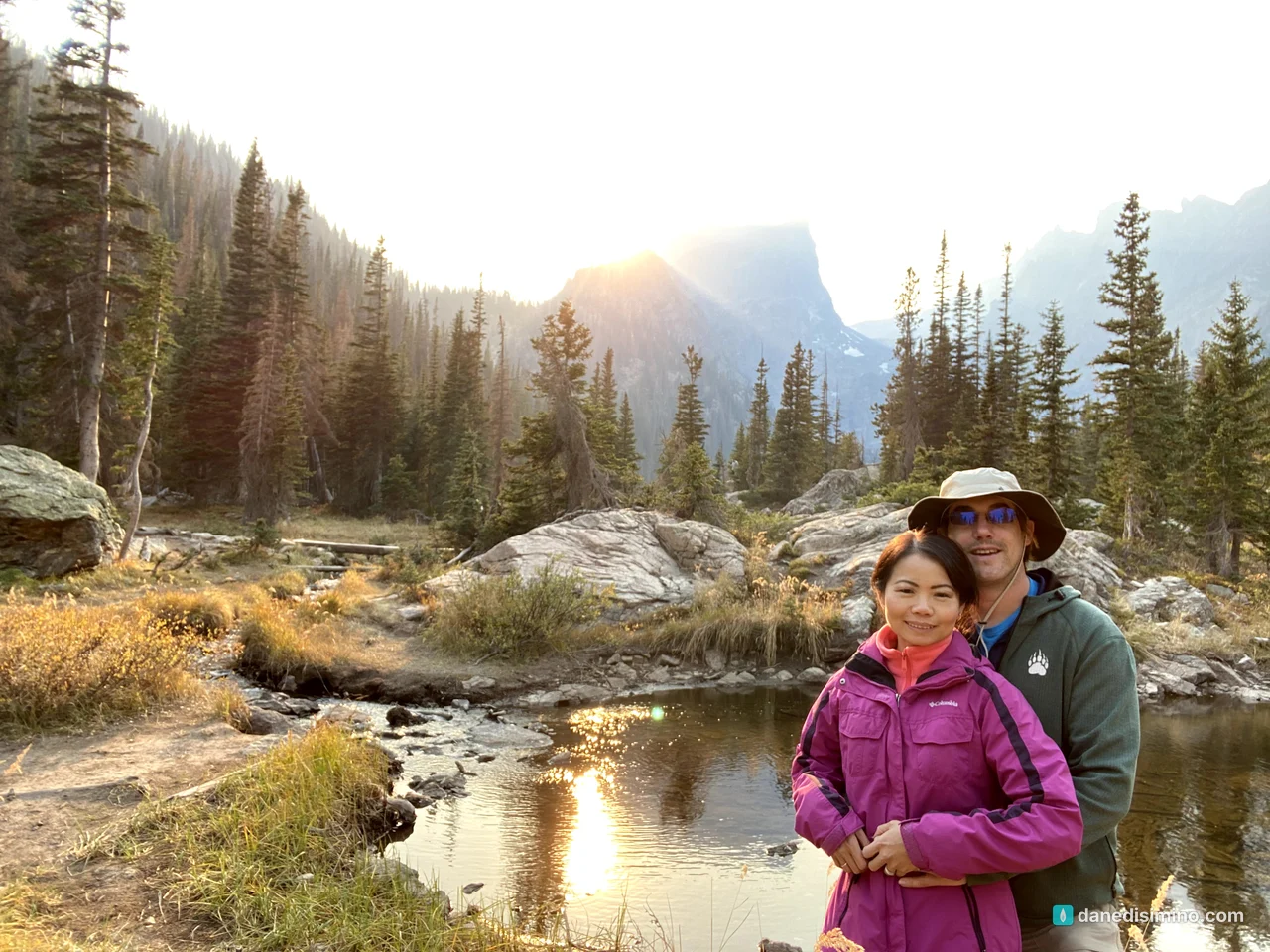
Three weeks after we left, the East Troublesome Fire ran 18 miles in a day, forced the evacuation of Grand Lake, jumped the Continental Divide, and burned nearly 30,000 acres inside the park. Driving the west side today, you still pass the burn scars. The town we'd just watched the sunset over came within a breath of being lost.
The campout: May 2021
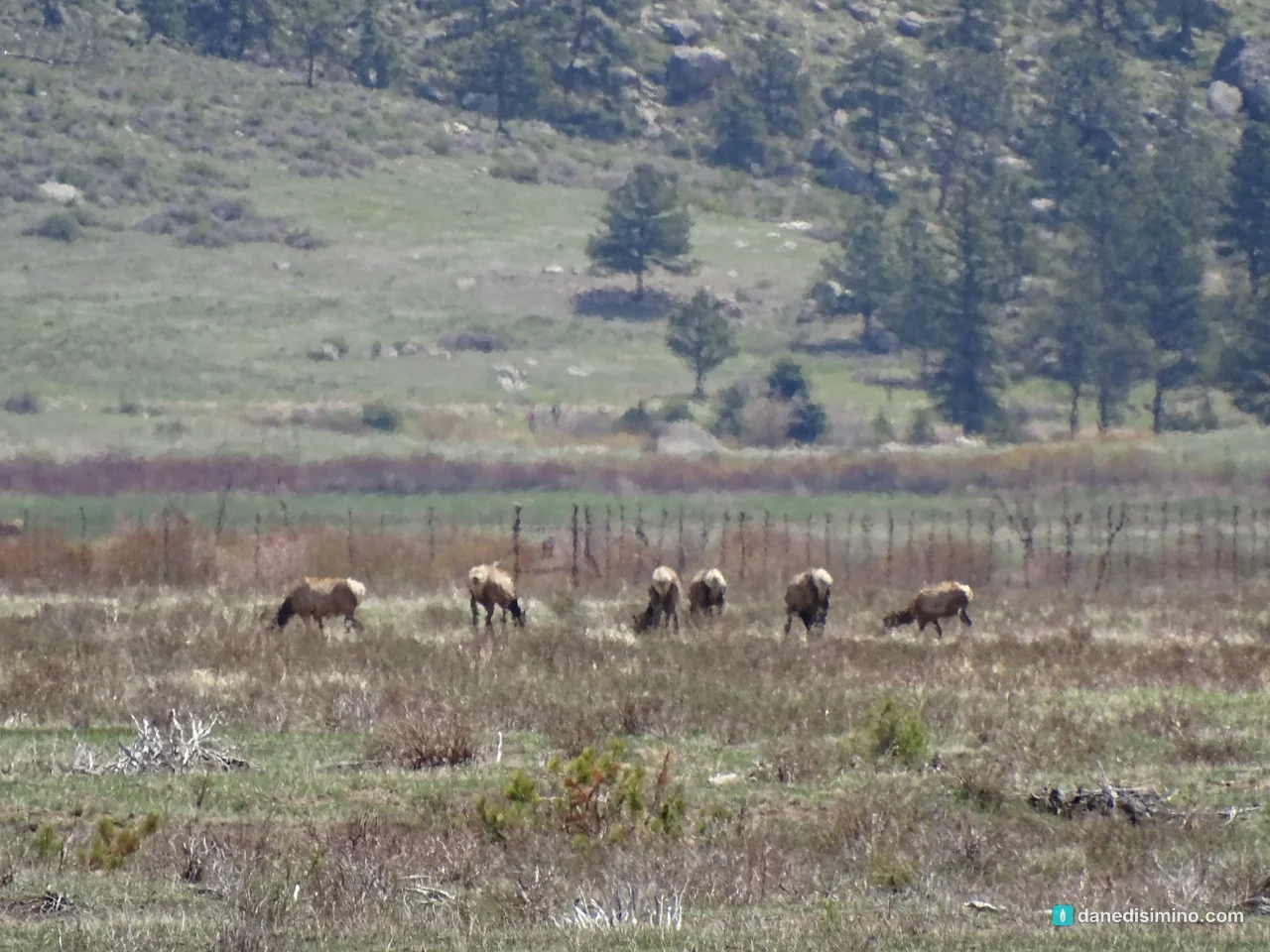
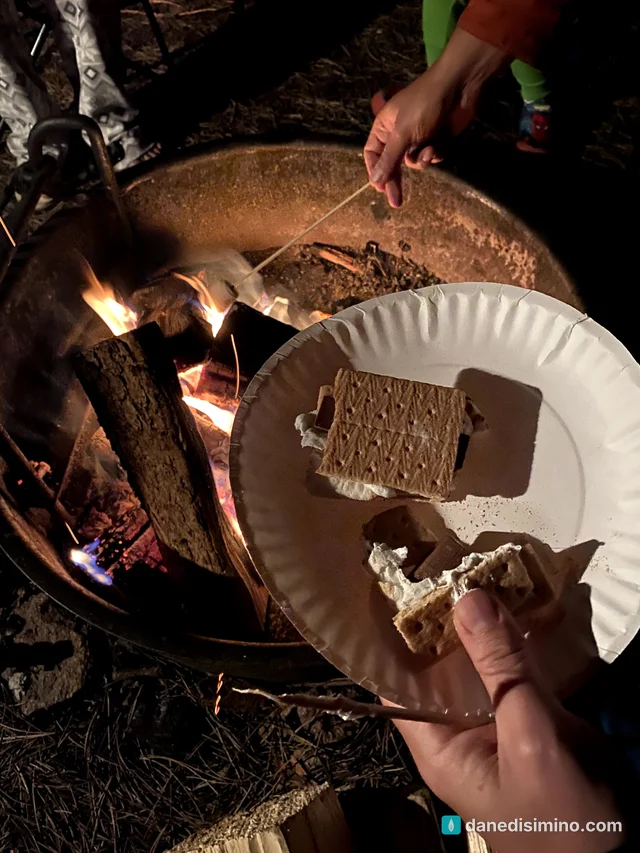
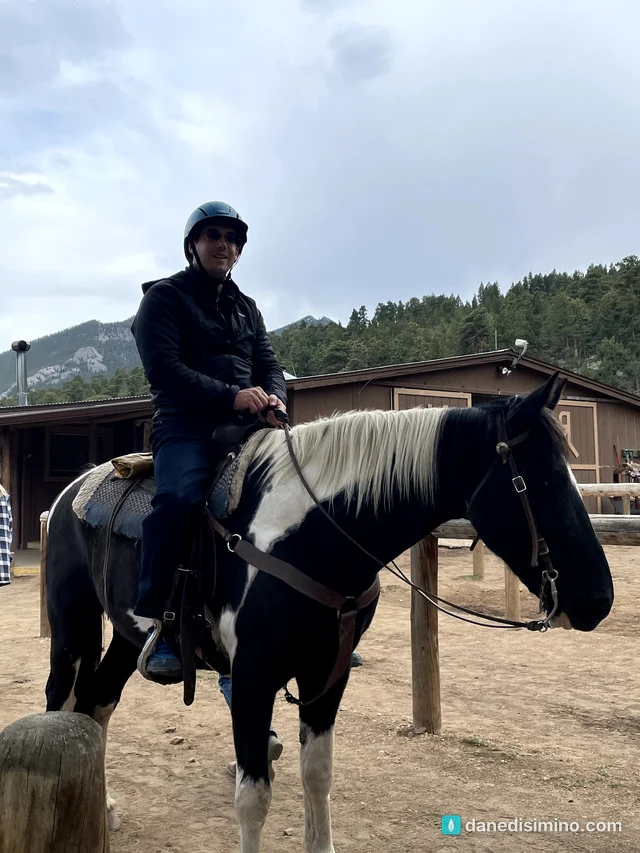
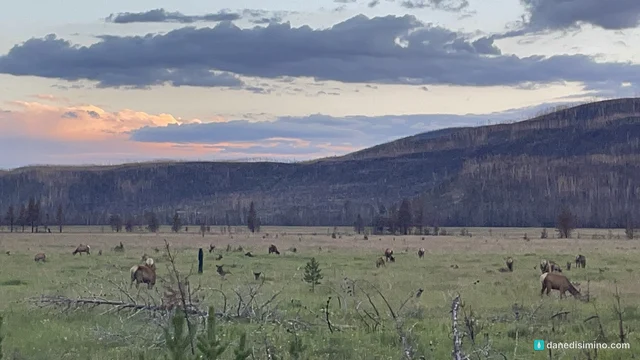
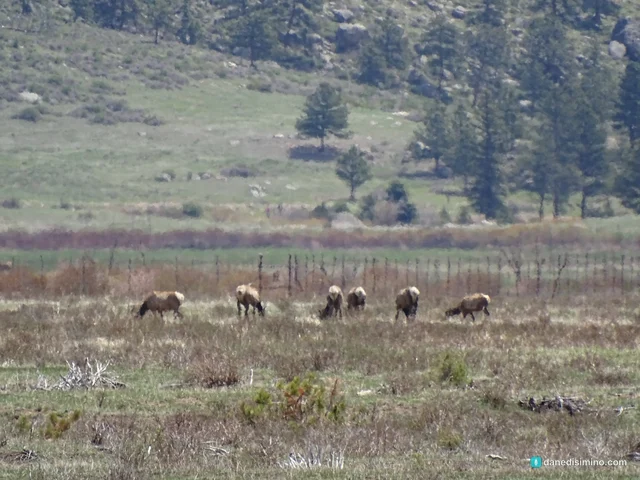
Friends invited us camping in the park in late May 2021: COVID season, when any excuse to be outdoors was a gift. It was the only park trip we've ever done with friends, and it changed the rhythm of it: s'mores after dark, a morning on horseback, and elk grazing through the meadow at dusk with the burn scar on the hills behind them.
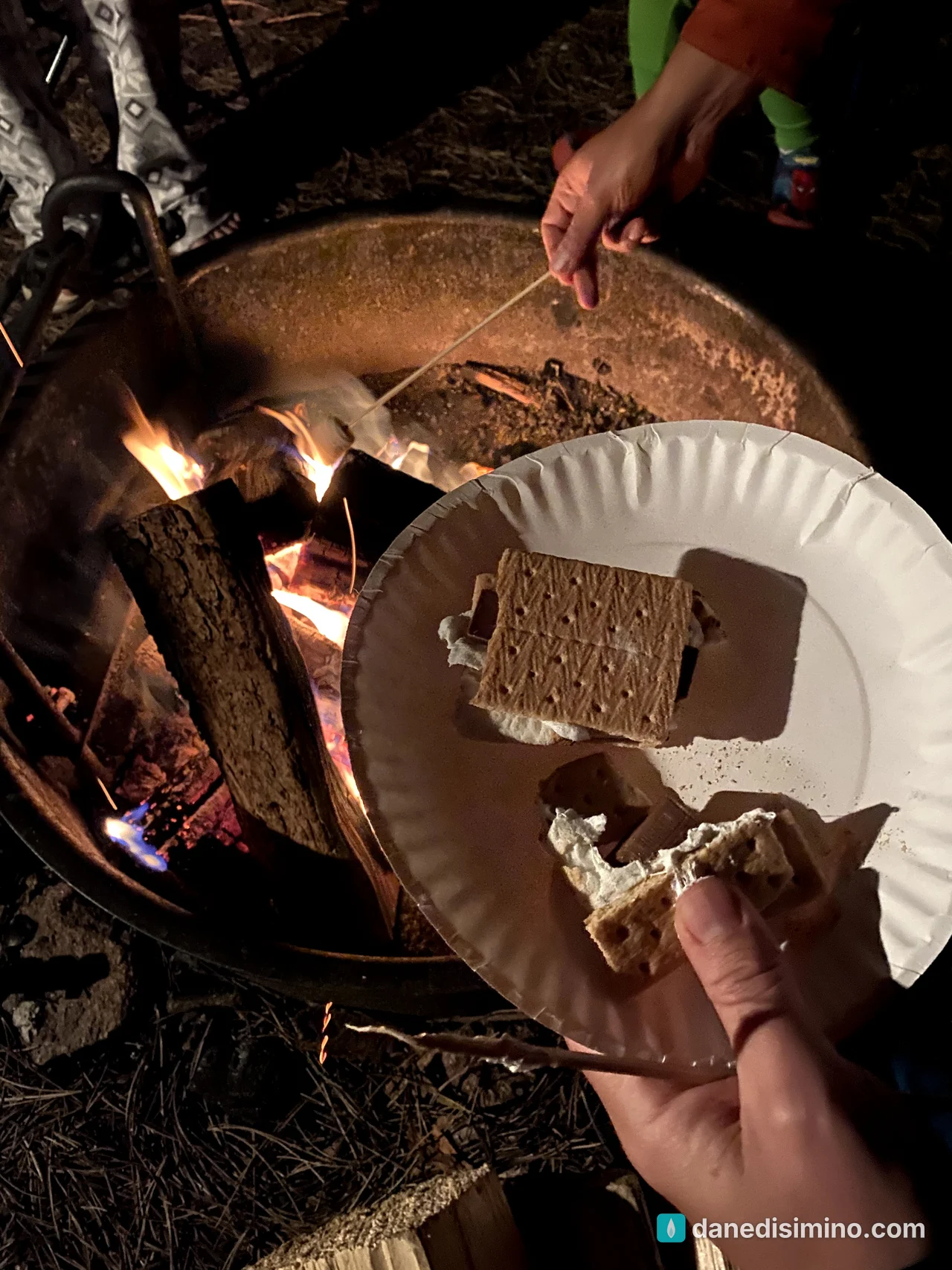
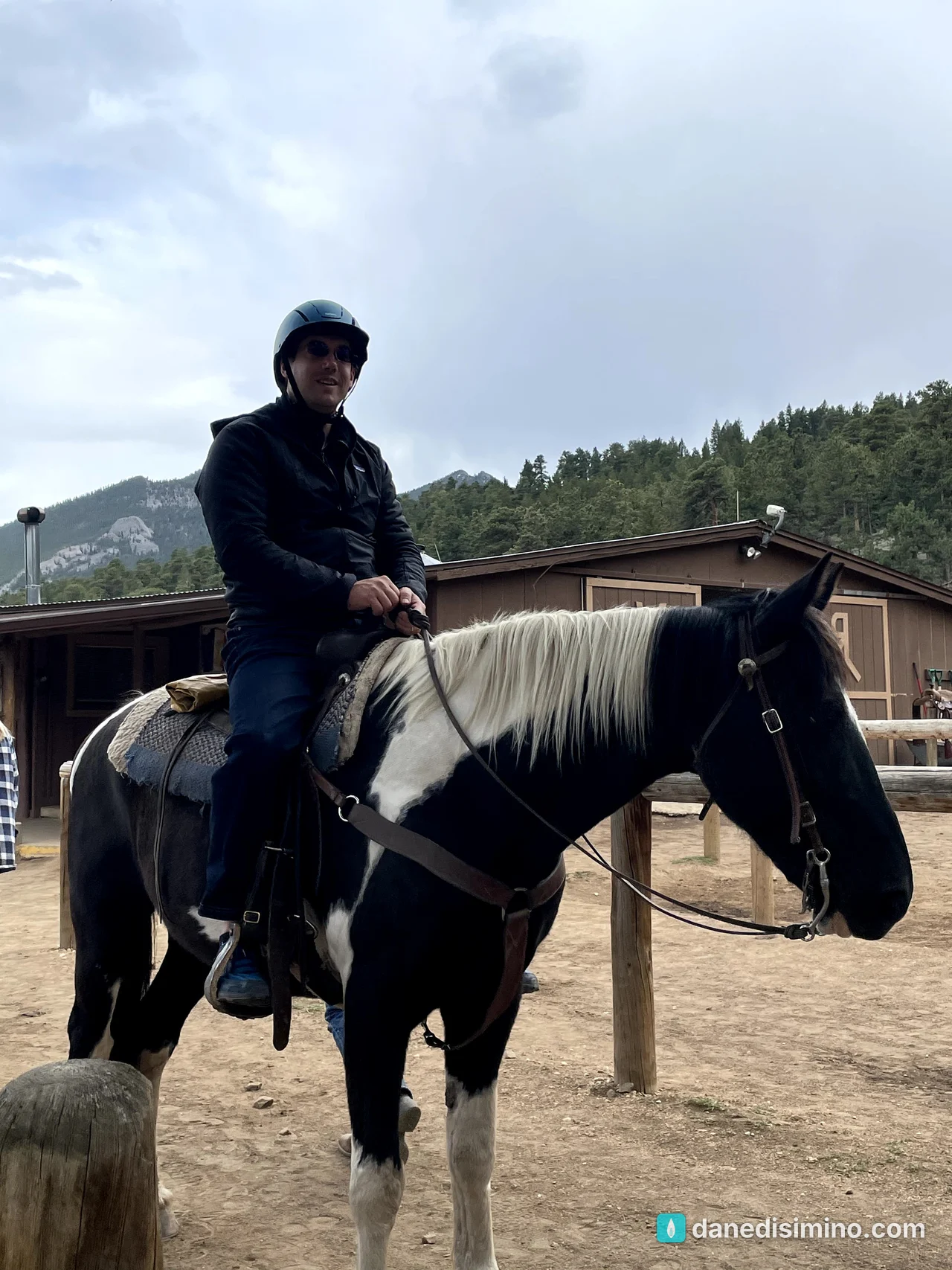
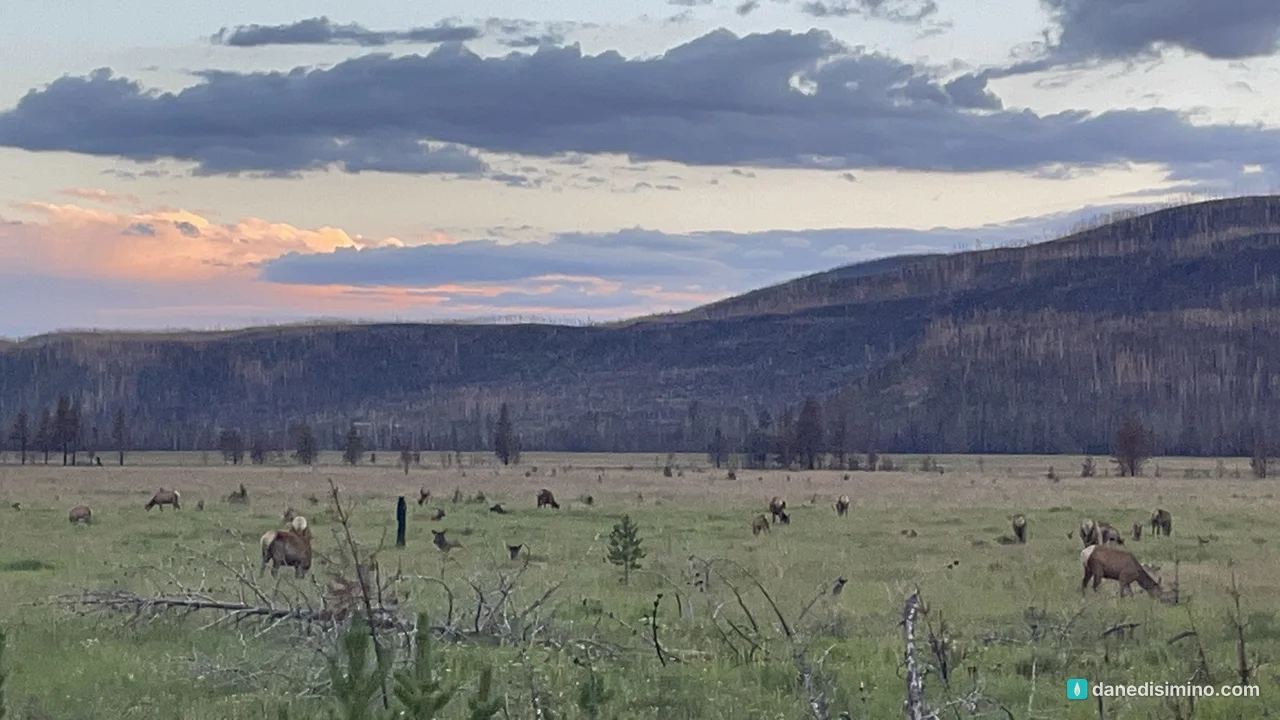
By then we'd camped at Black Canyon and spent five days in a tent at Yellowstone, so Rocky's campgrounds felt familiar rather than wild. That's not a knock. It's what a home park is: the place where the extraordinary becomes comfortable. The park's campgrounds book on Recreation.gov and fill fast for summer weekends; reserve as early as you can.
The anniversary: October 2026
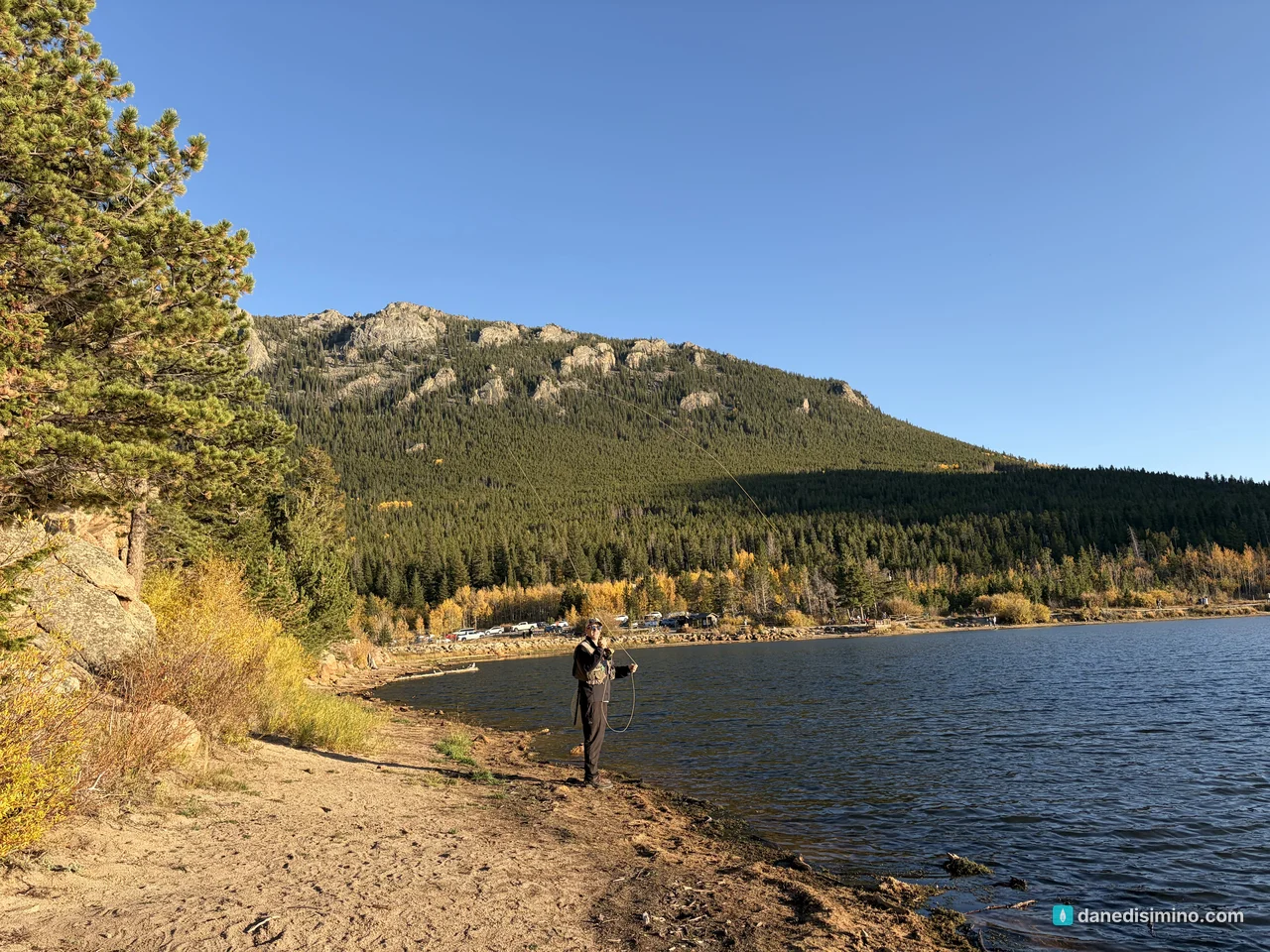
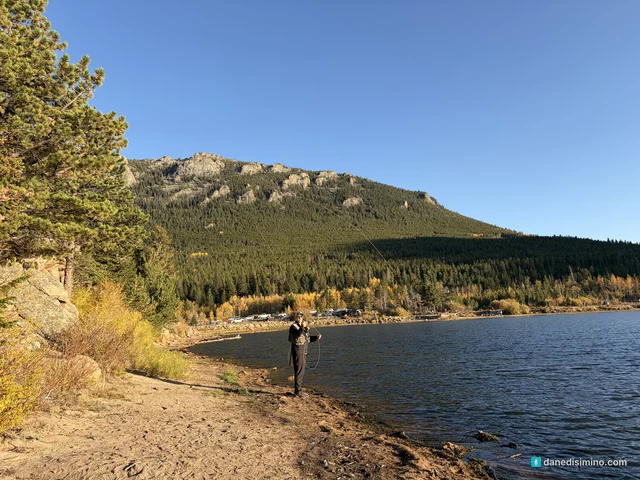
Last month we drove up from Colorado Springs for our anniversary. It's still a great day trip, even from two hours farther south. We ended it at Lily Lake, right on Highway 7 at the park's southeast corner, casting as the sun dropped behind the mountains. The fishing was slow. It didn't matter.
East side or west side?
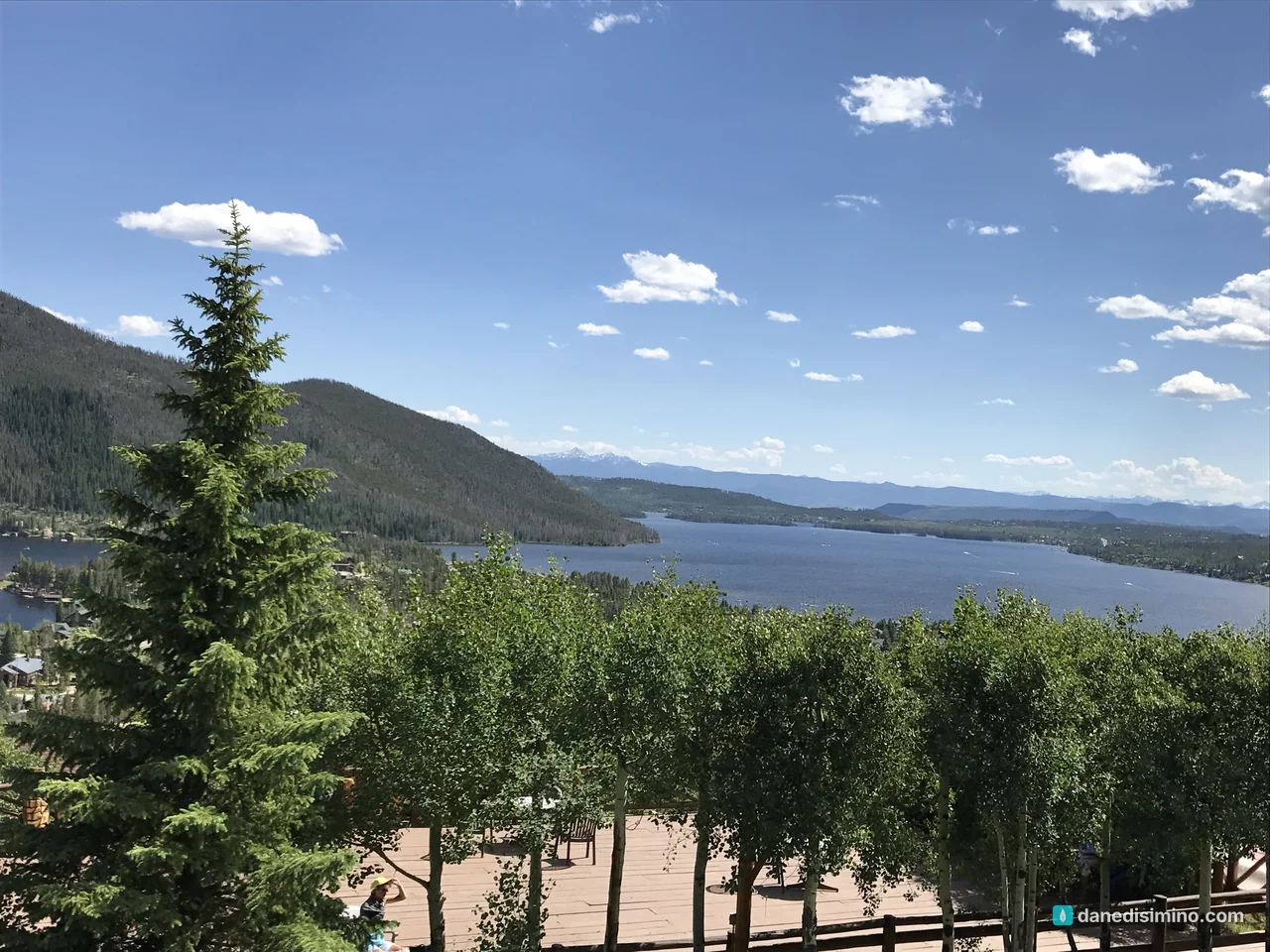
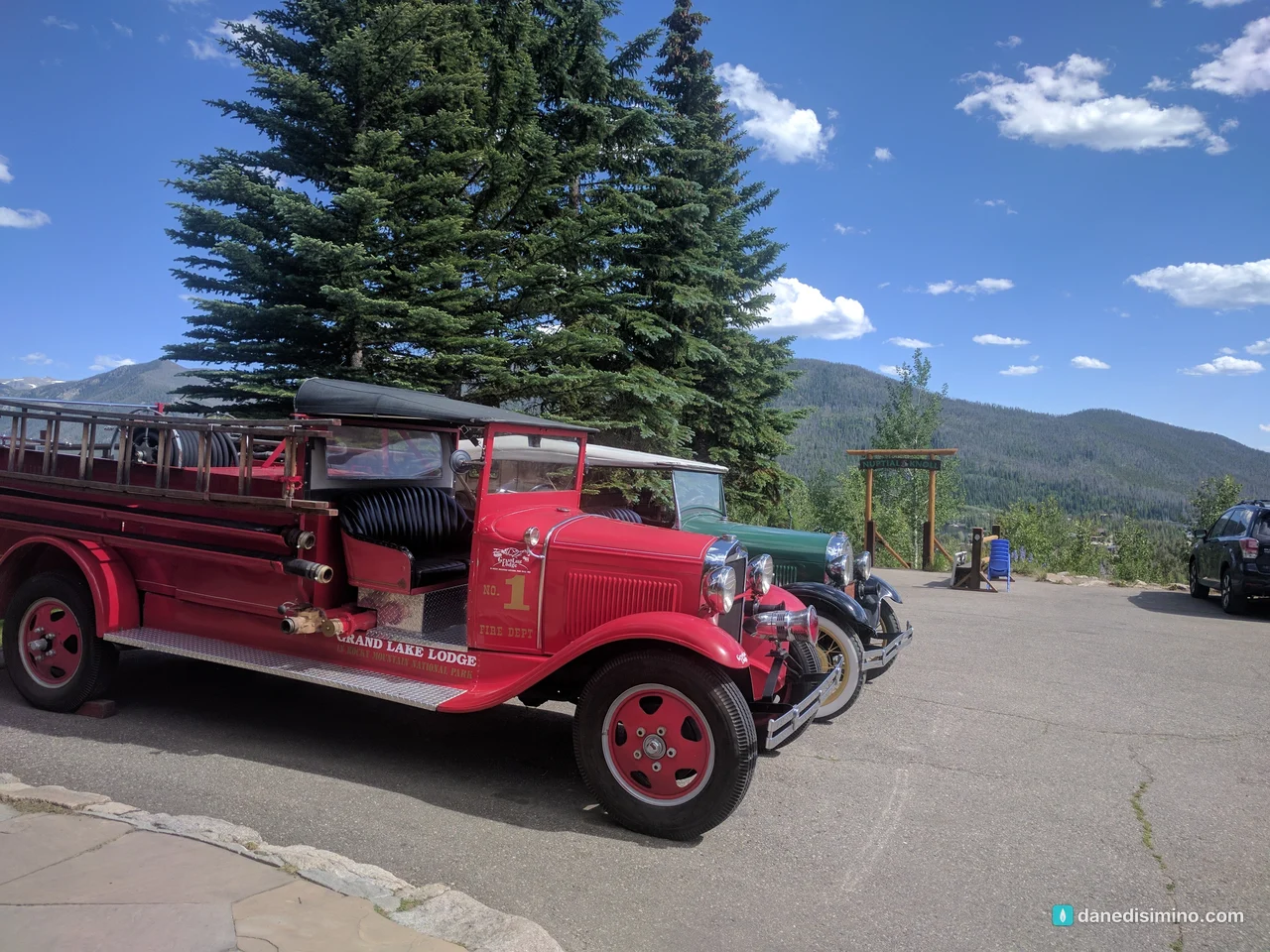
Go west. Estes Park, the east gateway, has the name recognition and the crowds to match. We drove through last month and I couldn't get out fast enough. Grand Lake, the west gateway, is everything Estes isn't: quieter, slower, sitting on Colorado's largest natural lake, with the historic Grand Lake Lodge above it. There are campgrounds just inside the west entrance, boat rentals on the lake, and the easy walk to Adams Falls from town.
The honest trade-off: the east side owns the famous lake hikes (Bear Lake, Dream, Emerald, The Loch, Sky Pond) and Moraine Park's elk meadows. If the hikes are the point, stay east or come over the top. If the evenings are the point, stay west.
If you have one day
Get a Bear Lake corridor timed-entry permit and enter early through Estes Park.
Hike to a lake. Dream and Emerald for the classic, The Loch for the one I'd pick.
Drive Trail Ridge Road over the top in the afternoon, stopping at the overlooks and the Alpine Visitor Center.
Finish in Grand Lake: dinner, the lake at sunset, and the long quiet drive home.
What lives here
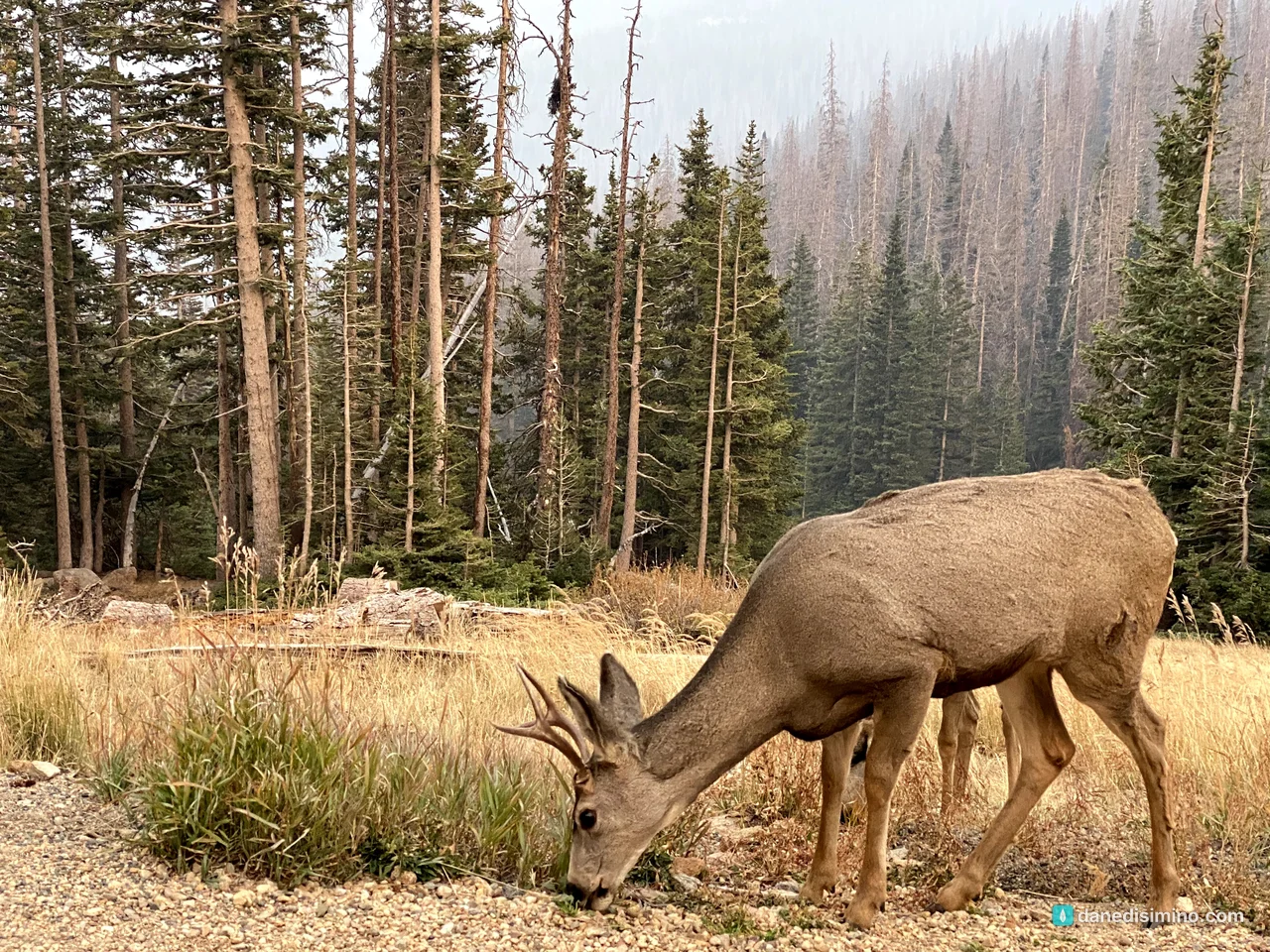
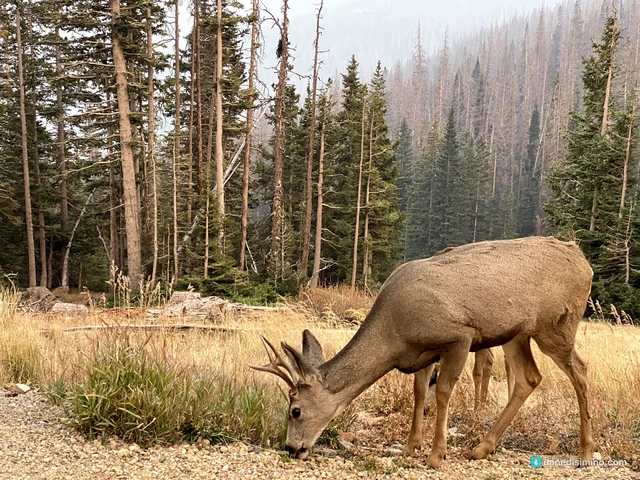
Elk are the park's signature, especially in the fall rut, when the meadows on both sides fill with harems and the bugling echoes until dark. We've had mule deer graze past us, chipmunks and golden-mantled ground squirrels audit every trail snack, and bighorn sheep are regulars at Sheep Lakes in early summer. Moose favor the west side's willows along the Kawuneeche Valley. Black bears live here too; store food properly when you camp.
Still on my list
Longs Peak. The park's only fourteener, 14,259 feet, climbing it via the Keyhole Route is the park's signature mountaineering day: 15 miles round trip, an alpine start, and real exposure above the Keyhole. It's been staring at me from every overlook for nine years. When I've climbed it, the full story goes here.
What Rocky Mountain taught me
Nine years, five visits, five different versions of us: day-trippers from Golden, smoke-season wanderers, COVID-season campers, a new fly fisherman, and now a couple marking an anniversary. The remarkable thing is that the park never moved. The same tundra, the same lakes, the same light on Longs Peak. We change a lot. The park stays the same, and measuring ourselves against something that doesn't move is one of the quiet gifts of going back.
"Lord, through all the generations you have been our home! Before the mountains were born, before you gave birth to the earth and the world, from beginning to end, you are God." (Psalm 90:1–2, NLT)
That's what a home park is for.
Questions?
Ask me anything about Rocky Mountain: timed entry, the lake hikes, fishing The Loch, or which side to stay on. I answer every question.
Photos
Sources
Pathlight
Park guides from the road. A printable trip sheet comes with them when one is ready.