

NATIONAL PARKS
Sequoia
A Field Guide
On this page
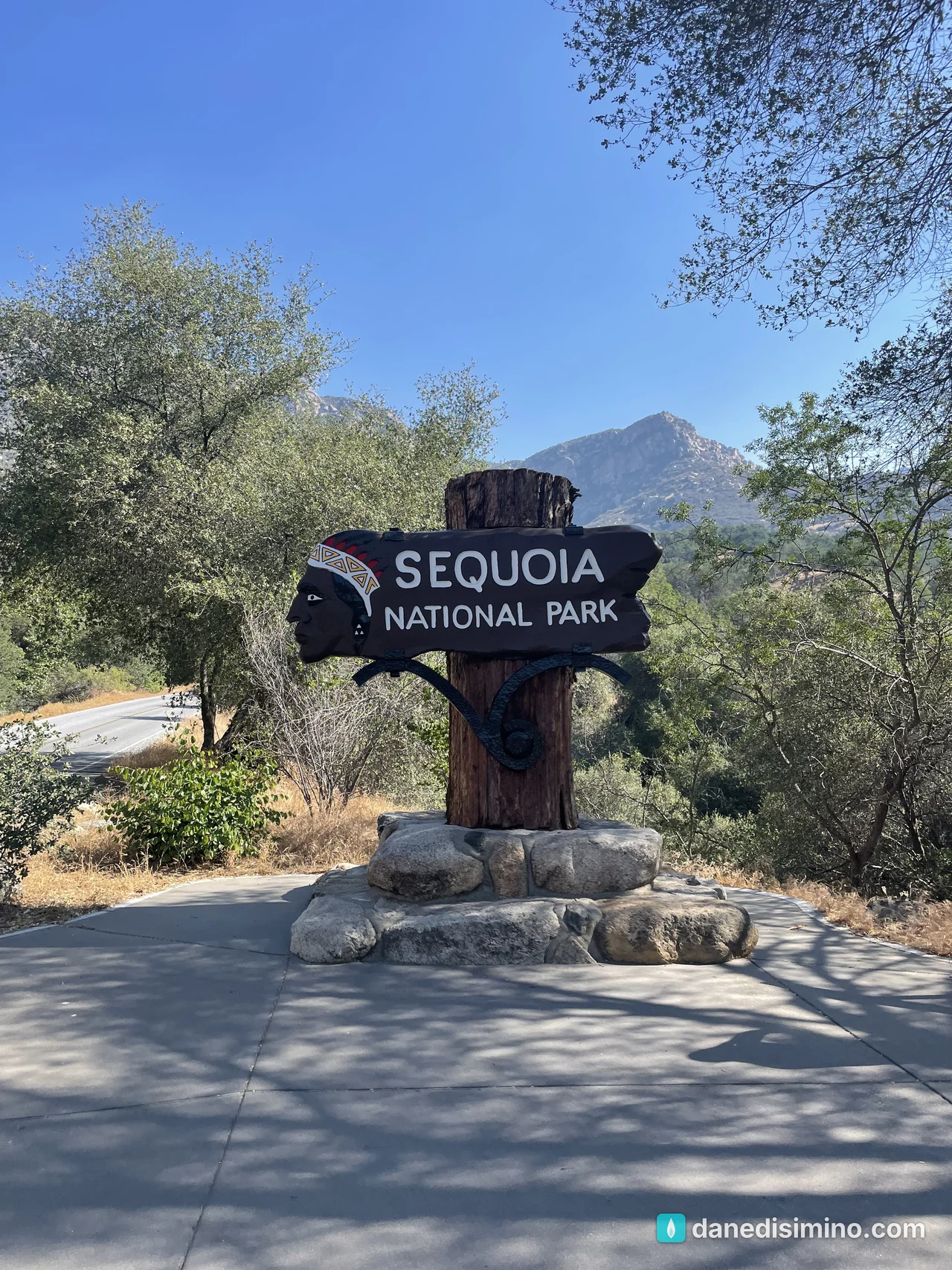
One day driving the Generals Highway from the south entrance to the north, built around the General Sherman Tree. Why the second national park in America was the first one created to protect a living thing, how fire makes a sequoia forest, and what a single day buys you here.
Version 1.0 · Updated Nov 24, 2026
Map
When to go
Average monthly visits, 2023–2025. Source: NPS visitor statistics. ● marks the months we visited.
| January | 41,979 |
|---|---|
| February | 36,578 |
| March | 49,131 |
| April | 74,003 |
| May | 116,630 |
| June | 124,280 |
| July | 200,053 |
| August | 188,801 |
| September | 146,041 |
| October | 115,590 |
| November | 73,244 |
| December | 56,496 |
We came off the back of a conference in San Francisco, pointed the car south, and drove until the valley heat gave way to foothills. The plan was a chain: Sequoia, then Kings Canyon, then Yosemite, then Death Valley, finishing in Las Vegas. Sequoia was first, and it got exactly one day.
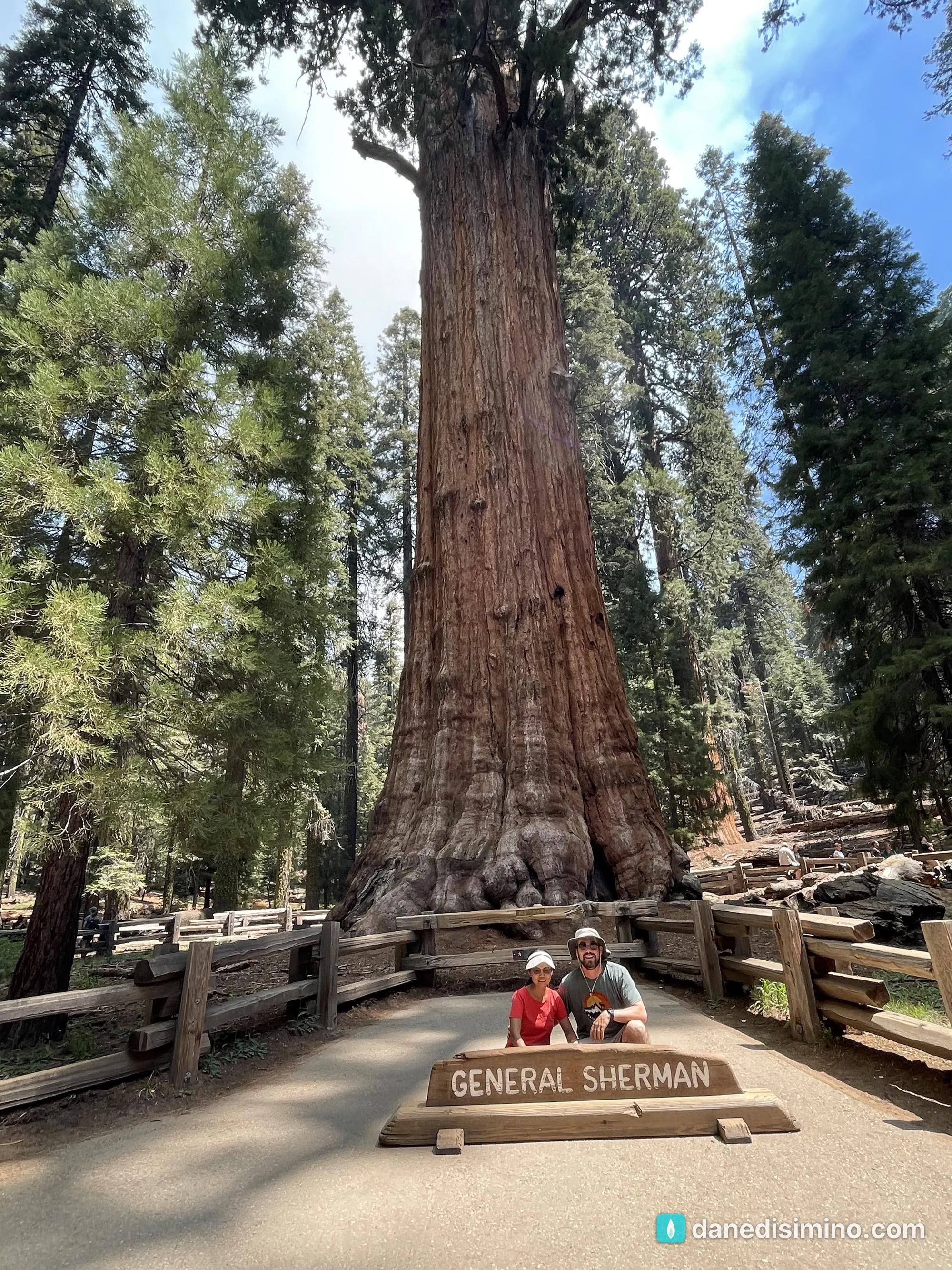
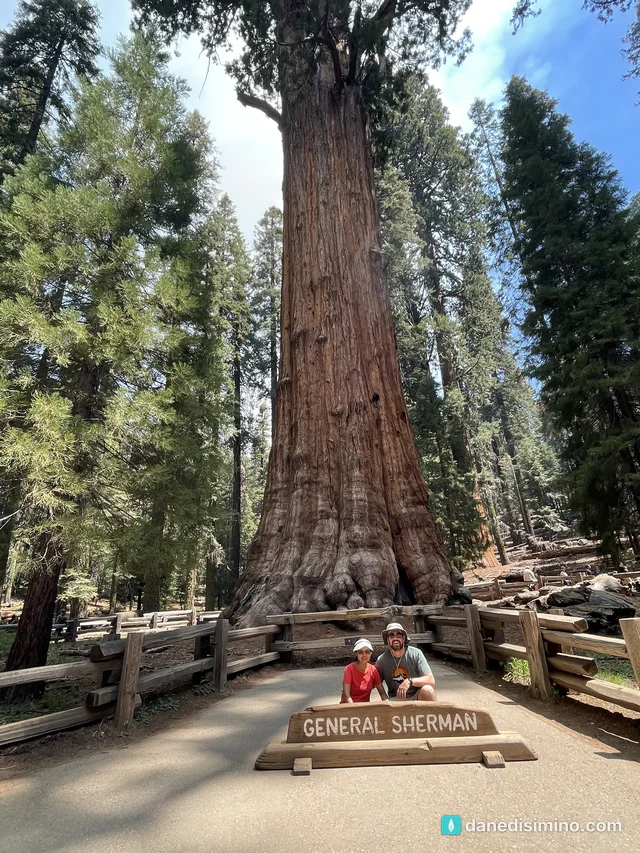
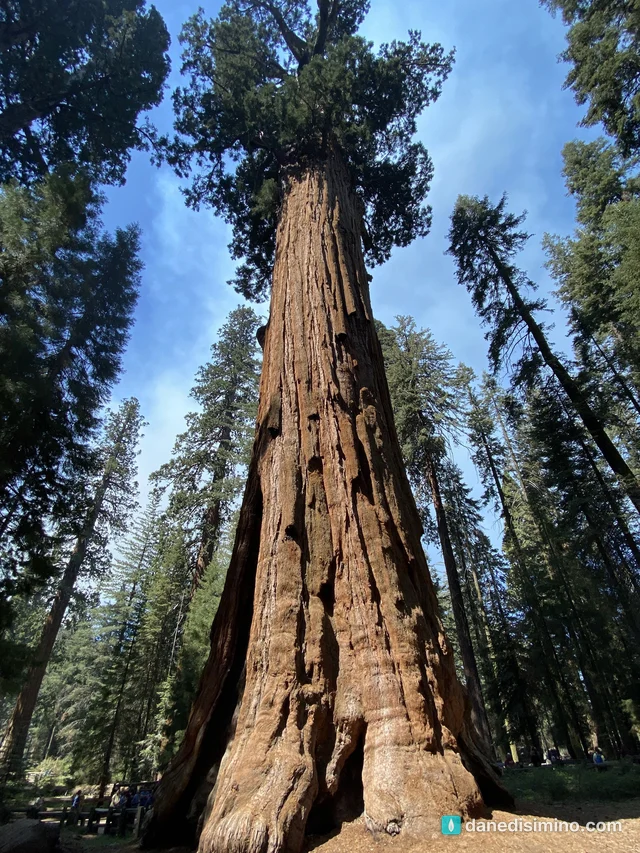
I remember standing in front of General Sherman and just gasping. Wow. That is an amazing sight.
The short version
It's farther than you think. San Francisco to the Ash Mountain entrance is about 250 miles and four and a half to five hours, not three. Leave early or you lose the morning.
Enter south, exit north. Ash Mountain up the Generals Highway to Grant Grove is roughly 47 miles and takes about two hours of steep, narrow switchbacks. It is the drive, not a shortcut.
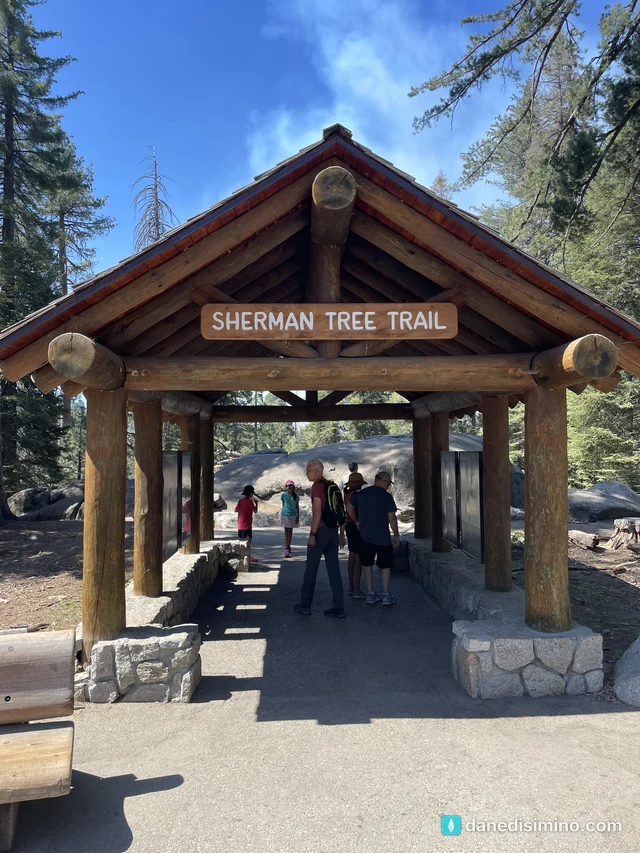
General Sherman is worth the stop it gets. Half a mile downhill from the parking area, and the trail is built so you meet the tree from the top down.
One day is enough to see it and not enough to know it. We did the drive-through because Kings Canyon was waiting. I'd give it a week now.
The fire scars are the park's actual story. A giant sequoia cannot reproduce without fire. The blackened trunks are not injuries to feel bad about.
Bring a card, not cash. The park is cashless at its entrance stations.
The park at a glance
- 1890
- America's second park
- 404,063
- Acres
- 275 ft
- The General Sherman Tree
- $35
- Per vehicle, 7 days
Where: the western slope of the southern Sierra Nevada in Tulare County, California. The Ash Mountain entrance is six miles above Three Rivers on Highway 198.
Getting there: Ash Mountain from the south via Visalia on 198; Big Stump from the north via Fresno on 180. The Generals Highway connects them inside the parks.
Fees: $35 per private vehicle, valid seven days, and it covers Kings Canyon too. Cashless — entrance stations take cards and digital payment only.
Jointly run: Sequoia and Kings Canyon are two parks under one administration, together 1,353 square miles, of which 97% is managed wilderness.
Before you go: check Alerts & Conditions at nps.gov/seki. The Generals Highway is steep and narrow, and long vehicles are restricted on parts of it.
How the ground got here
The rock under the trees is older than the mountains that carry it. During the Cretaceous, roughly 100 million years ago, an ocean plate was forced beneath the advancing North American continent. Superheated water driven off that sinking slab melted rock on its way up, and most of that magma never reached the surface. It cooled slowly, miles down, into the granite, diorite and monzonite that make up nearly every peak and canyon wall in the Sierra.
The range itself is young. Geologists argue the details, but the Sierra Nevada is probably no more than 10 million years old, lifted and tilted westward so that it climbs gently from the San Joaquin Valley and drops off sharply on its eastern edge. At least four glacial advances have scoured it since. A few small glaciers survive in the parks' high country — the southernmost in North America.
That tilt is why the drive feels the way it does. You start in dry foothills and finish in deep conifer forest, and the whole climb is one slope of a block of crust still being pushed up.
Two numbers put the scale in place. Mount Whitney, at 14,491 feet the highest point in the contiguous United States, stands on this park's eastern boundary, with eleven more peaks above 14,000 feet along the crest. And in the metamorphic pockets — old volcanic islands welded onto the continent before the uplift — Sequoia and Kings Canyon hold more than 270 marble caves, including Lilburn, the longest cave in California at nearly 17 miles of surveyed passage.
How the park began
On 25 September 1890, President Benjamin Harrison signed the bill that made Sequoia the second national park in America. The detail worth keeping is why. Yellowstone had been set aside for its geysers and canyons; Sequoia was the first national park created specifically to protect a living organism. Loggers were working the groves, and the trees themselves were the reason for the law.
One week later Congress tripled Sequoia's size and, in the same stroke, created a second small park four square miles across to protect Grant Grove: General Grant National Park. It stayed on the map of California for fifty years.
- 1890Sequoia established25 September. The second national park, and the first created to protect a living thing.
- 1890General Grant establishedOne week later. Four square miles around Grant Grove, a separate park.
- 1891–1913The Army runs itCavalry from the Presidio of San Francisco, including Buffalo Soldiers under Charles Young, who became the first Black military superintendent in 1903.
- 1926The Generals Highway opensCars reach the Giant Forest. By 1927 there was traffic at the entrance station.
- 1940Kings Canyon createdThe new park absorbs General Grant entirely. One administration ever since.
So the two-park question has a better answer than "one came later." They were established eleven days apart, both in 1890. What changed in 1940 was that the small General Grant park was dissolved into a much larger new one built around the glacial canyon to the north. They have been run as a single unit since, which is why one $35 pass covers both and why the park maps show them as one shape.
The drive up
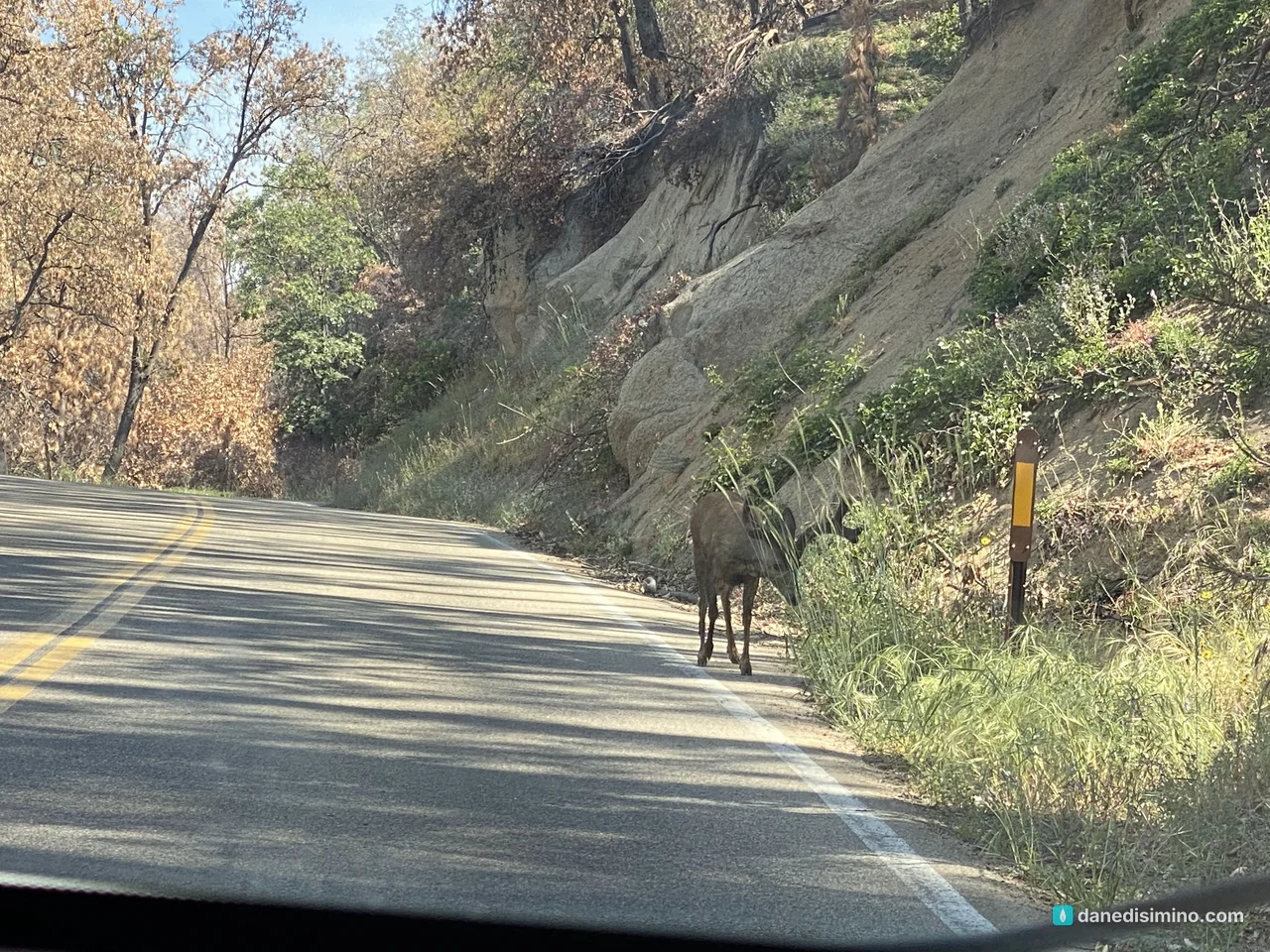
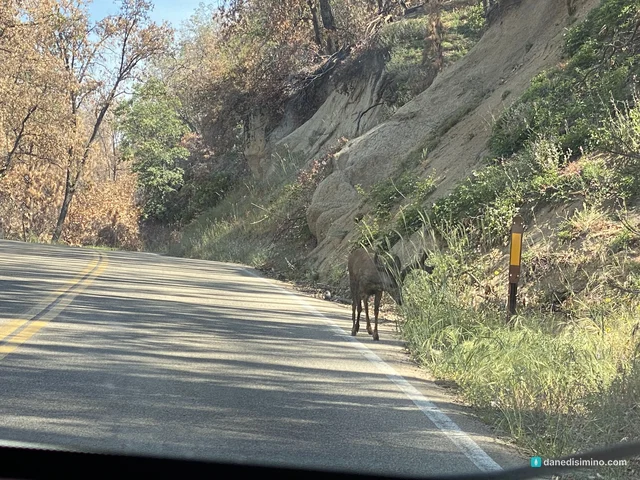
The Generals Highway starts at the entrance station and begins climbing immediately. It is the kind of road where you stop checking the clock and start checking the mirrors.
The Giant Forest
The Giant Forest holds the largest unlogged giant sequoia groves left in California. That word — unlogged — is the whole reason the 1890 law mattered. Logging was already well under way in the southern Sierra groves when the park was created, and some basins nearby were cut out entirely.
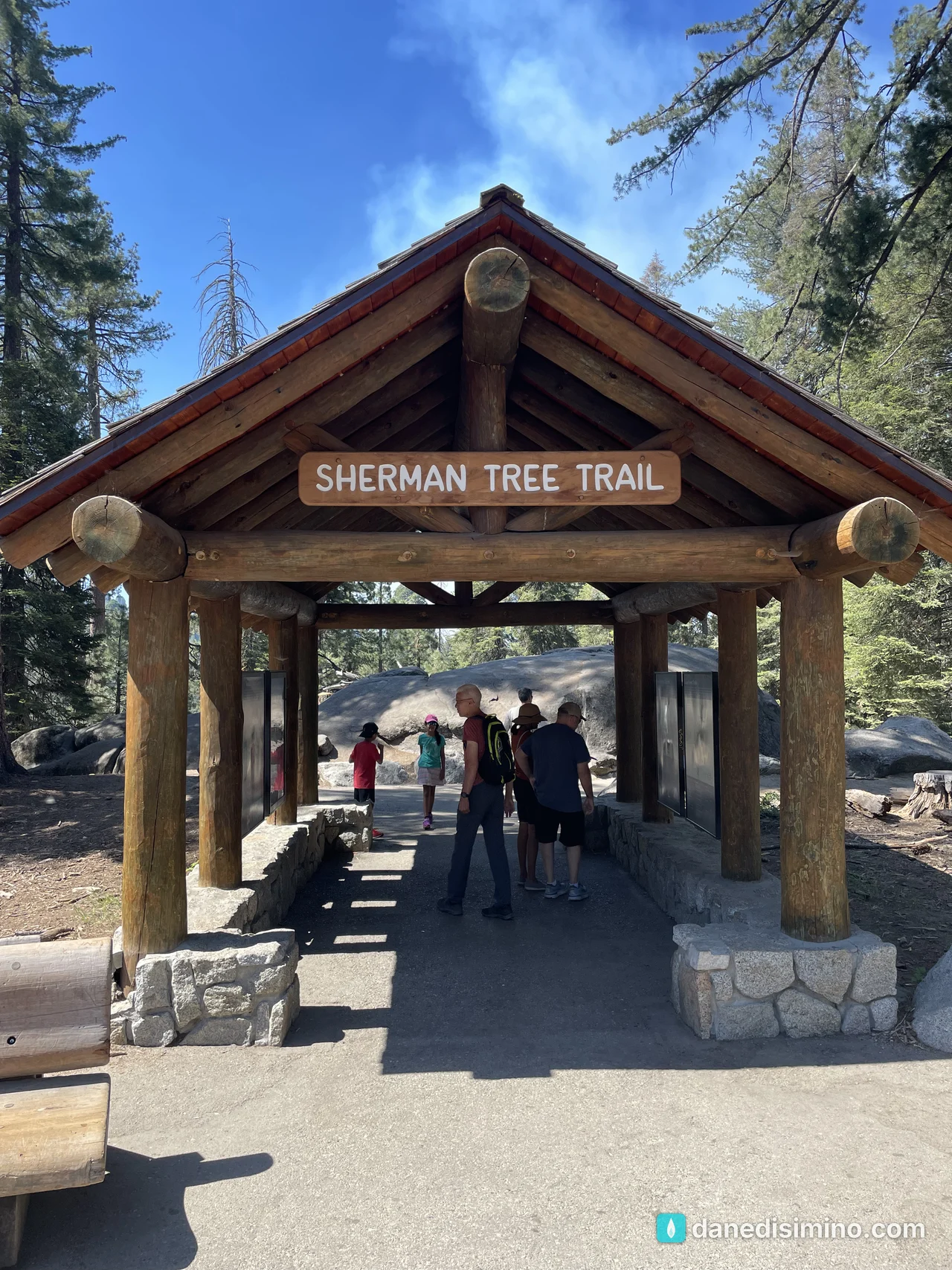
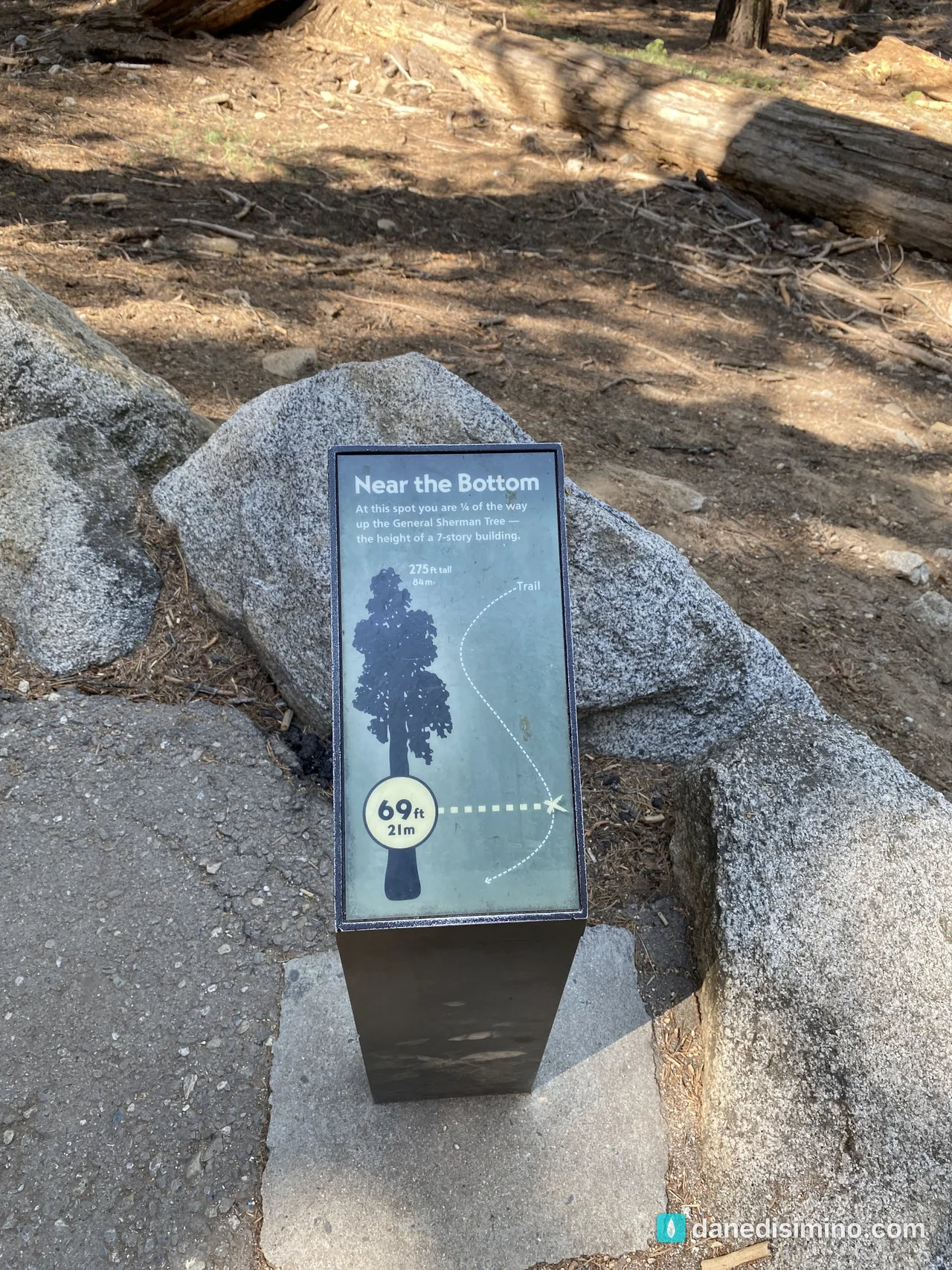
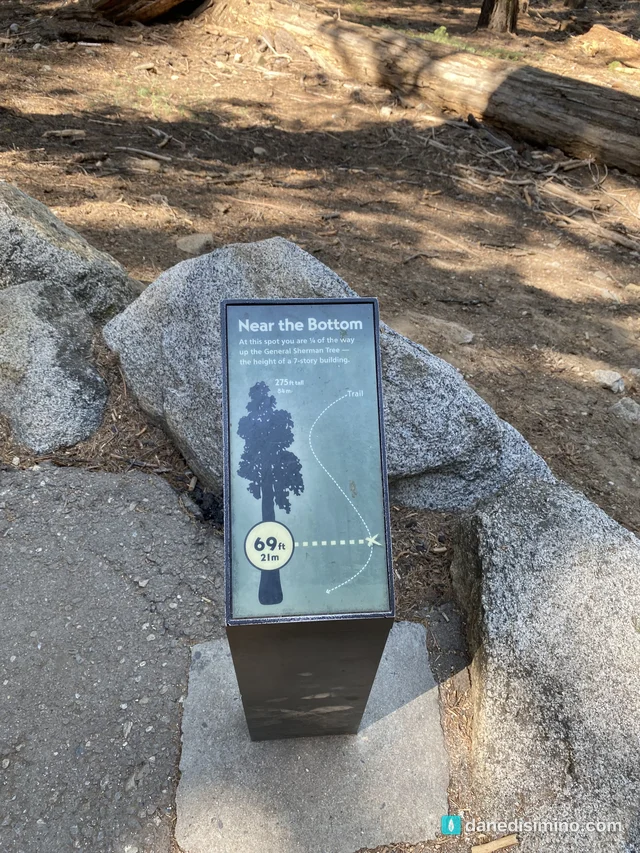
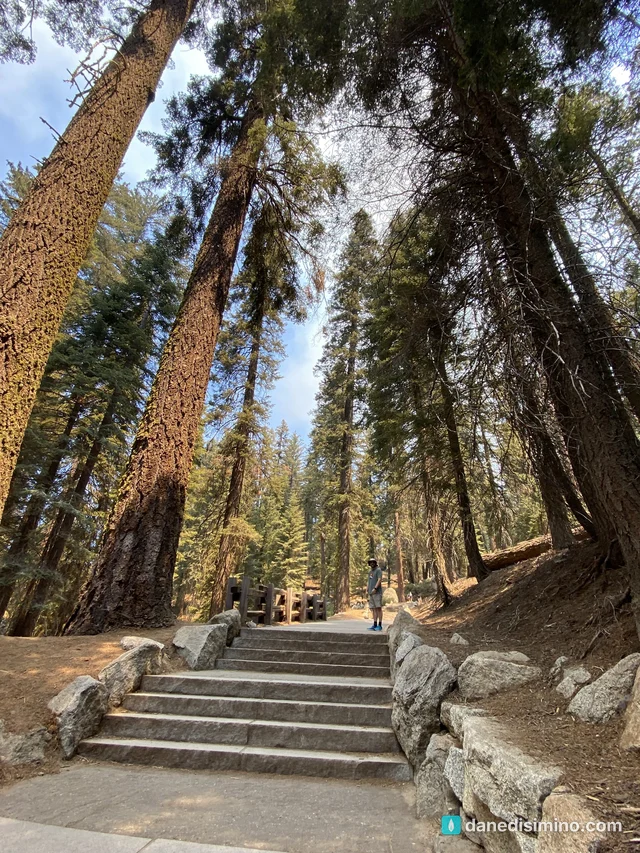
The path to General Sherman is half a mile and runs downhill on the way in, which is a deliberate piece of design: you come level with the canopy first, then descend the length of the trunk. Markers along the way tell you how far up the tree you'd be standing.
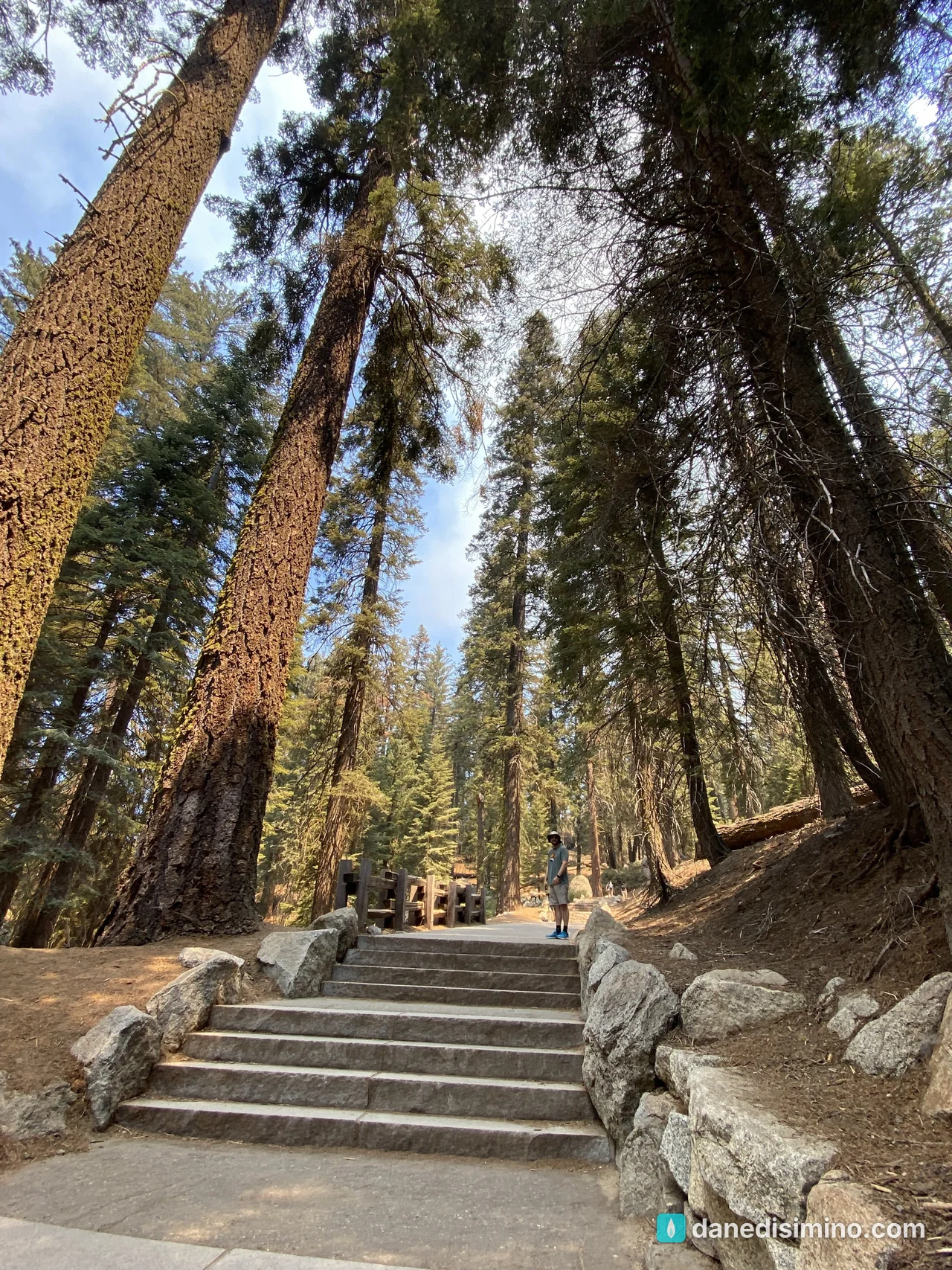
Standing under the largest tree on earth
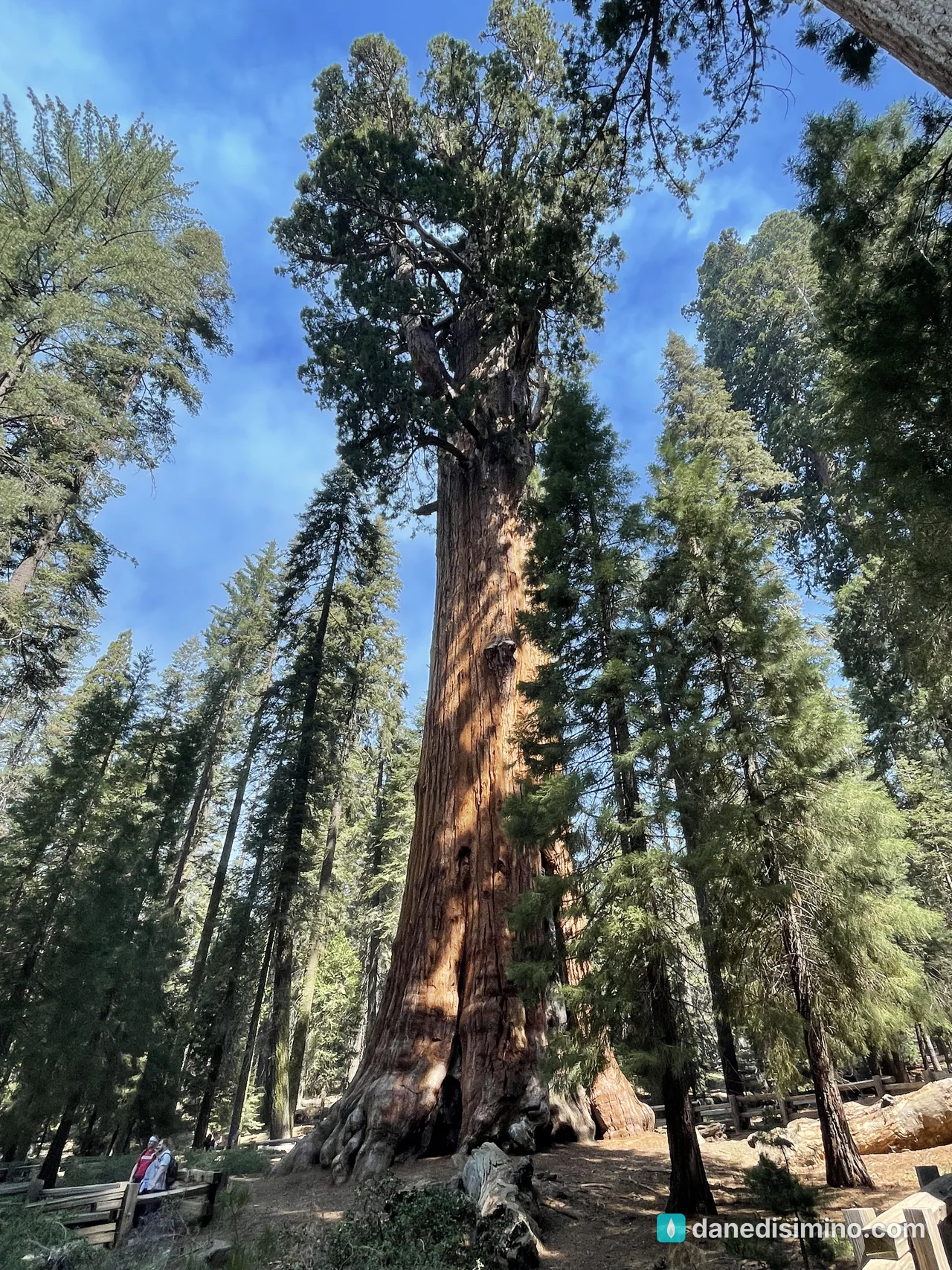
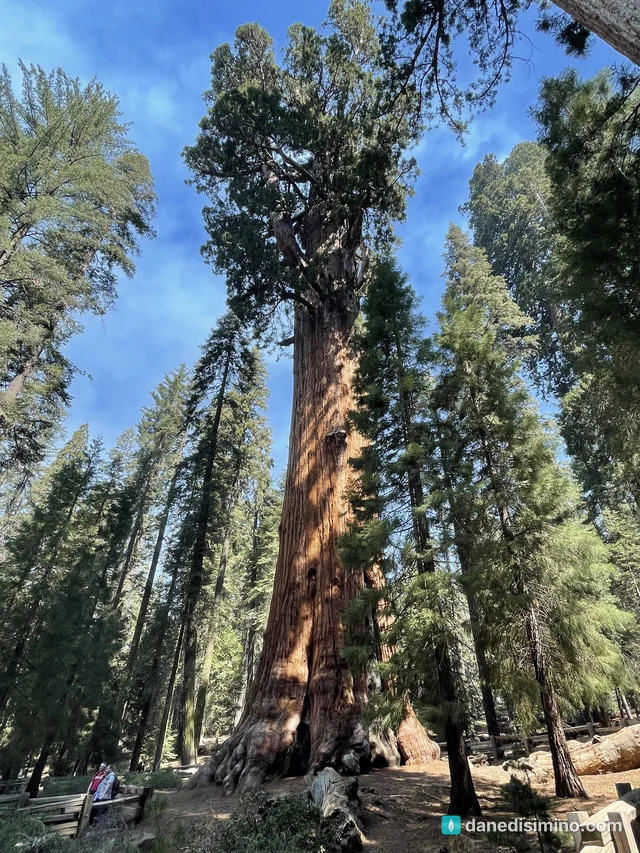
It is not the tallest tree in the world and it is not the widest. Coast redwoods go higher. What General Sherman has is volume: more wood in its trunk than any other tree on earth, an estimated 52,508 cubic feet.
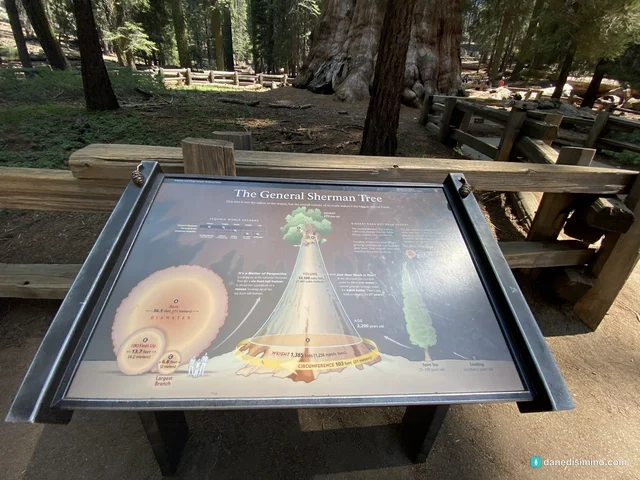
The numbers only start to land when you convert them. That trunk weighs close to 1,400 tons, which is roughly fifteen adult blue whales. In lumber terms it holds about 630,000 board feet — enough to frame 120 average houses. At a point 120 feet above the ground, higher than most buildings you have stood in, the trunk is still 17 feet across.
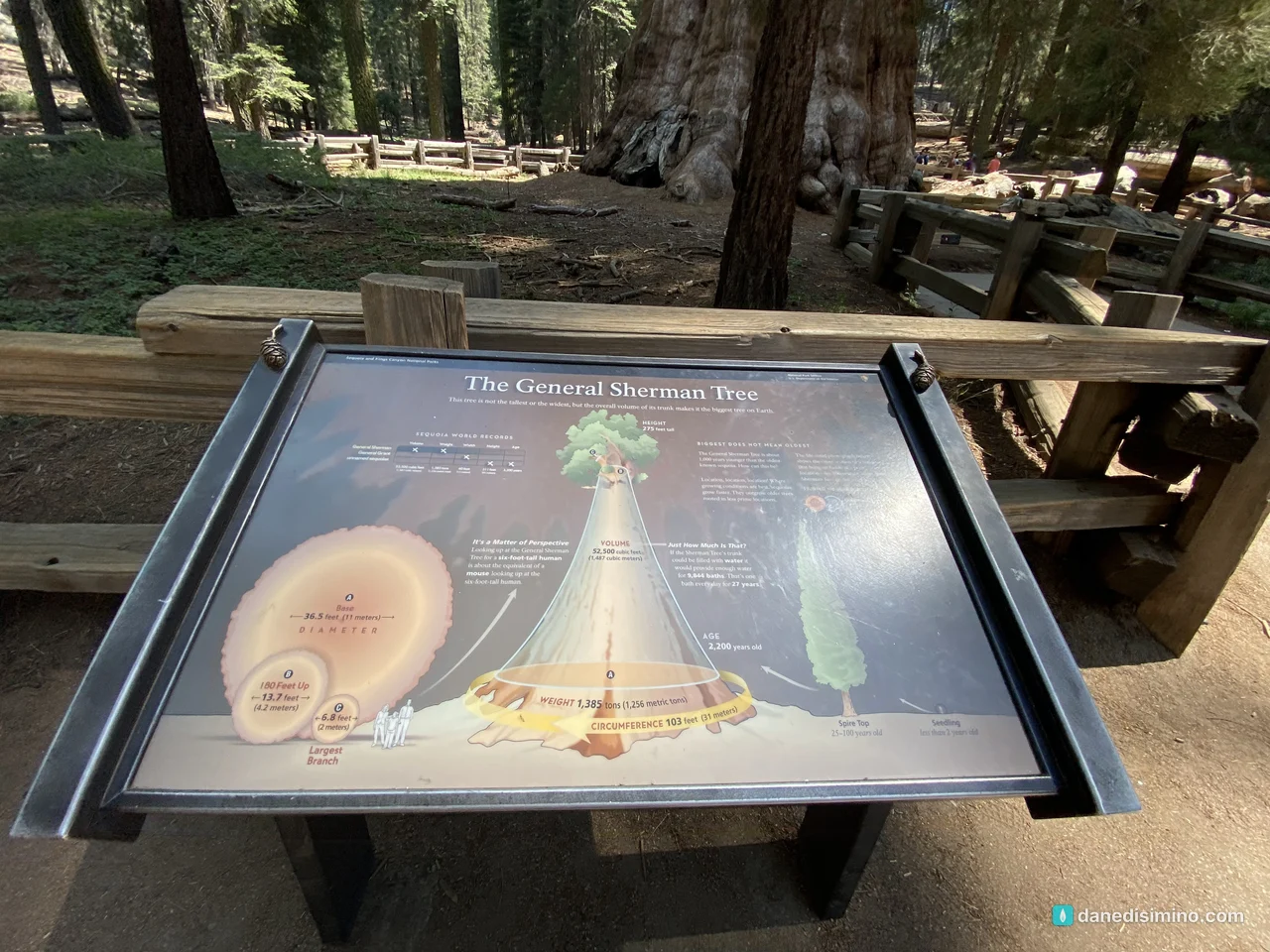
The age estimate is about 2,200 years. That is younger than the park signs of a few decades ago claimed, and the correction is itself interesting — these trees got that big through sustained fast growth over a long life, not by being impossibly ancient. The oldest known giant sequoias reach around 3,400 years.
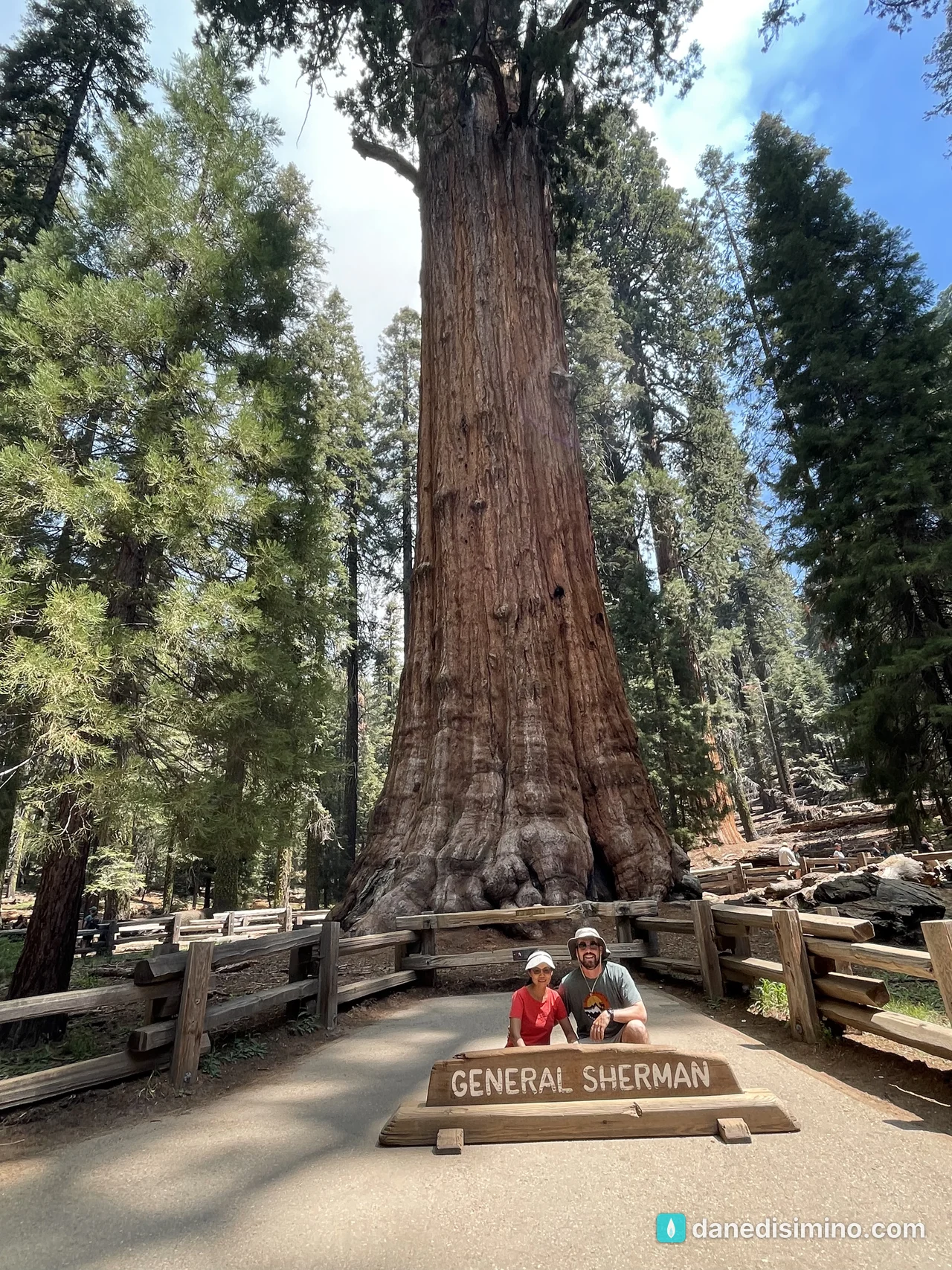
Standing at the base, the thing that gets you is not height. It is that the trunk does not taper the way a tree is supposed to. It goes up like a column and keeps going.
What the fire scars mean
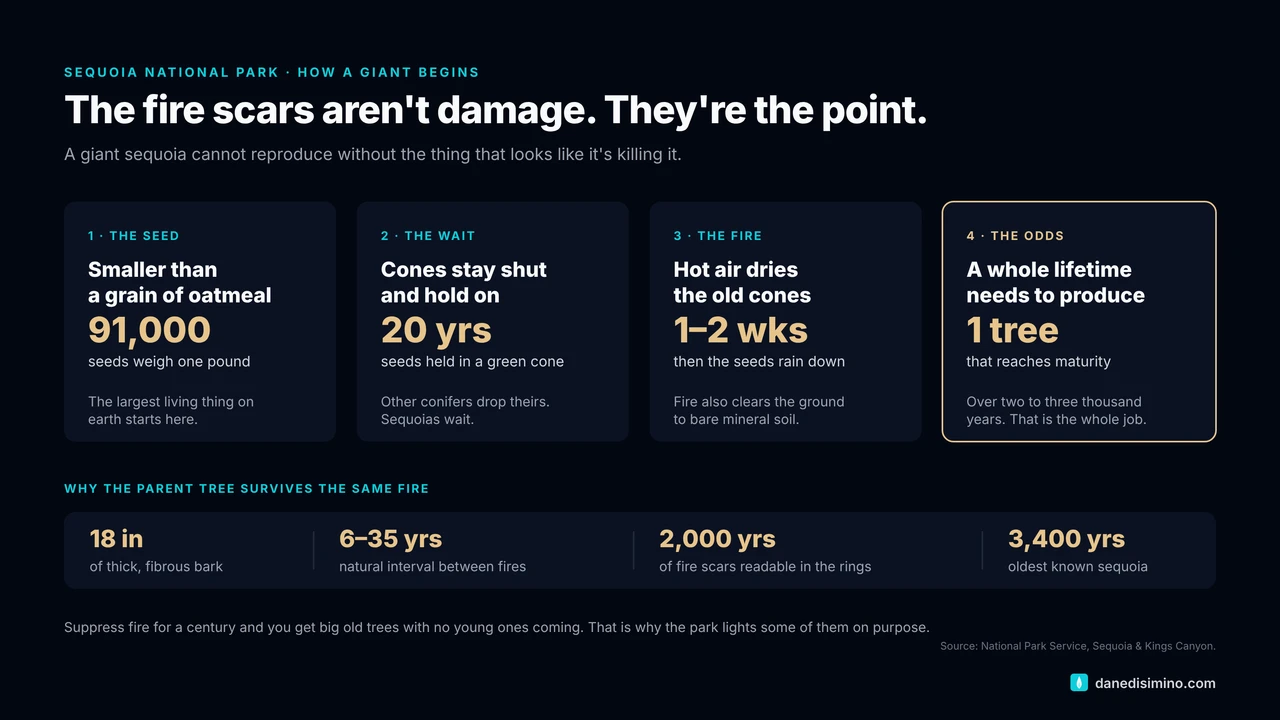
Walk the grove and you will see black wounds running up the base of nearly every mature sequoia, some of them cave-sized. They look like the slow destruction of the forest. They are the opposite.
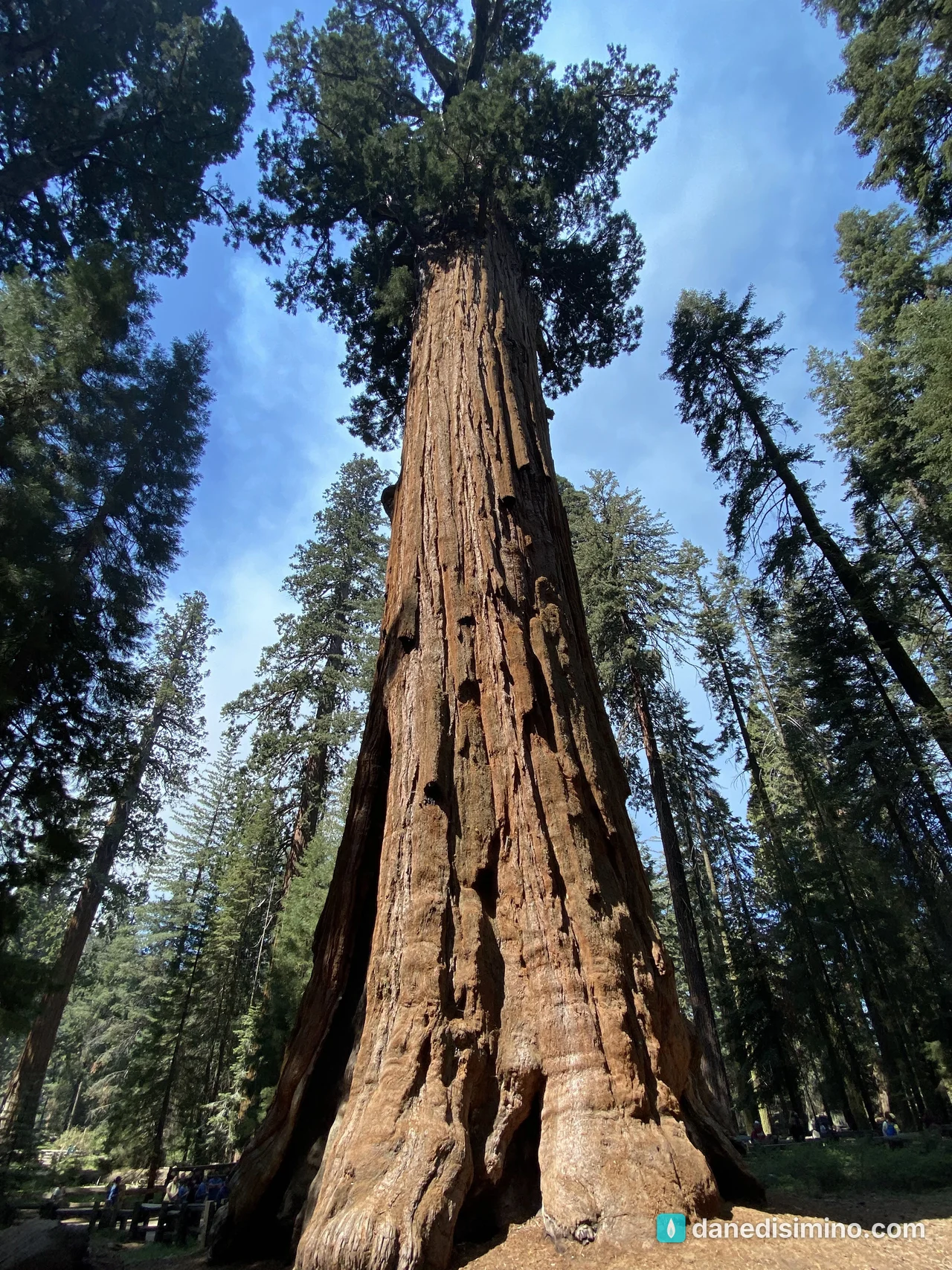
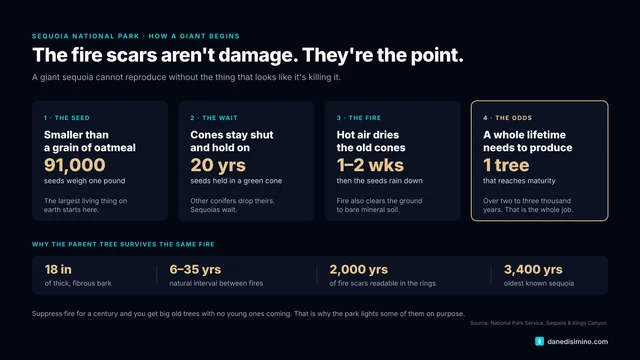
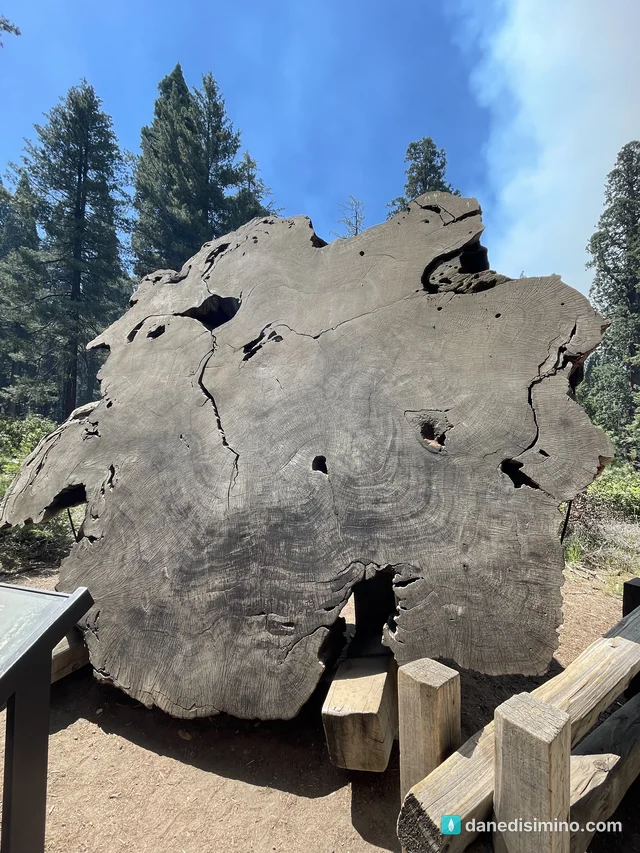
Sequoia bark grows up to 18 inches thick and is fibrous rather than resinous, so it resists burning and insulates the living tissue behind it. Tree rings here carry a readable fire record going back 2,000 years, and they show that fires swept these forests naturally every 6 to 35 years. A tree that lives two millennia will be burned a hundred times.
And it needs to be. Sequoia cones hold their seeds shut for as long as 20 years. Fire's hot air dries the old cones, which open and release seeds within a week or two — onto ground the same fire has just cleared down to the bare mineral soil the seeds require. No fire, no seedbed, no next generation.
The seed itself is smaller than a grain of oatmeal. It takes 91,000 of them to weigh a pound. Out of all of that, across two or three thousand years, a single sequoia only needs to produce one offspring that reaches maturity.
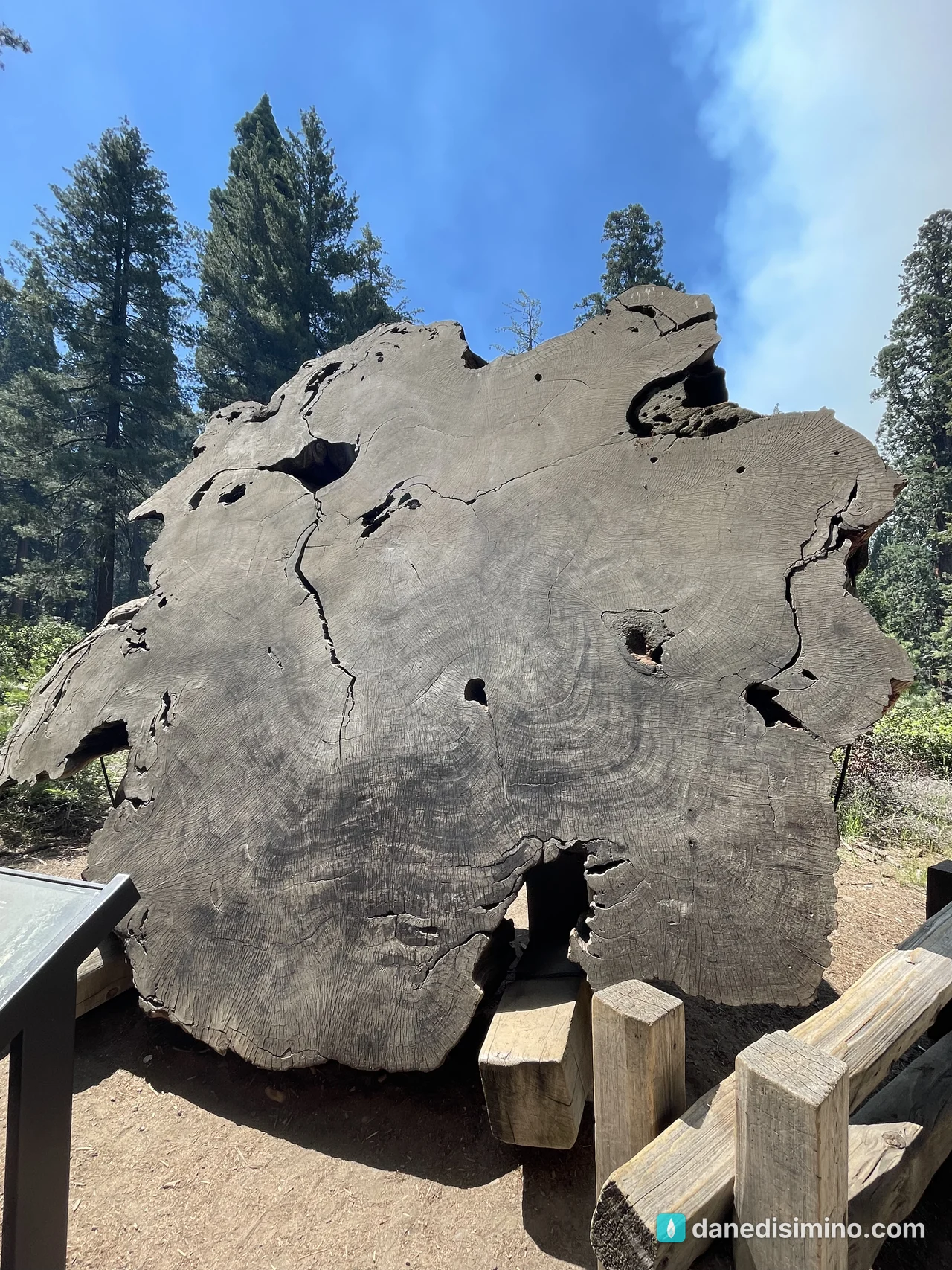
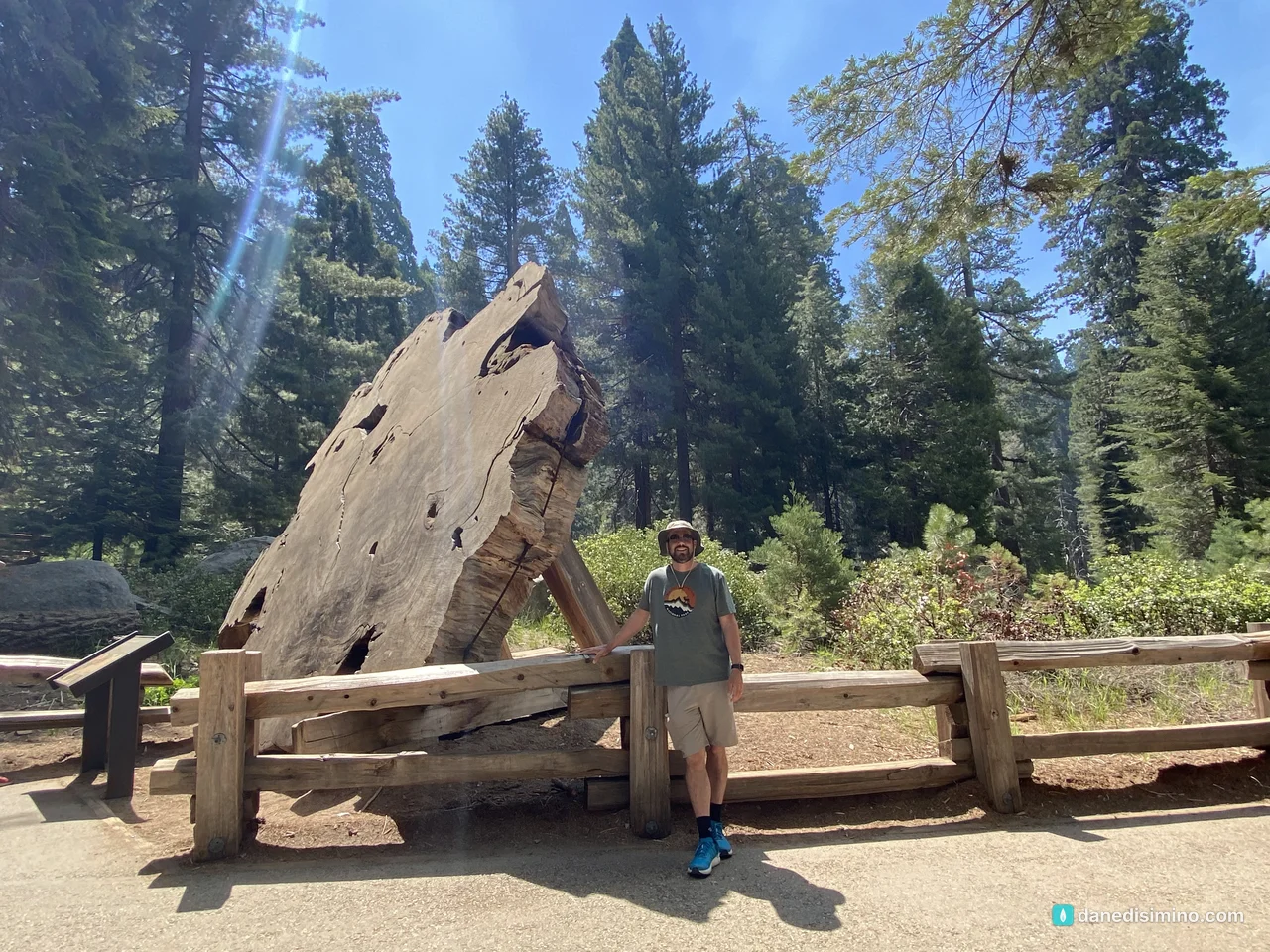
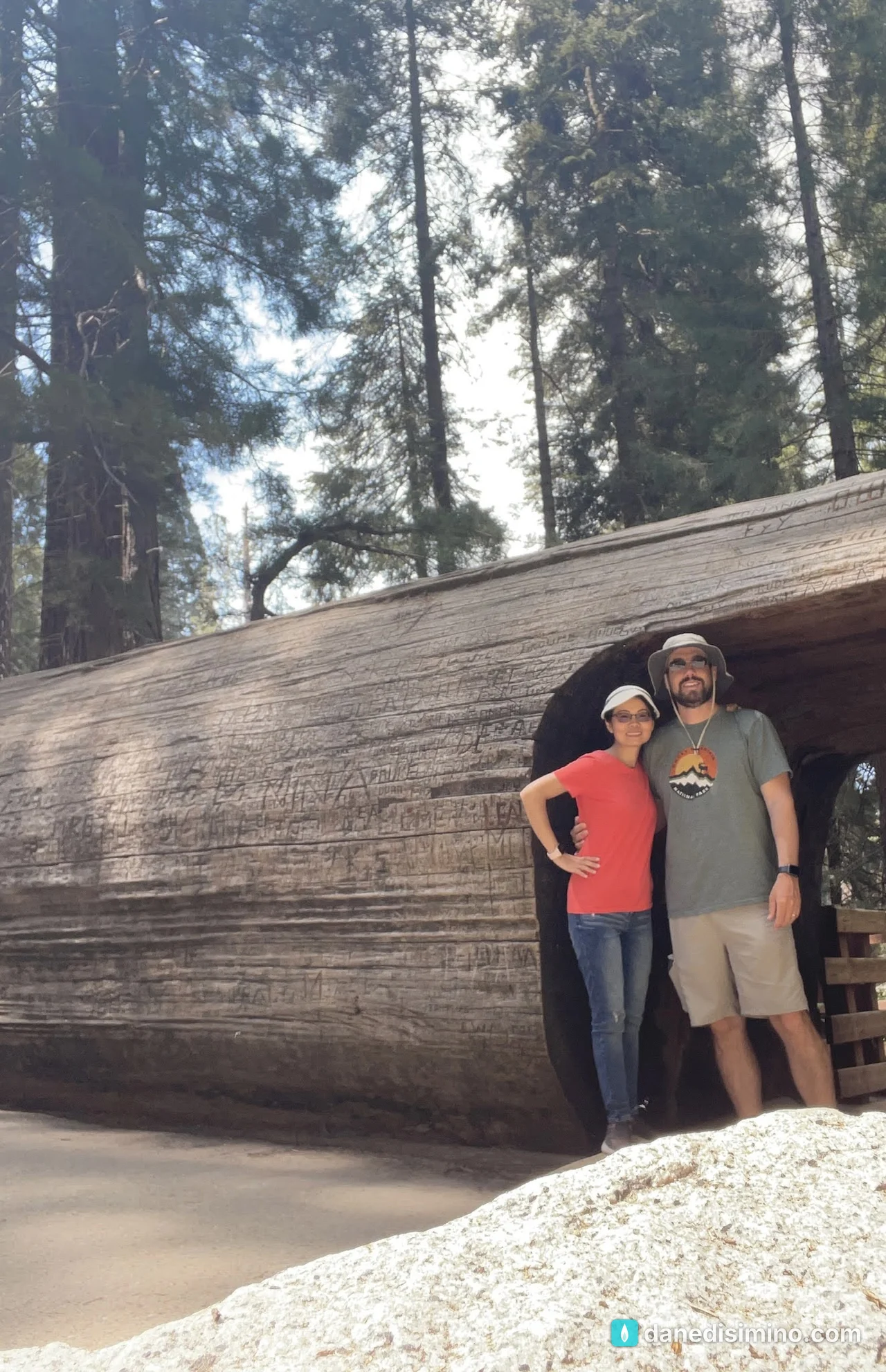
Sequoia roots are shallow for a tree that size, but they spread wide and tangle with their neighbours'. They hold each other up. When one does come down, the wood lasts on the forest floor for centuries.
The Congress Trail
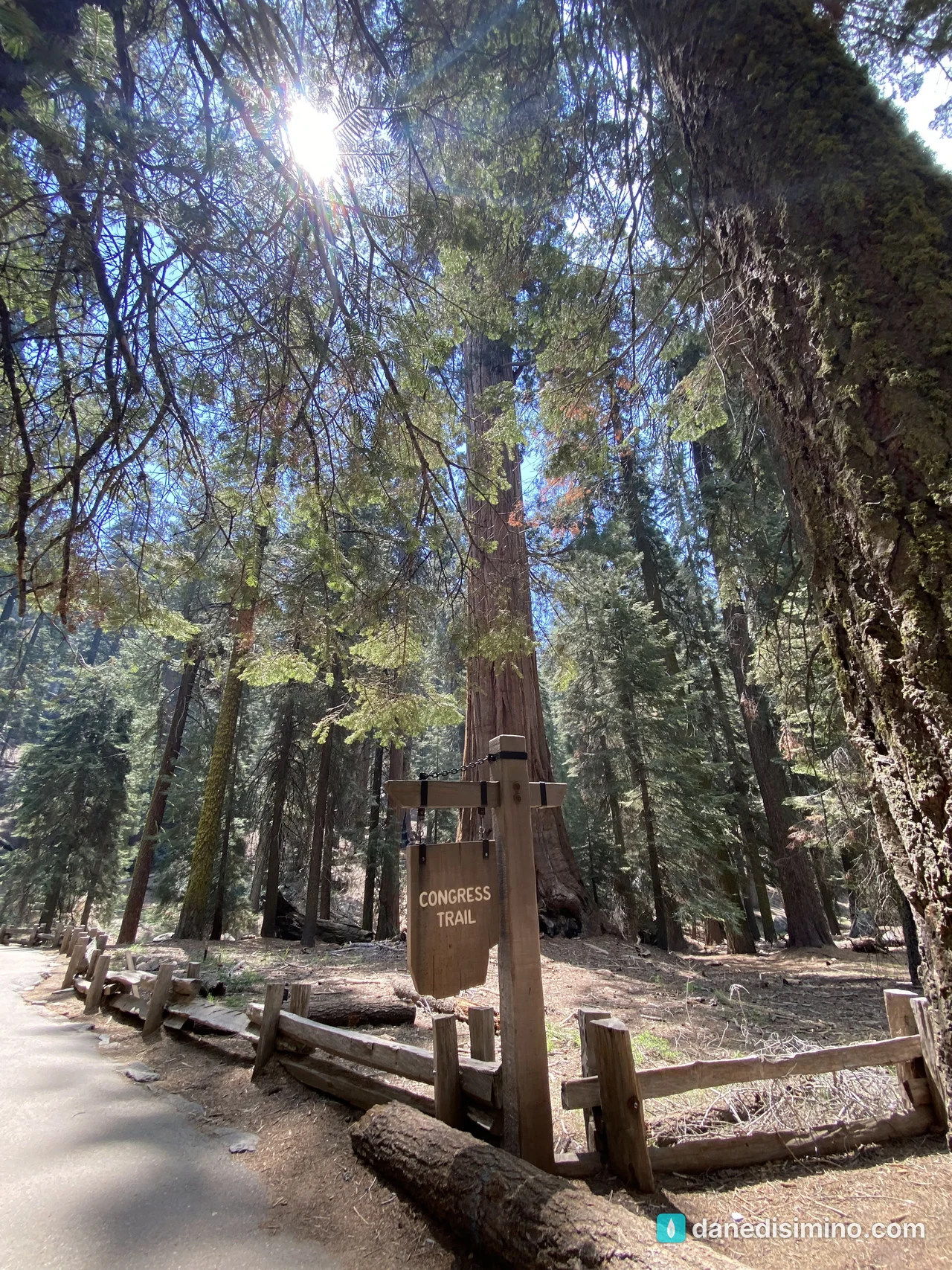
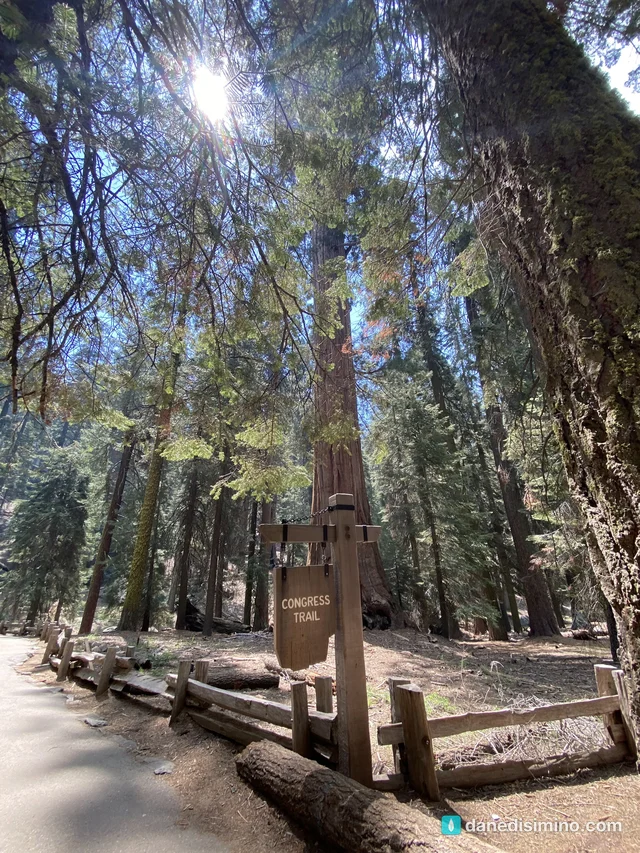
The Congress Trail leaves from General Sherman and loops about two paved miles past the House and Senate groups — dense clusters of mature sequoias standing together. We saw the sign and the first stretch of it, and then we got back in the car, because Kings Canyon was still ahead of us and the afternoon was going.
That was the trade. I would make it differently now.
Where we stayed
One night in a hotel in Three Rivers, just outside the Ash Mountain entrance, which put us at the gate early. The second night was camping on the north side — that one belongs to the Kings Canyon guide.
Three Rivers is the practical base for the south entrance. It is the last place to fuel up, and it has the cash-accepting vendors if you need a pass without a card.
What I'd do differently
Give it two days, minimum. One for the Giant Forest on foot, one for the high country and Mineral King.
Walk the whole Congress Trail. Two level miles, and it is where the grove stops being a parking lot and starts being a forest.
Add Moro Rock and Crescent Meadow. Both are off the Generals Highway and neither takes long; we drove past both.
Book Crystal Cave ahead. The only one of the park's 270-plus caves open to the public, by guided tour only, and it sells out.
Camp. The drive-through is the one thing I'd undo. These groves are worth waking up in.
Bring a rod. Not for Sequoia so much as for what came next — there was water in Kings Canyon I'm still thinking about.
What Sequoia taught me
Everything impressive in that forest is the result of something slow and something violent, working together over a span I cannot hold in my head. Two thousand years of growing. A hundred fires. A seed the size of a grain of oatmeal that only had to win once.
I gave it a day because I was in a hurry to get to the next thing. The trees were not in a hurry about anything.
"He will give a crown of beauty for ashes... In their righteousness, they will be like great oaks that the Lord has planted for his own glory." (Isaiah 61:3, NLT)
Beauty for ashes is not a metaphor in this forest. It is the reproductive strategy.
Questions?
Photos
Sources
- Sequoia & Kings Canyon National Parks (NPS)
- History & Culture (NPS)
- Giant Sequoias (NPS)
- The General Sherman Tree (NPS)
- The Largest Trees in the World (NPS)
- General Sherman Tree (NPS Places)
- Geology Overview (NPS)
- Giant Forest and Lodgepole (NPS)
- Entrance Fees & Passes (NPS)
- Driving Directions (NPS)
- Frequently Asked Questions (NPS)
Pathlight Newsletter
Pathlight is my newsletter where you'll receive email updates on the topics you choose.