
NATIONAL PARKS
White Sands
A Field Guide
On this page
One November day on the world's largest gypsum dunefield: sledding down pure white sand, the visitor center that started two of our park traditions, a cottonwood alone in the dunes, and an orange-and-purple sunset. How to sled, how not to get lost, and what the missile range means for your day.
Version 1.1 · Updated Nov 17, 2026
Map
When to go
Average monthly visits, 2023–2025. Source: NPS visitor statistics. ● marks the months we visited.
| January | 40,409 |
|---|---|
| February | 43,157 |
| March | 99,448 |
| April | 78,222 |
| May | 67,583 |
| June | 60,926 |
| July | 61,187 |
| August | 44,797 |
| September | 45,066 |
| October | 48,125 |
| November | 49,797 |
| December | 58,307 |
White Sands wasn't a terrible drive south from Colorado Springs, and it turned out to be one of the most fun days we've had in a park. We went in early November 2021. Like Great Sand Dunes, the move here is to sled down the dunes, but the sand is different: smoother, finer, and pure white, like snow that never melts.
Then there are the skies. Orange and purple sunsets, the whole basin turning pink, and after dark, more stars than you can take in.
It looks like snow and it sleds like snow, and you're standing in the desert.
The short version
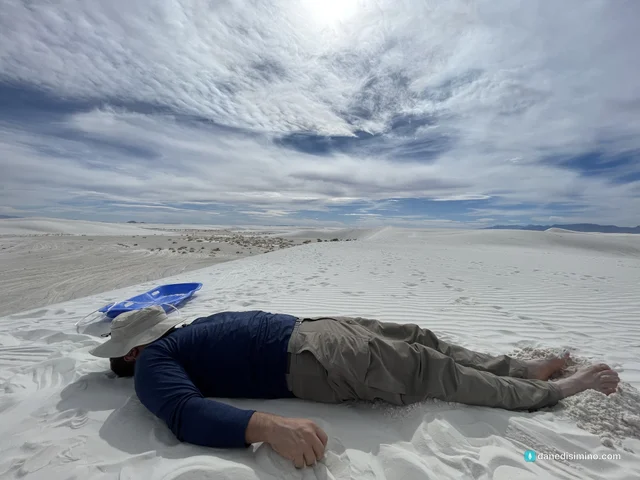
Sled. Buy or rent a waxed plastic saucer at the visitor center gift shop and pick a dune with a long, flat runout. Ride tandem with your spouse. We laughed the whole day.
Film it. Bring your phone or camera and record yourself on the way down.
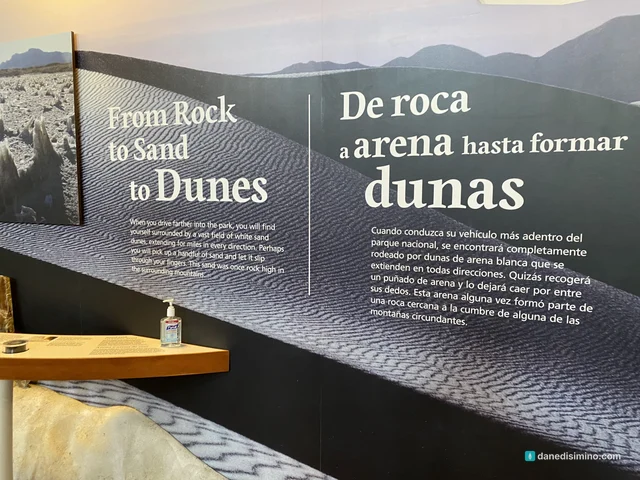
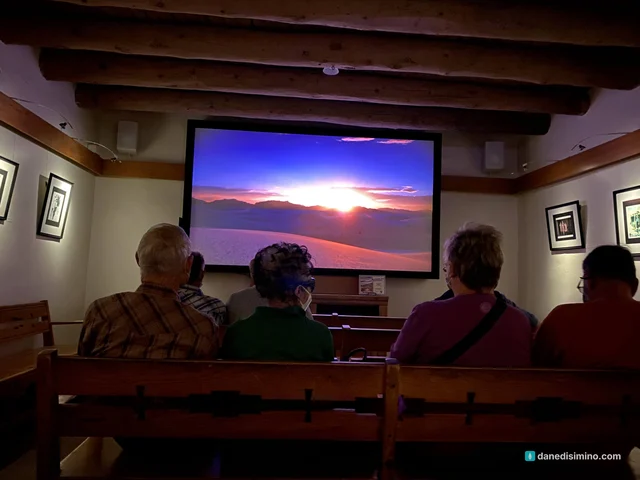
Start at the visitor center. The exhibits explain why the sand is white, and the park film is worth the 15 minutes.
Respect the dunes. Trails are marked with posts. If you can't see the next marker, turn back. People have gotten lost and died out here.
Stay for sunset. The park's best show is the last hour of light.
Check for missile tests. The road can close for up to three hours.
The park at a glance
- 275 sq mi
- Of gypsum dunes, the largest on Earth
- 8 mi
- Dunes Drive, each way
- ~15 mi
- From Alamogordo
- $25
- Per vehicle at the gate
Where: the Tularosa Basin in southern New Mexico, between Alamogordo and Las Cruces on U.S. 70.
Entrance fee: $25 per vehicle. Buy your pass online before you go; cell service is spotty.
When: March is the busiest month, and January the quietest. Summer days average in the high 90s, so spring, fall and winter are the comfortable seasons. We went in November and it was perfect.
Missile tests: the park sits next to White Sands Missile Range. During tests, the road into the park and U.S. 70 close for up to three hours. Check the park's closure page the day before.
Contact: nps.gov/whsa. In an emergency, call 911.
Why the sand is white
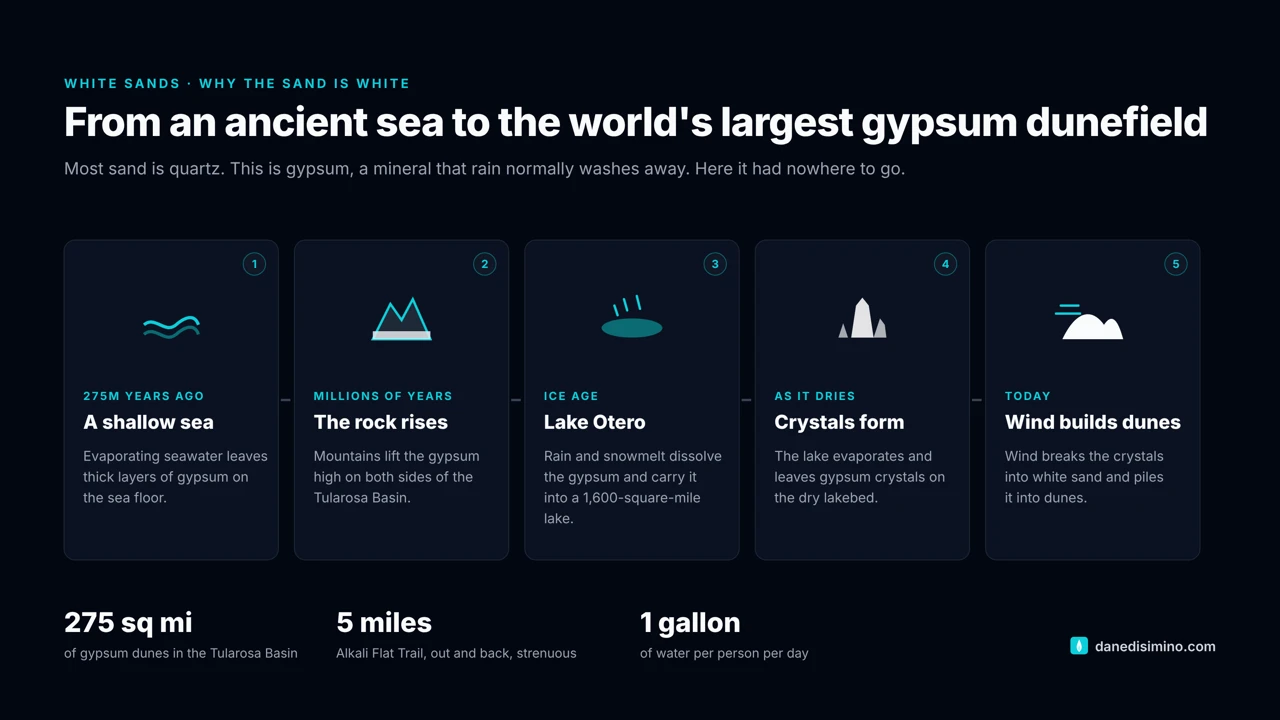
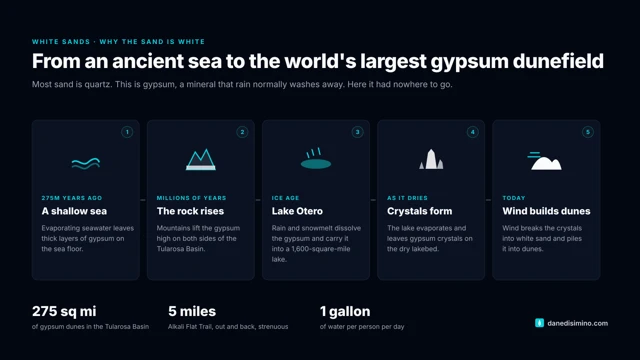
Most sand is quartz. White Sands is gypsum, a mineral that usually dissolves in rain and washes out to sea. The Tularosa Basin has no outlet to the sea, so it had nowhere to go.
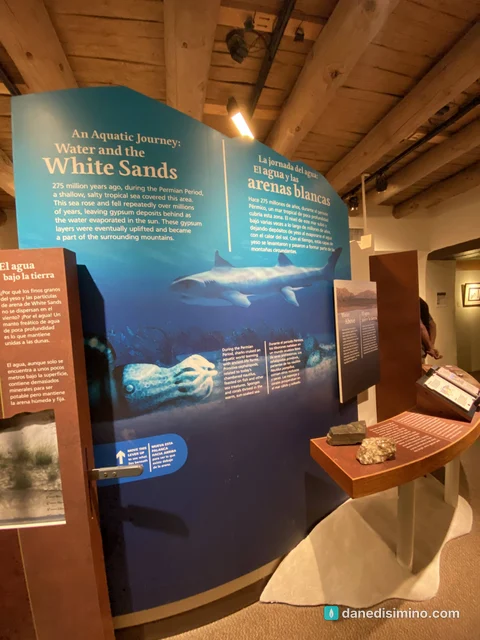
About 275 million years ago a shallow sea here left thick layers of gypsum behind. Mountains later lifted that rock up on both sides of the basin. Rain and snowmelt dissolved the gypsum and carried it down into Lake Otero, an ice-age lake that once covered 1,600 square miles. As the lake dried, the gypsum grew into crystals on the lakebed, and the wind has been grinding them into white sand and pushing it into dunes ever since.
How it became a park. President Herbert Hoover proclaimed White Sands National Monument on January 18, 1933. It became White Sands National Park on December 20, 2019, one of the newest national parks, after years as the most visited National Park Service site in New Mexico.
The visitor center, and two traditions
We started at the visitor center, and two of our park traditions started there too.
The first: we bought a big stuffed bison in the gift shop. Since then we've bought a stuffed animal at the visitor center of every park we visit.
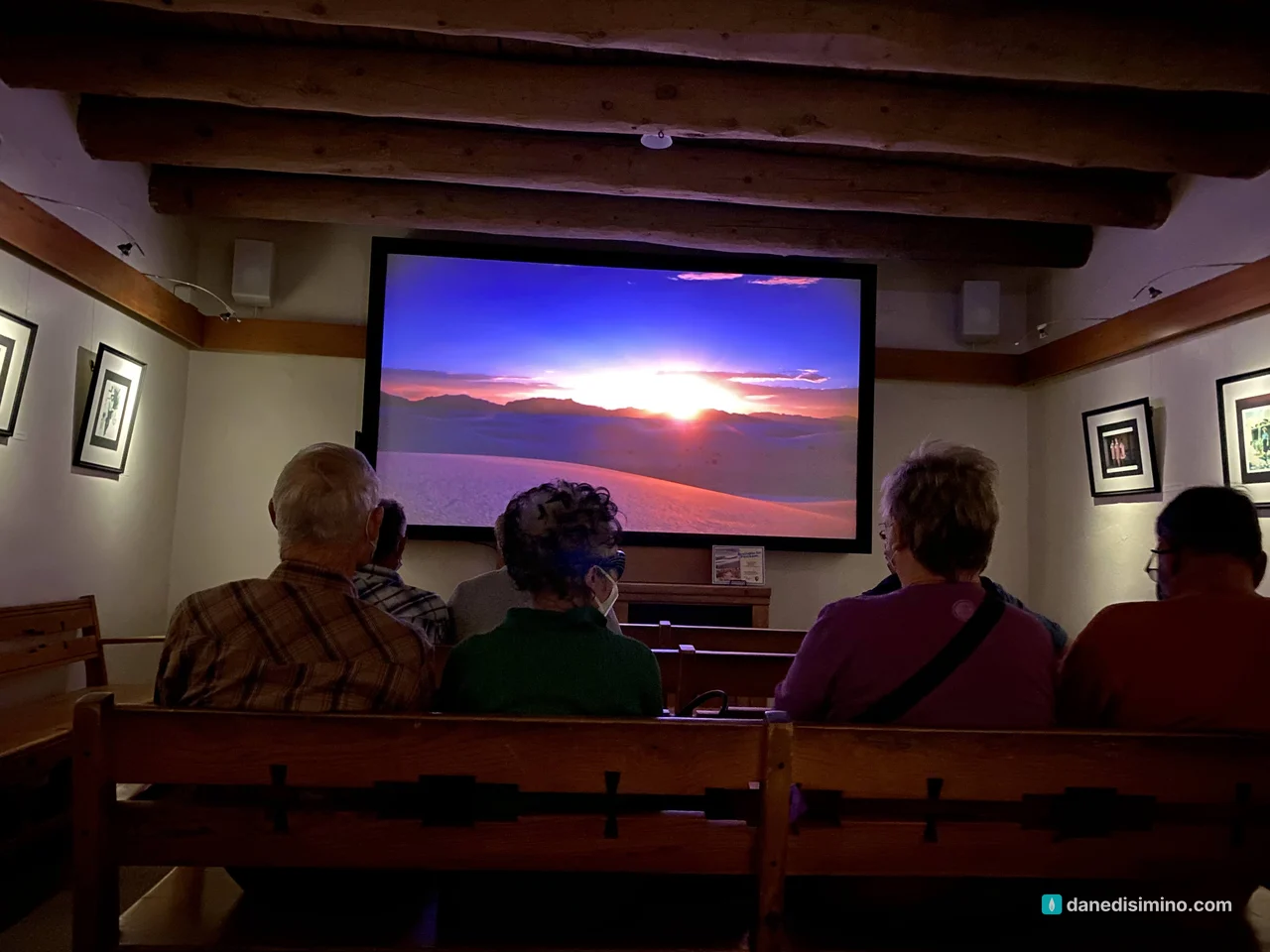
The second: we sat in the theater and watched the park film. It's about 15 minutes, and now we watch the film at every park. It's the fastest way to understand what you're about to see, and it's a good rest after a long drive.
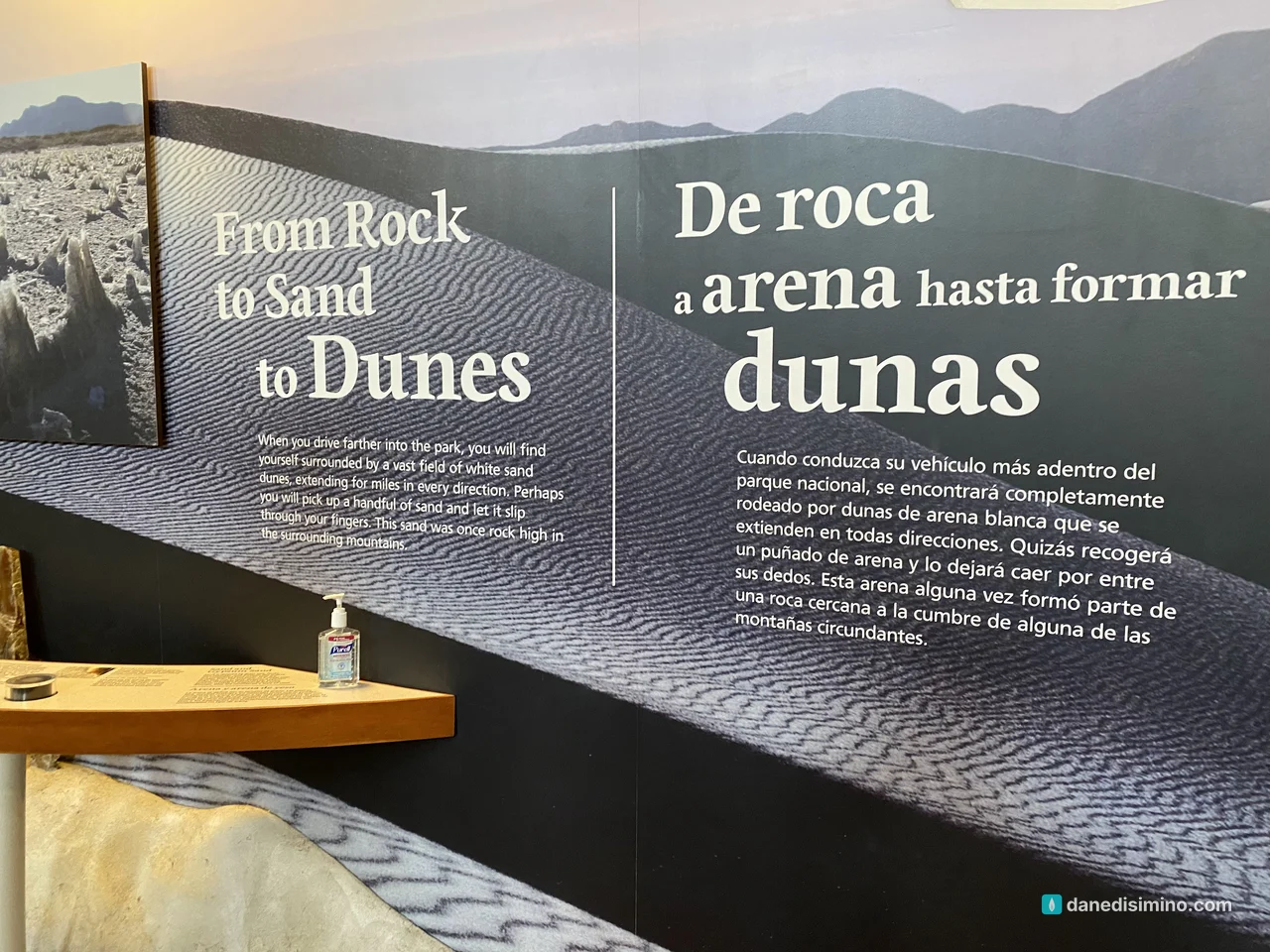
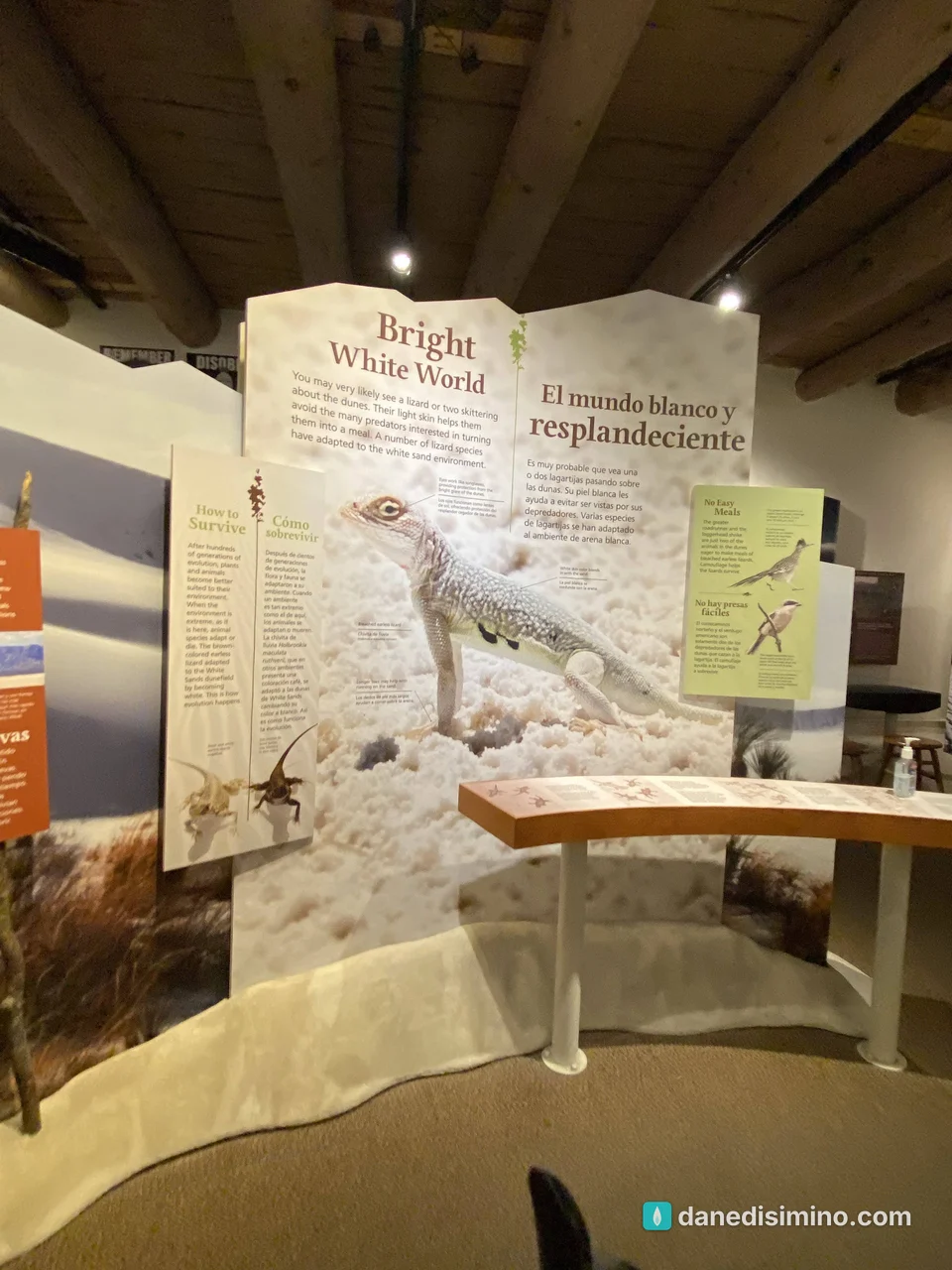
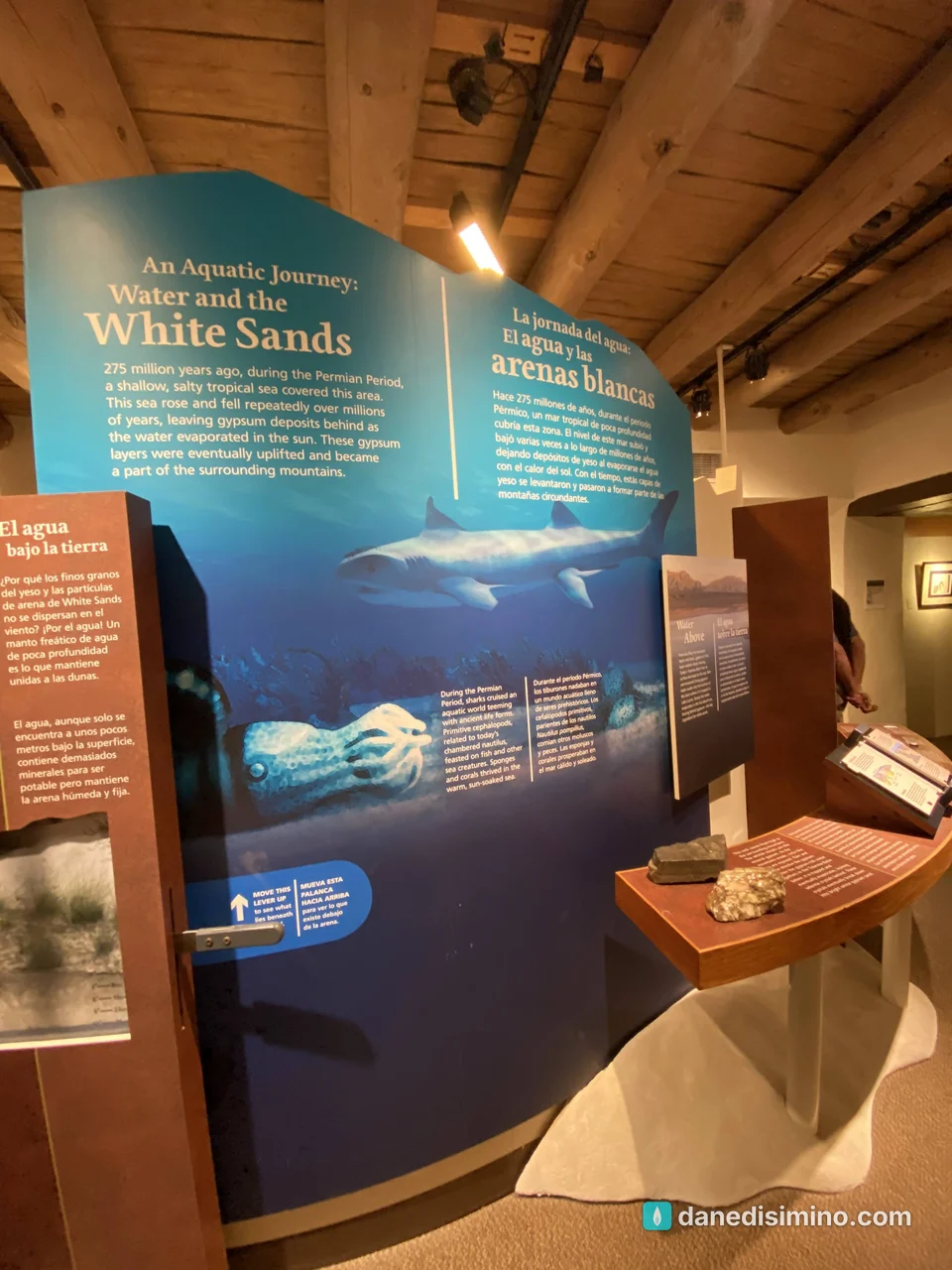
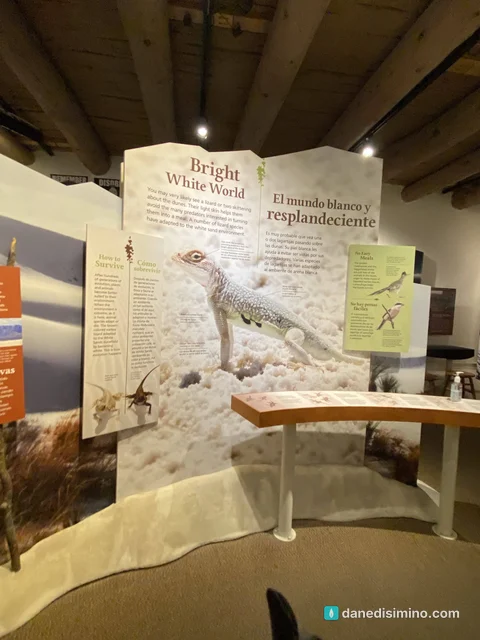
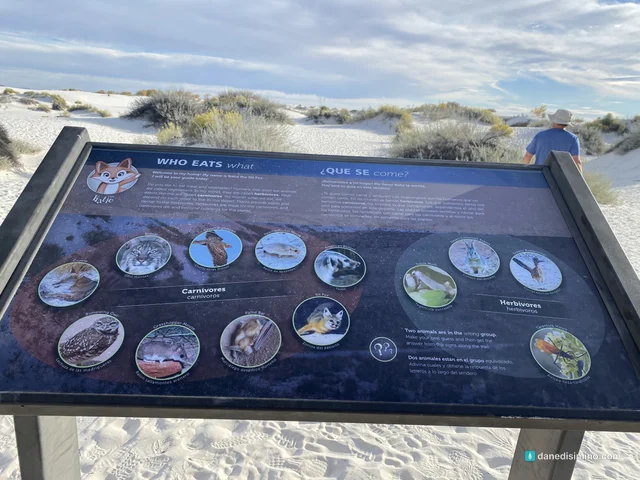
The exhibits are worth a slow walk: how the dunes formed, the ancient lake under the sand, and the animals that turned white to blend in.
Sledding the dunes
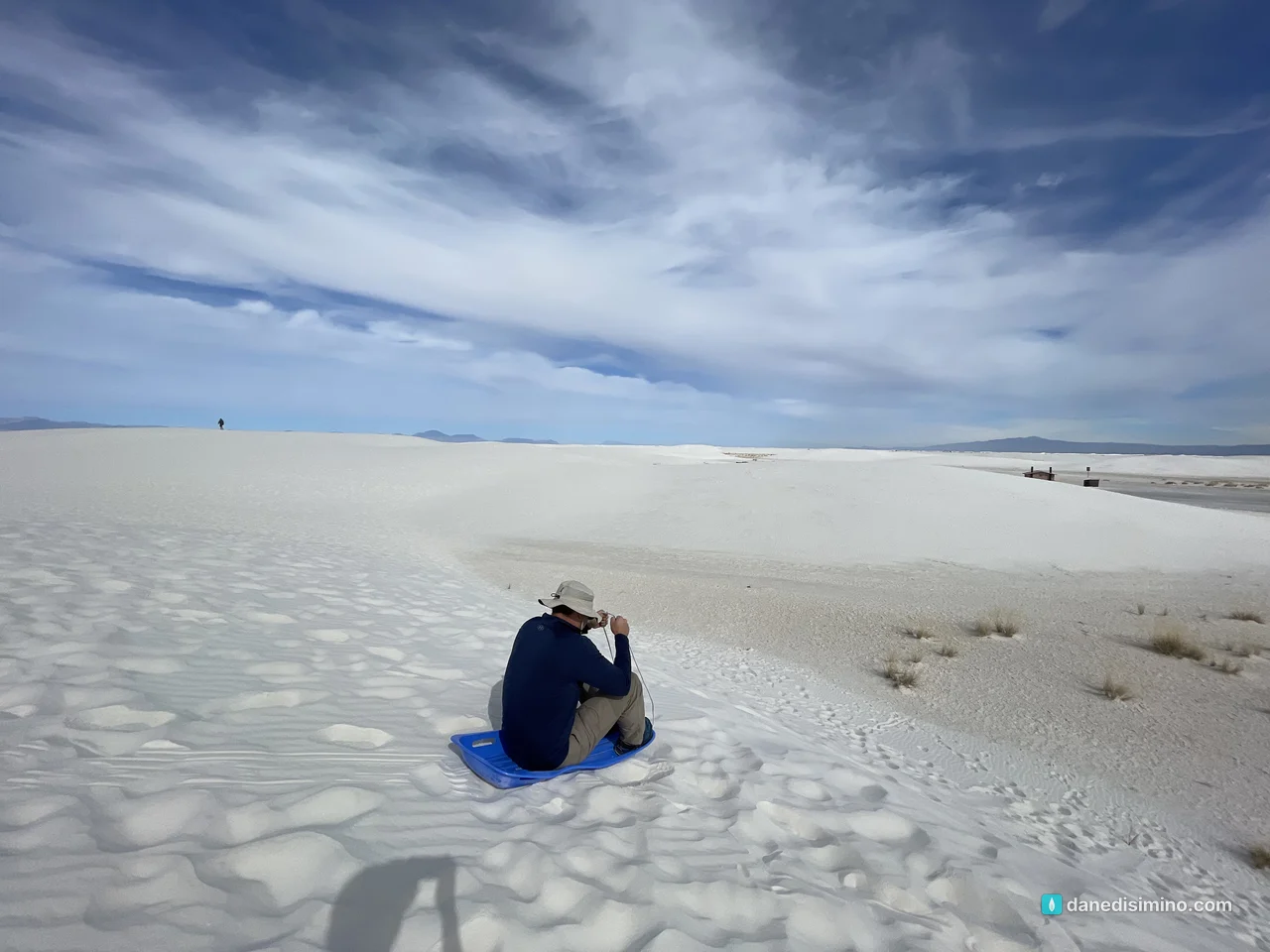
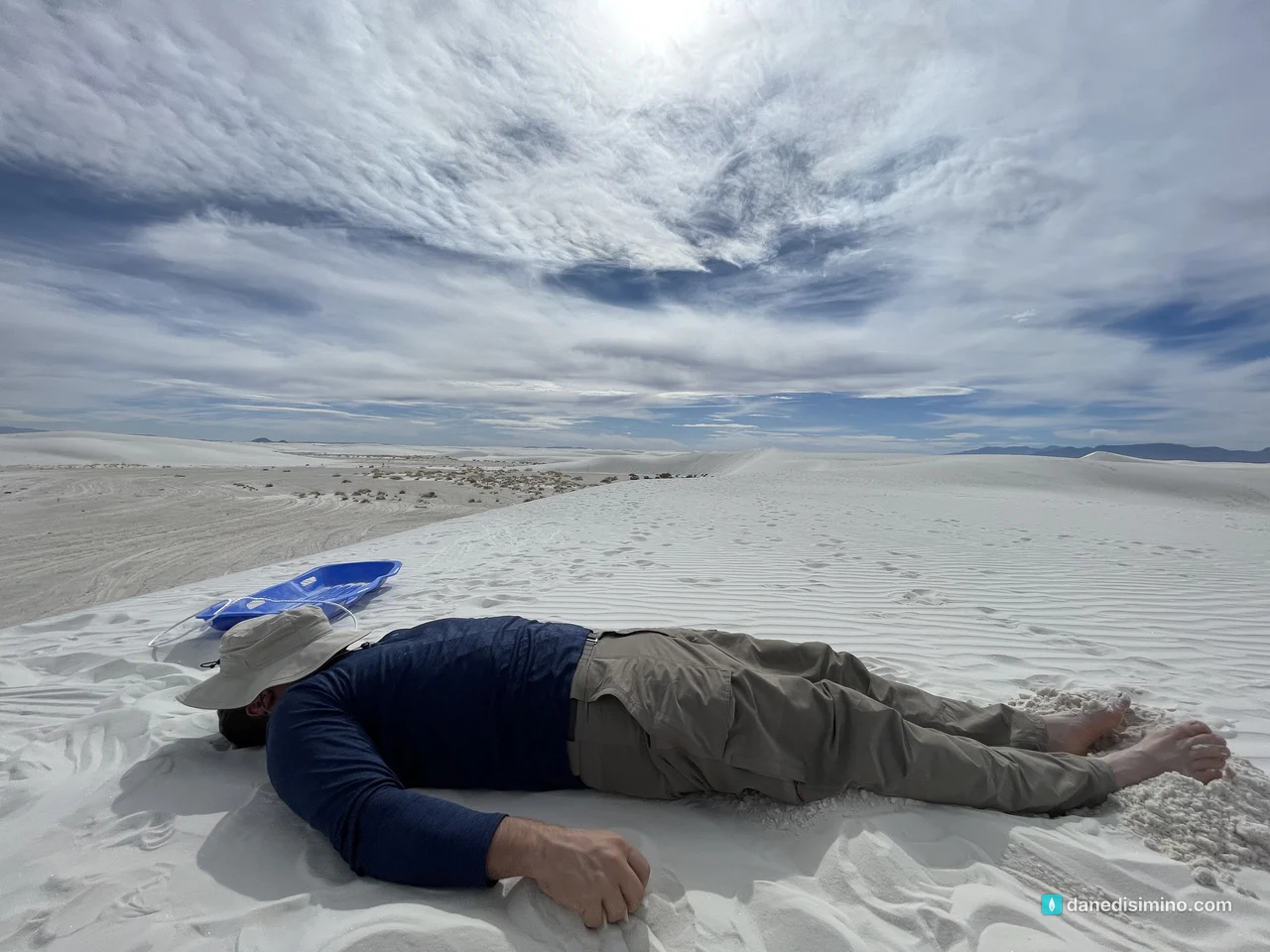
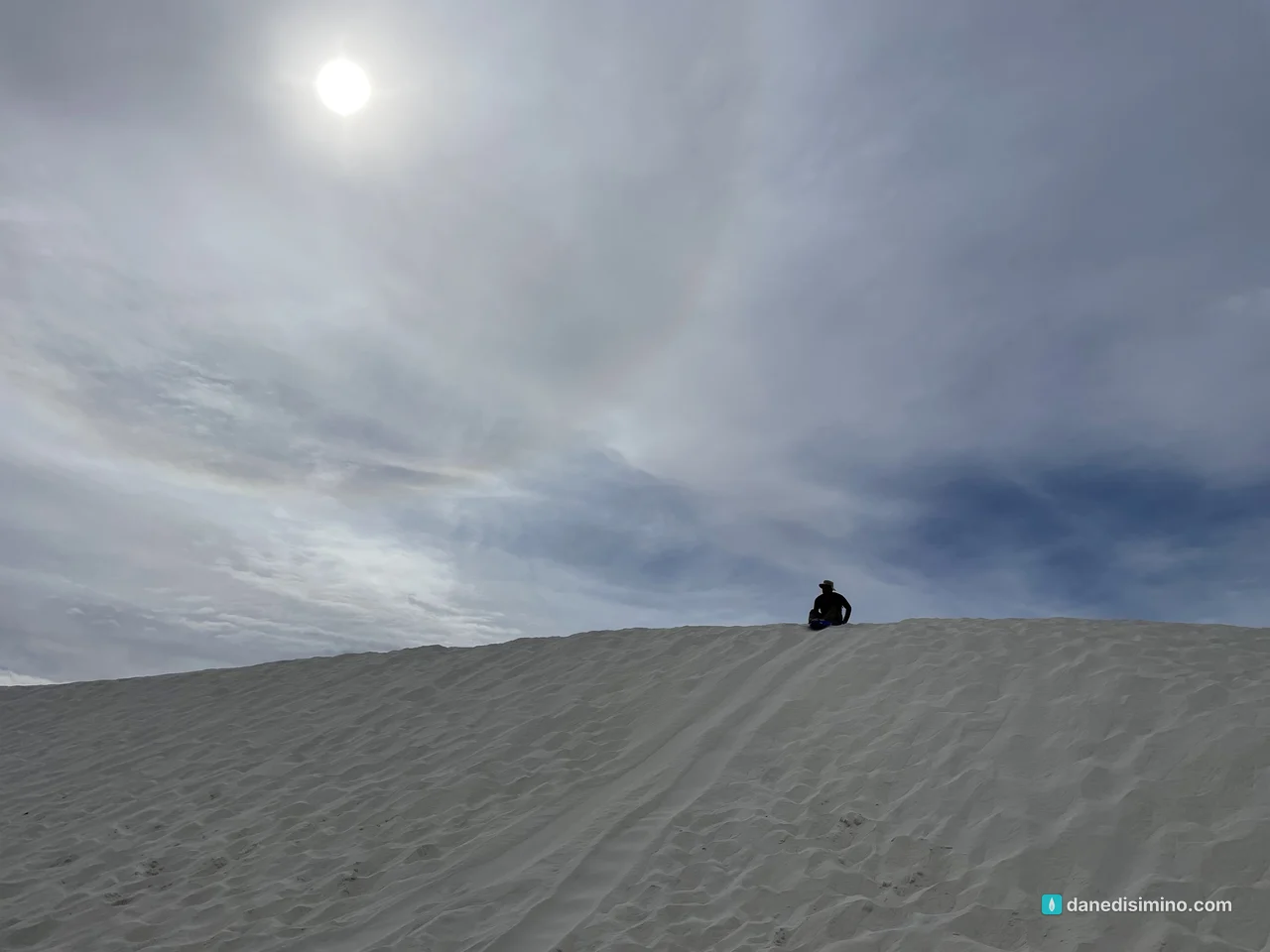
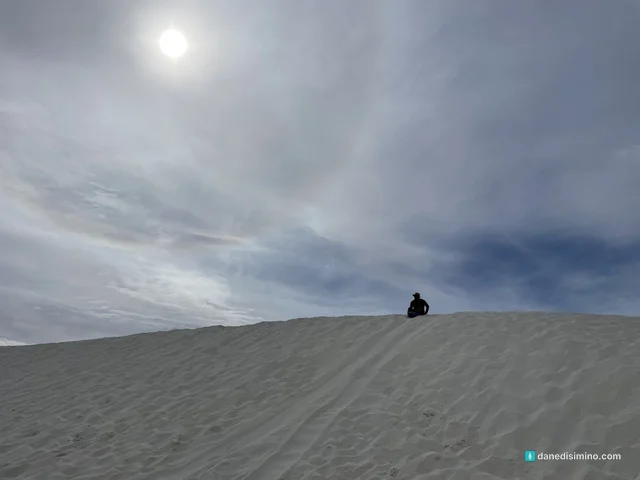
This is the main event. The gypsum sand is softer and smoother than the sand at Great Sand Dunes, and it slides beautifully on the waxed saucers from the gift shop. Carrie and I rode down together as a tandem, crashed, climbed back up and did it again. It was one of the most laughing-out-loud days we've had in a park.
Trails, and how not to get lost
Trails through the dunes are marked with colored posts, and they're easy to underestimate. Every ridge looks like the last one, the sand erases footprints, and wind can blow up a white-out in minutes. People have gotten lost out here, and some haven't come back.
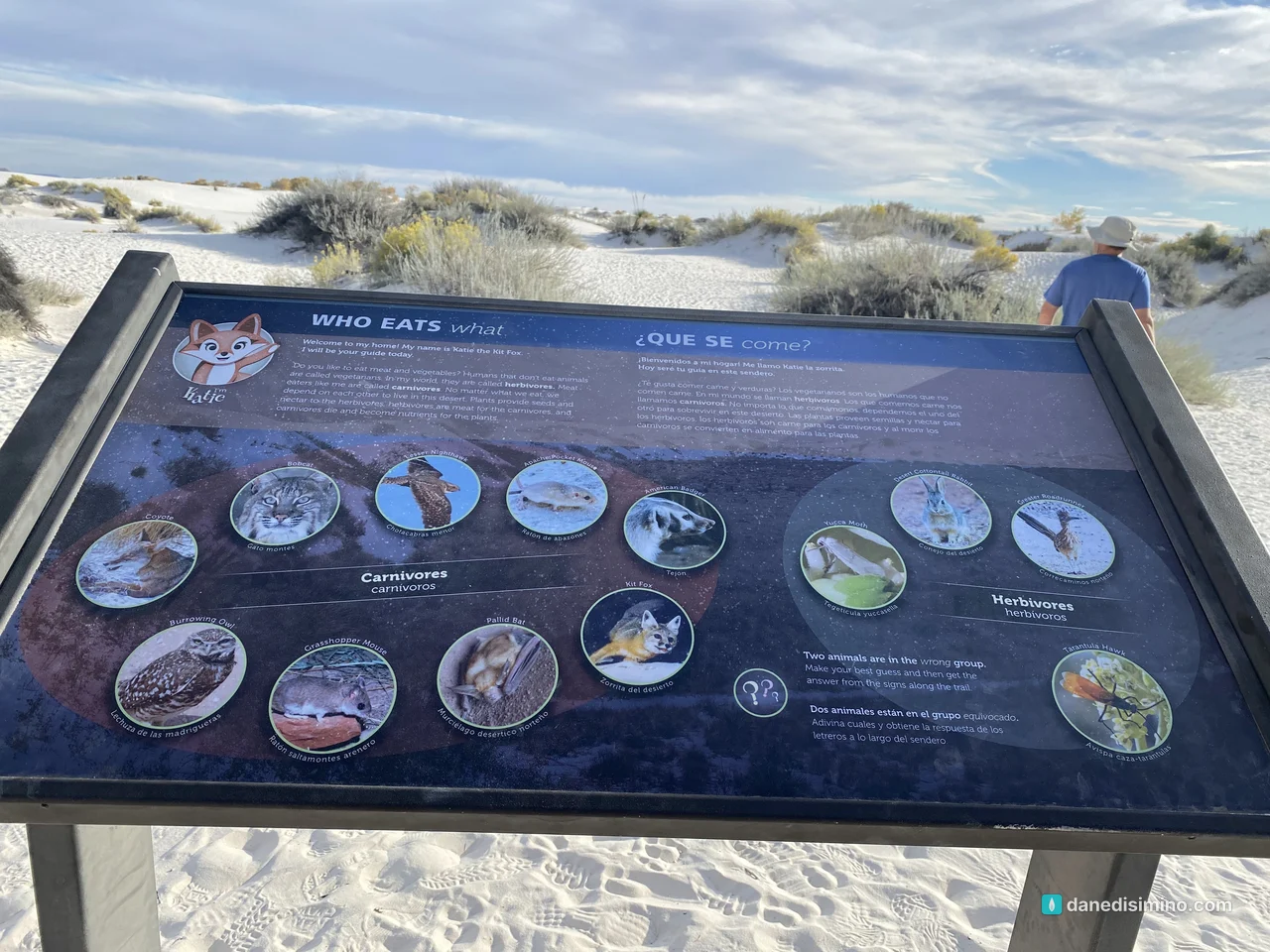
The Dune Life Nature Trail is a good shorter loop, with signs about the animals that live here: kit foxes, pocket mice, lizards and the birds that hunt them.
A cottonwood alone in the dunes
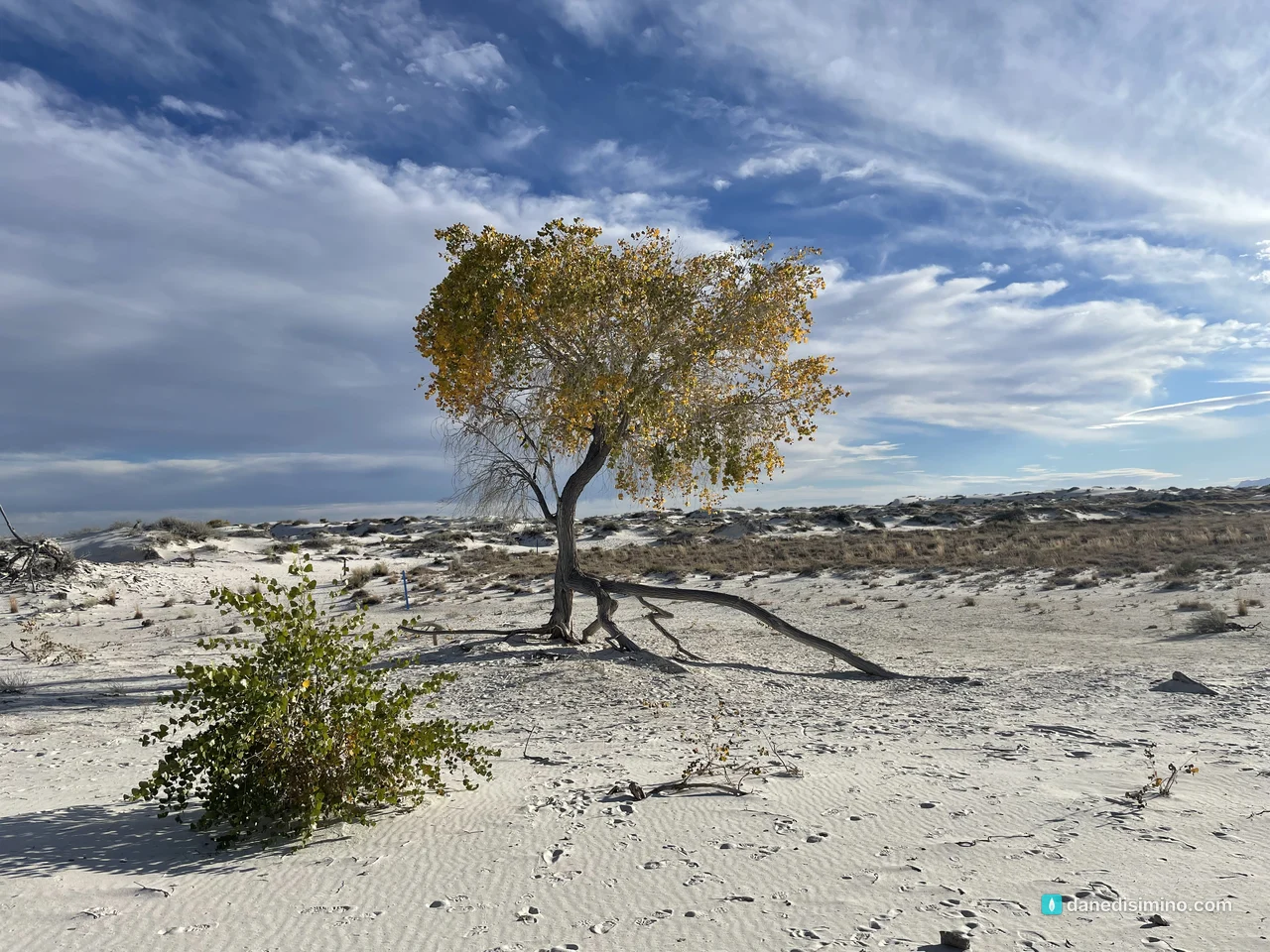
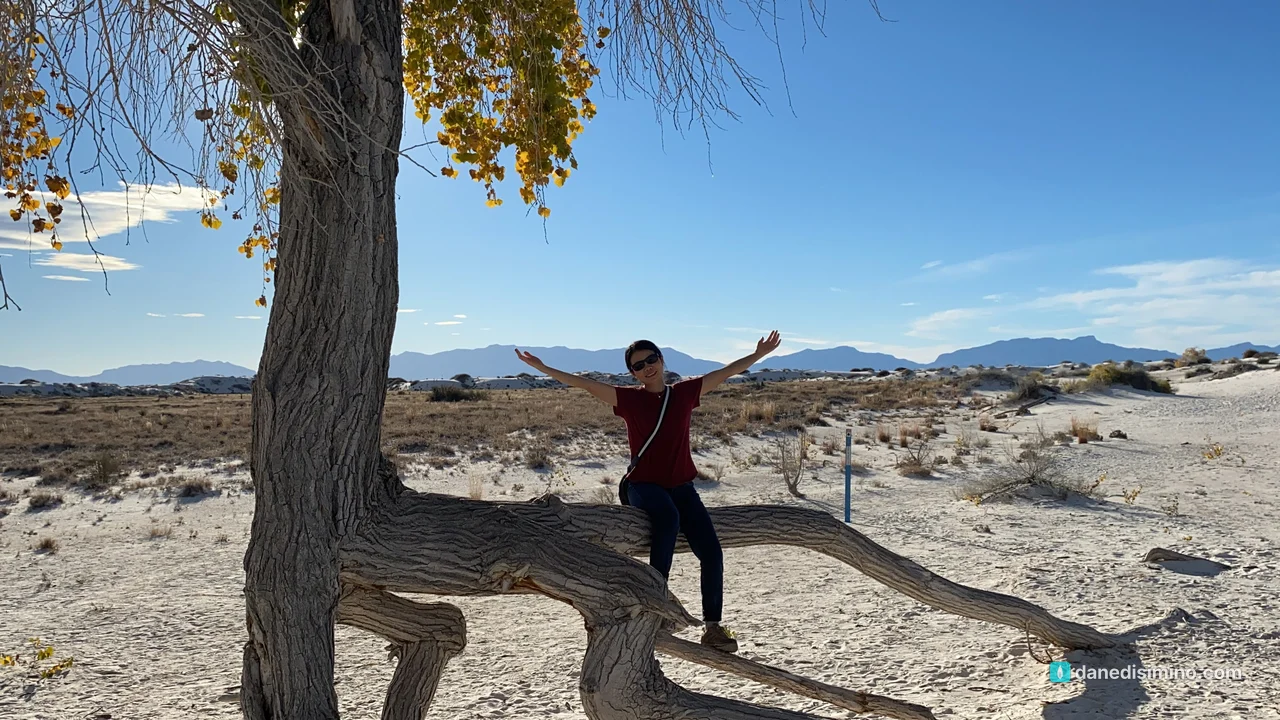
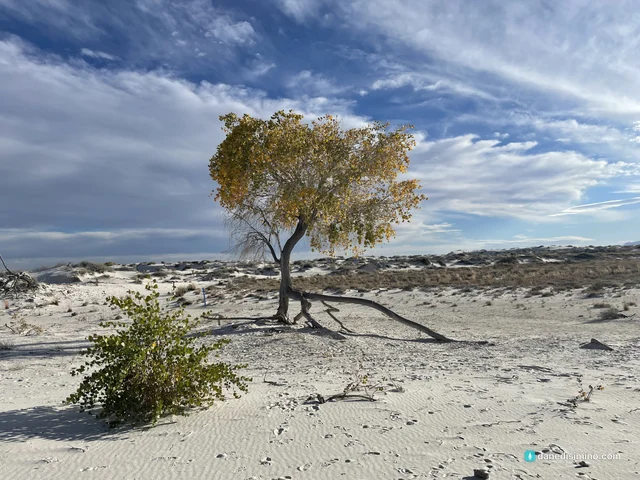
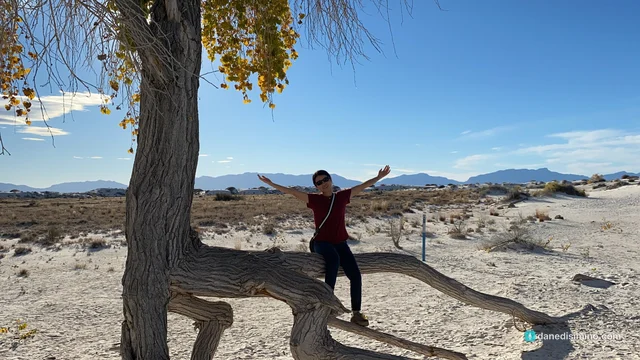
Out in the sand we found a cottonwood tree growing straight out of the dunes, leaves turning gold, its roots and branches sprawled across the sand. It's a strange, beautiful thing in a place where almost nothing grows, and it made for some of our favorite pictures of the trip.
Sunset and night
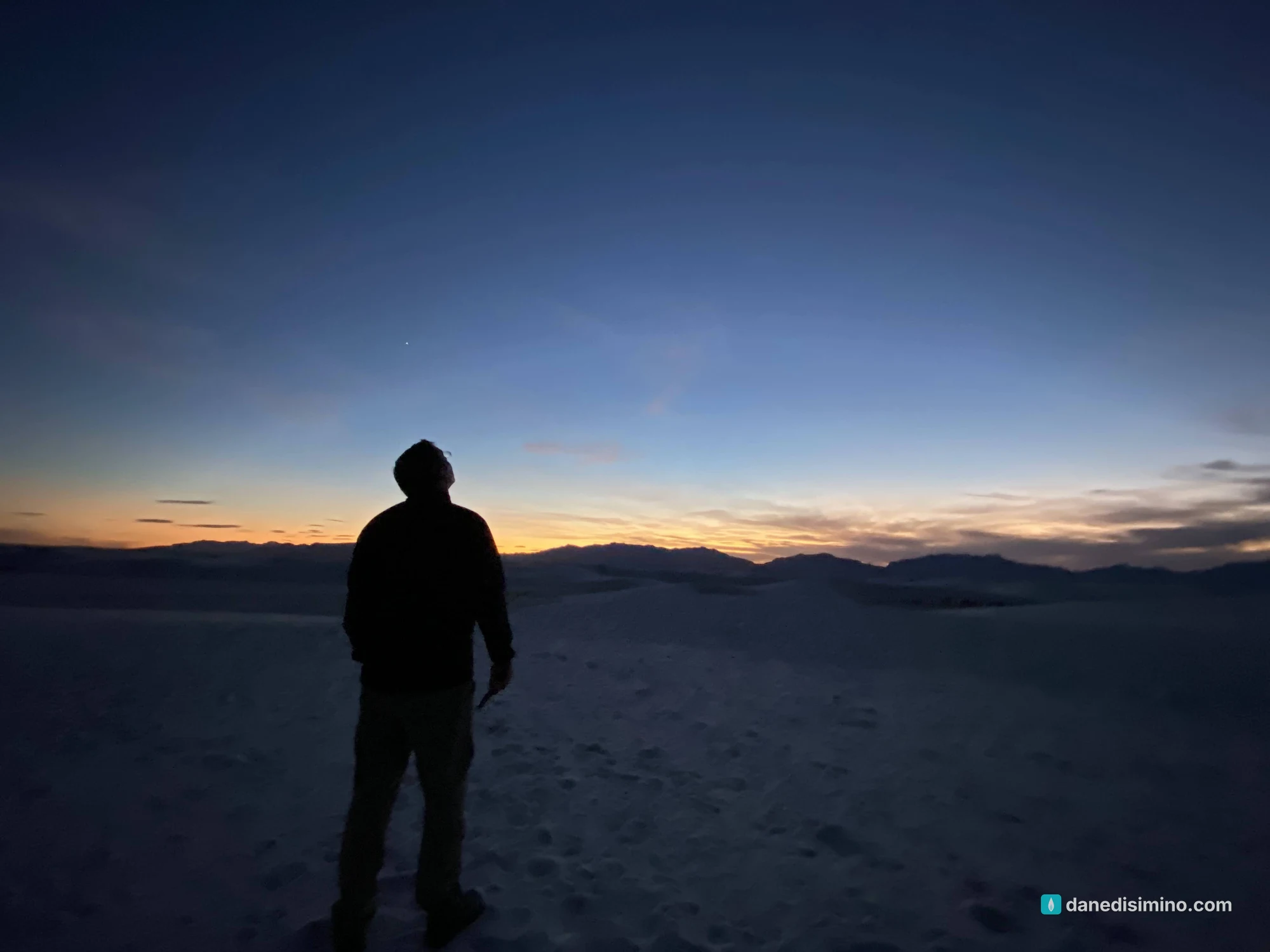
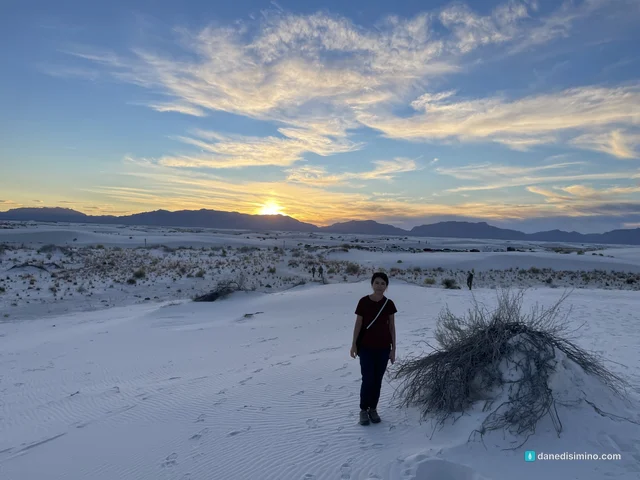
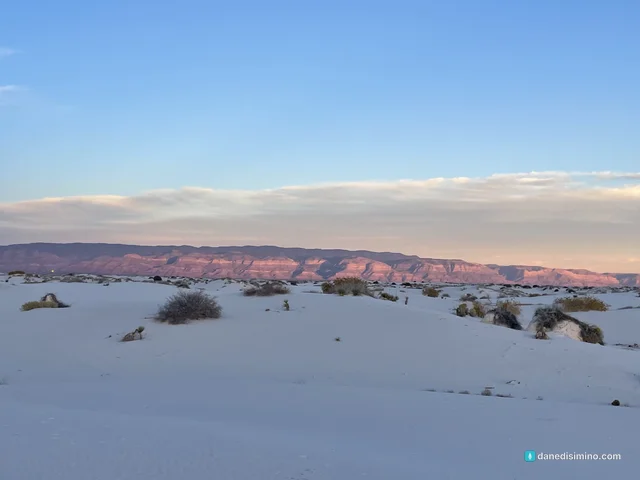
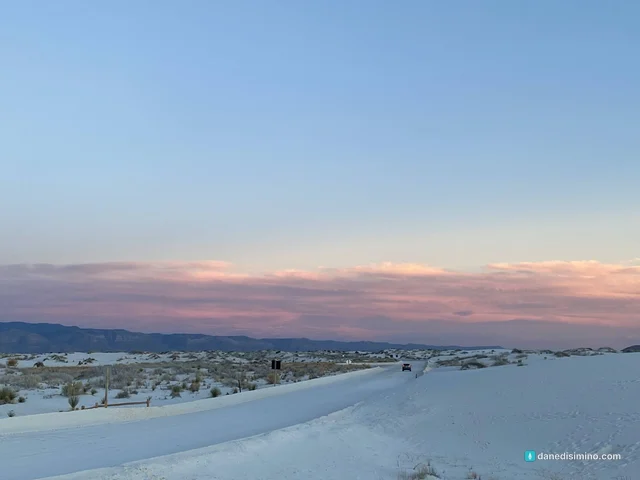
Stay for the end of the day. As the sun drops behind the San Andres Mountains, the sky goes orange, then purple, and the white sand turns every color the sky does. The mountains to the east glow pink for a few minutes after the sun is gone.
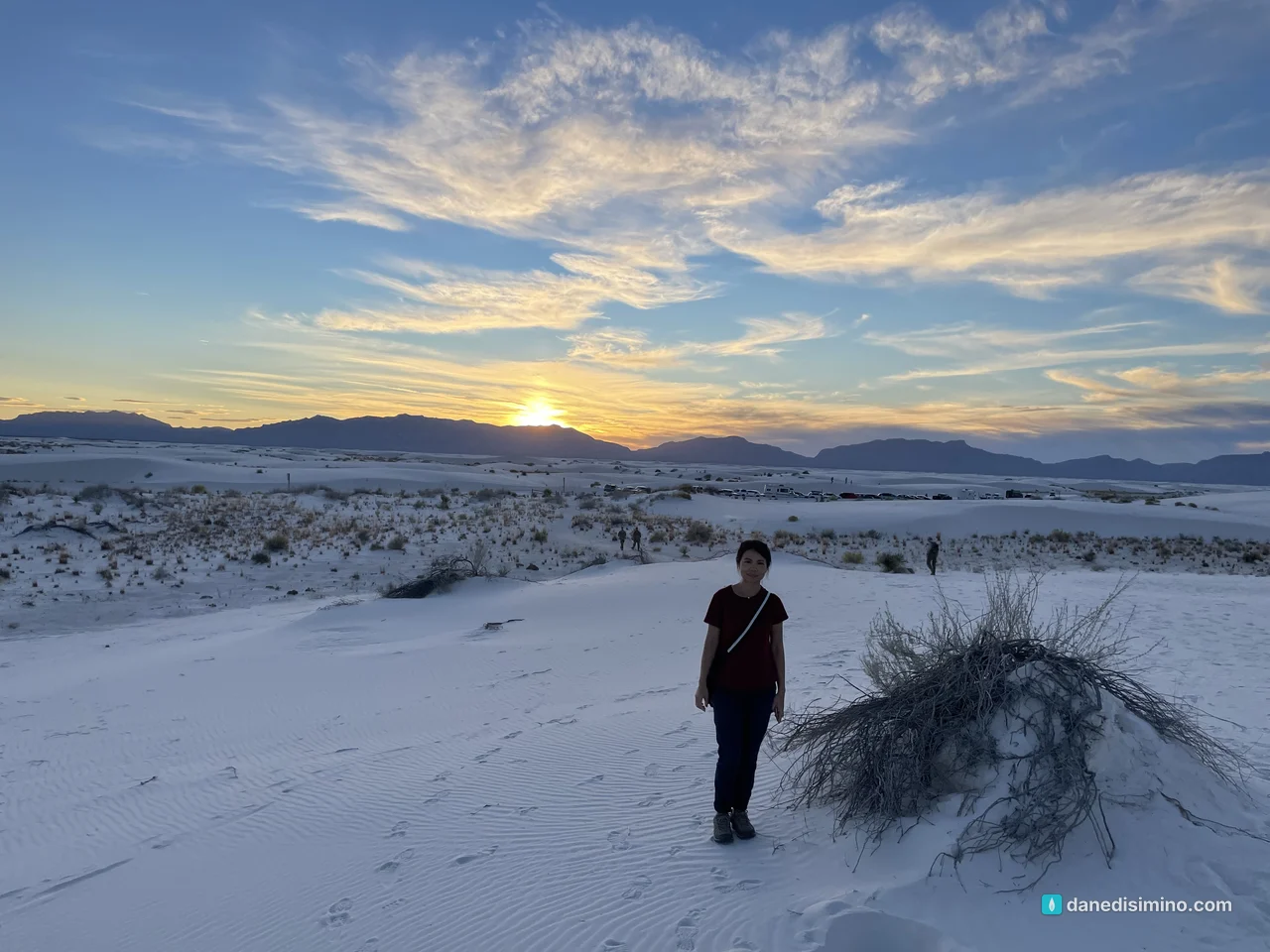
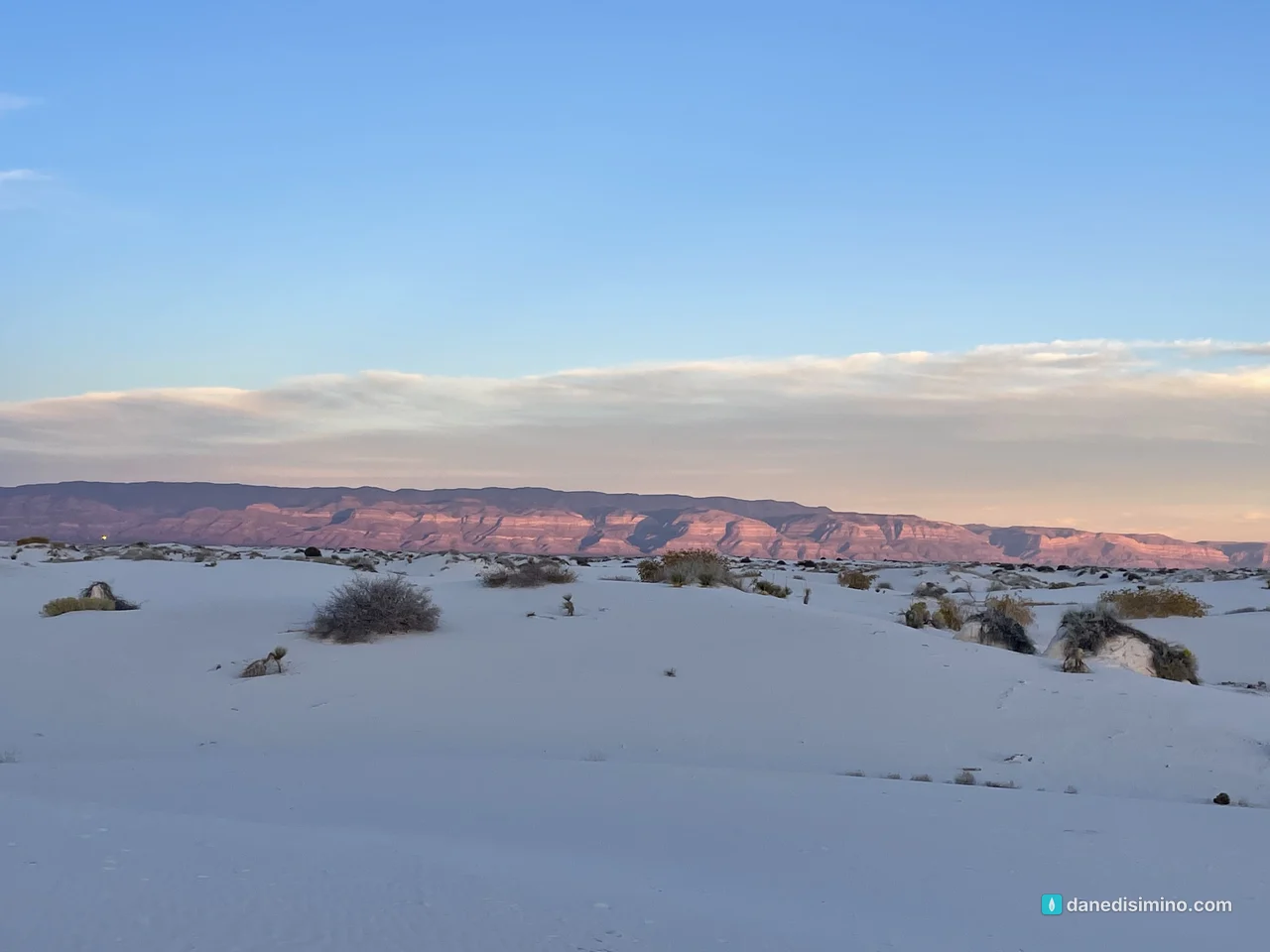
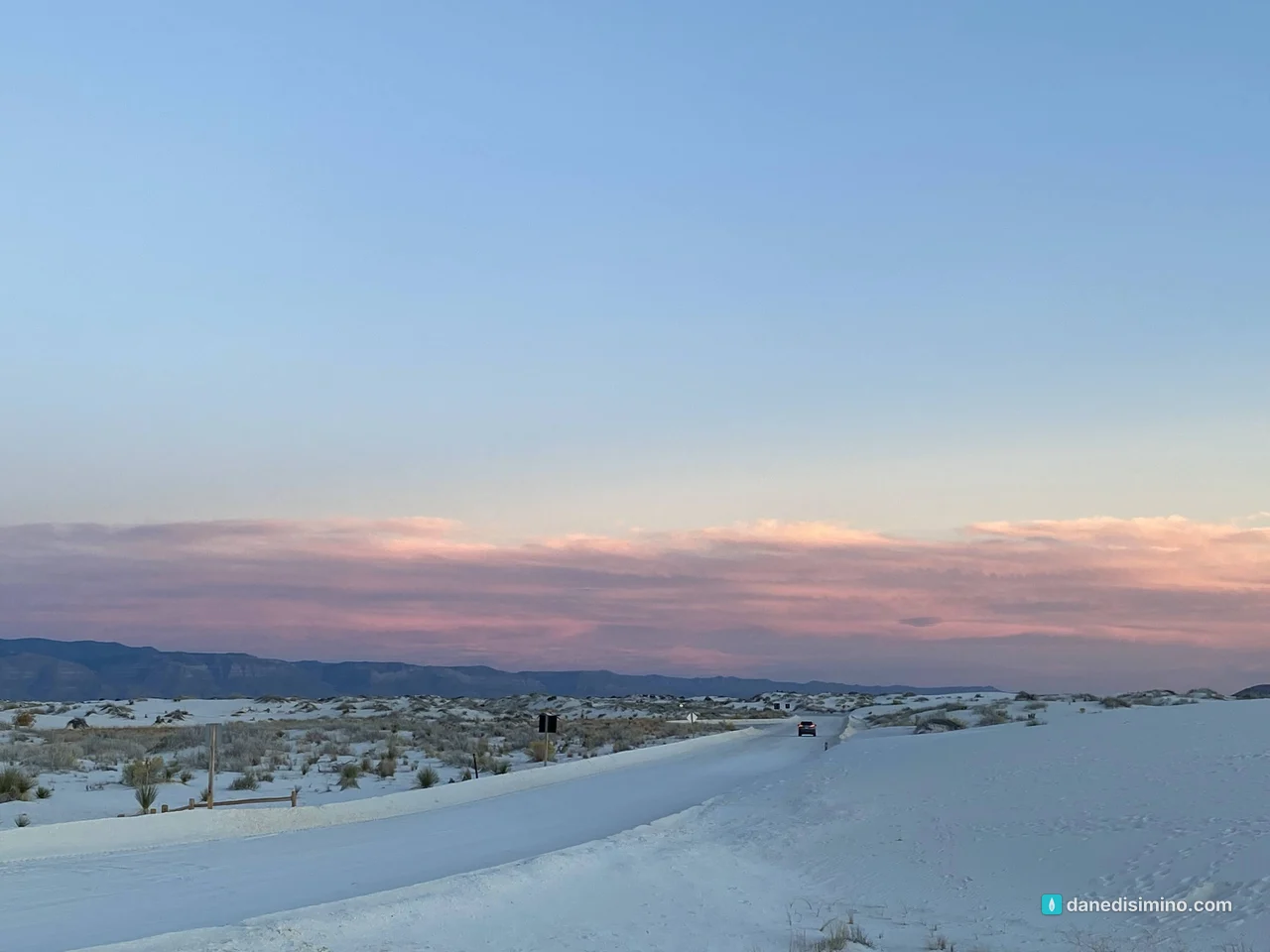
And then the stars. The night sky here is incredible. I stood out in the dunes looking up for a long time, just mesmerized. The park usually closes not long after sunset, so check the hours. For a longer night under the sky, look for the park's full moon and night-sky programs.
Where to stay
There's no campground or lodge in the park. Most people stay in Alamogordo, about 15 miles away, or Las Cruces, about an hour away. The park has a handful of primitive backcountry campsites a short hike into the dunes, but they're sometimes closed for repairs, so check before you plan around them.
Worth knowing: the atomic age started next door
The Tularosa Basin has a second story. During World War II the military built the Alamogordo Bombing and Gunnery Range here, now Holloman Air Force Base, and White Sands Proving Ground, now White Sands Missile Range. On July 16, 1945, the first atomic bomb was detonated at the Trinity Site, about 65 miles north of the park. It's on the missile range and closed to the public, except for an open house the Army holds once a year. If you hear a sonic boom while you're sledding, that's Holloman. Don't be alarmed.
What I'd do differently
Get there early, stay late. Sled in the morning, rest in the heat of the day, then come back for sunset.
Bring a real camera for sunset. Phones don't do the colors justice.
Plan one night for the stars. Time the trip for a full moon night or a night-sky program.
Check the missile-test schedule. A three-hour road closure can eat your sunset.
What White Sands taught me
White Sands taught me how small I am. We spent the day in a white desert that took 275 million years to make, and then the sun went down and the stars came out over the top of it. I stood there looking up and couldn't stop.
"When I look at the night sky and see the work of your fingers—the moon and the stars you set in place—what are mere mortals that you should think about them, human beings that you should care for them?" (Psalm 8:3–4, NLT)
And yet He does.
Questions?
Ask me anything about White Sands: sledding, the trails, timing a sunset, or pairing it with a southern New Mexico road trip. I answer every question.
Photos
Sources
Pathlight
Park guides from the road. A printable trip sheet comes with them when one is ready.