
NATIONAL PARKS · PARK 3 OF 64
Yellowstone
A Field Guide
On this page
Five days from one campsite at Canyon: geysers, hot springs, the Grand Canyon of the Yellowstone, bison at the car window and a cold September in a tent. What to see, where to sleep, and what I'd do differently.
Version 1.1 · Updated Nov 17, 2026
Map
When to go
Average monthly visits, 2023–2025. Source: NPS visitor statistics. ● marks the months we visited.
| January | 42,937 |
|---|---|
| February | 46,380 |
| March | 32,063 |
| April | 73,187 |
| May | 514,358 |
| June | 896,909 |
| July | 979,051 |
| August | 865,528 |
| September | 843,491 |
| October | 319,704 |
| November | 22,734 |
| December | 33,232 |
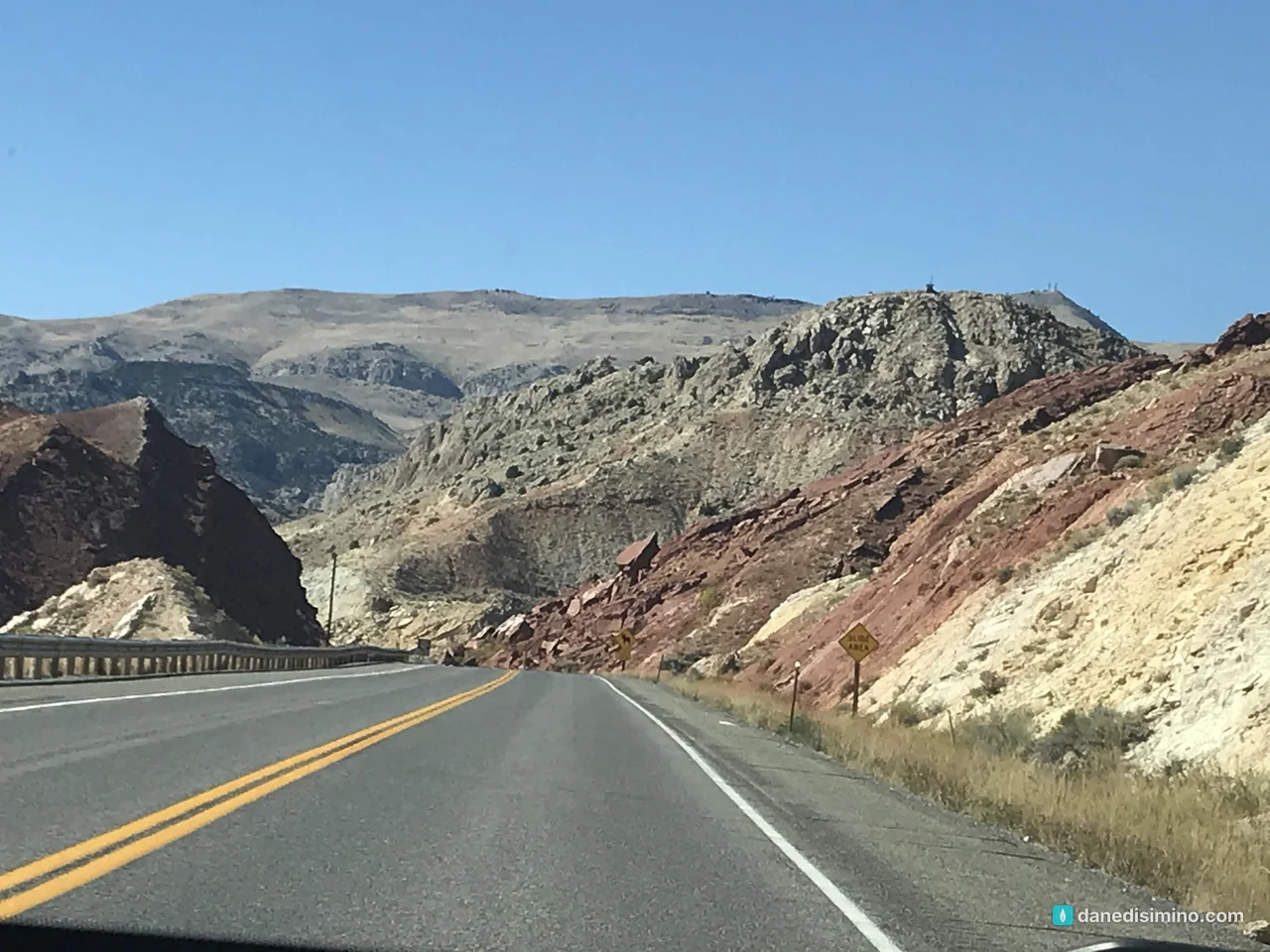
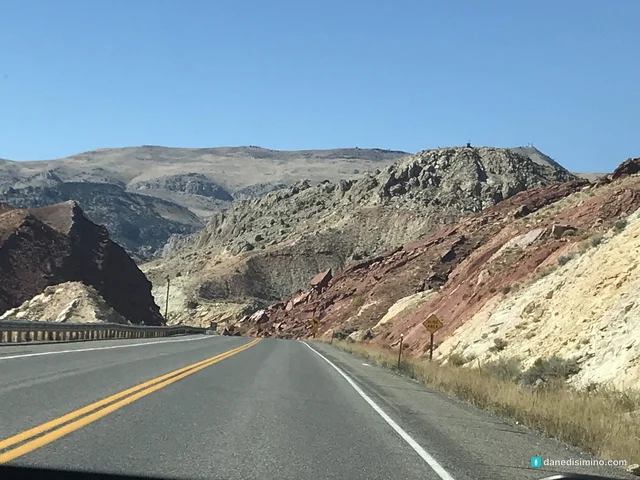
Yellowstone came two and a half weeks after Black Canyon, our first camping trip. We drove up from Golden through Wyoming in early September 2018, and the drive alone was worth it.
It was the biggest outdoor trip we had ever taken. Black Canyon had been a weekend. This was five days and four nights, and I had the bright idea of fitting all our food into one cooler, which meant planning every meal in advance and using everything Black Canyon had taught us. As we came through the gate and drove toward our campground at Canyon, I remember never having been so excited to be anywhere in my life. This was a real national park adventure.
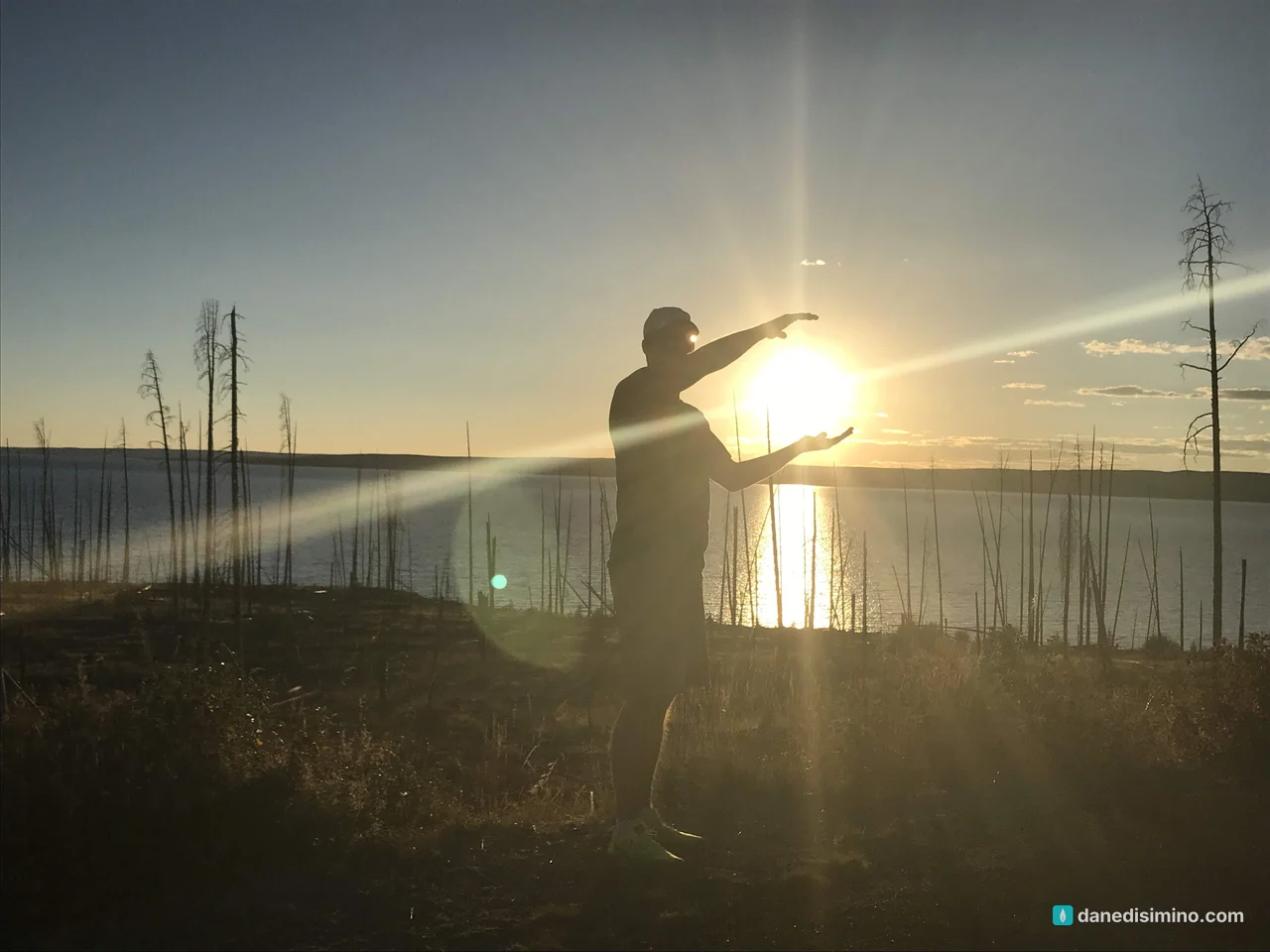
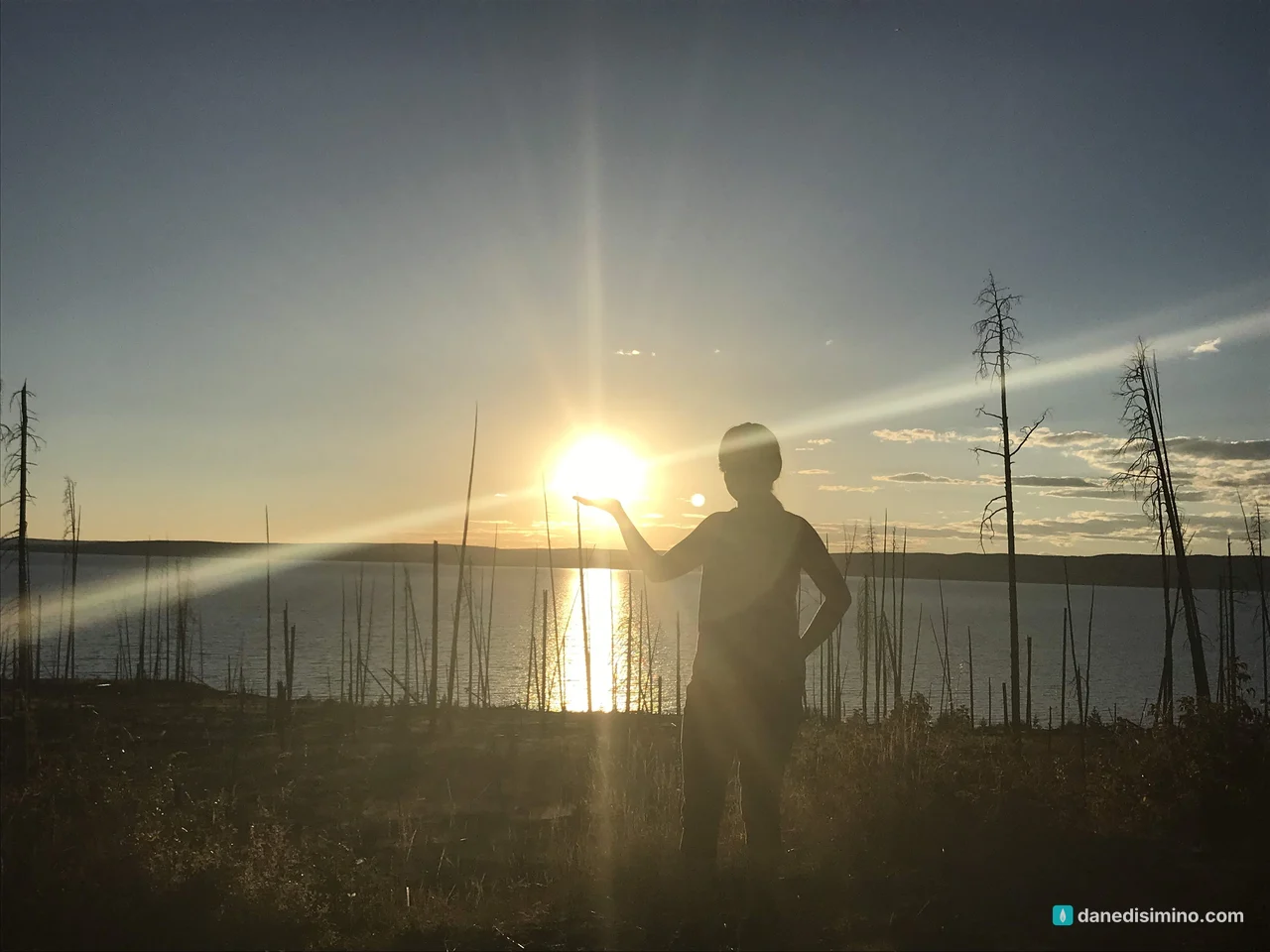
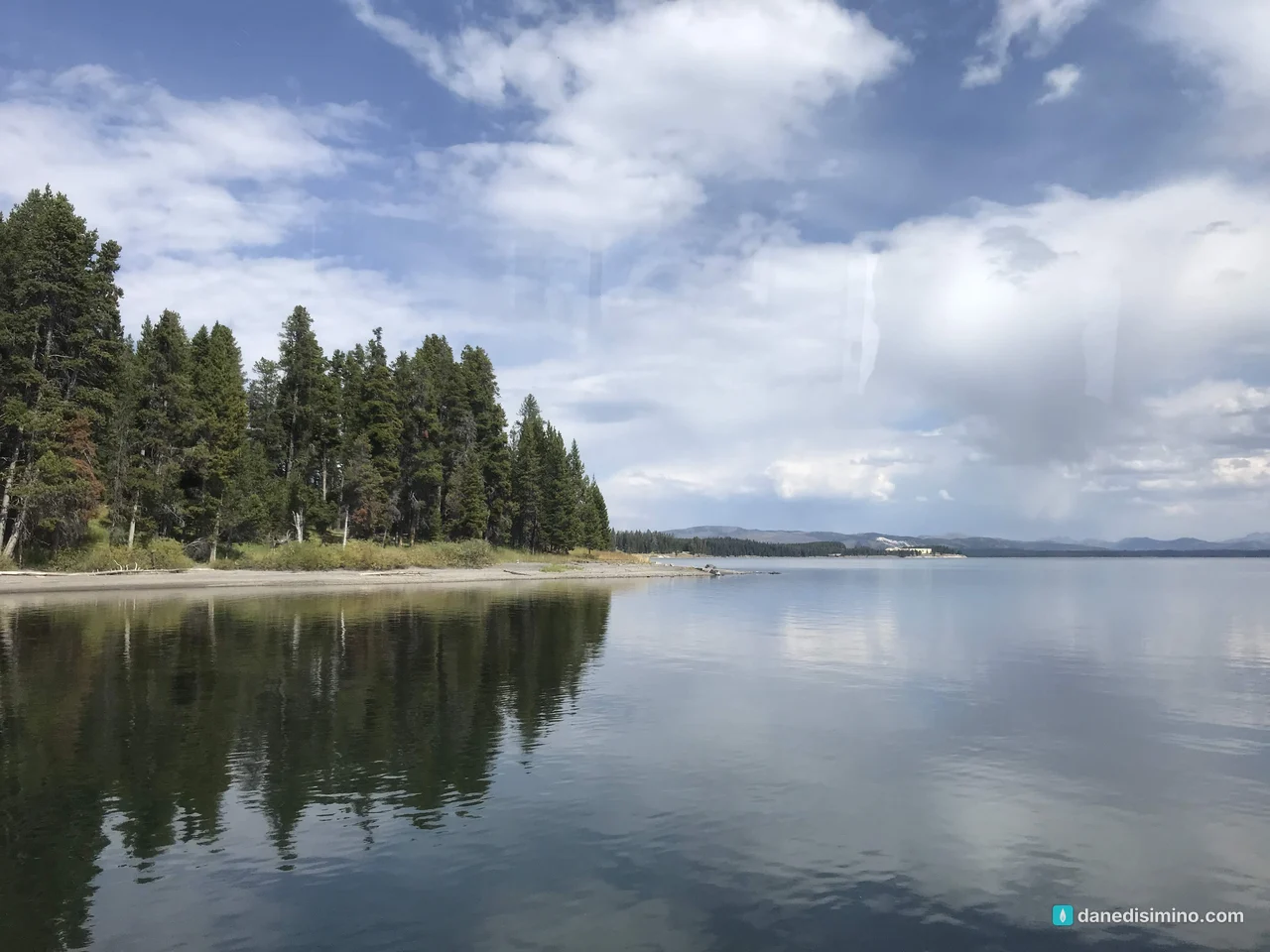
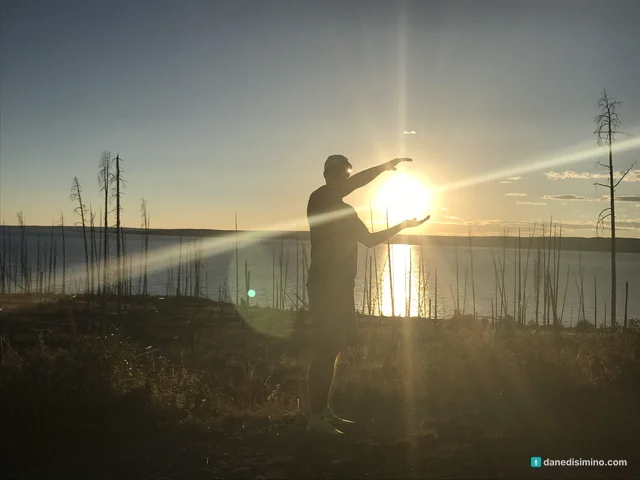
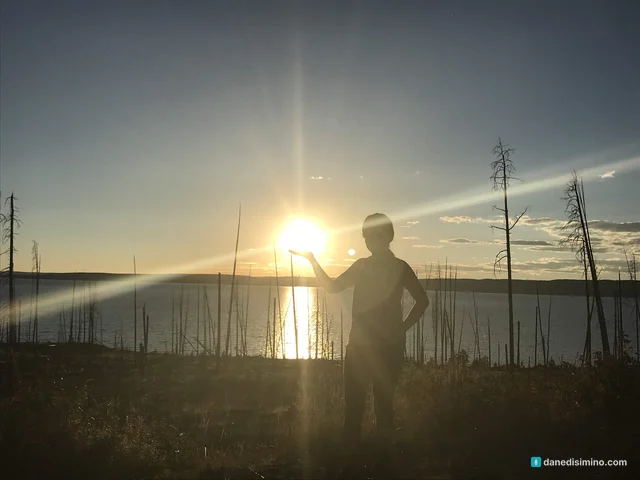
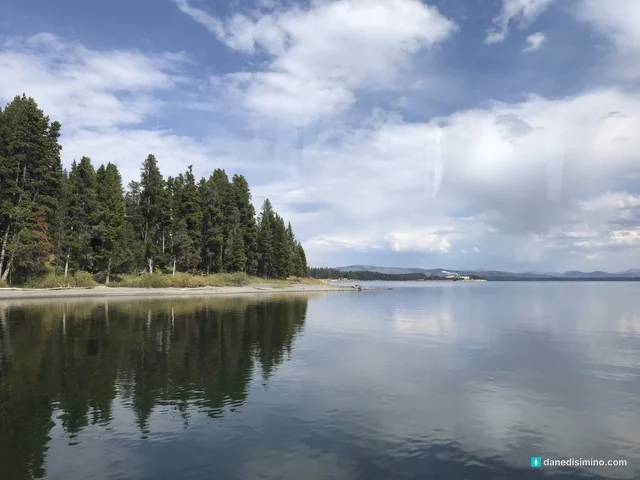
We came in through the East Entrance, over Sylvan Pass, and the road dropped us onto the shore of Yellowstone Lake just as the sun went down. We couldn't resist holding the sun again, like we had at Black Canyon.
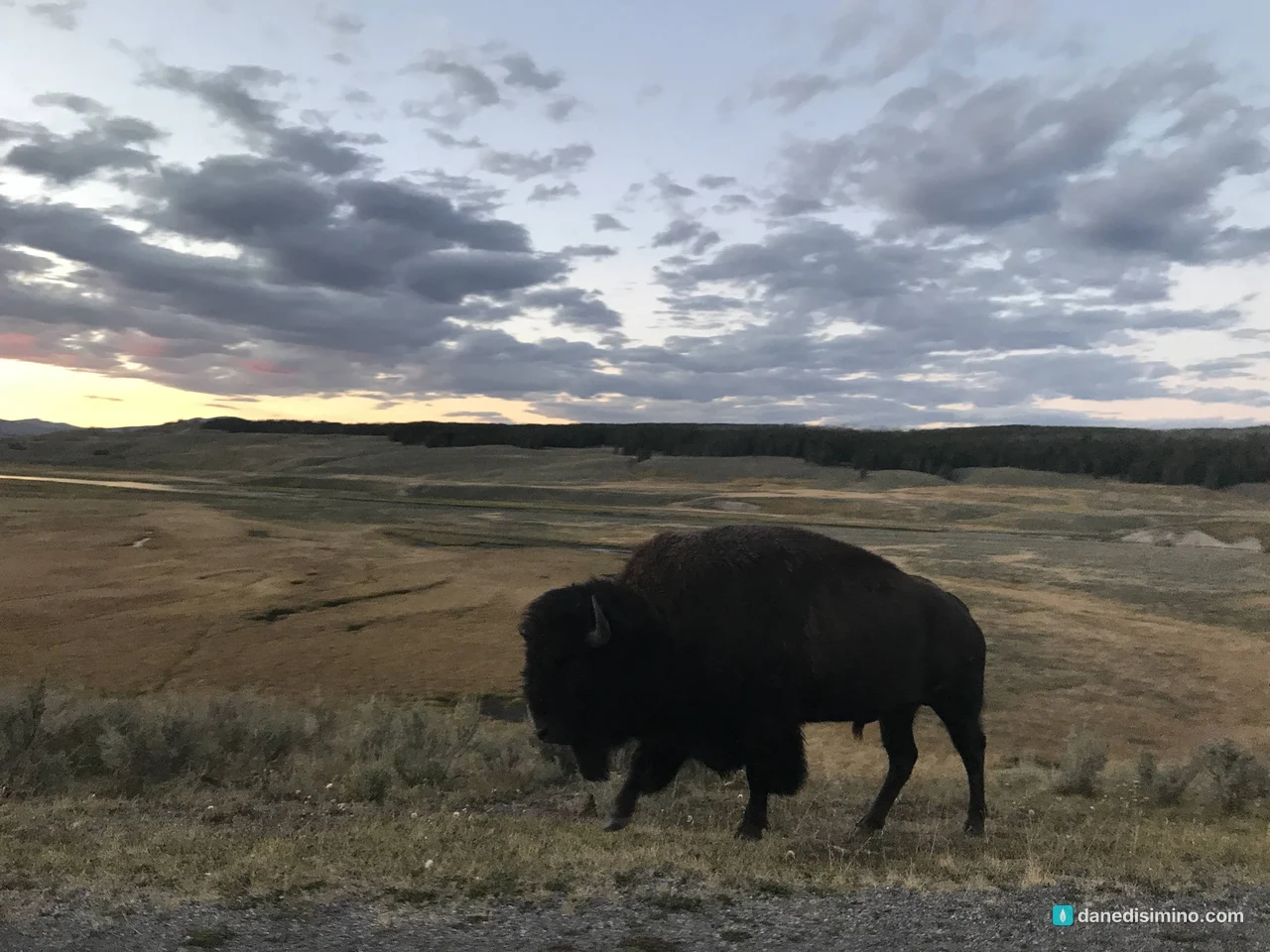
If I look back at why we ended up trying to visit every national park, Yellowstone is the reason.
It's also been hard to beat.
The short version
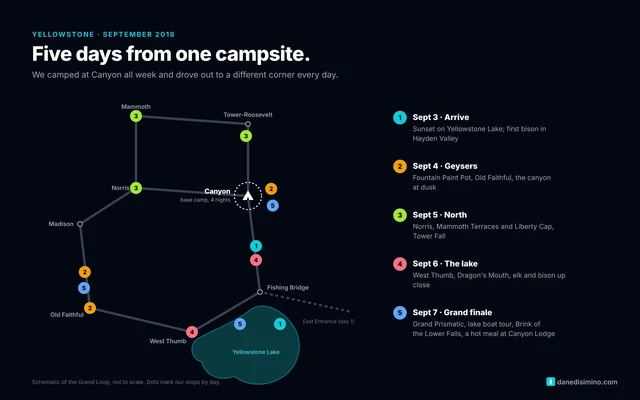
It's huge. Pick a base. We stayed at one campsite at Canyon for all five days and drove out to a different corner each day. Canyon sits in the middle of the Grand Loop, so nothing is too far.
If you only have a few days: Old Faithful, Grand Prismatic, the Grand Canyon of the Yellowstone and the Brink of the Lower Falls. Then spend your sunsets in Hayden Valley.
If you have five days: throw away the plan and explore.
September is great, and cold. Fewer people, but nights get close to freezing. Pack for it, especially if you're in a tent.
You're in grizzly country. Carry bear spray and make noise on the trail.
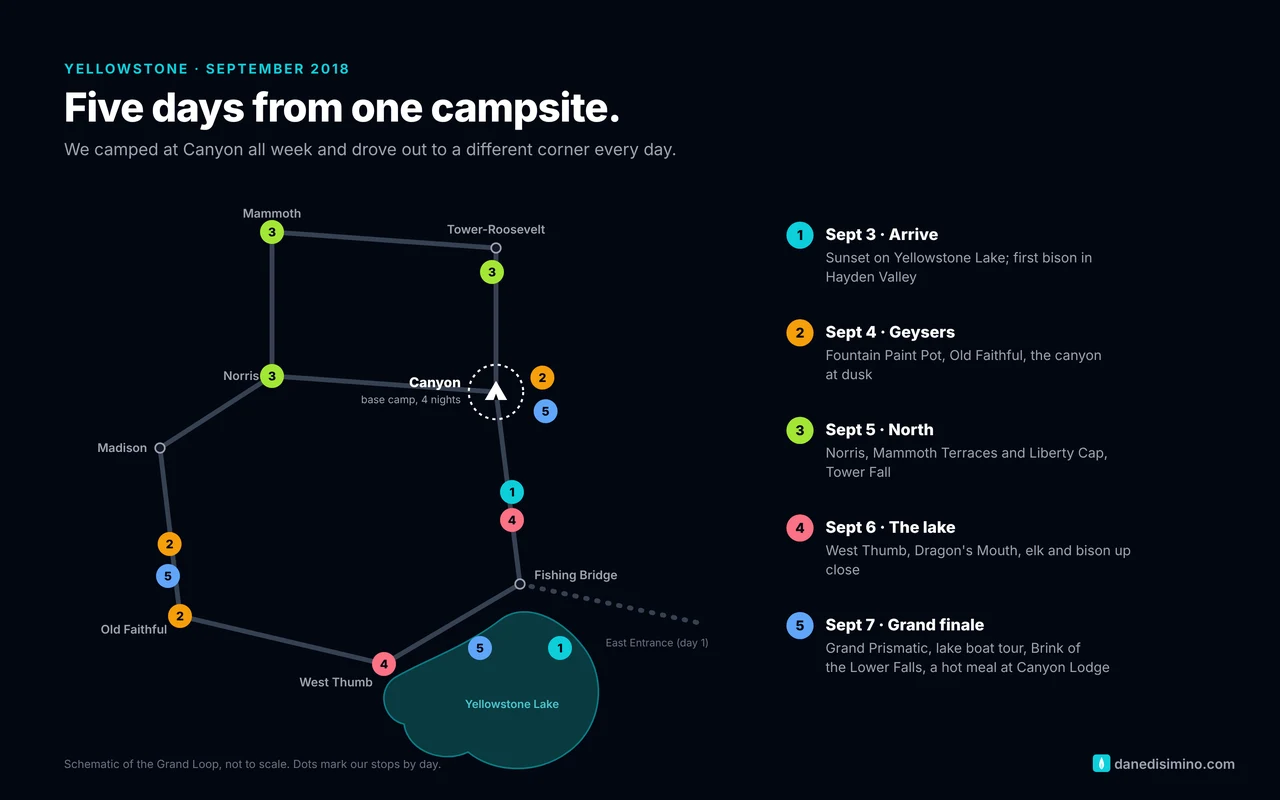
- Day 1 · Sept 3In through the East EntranceSunset on Yellowstone Lake, then our first bison in Hayden Valley on the way to camp.
- Day 2 · Sept 4Geyser countryFountain Paint Pot and Old Faithful, then back to the canyon at dusk.
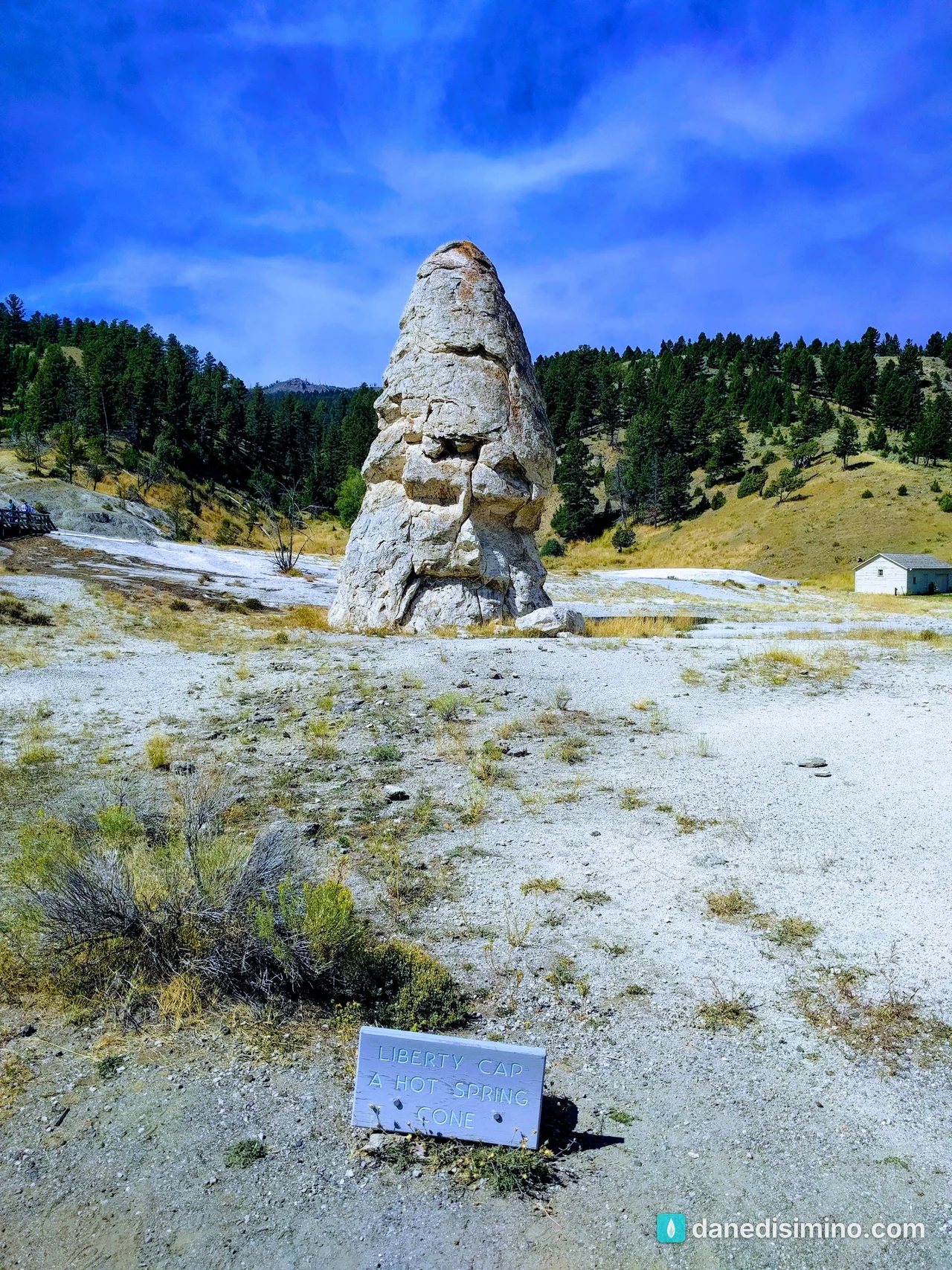
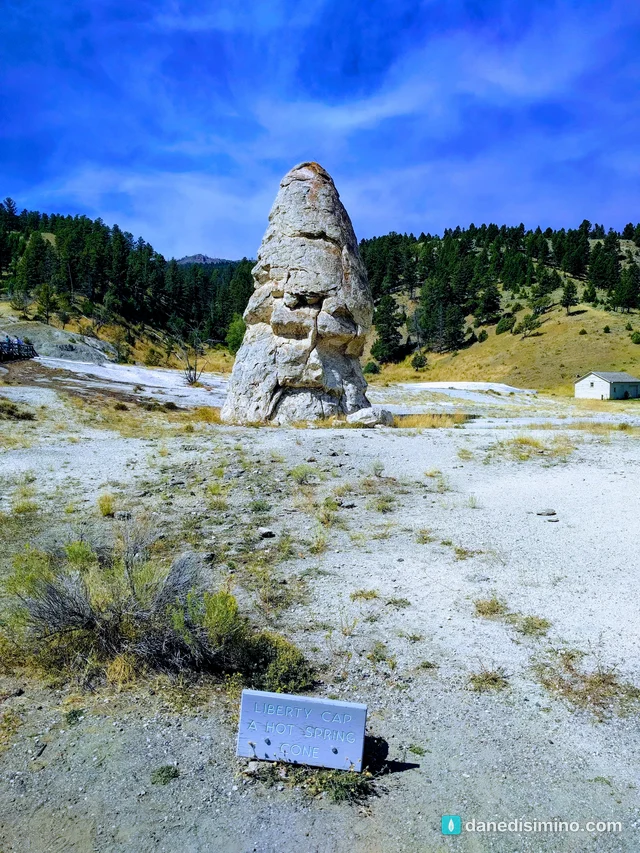
- Day 3 · Sept 5The north loopNorris, Mammoth's terraces and Liberty Cap, Tower Fall.
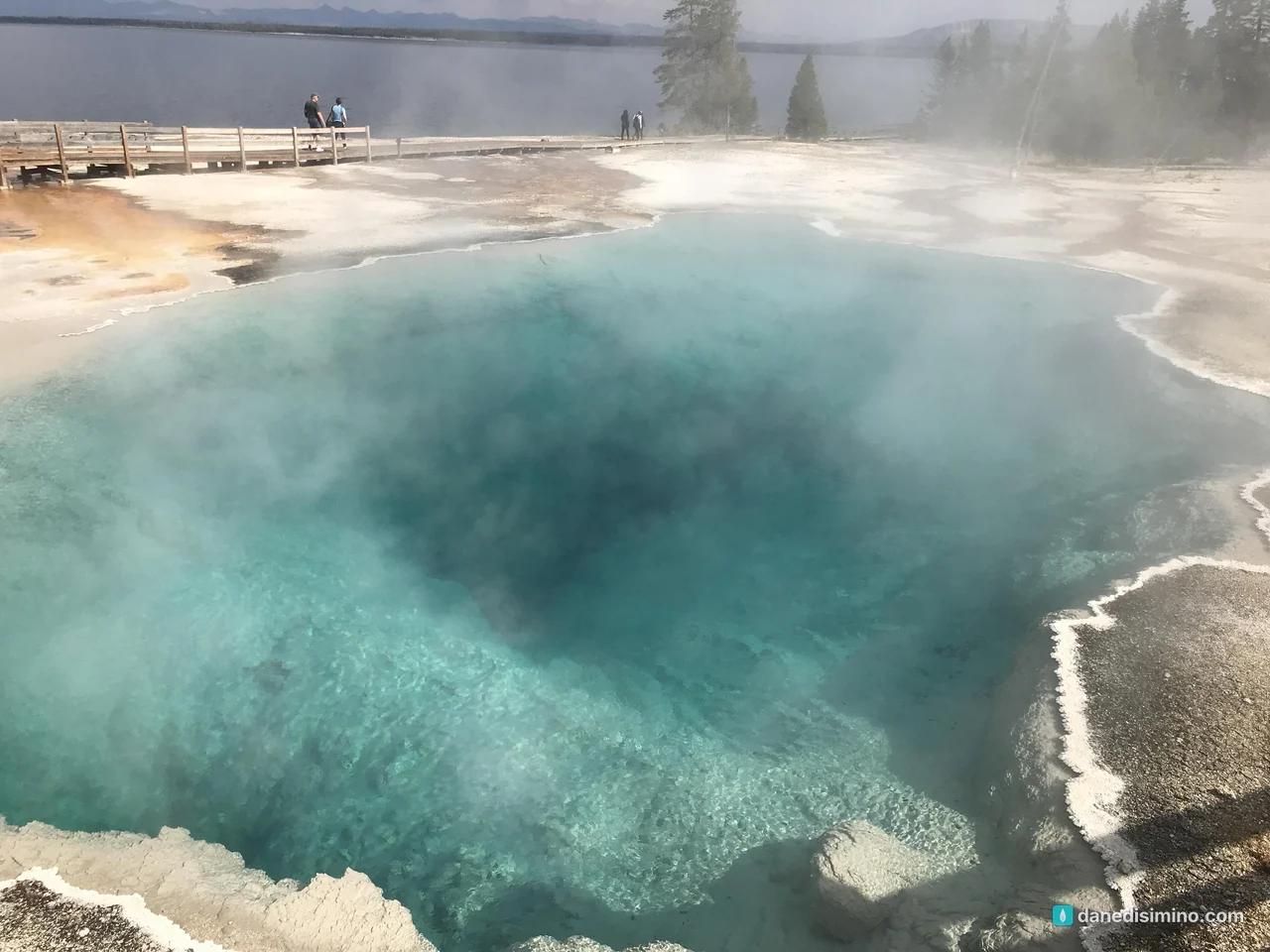
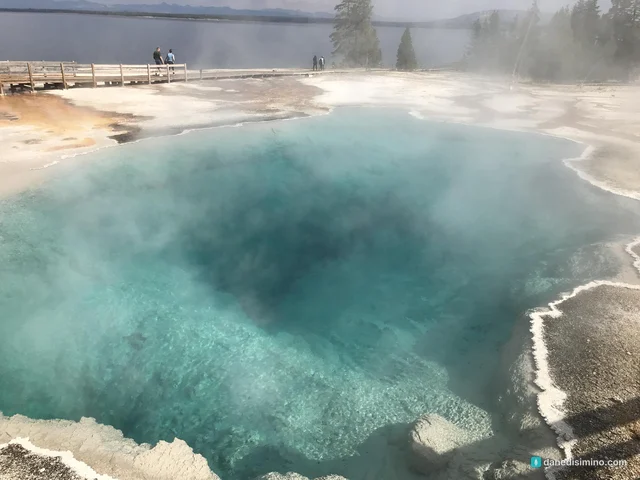
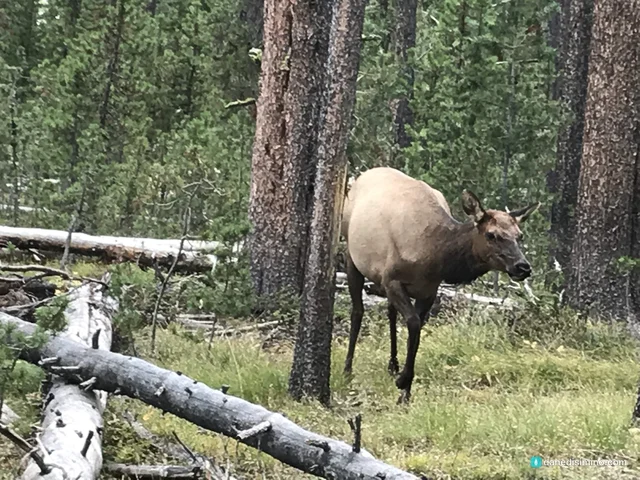
- Day 4 · Sept 6The lake sideWest Thumb, Dragon's Mouth, elk and bison up close.
- Day 5 · Sept 7Grand finaleGrand Prismatic, the boat tour, the Brink of the Lower Falls, and a hot meal at Canyon Lodge.
The park at a glance
- 1872
- The world's first national park
- 2.2M
- Acres, mostly in Wyoming
- 10,000+
- Hydrothermal features
- 308 ft
- Height of the Lower Falls
Where: mostly in northwest Wyoming, with edges in Montana and Idaho. Five entrances. The Grand Loop Road is a figure eight that connects the main areas: Mammoth, Norris, Madison, Old Faithful, West Thumb, Lake, Canyon and Tower-Roosevelt.
Why it's hot: a supervolcano. The latest huge eruption was about 631,000 years ago, and the center of the park collapsed into a 30- by 45-mile caldera. That heat still powers the world's largest group of hydrothermal features: geysers, hot springs, fumaroles and mudpots.
The lake: Yellowstone Lake is the largest high-elevation lake in North America, more than 400 feet deep with 141 miles of shoreline.
Entrance fee: $35 per private vehicle, good for seven days. Since January 2026, visitors who aren't US residents pay an extra $100 per person.
Campgrounds: a dozen, from big reservable ones like Canyon to small first-come sites. Book early.
Contact: nps.gov/yell. In an emergency, call 911.
What makes Yellowstone boil
Yellowstone sits on top of an active supervolcano.
A hot spot. Deep below, a plume of heat from the earth's mantle melts rock in the crust. As the North American plate has slid southwest over it, it has left a 500-mile trail of more than 100 calderas across southern Idaho. Today the hot spot sits under Yellowstone.
Three super-eruptions. About 2.1 million years ago, one of the largest eruptions known on Earth emptied a magma chamber, and the ground collapsed into the first caldera. A second, smaller eruption followed about 1.3 million years ago. The third, 631,000 years ago, made the 30- by 45-mile Yellowstone Caldera that holds much of the park today. The last lava flow was about 70,000 years ago.
Still alive. Two magma chambers of partly molten rock lie a few miles below the surface. The caldera floor rises and falls, and small earthquakes are common. Scientists at the Yellowstone Volcano Observatory watch it around the clock.
The plumbing. Rain and snowmelt seep down, get superheated by that magma, and rise back up. If the water flows freely, you get a hot spring. If the plumbing has a tight spot that traps the pressure, you get a geyser. Acidic, water-poor springs dissolve the rock into mudpots, and vents with almost no water become steaming fumaroles.
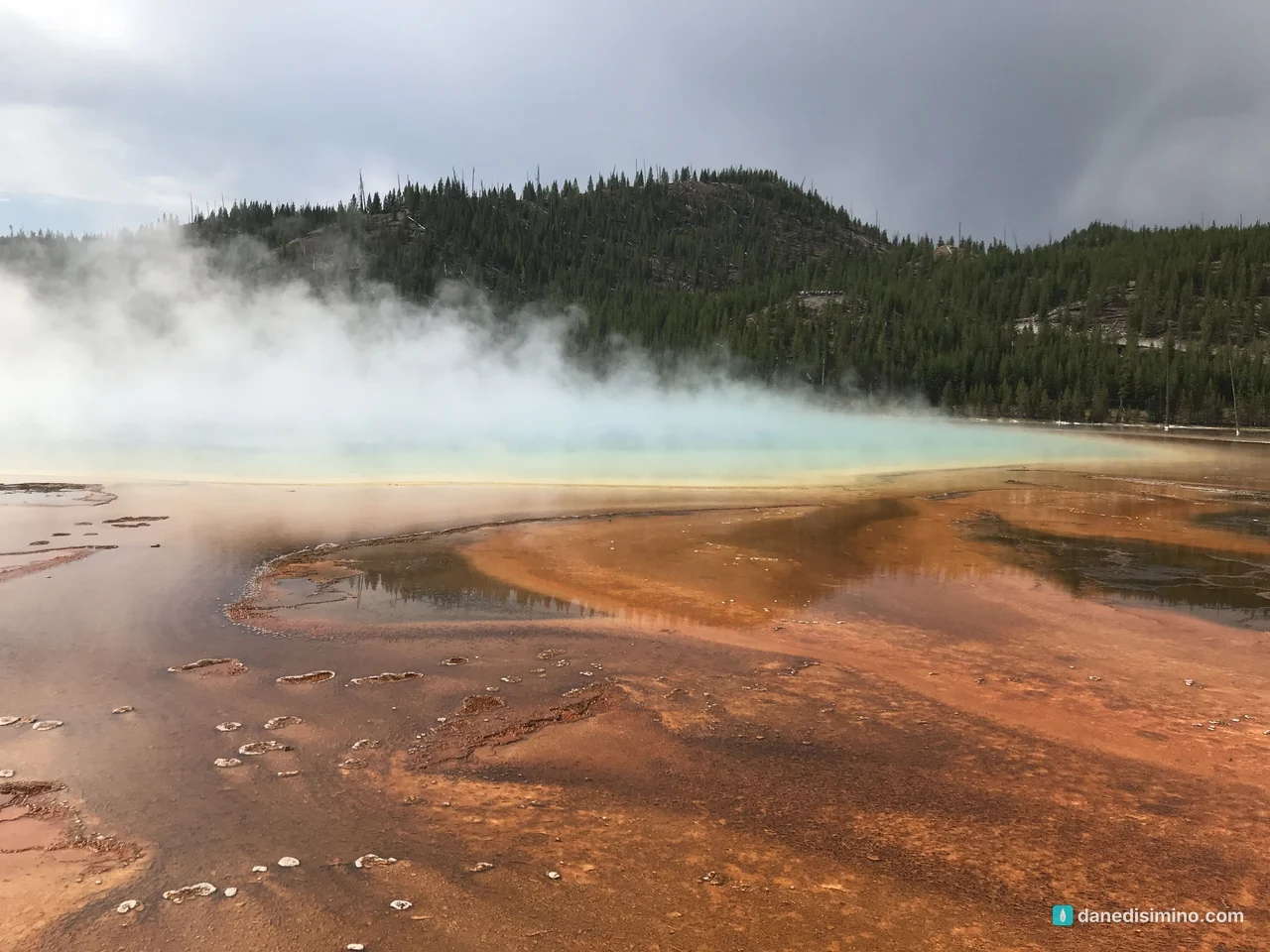
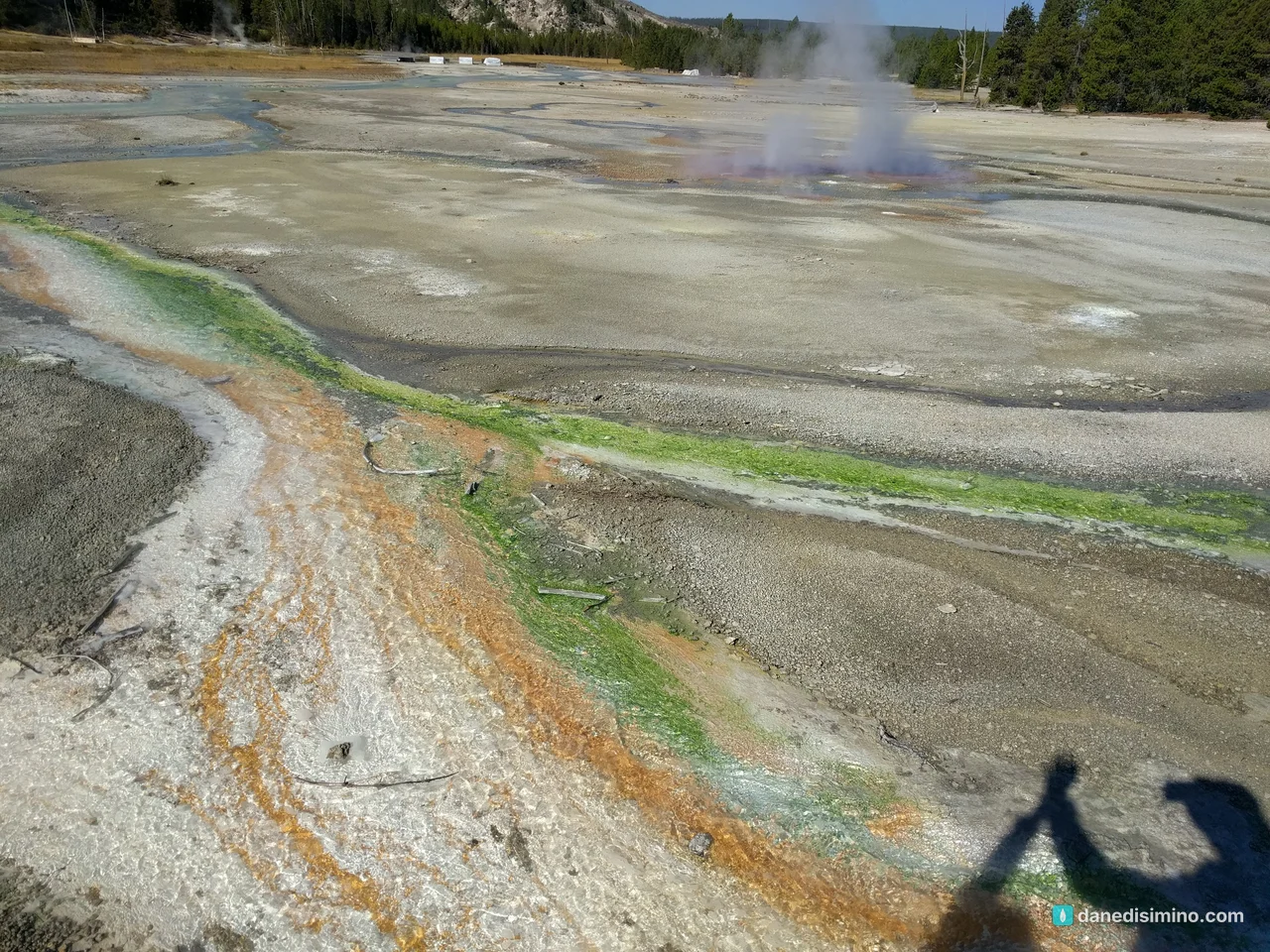
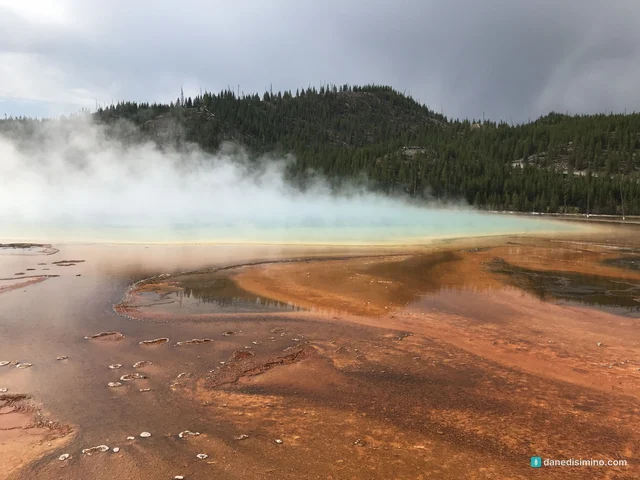
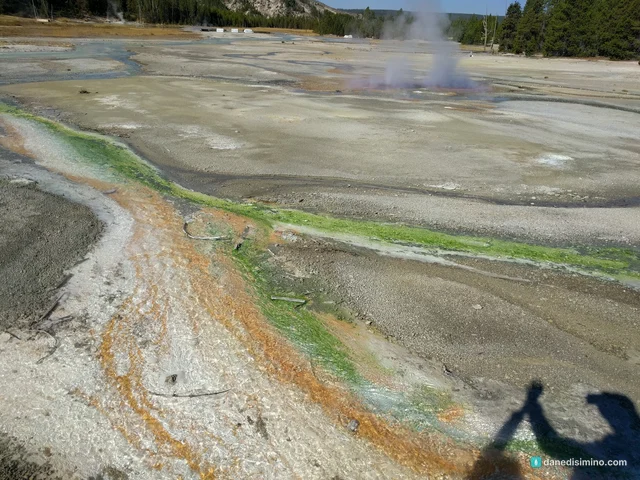
The colors. The bright oranges, yellows and greens around the hot springs are living things: microbes called thermophiles, "heat lovers," each kind thriving at its own temperature.
- 10,000+
- Hydrothermal features
- 500+
- Geysers
- 631,000
- Years since the last super-eruption
- 30 x 45 mi
- The Yellowstone Caldera
The first national park
Native peoples used this land for thousands of years before any explorer arrived. When trappers came back with stories of boiling springs and spouting water, few believed them. The Washburn Expedition of 1870 and the Hayden Expedition of 1871, with photographs by William Henry Jackson and paintings by Thomas Moran, finally convinced Congress. Just six months after the Hayden Expedition, on March 1, 1872, President Ulysses S. Grant signed the law creating Yellowstone, the world's first national park. It was set aside, in the law's words, "for the benefit and enjoyment of the people."
If you go
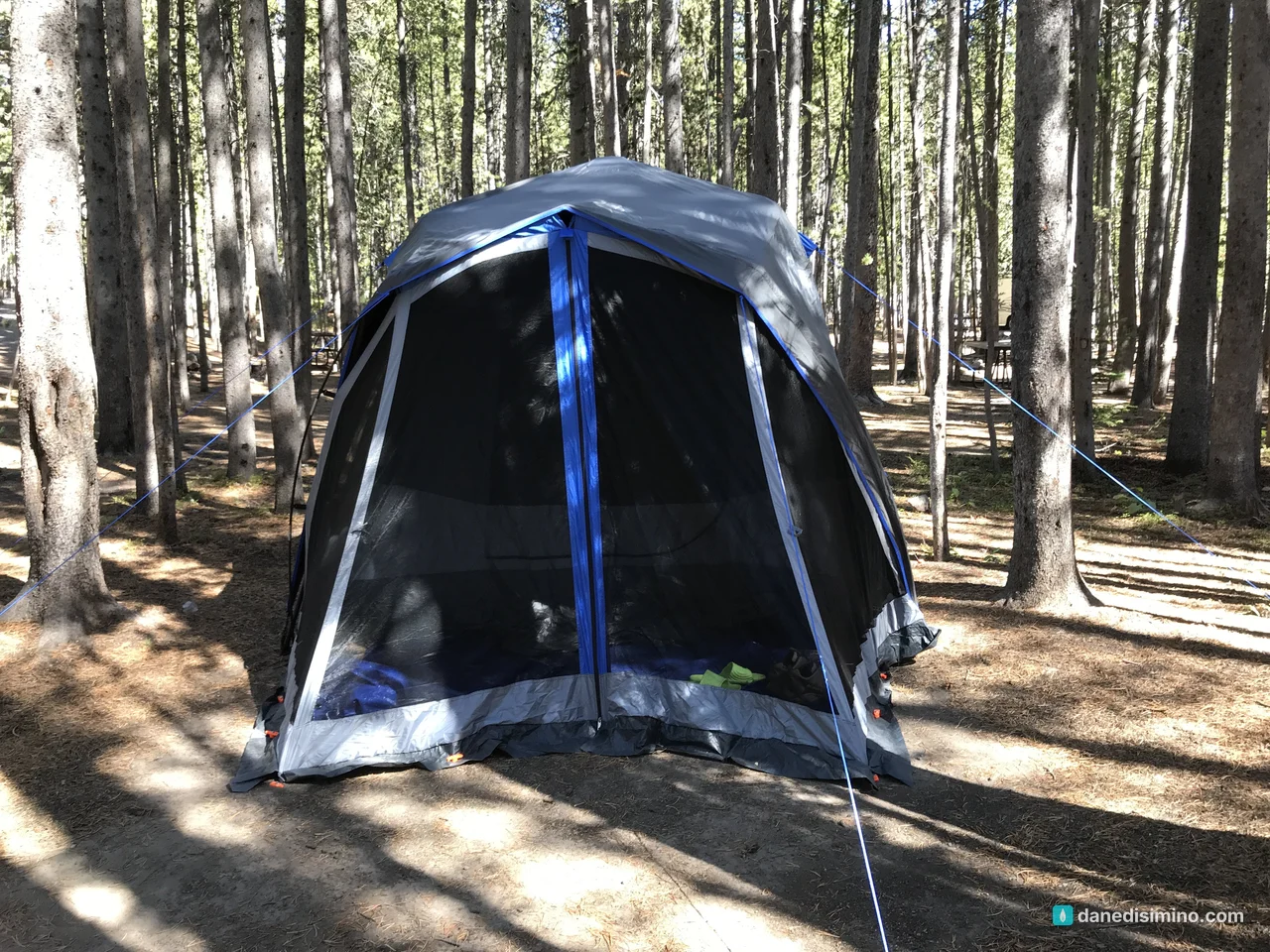
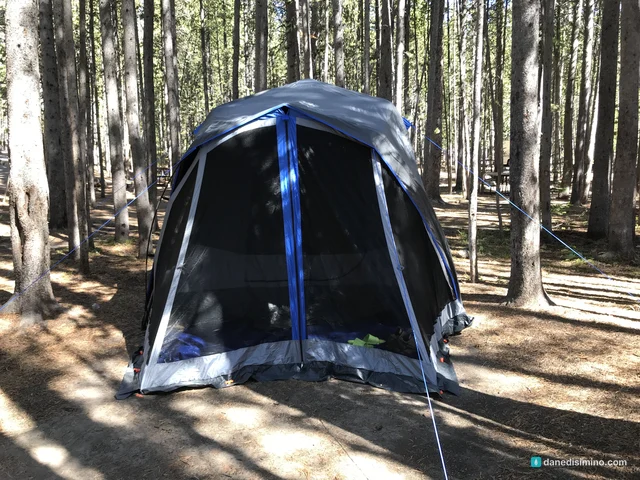
Where to sleep. We camped at Canyon Campground, in the trees a quarter mile from Canyon Village and within a mile of the Grand Canyon of the Yellowstone. It has more than 270 sites, with tent sites, RV sites and a few walk-in sites for hikers and cyclists. Showers and laundry are at the camper services building, and two showers per night come with your site. Coolers, cookware, toiletries and anything that smells like food must stay in a hard-sided vehicle or the shared food boxes when you're not using them. Reservations open about six months out on Recreation.gov, and the season runs from late May to mid-September.
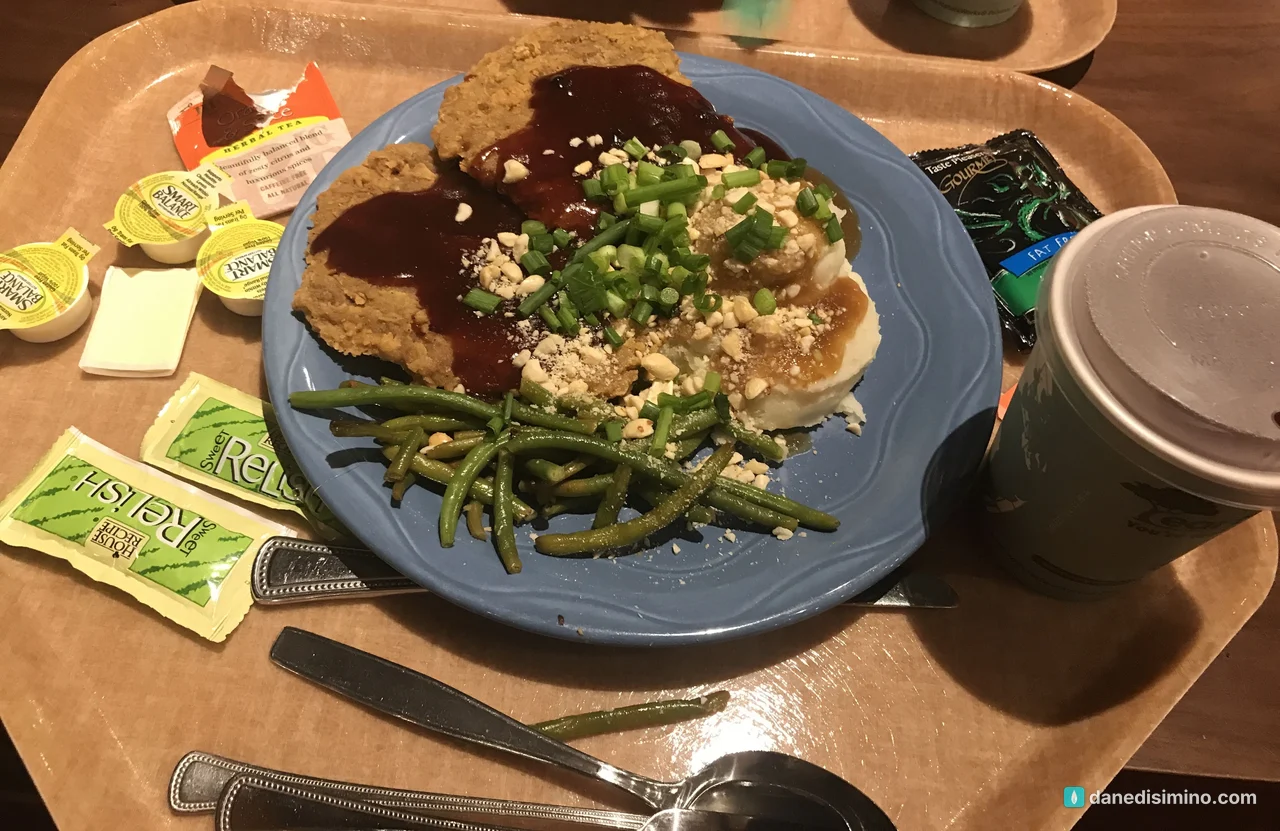
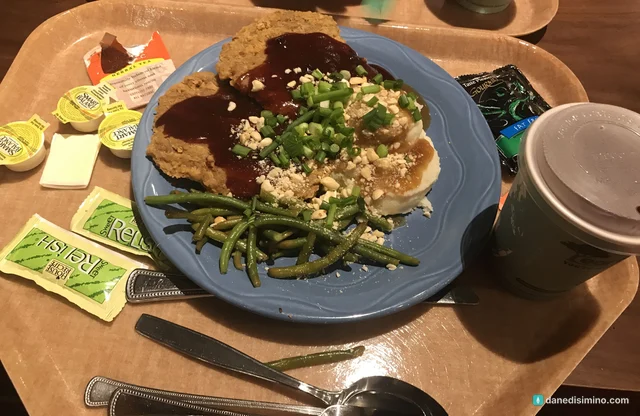
Here's the funniest lesson of the trip. After four nights of the hardest camping we'd ever done, we went for a walk near the campground on the last night and wandered into Canyon Lodge, a few hundred feet away. Every day we had driven out the other direction, so we never knew it was there. Inside: a fireplace, a hot buffet, hot drinks, couches and Wi-Fi we hadn't touched all week. Eating a hot meal I didn't have to cook, then drinking a hot tea on a couch, was one of the happiest moments of my life up to then. It made me truly appreciate the little things.
Visitor centers. Yellowstone is where we got hooked on visitor centers. Stop at every one you pass. At one, we bought a book of true stories about accidents and bear attacks in the park. Reading it in a tent made sleeping a little harder. Read it at home first.
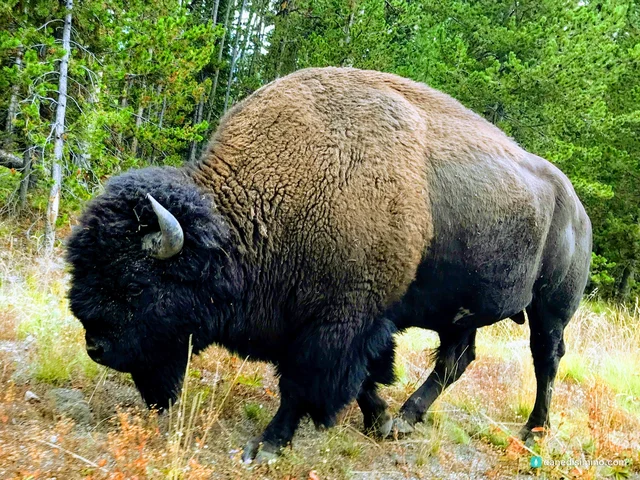
Give wildlife room. The park's rule: stay at least 100 yards from bears and wolves, and 25 yards from bison, elk and everything else. Bison look slow. They aren't.
What we saw
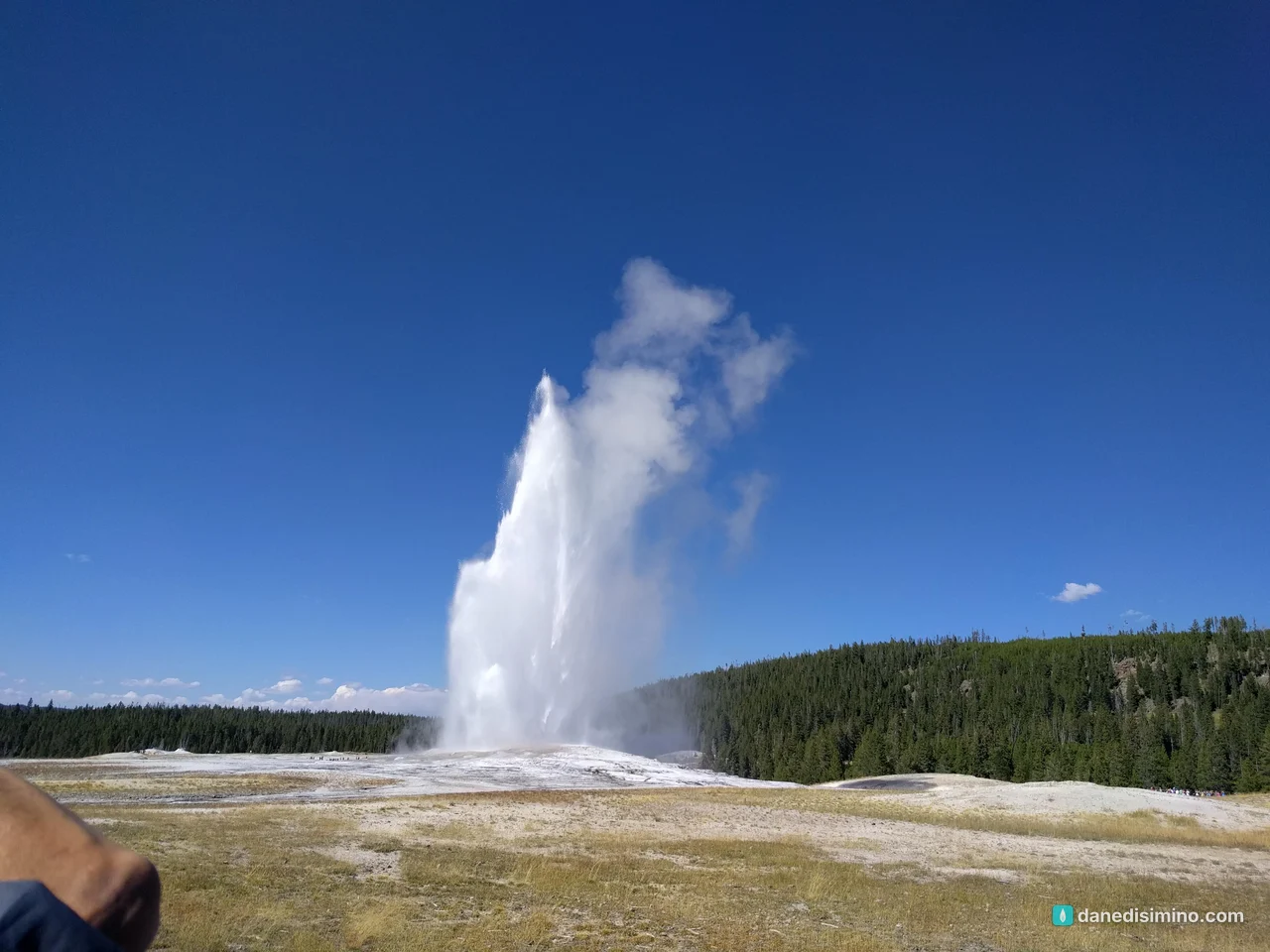
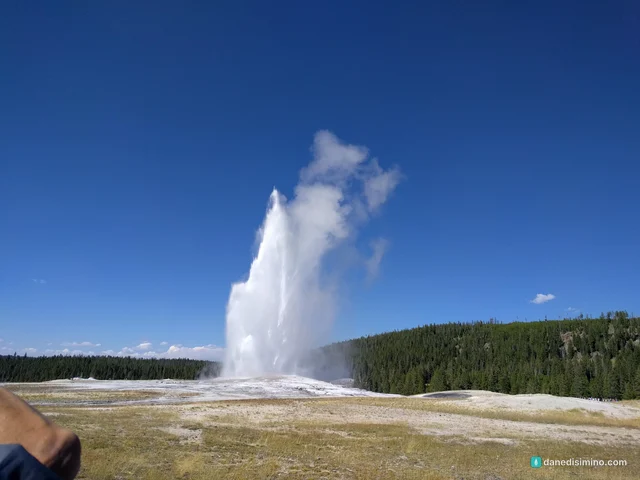
Old Faithful. We caught it erupting on our second day. Check the predicted eruption times at the visitor center and get there early for a spot on the boardwalk.
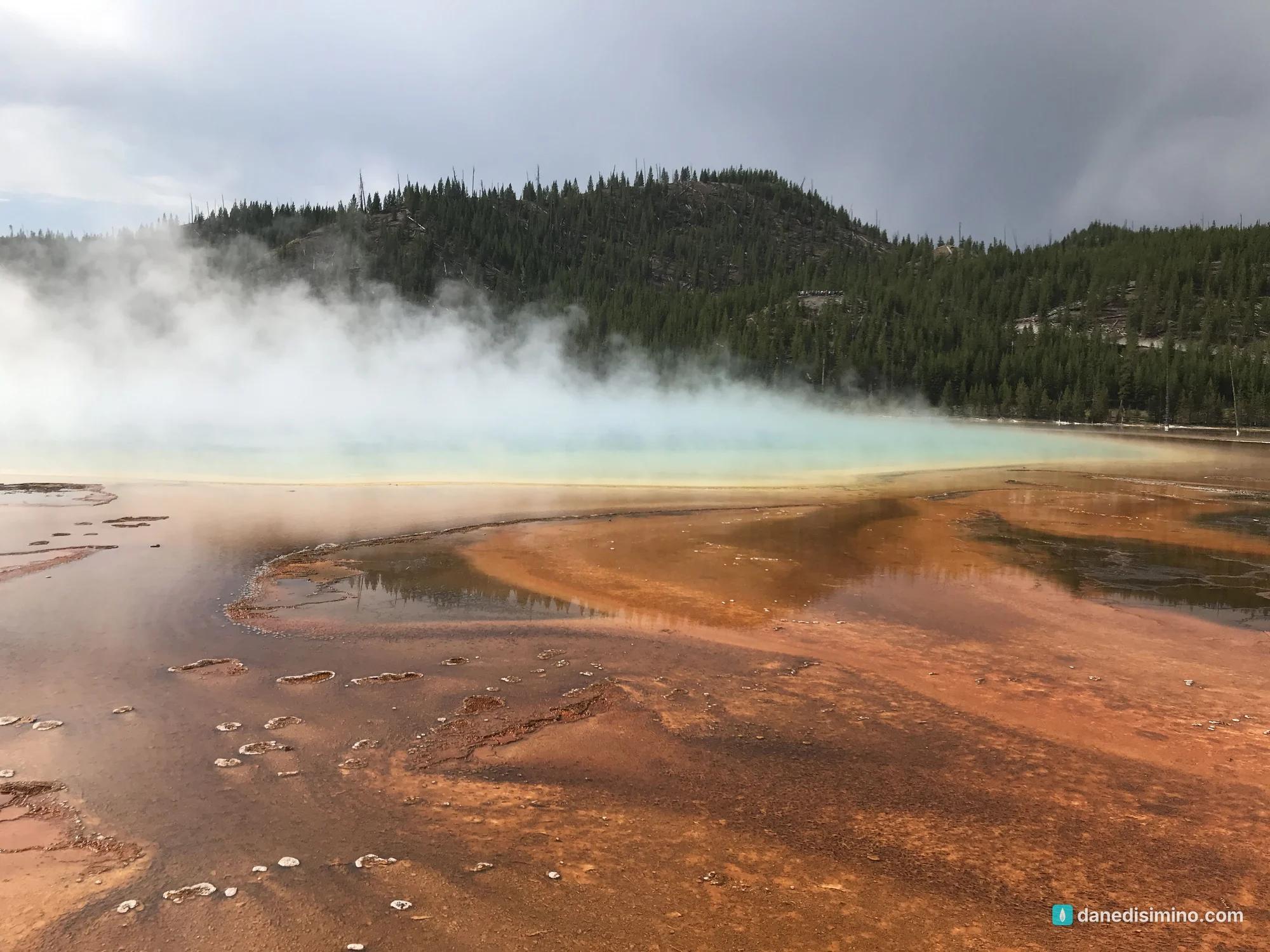
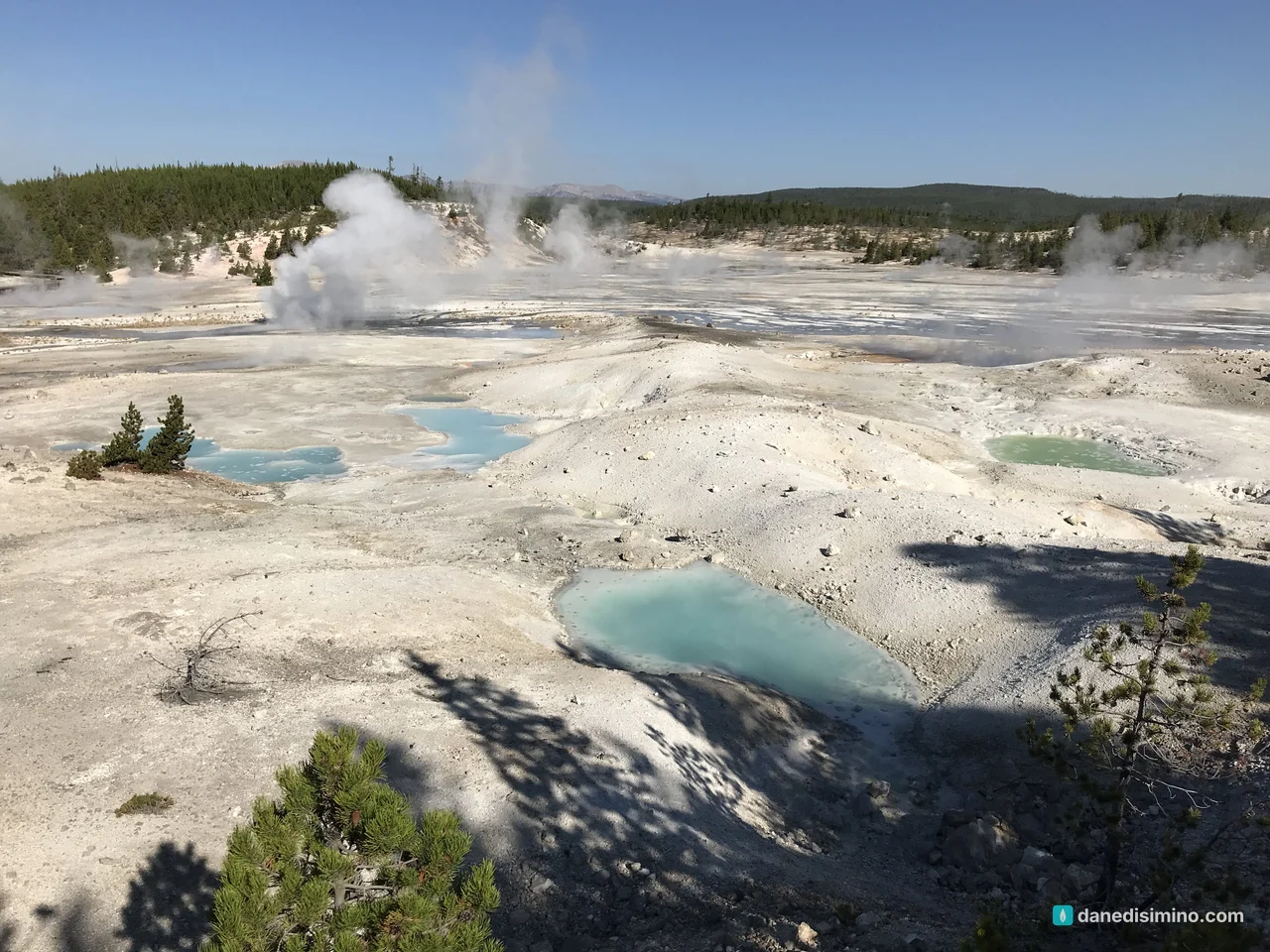
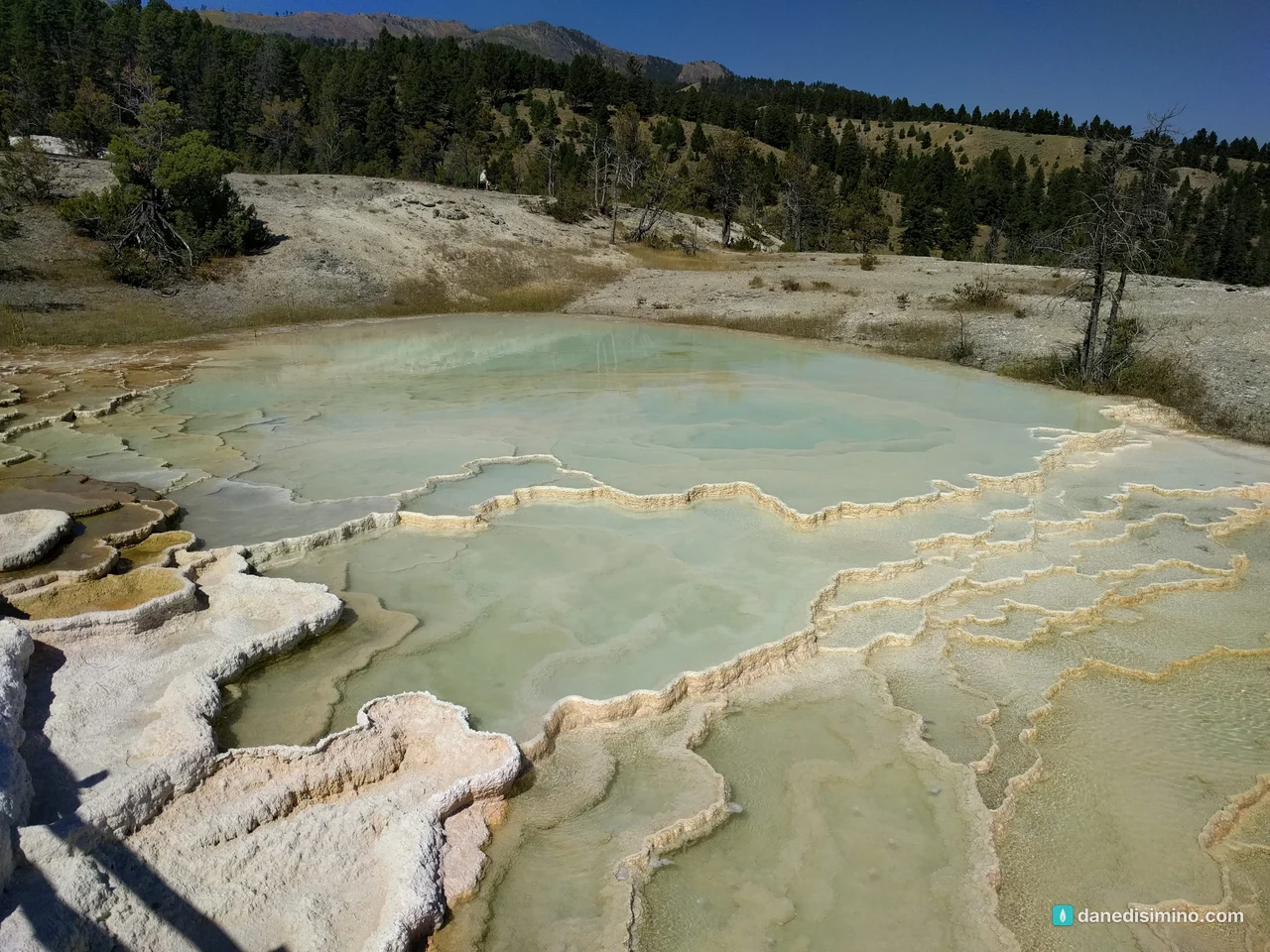
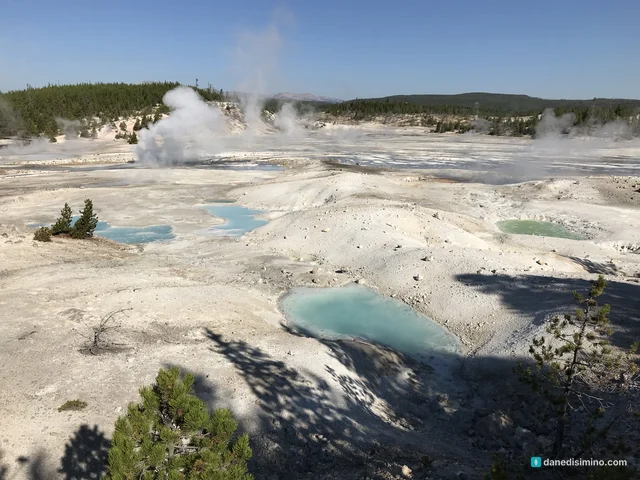
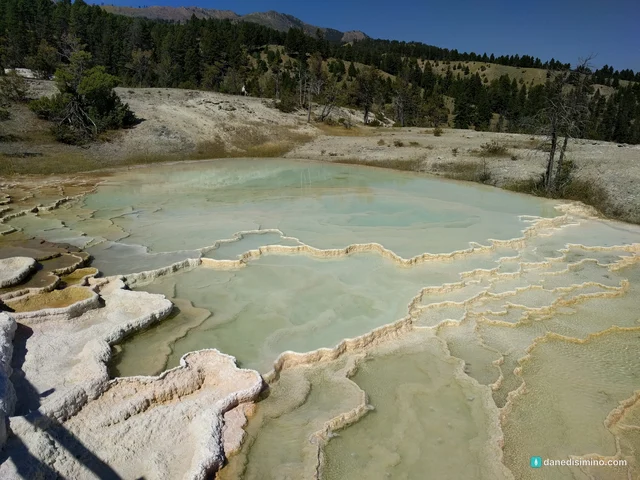
The boardwalks. Walking the boardwalks at Grand Prismatic, Norris's Porcelain Basin, West Thumb and Mammoth Hot Springs, the colors and formations didn't look real. Grand Prismatic is the world's largest hot spring. Norris is the park's hottest, most changeable geyser basin. Mammoth's travertine terraces are some of the fastest-changing features in the park. Stay on the boardwalk: the crust is thin and the water is scalding.
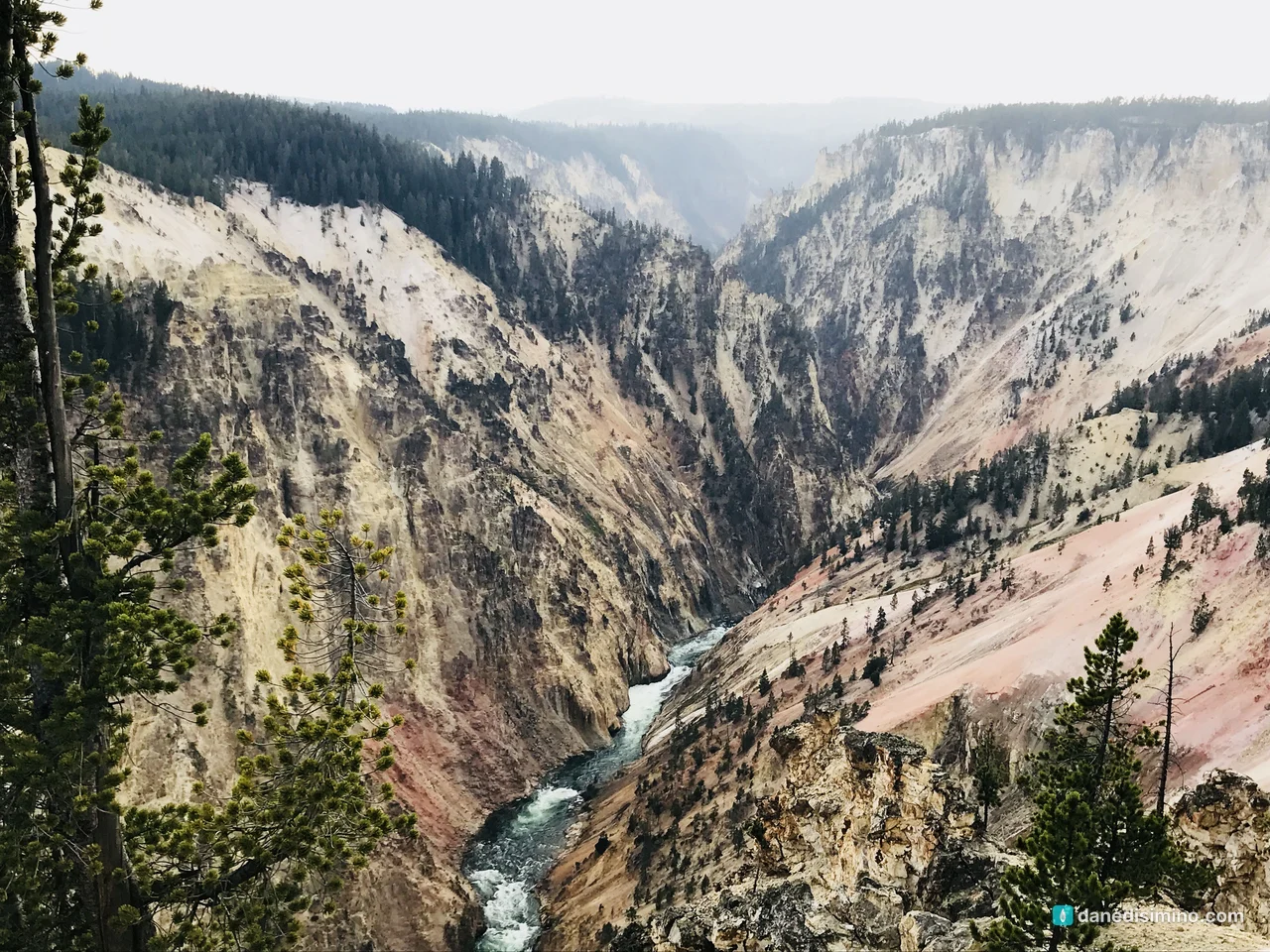
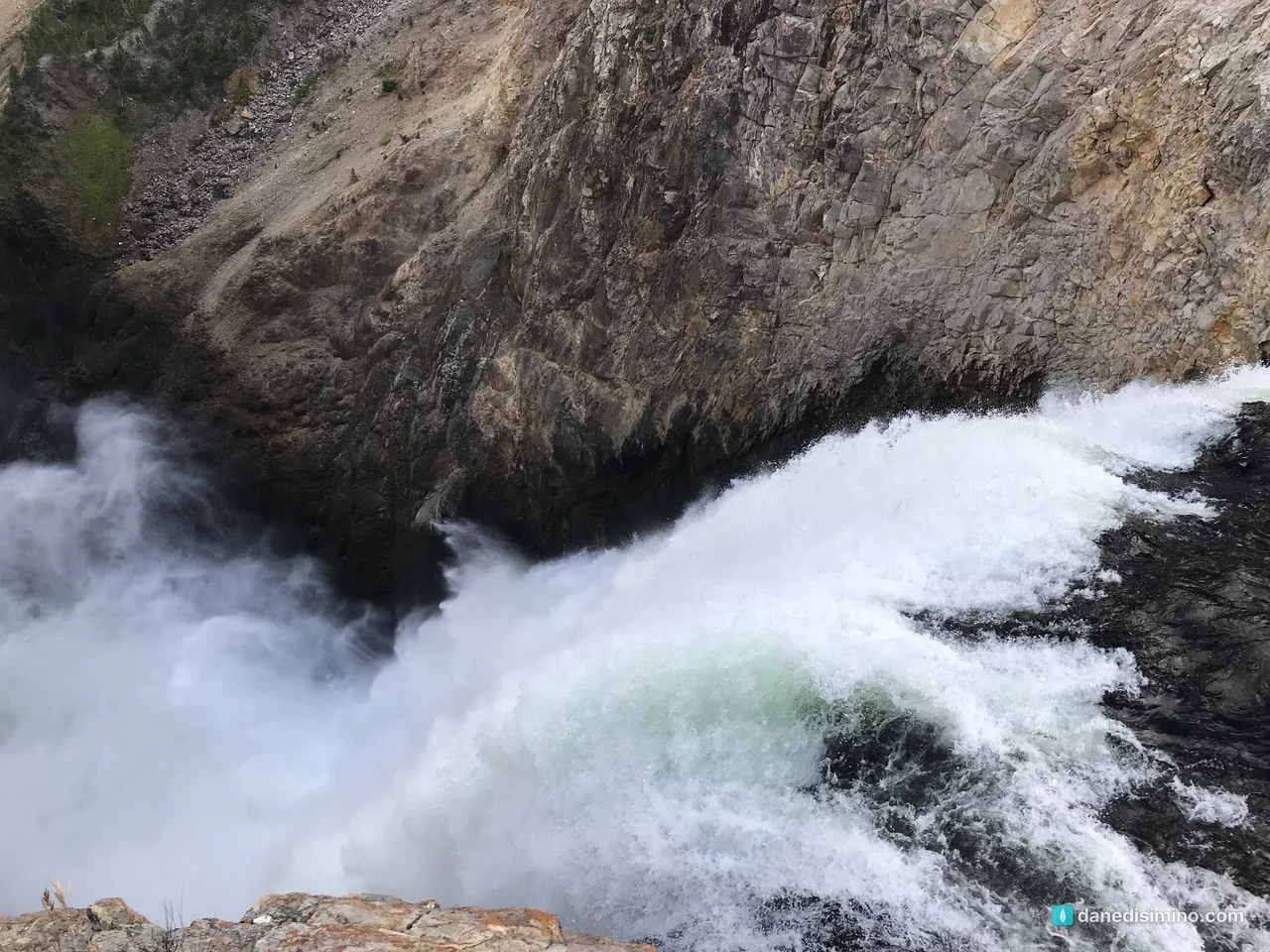
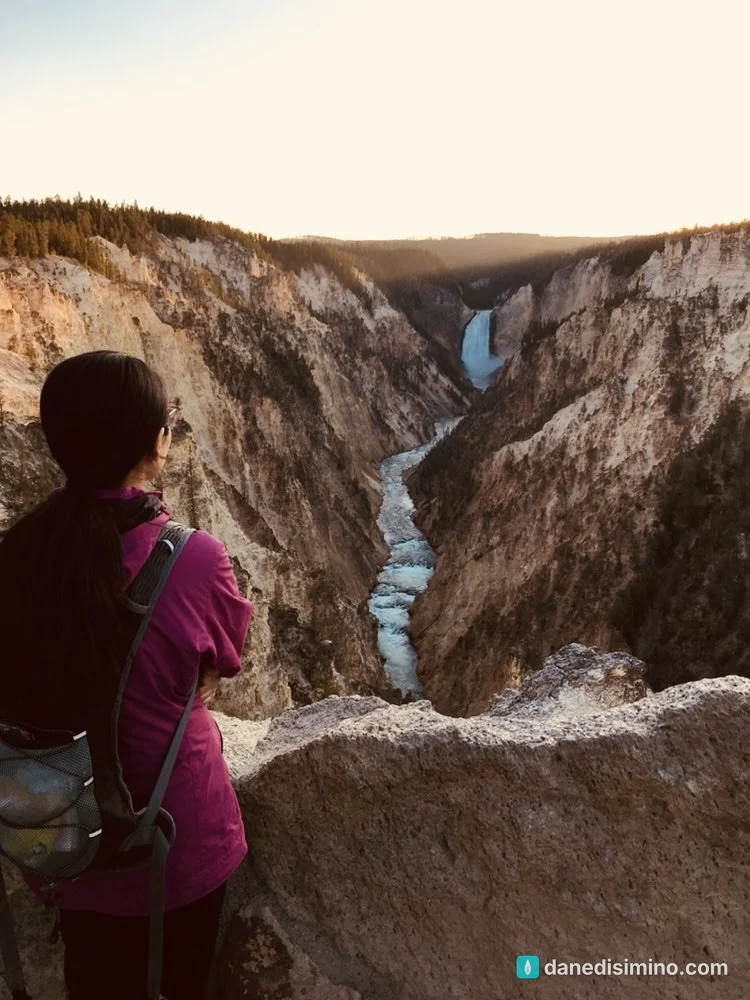
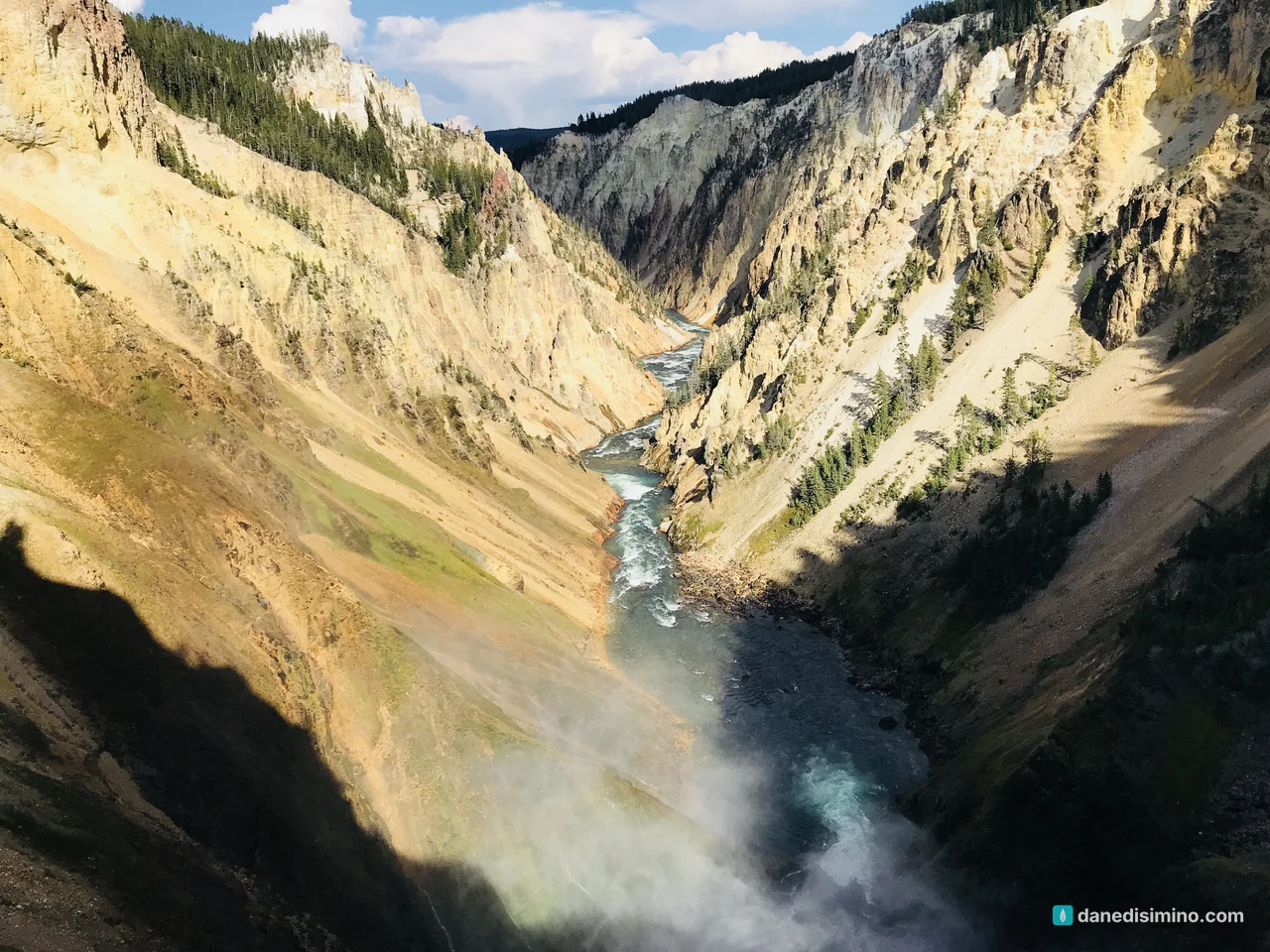
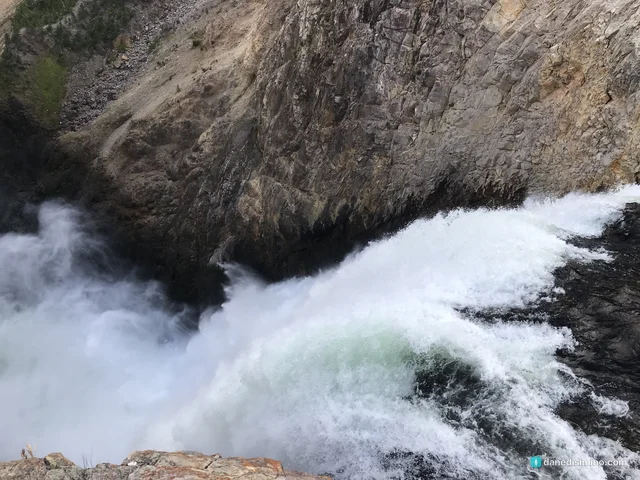
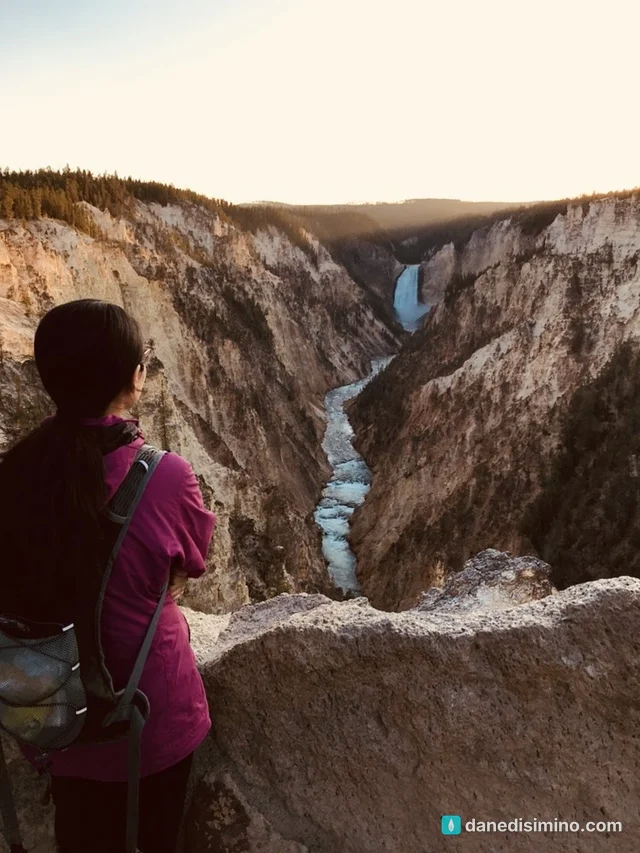
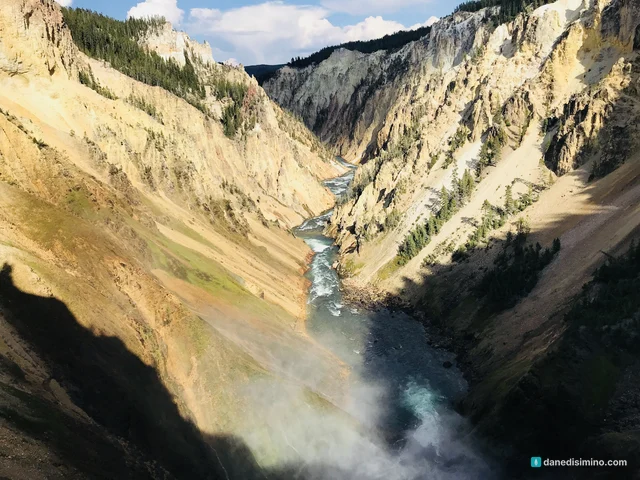
The Grand Canyon of the Yellowstone. This was our backyard all week, and it's spectacular, especially at sunset. The yellows, pinks and whites in the walls are rock altered by heat and hot water. Take the Brink of the Lower Falls trail: it's short, 0.7 miles round trip, but it drops 600 feet in less than half a mile, and the climb back is steep. At the bottom you're standing about 20 feet from the edge where the whole river pours over the falls. The roar is unforgettable. (Uncle Tom's Trail, the old staircase down the canyon wall, is permanently closed.)
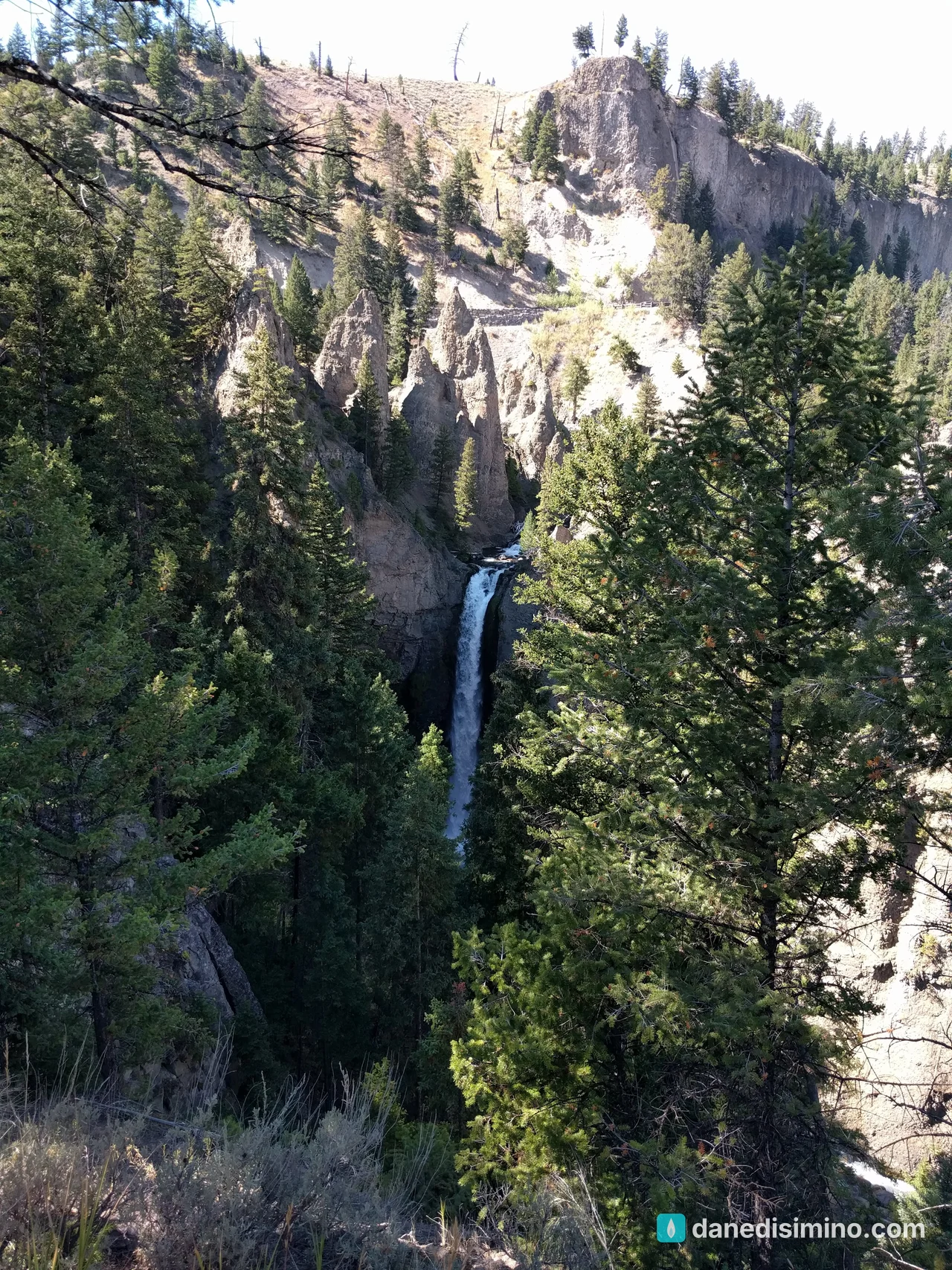
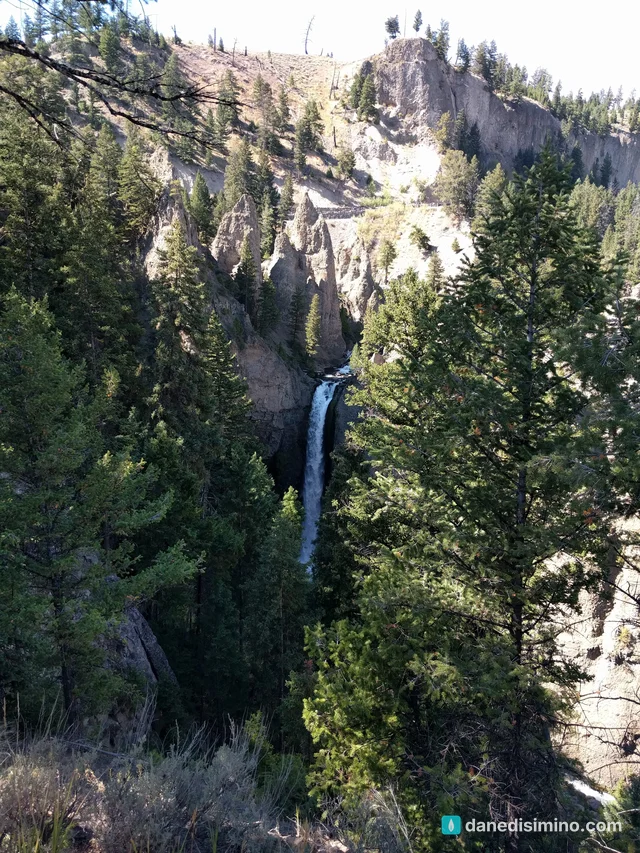
Tower Fall. A good stop on the road north from Canyon toward Tower-Roosevelt and Mammoth.
Yellowstone Lake and the boat tour. We took the hour-long Scenicruise from Bridge Bay Marina (about $25 a person). The scenery from the water was honestly less dramatic than from the shore. What made it worth it was the ranger. We learned the history of the lake and its fish: invasive lake trout turned up in the 1990s and have been eating the native Yellowstone cutthroat, and the park has been fighting back ever since. As a fly fisherman now, that story means a lot more to me than it did then.
What lives here
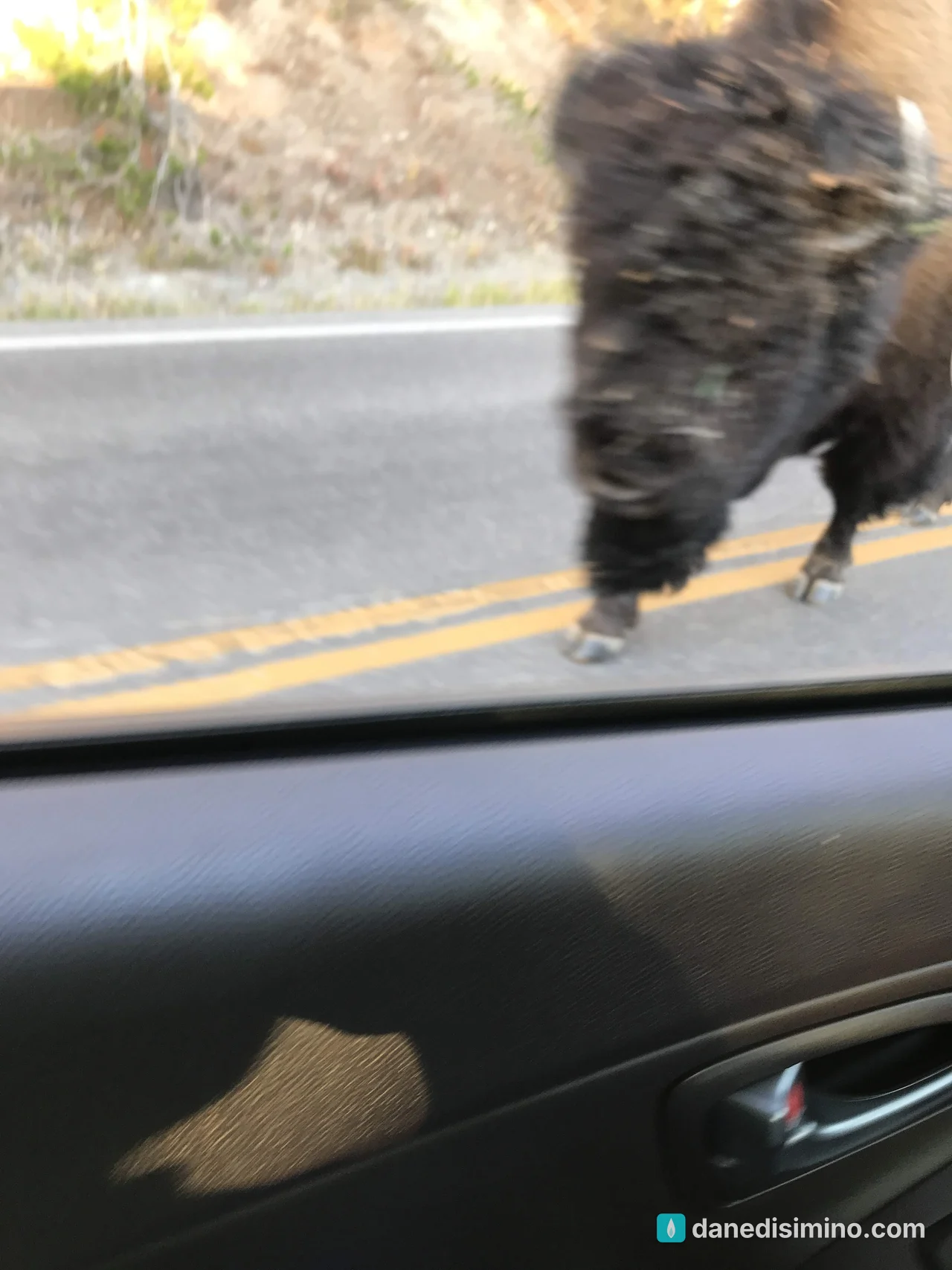
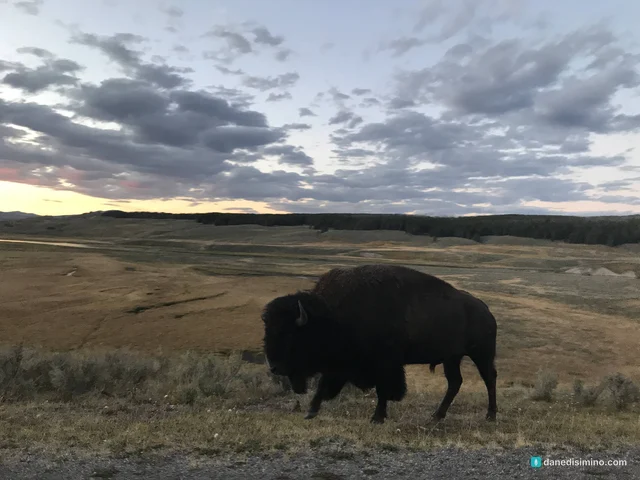
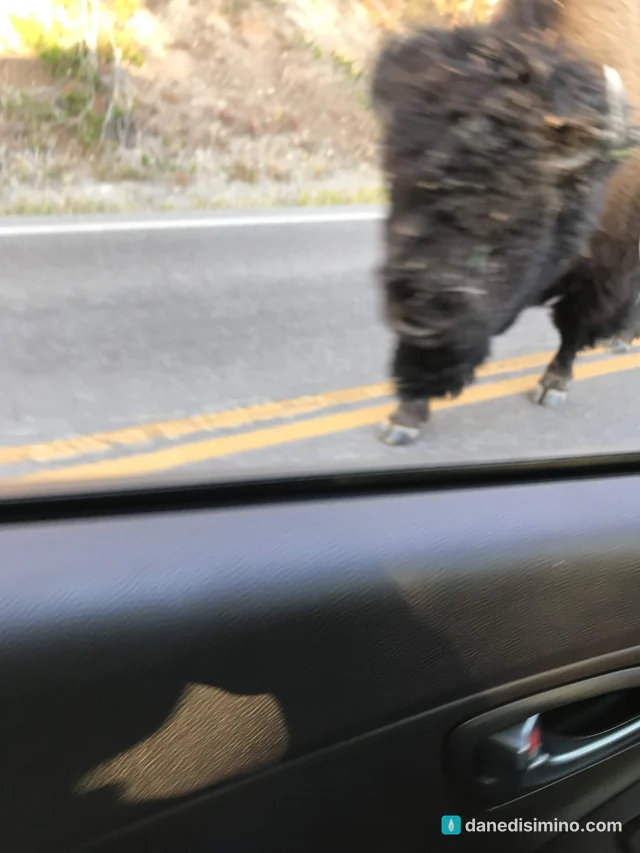
Seeing bison for the first time, and elk for the first time, made the trip feel like a dream. One bison walked right up to our car window. Another day we were the first car stopped at a herd crossing, and we sat there while hundreds of bison walked in front of us.
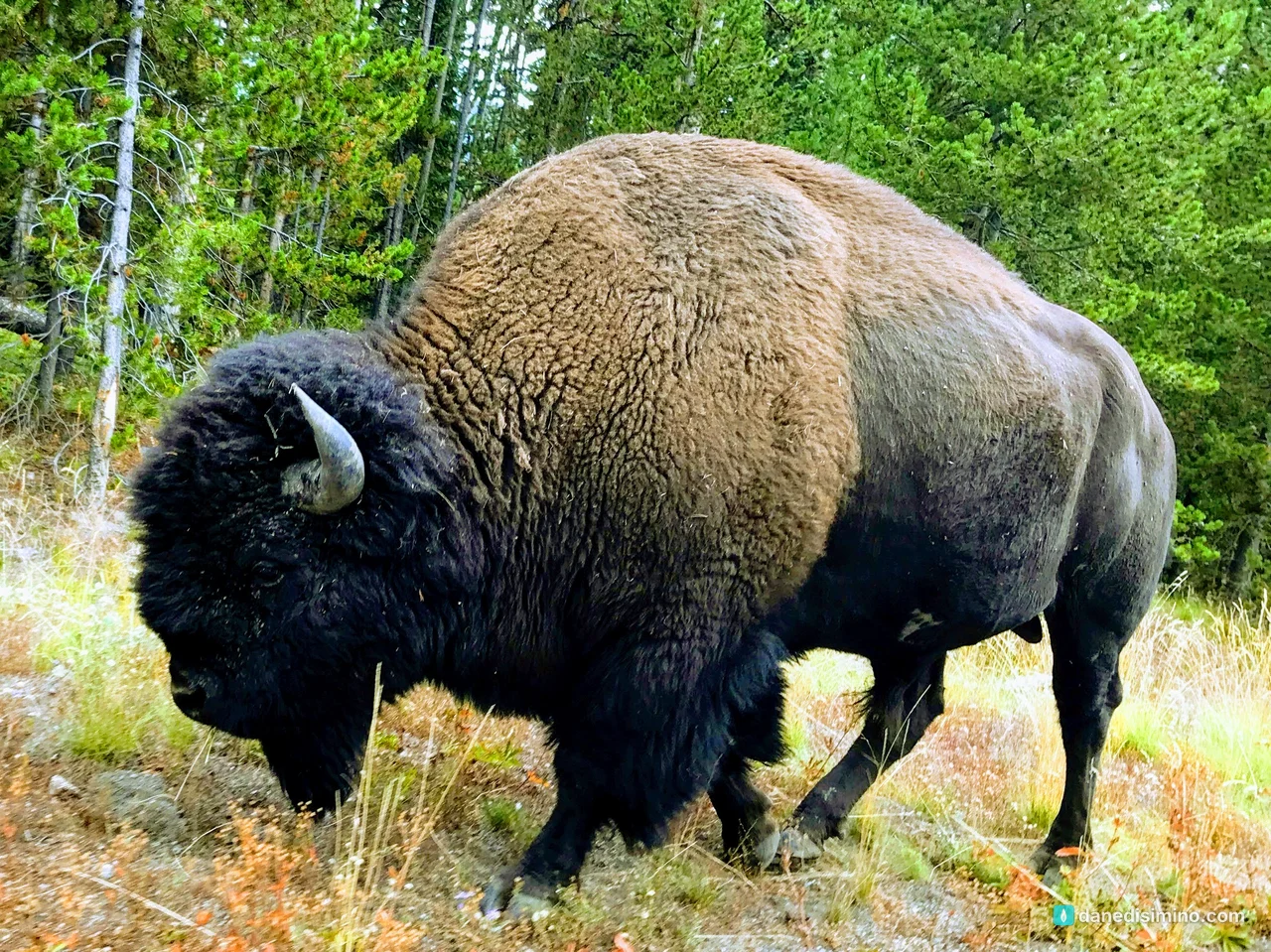
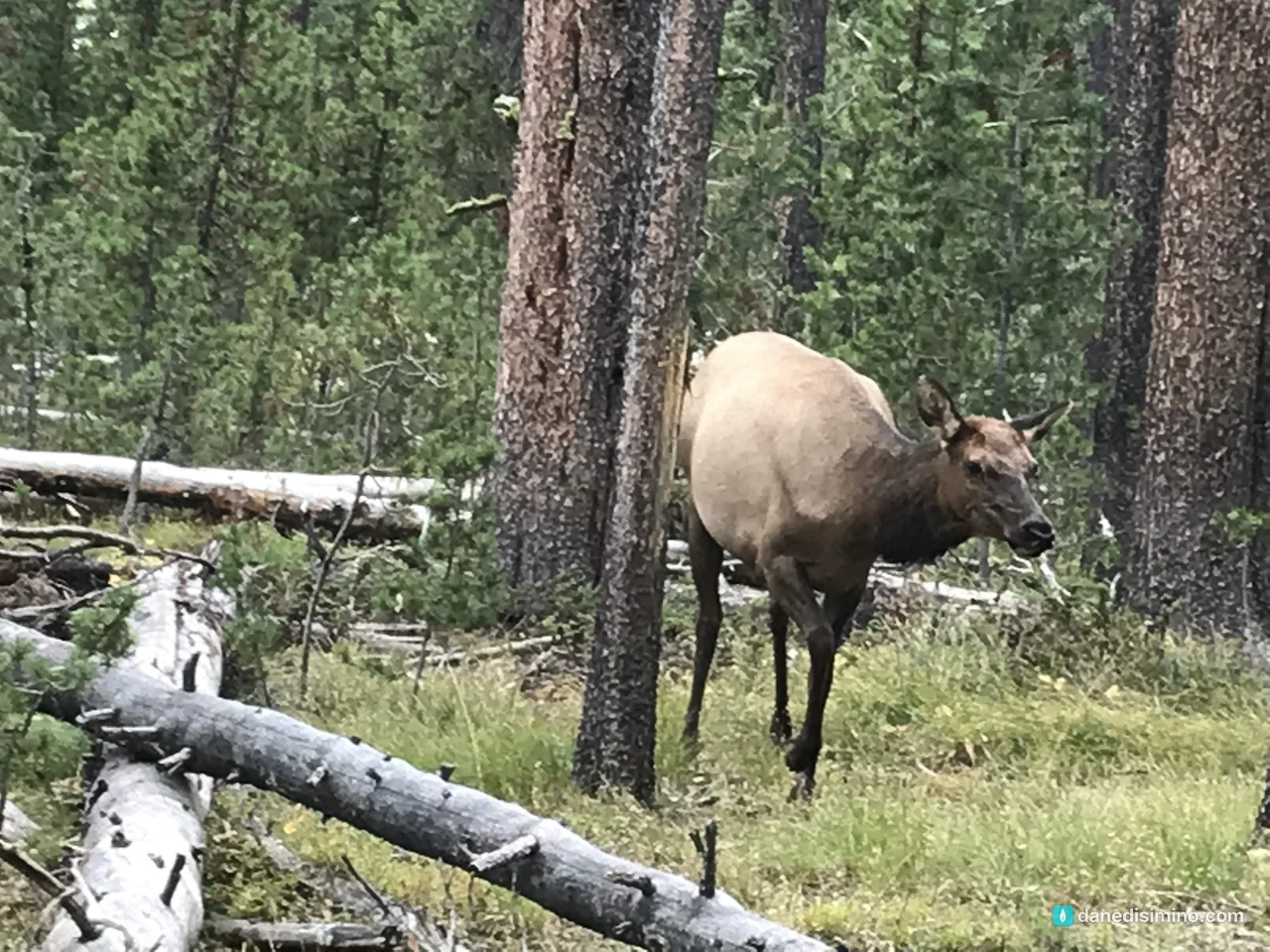
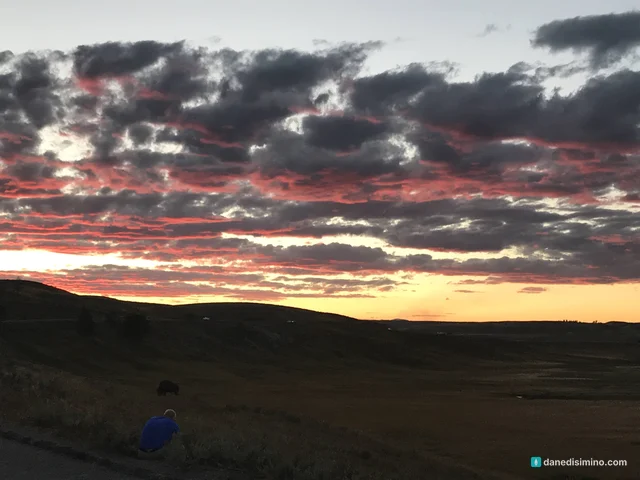
The park's ecosystems run from near-desert at the North Entrance to subalpine meadows on Mount Washburn. They support bison, elk, grizzly and black bears, wolves, trumpeter swans and Yellowstone cutthroat trout. For bison at sunset, Hayden Valley, between Canyon and the lake, is hard to beat.
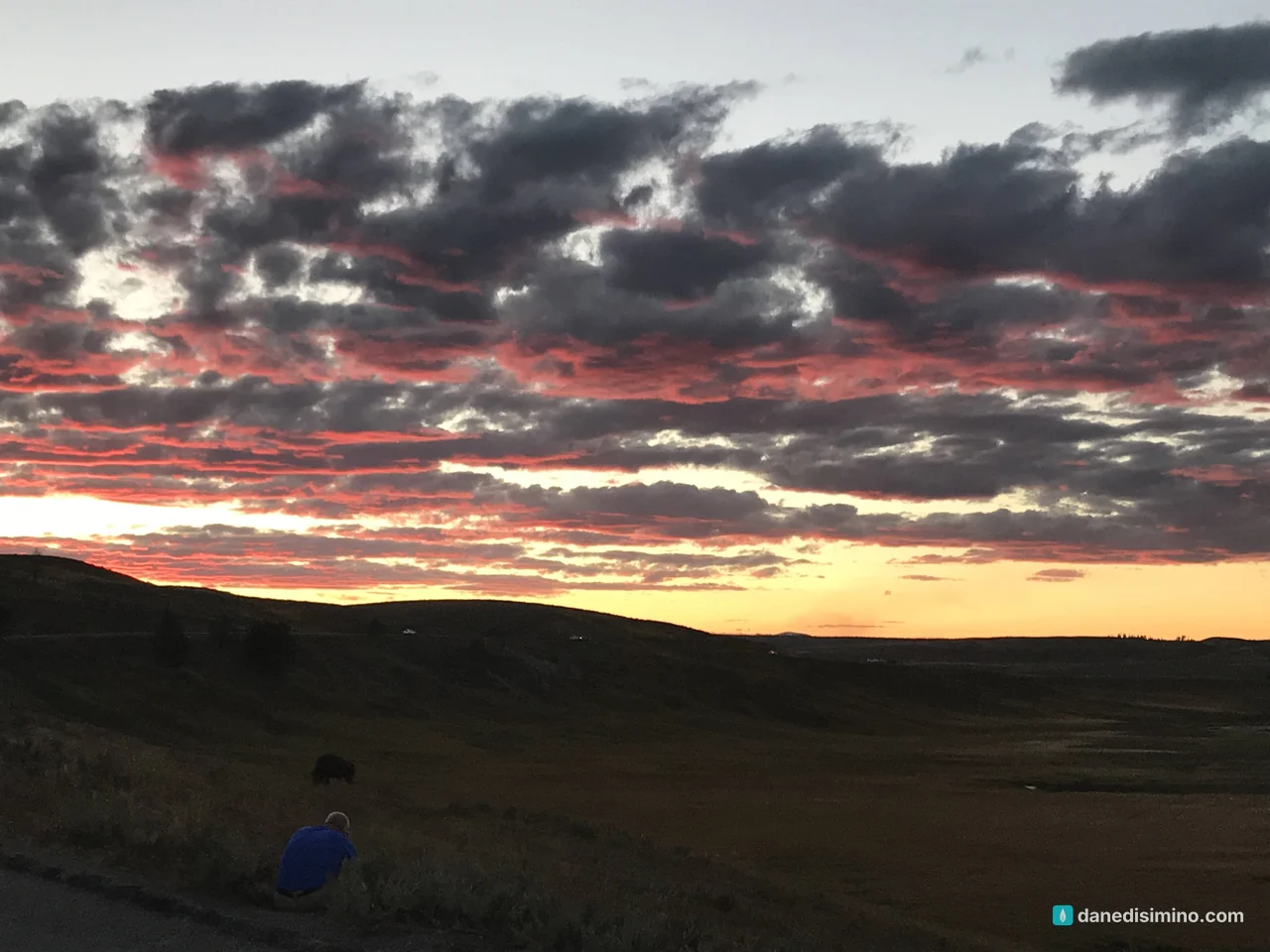
On the trails we saw hikers with bear bells and wondered why they were making so much noise. We didn't realize we were hiking through grizzly country.
If it's your first time camping in Yellowstone
September nights are cold. I had no idea. Carrie is not a fan of cold weather, and our first few nights in the tall tent were rough: our sleeping bags and blankets weren't enough. Bring bags rated for freezing, a warm hat and layers to sleep in.
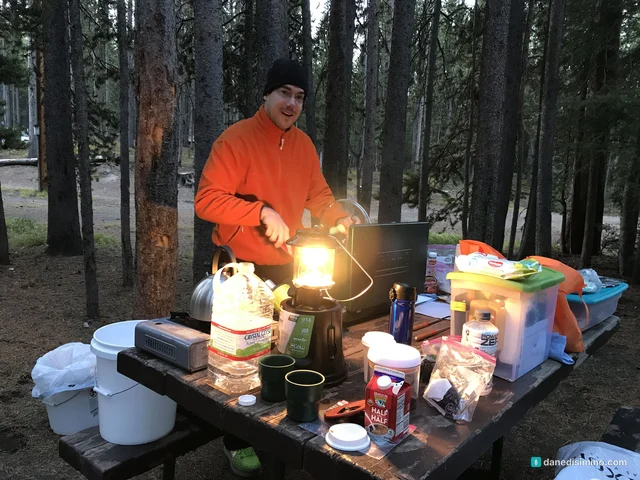
One cooler isn't a plan. Packing all our food meant I was up before dawn every day to start a fire and cook breakfast, coffee and tea, then carrying everything in a bucket to the campground faucet to wash dishes in freezing water. It was fun because it was all new. It was also exhausting. Mix camp meals with a few meals at the lodges.
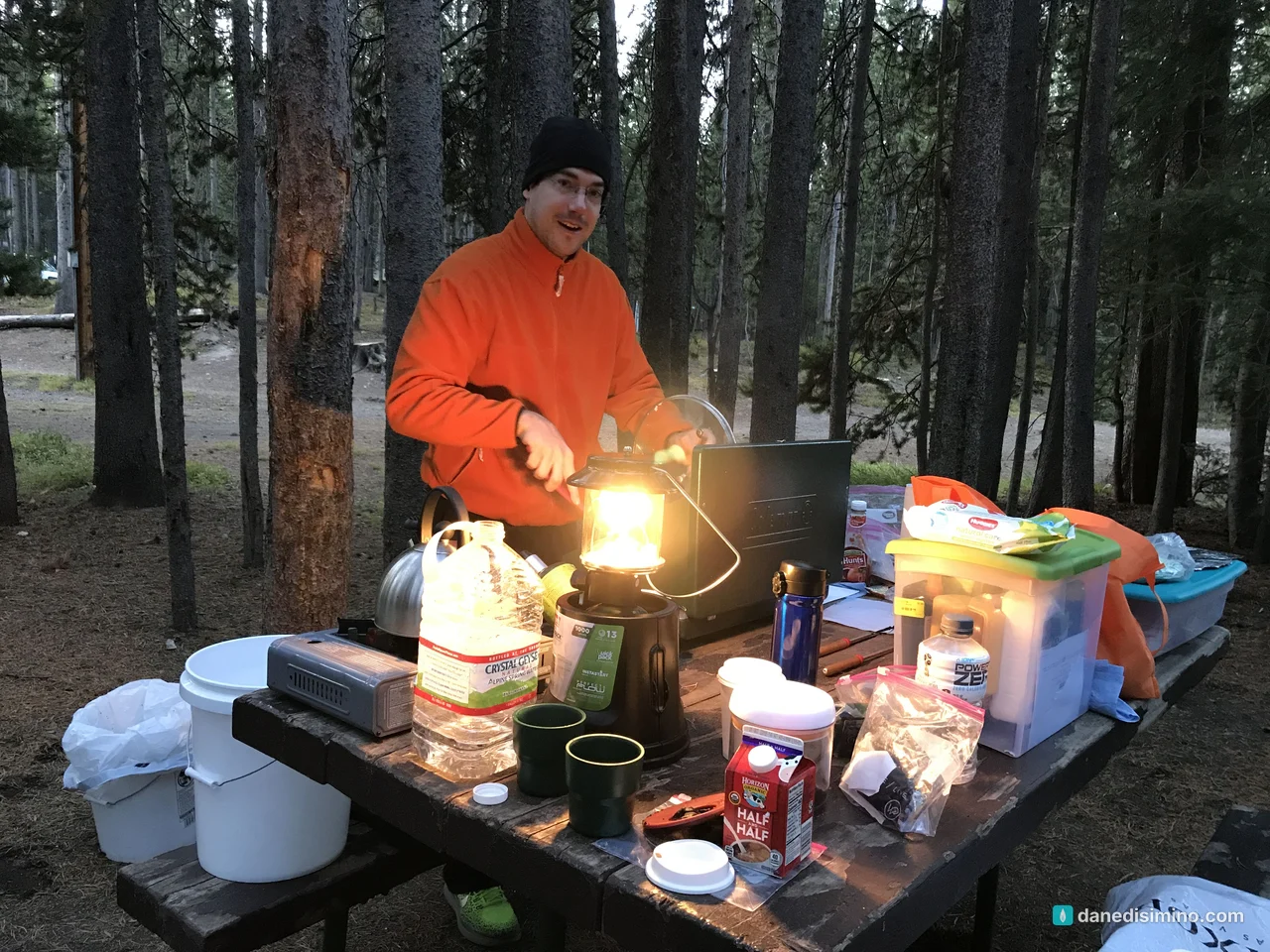
Breakfast before dawn, September 7, 2018. Expect the unglamorous parts. Shared bathrooms, showering in the cold, and a neighbor whose snoring kept us awake. That was our first taste of what camping in a popular park is really like.
Store everything that smells. Food, coolers, cookware and toiletries go in the car or the food boxes. This is bear country, not Black Canyon's deer.
What I'd do differently
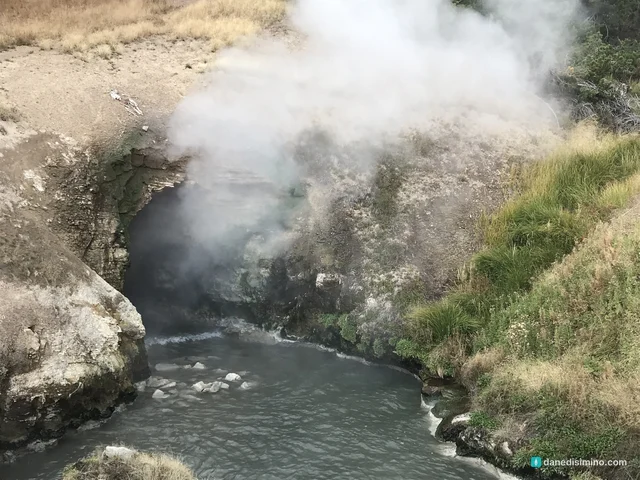
Balance the big stops with solitude. We forced in too many stops trying to hit every major attraction. At Dragon's Mouth Spring, several tour buses unloaded just as we arrived. I'm not against tours, but crowded stops wear on you.
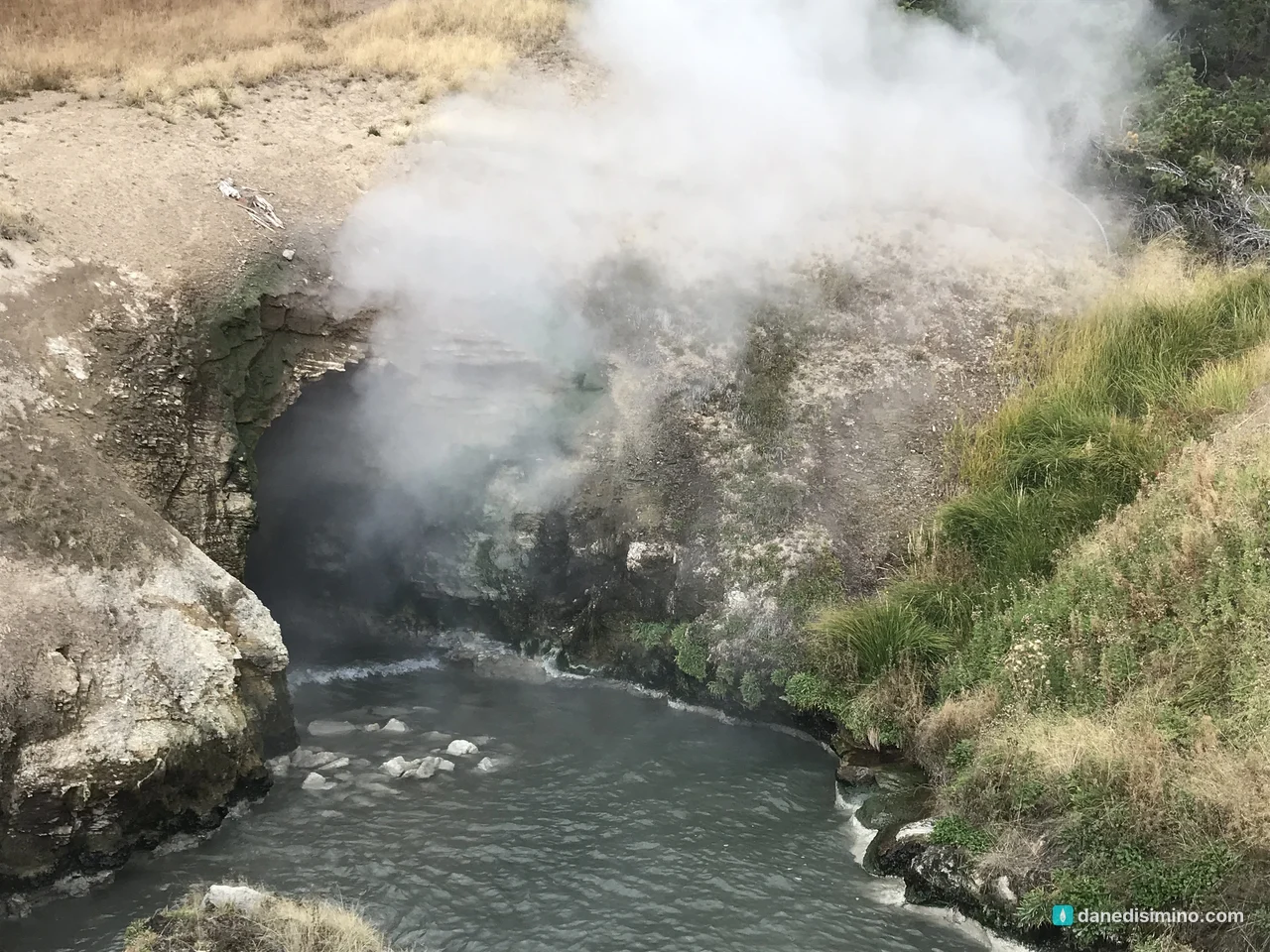
Dragon's Mouth Spring, September 6, 2018. Bring a fly rod. I hadn't started fly fishing yet, so we never fished. If we go back, I'll spend real time on the rivers. A fishing permit from the park is required, and native fish rules are strict, so read the regulations first.
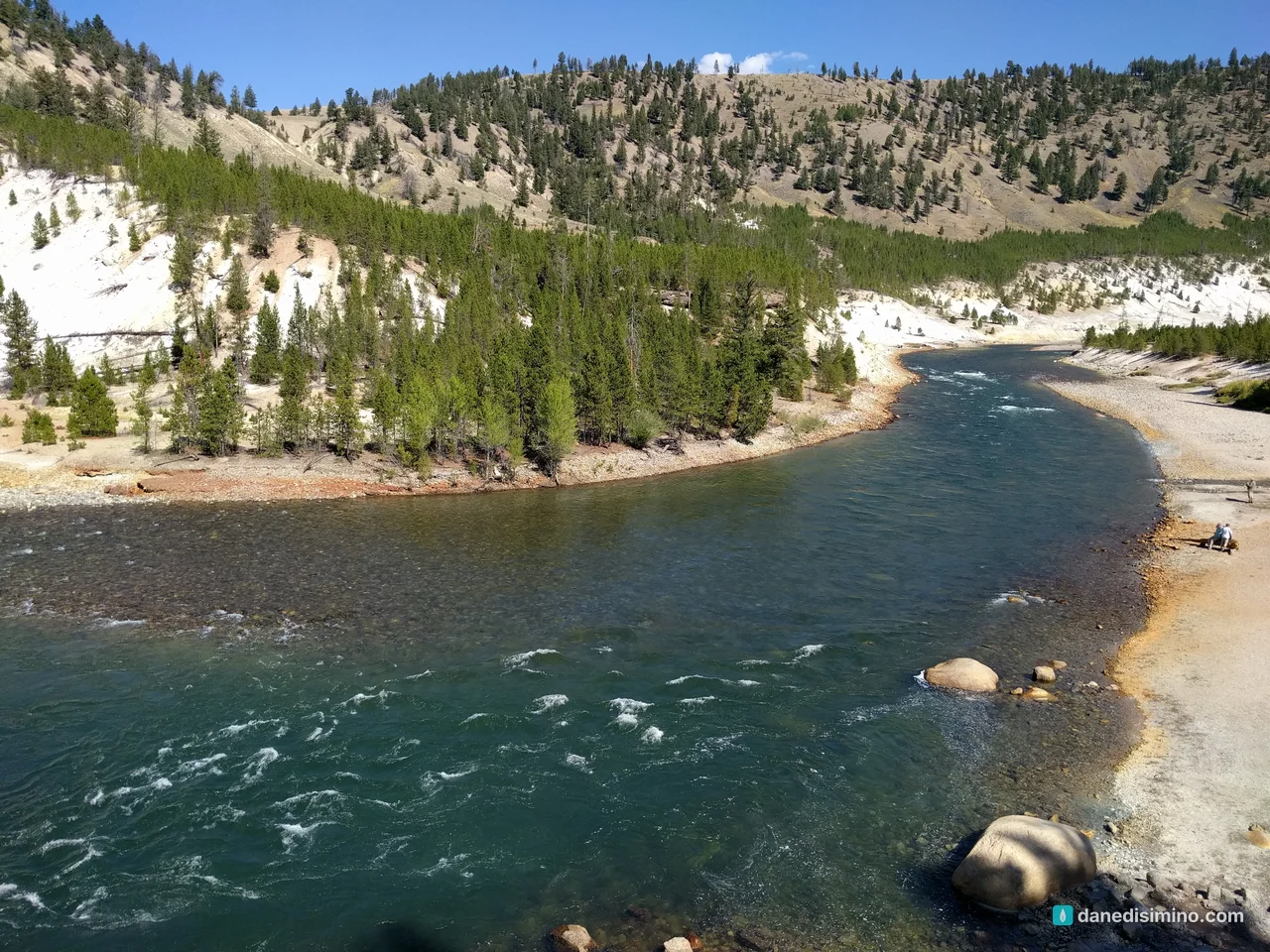
What Yellowstone taught me
Yellowstone taught me there's a whole universe out there I'd never explored, and that adventure is worth it. It taught me that adventure is better together, especially with your spouse and family. It taught me that sometimes you have to go off the beaten path, and that pushing through discomfort is how you grow.
Most of all, it awakened in us a desire to see more parks. I genuinely think that if Yellowstone had been something less amazing, we wouldn't have wanted to see every park in the country. Yellowstone opened our eyes to the beauty of God's creation and all He had in store for us.
"The heavens proclaim the glory of God. The skies display his craftsmanship." (Psalm 19:1, NLT)
Adventure is better together. So go get out there.
Make it part of a longer trip
Grand Teton sits just south of Yellowstone, and the two pair naturally on one trip. Our own Grand Teton guide is coming next.
Questions?
Ask me anything about Yellowstone, camping at Canyon, or planning your first big park trip. I answer every question.
Photos
Sources
- Yellowstone National Park (NPS), incl. the official park brochure and map
- Fees and passes (NPS)
- Canyon Campground (Yellowstone National Park Lodges)
- Brink of the Lower Falls Trail (NPS)
- Yellowstone Lake Scenicruise (Yellowstone National Park Lodges)
- Uncle Tom's Trail is permanently closed (Cowboy State Daily, 2023)
- $100 nonresident fee for Yellowstone and Grand Teton (Buckrail)
- Park Map, Yellowstone (NPS 2025 brochure, public domain)
- Volcano (NPS)
- Hydrothermal features (NPS)
- Geysers (NPS)
- Birth of a national park (NPS)
Pathlight
Park guides from the road. A printable trip sheet comes with them when one is ready.