
NATIONAL PARKS
Grand Teton
A Field Guide
On this page
Three hazy days in August 2021: the moment the clouds shifted and the Tetons appeared, a clear lake at the mountains' feet, a guided float on the Snake River, bison under Mount Moran, and Jackson's antler arch. What we did, and what I'd do differently.
Version 1.1 · Updated Nov 17, 2026
Map
When to go
Average monthly visits, 2023–2025. Source: NPS visitor statistics. ● marks the months we visited.
| January | 53,183 |
|---|---|
| February | 54,786 |
| March | 60,720 |
| April | 73,795 |
| May | 309,603 |
| June | 635,721 |
| July | 755,782 |
| August | 706,635 |
| September | 599,905 |
| October | 264,285 |
| November | 51,688 |
| December | 49,223 |
Grand Teton came in the summer of 2021, in the middle of our biggest road trip yet: up from Colorado through Wyoming, three days in the Tetons, then on to Glacier. By then we were seasoned campers, and we'd gotten smart enough to bring the tiny tent instead of wrestling the big one for a short stay.
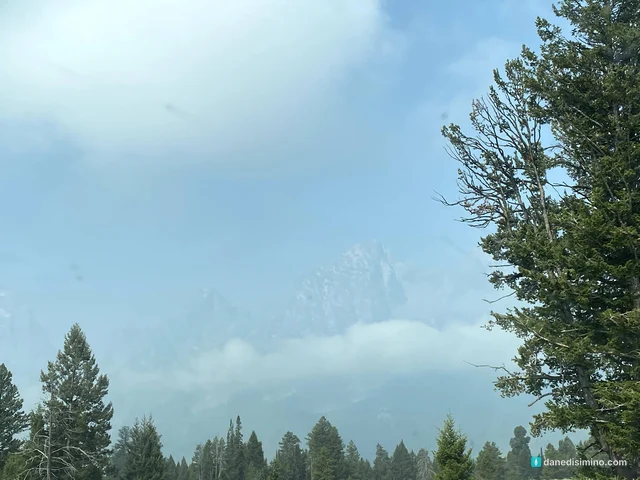
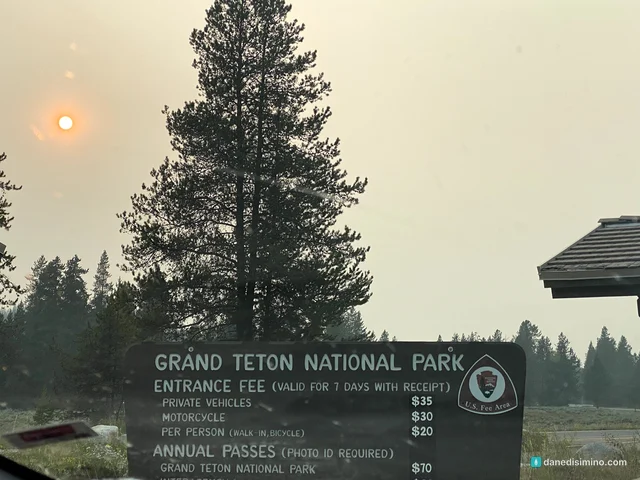
The arrival is the part I'll never forget. Wildfires were burning somewhere west of us that August, and the whole drive in was wrapped in haze. The closer we got, the more I kept asking, "Where are the Tetons?" I'd driven a very long way for something spectacular, and the mountains simply weren't there. I was starting to deflate.
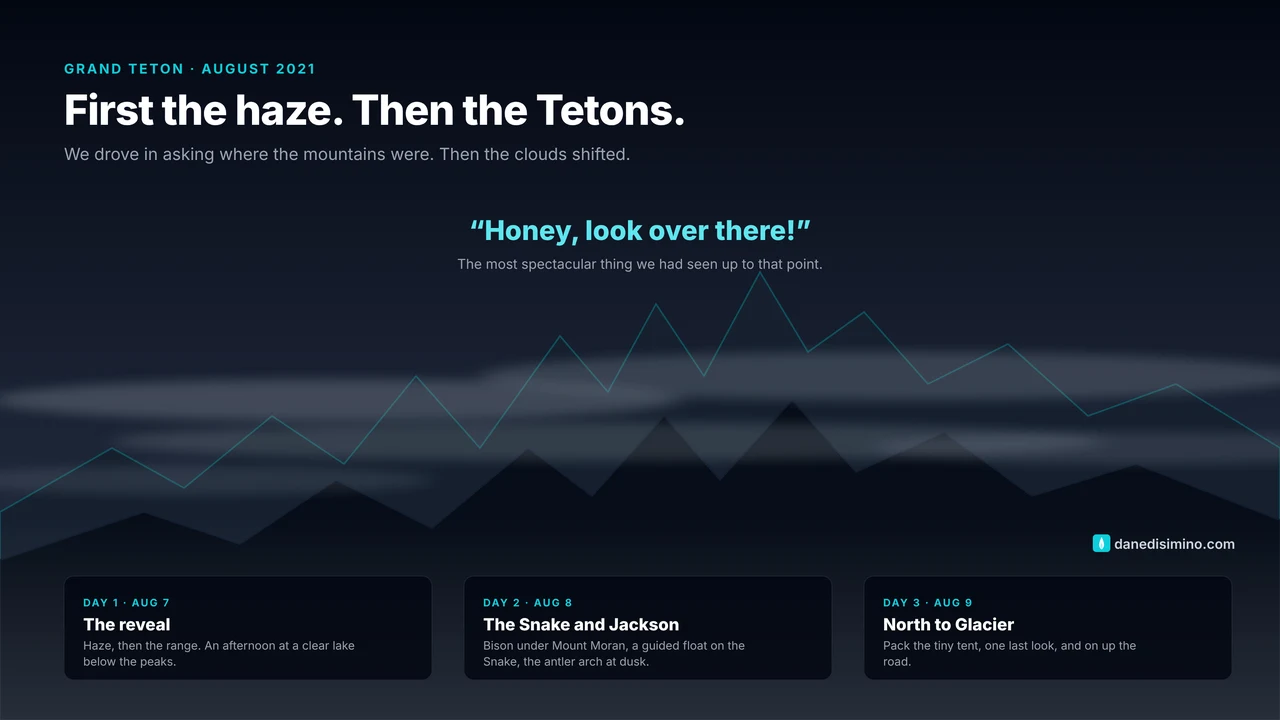
Then the clouds shifted while I was driving, and the Grand Tetons appeared, all of them at once, even through the haze. I gasped and shouted, "Honey, look over there!"
The clouds shifted, and there they were. The most spectacular thing we had seen up to that point.
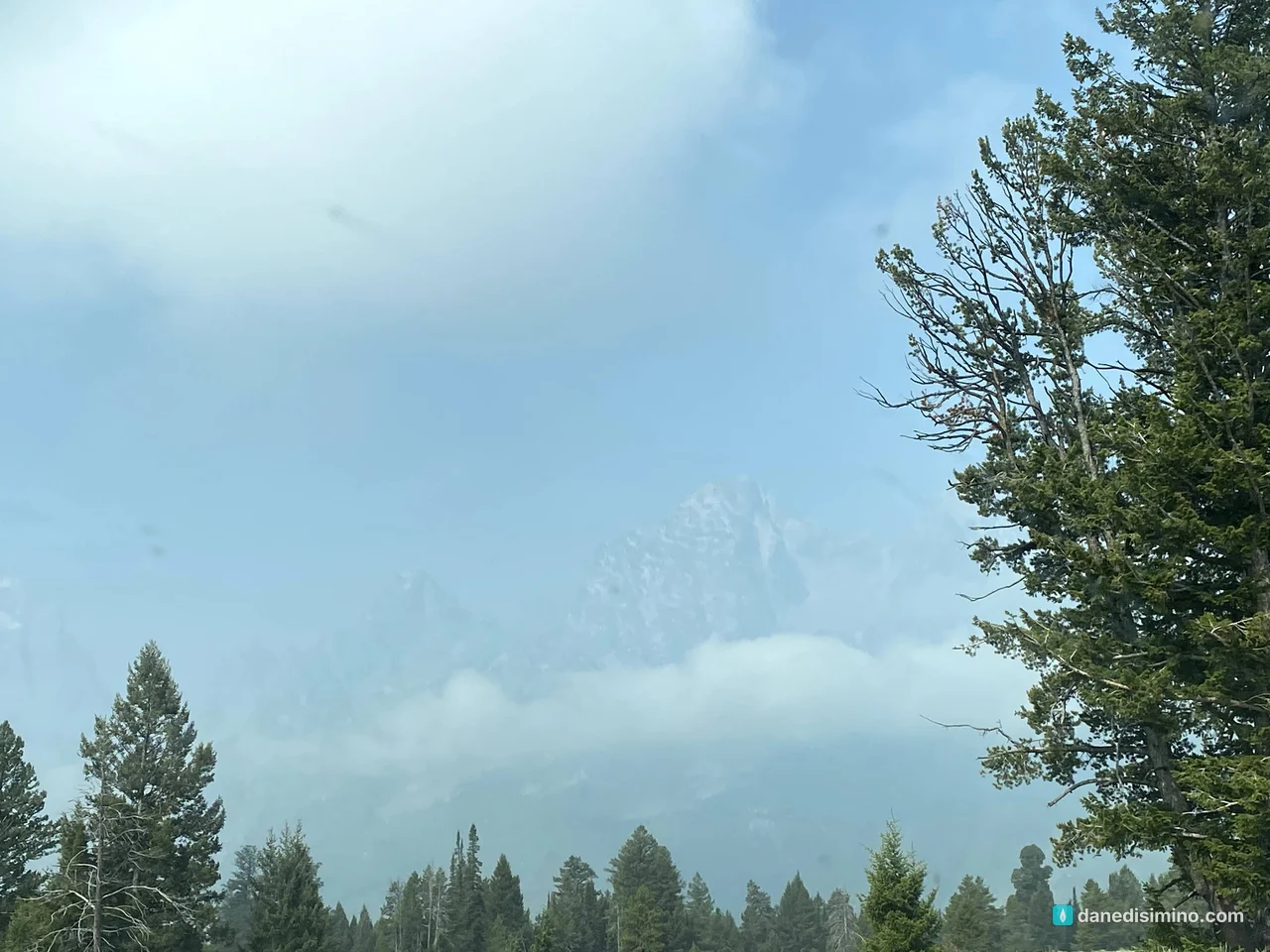
There's no buildup to this range. The Tetons have no foothills; they rise straight off the valley floor, which is why the reveal hits so hard. Even muted by smoke, it stopped us mid-sentence.
The short version
The drama is the point. The Tetons rise 7,000 feet straight from the valley with no foothills. Every overlook earns its pullout.
Get on the water. A guided scenic float on the Snake River was the best thing we did: calm water, big views, and a guide who did the work.
The lakes are the hikes. Clear, cold, stone-bottomed lakes sit right at the mountains' feet. Pick one and walk its shoreline.
Jackson is worth an evening. The antler arch, the boardwalks, dinner. Touristy, and fun anyway.
Pair it. Yellowstone is just up the road; Glacier is a day's drive north. The Tetons slot perfectly into a bigger trip.
The park at a glance
- 7,000 ft
- The Tetons' rise off the valley floor
- 13,775 ft
- The Grand itself
- 0
- Foothills in the way
- ~3 hr
- From Yellowstone's canyon country
Where: northwest Wyoming, just north of Jackson. The park runs along the base of the range, with the Snake River winding through the valley called Jackson Hole.
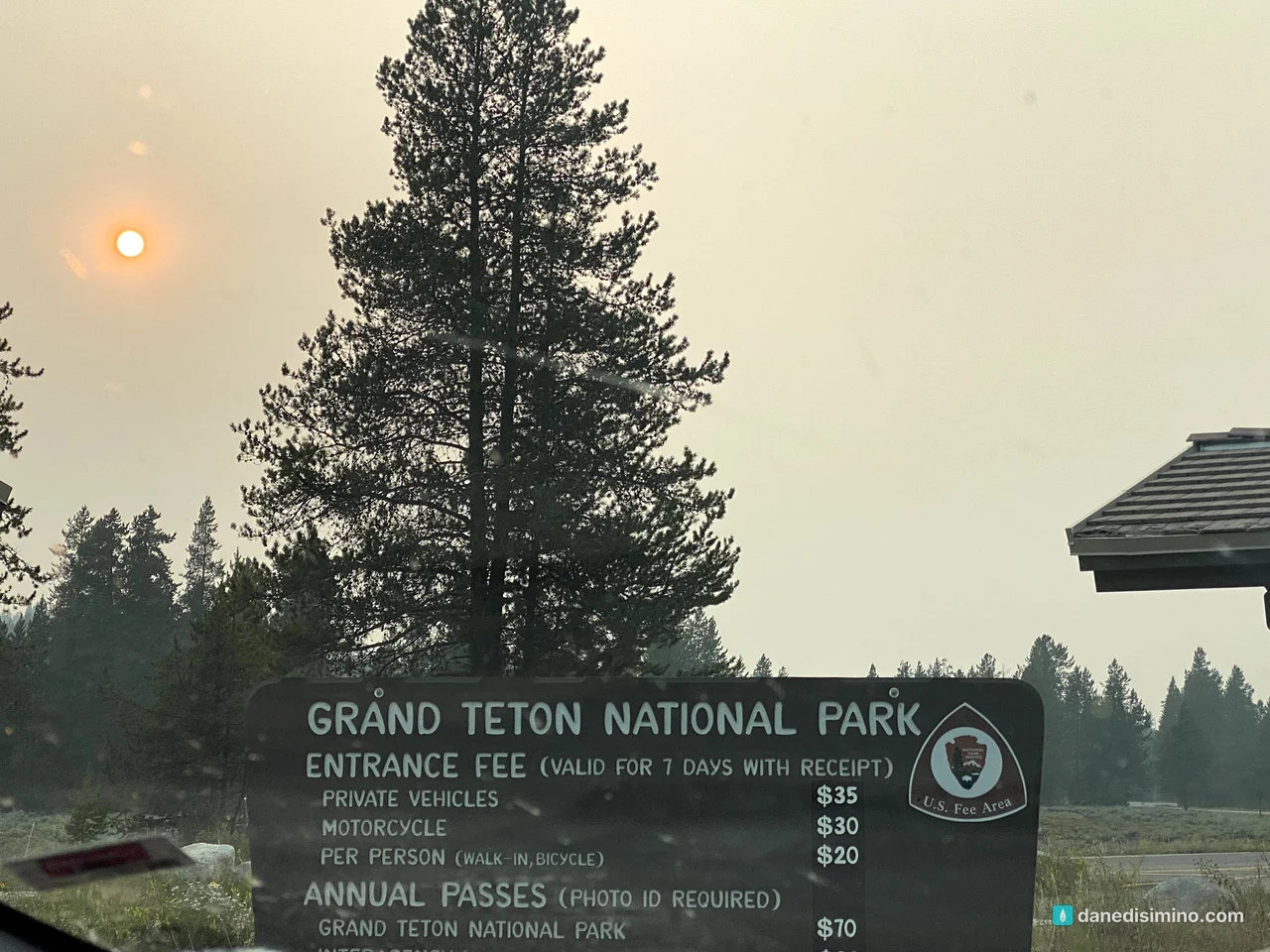
Entrance fee: $35 per vehicle for seven days. Since 2026, visitors who aren't US residents pay an extra $100 per person. The park is cashless.
Getting between parks: Yellowstone's South Entrance connects to Grand Teton via the John D. Rockefeller Jr. Memorial Parkway. Two parks, one road.
Contact: nps.gov/grte. In an emergency, call 911.
Why there are no foothills
The Tetons rise straight out of the valley because of one crack in the earth: the Teton fault, about 40 miles long, running along the base of the range.
Young mountains. The Tetons have been rising for less than 10 million years, which makes them one of the youngest ranges in North America. The NPS calls them "adolescent" next to the 50- to 80-million-year-old Rockies. Erosion hasn't had time to wear them down, so the peaks are still jagged.
One earthquake at a time. As the region stretches east to west, stress builds until the fault slips. In a typical quake, the mountains go up two to three feet and the valley drops four to six. Over 10 million years, the total offset is probably more than 25,000 feet. The same sandstone layer that caps Mount Moran, 6,000 feet above the valley, is buried about 20,000 feet below it on the other side of the fault.
Still active. The fault could produce a magnitude 7.0 to 7.5 earthquake. You can see the fault scarp from the Cathedral Group Turnout on the Jenny Lake Scenic Loop.
Ancient rock. The mountains are young, but the rock isn't. Much of the range is 2.7-billion-year-old gneiss, some of the oldest rock in North America. The highest peaks, including the Grand, are harder granite.
Carved by ice. Ice Age glaciers turned river canyons into U-shaped valleys and gouged out the basins that hold Jenny, Taggart and Jackson lakes, ringed by moraines of glacial debris. About 200,000 years ago, ice more than 2,000 feet thick filled the valley.
How the park came together
The park was built in two pieces, and it took a fight. The first Grand Teton National Park, in 1929, protected mainly the mountains. John D. Rockefeller Jr. then quietly bought up ranchland in the valley to protect the view. In 1943, Franklin Roosevelt created Jackson Hole National Monument, 221,000 acres around Rockefeller's land, over strong local opposition. In December 1949, the Rockefeller family donated 33,562 acres, and on September 14, 1950, Harry Truman signed the bill merging the park and monument into the 310,000-acre park we have today.
The Rockefellers weren't done. The same family group, the Jackson Hole Preserve, later bought the land that became Virgin Islands National Park.
Day one: the lake at the mountains' feet
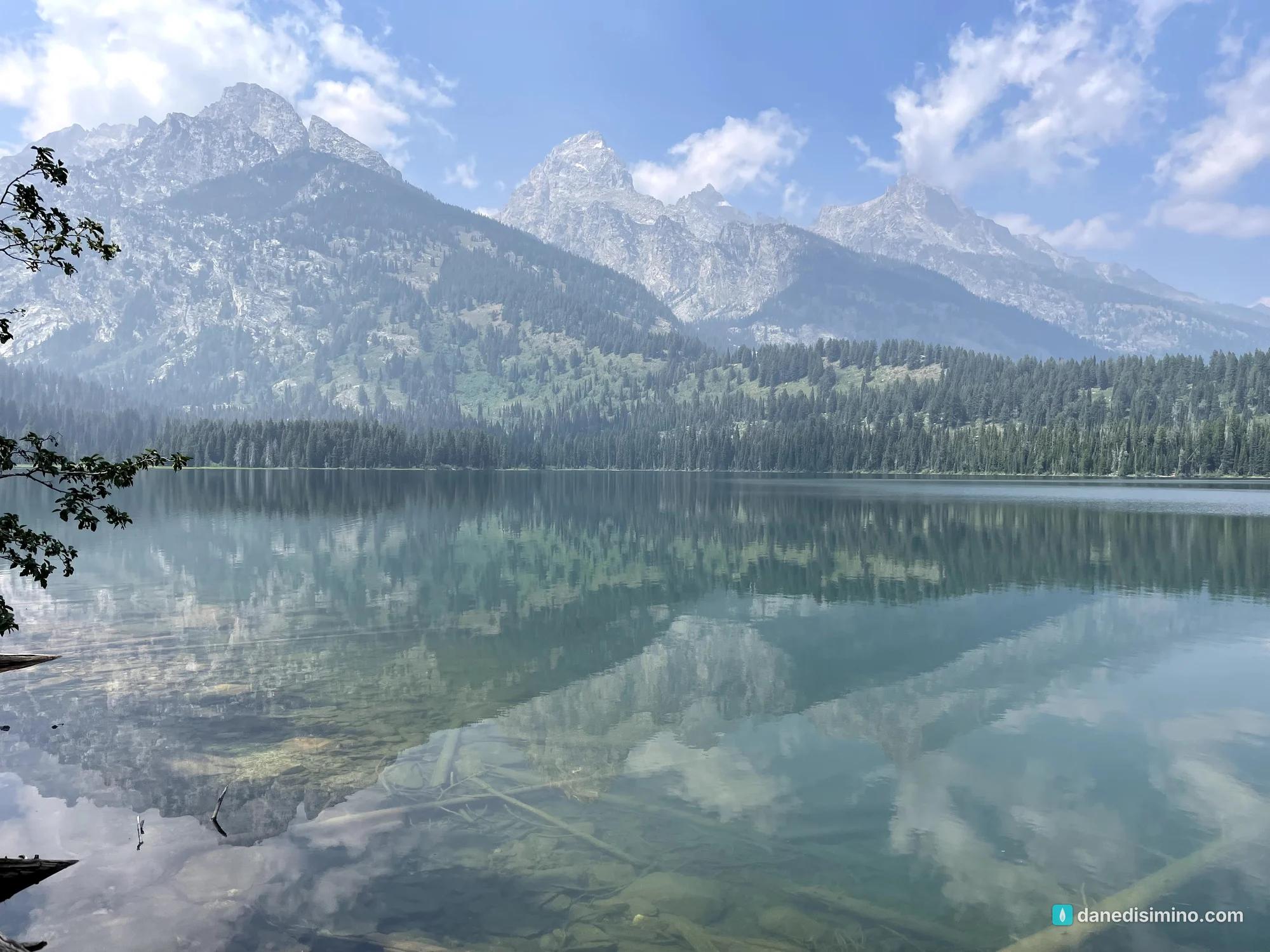
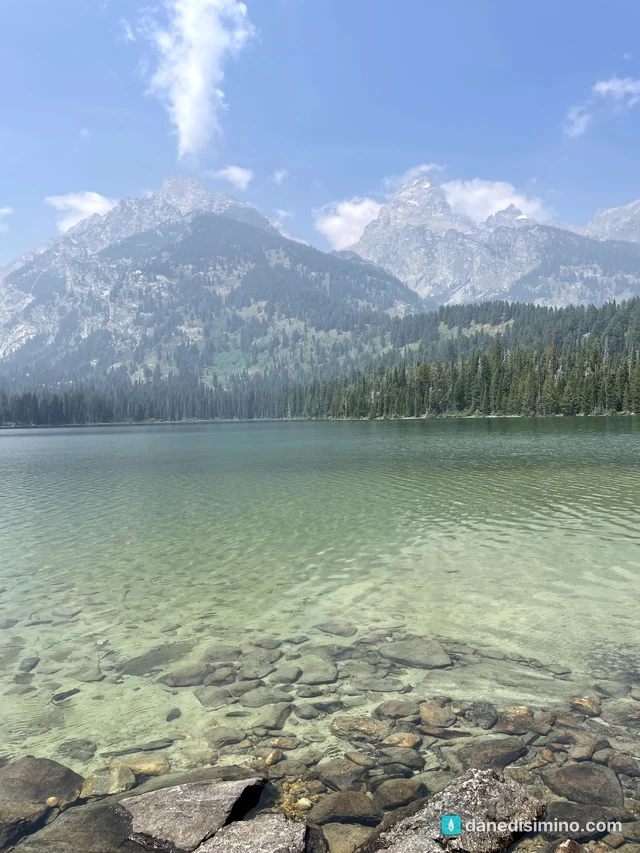
After the reveal, we spent the afternoon at one of the clear lakes below the peaks. This is what the Tetons do best: water so clear you can count the stones on the bottom, with the range standing straight up behind it.
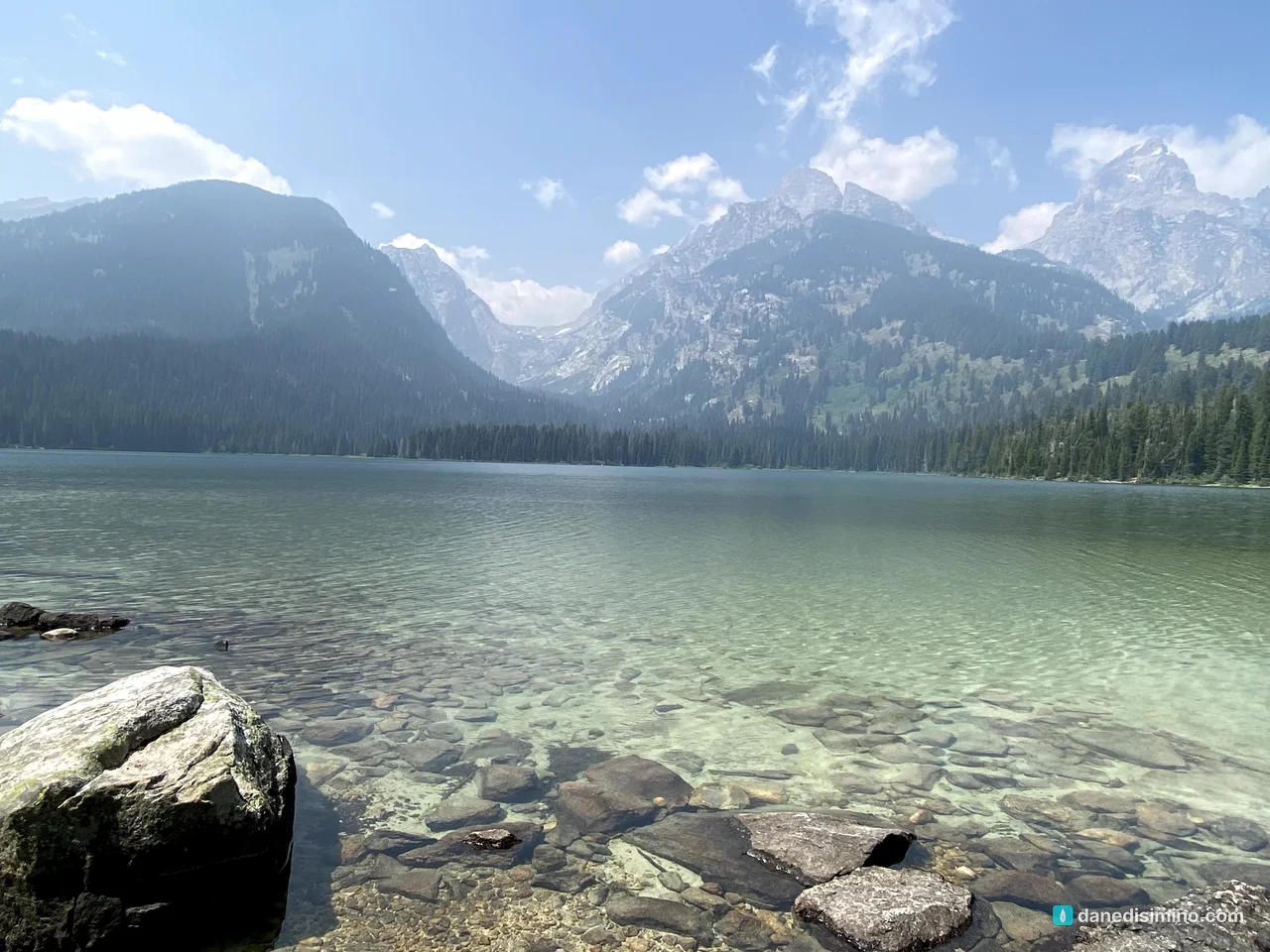
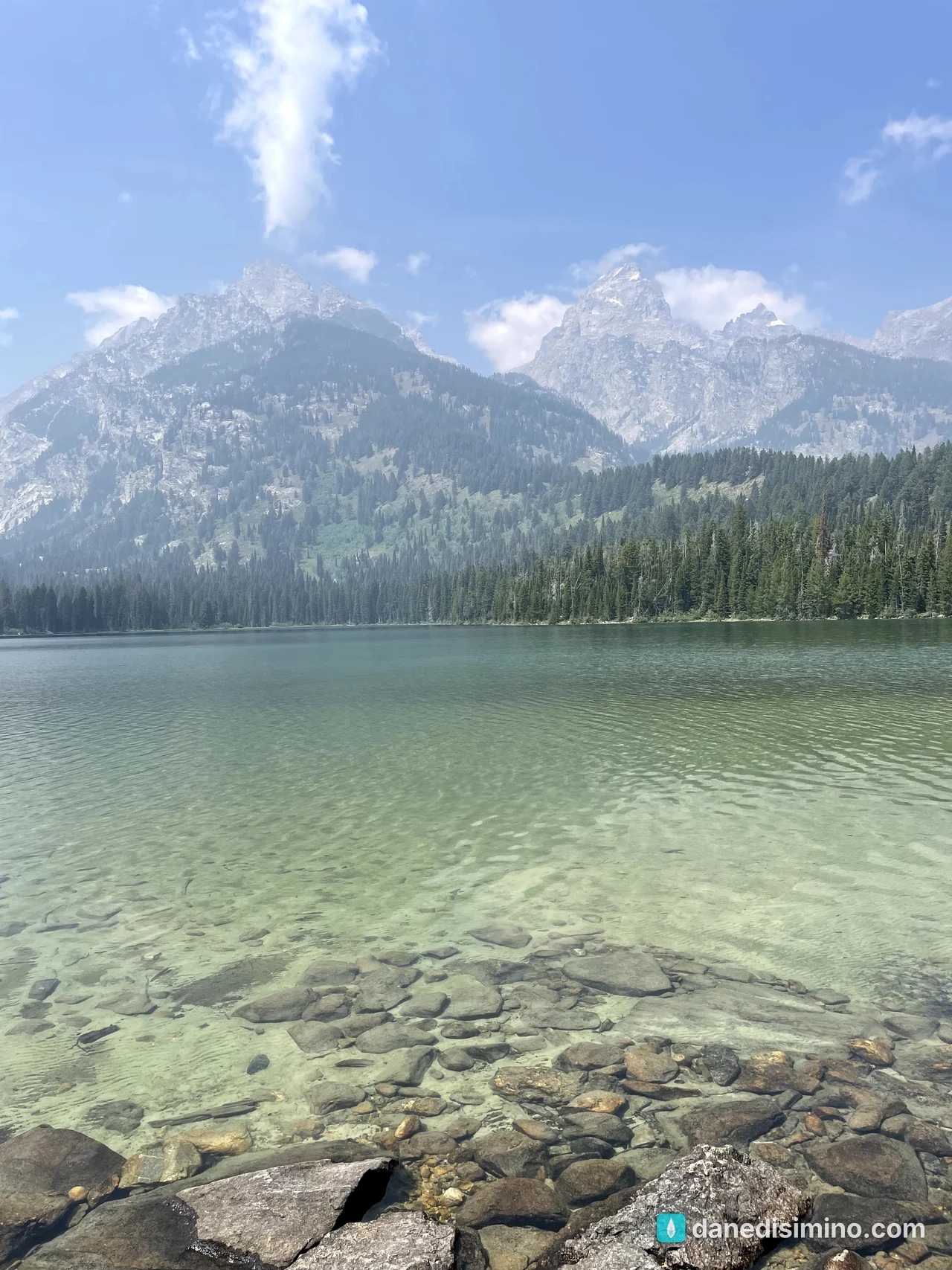
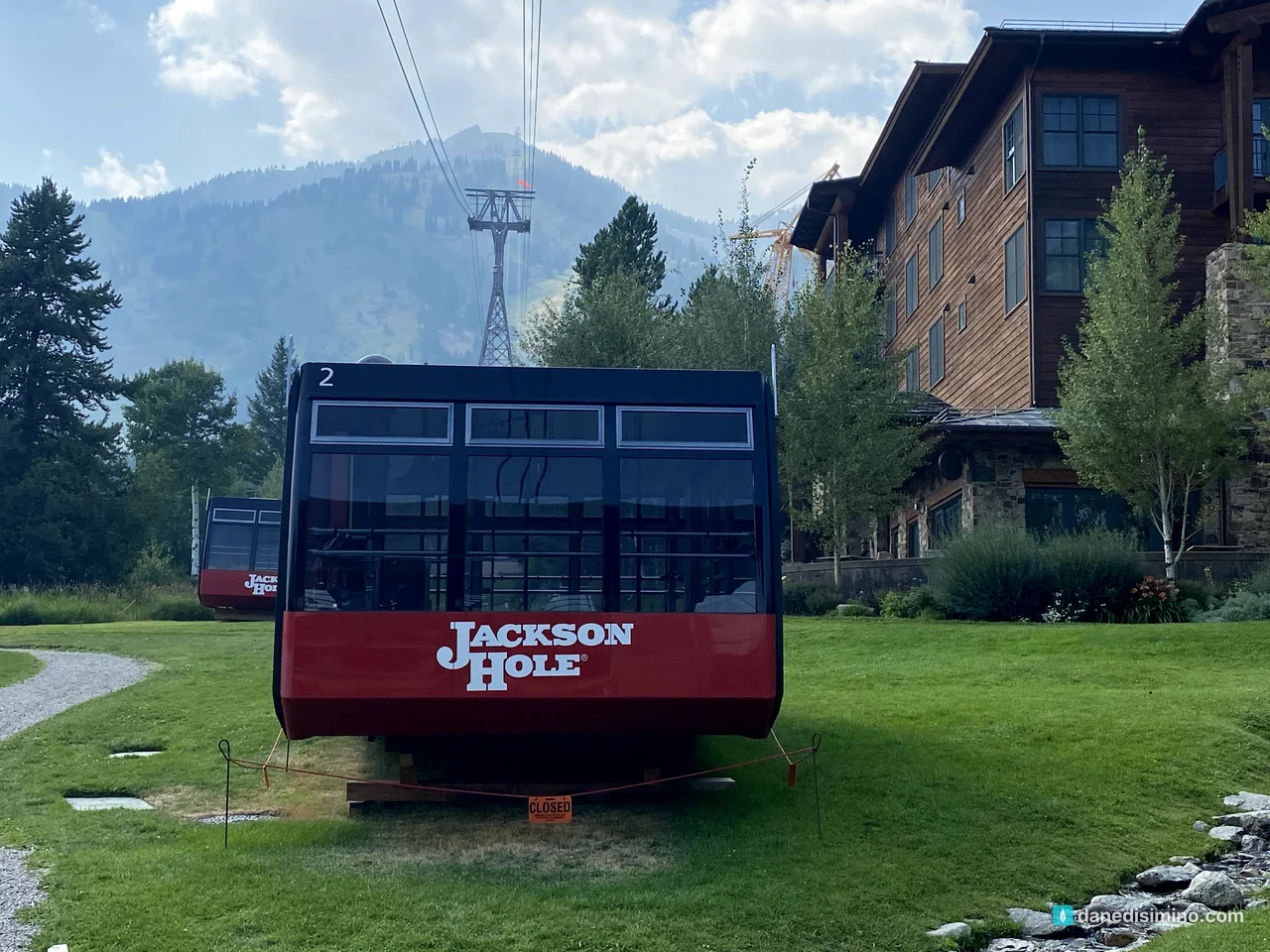
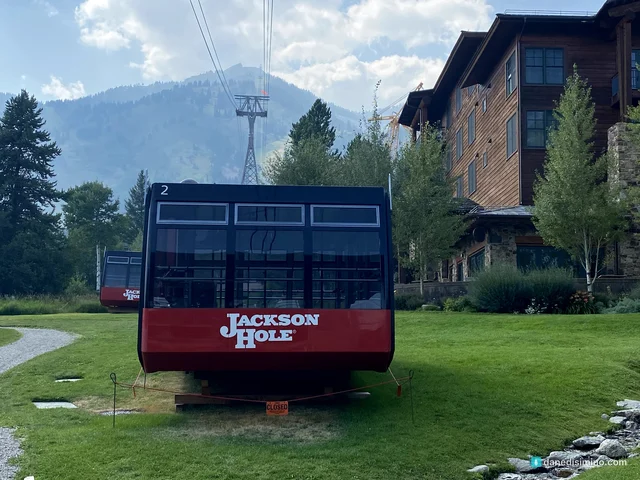
Later we wandered down to Teton Village and stood under the Jackson Hole aerial tram. We didn't ride it that trip; it's on the list for next time, since it hauls you 4,000 feet up the range in about 12 minutes.
Day two: the Snake, the bison and Jackson
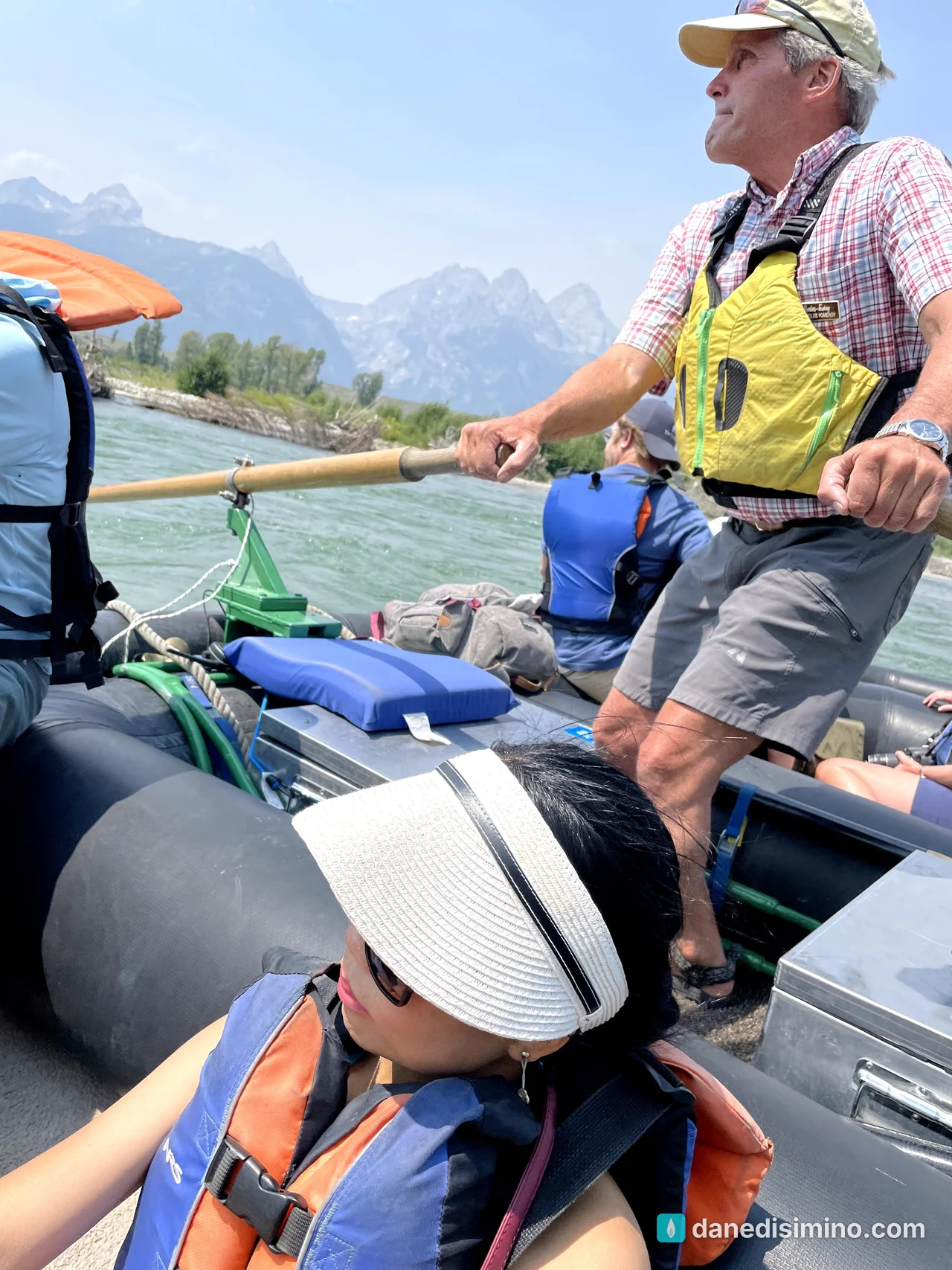
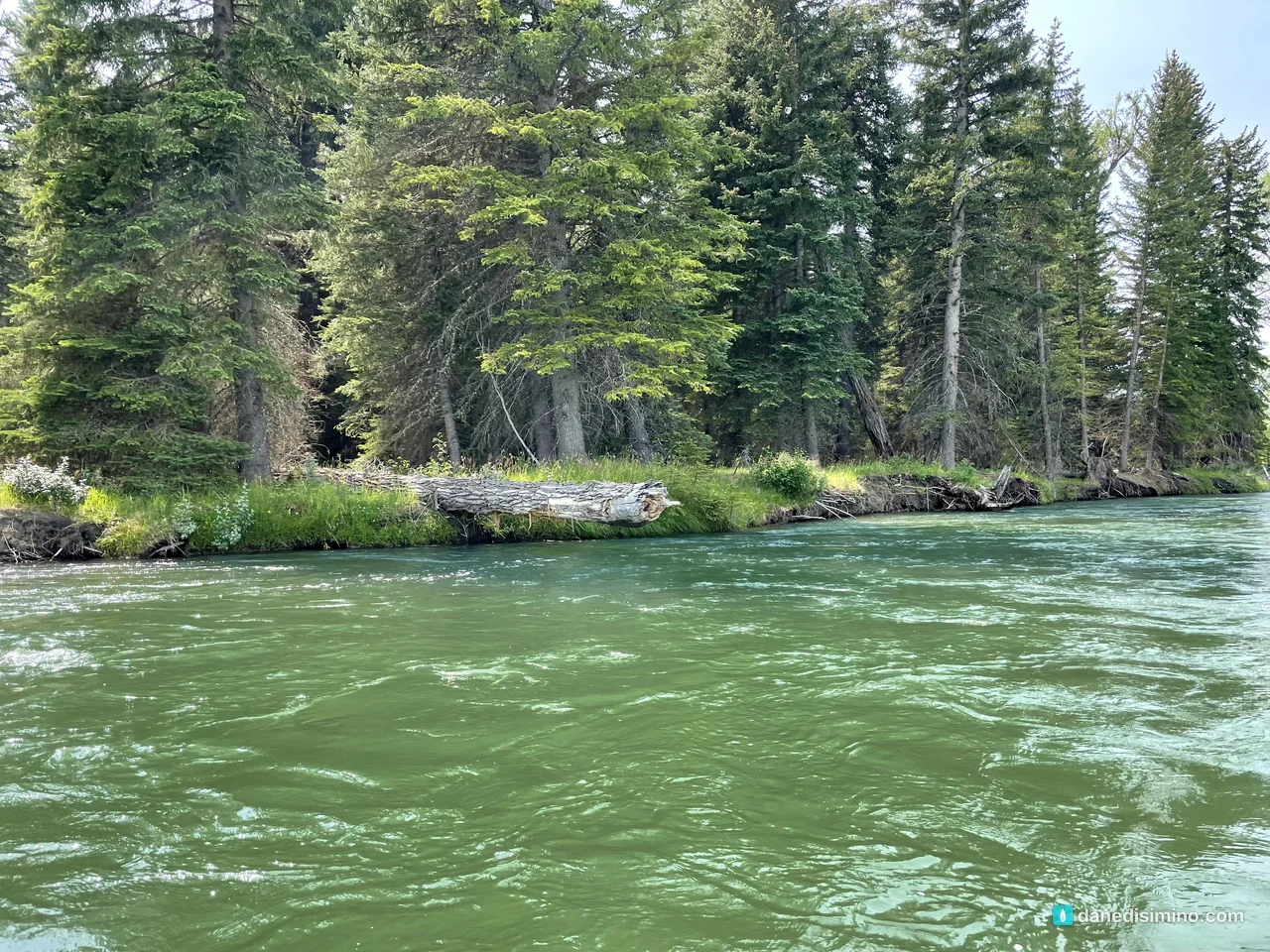
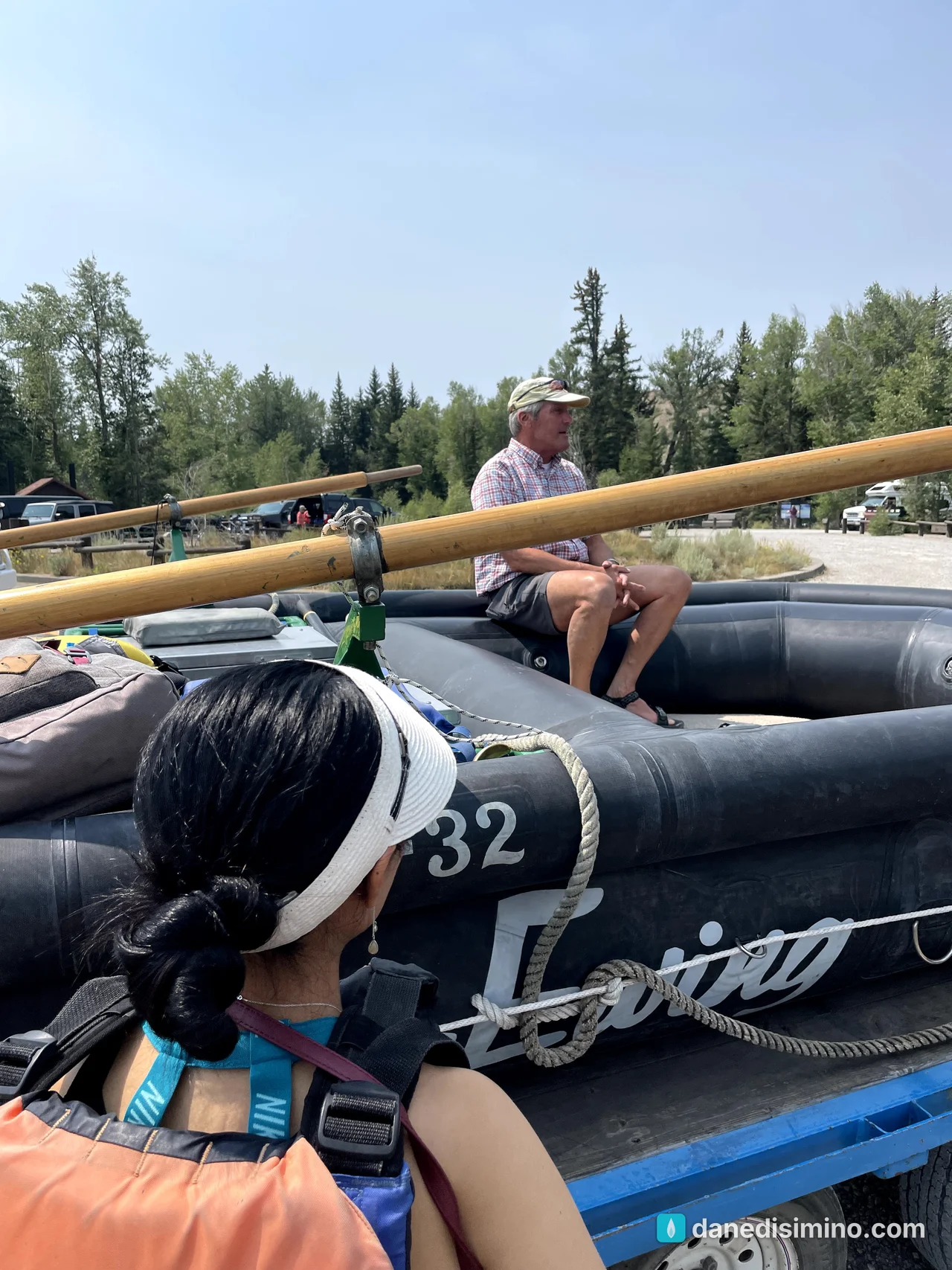
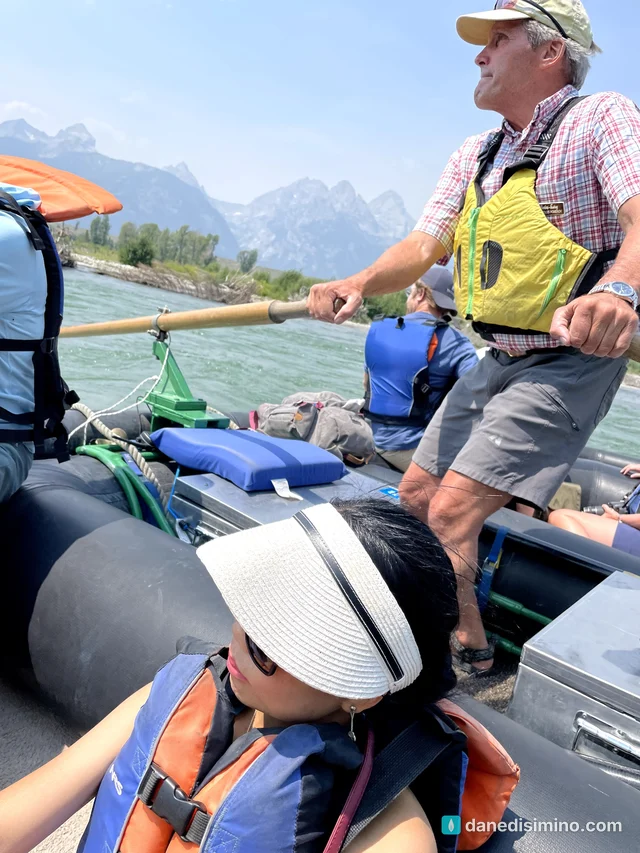
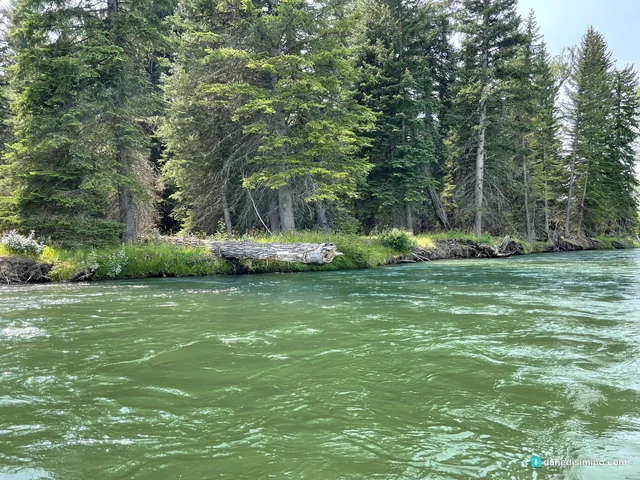
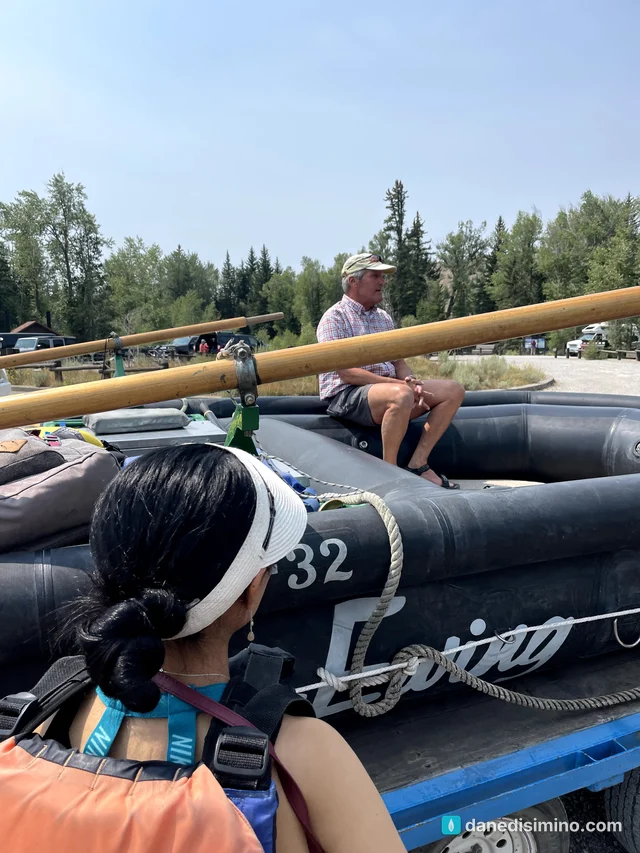
Float the Snake. The best thing we did in the park was a guided scenic float down the Snake River. You sit in a raft with a guide on the oars, the current does the rest, and the Tetons slide along the horizon while you watch the banks for wildlife. The water is a green you don't quite believe, even under smoke. If you go: motors aren't allowed on the Snake inside the park, so everything on the water is oar- and paddle-powered, and the licensed outfitters run trips daily all summer. Book a morning float; the water's calmer and the animals are out.
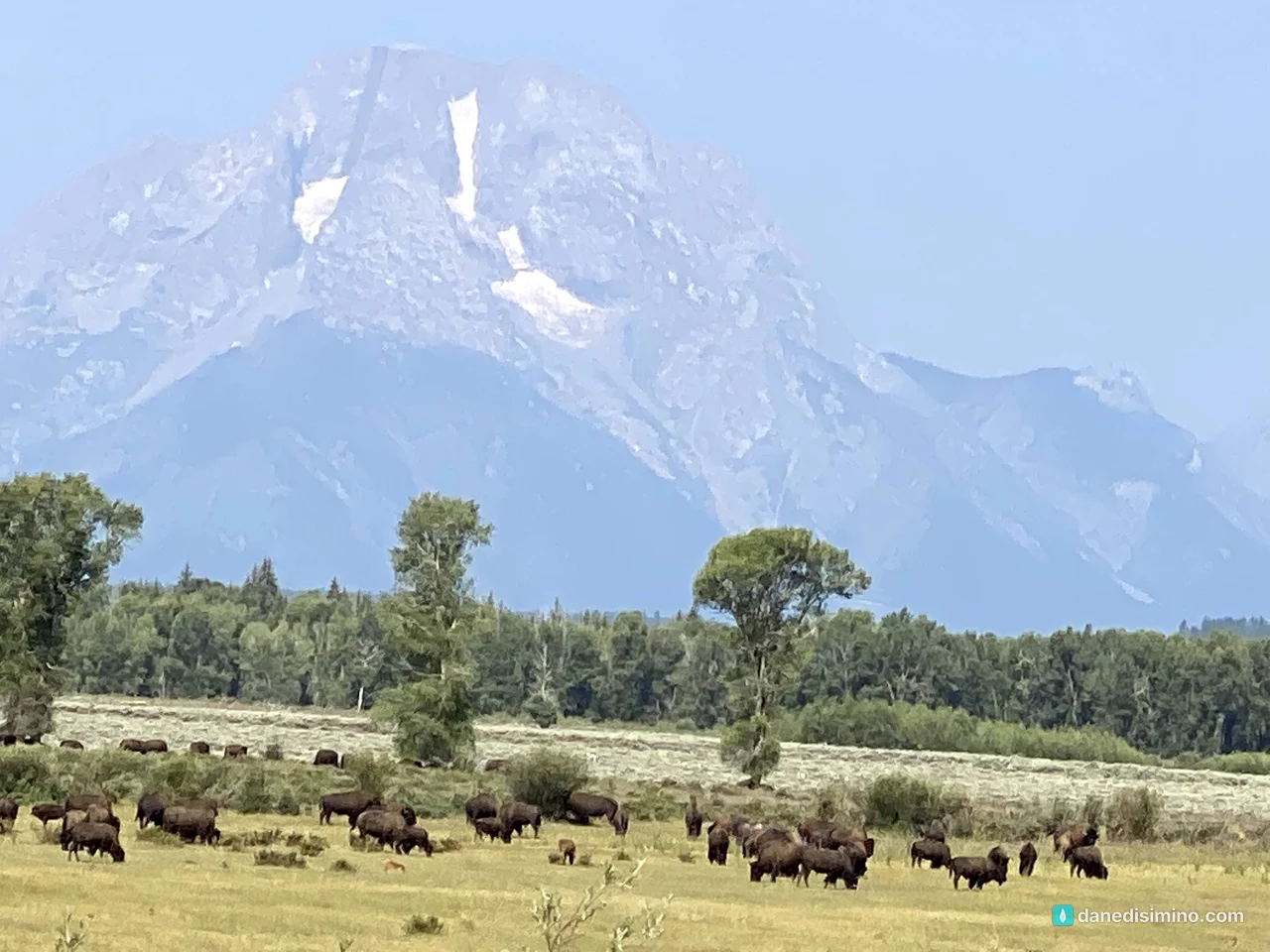
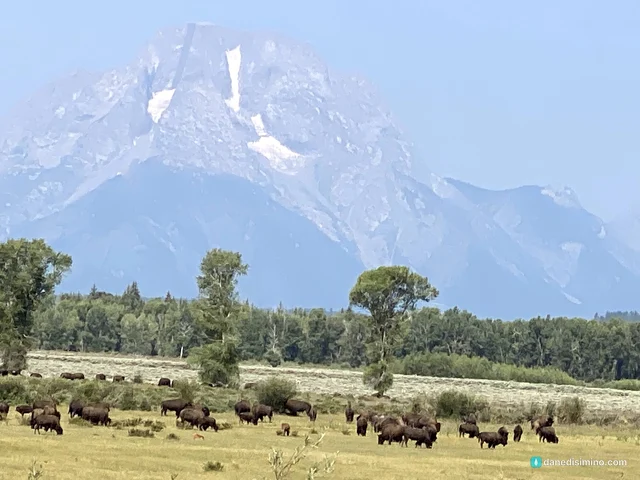
Bison under Mount Moran. On the drive north that morning we hit a classic Jackson Hole scene: a herd of bison grazing the flats with Mount Moran floating above them in the haze. Pull over (fully off the road), stay by the car, and give them their 25 yards.
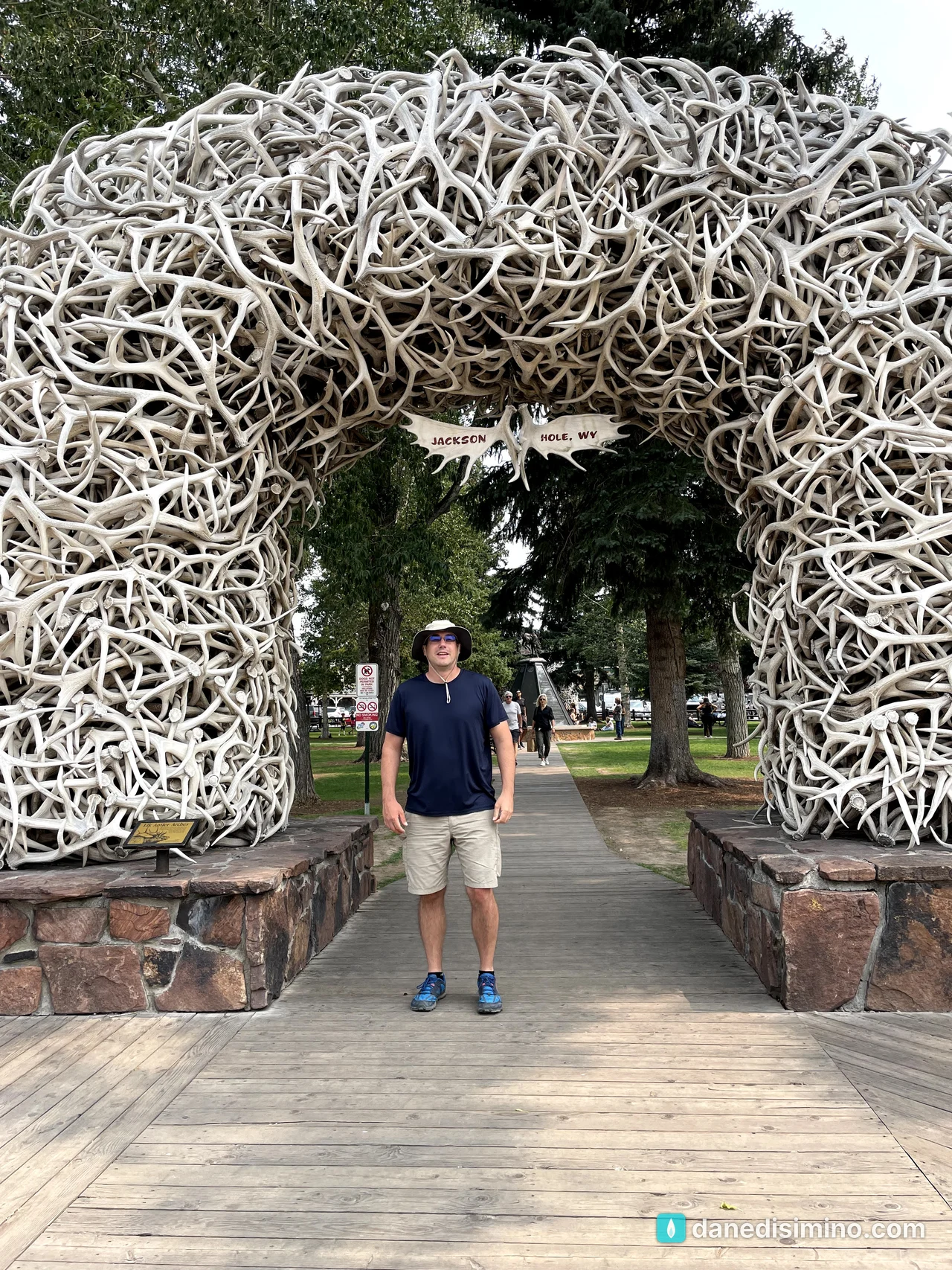
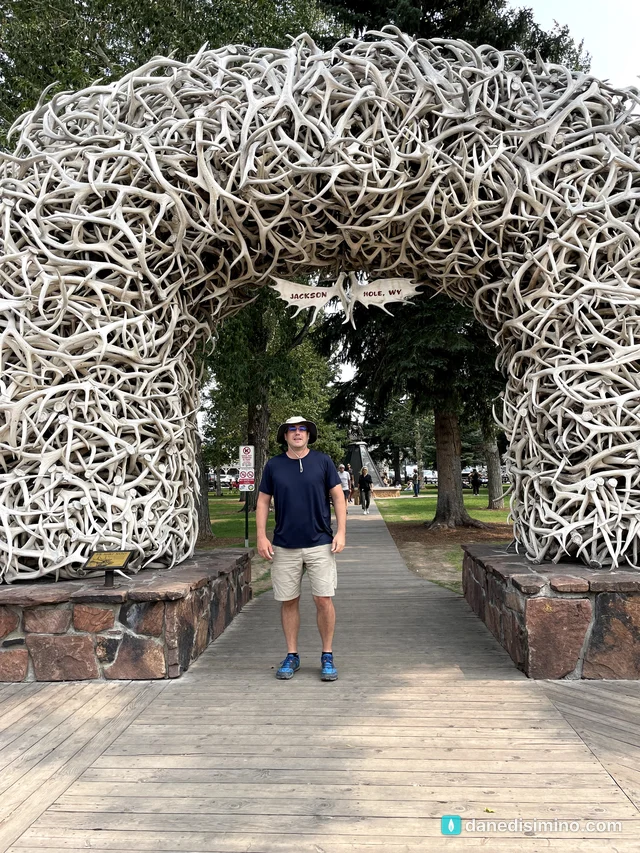
Jackson in the evening. The town of Jackson sits just south of the park: the elk antler arches on the square, boardwalk storefronts, and every kind of dinner. It's touristy. Lean into it; we did.
Where we slept
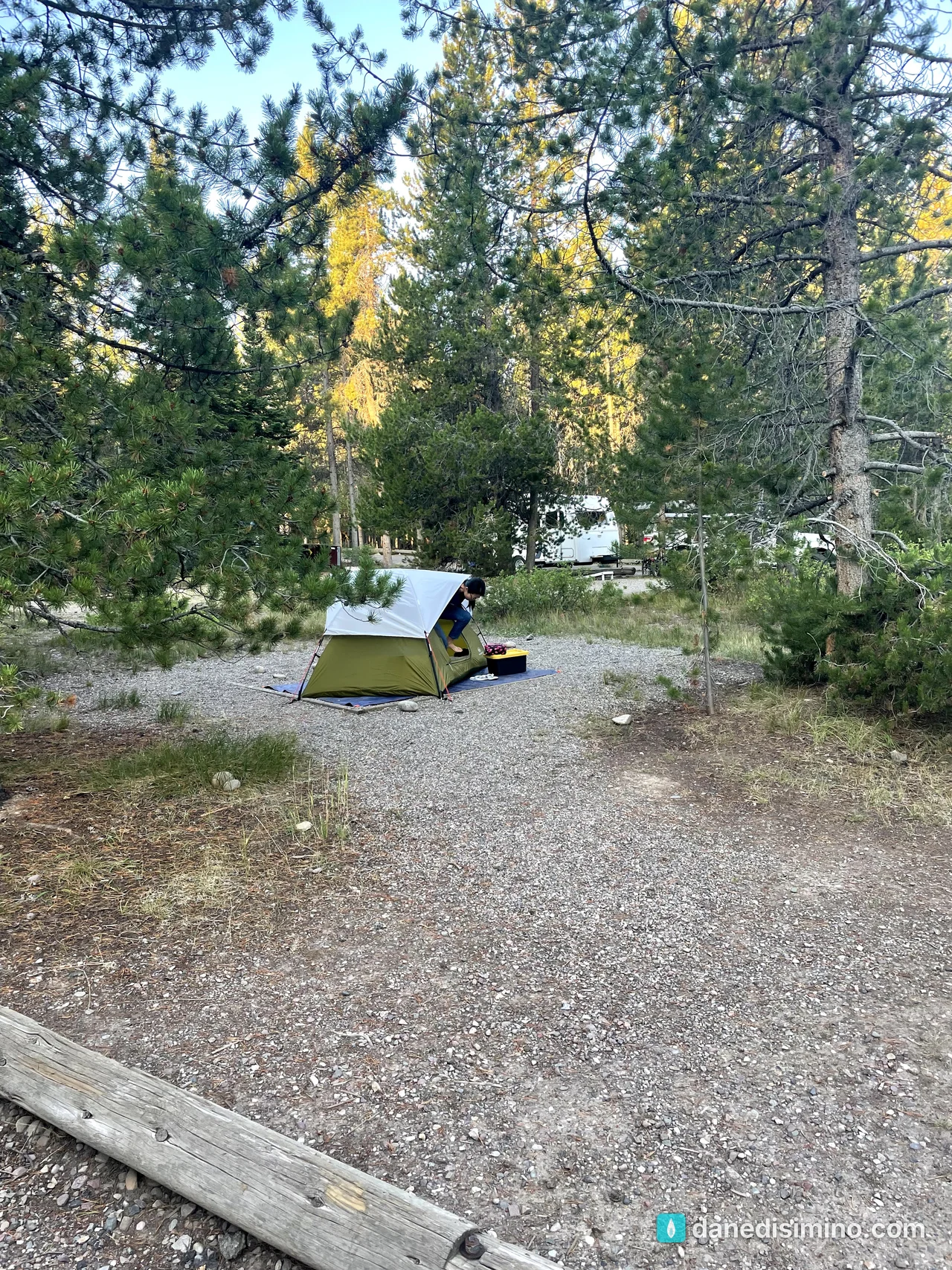
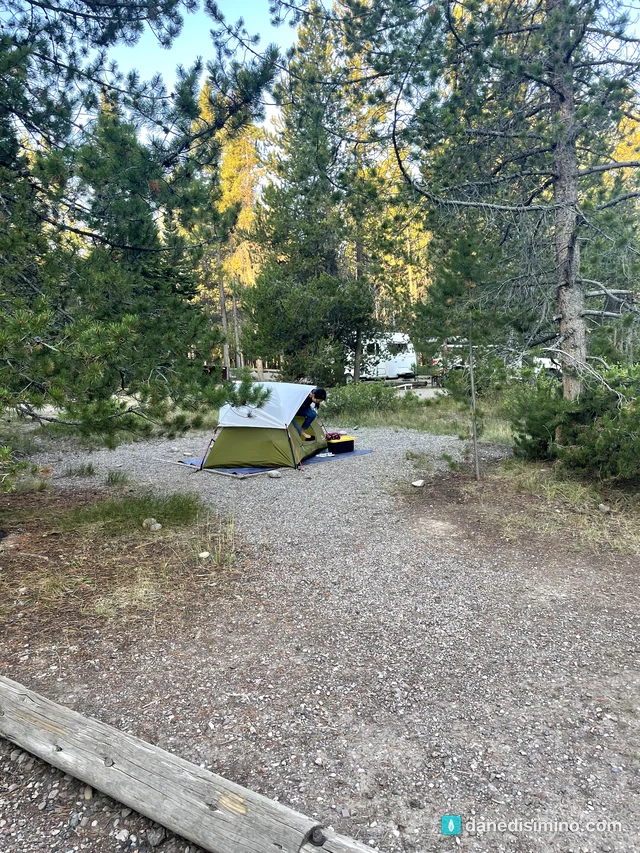
We camped at a campground near the lake, in the pines, with the tiny tent, the right call for a short stay after the Yellowstone lesson about cold nights and big setups. All of Grand Teton's campgrounds are now reservation-only on Recreation.gov, bookable up to six months out, and summer dates go fast. If you're tent camping, Jenny Lake Campground is the classic: tents only, sitting right at the base of the range.
Day three: north to Glacier
We packed up on the morning of August 9, took one last look at the range, and drove north for Glacier. That's the thing about the Tetons: the park slots perfectly into a bigger road trip. Yellowstone is connected directly by the Rockefeller Parkway, and Glacier is a long day's drive beyond.
What I'd do differently
Check the smoke forecast. August is fire season in the West. The haze dampened our views and our mood until the mountains broke through it. If your dates are flexible, June and July usually run clearer.
Hike farther. We stayed low and close. Next time it's Cascade Canyon from the Jenny Lake boat, and the tram from Teton Village.
Sunrise, not midday. The Tetons face east. The famous valley viewpoints: Schwabacher Landing, Oxbow Bend, Mormon Row, are morning-light places, and we never saw one at dawn.
Fish it. I hadn't picked up a fly rod yet in August 2021. The Snake has its own cutthroat, fine-spotted and native. That alone will bring me back.
What Grand Teton taught me
Grand Teton taught me that anticipation is part of the gift. We drove hundreds of miles on faith that something spectacular was out there, and for the last hour it looked like it wasn't. The payoff wasn't just the mountains. It was the waiting, the doubt, and then the clouds moving aside.
"Faith shows the reality of what we hope for; it is the evidence of things we cannot see." (Hebrews 11:1, NLT)
Sometimes the view is there the whole time, just behind the haze.
Questions?
Ask me anything about Grand Teton: the float, the lakes, camping with a small tent, or pairing it with Yellowstone and Glacier. I answer every question.
Photos
Sources
Pathlight
Park guides from the road. A printable trip sheet comes with them when one is ready.