
NATIONAL PARKS
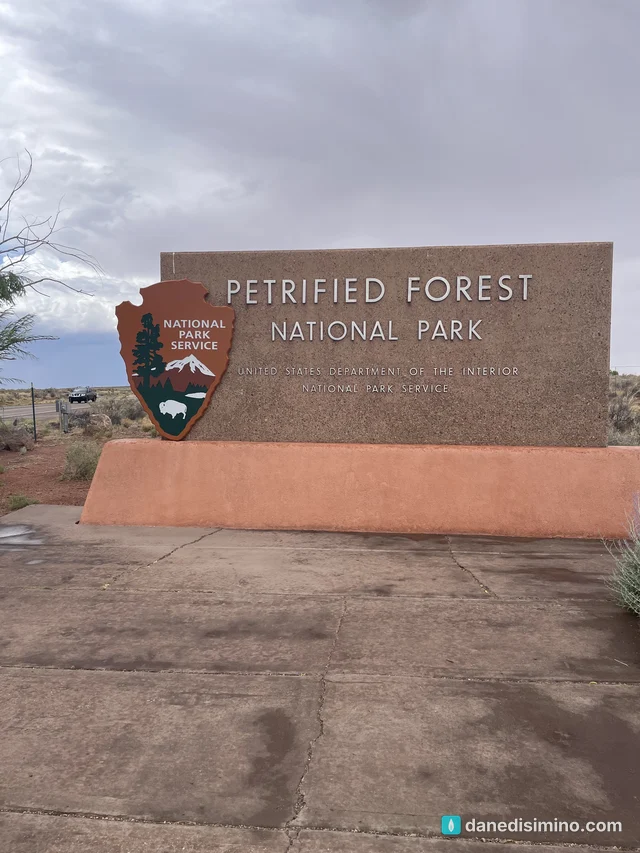
Petrified Forest
A Field Guide
On this page
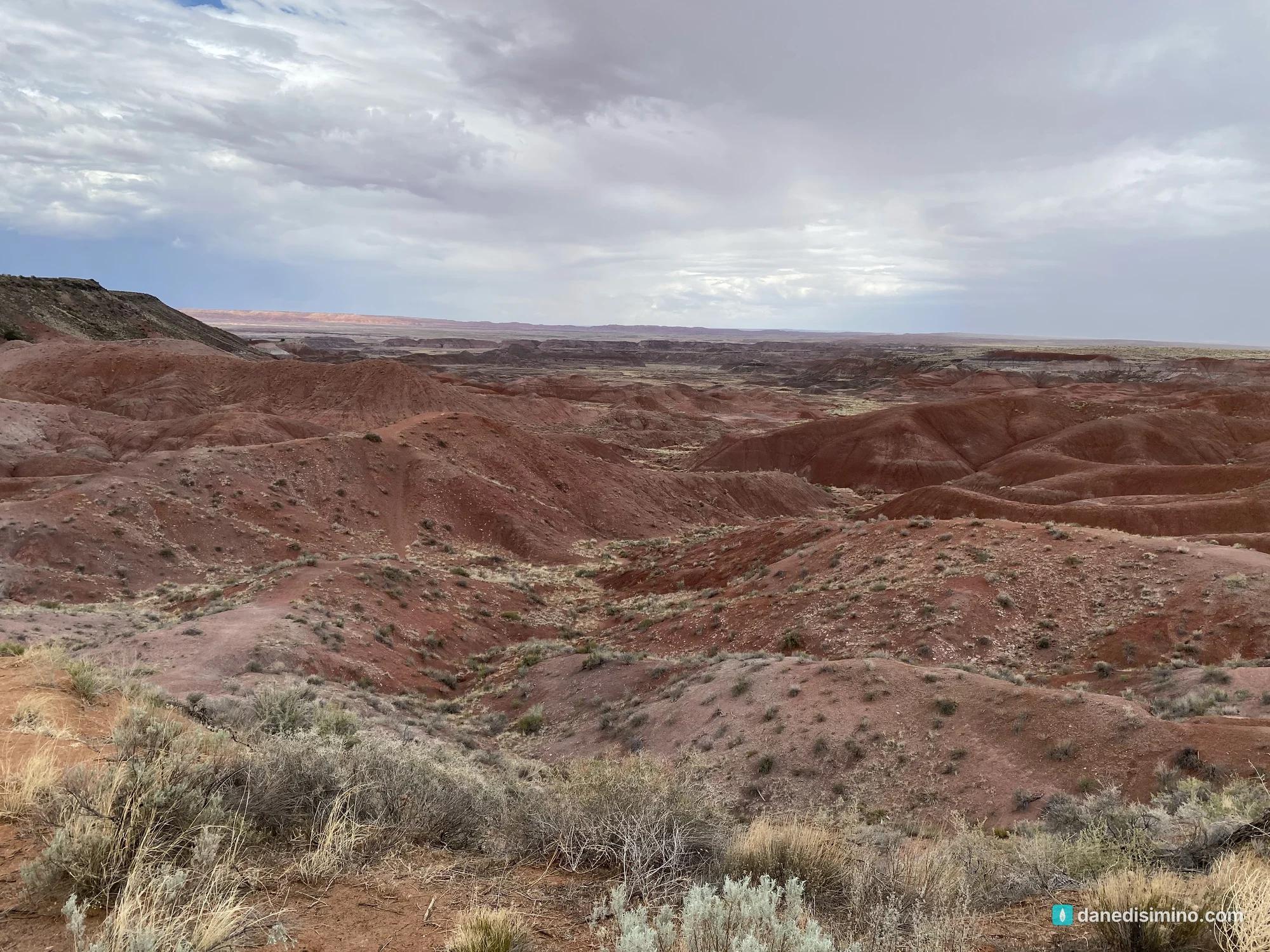
The last park of our month-long Great Loop trip: a rainy June drive through Petrified Forest, with logs of solid quartz, the red and purple badlands of the Painted Desert, and Whipple Point. How a tree turns to stone, how to see the park in a few hours, and the hard lesson from our long drive home.
Version 1.0 · Updated Nov 17, 2026
Map
When to go
Average monthly visits, 2023–2025. Source: NPS visitor statistics. ● marks the months we visited.
| January | 21,867 |
|---|---|
| February | 19,191 |
| March | 44,582 |
| April | 42,540 |
| May | 54,847 |
| June | 59,891 |
| July | 46,717 |
| August | 38,363 |
| September | 40,874 |
| October | 37,639 |
| November | 27,847 |
| December | 30,873 |
Petrified Forest was the final park of our Great Loop trip of 2022, a month on the road and about ten national parks. The day before, we'd been at Saguaro. By June 18, we were racing toward home.
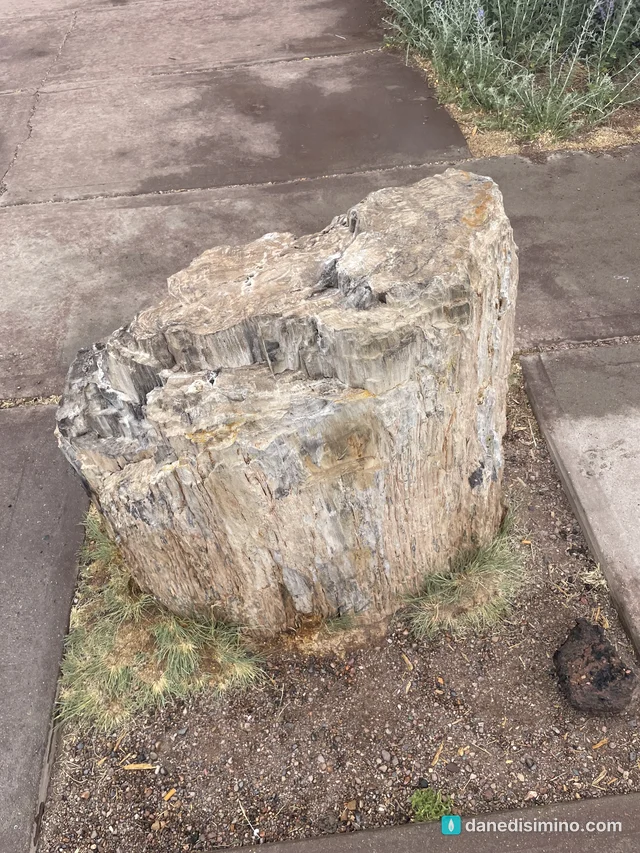
For us, it was a drive-through park. The weather was pretty bad: rainy, wet and cool. But we were delightfully surprised by the views, and by seeing real petrified wood right along the road.
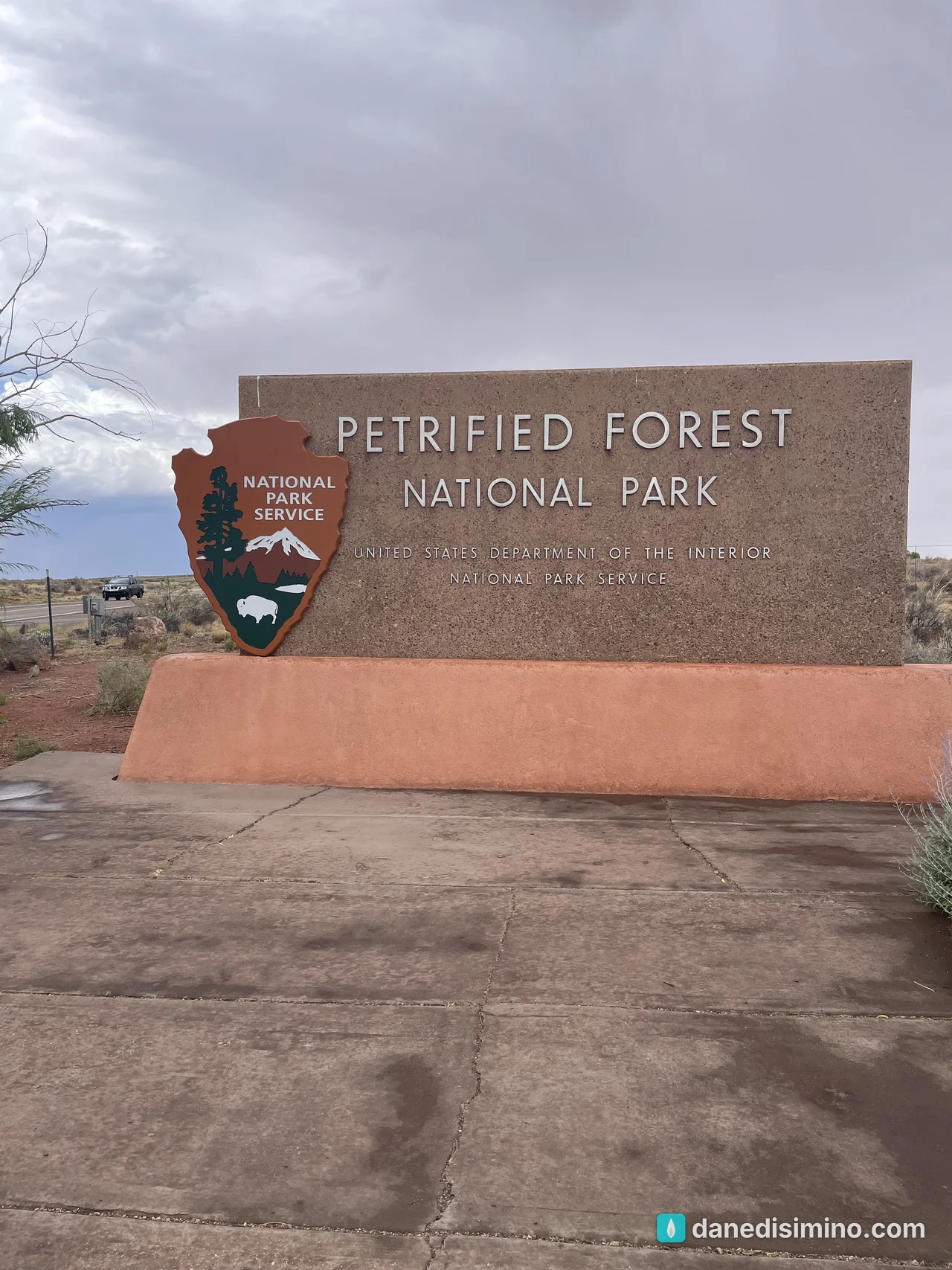
We looked at each other in that visitor center and said, "Let's just go home."
The short version
Drive the park road. It's 28 miles, about an hour without stops. Most visitors spend two to three hours.
See the wood up close. The Giant Logs trail behind the Rainbow Forest Museum is the heart of the original monument.
Stop at the Painted Desert overlooks. The red and purple badlands are the other half of the park.
Leave everything. Taking any petrified wood, even a sliver, is illegal.
Don't drive tired. It's a long way to anywhere from here. Book a room.
The park at a glance
- 200+ million
- Years old, the petrified wood
- 28 mi
- The park road, end to end
- 1906
- First protected, as a monument
- $25
- Per vehicle, good for 7 days
Where: northeastern Arizona, along I-40 east of Holbrook. The north entrance is right off I-40. The south entrance is about 18 miles from Holbrook on U.S. 180.
The road: one 28-mile park road connects the north and south entrances, so you can drive straight through and keep going.
Weather: semi-arid grassland, from over 100°F in summer to well below freezing in winter. Most of the year's 10 inches of moisture comes from winter snow and dramatic summer thunderstorms.
Entrance fee: $25 per vehicle, good for seven days.
Food: the diner at the Painted Desert Visitor Center closes early, and the nearest truck stops on I-40 are about 15 miles away.
Contact: nps.gov/pefo. In an emergency, call 911.
How a tree turns to stone
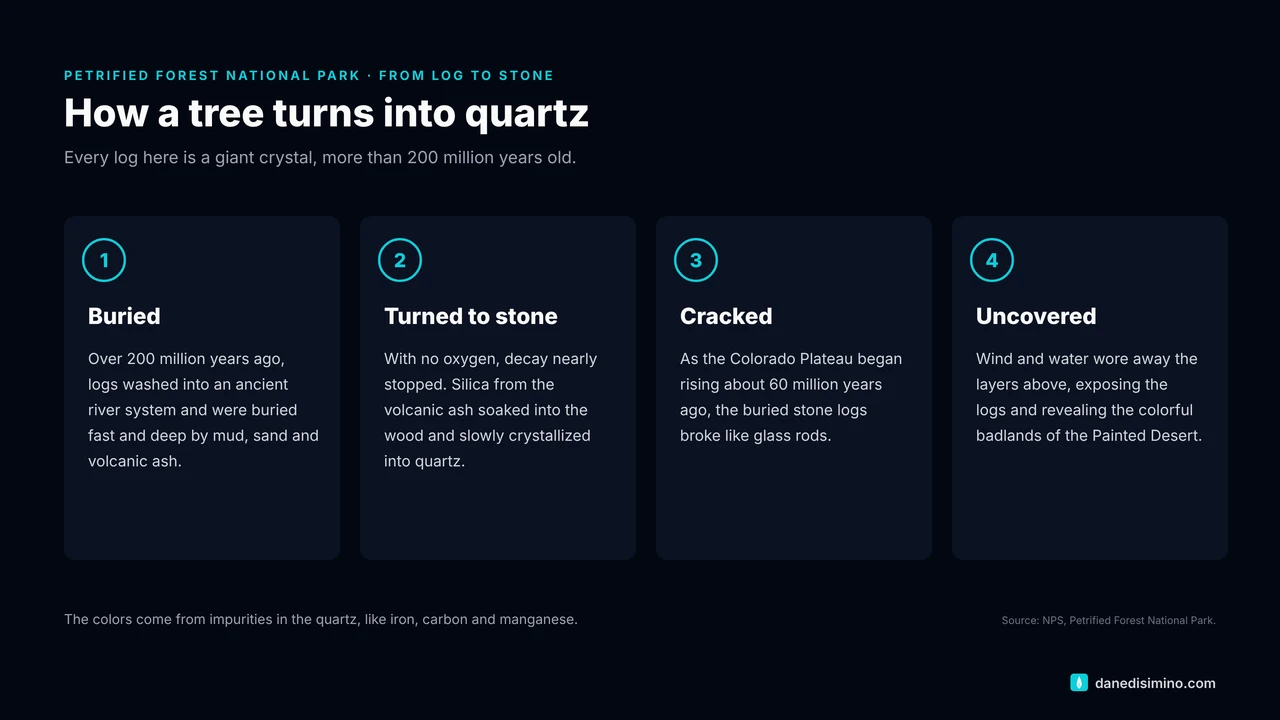
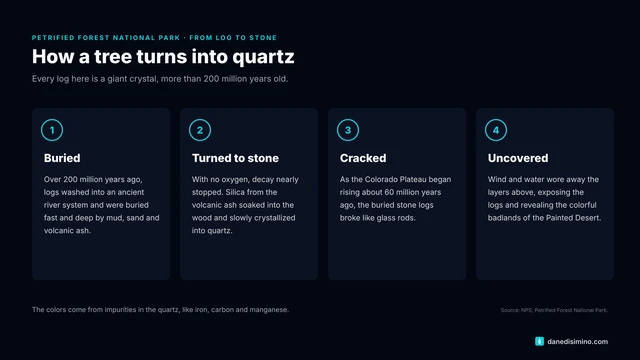
More than 200 million years ago, in the Late Triassic, this was a tropical land of rivers. It's sometimes called the "Dawn of the Dinosaurs," the time before the Jurassic. Huge trees fell and washed into the river system, where mud, sand and volcanic ash buried them quickly and deeply. Cut off from oxygen, they barely decayed.
Over hundreds and thousands of years, silica from the volcanic ash soaked into the wood and crystallized into quartz. The logs became stone, almost solid quartz. Each piece is like a giant crystal, and it sparkles in the sun. The colors come from impurities like iron, carbon and manganese.
Much later, starting about 60 million years ago, the Colorado Plateau began to rise. The buried stone logs were put under so much stress that they snapped like glass rods. That's why so many logs here look like they were sliced into sections. Erosion has been uncovering them ever since.
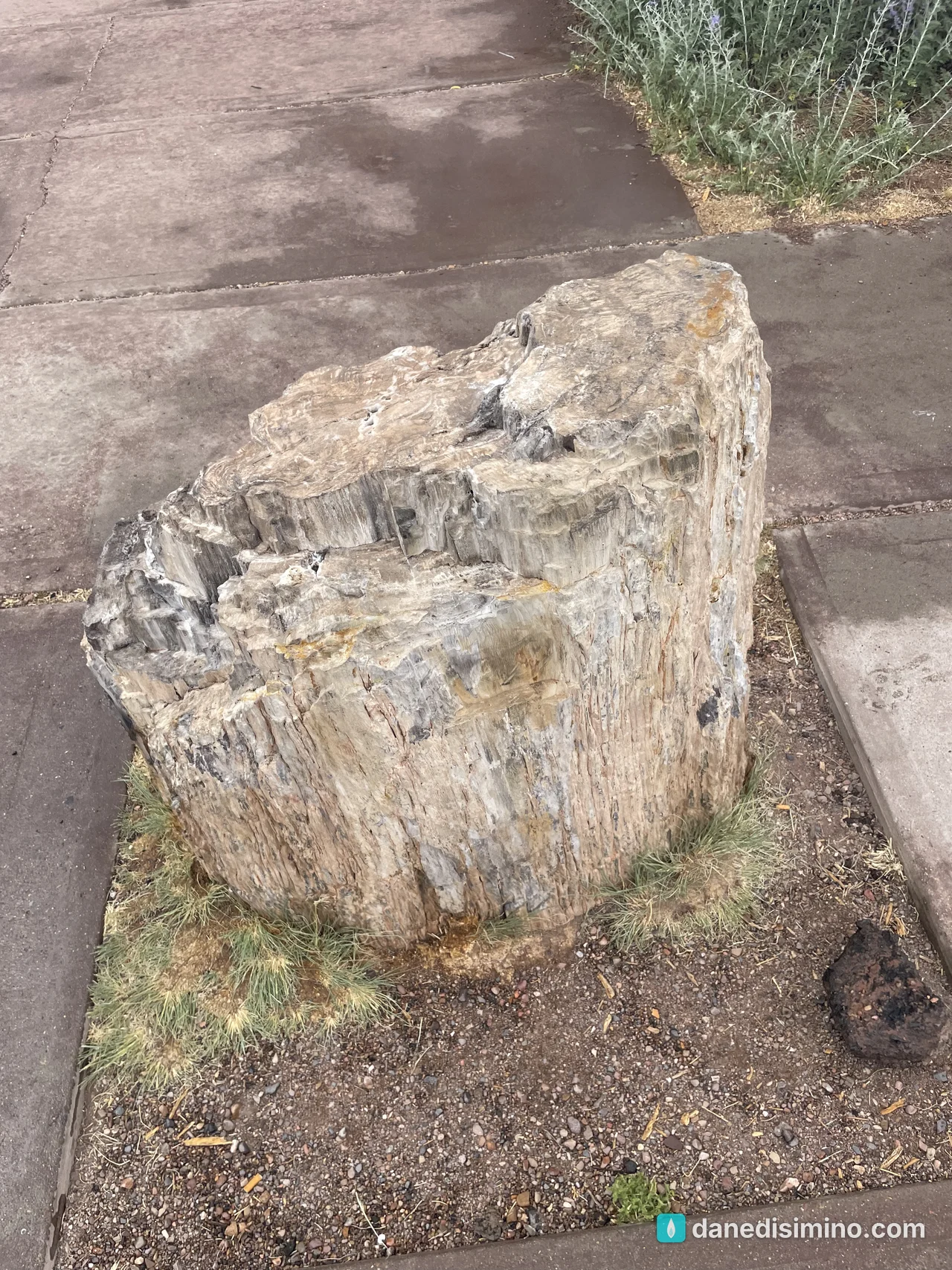
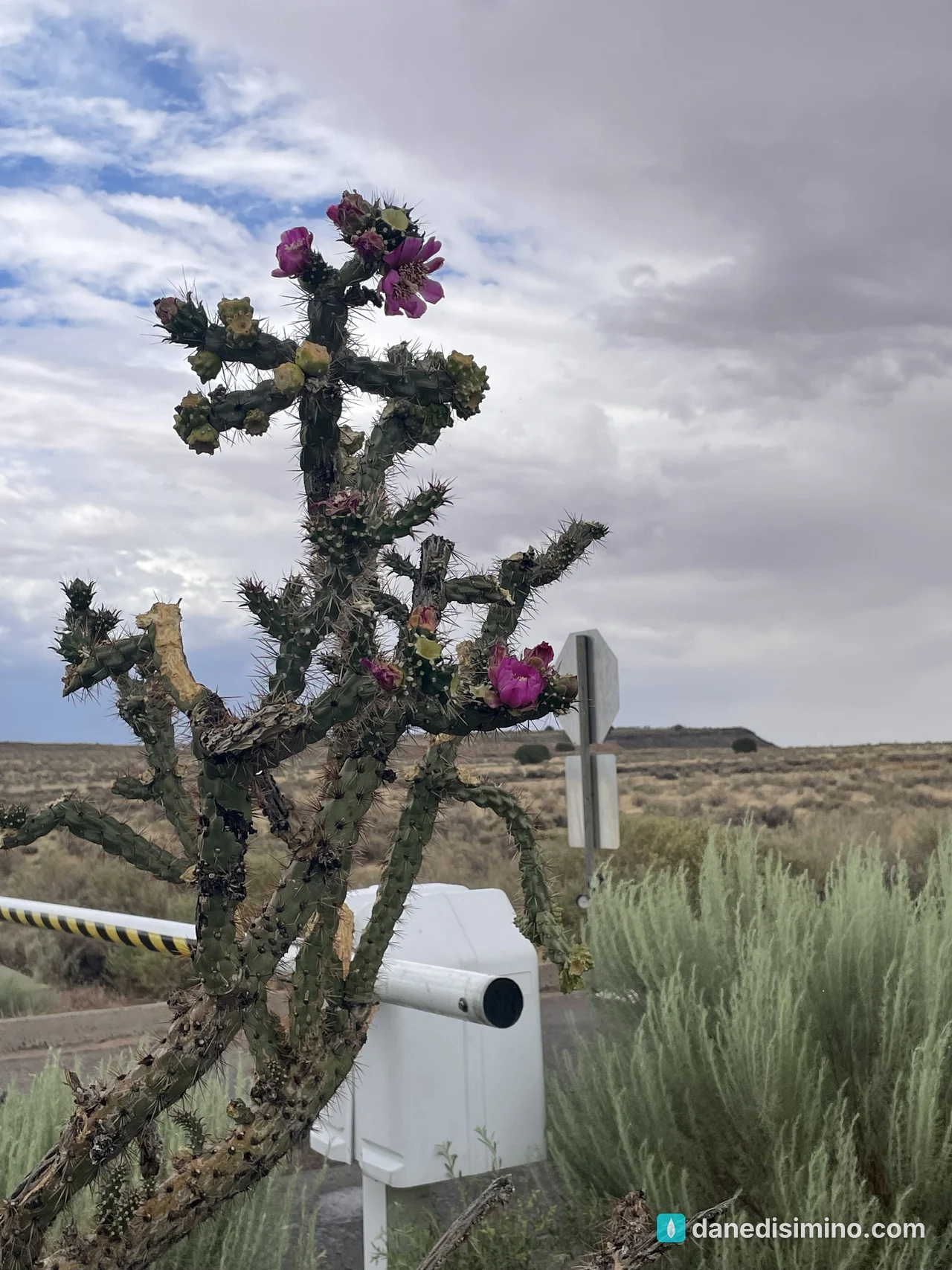
The park protects much more than wood: fossils of Triassic reptiles and early dinosaur relatives, Ancestral Puebloan sites and petroglyphs, grasslands full of pronghorn, and a stretch of historic Route 66.
How the park began
By the late 1800s, souvenir hunters and collectors were carrying off the petrified wood. In 1906, President Theodore Roosevelt set aside Petrified Forest National Monument, with the Giant Logs area at its heart. It became a national park in 1962.
The Painted Desert
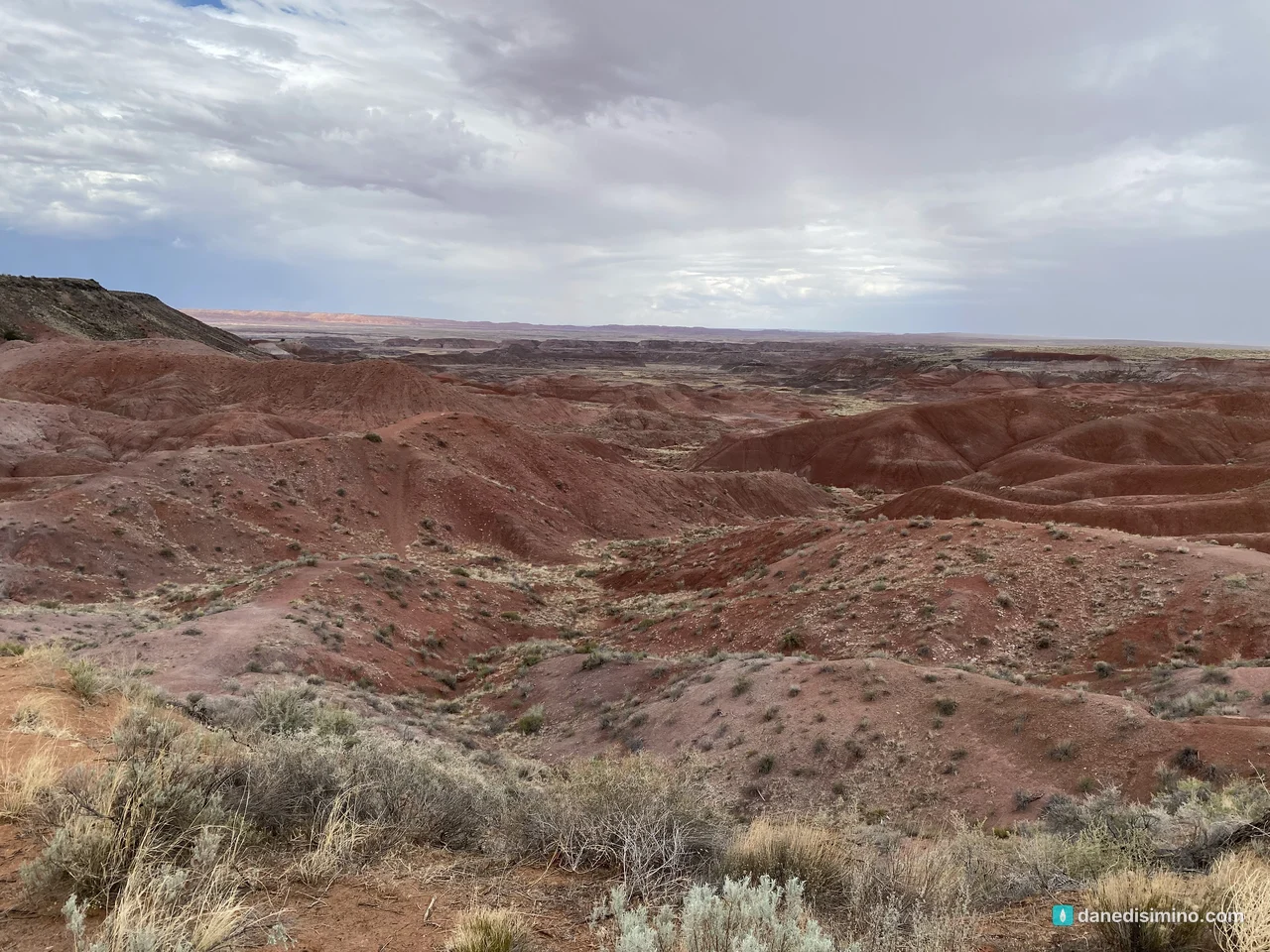
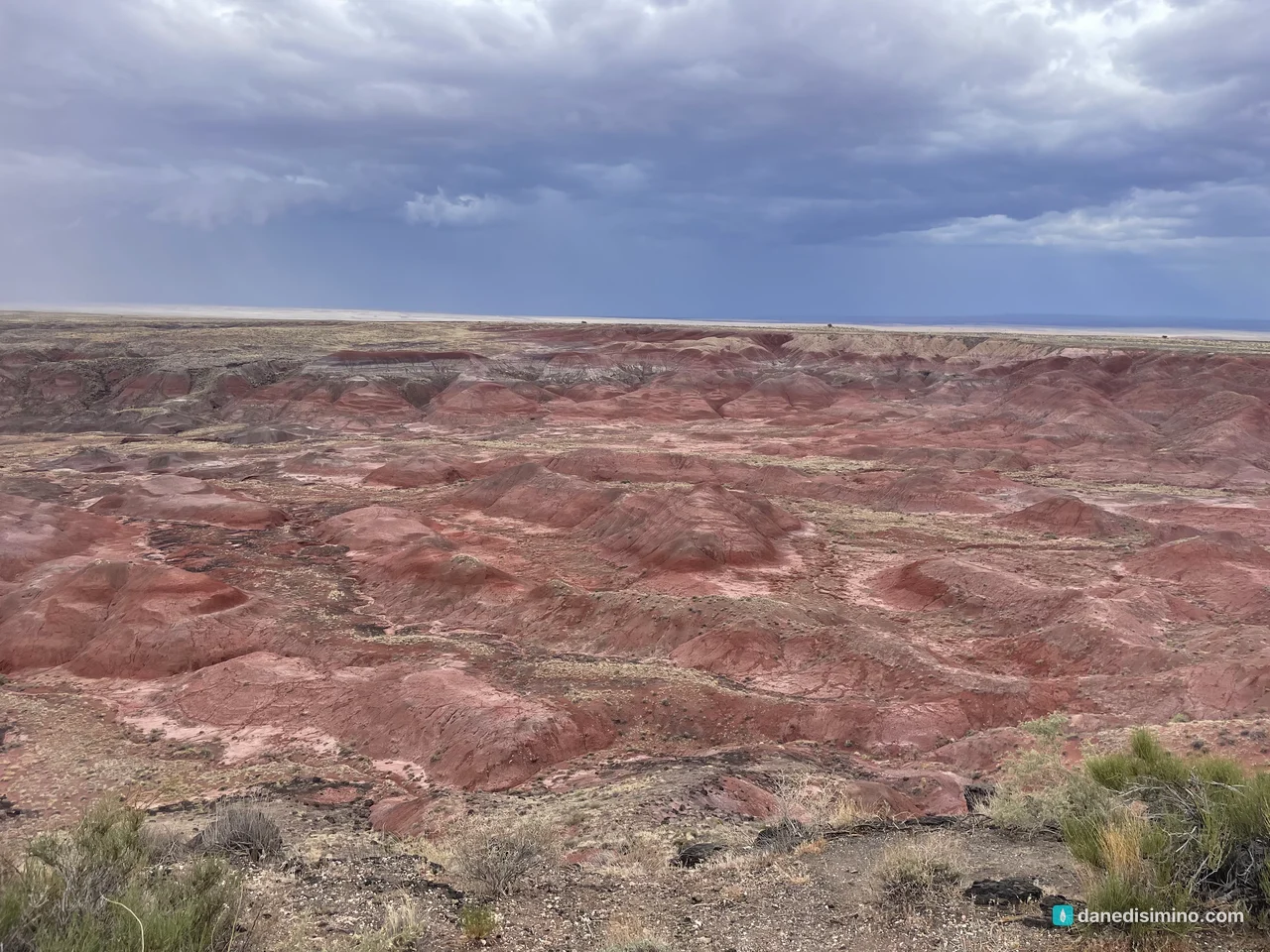
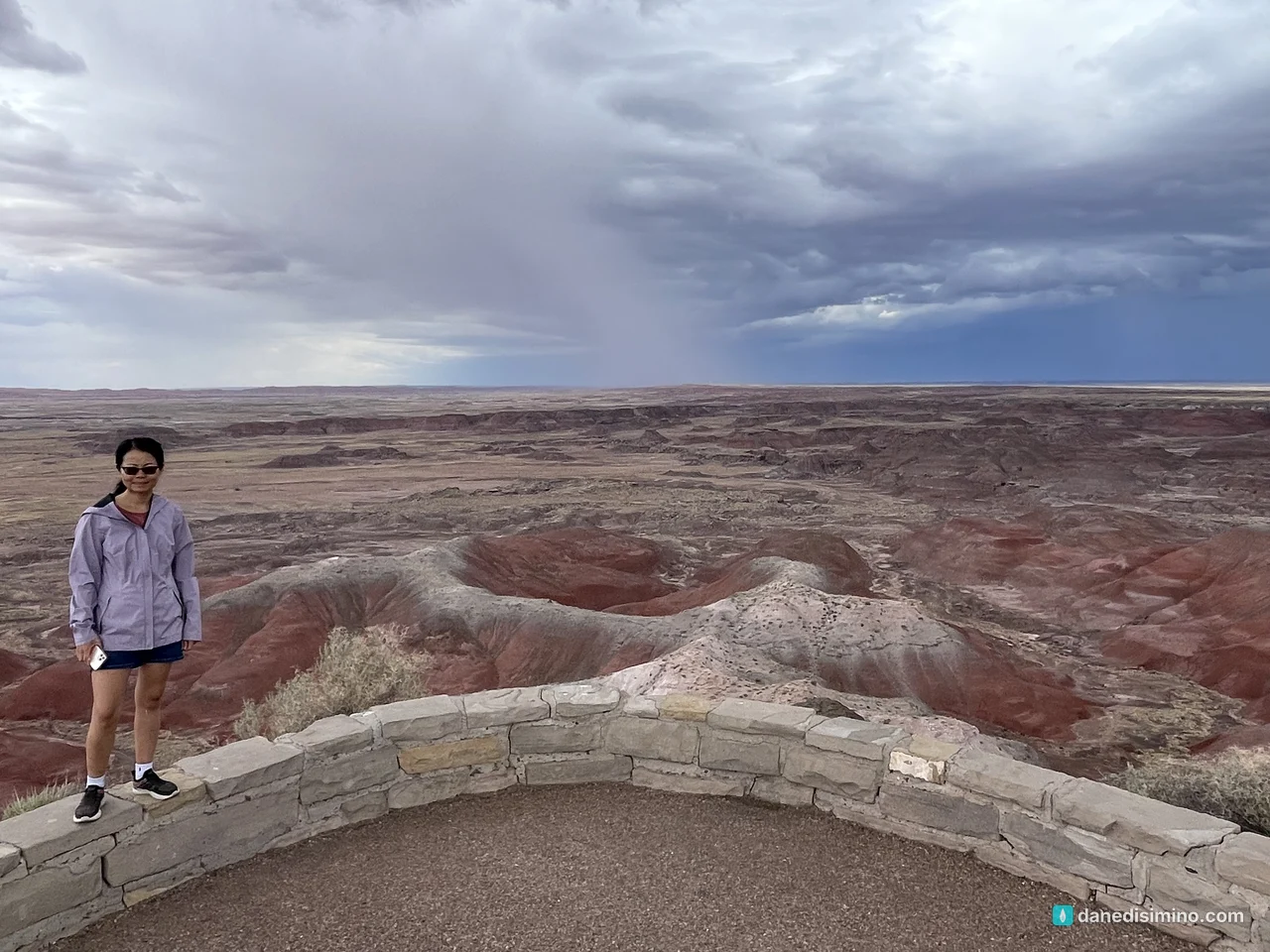
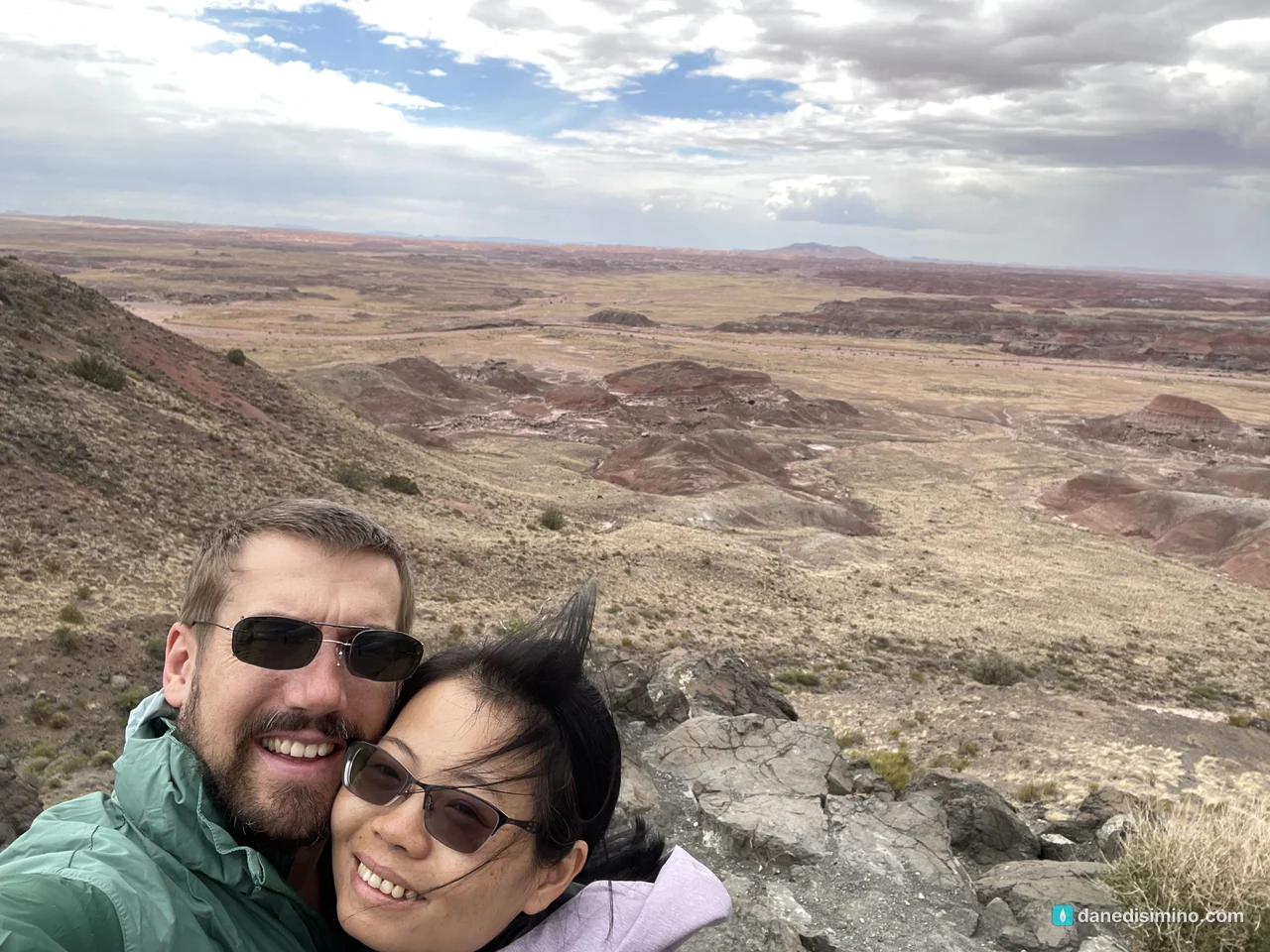
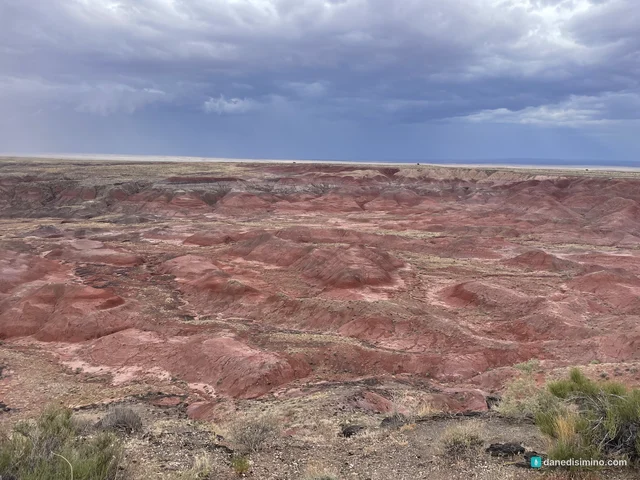
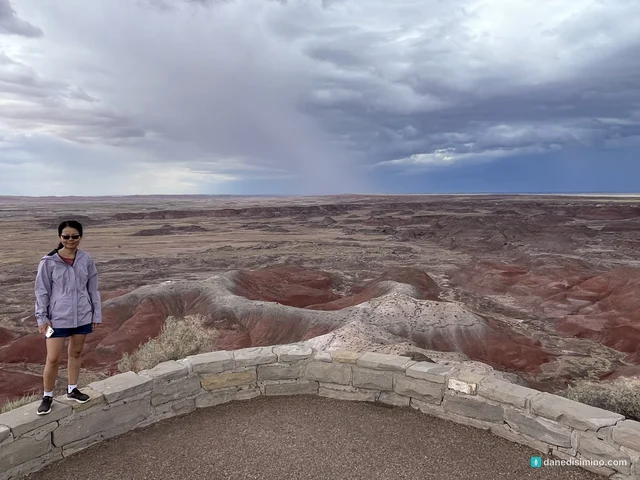
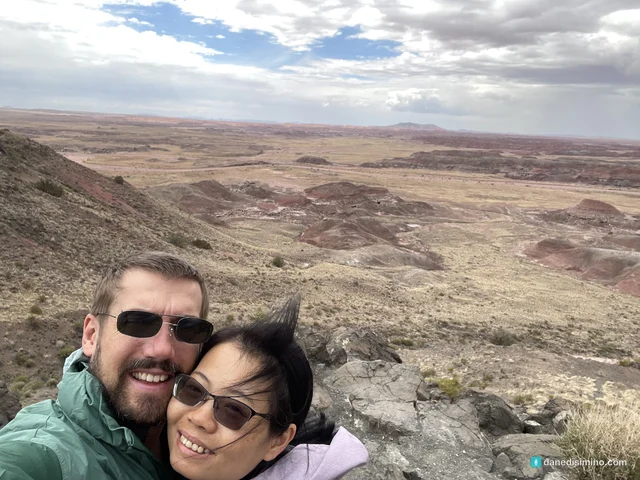
At the north end, the land opens up into the Painted Desert: rolling badlands banded in red, purple, gray and white, stretching to the horizon. It almost reminded me of the Badlands in South Dakota. With storm clouds overhead and rain falling in the distance, it was beautiful.
Whipple Point and the path of least resistance
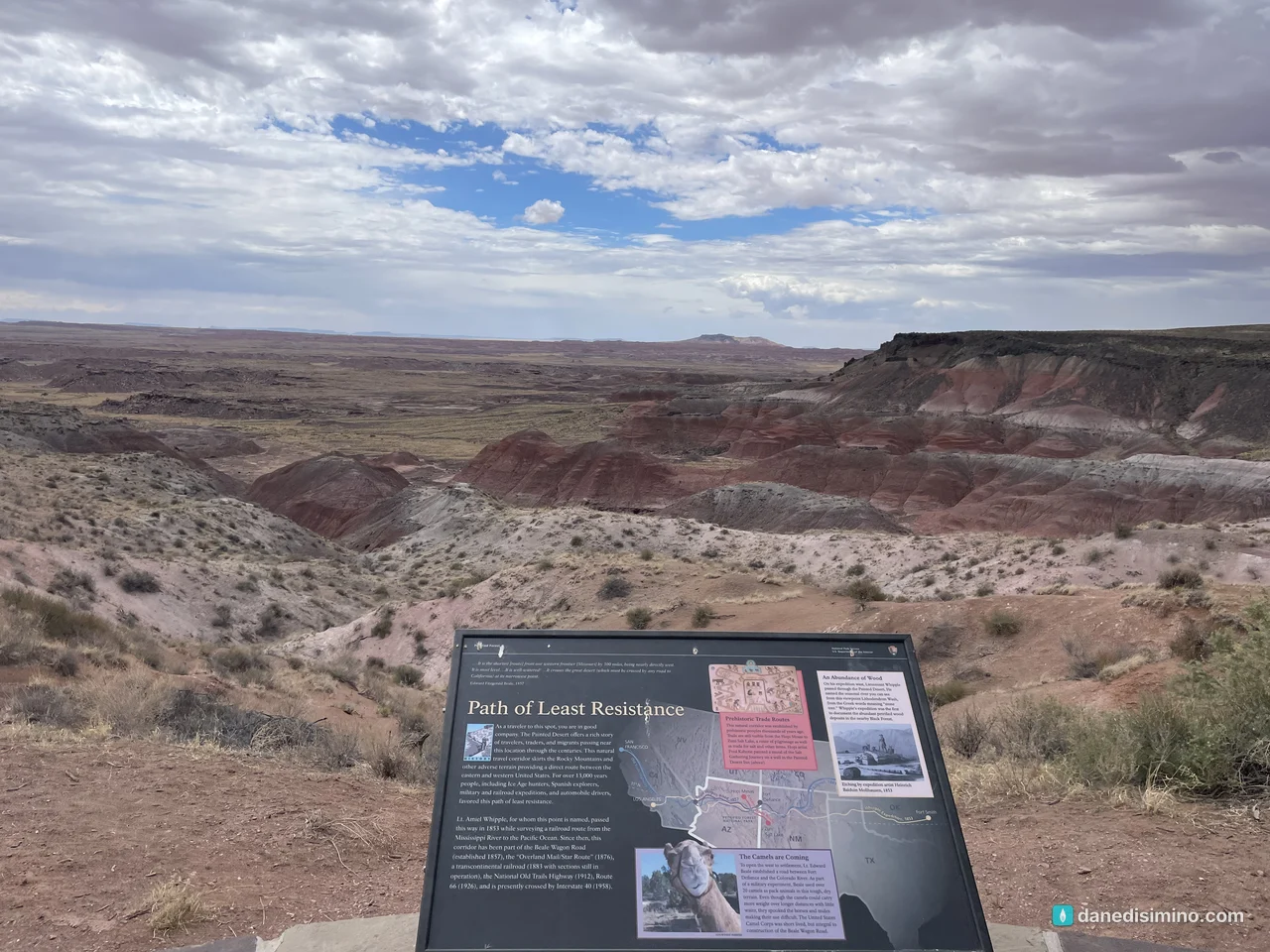
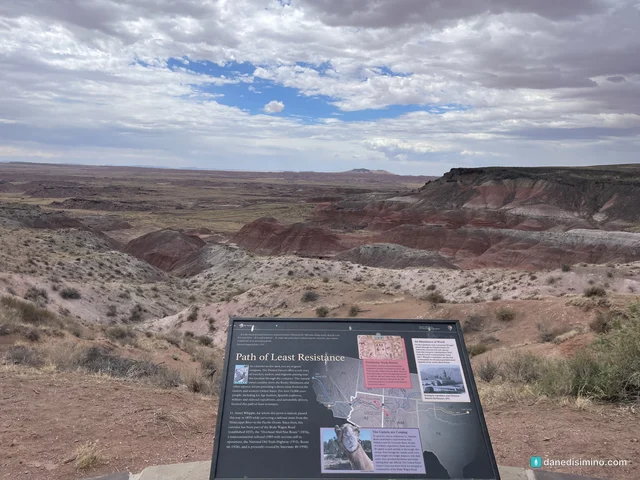
At Whipple Point, a sign tells the story of this natural travel corridor. For more than 13,000 years, people have passed through here, because it skirts the Rocky Mountains and other hard terrain. Lt. Amiel Whipple came through in 1853, surveying a railroad route from the Mississippi to the Pacific. His expedition was the first to document the petrified wood in the nearby Black Forest, and he named Lithodendron Wash, from the Greek for "stone tree."
The same corridor later carried the Beale Wagon Road (1857), a transcontinental railroad (1883), Route 66 (1926) and, today, Interstate 40.
Near the north entrance, the Painted Desert Inn, now a National Historic Landmark, once served Route 66 travelers. Inside are murals by Hopi artist Fred Kabotie.
On the way: Salt River Canyon
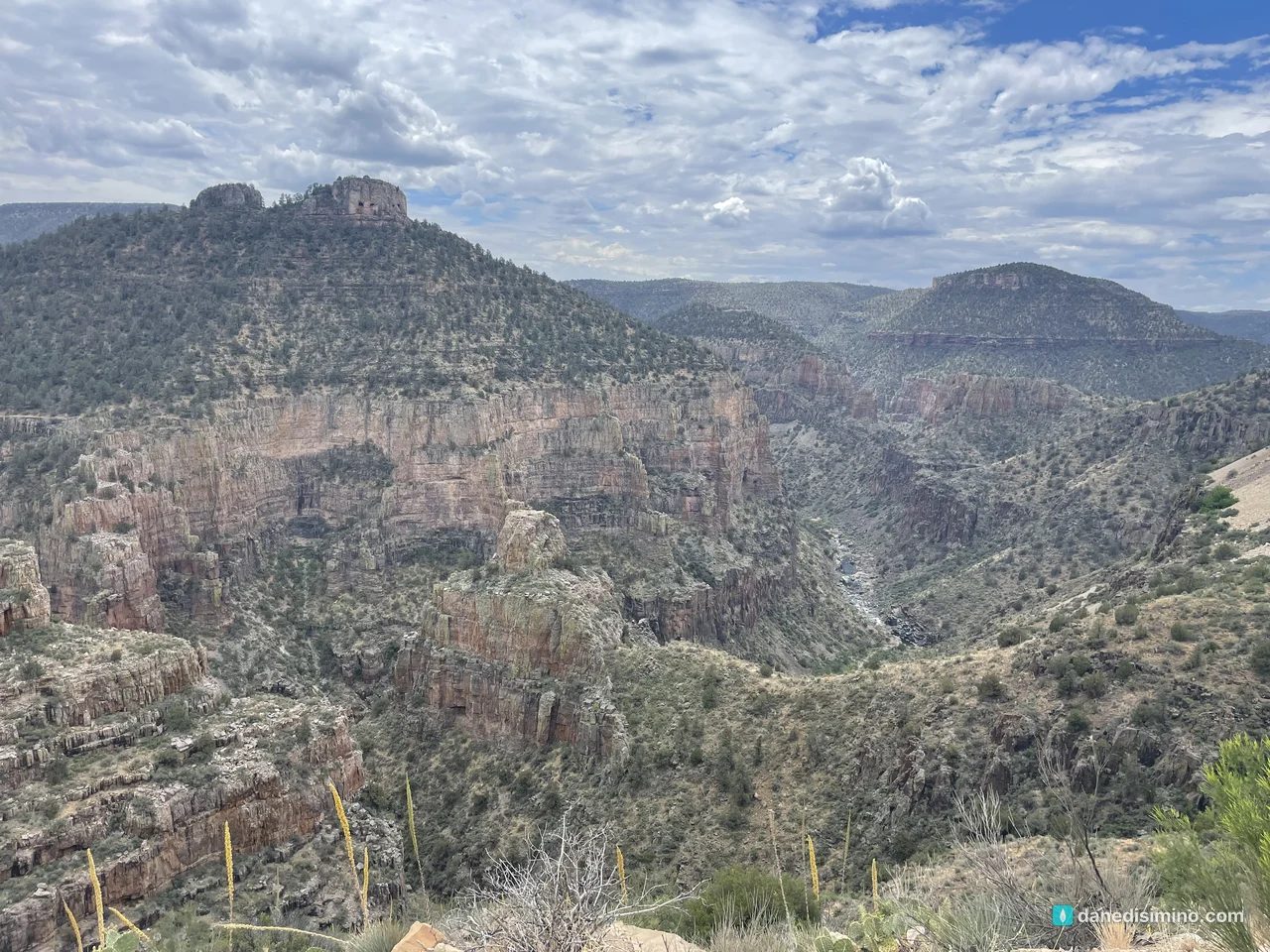
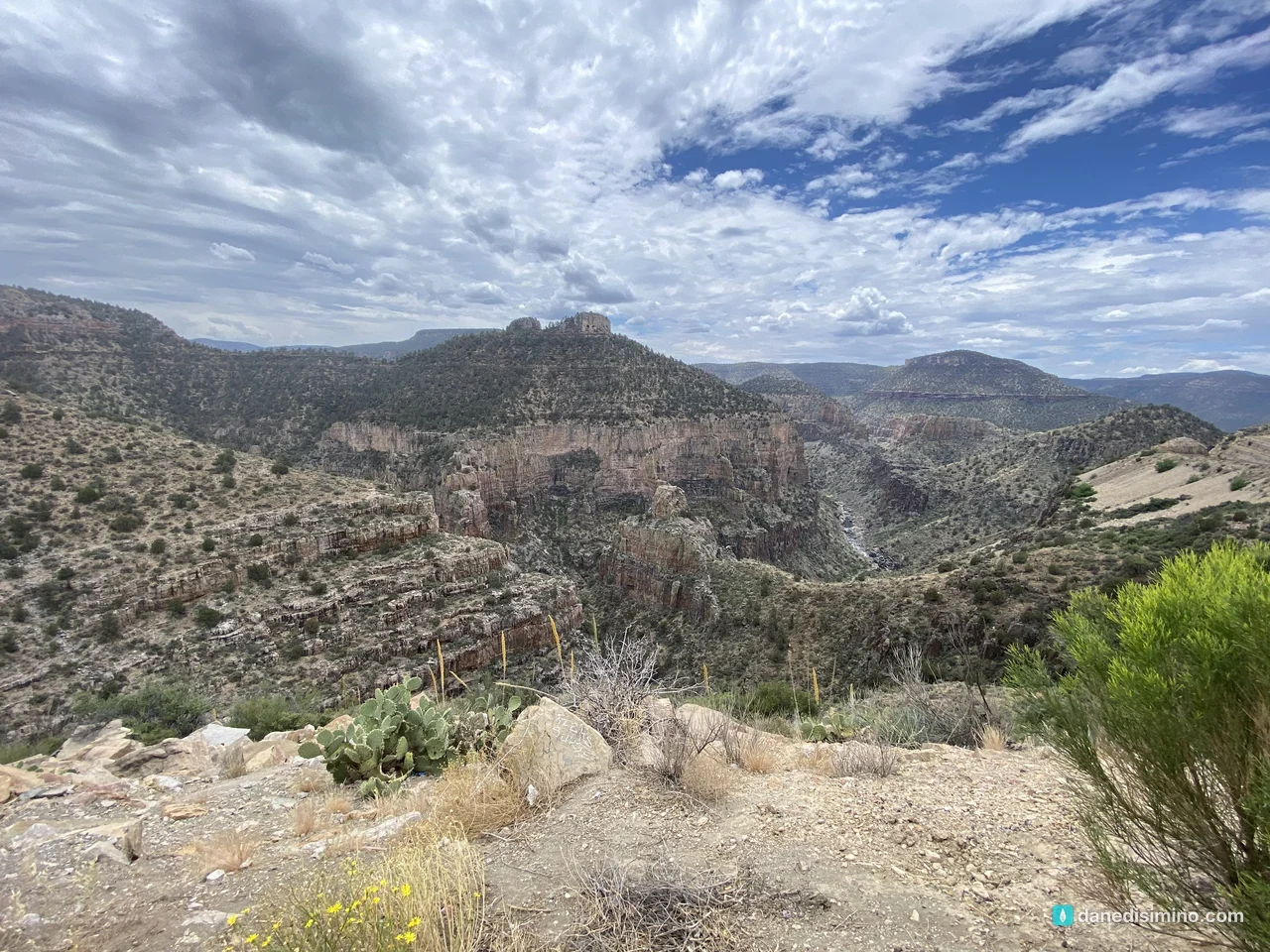
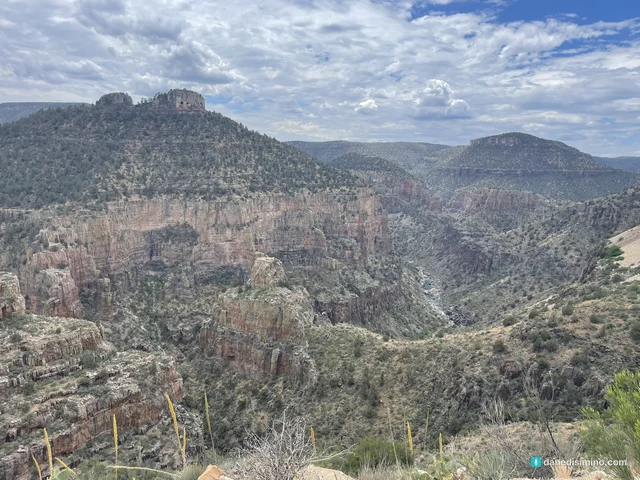
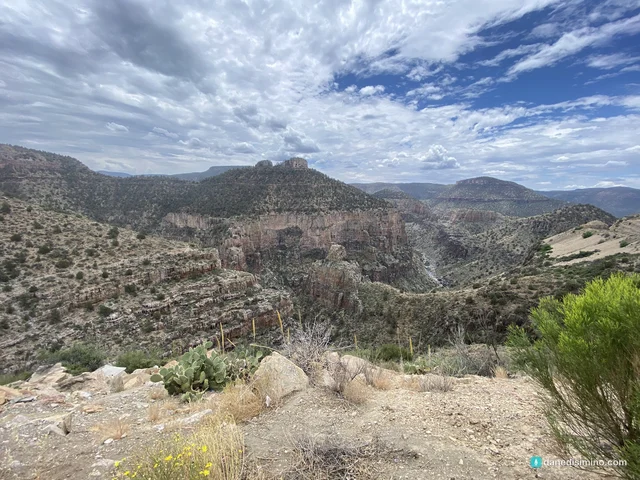
On the drive north from Tucson, U.S. 60 drops into Salt River Canyon, a deep, wild canyon that's worth a stop at the overlooks.
The drive home
By the end of the Great Loop trip, we were tired and ready to be home. I had a campground near the park booked for us. But as Carrie and I walked through the visitor center at that final park, we looked at each other and said, "Let's just go home."
That started a very long drive through New Mexico toward Colorado Springs. I almost regretted it. Toward the end, I was really struggling to keep my eyes open.
What I'd do differently
Give it half a day. Walk the Giant Logs and Blue Mesa trails instead of just driving through.
Stay the night we'd planned. Then start the long drive home rested.
Hope for better weather. But even in the rain, it was worth it.
What Petrified Forest taught me
Petrified Forest taught me two things. First, that God works on a scale of time I can barely imagine, turning trees into stone over millions of years. And second, that I'm not built to work that way. I need rest. We pushed through that night when we should have stopped.
"It is useless for you to work so hard from early morning until late at night, anxiously working for food to eat; for God gives rest to his loved ones." (Psalm 127:2, NLT)
Rest is a gift. Take it.
Questions?
Ask me anything about Petrified Forest: how long to spend, where to see the best wood, the Painted Desert overlooks, or planning a long road trip through Arizona and New Mexico. I answer every question.
Photos
Sources
Pathlight
Park guides from the road. A printable trip sheet comes with them when one is ready.