
NATIONAL PARKS
Badlands
A Field Guide
On this page
The pinnacle of our Dakotas trip. A full Fourth of July driving the Badlands Loop Road, stopping at every overlook, and counting colors in hills that must hold twenty of them. Why the layers come in bands, what the crowded visitor center gets right, and how I'd plan two days here.
Version 1.0 · Updated Nov 20, 2026
Map
When to go
Average monthly visits, 2023–2025. Source: NPS visitor statistics. ● marks the months we visited.
| January | 9,812 |
|---|---|
| February | 10,645 |
| March | 24,950 |
| April | 38,094 |
| May | 111,439 |
| June | 212,982 |
| July | 238,683 |
| August | 205,777 |
| September | 141,988 |
| October | 66,804 |
| November | 19,381 |
| December | 12,782 |
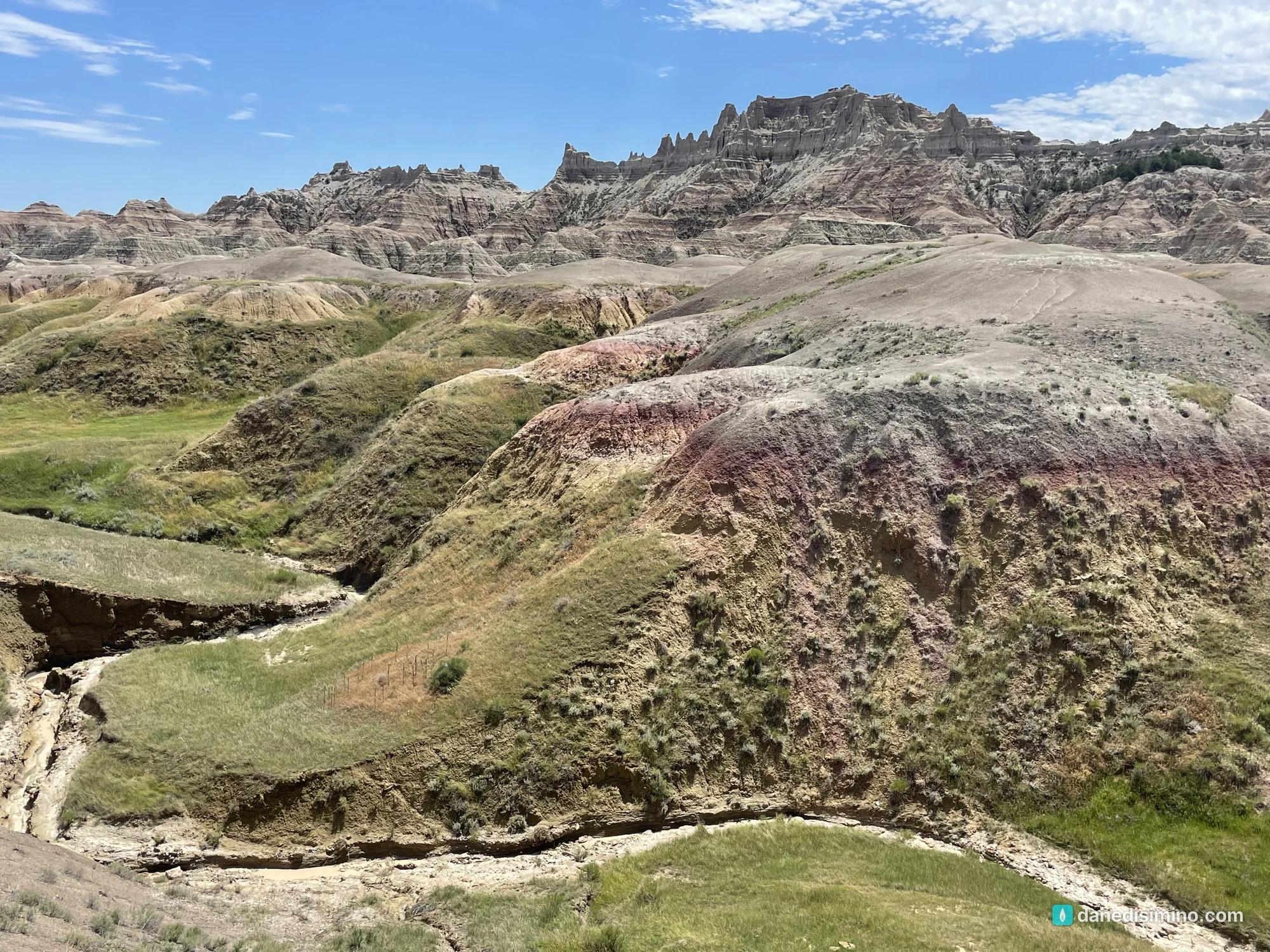
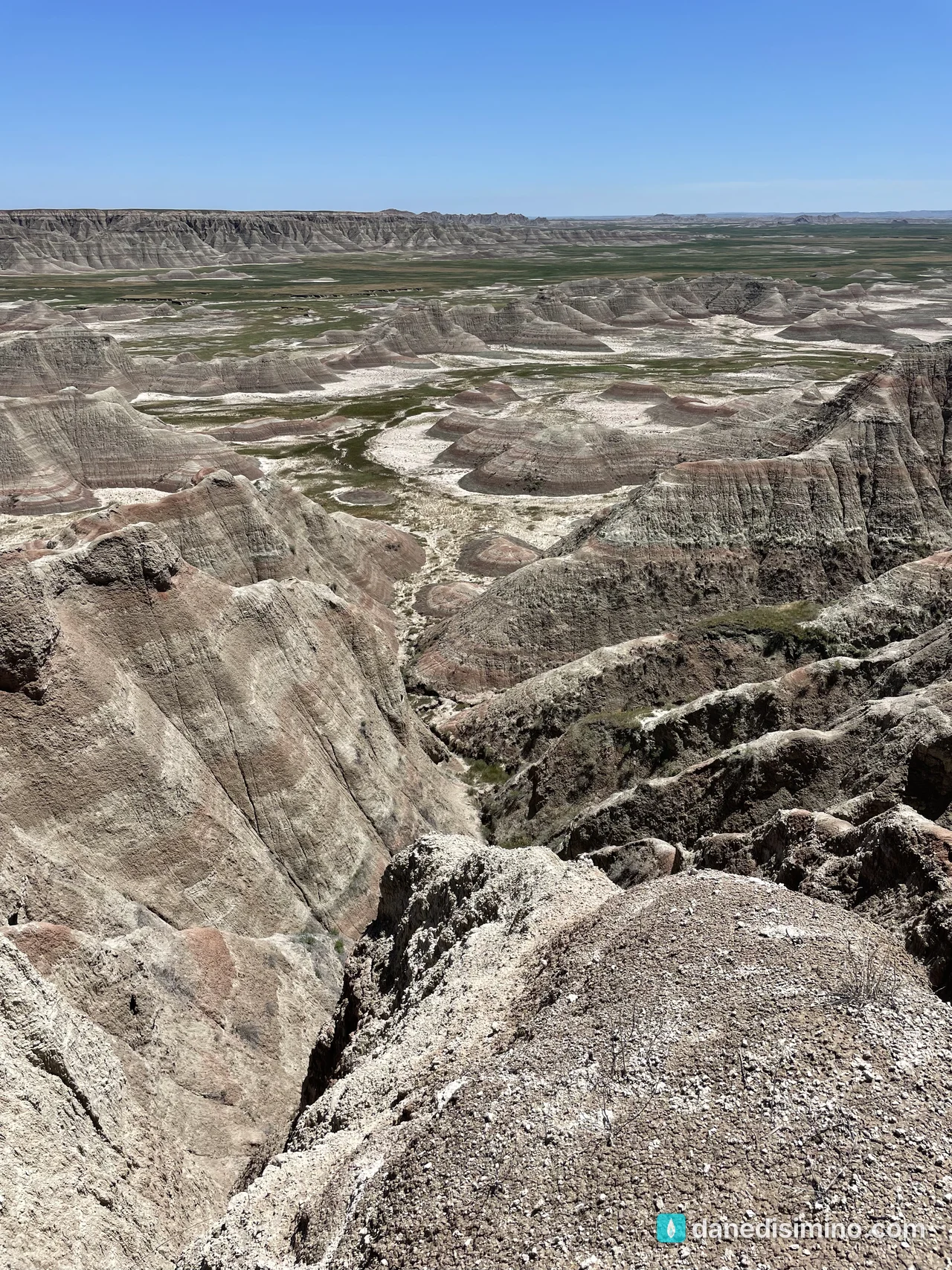
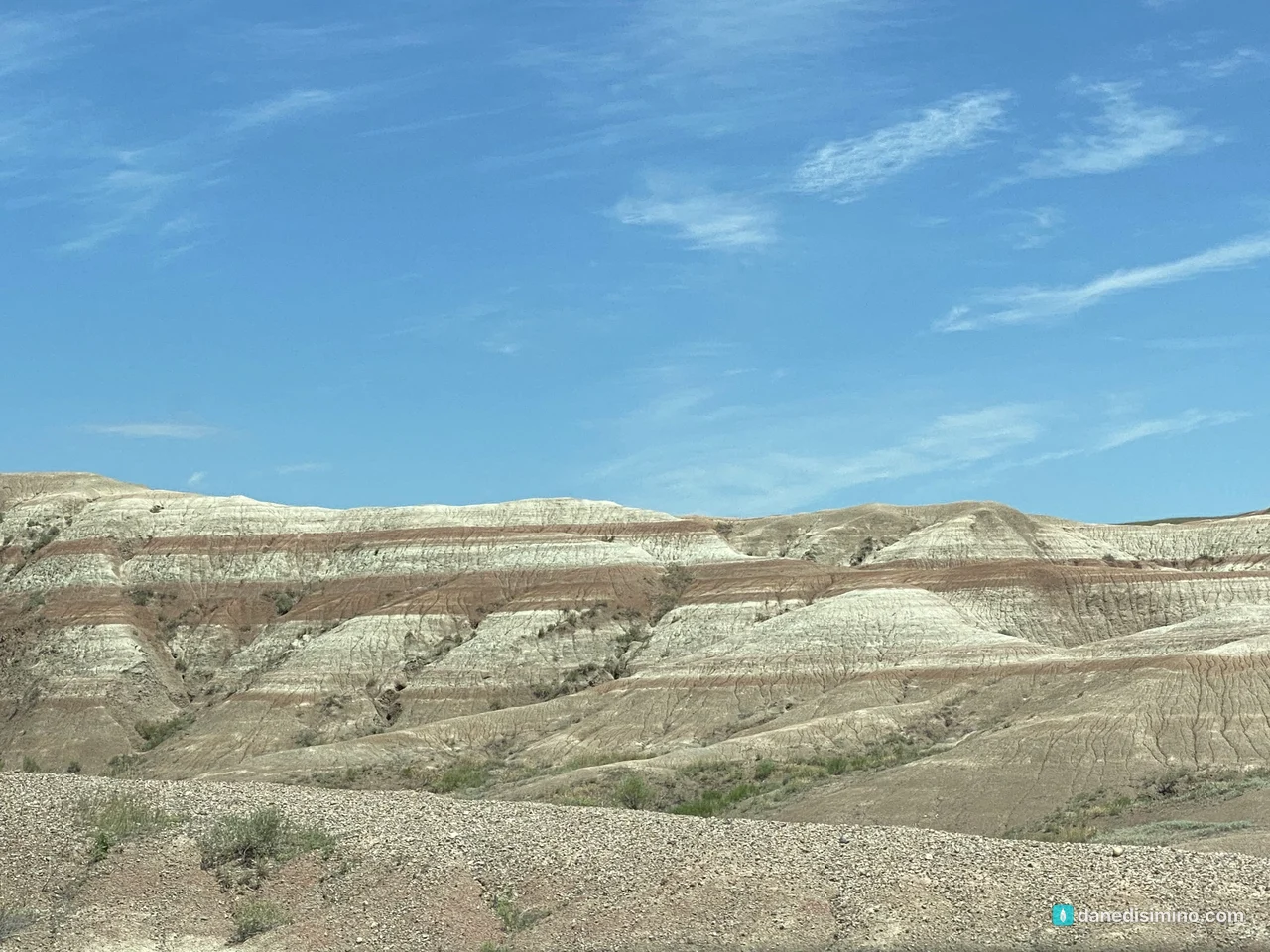
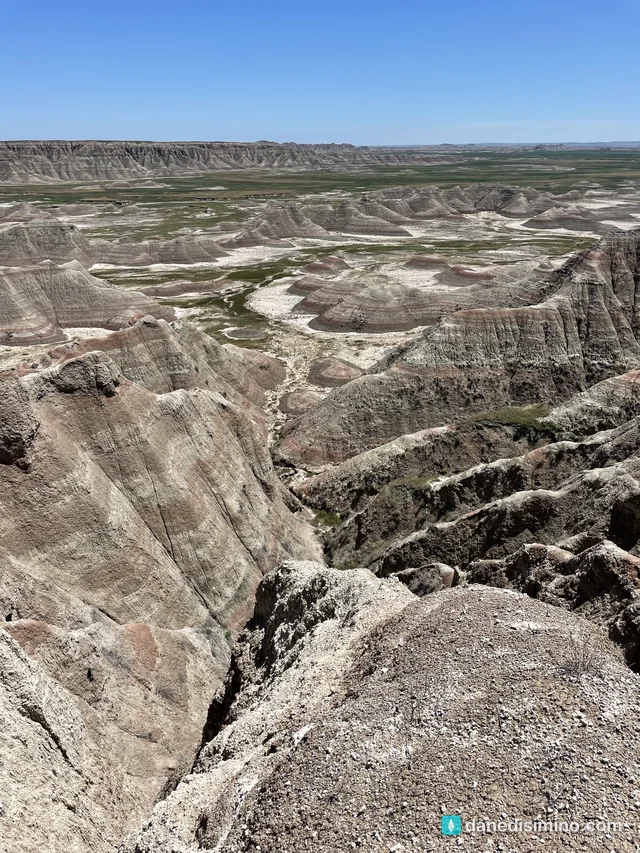
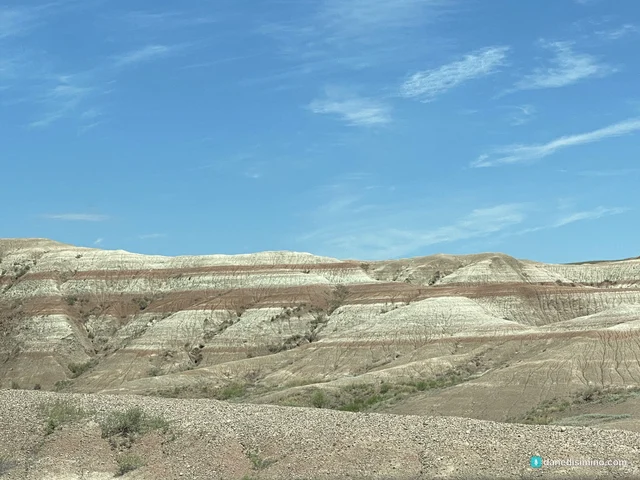
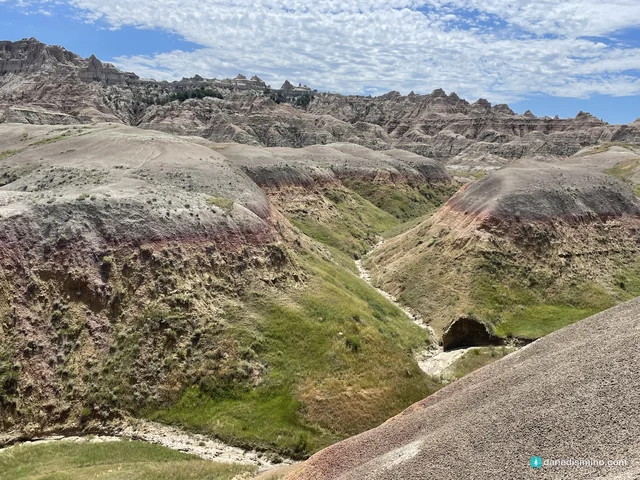
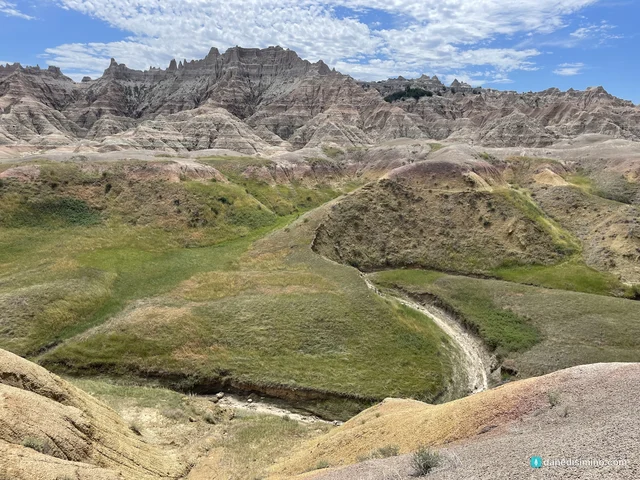
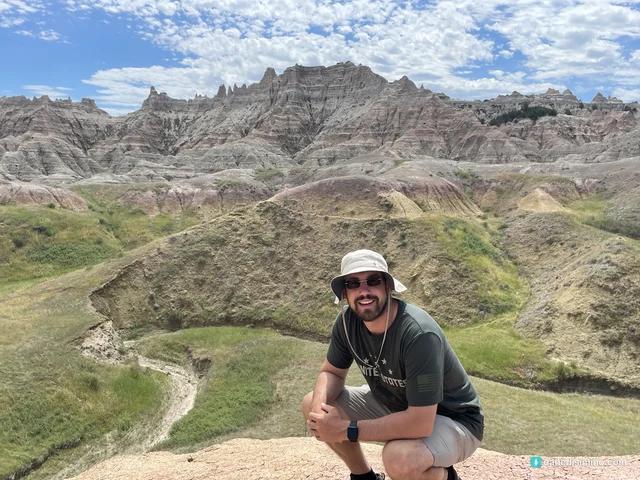
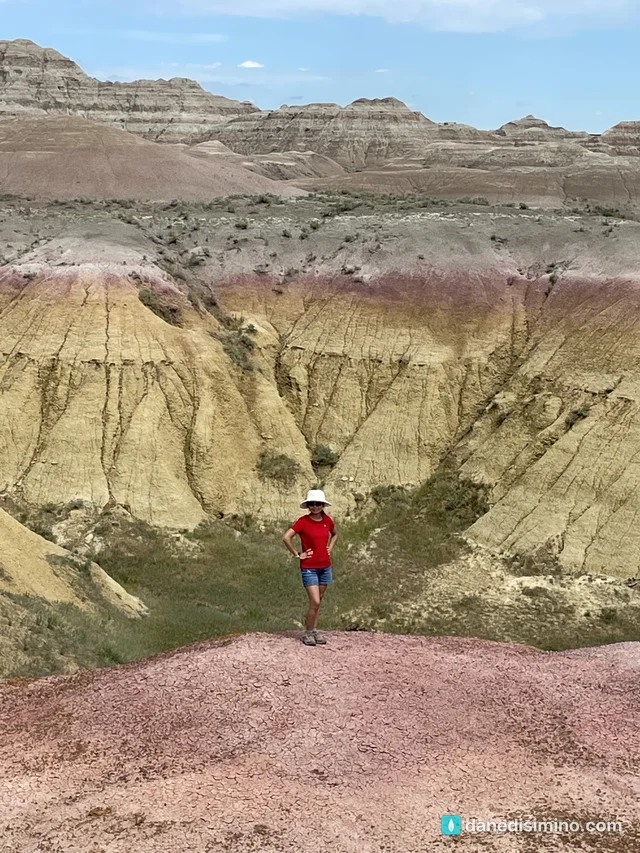
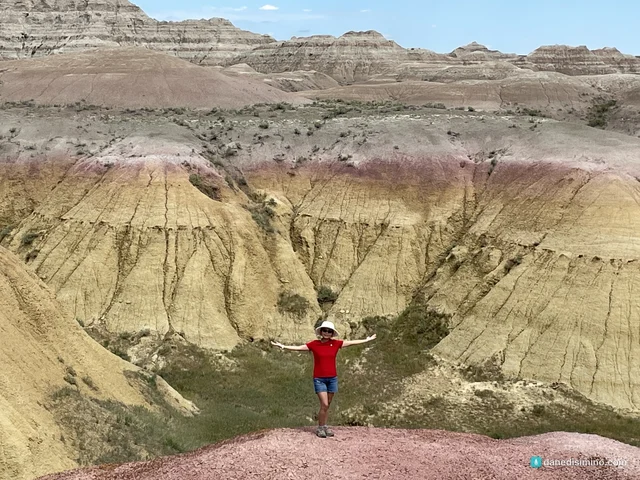
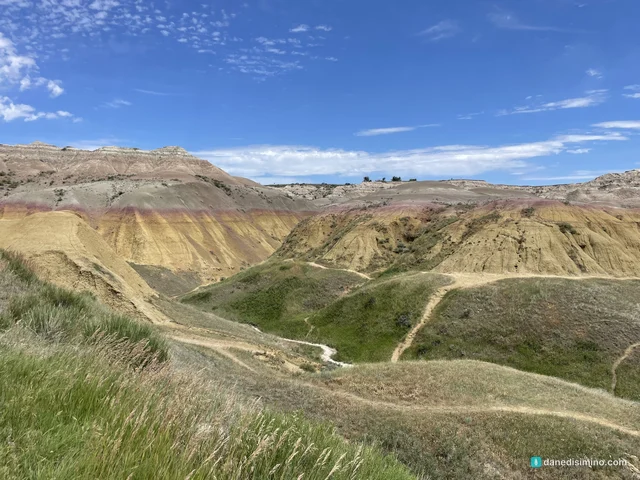
Theodore Roosevelt had its surprises, but it's hard to beat Badlands National Park. It was the pinnacle of our Dakotas trip. Some of those hills must hold twenty colors: yellow, purple, red, gray, tan and white, stacked in stripes as far as you can see. It was truly a sight to behold.
We spent the Fourth of July, 2022, driving the park from end to end, stopping at the turnouts and exploring. That evening we drove home through Custer State Park at sunset. If I did it again, I'd add a second day just for hiking.
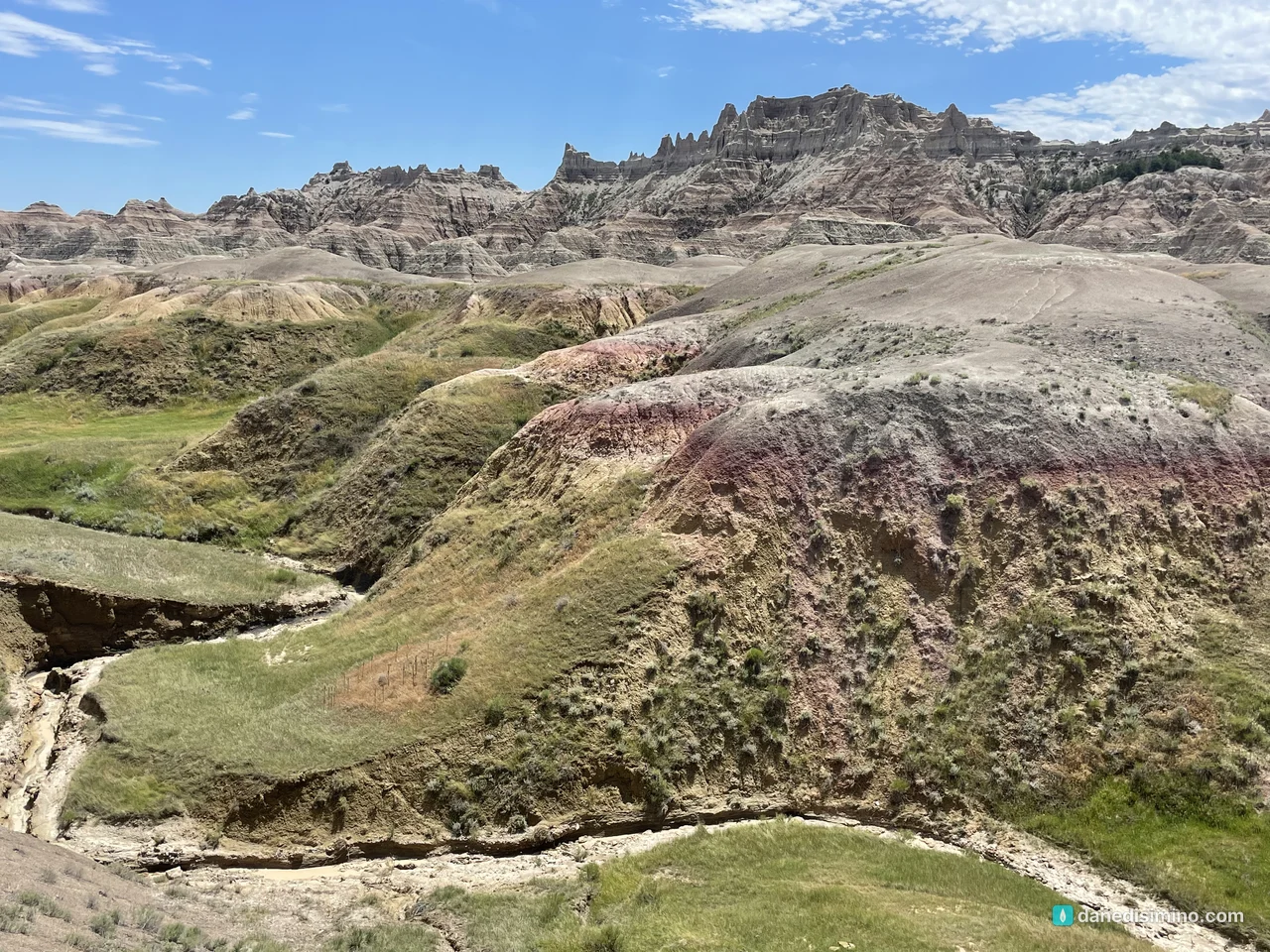
Some of those hills must hold twenty colors.
The short version
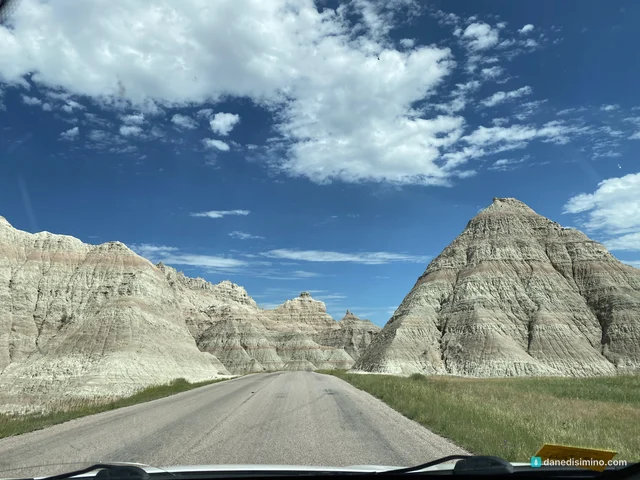
Drive the Badlands Loop Road. Stop at every overlook. Badlands is an open-hike park, so you can walk out into the formations.
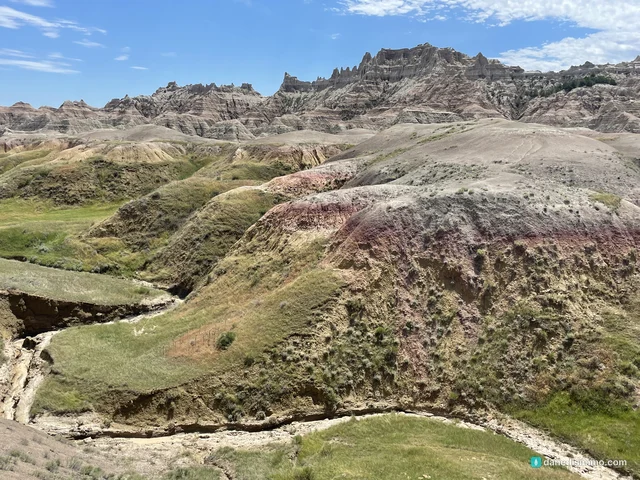
Don't miss the Yellow Mounds. It's the most colorful stretch of the park.
Plan two days. One to drive, one to hike the Door, Window, Notch and Castle trails.
Go early in summer. The visitor center was the most crowded I've ever seen one in July.
Bring water and sun protection. There's almost no shade.
The park at a glance
- 244,000
- Acres of buttes and prairie
- 75M yrs
- Since the oldest layer formed
- 1 inch
- Of rock erodes each year
- $30
- Per vehicle, good for 7 days
Where: southwestern South Dakota, off I-90 near Wall and Interior. Rapid City is the nearest city.
Fees: $30 per vehicle, $25 per motorcycle, $15 per person on foot or bike. No reservation needed.
Start here: the Ben Reifel Visitor Center on the Badlands Loop Road, near the Door, Window and Notch trailheads.
The South Unit: the park's southern half is co-managed with the Oglala Lakota and is far less visited.
Before you go: check the park's Alerts & Conditions page at nps.gov/badl.
How the layers formed
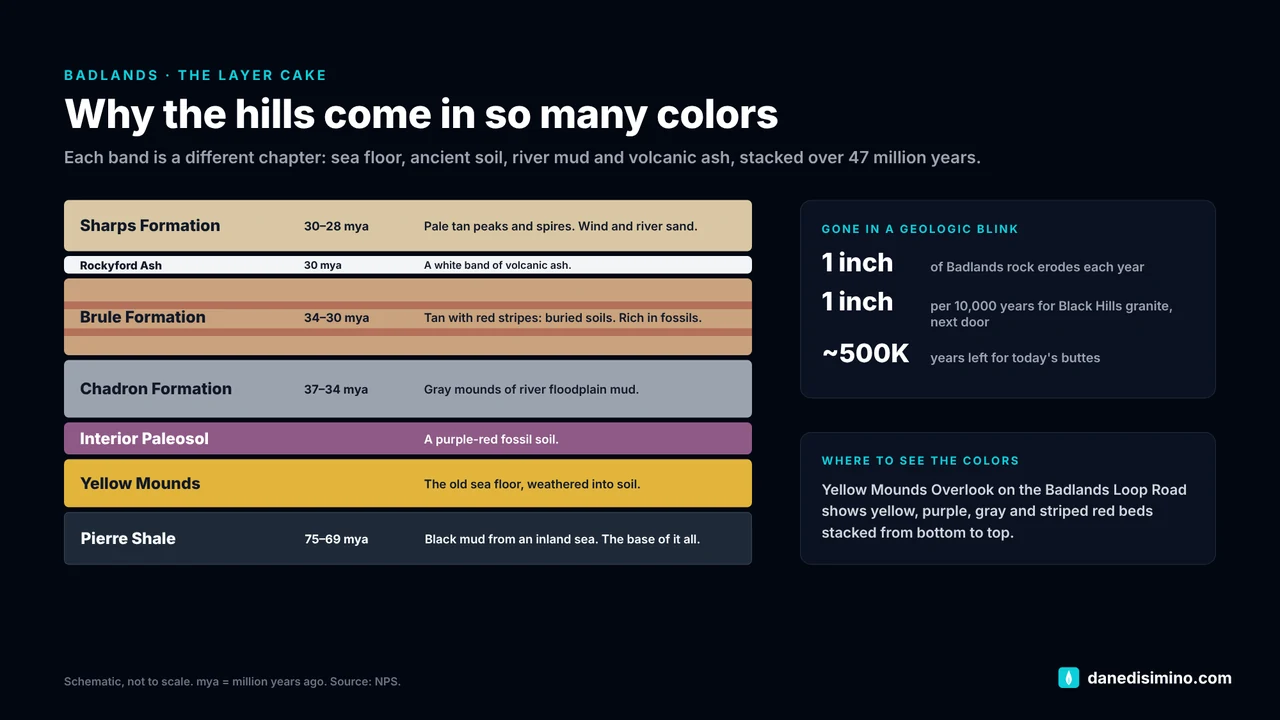
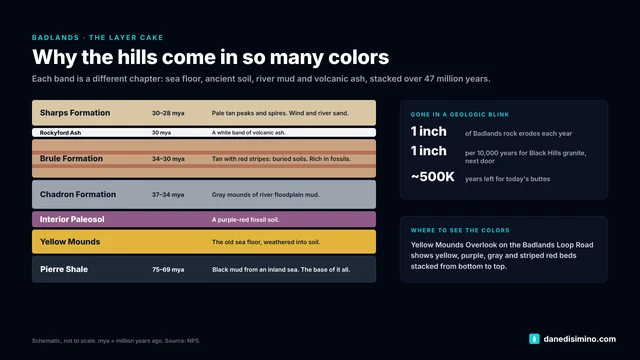
The Badlands started at the bottom of a sea. About 75 million years ago, an inland sea laid down black mud that became the Pierre Shale. When the sea drained away, the top of that mud weathered into soil, now the Yellow Mounds. Then came rivers carrying mud and sand, soils that formed and were buried, and ash blown in from distant volcanoes. Deposition ended about 28 million years ago with the tan Sharps Formation.
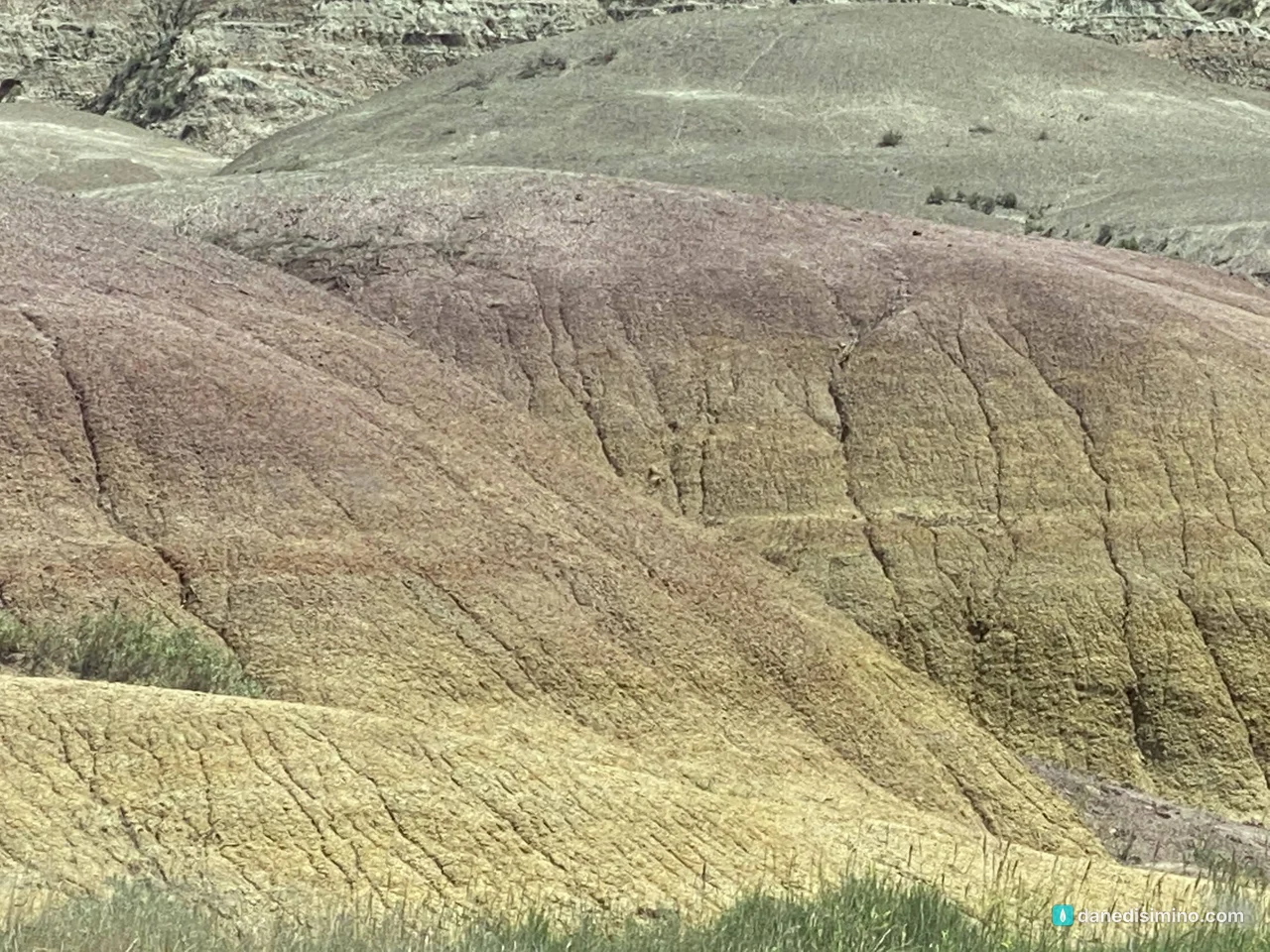
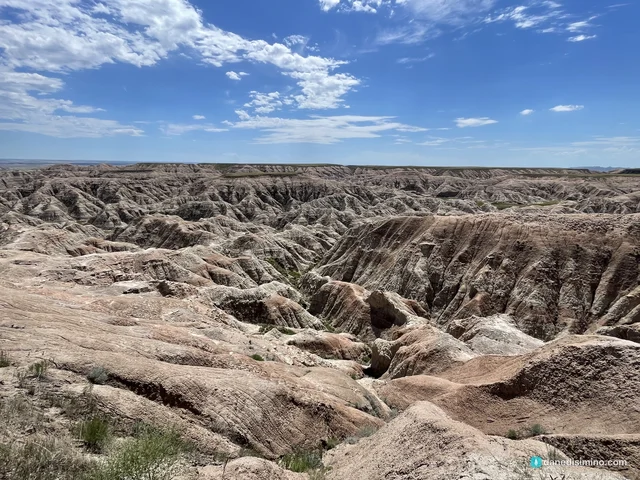
Then the water turned the other way. Rivers began cutting down through the layers, and they're still at it. The Badlands erode about an inch a year, fast for rock. The granite of the Black Hills next door, where Mount Rushmore is carved, wears away an inch every 10,000 years. At this pace, today's buttes have roughly 500,000 years left.
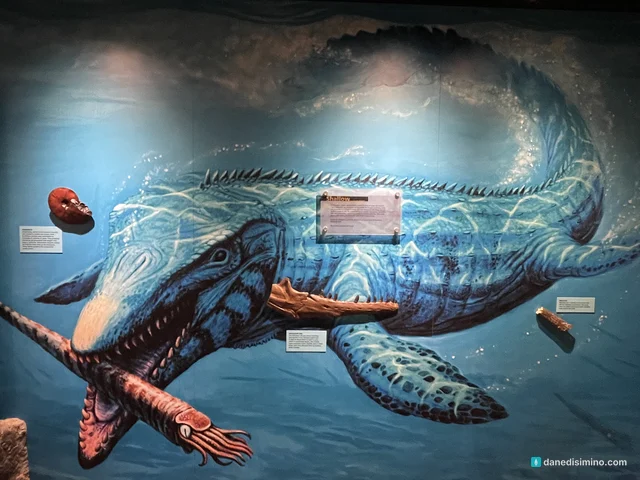
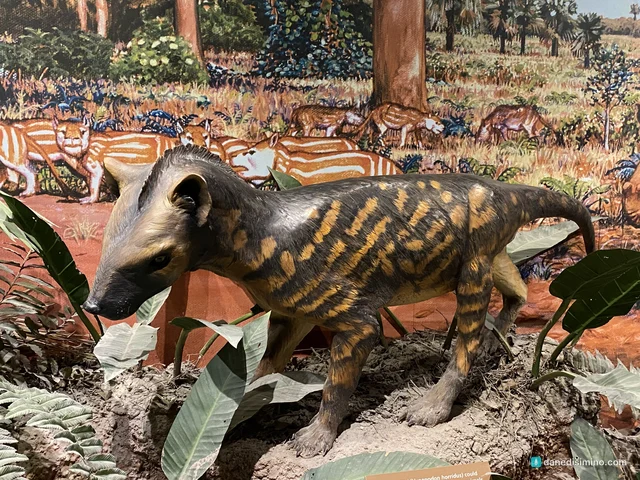
The layers also hold one of the world's richest fossil beds, with more than 250 species of fossil animals found so far.
How the park began
The Lakota call this land Makȟóšiča. Badlands was authorized as a national monument in 1929 and established in 1939. In 1976 the park agreed with the Oglala Lakota to co-manage the South Unit, roughly doubling its size, and on November 10, 1978, it became Badlands National Park.
The visitor center
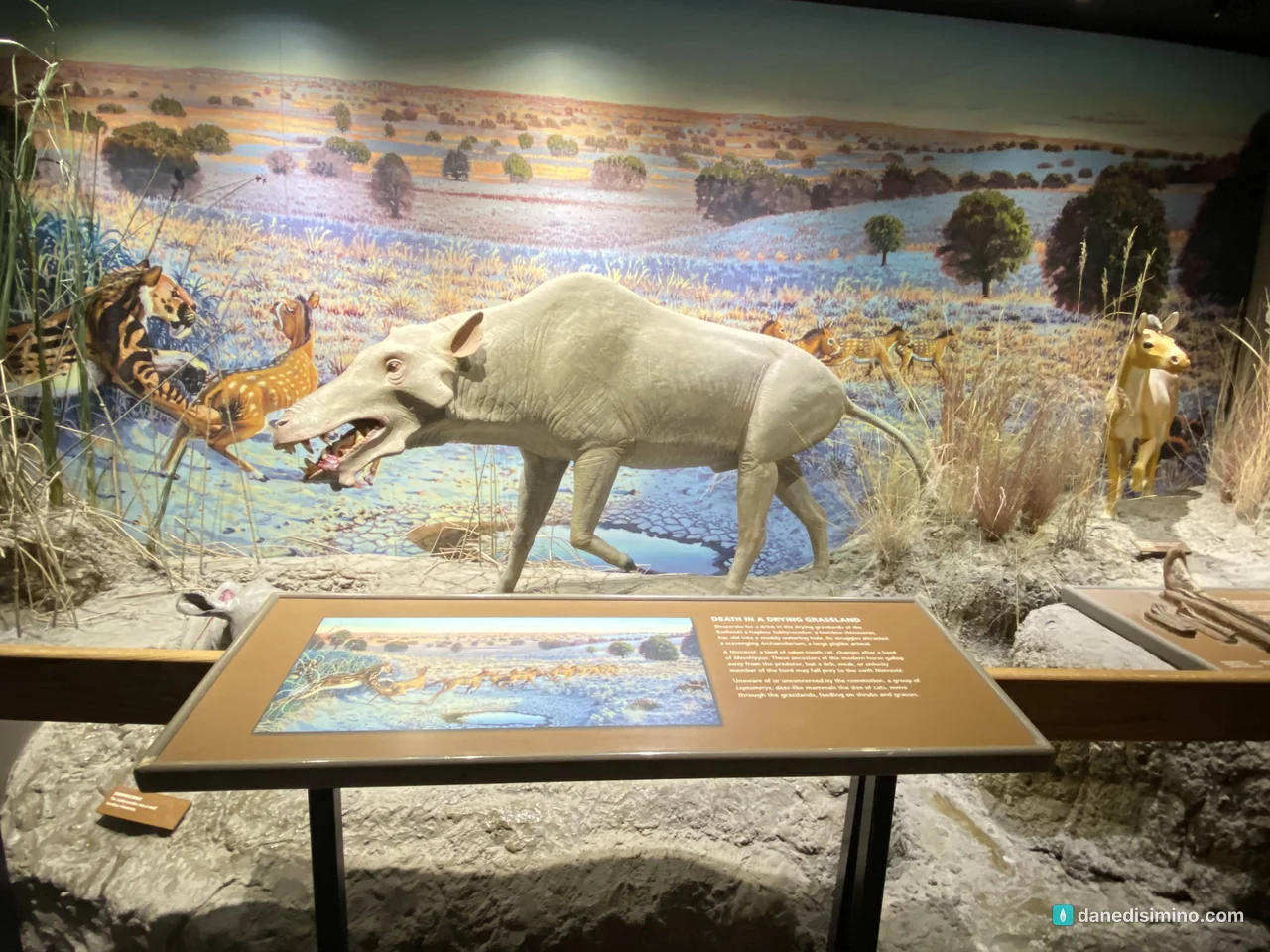
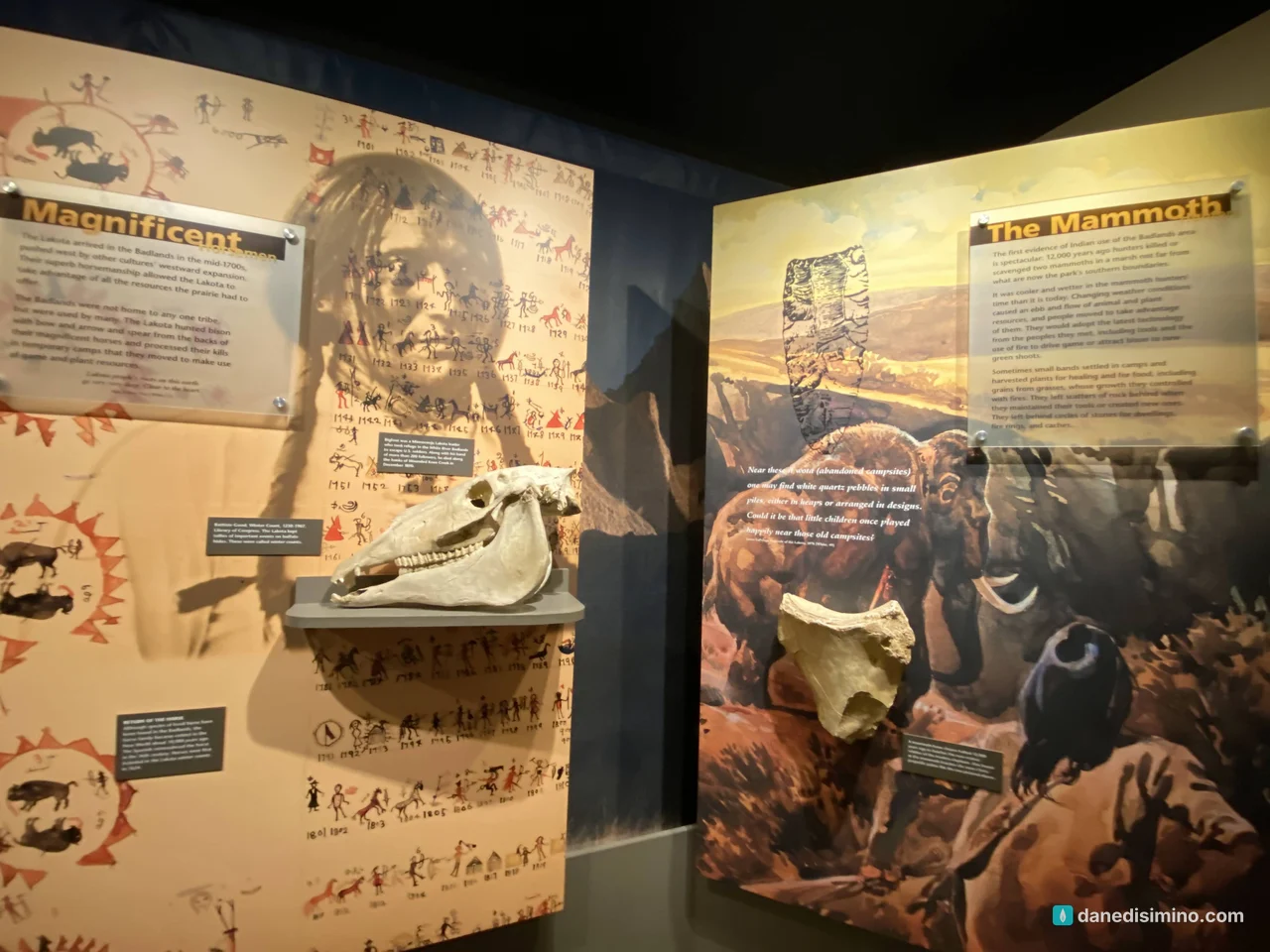
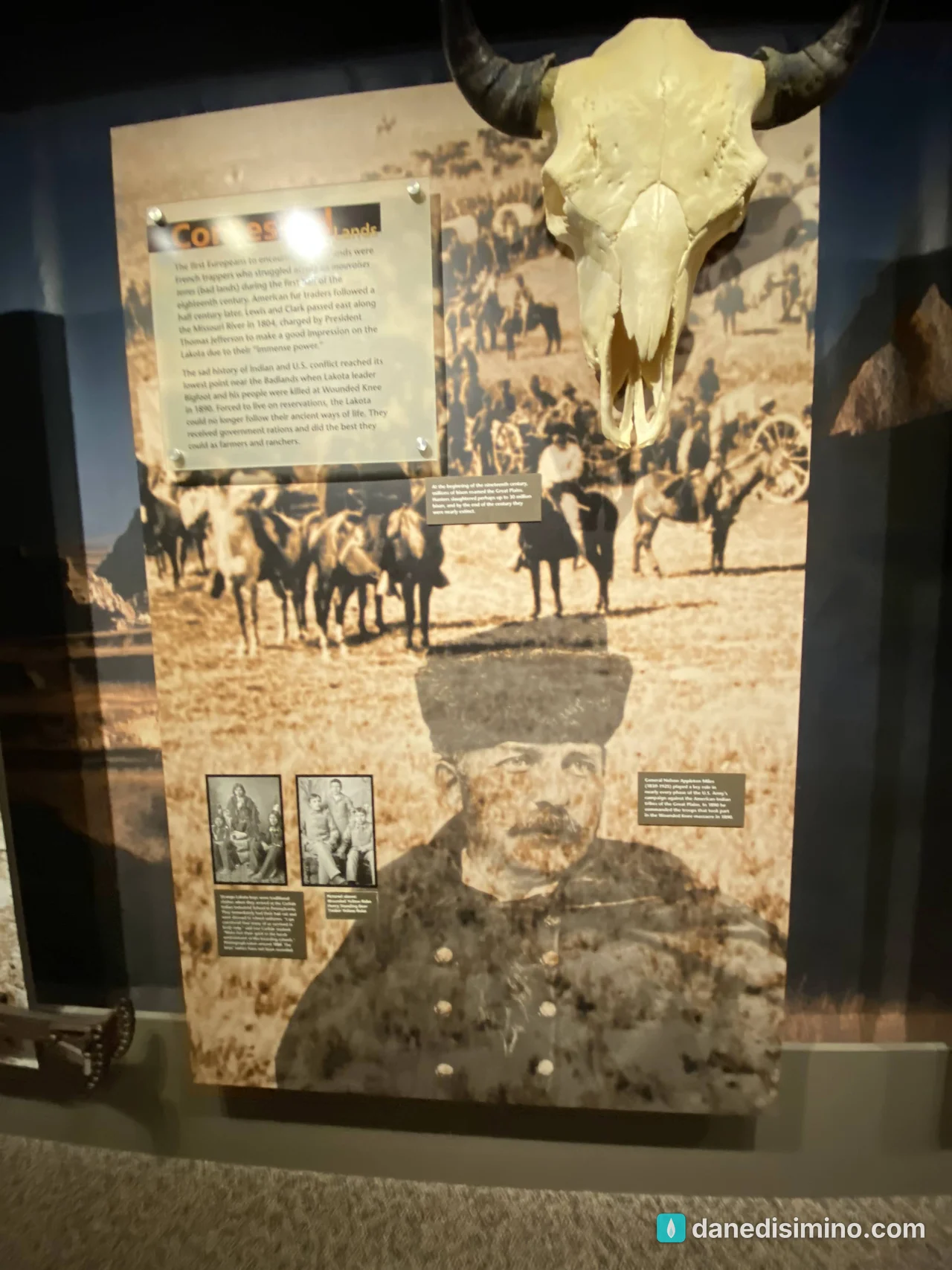
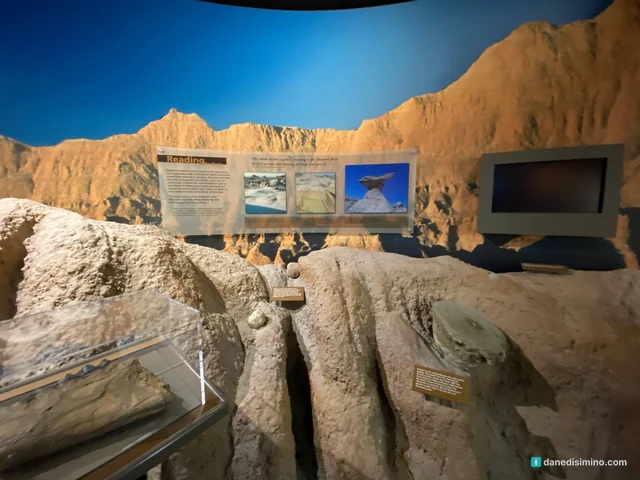
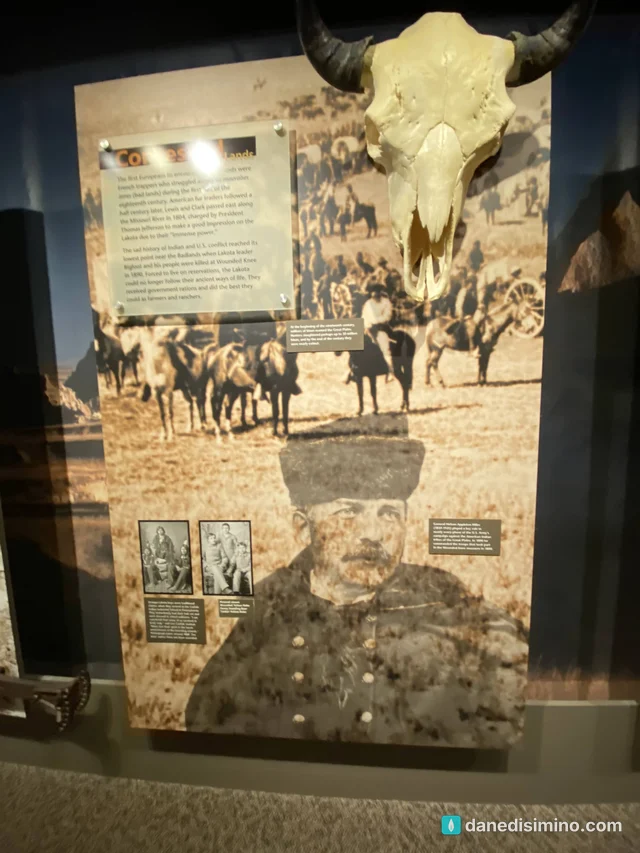
We started at the Ben Reifel Visitor Center late morning. It was packed. In South Dakota in July, there were more people than we were used to, and it wasn't a pleasant experience. But the exhibits are excellent and genuinely educational.
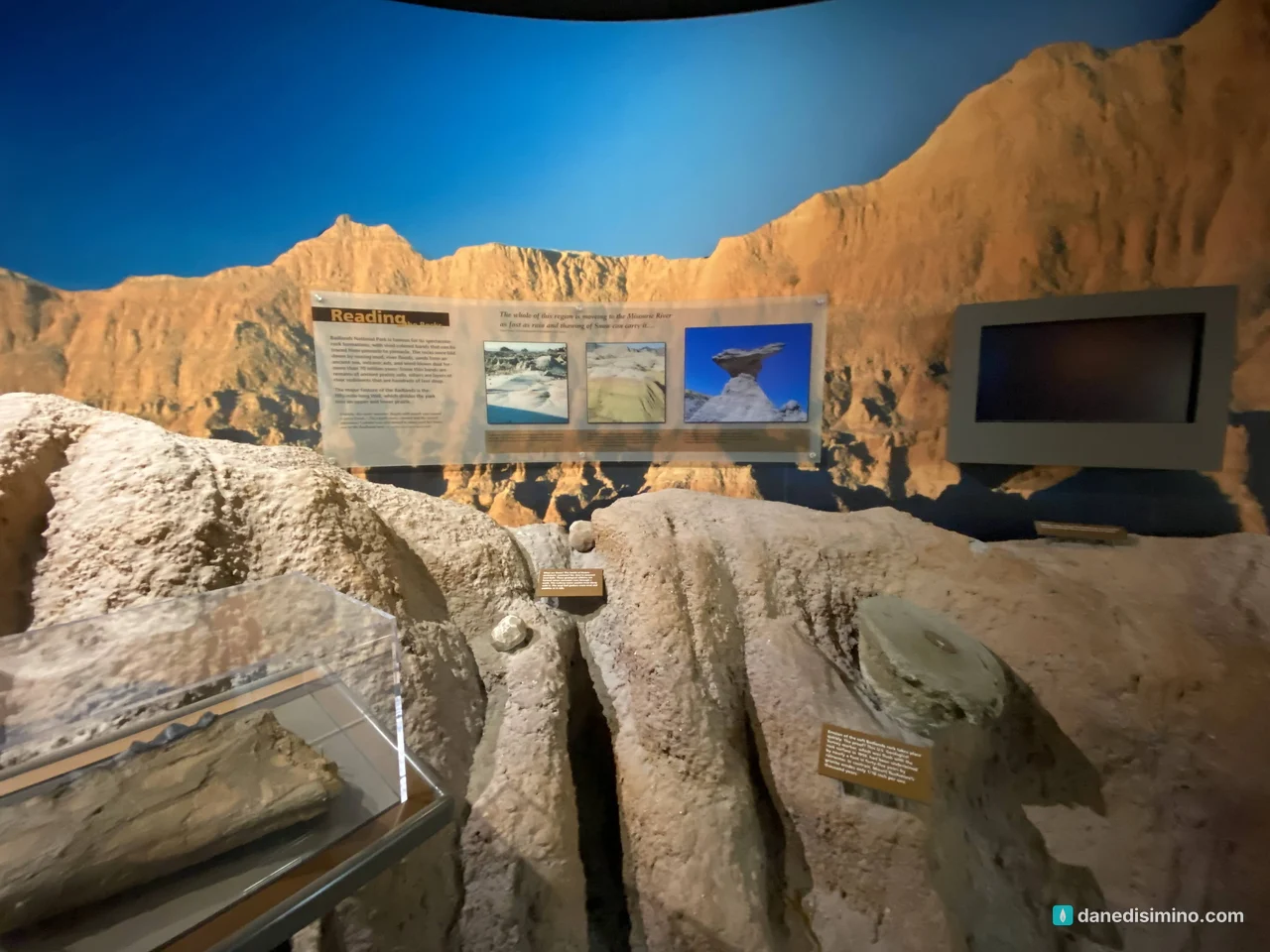
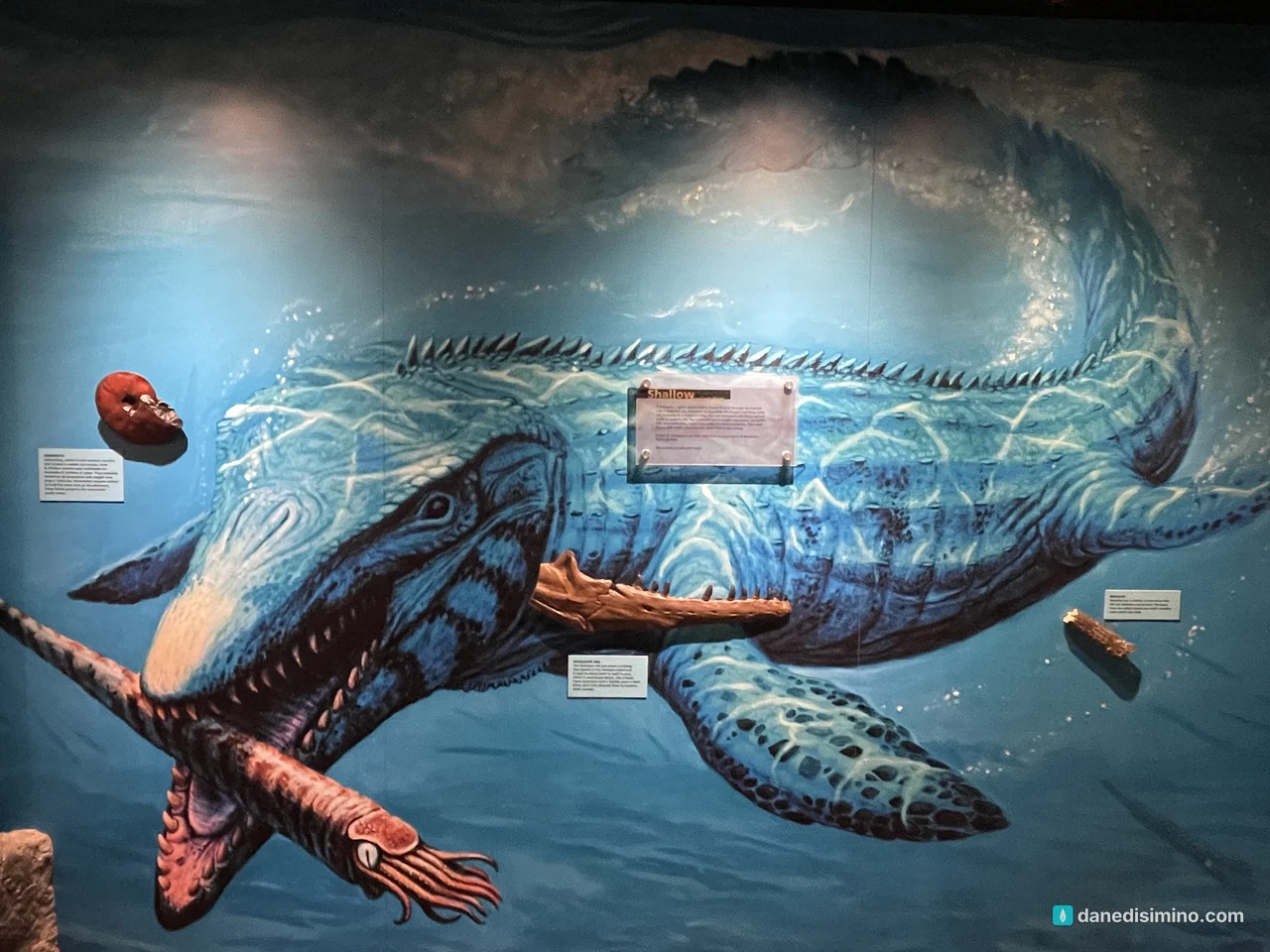
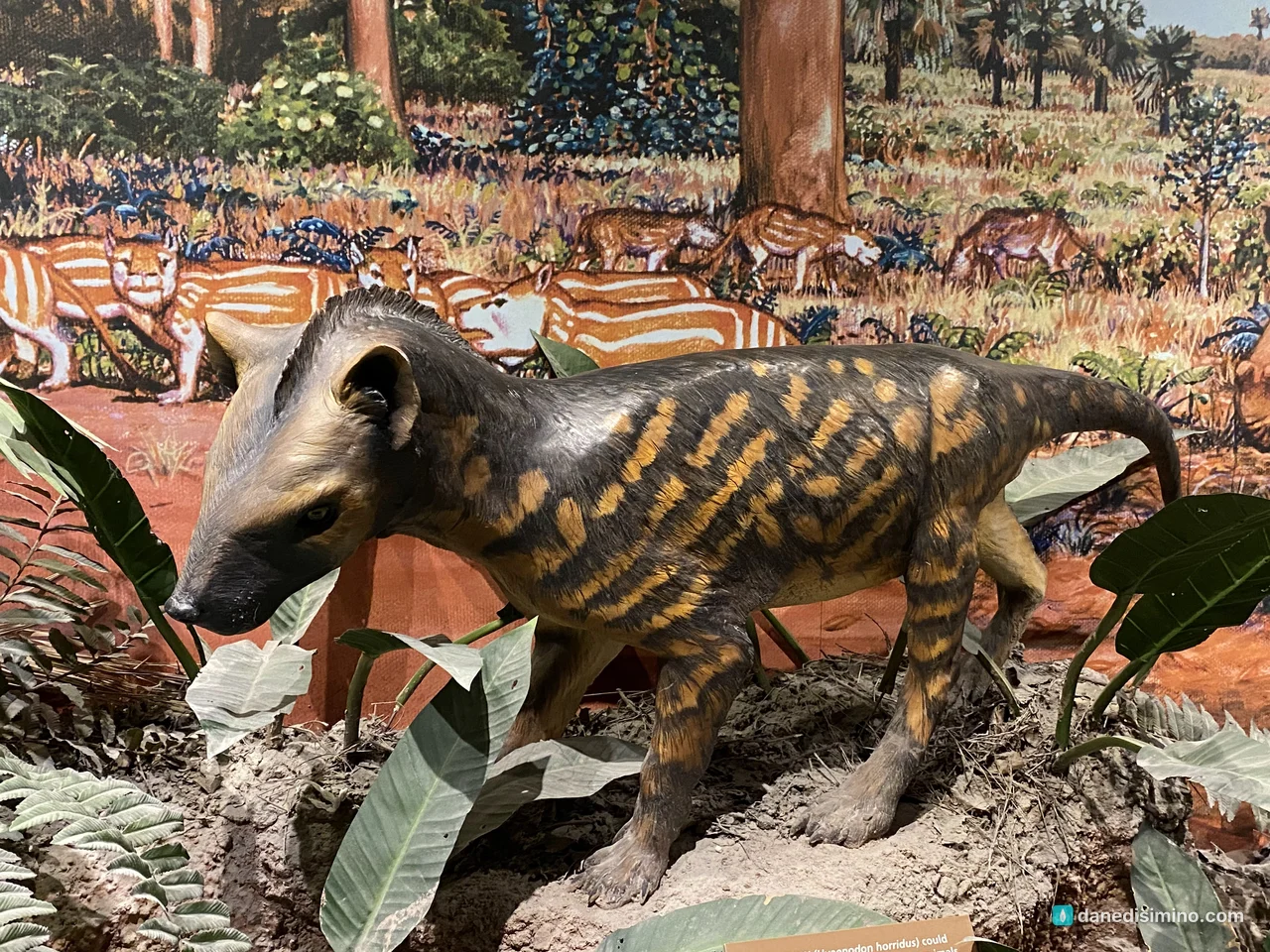
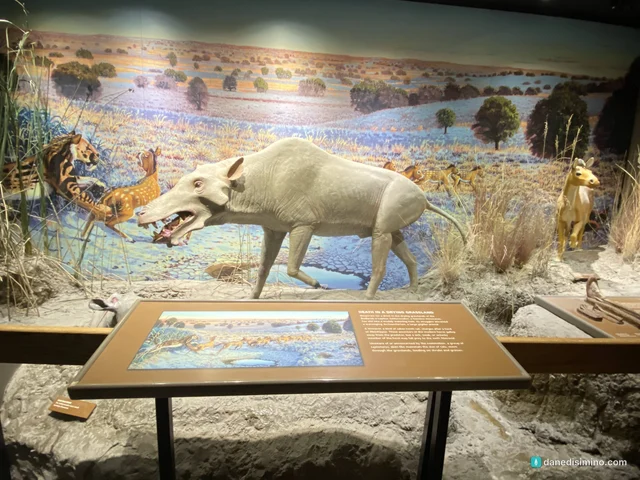
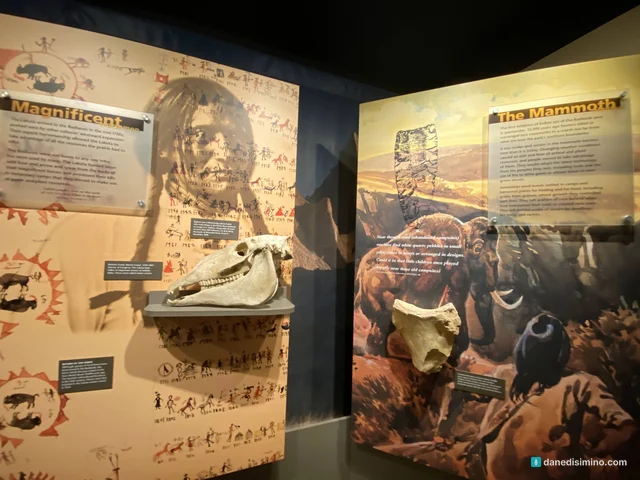
The fossil dioramas bring the old animals back. One shows an Archaeotherium, a large pig-like animal, scavenging at a muddy watering hole as the grasslands dried. Another wall tells how the Lakota arrived in the Badlands in the mid-1700s, and how hunters here took mammoths some 12,000 years ago.
Driving the Loop Road
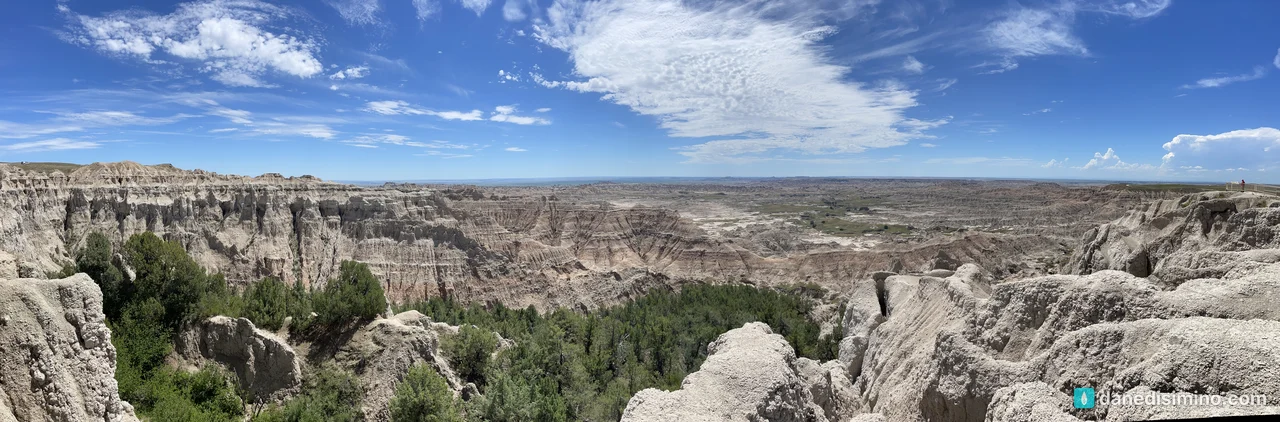
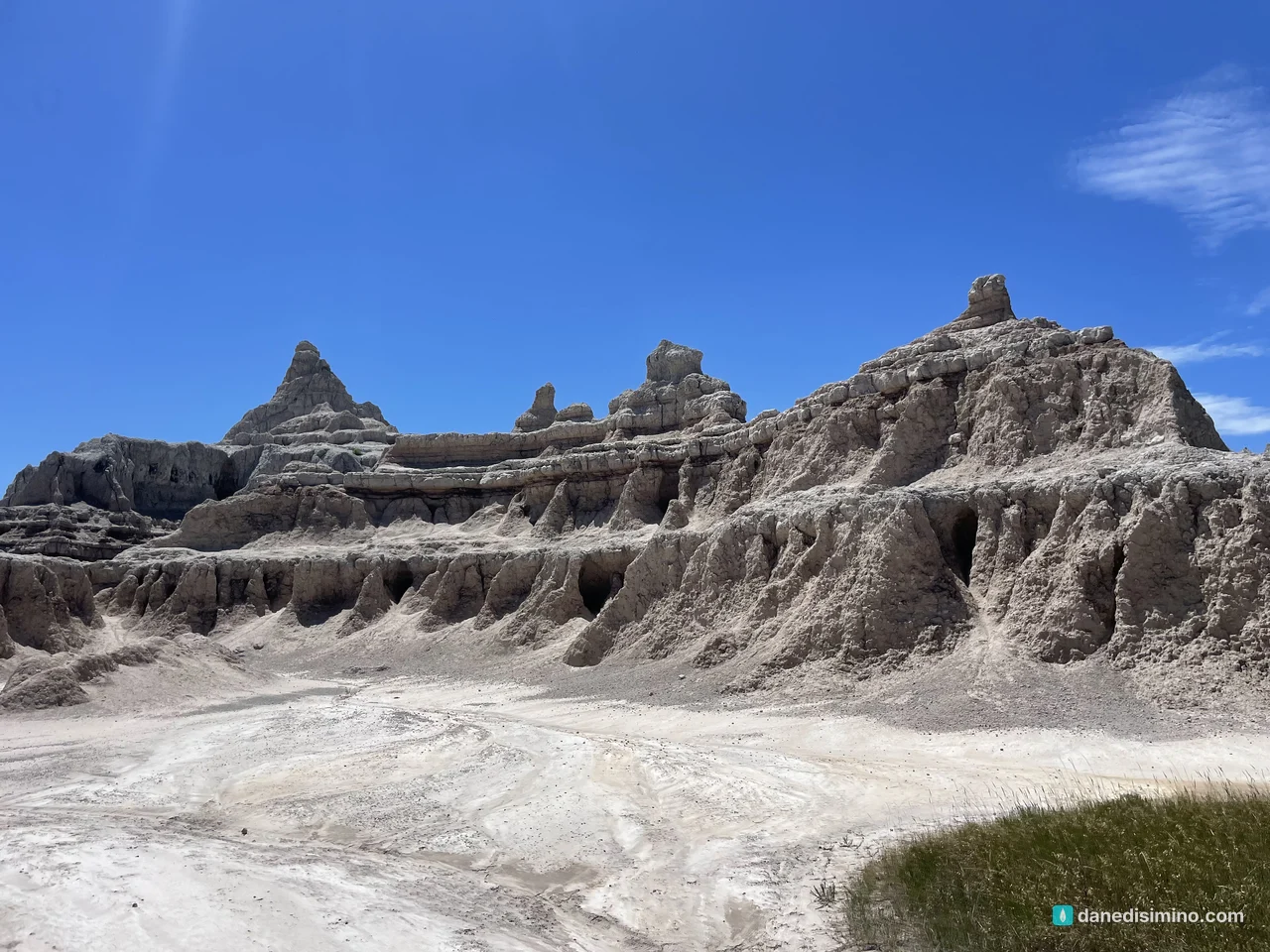
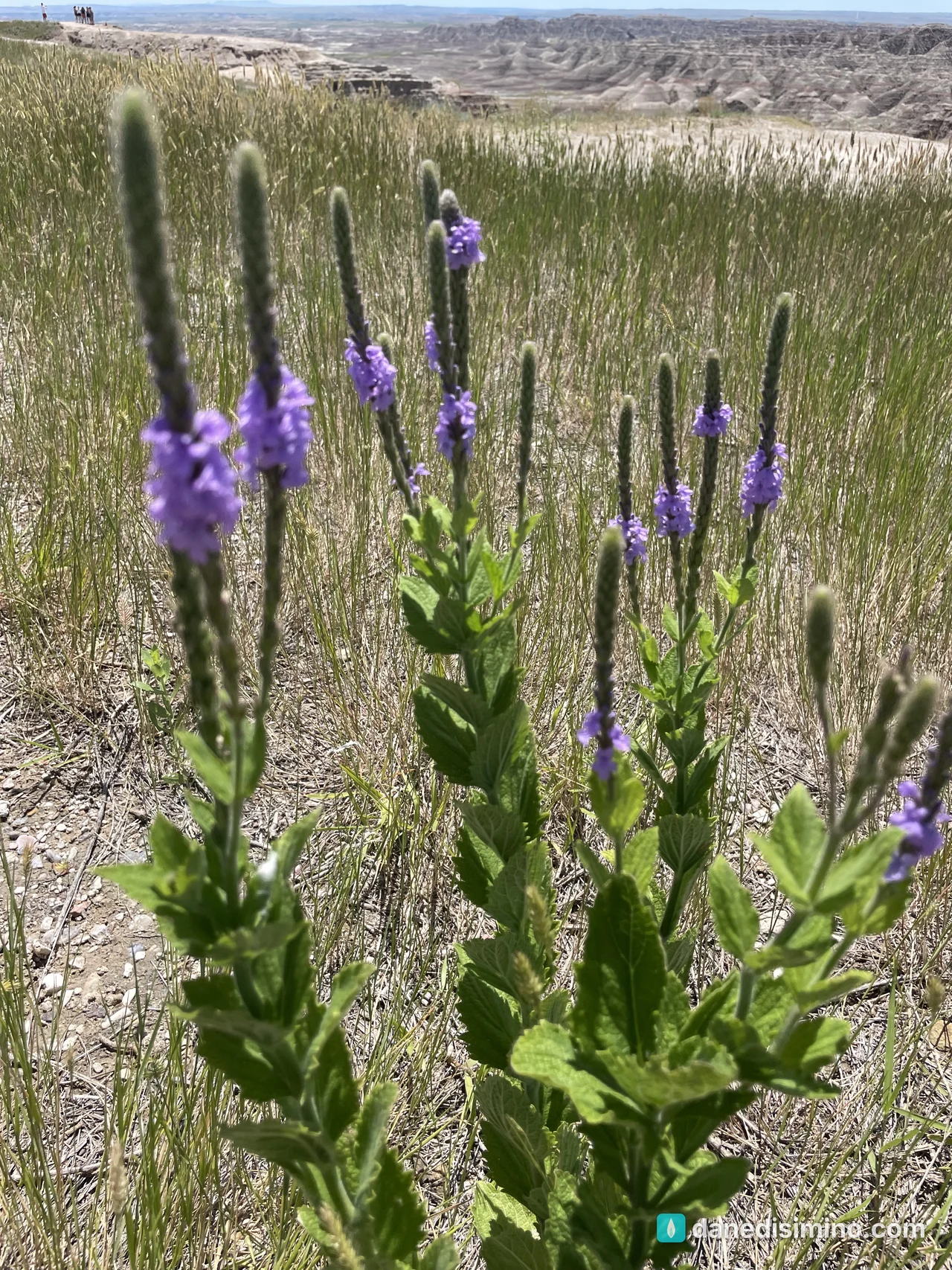
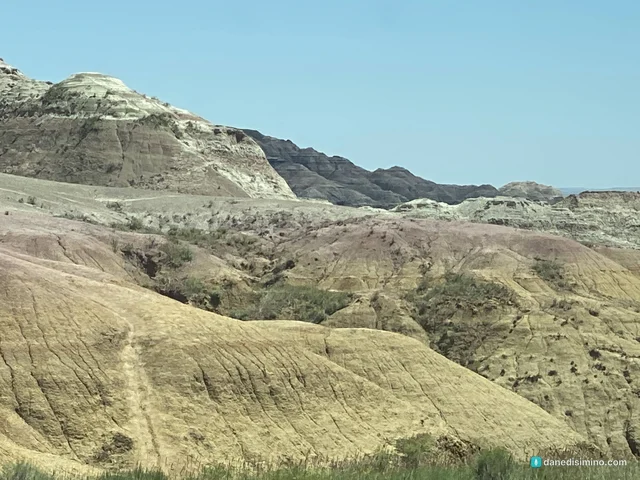
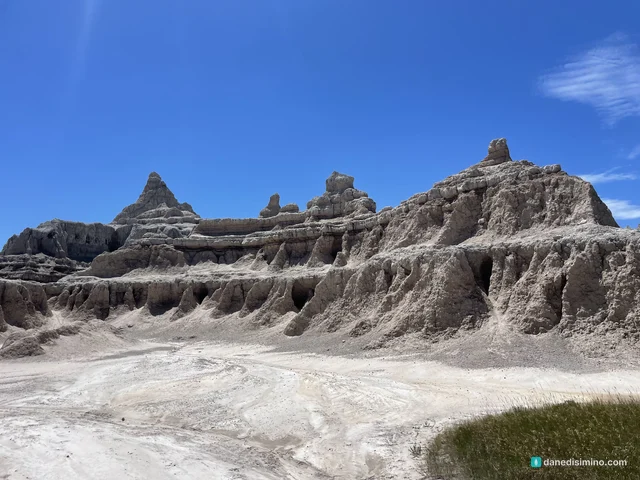
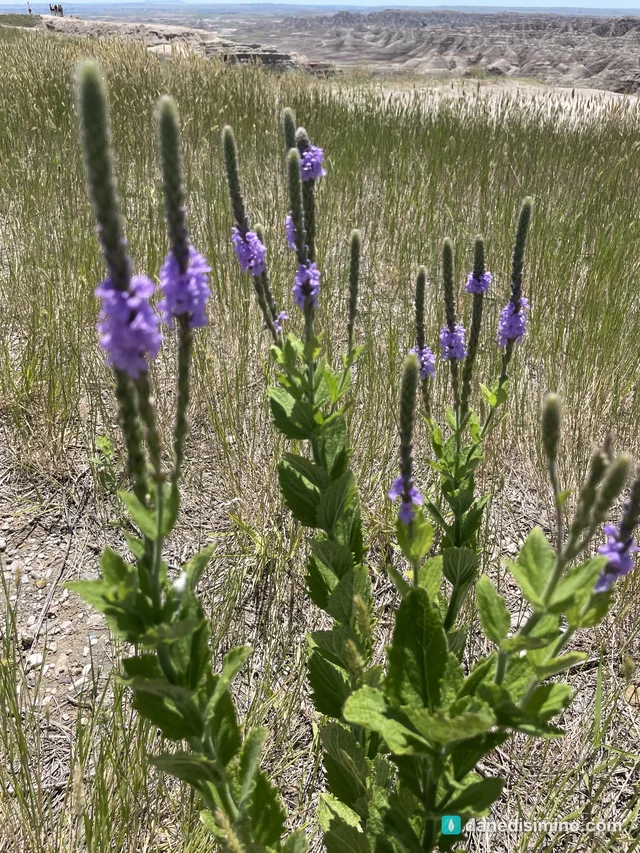
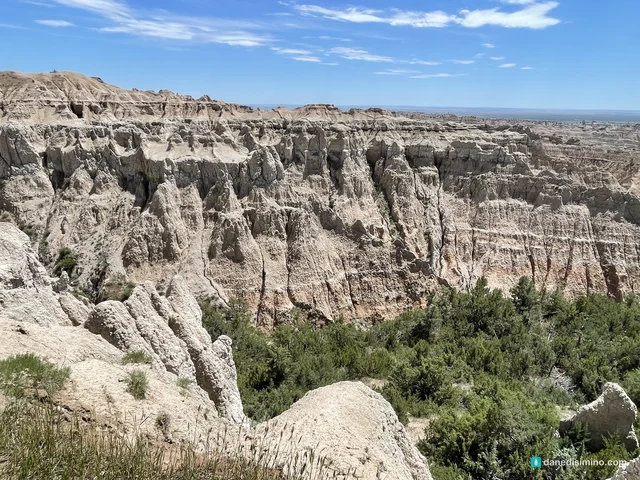
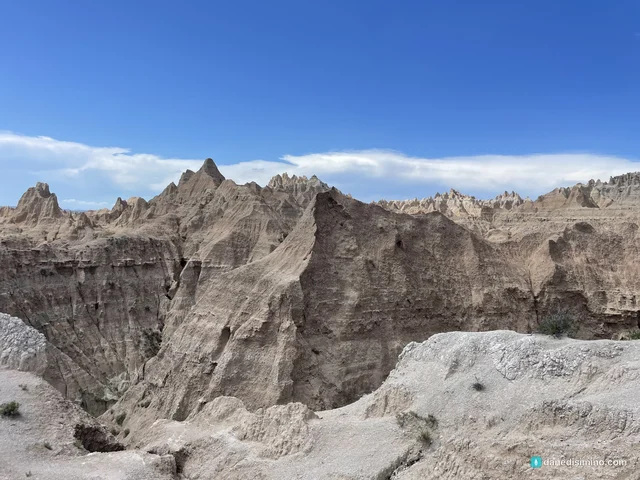
From the visitor center we headed west on the Loop Road. The first stretch is all jagged spires and deep canyons, pale gray and tan. Purple wildflowers grew right at the edge of the drop-offs.
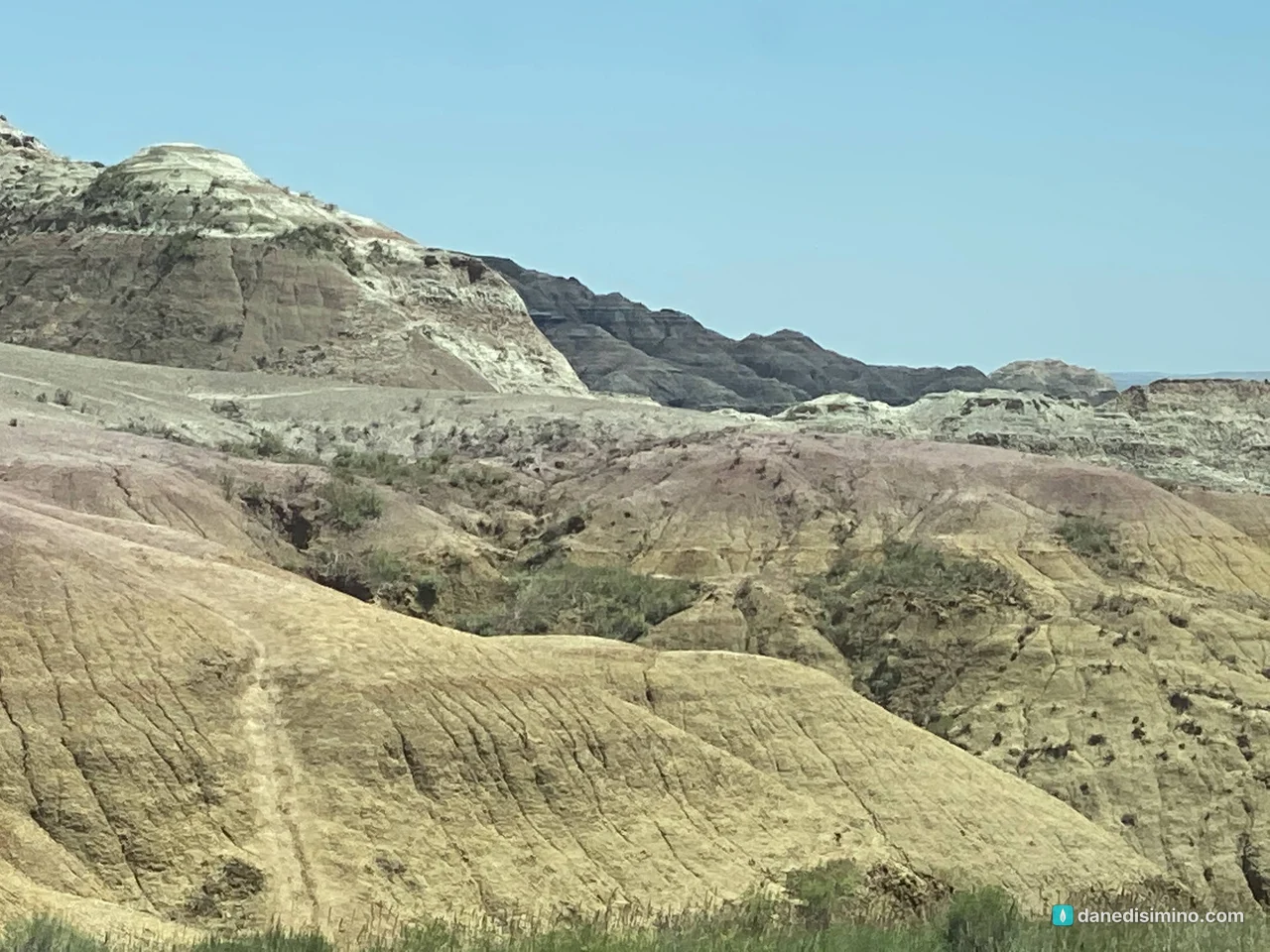
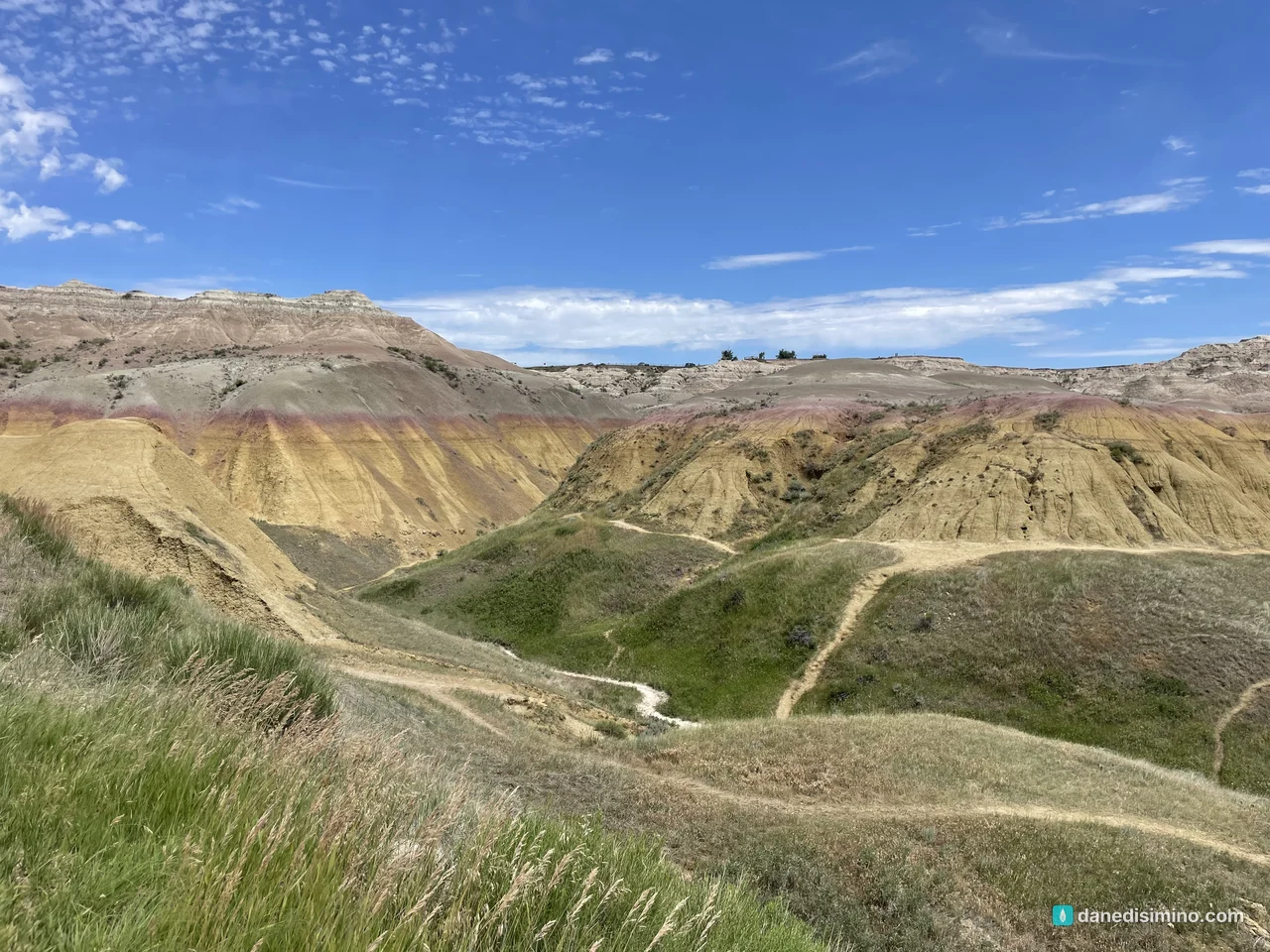
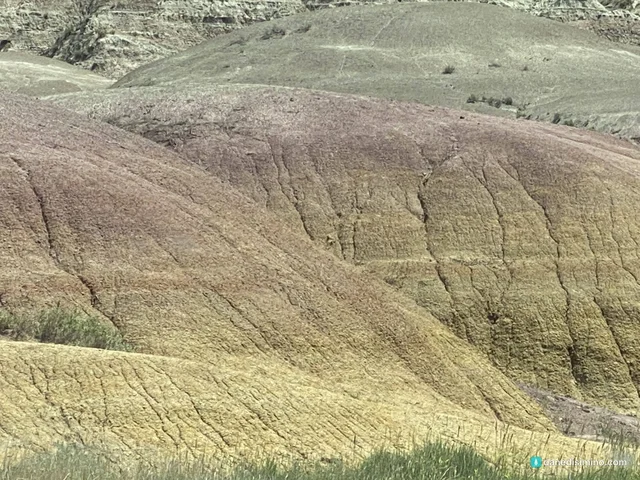
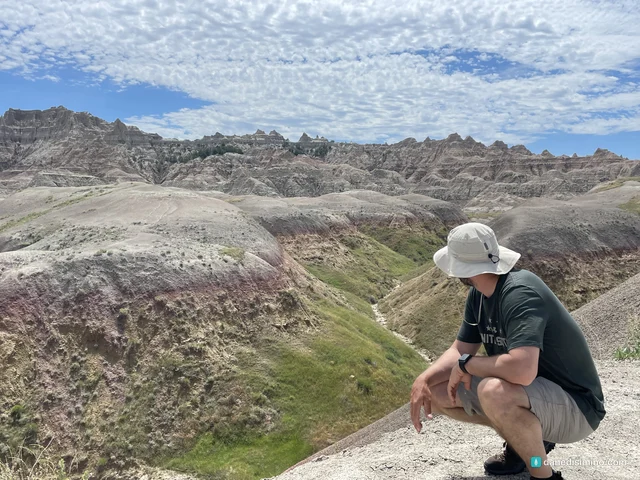
Then the colors started. By early afternoon we reached the Yellow Mounds, where the park says the brightest beds sit stacked in order: yellow, then purple, then gray, then striped red. We walked out onto the mounds, and it felt like standing inside a painting.
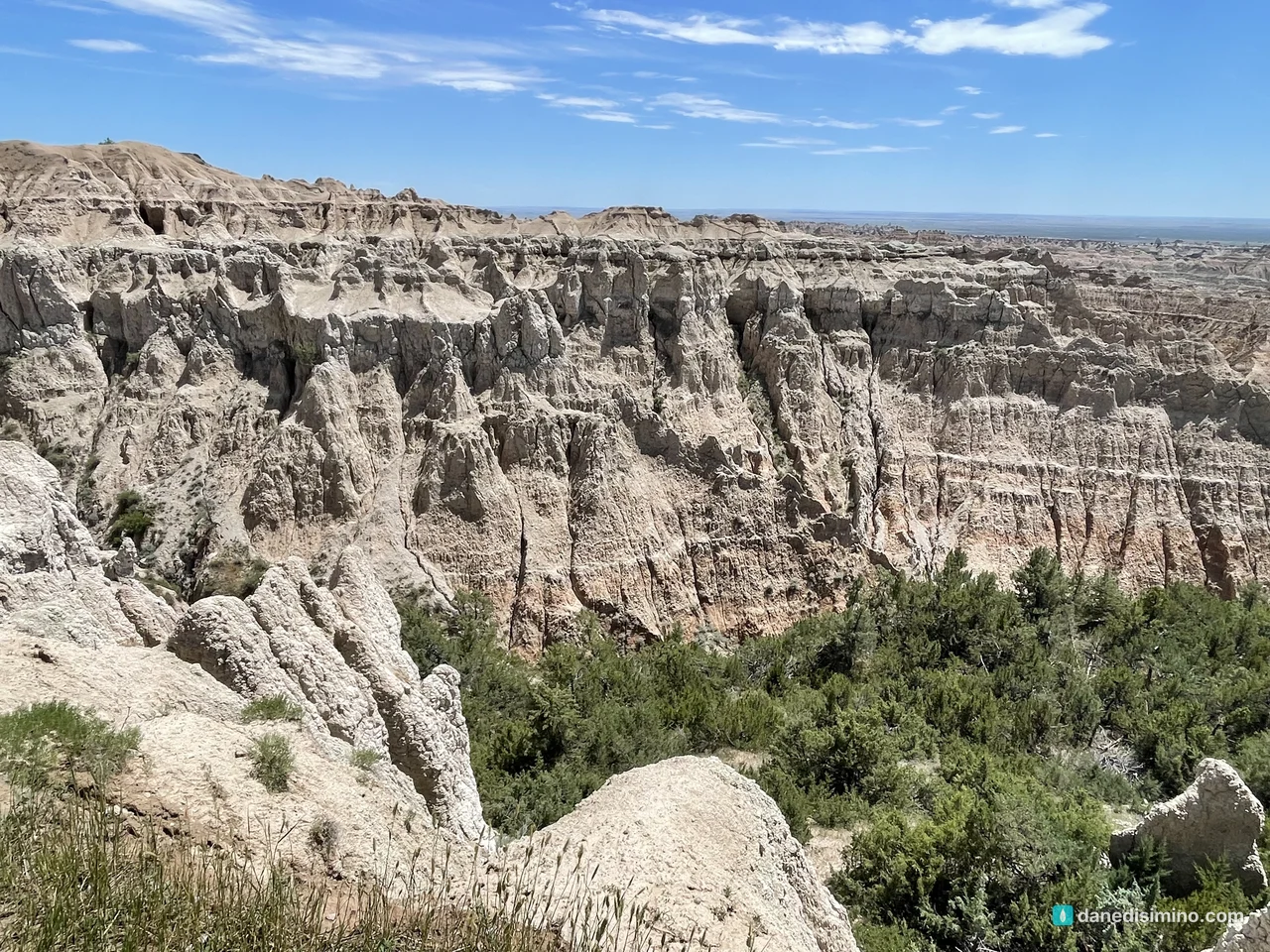
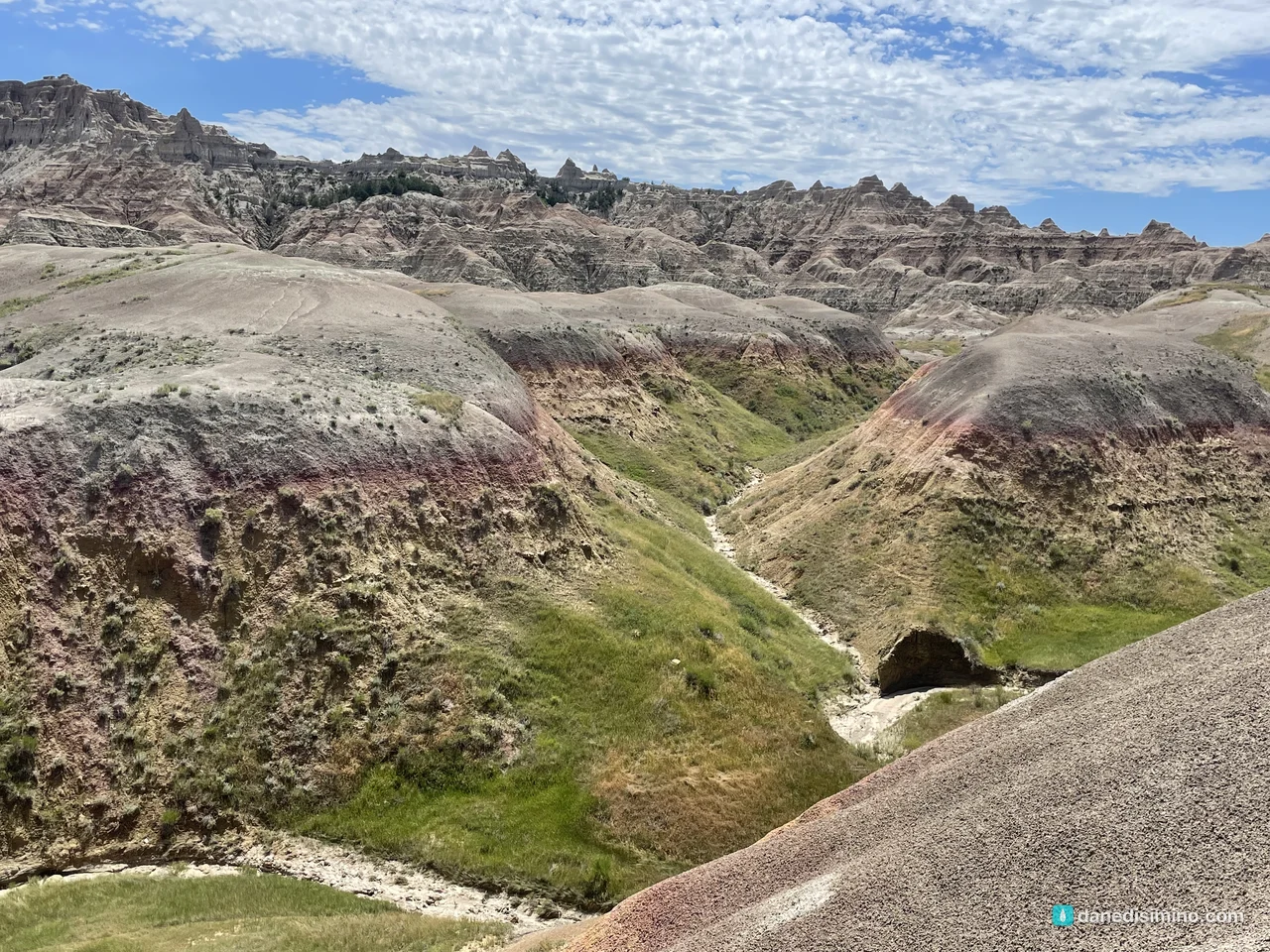
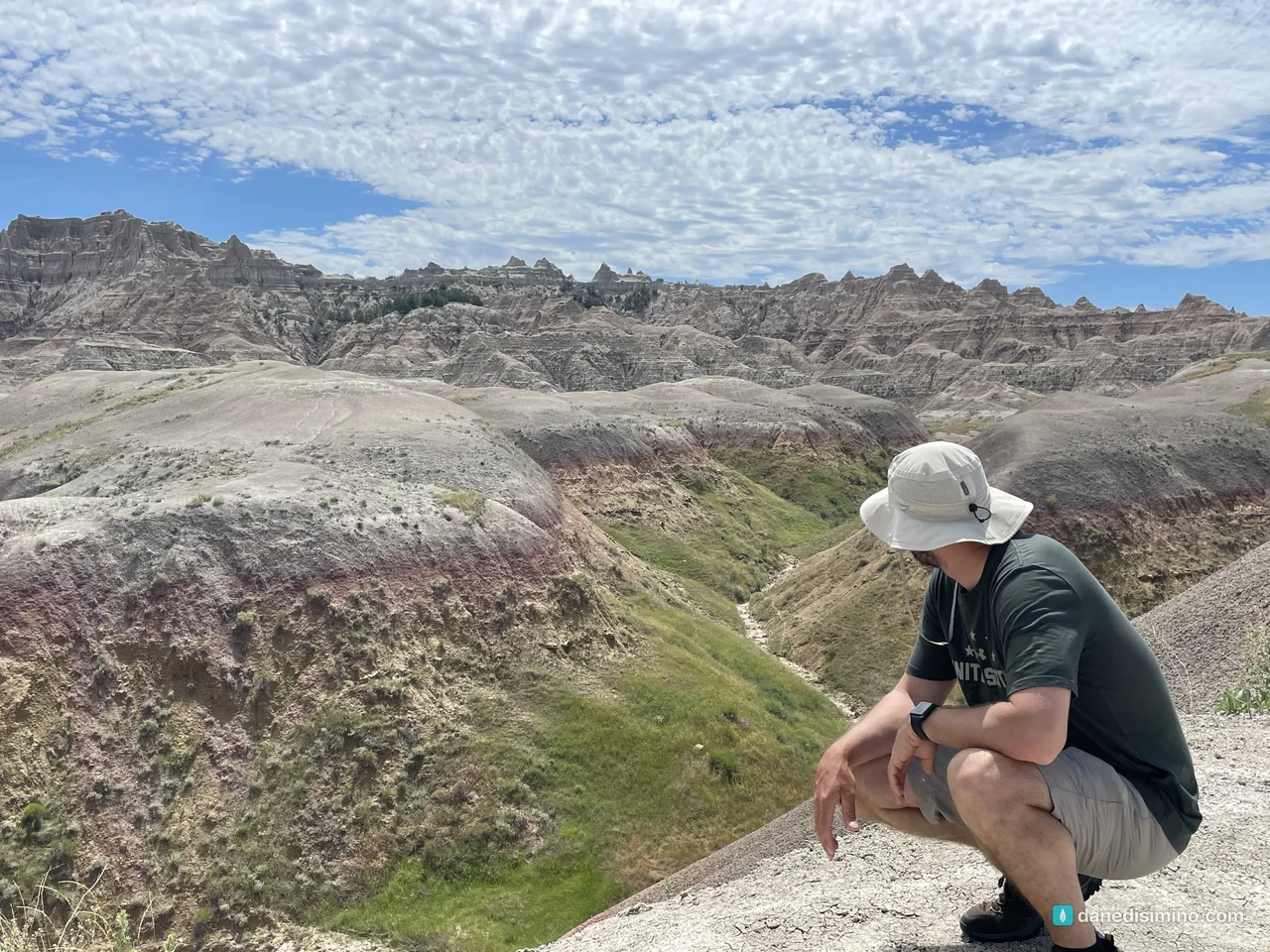
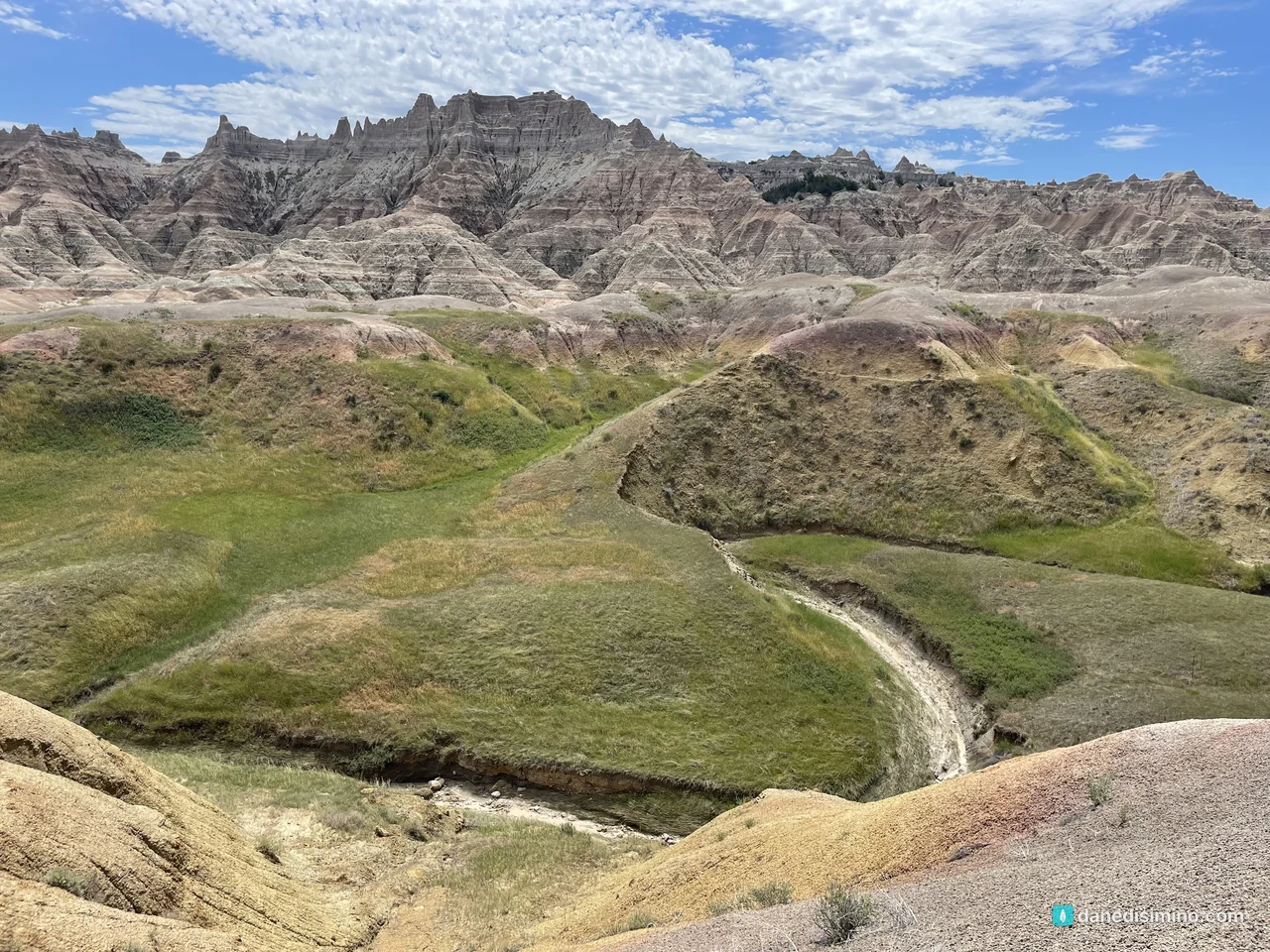
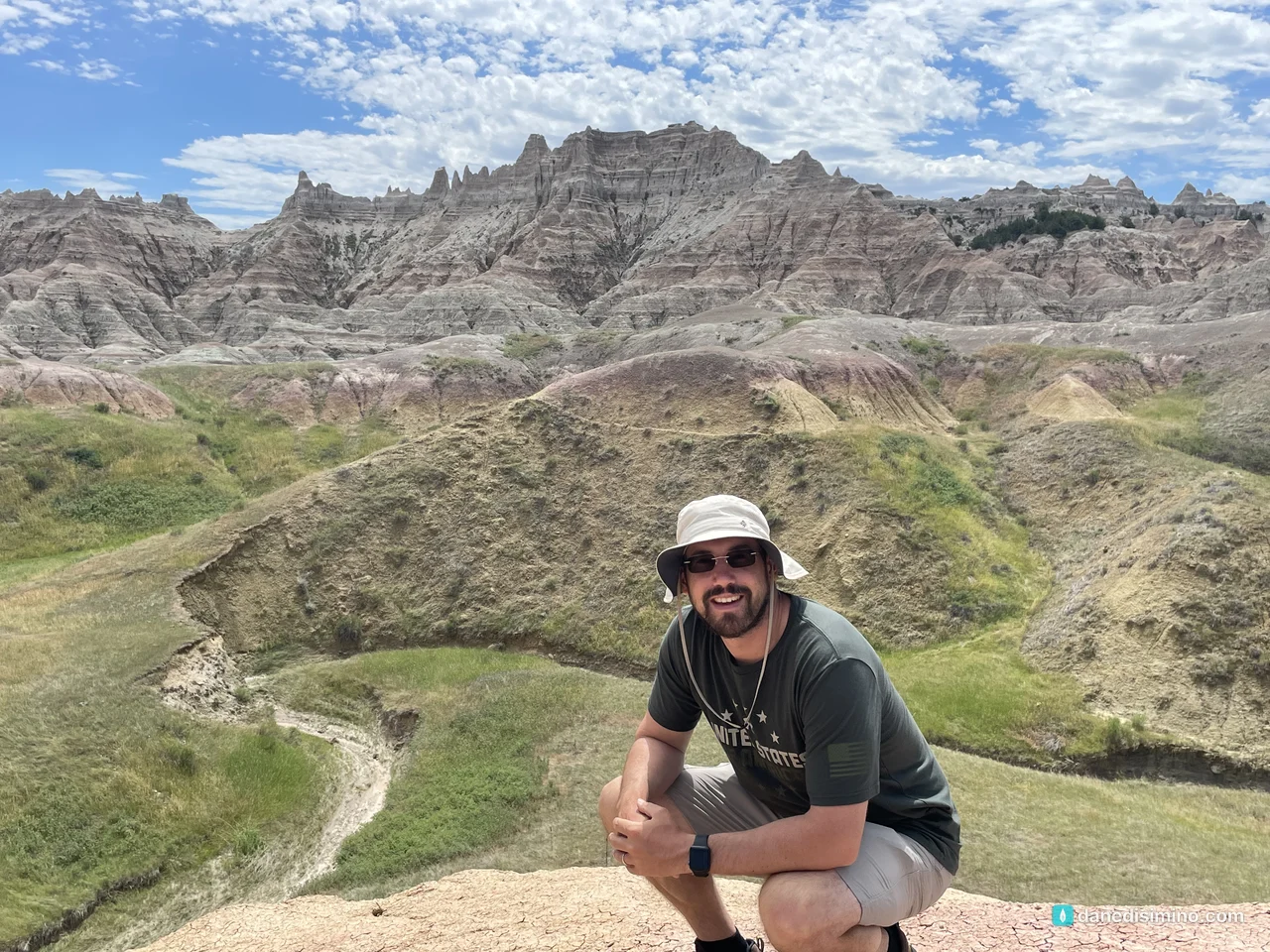
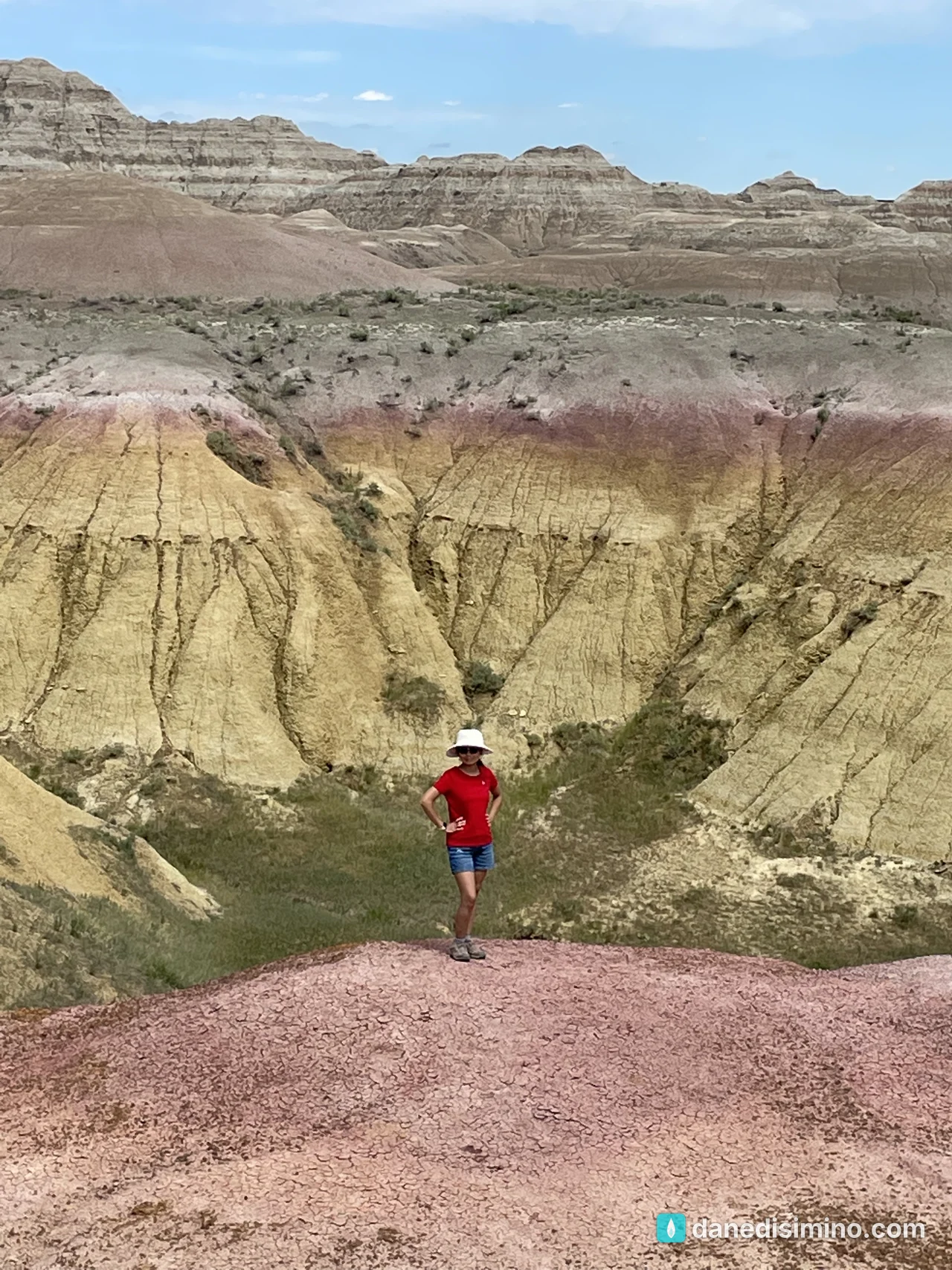
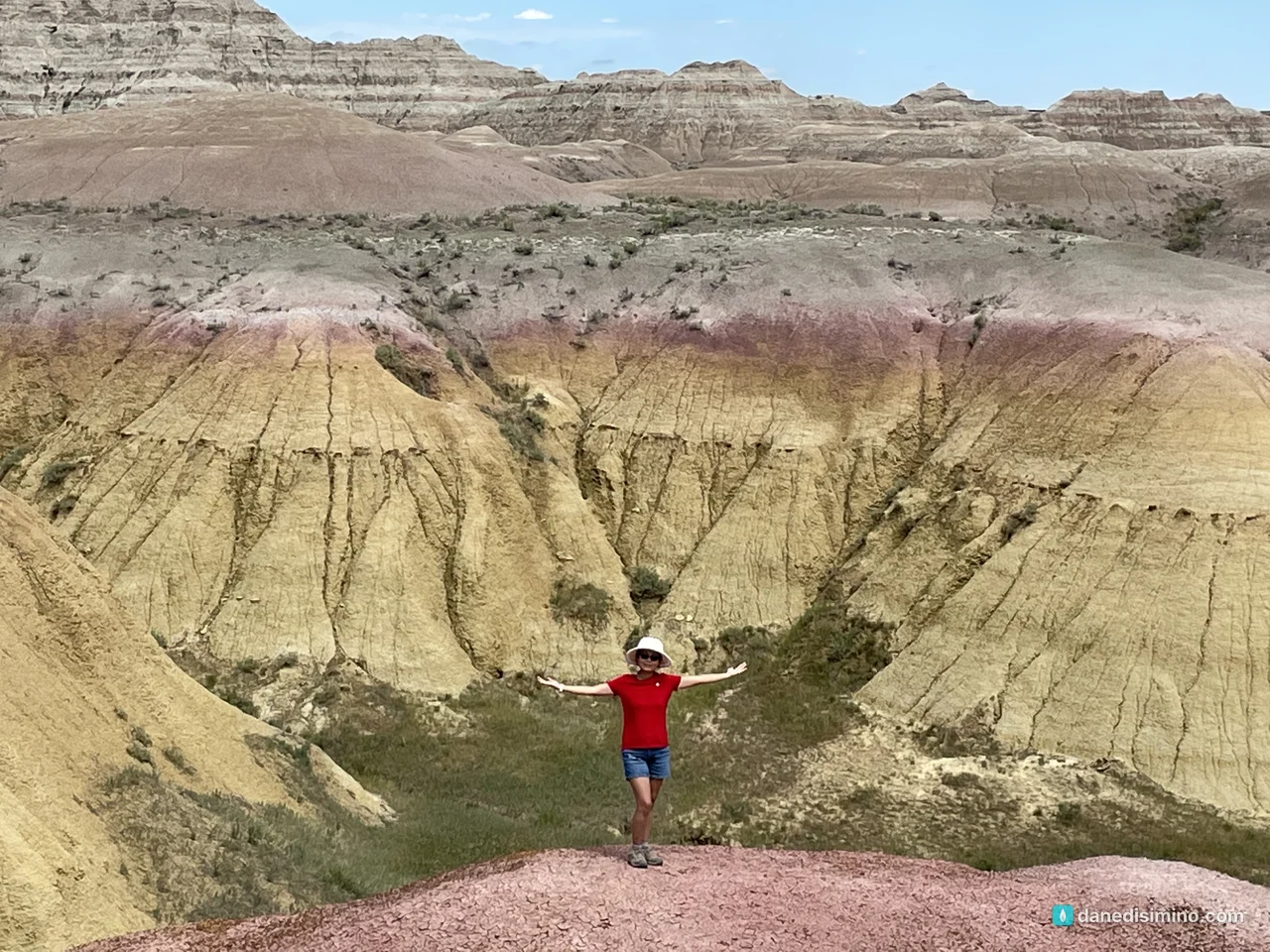
The last stretch opened back up into prairie and a sea of pinnacles before the road brought us back out.
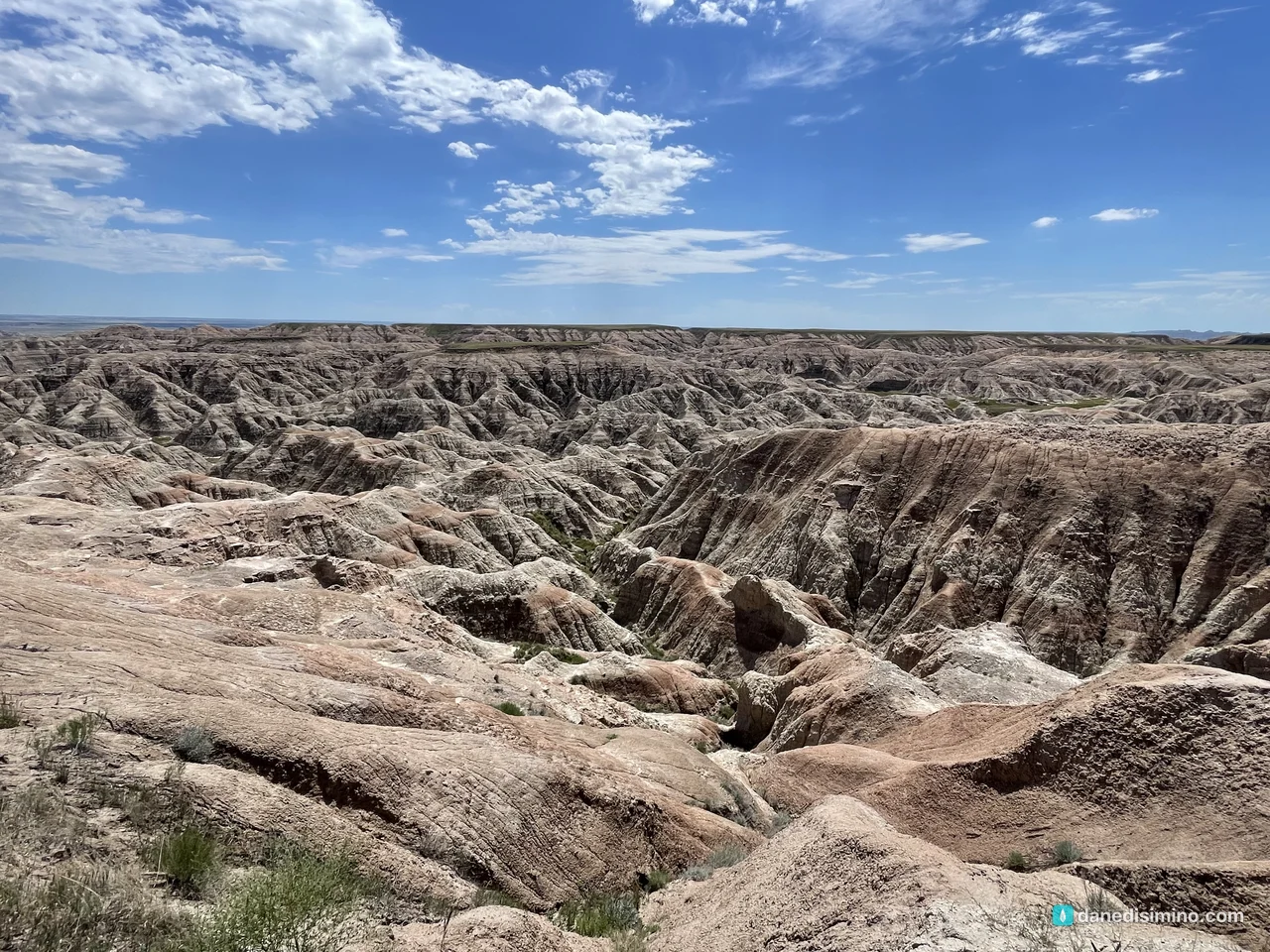
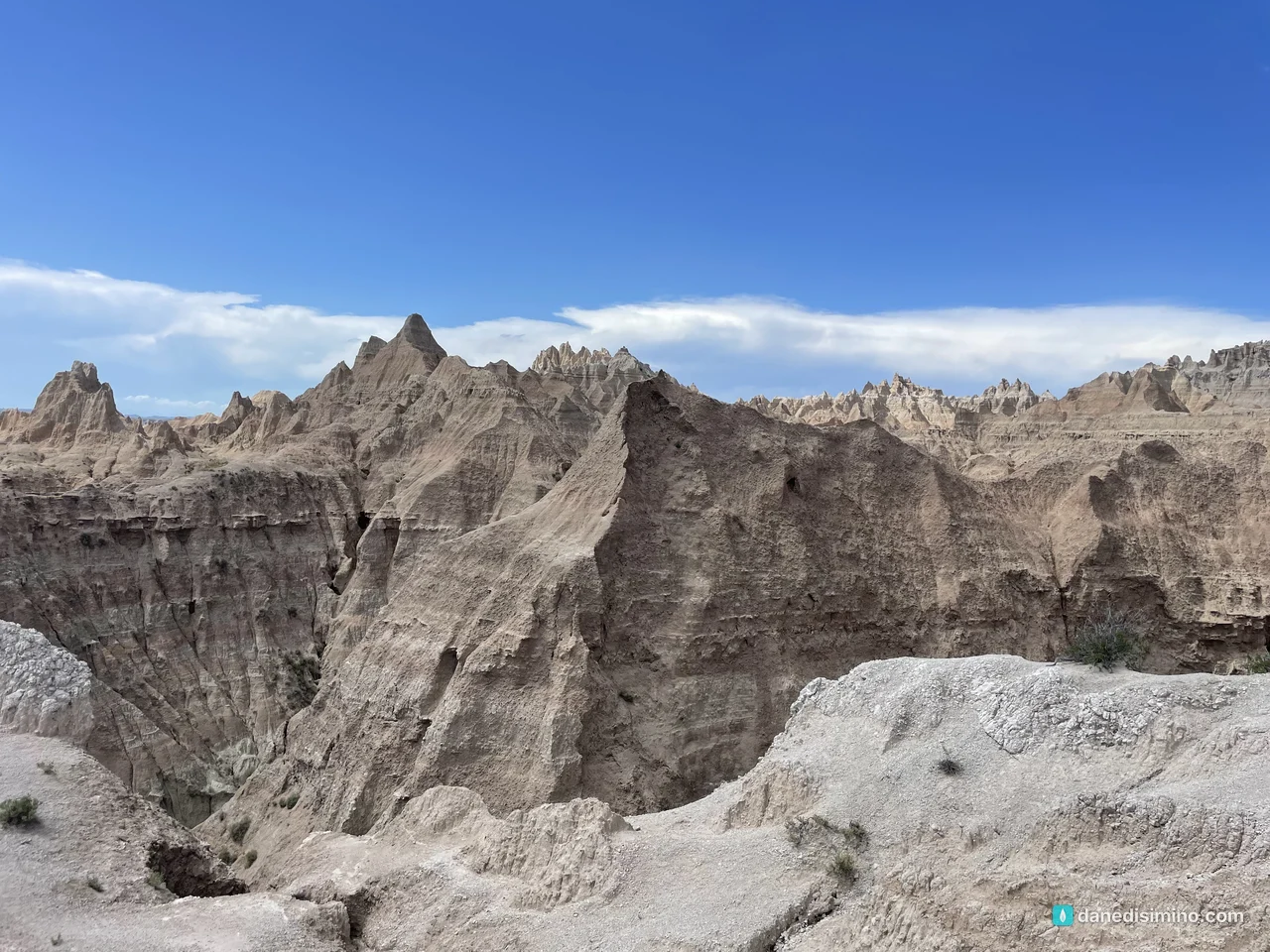
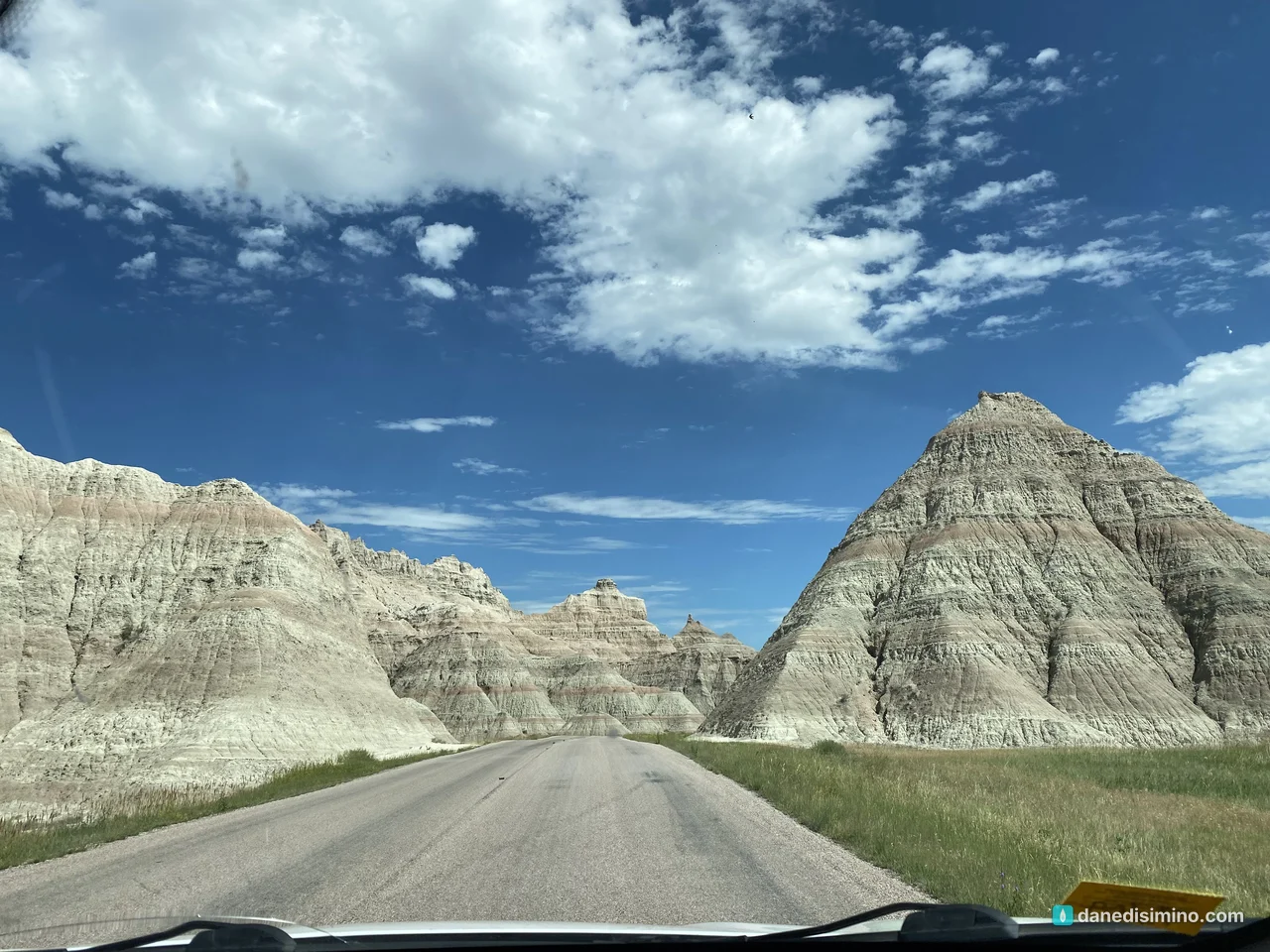
The whole Dakotas trip
Badlands was the winner, and it was one stop on a bigger loop. Here's how it came together: four days and four nights, all based out of the Hot Springs KOA, with a drive day and three full days of parks.
- Day 1 · July 2Colorado to the Black HillsA flat drive north and a tent at the Hot Springs KOA.
- Day 2 · July 3Wind Cave, Mount Rushmore, CusterA cave tour, the four faces, the Wildlife Loop and a double rainbow.
- Day 3 · July 4BadlandsThe whole day on the Loop Road, then a sunset drive home through Custer.
- Day 4 · July 5Theodore RooseveltA storm on the drive north, wild horses and the Little Missouri, then back to Hot Springs.
Read the rest: Wind Cave, Mount Rushmore, Custer State Park and Theodore Roosevelt.
Where we stayed
We stayed at the Hot Springs KOA and drove up for the day, about two hours each way. Next time I'd stay closer. Cedar Pass Lodge sits right next to the Ben Reifel Visitor Center, and the town of Wall is just outside the park.
What I'd do differently
Add a second day for hiking. The Door, Window and Notch trails start near the visitor center, and the Castle Trail runs about 10 miles round trip.
Catch sunrise or sunset. The colors are at their best in low light.
Avoid the midday crowd. See the visitor center first thing, or last.
What Badlands taught me
I've never seen so many colors in one landscape. Every turn showed us another stripe we hadn't noticed.
"O LORD, what a variety of things you have made! In wisdom you have made them all. The earth is full of your creatures." (Psalm 104:24, NLT)
God didn't make the world in one color. He made it in twenty.
Questions?
Ask me anything about Badlands: which overlooks to stop at, which trails to hike, or how to fit it into a Dakotas trip. I answer every question.
Photos
Sources
- Badlands National Park (NPS)
- Geologic formations: how Badlands buttes came to be (NPS)
- Yellow Mounds Overlook (NPS)
- Big Badlands Overlook (NPS)
- Hiking in Badlands (NPS)
- Secrets of the past: animals and rock layers (NPS)
- Badlands National Park (Wikipedia)
- Is Badlands National Park worth visiting? (USA Today via Yahoo)
- Badlands National Park geology (National Parks Traveler)
Pathlight
Park guides from the road. A printable trip sheet comes with them when one is ready.